
Space is supposed to play by the rules. We write down some elegant equations, test them in labs and telescopes, and expect the universe to nod politely and cooperate. And then, every so often, it does something so weird that even the people who study it for a living have to sit back and say, “Wait… what?”
These six cosmic oddities are exactly that kind of thing: phenomena that don’t quite fit, signals that look wrong, structures that feel too extreme, and mysteries that mock our best models. We’ve learned a lot about them over the past decade, but in 2026 they’re still stubbornly refusing to give us a full explanation. As you read, imagine the night sky not as a calm backdrop of stars, but as an ongoing detective story where the clues are billions of light‑years away and the crime scenes are older than Earth itself.
1. Fast Radio Bursts: Millisecond Messages from the Deep
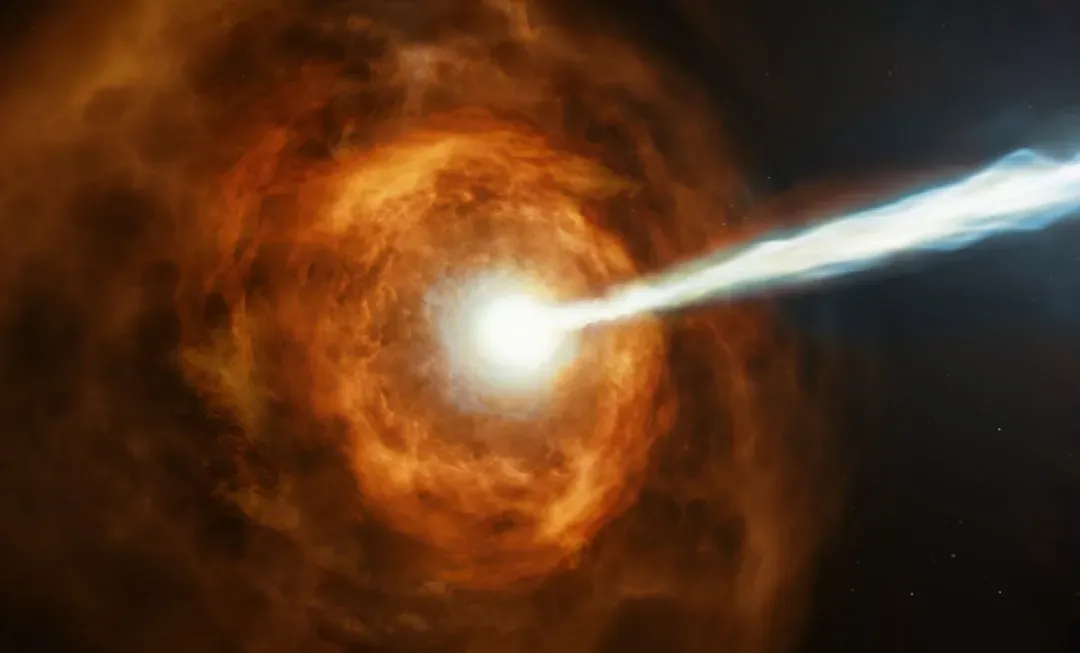
Imagine turning on a radio for a fraction of a second and picking up more energy than our Sun puts out in days, all squeezed into a single, sharp “ping.” That’s essentially what fast radio bursts (FRBs) are: ultrabright flashes of radio waves lasting less than the blink of an eye, coming from far beyond our galaxy. They were first noticed in the early 2000s almost by accident in archival data, and at first some astronomers seriously wondered if their equipment was broken.
We now know there are thousands of FRBs lighting up the universe, some of them repeating, others erupting once and never being heard from again. A few repeating FRBs seem linked to highly magnetized neutron stars called magnetars, but that can’t comfortably explain all of them, especially the most extreme one-off bursts. The way their signals scatter and stretch as they travel through space helps us map the invisible gas between galaxies, yet the engines that produce them remain a mix of educated guesses: collapsing stars, exotic magnetospheres, even speculative ideas about new physics. The uncomfortable truth is that in spite of massive radio arrays dedicated to catching them in real time, FRBs are still more mystery than solved case.
2. Dark Matter: The Invisible Stuff Holding Galaxies Together
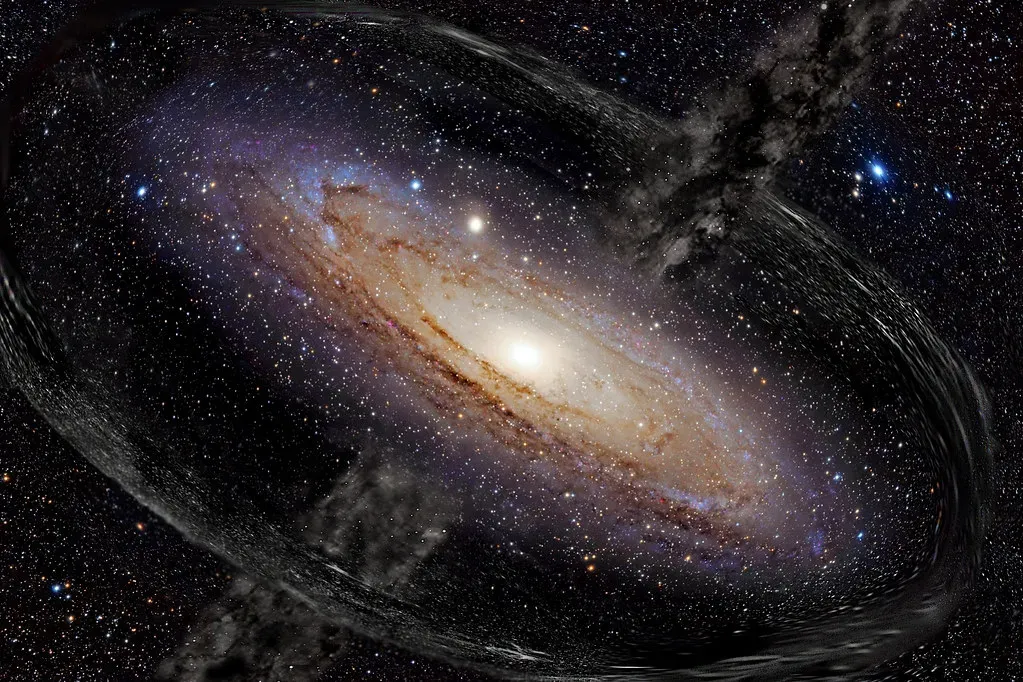
If you spin a merry-go-round too fast, kids go flying off. By the same logic, many galaxies are spinning so quickly that their stars should have been flung into intergalactic space long ago. But they haven’t, and the simplest explanation is that there’s extra, unseen mass providing the extra gravity to hold everything together. This unseen mass is what astrophysicists call dark matter, and it seems to make up roughly about five times more mass than all the normal matter we can see.
Here’s the maddening part: we still don’t know what dark matter actually is. We’ve built incredibly sensitive detectors deep underground, searching for rare collisions between hypothetical dark matter particles and ordinary atoms, and so far they’ve mostly reported silence. Colliders like the Large Hadron Collider have not given us the new particles many theories predicted. At the same time, alternative ideas that try to tweak gravity itself instead of adding new matter struggle to fit every observation, especially on different cosmic scales. The universe behaves as if dark matter is real, shaping galaxies, galaxy clusters, and the large-scale cosmic web, but until we catch it directly, astrophysicists are stuck explaining an invisible backbone with no confirmed identity.
3. Dark Energy and the Runaway Expansion of the Universe
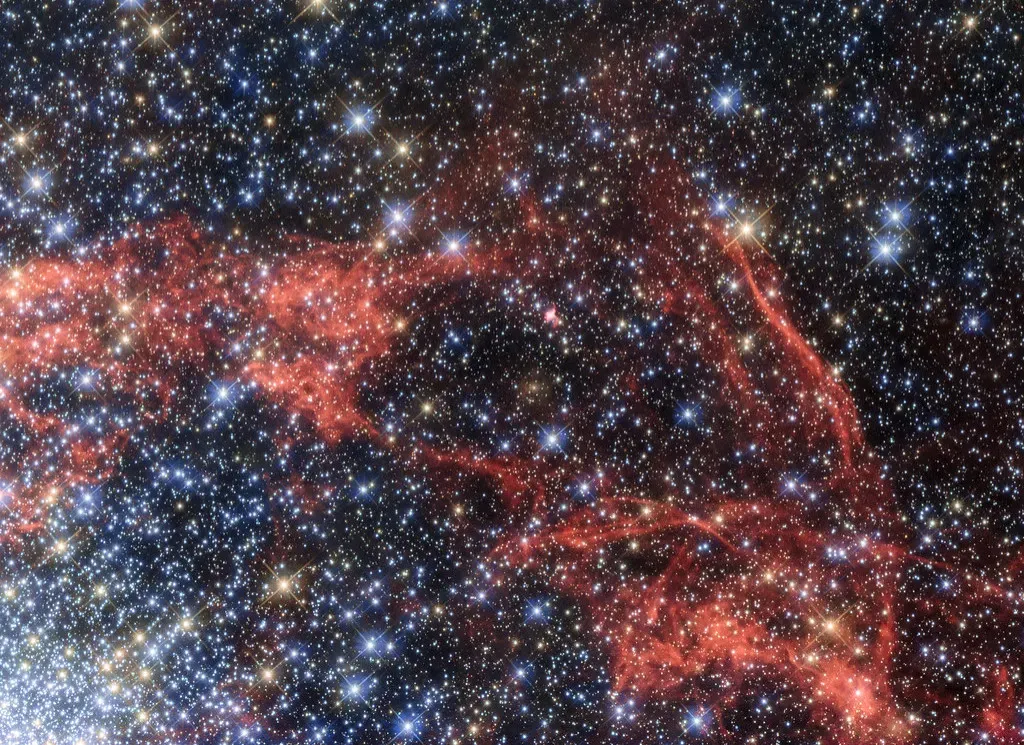
For most of the twentieth century, astronomers assumed that the expansion of the universe, set in motion by the Big Bang, would gradually slow down under gravity’s pull. The shock came in the late 1990s when precise measurements of distant exploding stars showed the opposite: the expansion is speeding up, as if some hidden repulsive ingredient is pushing galaxies away from each other harder and harder over time. That mysterious driver is what we call dark energy, and it dominates the energy budget of the cosmos.
Dark energy is not just a placeholder name; it’s a confession that our understanding of gravity and the vacuum of space is deeply incomplete. The simplest idea is that empty space itself has a tiny, constant energy density, but when physicists try to calculate this using quantum theory, they get answers that are wildly off, by factors so huge they’re almost comical. Large surveys mapping millions of galaxies and the subtle distortion of light called gravitational lensing have been trying to pin down how strong dark energy is and whether it changes over time. Some recent measurements even hint at mild tensions with our standard model of cosmology, raising the possibility that we’re missing a key piece of the puzzle. For now, we can describe what dark energy does astonishingly well, but we can’t honestly say we know what it is.
4. The Hubble Tension: Conflicting Measurements of the Cosmic Speed Limit
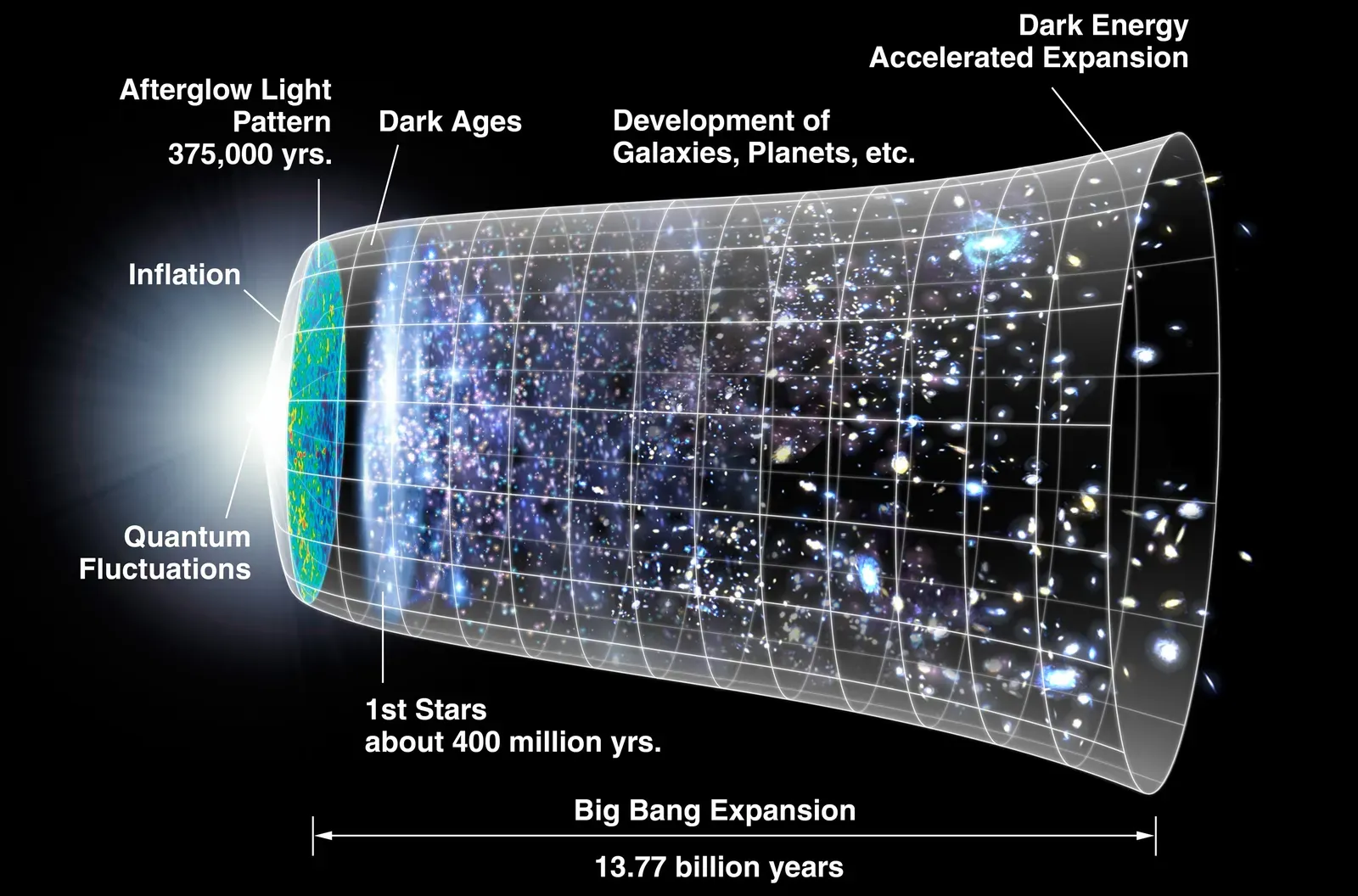
Ask astronomers how fast the universe is expanding right now – known as the Hubble constant – and you might expect a single, precise number. Instead, you get a cosmic family argument. When scientists infer the expansion rate from the cosmic microwave background, the afterglow of the Big Bang, they get one answer. When they measure it more directly using nearby galaxies, pulsating stars, and certain kinds of supernovae, they get a noticeably higher value.
This mismatch, often called the Hubble tension, has grown more pressing as measurements on both sides become incredibly precise. The odds that it’s just random error get smaller with each new survey, which nudges the field toward a more unsettling possibility: maybe our standard cosmological model is incomplete. Ideas on the table range from subtle early-universe physics that changed how matter clumped, to new kinds of energy fields, to more mundane but complicated systematic biases we still haven’t fully understood. It’s a bit like having two perfectly calibrated clocks that slowly drift apart; either one of them is lying, or our idea of time itself needs revisiting. In 2026, that question is still unresolved, and the tension has turned into one of cosmology’s sharpest thorns.
5. Ultra‑High‑Energy Cosmic Rays: Particles That Shouldn’t Be So Powerful
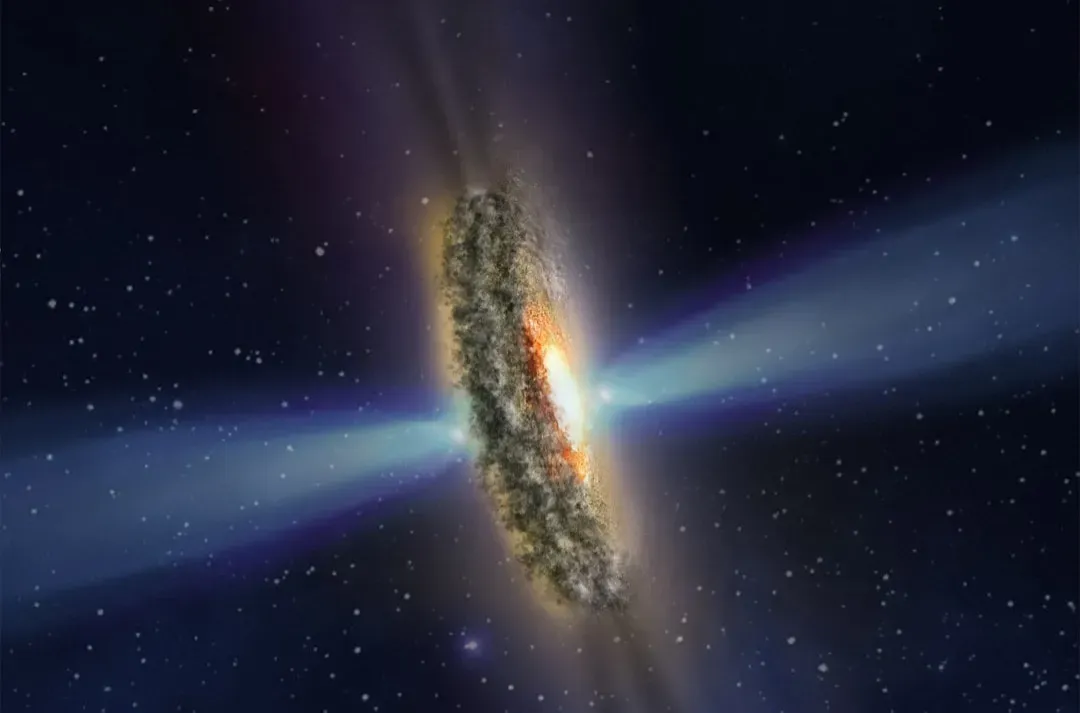
Every second, high‑energy particles from space – cosmic rays – slam into Earth’s atmosphere, creating showers of secondary particles. Most are modest, but every once in a while detectors pick up something so energetic it borders on absurd: a single atomic nucleus with as much kinetic energy as a fast‑pitched baseball. According to our current understanding, there shouldn’t be many of these ultra‑high‑energy cosmic rays, especially from very far away, because interactions with cosmic background radiation should sap their energy over long journeys.
Yet observatories in South America and elsewhere keep detecting them, and tracing their origins is like trying to work out where a specific raindrop fell from in a thunderstorm. We suspect extreme environments such as active galactic nuclei, powerful jets from supermassive black holes, or the shock waves around galaxy clusters might be responsible, but tying specific events to specific sources has been frustrating. Magnetic fields threading through galaxies and intergalactic space bend their paths, scrambling their trajectories by the time they reach us. These particles are nature’s own particle accelerators, surpassing anything we can build on Earth, and they hint that the universe has engines operating at the edge of known physics. Until we figure out exactly how and where those engines run, these cosmic bullets remain one of the strangest unsolved riddles raining down on us.
6. Tabby’s Star and Other Bizarre Dimming Stars
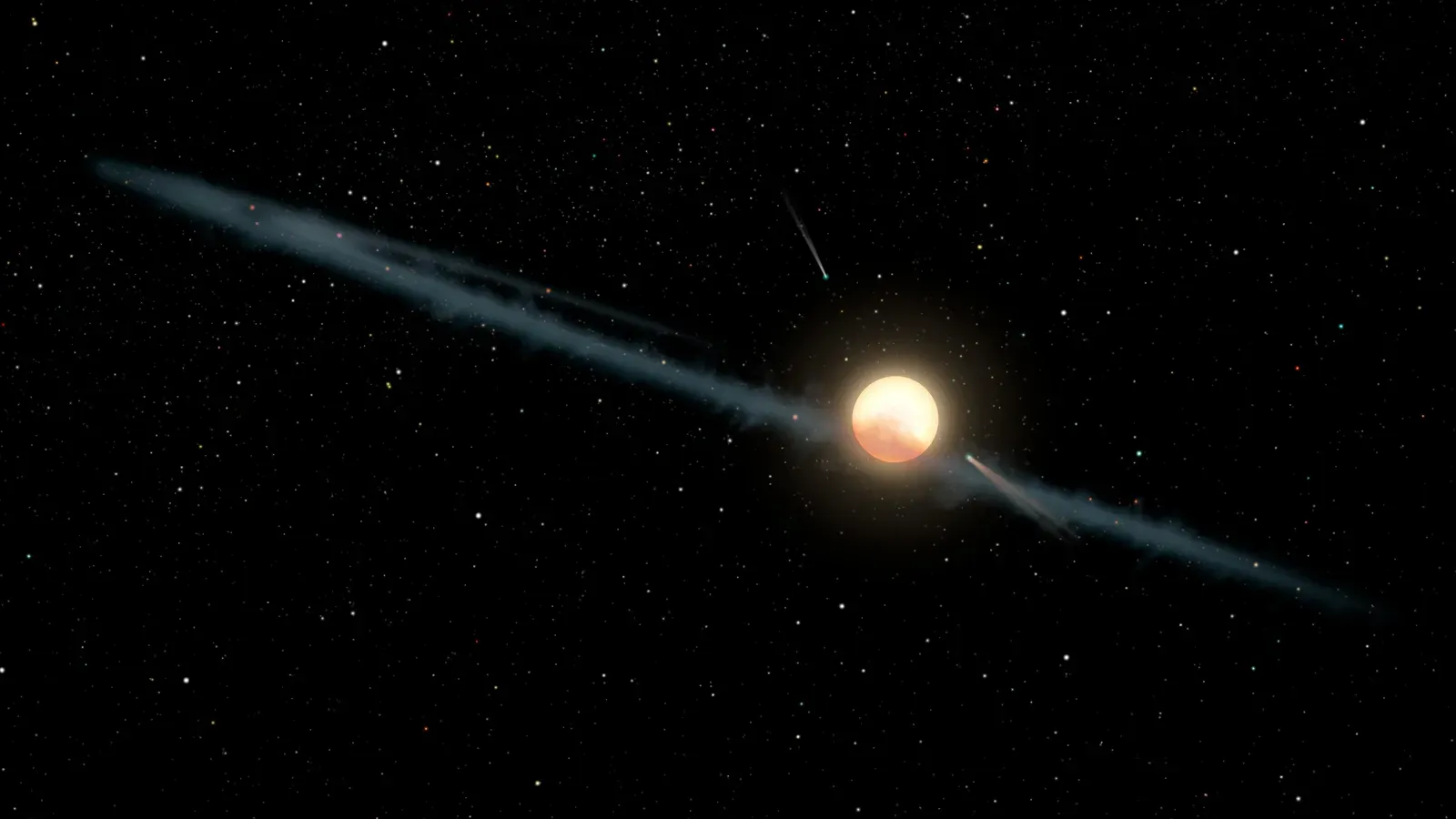
Most stars are comfortingly predictable: they might flare a bit, pulsate gently, or dim when a planet crosses in front of them, but their light curves usually make sense. Then came a star in the constellation Cygnus, often nicknamed Tabby’s Star, that started dimming by large, irregular amounts with no obvious rhythm. For a while, the patterns were so odd that some people half‑jokingly floated ideas about gigantic alien megastructures blocking the light, just because nothing else seemed to fit comfortably.
More sober explanations have focused on clouds of dust, swarms of comets, or remains of shattered planetary systems, and observations have shown that the dimming is wavelength‑dependent in a way that supports tiny dust grains. Even so, the full behavior of the star over years – gradual fading over long timescales mixed with sharp, deep dips – has not been wrapped up in a neat, universally agreed model. On top of that, surveys have uncovered other stars with weird, hard‑to‑explain dimming patterns, suggesting Tabby’s Star is not a total one‑off. These cases are humbling reminders that even around ordinary stars, complexity can mimic almost any signal, and that our catalog of stellar behavior is still far from complete.
Conclusion: A Universe That Refuses to Be Ordinary
What ties all these mysteries together is not just that they’re unsolved, but that they sit at the edges of what we think we know: invisible matter and energy shaping everything, expansion rates that disagree depending on how we ask, impossible‑seeming particles, and stars that misbehave in ways our textbooks didn’t prepare us for. Each one is like a loose thread dangling from the fabric of modern astrophysics, begging to be pulled, risking that something big might unravel – or reveal a hidden pattern we never noticed before.
There’s a quiet thrill in living at a time when these questions are still open, when new telescopes, detectors, and surveys coming online could flip our understanding almost overnight. The next decade might finally pin down dark matter, resolve the Hubble tension, or catch an FRB in enough detail to expose its engine, or it might instead hand us an even stranger set of puzzles. The sky looks calm from a distance, but behind that calm is a universe that keeps surprising the people who study it most closely. Which of these cosmic oddities do you think will give up its secrets first?