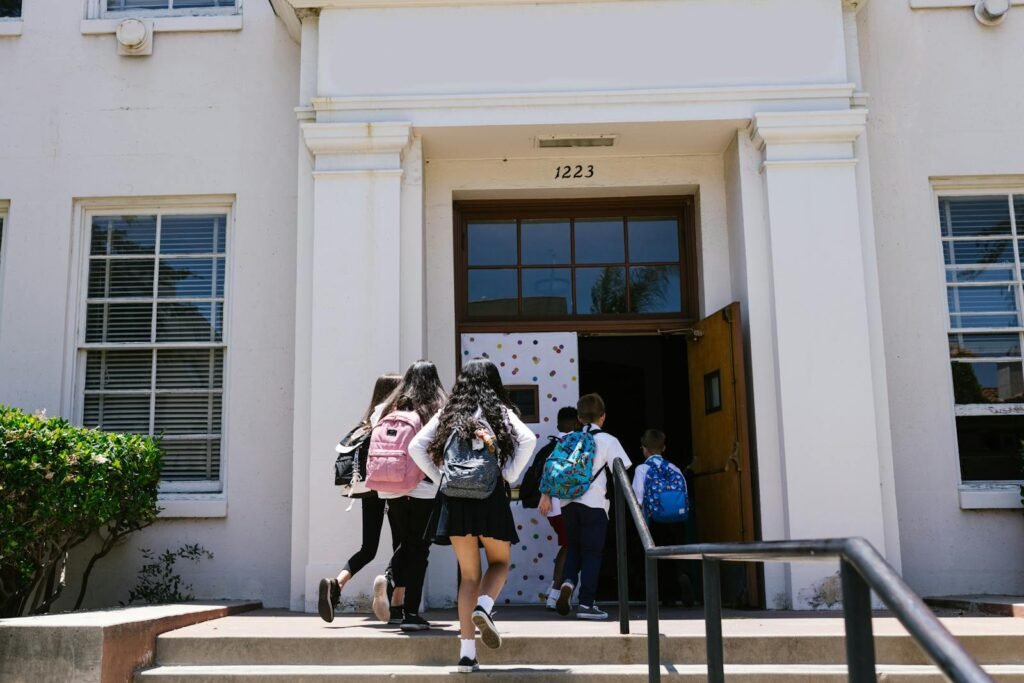

When most parents hear “artificial intelligence” and “schools” in the same sentence, they probably picture kids cheating on homework with ChatGPT. But here’s the twist – across America, public schools are finding ways to use AI that would absolutely blow your mind. We’re talking about technology that’s transforming everything from cafeteria lines to math class, and it all happened way faster than anyone expected.
The revolution started quietly in 2022, but as of fall 2024, roughly half of U.S. school districts reported that they provided training to their teachers about generative AI–powered tools, such as ChatGPT. That’s twice as many districts that reported doing so the previous fall. What’s even more fascinating is how creative these schools are getting with AI technology in ways that go far beyond homework help.
The Secret AI Chatbot That Only Teachers Get to Use

The Arcadia Unified school district in California was already building a basic chatbot specifically for staff use at least four years before ChatGPT became the hottest AI tool on the market, according to their chief strategy officer. While students worldwide were discovering AI for essays, Arcadia teachers were quietly beta-testing something completely different – an AI assistant trained specifically on their district’s data.
Arcadia Unified decided to pick up the development of its chatbot where it left off and experiment with applying a generative AI model to it. For the past year and a half, Gazanian and his team have been testing and piloting the chatbot with a few staff members. Soon, he said, they’ll open up its use to any employee who wants to try it out and give real-time feedback so they can make improvements. Teachers love having it trained on district-specific information, and it saves money since they don’t need individual ChatGPT licenses.
What makes this different is the human touch – these aren’t outsiders building something for teachers; it’s teachers working alongside tech teams they’ve known for years. We have teachers working with us on this development internally, whereas maybe in another instance of using a third party, the third party’s never met those teachers. They’re not working with them, they’re not in the same room. In a lot of cases, in our district, we’re working with people we’ve known for five, 10, 15, 20 years. We have that trust.
Khan Academy’s AI Tutor That Actually Won’t Do Your Homework

While kids everywhere try to get AI to write their essays, Khan Academy built something revolutionary – an AI tutor that refuses to give you the answer. Type in a homework question and get instant help. Like a good tutor, Khanmigo gently guides your child to discover the answers themselves. It’s like having a patient teacher available 24/7, but one that’s programmed to make you actually learn.
We believe that AI has the potential to transform learning in a positive way, but we are also keenly aware of the risks. Therefore, we are only offering access to learners who are under 18 years old when their parents give them access or when their school district is partnered with Khan Academy. This isn’t some random tech company trying to replace teachers – it’s a trusted nonprofit that’s been helping students for over a decade.
The feedback from teachers and parents tells the whole story. One high school English teacher shared how “Khanmigo’s Rubric Generator allowed me to incorporate our actual unit plans and objectives to construct a rubric from scratch. A task that would normally take me about an hour was now completed in no more than 15 minutes.” Meanwhile, homeschooling families are discovering something incredible: “It has completely revolutionized our homeschool. It is perfect for a family that asks ‘why’ constantly. It is so much more time-efficient than trying to piece together intelligent answers from many sources.”
California Schools Deploy AI Career Counselors for Overwhelmed Students

Here’s a shocking statistic that’ll make your jaw drop: Almost one-quarter of U.S. schools don’t have a single counselor, according to the latest federal data, from the 2021-22 school year. California high schools fare better, but the state’s student-to-counselor ratio when ChatGPT debuted the following year was still 464-to-1, a far cry from the American School Counselor Association’s recommended ratio of 250-to-1. So what do you do when teenagers have burning questions about college at 11 PM on a Sunday?
Enter AI career counselors with names like Coach, Ava, and Coco. During the pandemic, longtime Bay Area college and career counselor Jon Siapno started developing a chatbot that could answer high schoolers’ questions about their future education options. He was using IBM’s question-answering precursor to ChatGPT, Watson, but when generative artificial intelligence became accessible, he knew it was a game-changer.
An AI-powered chatbot trained on information about college and careers and designed to mimic human speech meant students at the Making Waves Academy charter school in the East Bay city of Richmond could soon text an AI Copilot to chat about their futures. The idea was that students could get basic questions out of the way — at any hour — before meeting with counselors like Siapno for more targeted conversations. It’s like having a knowledgeable mentor in your pocket, available whenever anxiety about the future strikes.
Schools Using AI to Spot Safety Threats Before They Happen

Beyond the classroom applications, some schools are quietly implementing AI for something much more serious – safety. AI-powered surveillance systems monitor school premises for potential safety threats. Tools like Avigilon use AI to analyze video feeds and alert security personnel to suspicious activities, thereby enhancing the overall safety and security of the school environment. This isn’t about watching students eat lunch; it’s about preventing serious incidents before they escalate.
The technology goes deeper than just cameras. We prioritize student safety by actively monitoring for concerning signals like bullying, abuse, and neglect. Our platform flags these critical safety concerns for teacher attention, enabling timely and appropriate intervention. It’s AI working behind the scenes to catch warning signs that overwhelmed teachers might miss in a classroom of 30 students.
What’s remarkable is how this technology can identify patterns humans can’t see – changes in behavior, language, or interactions that might signal a student needs help. The AI doesn’t replace human judgment; it amplifies it, giving teachers and counselors the information they need to step in at exactly the right moment.
Transportation Revolution: AI Optimizing School Bus Routes in Real-Time

While parents sit in cars wondering when the school bus will actually arrive, some districts have gone high-tech with their transportation. AI-powered systems optimize school bus routes, reducing travel time and improving safety. Tools like SafeStop use real-time data to track bus locations and provide parents with accurate arrival times, enhancing the overall efficiency of student transportation. No more standing in the cold for 20 minutes because the bus is running late.
This isn’t just about convenience – it’s about fundamentally reimagining how schools handle one of their biggest logistical challenges. Think about it: every morning, thousands of buses need to pick up hundreds of thousands of kids, navigate traffic, handle construction zones, and deal with weather delays. AI systems can process all these variables in real-time and automatically adjust routes.
Parents get notifications on their phones with exact arrival times, kids spend less time on buses, and districts save money on fuel and driver overtime. It’s the kind of behind-the-scenes innovation that makes school run smoother for everyone, even though most families never realize AI is involved.
MagicSchool: The AI Platform That’s Secretly Everywhere
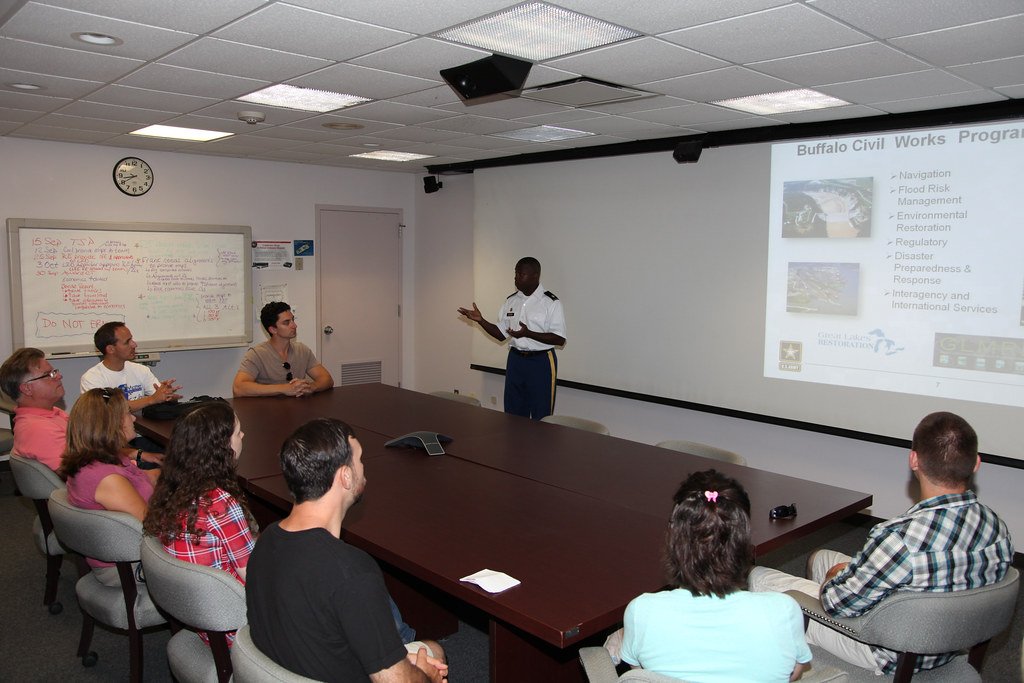
Here’s something that might surprise you: We are the award-winning, most used, and most loved AI for educators in the world – now in nearly every U.S. school district and in 160 countries around the world. MagicSchool has quietly become the backbone of AI education, and chances are your child’s teacher is already using it.
Join over 5 million educators saving 7-10 hours each week using MagicSchool to help lesson plan, differentiate, write assessments, write IEPs, communicate clearly, and more while having a measurable impact on student outcomes. That’s not just impressive numbers – that’s teachers getting their lives back while still providing better education for students.
The platform isn’t trying to replace teachers; it’s trying to save them from drowning in paperwork. MagicSchool is built for educators, by educators, providing a genuine opportunity to reclaim valuable time for educators, combat burnout, and elevate the art of teaching. The go-to AI assistant for educators worldwide, designed to simplify teaching tasks, save time, and combat teacher burnout. Our intuitive interface and guided prompts make prep and planning faster than ever, giving you more time where it matters most—with your students.
Financial Management: AI Helping Schools Stretch Every Dollar
Most people don’t think about school budgets, but here’s the reality – every public school is trying to do more with less money. AI assists educational institutions in managing their finances by analyzing spending patterns, predicting future expenses and identifying cost-saving opportunities. Tools like Allovue help schools allocate resources more effectively and improve financial planning. It’s like having a financial advisor who never sleeps and can spot waste before it becomes a problem.
This technology can analyze years of spending data and identify patterns that humans would miss. Maybe the district always overspends on supplies in September, or certain schools consistently need more maintenance funding in winter months. AI can predict these needs and help administrators plan accordingly.
The result? More money stays in classrooms instead of getting lost to inefficiency. While it’s not glamorous, this kind of AI application might be one of the most impactful – because every dollar saved is a dollar that can go toward books, field trips, or teacher salaries.
Smart Content Creation: Teachers Getting Superhuman Lesson Planning Powers

Smart Content Creation: AI aids instructors in the creation of digital lessons and study materials. Tools like Magic School AI and Eduaide.AI simplify lesson planning, create assessments, write individualized education plans (IEPs), and much more to modernize learning and streamline instruction. Imagine a teacher who needs to create 30 different versions of the same math worksheet to match 30 different learning levels – AI can do that in minutes.
This isn’t about making teaching easier; it’s about making teaching better. When teachers spend less time on repetitive tasks, they can focus on what humans do best – building relationships, inspiring curiosity, and adapting to what individual students need in the moment.
The technology can generate everything from quiz questions to entire unit plans, but it’s designed to work with teachers, not replace them. A teacher still decides what students need to learn and how to present it; AI just handles the time-consuming mechanics of creating all the materials.
Cybersecurity: Protecting Student Data in the Digital Age

With more schools going digital, cybersecurity has become critical. AI enhances the security of educational institutions by detecting and responding to cyber threats in real time. Tools like Darktrace use machine learning algorithms to identify unusual network activity, prevent data breaches and protect sensitive student information. It’s working 24/7 to keep student data safe from hackers who specifically target schools.
Schools are attractive targets for cybercriminals because they often have limited IT budgets but hold valuable personal information about students and families. AI security systems can spot threats that traditional security might miss – like subtle changes in network traffic that suggest someone is trying to steal data.
Think of it as having a digital security guard that never gets tired, never misses patterns, and can respond to threats in milliseconds. For schools that couldn’t afford a full-time cybersecurity team, AI provides enterprise-level protection at a fraction of the cost.
Personalized Learning: AI That Knows How Every Student Learns Best

AI personalizes learning by adapting educational content and experiences to better meet individual students’ needs and preferences. When you utilize AI in education, the AI systems leverage data analytics and machine learning to assess a student’s past academic performance and learning style. Based on this data, the system can adjust the difficulty level of assignments and tailor the content to match the student’s current skill level. If a student excels in a particular area, the system can provide more challenging material, and if they struggle, it can offer additional scaffolding.
For example, a teacher might use AI to easily create customized homework for a student to practice a concept they were struggling with in class. Teachers may also be using AI to allow a student who reads at a grade 4 level to access high school-level social studies content. It’s like having a learning system that automatically adjusts to help every student succeed, no matter where they’re starting from.
This technology recognizes that not all students learn the same way or at the same pace. Some kids need visual examples, others learn better through hands-on activities, and some need content broken down into smaller chunks. AI can provide all of these variations automatically, giving teachers the superpower of truly personalized instruction for every student in their classroom.
AI Tutoring Systems That Never Run Out of Patience
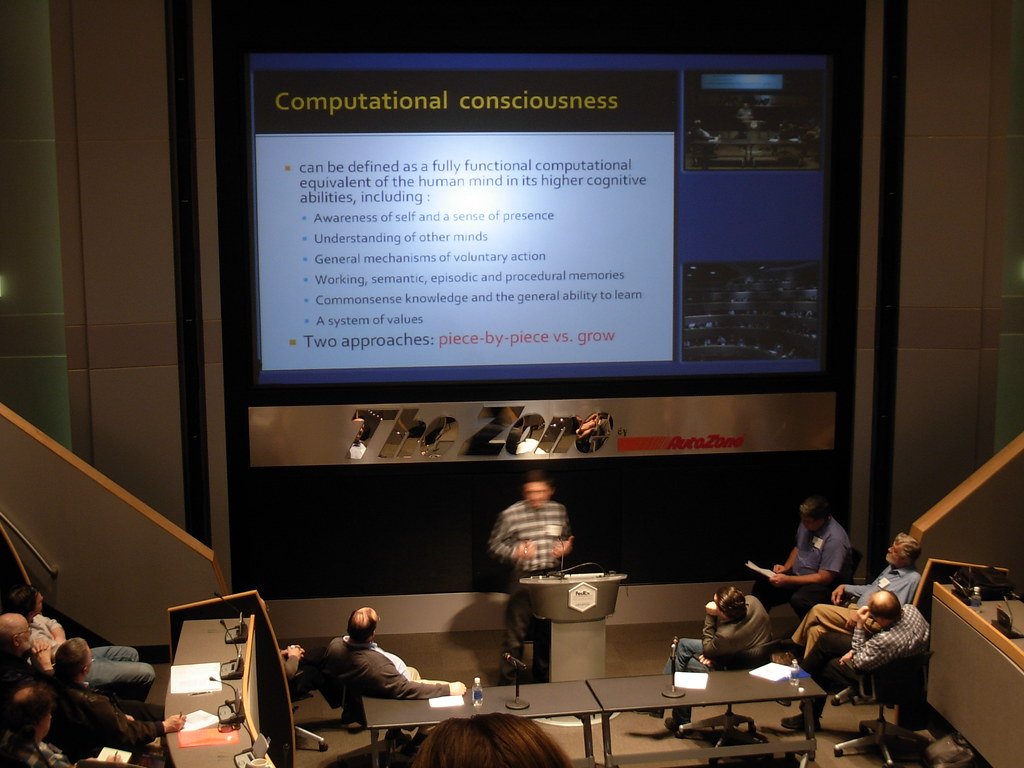
One trending application of AI in education is “study buddies” or “tutor bots.” Conversational AI assistants can give students who need one-on-one attention when they don’t have anyone to speak with. Chatbots are far more sophisticated than they have been in the past. They can answer student questions, analyze answers for accuracy, and even suggest improvements based on individual student’s data on past performance.
Virtual tutors can guide students to focus on the topics where they need the most assistance—and provide real-time feedback and support with natural-sounding language. Unlike human tutors who might get frustrated with repetitive questions, AI tutors have infinite patience and can explain concepts in dozens of different ways until something clicks.
The beauty of AI tutoring is that it’s available whenever students need help – during homework time, late at night before a test, or when they’re reviewing concepts they didn’t understand in class. It’s like having a knowledgeable, patient tutor who’s always ready to help, no matter how many times you need to ask the same question.
Enhanced Online Learning: Making Virtual Classrooms Actually Work

Enhanced Online Discussion Boards: AI enhances online discussion boards by moderating content, facilitating discussions and providing personalized feedback. Tools like Packback use AI to encourage critical thinking and engagement in online forums, creating a more dynamic and interactive learning environment. For students who struggle to participate in face-to-face discussions, AI-enhanced online platforms can be a game-changer.
The technology doesn’t just moderate content; it actively encourages deeper thinking. If a student posts a surface-level response, the AI might ask follow-up questions to push them toward more critical analysis. It can identify when discussions are getting off-track and gently guide them back to the learning objectives.
This is particularly valuable for students who need more time to process information or who feel intimidated speaking up in traditional classroom settings. The AI creates a safe space for intellectual exploration where every student can participate at their own pace and comfort level.
Research and Data Analysis: Uncovering Hidden Patterns in Student Success

Academic Research: AI assists academic research by analyzing large datasets, identifying trends and generating insights. Tools like IBM Watson Discovery provide researchers with advanced analytics capabilities, helping them uncover new findings and accelerate the research process. Schools are sitting on mountains of data about what works and what doesn’t, but humans can’t process it all.
AI can analyze everything from test scores and attendance patterns to library checkout records and cafeteria choices to identify what factors contribute to student success. Maybe students who eat breakfast at school perform better in first period, or perhaps there’s a correlation between certain after-school activities and improved math scores.
These insights help schools make data-driven decisions about everything from scheduling to program funding. Instead of relying on hunches or tradition, administrators can use AI-powered research to understand what actually helps students succeed and allocate resources accordingly.
Breaking Down Barriers: AI Making Education Accessible for Everyone

Creating access for “students who might not be able to attend school due to illness” · Better serving “students who require learning at a different level or on a particular subject that isn’t available in their own school” – AI is quietly revolutionizing access to education for students who’ve traditionally been left behind.
Students with chronic illnesses can participate in classes through AI-powered virtual learning systems. Kids in rural schools can access advanced courses that their small districts can’t afford to offer. Students with learning disabilities can get content delivered in formats that work specifically for