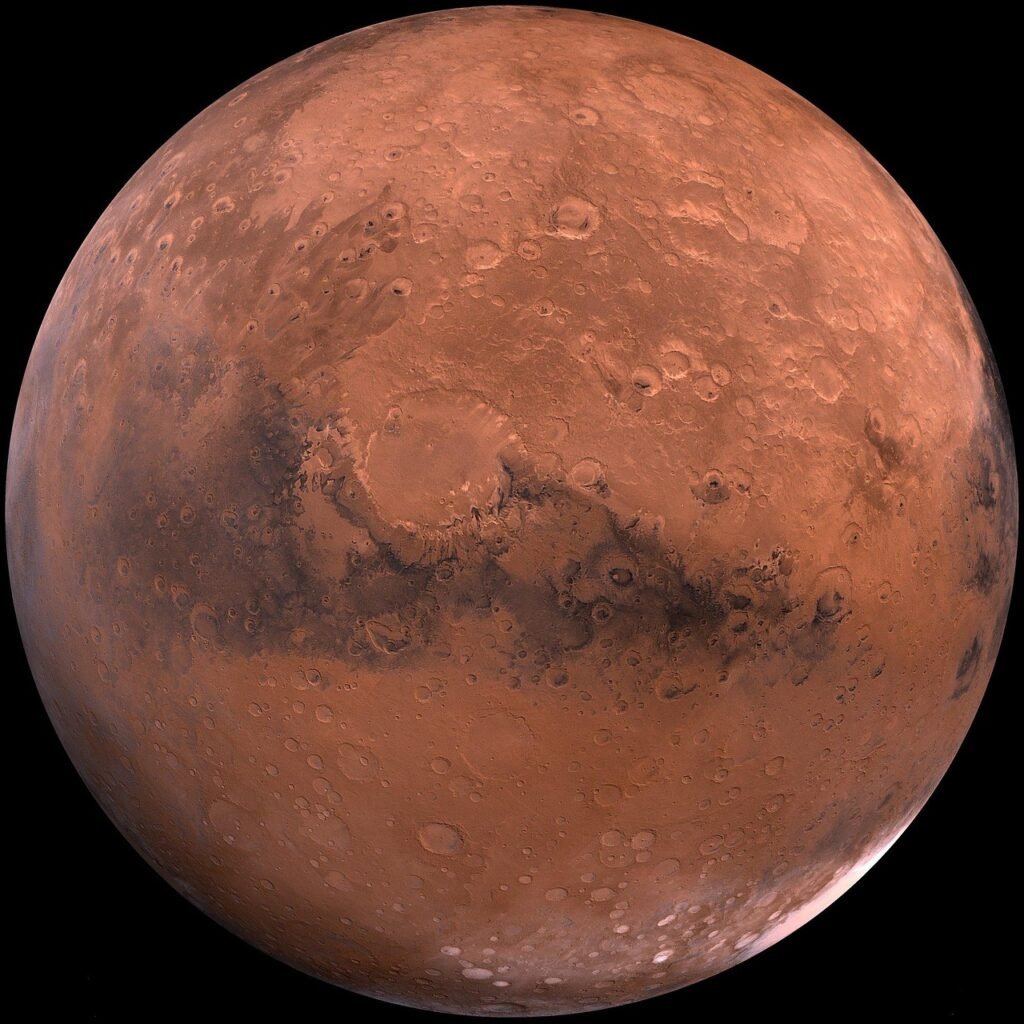

The rusty red sands of Mars stretch endlessly across our monitors, transmitted from rovers millions of miles away. For decades, we’ve sent robotic explorers to study our nearest planetary neighbor, hoping to find answers about the universe beyond Earth. What we’ve found instead is a collection of geological features that continue to baffle scientists and spark debates across the scientific community.
These aren’t just interesting rock formations or picturesque landscapes. Some of these discoveries challenge our fundamental understanding of planetary geology, forcing researchers to rethink theories that have held for generations. From bizarre spider patterns etched across polar ice caps to massive underground structures invisible to the naked eye, Mars keeps revealing secrets that don’t fit neatly into our textbooks. Let’s be real, the more we explore, the stranger it gets.
The Enigmatic Spider Terrain of the South Pole
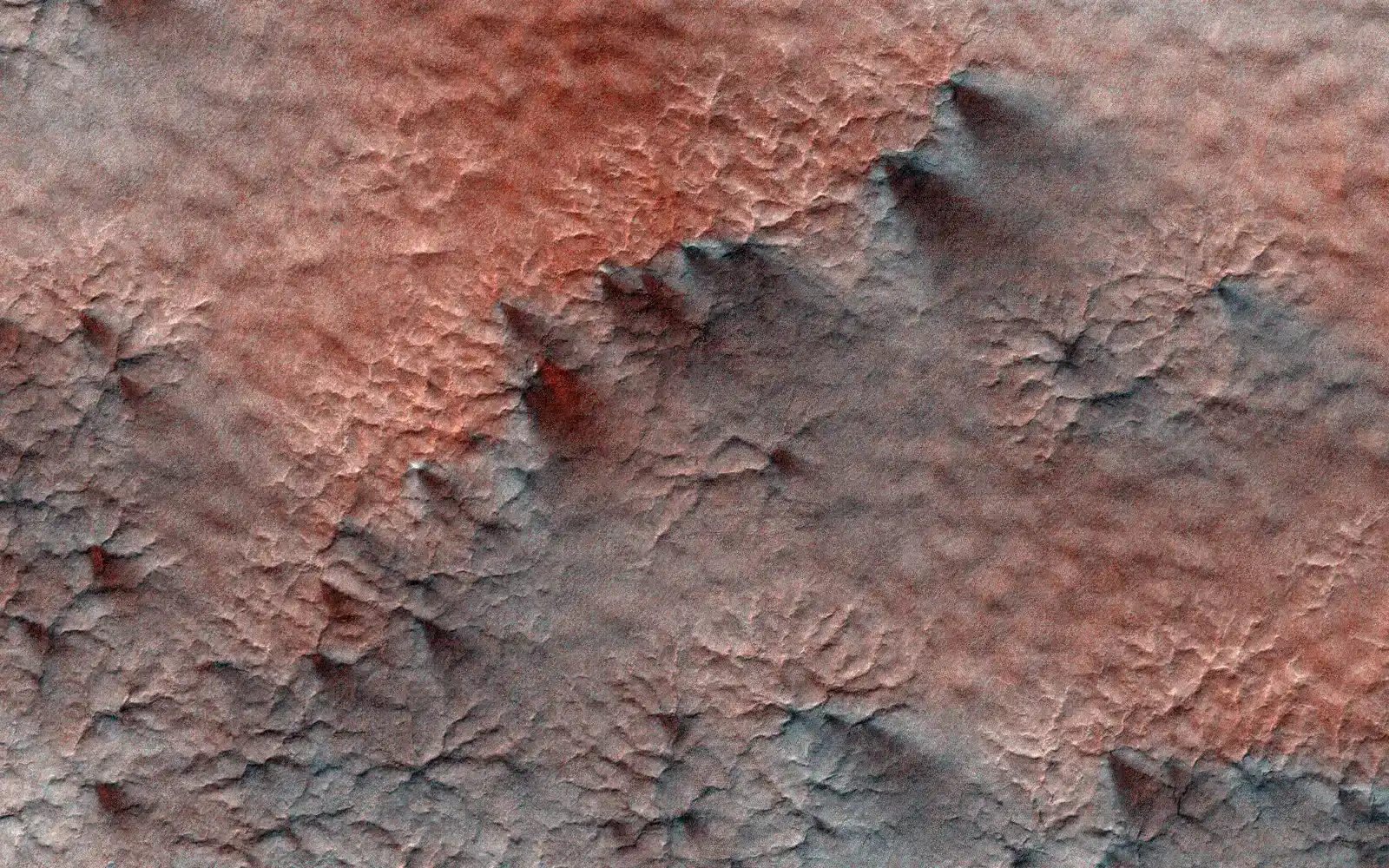
Scattered across the southern polar region, scientists have identified strange, spider-like formations, massive dark splotches, and high-velocity geysers erupting from beneath the surface – features unlike anything found on Earth. Lauren McKeown, a planetary scientist at NASA’s Jet Propulsion Laboratory (JPL), describes these formations as some of the most peculiar features ever observed on another planet. The formations look like massive spiders crawling across the frozen landscape, some spanning hundreds of meters.
Unlike anything found on Earth, these features form when a thick slab of CO2 ice builds up during the Martian winter, sealing off gas beneath the surface. As spring sunlight penetrates the ice, it warms the ground underneath, causing the trapped CO2 to sublimate (turn directly from solid to gas). The gas builds up pressure beneath the ice until it ruptures, shooting sand and dust into the air in violent jet-like eruptions. These patterns appear year after year in the same locations, suggesting a seasonal cycle we’ve never witnessed on any other world.
You’d think frozen carbon dioxide would behave predictably, but Mars always has other ideas. As temperatures rise during the Martian spring, CO2 trapped beneath the surface is violently released, carving out eerie, web-like channels and sending bursts of dark material across the planet’s icy surface. For now, the mysterious alien landscapes of Mars continue to challenge our understanding of planetary geology, showing that the Red Planet is far more dynamic than we ever imagined.
The Mysterious Gullies Carved by Dry Ice
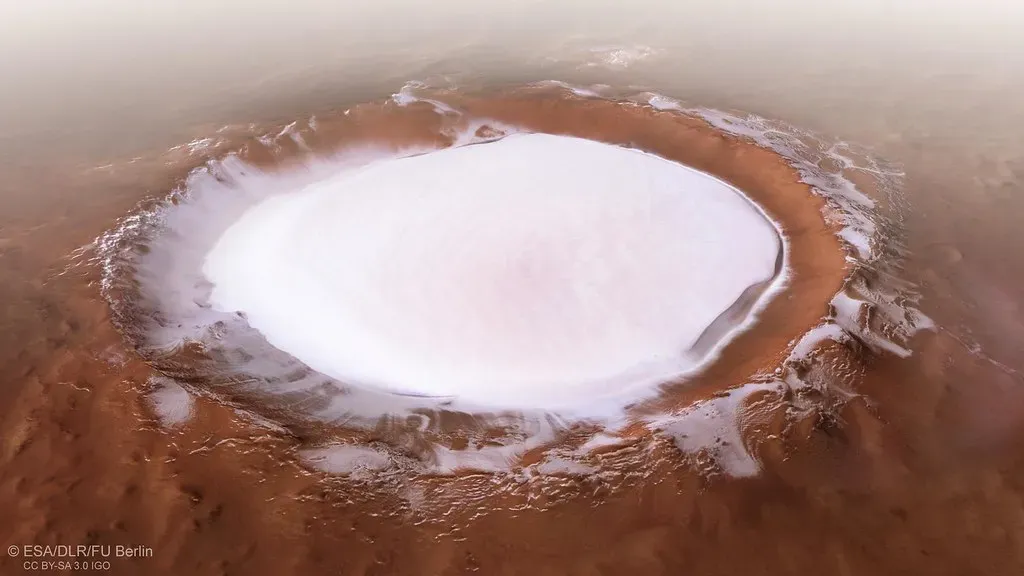
When NASA’s rovers first spotted the gullies on Mars, they were immediately linked to water. The winding tracks carved into the dunes looked strikingly similar to riverbeds, leading researchers to speculate that they were shaped by flowing water. That seemed like the obvious answer at first. Honestly, who wouldn’t look at those channels and think of flowing streams? The problem is that Mars is cold, bitterly cold, with temperatures plummeting to minus 190 degrees Fahrenheit during winter.
While the Martian surface remains cold and barren, it turns out that carbon dioxide ice – dry ice – may be the driving force behind these alien landforms. Recent laboratory experiments have confirmed this wild hypothesis. By simulating these conditions in a sealed “Mars chamber” at the Open University in Milton Keynes, UK, Roelofs and her team were able to reproduce the same phenomenon. The results were clear: dry ice blocks, when released on slopes with the right angle, began to carve deep trenches into the sand.
As the solid CO2 turns to gas, it doesn’t just evaporate – it builds up pressure underneath the ice, creating a kind of explosive force. This force causes the dry ice blocks to slide down the slopes of dunes, carving a path through the sand as they go. The researchers watched in amazement as blocks of dry ice essentially burrowed through sand like some kind of frozen mole. It’s hard to say for sure, but this process might also be creating features elsewhere on the planet that we haven’t even recognized yet.
The Colossal Underground Mass Beneath Tharsis Montes
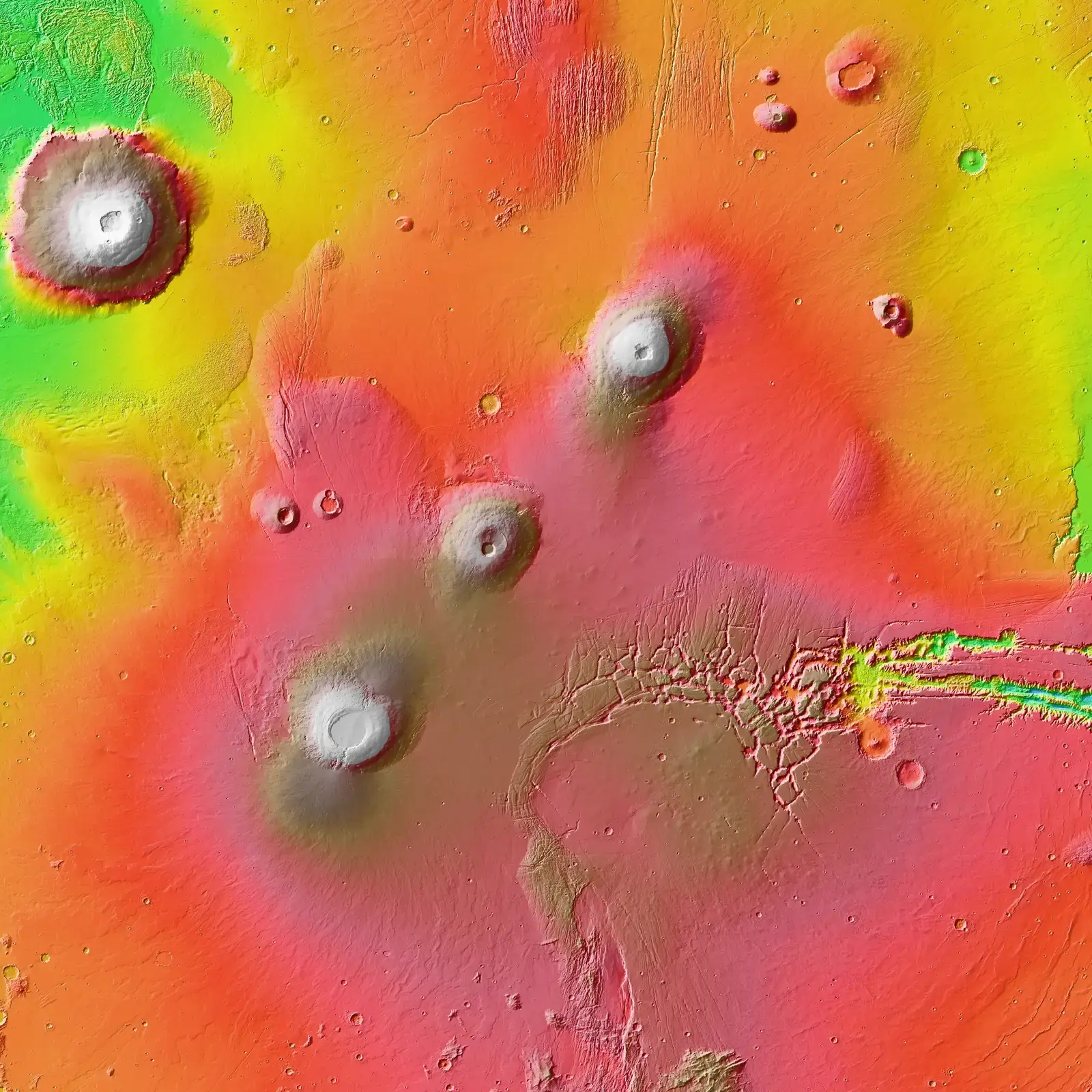
Researchers have identified a colossal underground feature spanning approximately 1,750 kilometers (1,000 miles) in diameter at a depth of 1,100 kilometers (684 miles). This anomaly lies beneath the Tharsis Montes, home to Olympus Mons, the largest volcano in the solar system. The team, led by Bart Root of the Delft University of Technology, suggests the structure may be a mantle plume – a vast upwelling of material from deep within Mars. We’re talking about a mass roughly the size of several western European countries, hiding beneath the surface.
The discovery contradicts the principle of flexural isostasy, which states that heavy loads on the lithosphere cause it to sink. Instead, the Tharsis Montes region is elevated, indicating that the massive underground structure is pushing it upward. This challenges existing geological models and suggests that Mars’ lithosphere behaves differently than previously thought. For geologists, this is like discovering gravity works backward in your backyard.
In addition to the dense structures, this revealed another subterranean secret: the Martian mantle appears to still play host to active processes which may be feeding into Olympus Mons, the largest known volcano in the Solar System. The evidence for this, according to the work, was the detection of another gravitational anomaly below a volcanic plateau called Tharsis Rise – where Olympus Mons resides – which indicates that this incredibly dense region is undergirded by a much lighter mass nearly 700 miles underground. Root suggests that this could be an enormous plume of magma around 1,000 miles across in the Martian mantle, which may be in the process of slowly bubbling towards the surface. Could Mars experience future volcanic eruptions? The implications are staggering.
Twenty Dense Structures Hidden Beneath an Ancient Ocean
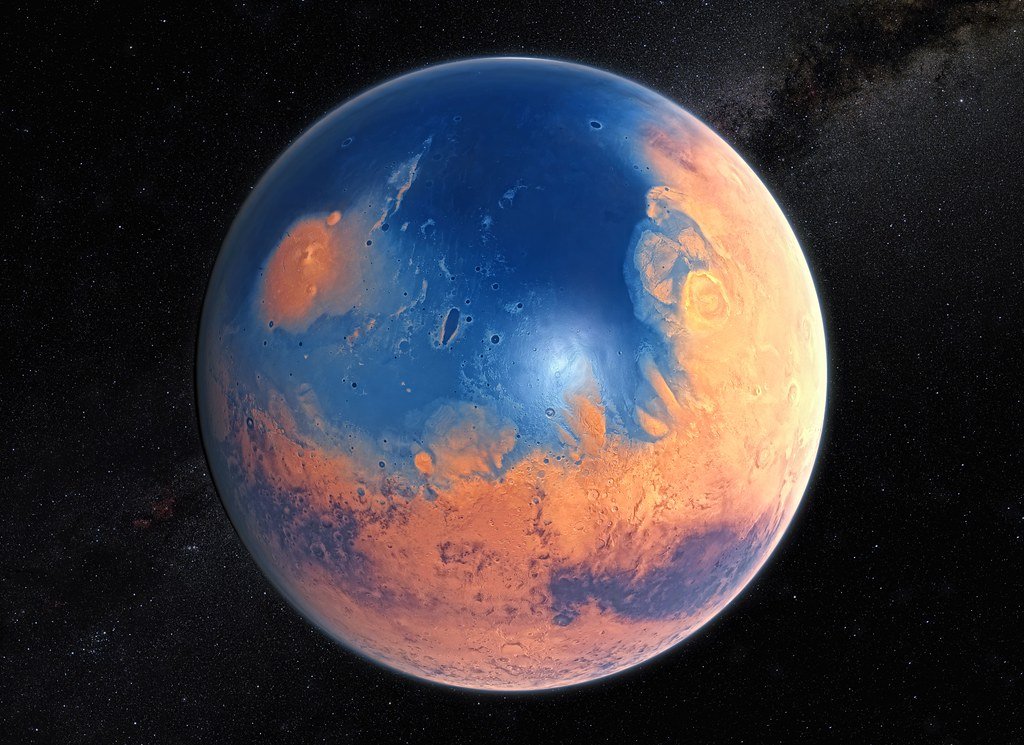
Dutch researchers have found evidence of approximately 20 mysterious, large-scale structures hidden beneath the sediment of an ancient lost ocean on Mars. The team also reports the discovery of evidence that an active Martian crust is pushing against Olympus Mons, elevating the solar system’s largest volcano. These aren’t just small oddities. According to the researchers, these large-scale mysterious structures are approximately 300-400 kg/m3 denser than their surroundings. The structures are not visible from the surface but instead appear to have been buried in the planet’s ancient past beneath the remnants of a large ocean.
They found mysterious, dense structures under Mars’ northern polar plains. They’re buried under a thick, smooth sediment layer that was likely deposited on an ancient seabed. The anomalies are approximately 300–400 kg/m3 denser than their surroundings. What exactly are these things? These dense structures could be volcanic in origin or could be compacted material due to ancient impacts. There are around 20 features of varying sizes that we have identified dotted around the area surrounding the north polar cap – one of which resembles the shape of a dog.
One of them literally looks like a dog when mapped through gravitational data, complete with tail and ears. It’s a bizarre coincidence that highlights just how strange these formations truly are. There seems to be no trace of them at the surface. However, through gravity data, we have a tantalizing glimpse into the older history of the northern hemisphere of Mars. These hidden masses could be volcanic roots, meteor impact remnants, or something entirely different that we haven’t even considered yet.
The Taffy Terrain of Hellas Basin
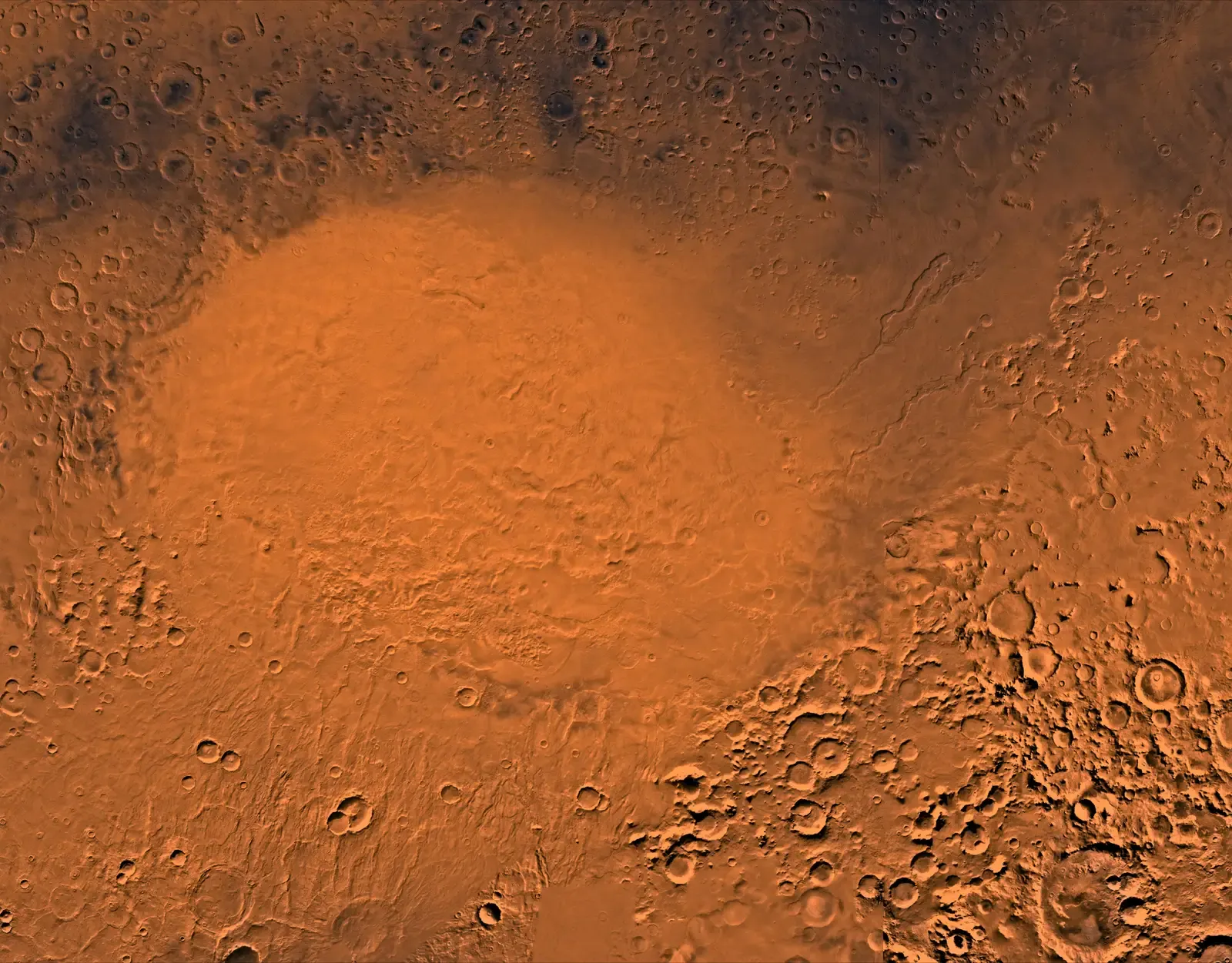
This complex terrain, consisting of swirling layers with variably sized bands, is present mostly at the bottom of Hellas Basin, but versions of it can also be found on the floor of Melas Chasma and in the Medusae Fossae Formation near Apollinaris Sulci. While little has been written about the taffy terrain, hypotheses include “glacial features” and salt domes. The taffy terrain bears some resemblance to submarine salt domes in the Gulf of Mexico, glacial deposits with mixed ash and ice in Iceland, or chalk formations in Egypt’s White Desert. It’s as if someone took layers of rock and twisted them like ribbons of candy.
Here’s the thing, though. No one can definitively explain how these swirling patterns formed. The resemblance to Earth formations is tantalizing, yet the Martian environment is so vastly different that drawing direct comparisons feels inadequate. Were they created by ancient glaciers grinding through layers of rock and ice? Did underground salt deposits push upward and deform the surface? Or is this evidence of water processes we haven’t yet understood?
The published literature tends to focus on regions of Mars for which there are ready explanations; however, many regions of Mars remain mysterious. The taffy terrain is one of those areas scientists prefer not to discuss too loudly at conferences, precisely because it doesn’t fit neatly into any established geological framework. It’s sitting there at the bottom of one of the largest impact basins in the solar system, mocking our attempts to categorize it.
The Boxwork Ridges and Mysterious Honeycomb Terrain
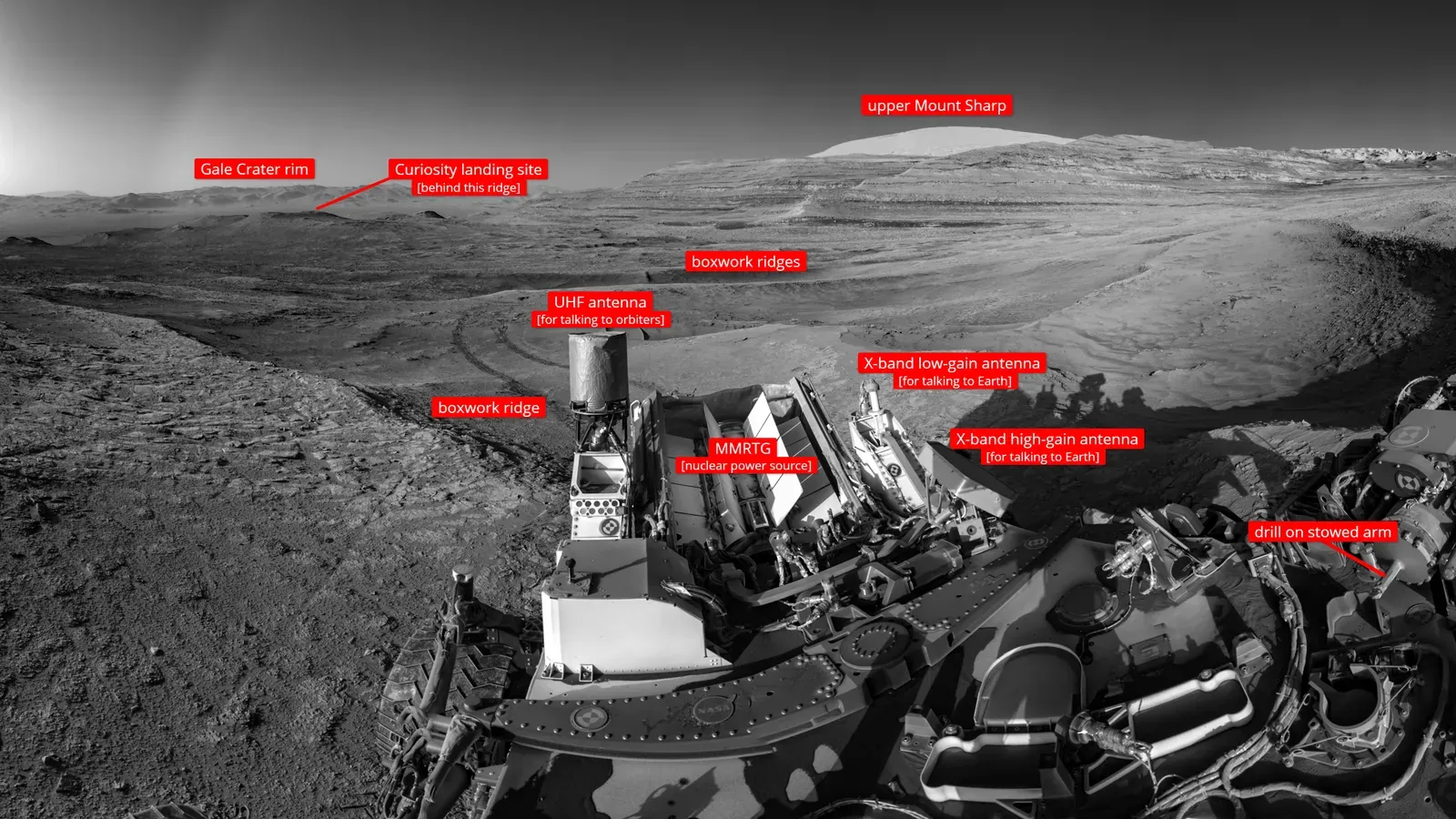
Curiosity is in the midst of the boxwork campaign, trying to decipher why we see such pronounced ridges and hollows in this area of Mount Sharp. When this terrain was first identified from orbit it was hypothesized that the ridges may be the result of cementation by circulating fluids, followed by differential erosion of the less resistant bedrock in between (the hollows that we now observe). The patterns look architectural, almost deliberately constructed with geometric precision that seems too perfect for natural processes.
Of eerie beauty are odd arrangements visible on the bottom of the Hellas Impact basin. We are not sure exactly what caused them. They have been called honeycomb terrain or banded terrain. Honeycomb terrain on floor of Hellas Basin The exact origin of these shapes is unknown at present. You’ve got these hexagonal and polygonal patterns sprawling across ancient surfaces, looking for all the world like tiling on some cosmic bathroom floor. Scientists have thrown out theories ranging from thermal contraction to groundwater percolation, but nothing fully explains the precision and scale.
Also a part of the Medusae Fossae Formation, the ridges in Gordii Dorsum represent a negative image of the fishscale terrain – a intricate lattice of slender black ridges. These are thought to form via the embayment of the fishscale terrain with lava and the subsequent erosion of the original mesas. It’s like looking at a photographic negative of another strange formation. Layers upon layers of geological processes have created patterns that challenge our ability to reconstruct Mars’s history. Did you expect that? What would you have guessed was creating these formations before reading this?
Conclusion
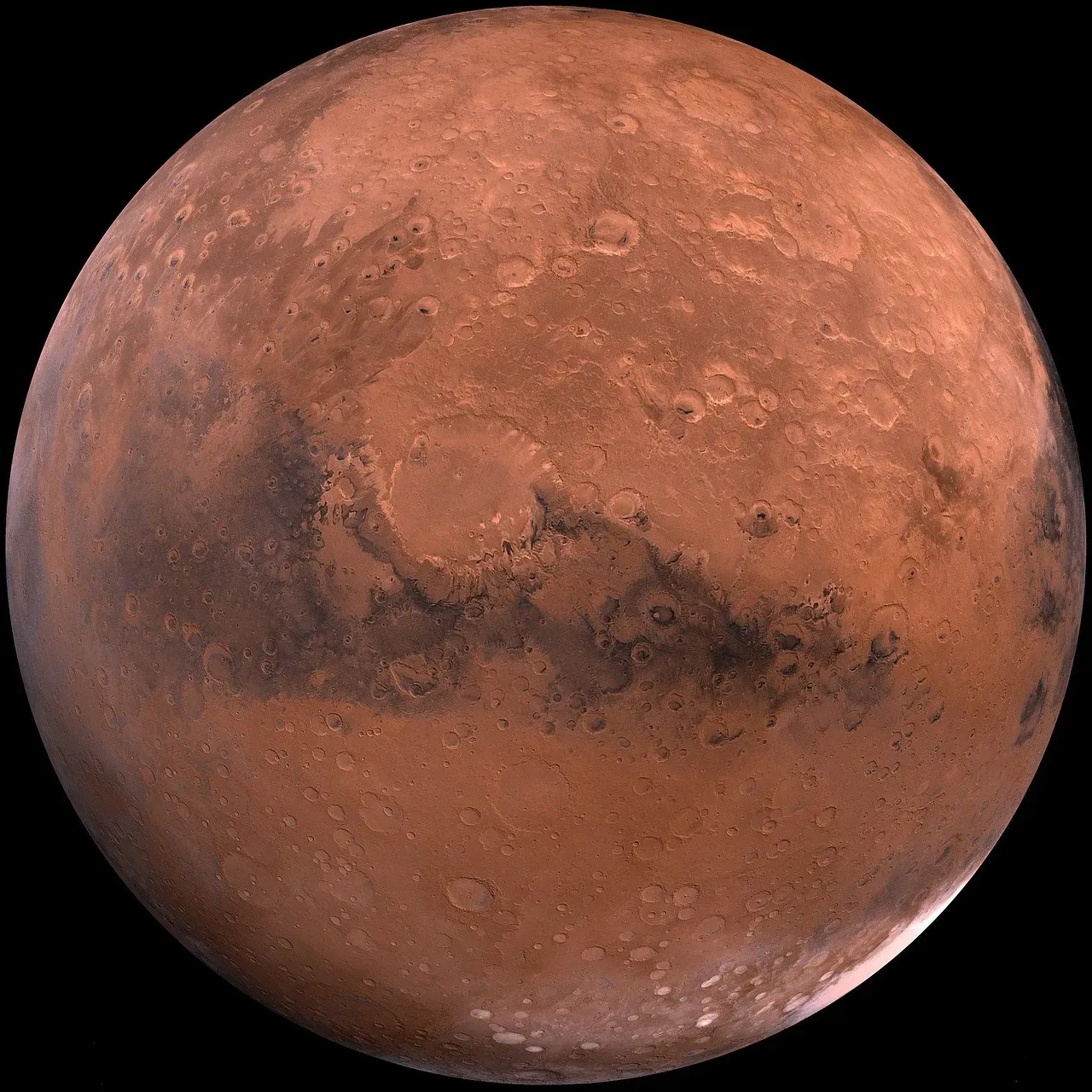
Mars continues to surprise us at every turn. Each new image transmitted from our robotic explorers reveals features that don’t quite make sense, formations that force planetary geologists to question assumptions they thought were settled science. From spider patterns etched by exploding carbon dioxide to massive underground structures invisible from the surface, the Red Planet is anything but the dead, static world we once imagined.
The formations we’ve explored here represent only a fraction of the mysteries waiting beneath Martian dust and ice. As missions like the proposed Martian Quantum Gravity expedition move forward, we’ll likely uncover even stranger features lurking in the planet’s interior. These geological puzzles aren’t just academic curiosities. They hold clues to Mars’s past climate, its potential to harbor life, and perhaps most importantly, what future explorers might encounter when humans finally set foot on that rust-colored soil.
What’s your take on these strange Martian mysteries? Do you think we’ll find explanations that fit neatly into existing geological theories, or is Mars going to keep rewriting the textbooks? Tell us in the comments.
Jan loves Wildlife and Animals and is one of the founders of Animals Around The Globe. He holds an MSc in Finance & Economics and is a passionate PADI Open Water Diver. His favorite animals are Mountain Gorillas, Tigers, and Great White Sharks. He lived in South Africa, Germany, the USA, Ireland, Italy, China, and Australia. Before AATG, Jan worked for Google, Axel Springer, BMW and others.