
There are places in the United States where the ground under your feet feels almost unreal, as if you’ve stepped onto another planet. Towering stone cathedrals, yawning canyons, bubbling hot springs, and bizarre rock forests quietly tell stories that began hundreds of millions of years ago. You don’t need to be a geologist to feel a jolt of awe when you stand in front of them; your brain just goes a little quiet and your jaw does the rest.
I still remember the first time I stared over the edge of a vast canyon in the desert Southwest. I wasn’t thinking about plate tectonics or erosion. My only thought was something like: “How is this even real?” These six geological wonders across the US have that same effect. They’re not just scenic postcards; they’re massive, living timelines carved into the planet itself, and once you see them, it’s hard to look at an ordinary hill the same way again.
1. Grand Canyon, Arizona – A Mile-Deep Time Machine
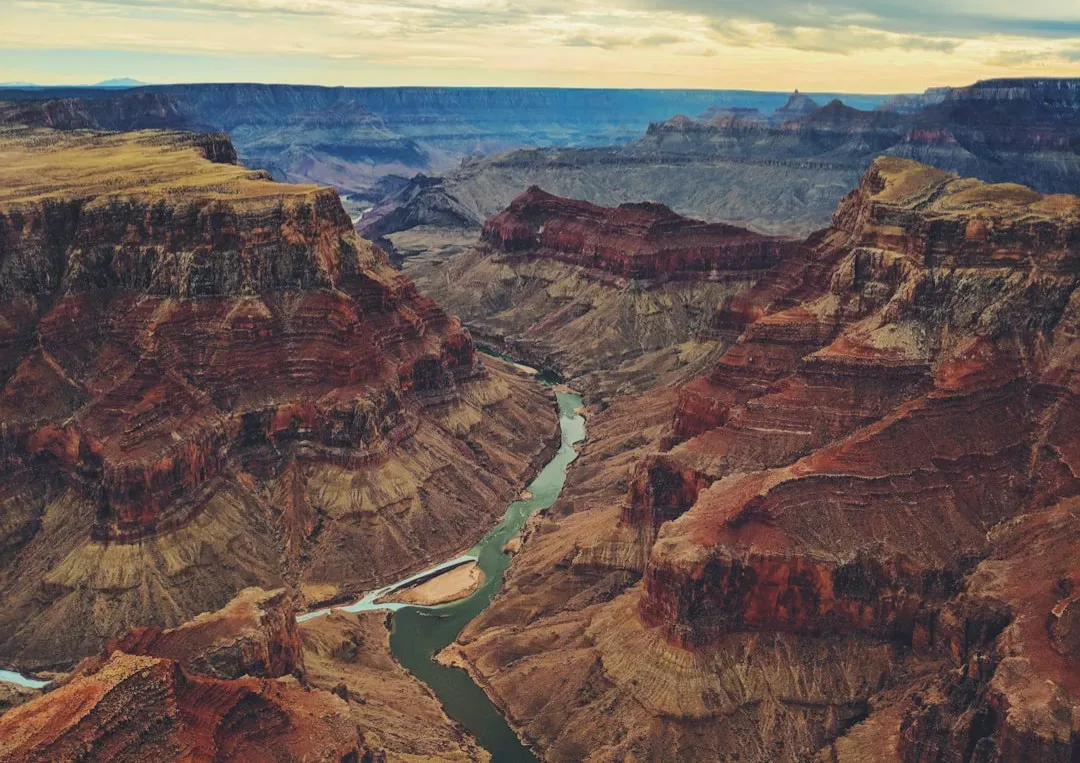
Stand on the rim of the Grand Canyon and you’re looking down through nearly two billion years of Earth’s history, stacked layer upon layer like a gigantic, ripped-open history book. The canyon is roughly a mile deep in places and stretches for hundreds of miles, but it’s the exposed stripes of red, orange, and tan rock that really hit you. Each band formed in a different era, from ancient shallow seas to desert dunes, all sliced open by the relentless Colorado River.
What feels almost shocking is how something as “soft” as water did all this. Over countless millennia, the Colorado River didn’t rush; it persisted, slowly carving deeper as the Colorado Plateau lifted upward. Today, when you watch that same river glinting far below, it looks quiet, almost harmless, like a thin ribbon. Yet it’s the sculptor behind this enormous wound in the continent, quietly reminding you that small forces, given enough time, can remake the world.
2. Yellowstone, Wyoming – A Supervolcano Hiding in Plain Sight
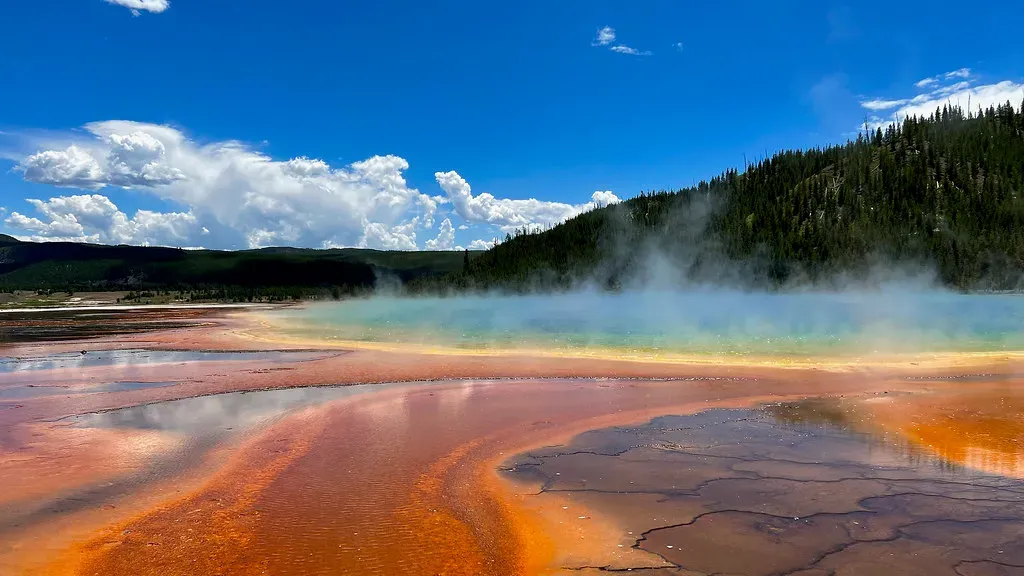
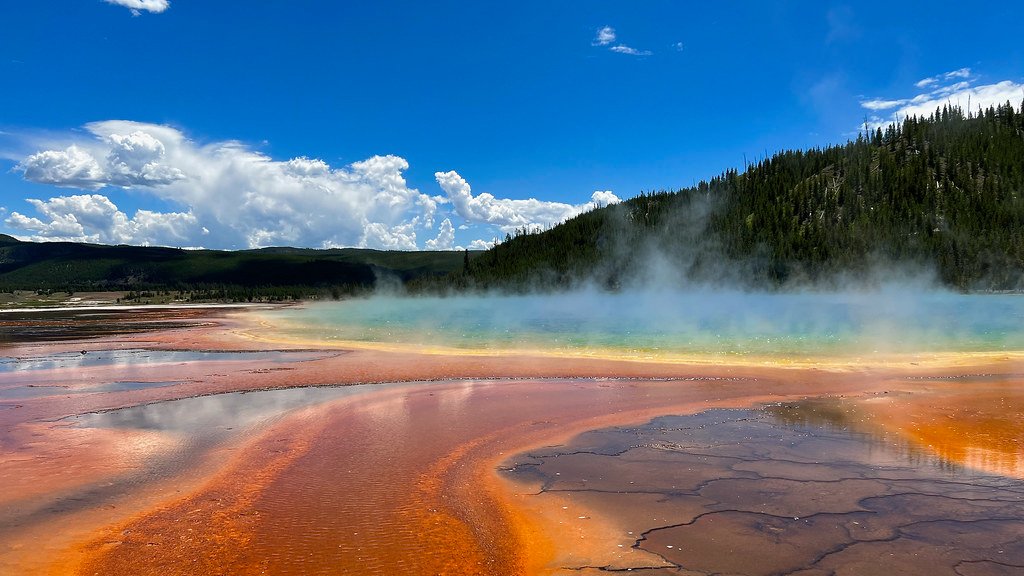
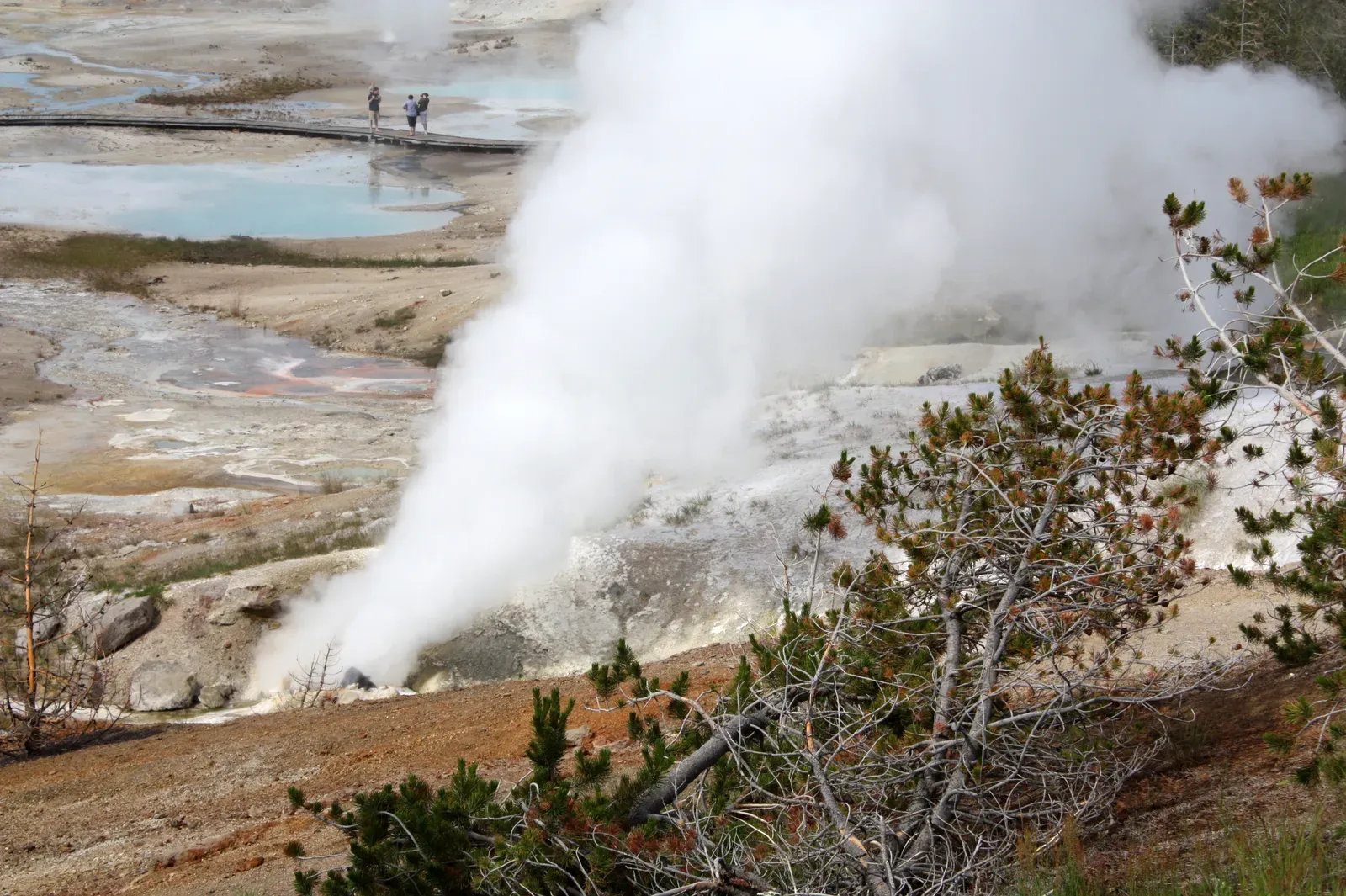
Yellowstone might look like a beautiful high-altitude park of forests, rivers, and bison, but underneath lies one of the most powerful volcano systems on Earth. The colorful hot springs, roaring geysers, and steaming vents are not random tourist attractions; they’re symptoms of a colossal magma chamber simmering below the surface. Places like the Grand Prismatic Spring, with its vivid rings of blue, green, and orange, feel almost alien, more like a fantasy novel than a national park.
Scientists monitor Yellowstone constantly because it isn’t just another volcano; it’s a supervolcano capable of eruptions on a scale that would transform climates and landscapes across continents. That doesn’t mean it’s about to explode tomorrow, but the very idea that you can casually walk over a thin crust above such power is unsettling and mesmerizing. Every boiling pool and gushing geyser is like a little pressure valve, hinting at the immense heat and instability lurking just below your hiking boots.
3. Yosemite Valley, California – Granite Sculpted by Ice
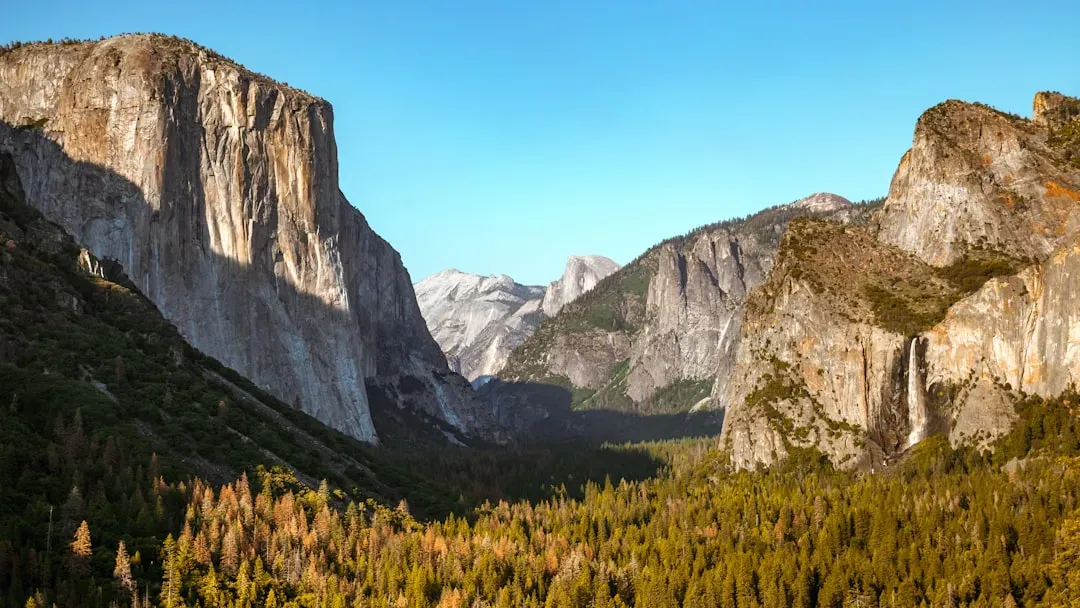
Yosemite Valley looks like something a painter with a dramatic streak dreamed up: vertical granite walls, a flat green floor, and waterfalls plunging in silver ribbons from dizzying heights. Yet this landscape wasn’t created in some sudden catastrophe; it was slowly carved by ancient glaciers grinding through the Sierra Nevada. When you stare at El Capitan’s sheer face or Half Dome’s sliced-off profile, you’re looking at the scars left behind when thousands of feet of ice bulldozed its way through solid rock.
Granite, one of the hardest rocks around, doesn’t give in easily. But over long stretches of time, glaciers work like sandpaper the size of cities, plucking chunks of rock and polishing the rest into smooth, sweeping cliffs. I remember standing in the middle of the valley, tilting my head back until my neck protested, and realizing that this grand scene was basically the result of ice acting like a slow-motion sculptor. It’s humbling to think that something as simple as frozen water can remake a mountain range when given enough time.
4. Bryce Canyon, Utah – A Forest of Stone Hoodoos
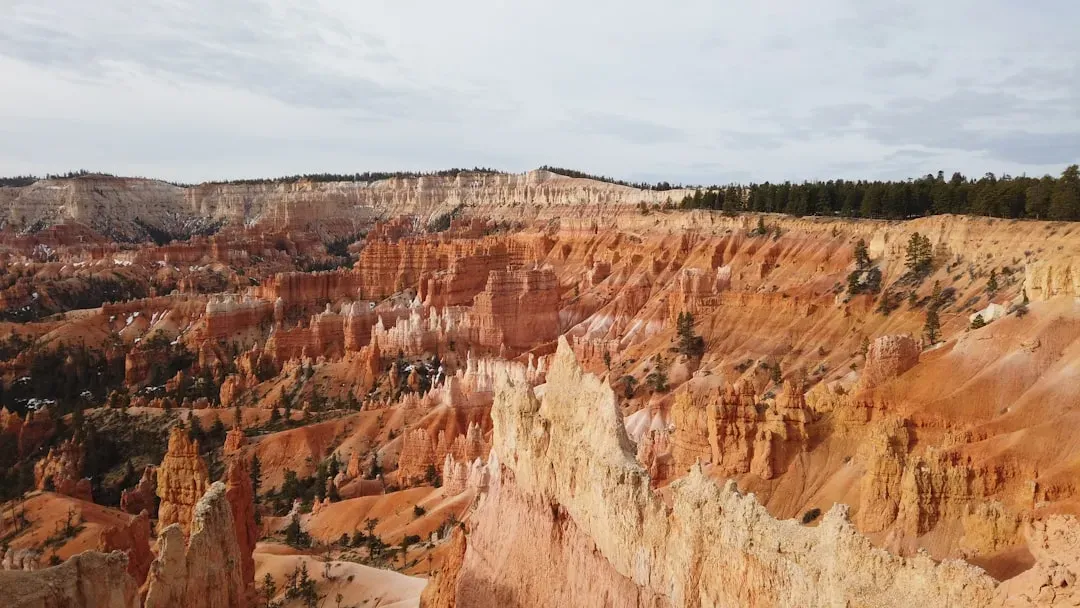
Bryce Canyon isn’t really a canyon at all; it’s a series of natural amphitheaters filled with thousands of strange rock spires called hoodoos. These thin, jagged towers of red, orange, and pink limestone stand shoulder-to-shoulder like an enormous stone crowd, each one wearing a slightly different cap or shape. From the rim, the scene looks like a frozen alien city, as if someone turned a forest of flames into rock mid-spark.
The magic behind Bryce is a mix of freezing nights, thawing days, and delicate rock. Water seeps into tiny cracks, freezes, expands, and slowly pries pieces apart, while rain washes everything downward. Over time, softer rock erodes away faster, leaving behind more resistant columns that become the hoodoos. Walking among them feels strangely intimate; you wander narrow paths between towering spires and realize that every curve, notch, and ledge is a record of countless freeze–thaw cycles. It’s destruction and creation happening at the same time, just in a tempo too slow for the human eye.
5. Hawaii Volcanoes, Hawaii – New Land in the Making
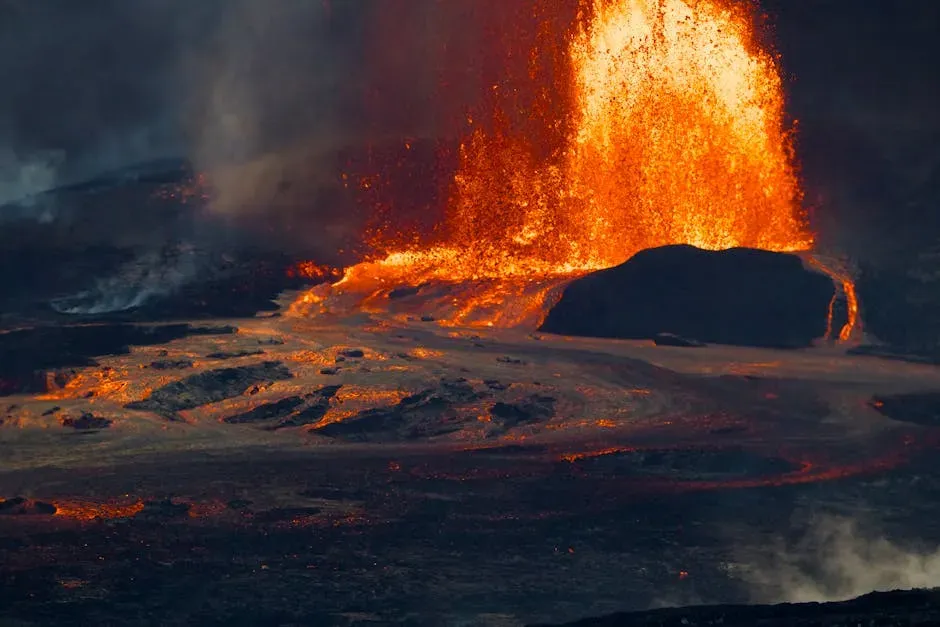
On Hawaiʻi’s Big Island, you can watch the Earth literally building itself in real time. The volcanoes Kīlauea and Mauna Loa sit along a hot spot in the Earth’s mantle, where magma rises up and spills onto the surface, creating new rock and, eventually, new land. Fresh lava fields look like still-black oceans frozen in mid-wave, with twisted, ropey textures and jagged shards that feel almost too sharp and fragile to be stone.
When lava flows reach the ocean, they hiss, crackle, and belch steam, solidifying as they meet the waves and slowly extend the shoreline. It’s dramatic, but it’s also how the Hawaiian Islands formed in the first place: layer after layer of erupted lava building up from the seafloor over millions of years. Standing on the cooled crust, you’re aware that it might be younger than you are, which is a deeply weird feeling. This isn’t ancient geology; it’s geology in progress, where every new eruption redraws the map and reminds you the planet is still very much alive.
6. Mammoth Cave, Kentucky – A Hidden Underground World
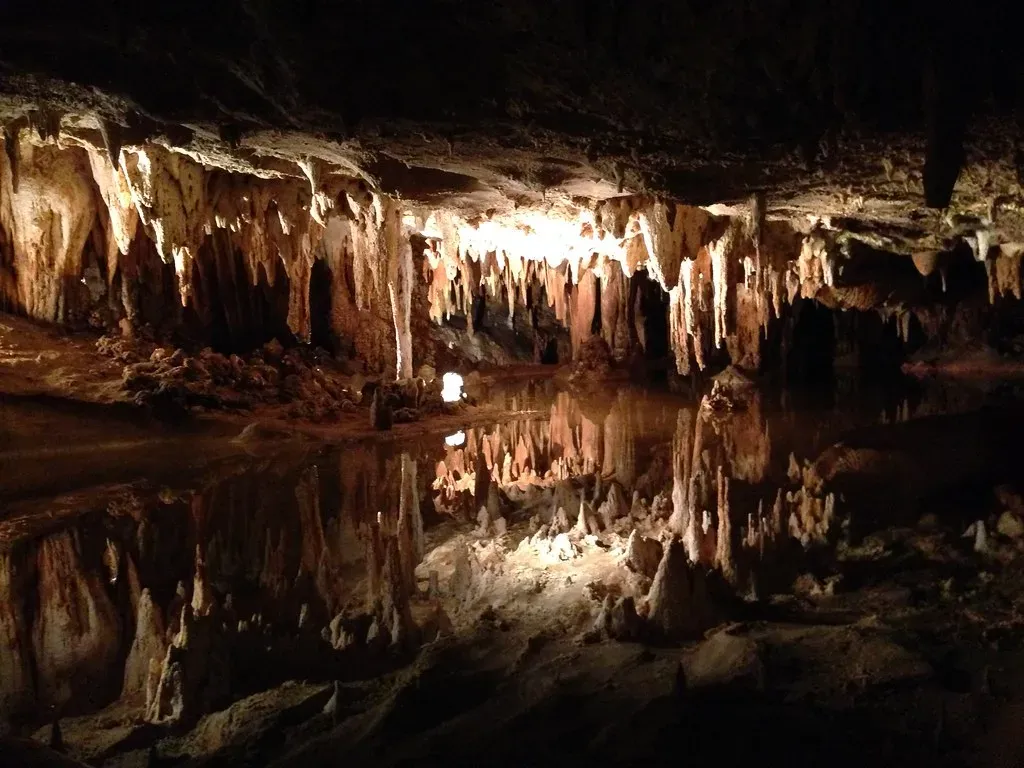
From the surface, Mammoth Cave National Park looks like gentle hills, forests, and winding country roads. What you don’t see is the enormous underground labyrinth beneath your feet: the world’s longest known cave system, with hundreds of miles of explored passageways and many more likely still undiscovered. The sheer scale is difficult to grasp until you walk into a massive chamber lit just enough to see the ceiling vanish into darkness and corridors branching off like underground rivers of stone.
The cave formed in thick layers of limestone, slowly dissolved by slightly acidic groundwater that seeped through cracks and widened them into tunnels and rooms. Inside, delicate formations like stalactites and stalagmites grow drip by drip, adding millimeters over centuries as minerals precipitate from water. It feels like walking inside the Earth’s slowest art studio, where gravity and chemistry collaborate quietly in the dark. Above, life goes on almost unaware, while beneath, this vast secret world continues to stretch and reshape itself grain by grain.
Conclusion – A Living, Breathing Planet Beneath Our Feet
These six geological marvels might seem wildly different on the surface, from lava-soaked coasts to icy-sculpted valleys and underground mazes. But they’re all proof that the Earth isn’t a static stage set; it’s an active, restless system, constantly building, breaking, and reshaping itself. Standing in front of them, you’re not just sightseeing, you’re glimpsing processes that span lifetimes, civilizations, and entire eras.
Once you’ve watched steam rise from a supervolcano, traced rock layers older than life as we know it, or walked through a cave hallway carved by invisible water, everyday landscapes start to look different. A hill is no longer just a hill; it’s a clue, a leftover, a half-finished sentence in a story that began long before you. And it makes you wonder: if this is what we can see today, how much more is the planet quietly working on right now, far beyond what we can imagine?