
If you’ve ever stared at your ceiling at 3 a.m. wondering why your brain won’t shut up, you’ve already bumped into one of science’s biggest everyday mysteries. For all our rockets, quantum theories, and AI models, there are things we live with daily that researchers still can’t fully explain. Not fringe stuff, not sci‑fi scenarios – just normal, routine experiences that quietly defy complete understanding.
What makes these mysteries so gripping is that they sit right in front of us. We yawn, dream, forget names, and fall in love, and behind each of those ordinary moments is a tangle of unanswered questions. We often imagine science as this finished book of answers, but in reality it’s more like a notebook full of scribbles, crossed‑out ideas, and half‑solved puzzles. Let’s walk through six of the most surprising everyday phenomena that still keep scientists scratching their heads.
The Strange Contagion of Yawning

Next time you catch yourself yawning just because someone else did, remember: nobody really knows why that happens. Scientists can describe what a yawn is – deep inhalation, stretch of facial muscles, quick boost in arousal – but the deeper question of why yawns are contagious is still wide open. Even seeing a picture of someone yawning, or sometimes just reading the word, can trigger it, which is weirdly powerful for such a simple reflex. Some theories link it to empathy and social bonding, noticing that contagious yawning appears more often among people who are close.
Other researchers have suggested it might help synchronize group behavior, like a flock of birds suddenly changing direction, but nothing has been conclusively proven. The oddest part is that contagious yawning is not universal: not everyone experiences it, and young children often do not, which complicates tidy explanations. I’ve noticed that when I’m exhausted in a boring meeting, one person’s yawn can turn into a slow-motion wave across the room, like a silent, shared protest. For something we all do multiple times a day, it’s surprising how much is still guesswork.
The Baffling Nature of Consciousness
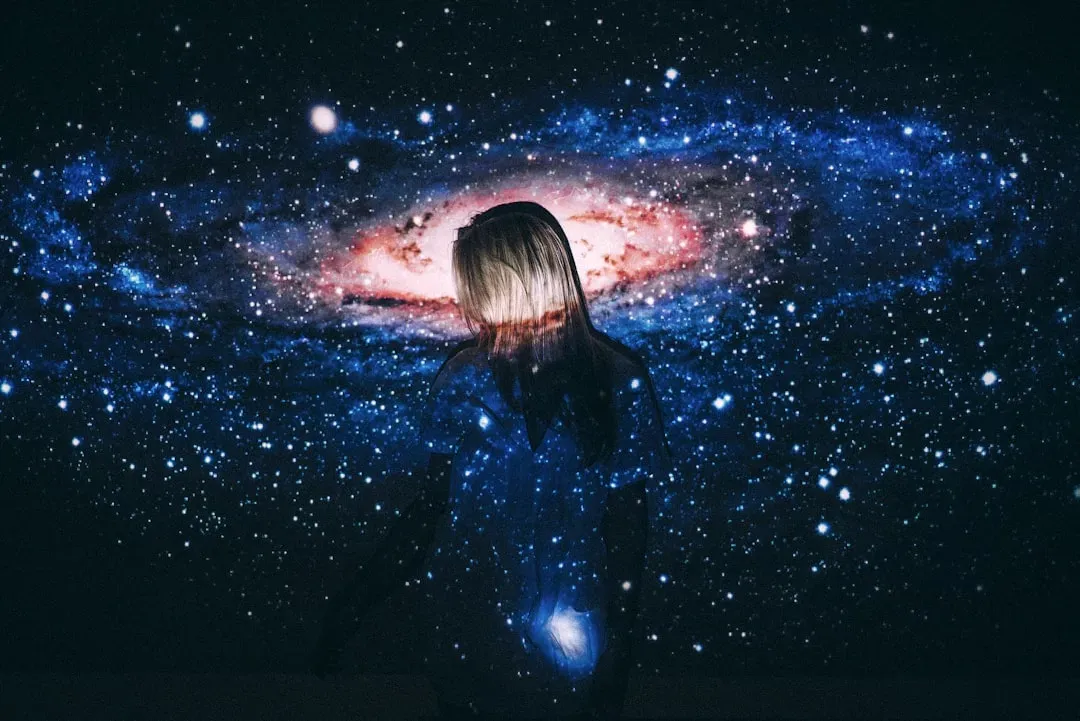
You wake up, you feel like “you,” and it seems so obvious that we barely question it – but consciousness is still one of the hardest problems in science. We know that brain cells fire, chemical signals travel, networks form and dissolve, yet how this electrical storm turns into the feeling of being aware is still not clear. Neuroscientists can map which regions light up during certain tasks, and they can measure when someone is likely conscious or unconscious. But why a lump of biological tissue produces subjective experience at all remains firmly in the realm of mystery.
Different theories compete: some argue consciousness emerges when information is integrated above a certain threshold, others think specific brain structures act as hubs, and some researchers even play with the idea that consciousness might be a more fundamental feature of reality. None of these ideas has landed a knockout punch. On a personal level, there’s something almost unsettling about realizing that no one can fully explain what it is that’s reading these words right now. We live inside this phenomenon every waking moment, and yet we still can’t quite pin down what it actually is.
Why We Sleep the Way We Do

We spend roughly about one third of our lives asleep, and still the full purpose of sleep is not completely nailed down. We know that sleep helps consolidate memories, clear metabolic waste from the brain, regulate hormones, and support the immune system. But those are pieces of the puzzle, not a final picture. The big question – why evolution shaped such a risky behavior where an organism is immobile and vulnerable for hours – is still debated. If sleep is so vital, why do different species show such wildly different sleep patterns?
Humans typically have a single long stretch of nighttime sleep, yet in history and some cultures, segmented sleep or daytime naps are common and sometimes even feel more natural. There are also people who seem to function unusually well on very little sleep, and science doesn’t fully understand how they manage it biologically. Personally, I’ve gone through periods of terrible insomnia where my body clearly wanted something my brain couldn’t quite deliver, like two systems talking past each other. For all the wearable trackers and sleep apps in the world, we’re still circling around the core, not standing on solid ground.
The Mystery of Memory: Why We Forget (and Misremember)

It feels like memory should be a simple recording device: you store an event, play it back later, done. Reality is more chaotic. Memories are reconstructed every time we retrieve them, and that rebuilding process changes them, sometimes in subtle but important ways. People can confidently recall details that never happened or misplace events in time, even without any intent to lie. Researchers know that the hippocampus and certain cortical regions are deeply involved in forming and stabilizing memories, yet the precise mechanics of long‑term storage and retrieval are still only partially understood.
What is even stranger is how selective and unpredictable memory can be. A random jingle from childhood can stick around forever, while the name of someone you met last week vanishes at the worst moment. Emotional events seem to burn themselves in more strongly, but those “flashbulb memories” are often just as prone to distortion. I still remember the layout of a friend’s childhood kitchen more clearly than some apartments I’ve lived in myself, and I couldn’t tell you exactly why that stuck. For something that shapes our identity so deeply, memory behaves more like a creative storyteller than an obedient file system.
Placebos and the Power of Belief

The placebo effect might be one of the most unsettling reminders that mind and body are tangled together in ways we don’t fully understand. When someone takes a sugar pill thinking it is medicine and then actually feels better, that’s not just imagination – it’s often accompanied by measurable changes in the body. Brain scans show shifts in activity in pain and reward circuits; in some cases, the body releases real biochemical agents in response to pure belief. Doctors know this effect is so strong that they have to design clinical trials carefully just to separate real drug effects from placebo responses.
But we still don’t have a complete theory that explains all the layers of what is going on. Expectations, past experiences, the doctor’s attitude, cultural context – all of these seem to modulate the effect, yet no one can fully predict who will respond or how strongly. There is even a puzzling phenomenon where people can experience benefits from a placebo even when they are told it is a placebo, which almost sounds like a joke. I find this oddly hopeful and unnerving at the same time: hopeful because belief can genuinely help, unnerving because it shows how easily our perception of “what works” can be twisted. It raises quiet questions about how much of daily life is powered by stories we tell ourselves.
Love, Attraction, and the Chemistry We Can’t Quite Map

We like to think we fall in love for clear reasons – shared values, similar sense of humor, a certain look – but the science of attraction is messy and far from settled. Hormones like oxytocin and dopamine are involved, sure, but that is like saying flour is involved in bread: it doesn’t fully explain the recipe. Some studies suggest that subtle cues like voice, scent, or symmetry play roles in who we feel drawn to, while others highlight timing, context, and even simple proximity. The same person who leaves one person cold can be completely magnetic to someone else, and there is no unified theory that can predict those sparks.
Long‑term love is even harder to pin down. Relationships that by all surface measures should work sometimes crumble, while unlikely pairs thrive for decades. Biologists, psychologists, and sociologists all map different parts of the territory, but the full, detailed pathway from first glance to deep attachment is still beyond our current models. I think everyone has at least one story of being unexpectedly pulled toward someone who made no sense “on paper,” like your brain politely stepped aside and let some older, less rational system take over. For something that shapes families, societies, and entire life stories, love remains one of our most familiar mysteries.
Conclusion: Living With Questions in a World of Answers

It is strangely comforting to realize that even the most advanced science of our time still has big blind spots right in our daily routines. Yawns, sleep, memories, belief, and love are not just background noise – they are unsolved puzzles we live inside every day. Instead of making the world feel less reliable, these gaps can actually make it feel more alive, more open, and less mechanical. They remind us that being human isn’t just about having information; it is also about wandering through uncertainty.
As research tools get sharper, some of these mysteries will probably shrink, but it is unlikely they will ever disappear completely. The border between what we know and what we feel, what we can measure and what we can only describe from the inside, will always be a bit blurry. There is a kind of quiet awe in accepting that your ordinary Tuesday afternoon is built on phenomena that still resist full explanation. Which of these everyday mysteries surprised you the most?