
The universe has a habit of humbling us. Just when you think science has got it figured out, something out there in the cosmos throws a wrench into every model, equation, and theory built over decades. It happens more often than you’d think, and honestly, that’s what makes astrophysics one of the most thrilling fields of inquiry humanity has ever undertaken.
From invisible forces stretching space apart to ghost signals screaming across galaxies, the cosmos is packed with phenomena that make even the brightest minds on Earth quietly confess they have no idea what’s going on. Some space mysteries continue to defy explanation despite decades of observation, simulation, and theoretical debate. These unresolved phenomena challenge core assumptions about gravity, matter, time, and even the origin of the universe itself. So let’s dive into six of the most mind-bending, physics-rattling phenomena the universe has ever thrown at us.
1. Dark Matter: The Invisible Scaffolding Holding Everything Together
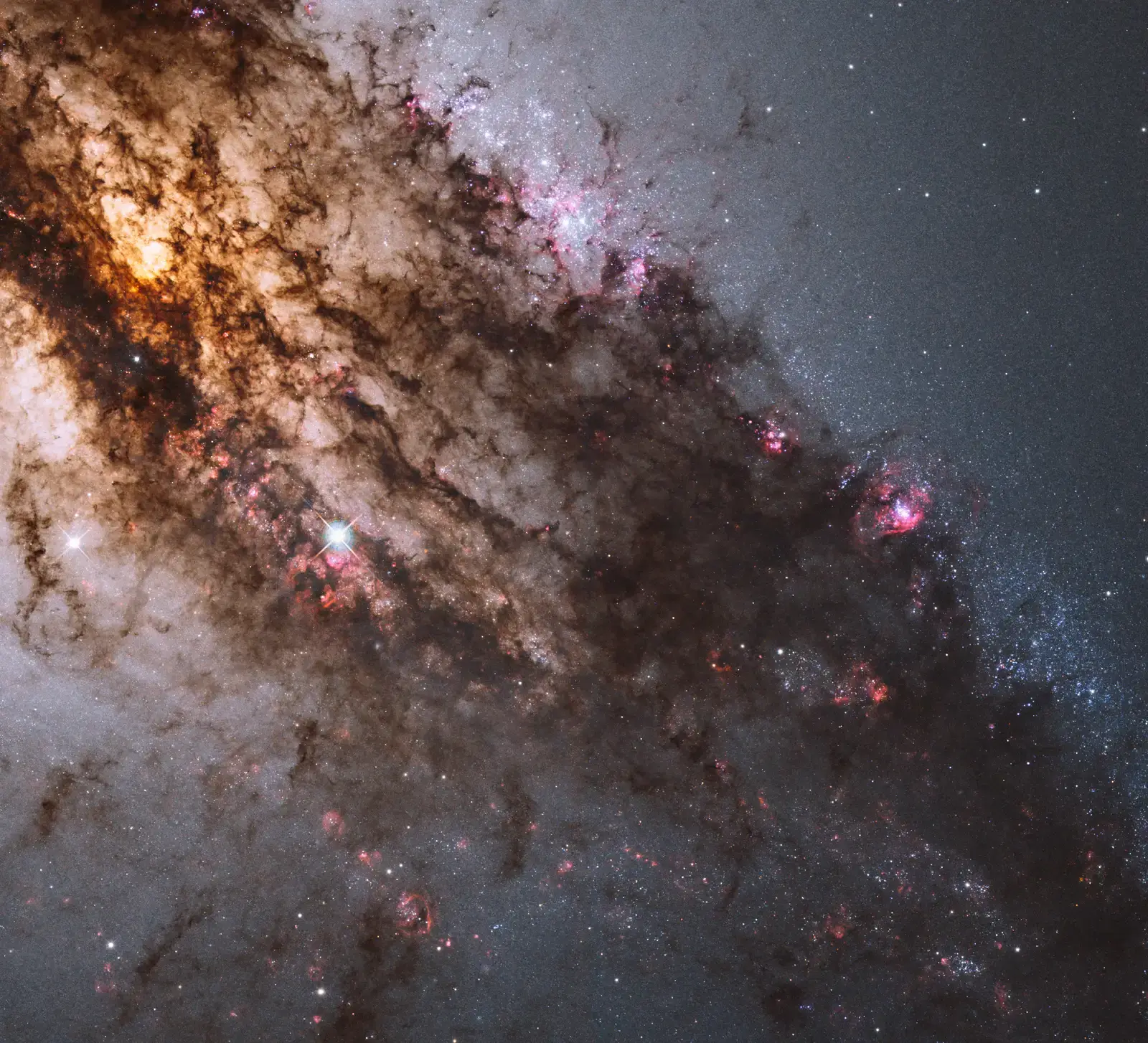
Here’s the thing – you can’t see it, you can’t touch it, and no detector has ever directly caught it. Yet without it, everything you see in the night sky would simply fly apart. This invisible substance makes up roughly 25% of the universe’s total mass-energy, yet it refuses to interact with light in any detectable way. Galaxies would literally fall apart without dark matter’s gravitational scaffolding holding them together, as stars in outer regions would spin off into space. Think of it like the invisible framework of a building – you can’t see the steel, but without it, the whole structure collapses.
Dark matter and dark energy are named for what scientists do not yet know about them. Dark matter makes up most of the mass found in galaxies and galaxy clusters, playing a major role in shaping their structure across vast cosmic distances. Dark energy refers to the force behind the universe’s accelerating expansion. Put simply, dark matter acts like cosmic glue, while dark energy drives space itself to expand faster and faster. Despite building increasingly sensitive detectors and running countless experiments, scientists haven’t directly caught a single dark matter particle. Whether it consists of exotic particles beyond our current understanding or requires completely rewriting the laws of gravity remains one of physics’ greatest puzzles.
2. Dark Energy: The Accelerating Force That Shouldn’t Exist
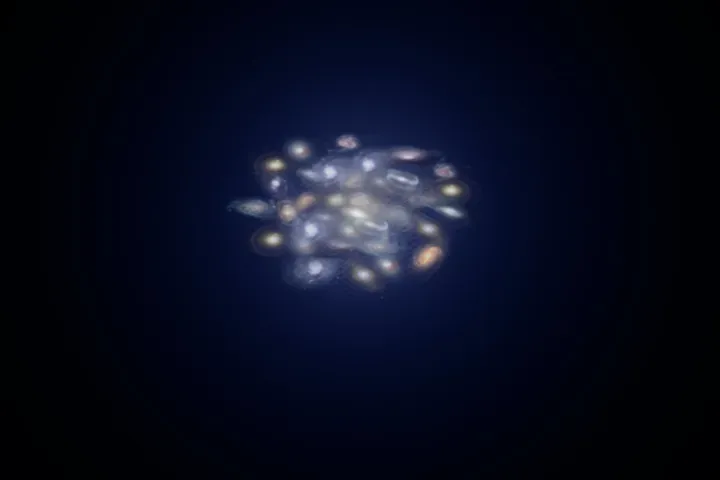
If dark matter is the cosmic glue, dark energy is the cosmic rocket fuel – and it makes even less sense. Among all cosmic questions, dark energy stands as the most dominant unsolved universe mystery. It drives the accelerating expansion of space, overriding gravitational attraction on the largest scales. Observations of distant supernovae revealed this unexpected behavior, forcing scientists to rethink cosmological models. Honestly, imagine blowing up a balloon and watching it not just expand, but speed up as it inflates. That’s essentially what the universe is doing, and nobody can fully explain why.
What makes this even stranger is recent data suggesting dark energy itself may be changing. Results showed that 4.5 billion years ago, dark energy seemed to begin weakening. Furthermore, during the previous 9 billion years, dark energy was stronger than anyone expected. This superpowered dark energy, dubbed phantom dark energy, invokes exotic physics. Why phantom dark energy would have transitioned into a weakening form two-thirds of the way into the universe’s history is a complete mystery. A new mathematical framework indicates that dark energy may be evolving over time and could be linked to the persistent Hubble tension. A team of cosmologists in China has introduced a mathematical framework that investigates two of the deepest mysteries in cosmology at the same time.
3. Fast Radio Bursts: Millisecond Screams From Across the Cosmos
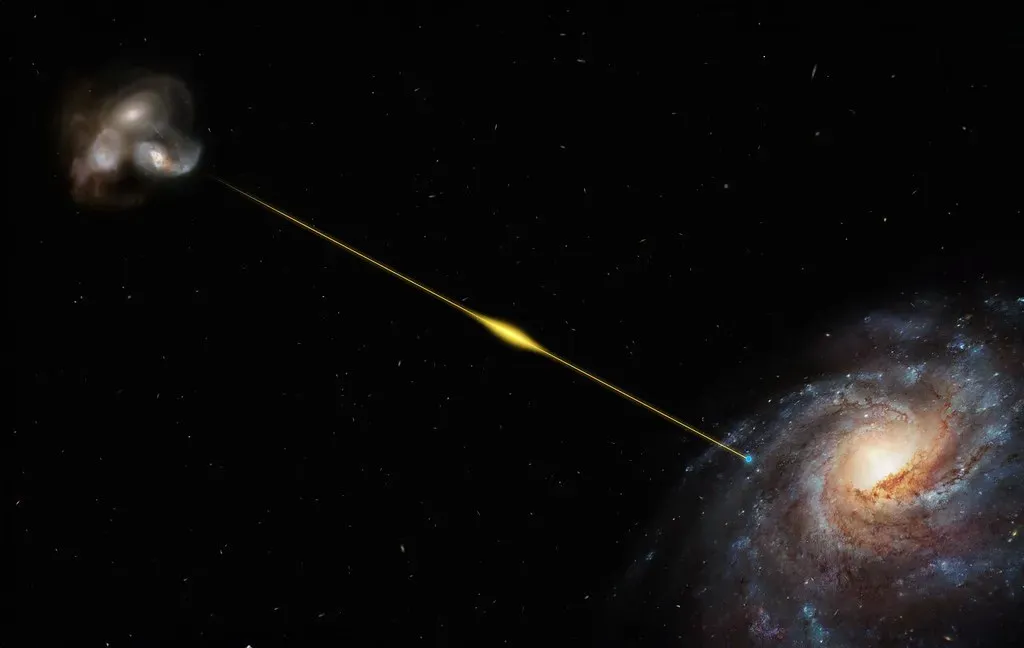
Imagine the most powerful radio flash in the known universe lasting less than the blink of an eye. That’s a fast radio burst – and they remain one of the most confounding phenomena in all of astrophysics. These millisecond blasts of radio energy pack more punch than our Sun produces in several days, yet they vanish almost as quickly as they appear. First discovered in 2007, hundreds of these extragalactic signals have been detected, with some repeating in mysterious patterns while others fire just once. Scientists have linked some bursts to highly magnetized neutron stars called magnetars, but this explanation doesn’t cover all cases. The sheer diversity of these cosmic flash bombs – from their varying host environments to their different repetition patterns – suggests multiple unknown mechanisms at work.
In March 2025, the brightest fast radio burst ever recorded was detected and traced with remarkable precision. Astronomers detected the closest and brightest fast radio burst ever recorded, a dazzling signal from a galaxy just 130 million light-years away. The flash lasted only a fraction of a second but briefly outshone every other radio source in its galaxy. Follow-up observations with the James Webb Space Telescope spotted a faint infrared signal at the same location. The burst’s unusual behavior – showing no signs of repeating – may challenge current ideas about what causes these mysterious cosmic flashes. Astronomers from an international research team have found the clearest evidence so far that some fast radio bursts originate in binary star systems. Fast radio bursts are extremely powerful flashes of radio waves that last only milliseconds and come from distant galaxies. Until now, these signals were widely thought to come from single, isolated stars. The new findings show that at least some FRB sources are part of stellar pairs, with two stars orbiting one another. This discovery reshapes long-standing assumptions about where these mysterious signals come from and how they are produced.
4. The Hubble Tension: Two Measurements, One Universe, Zero Agreement
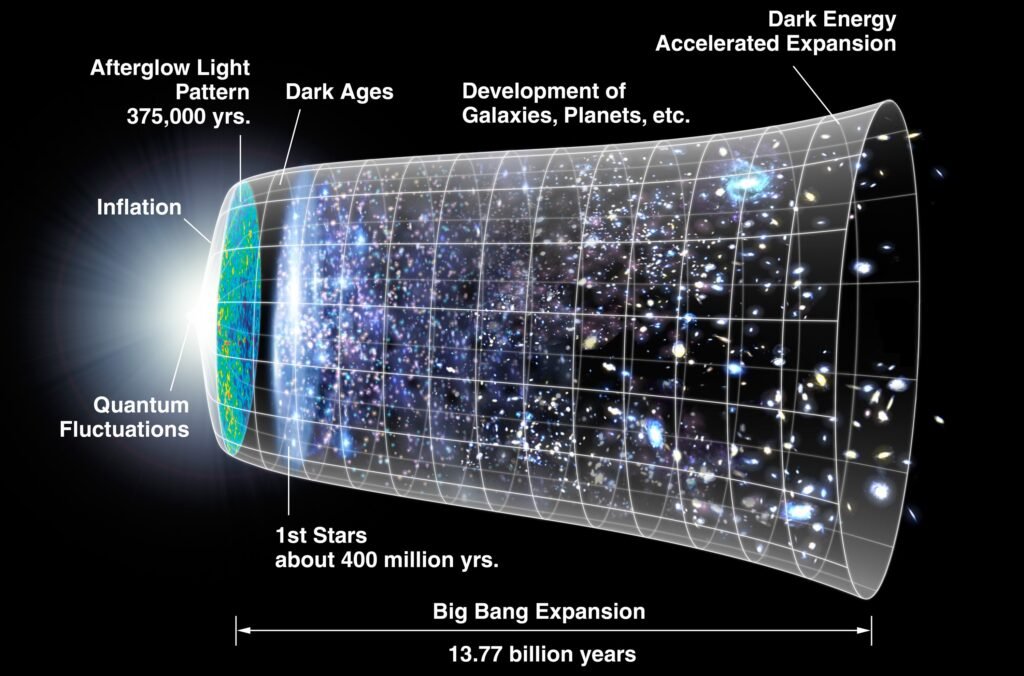
You’d think measuring how fast the universe is expanding would give you one answer. It doesn’t. In fact, it gives you two stubbornly different answers depending on how you measure it, and that disagreement is sending shockwaves through cosmology. The “Hubble Tension” is a worryingly persistent discrepancy: measurements of the universe’s expansion rate yield two different values. The cosmic microwave background radiation indicates roughly 67 km/s/Mpc, while local supernova measurements give roughly 73 km/s/Mpc. This difference is not explained by known errors. It’s as if two people measuring the same room got results that are too far apart to blame on faulty tape measures.
Fresh analyses in 2025 argue that the Milky Way may sit within a billion-light-year-scale underdensity, about 20% less matter than average. That placement could help explain the notorious Hubble tension, where local expansion measurements run faster than those inferred from the early universe. By re-examining two decades of baryon acoustic oscillation data – the “frozen-in” sound waves from the Big Bang – researchers showed that a local-void model can reduce the tension dramatically, because galaxies inside a low-density region would recede a bit faster. The Hubble Tension: the difference between 67 and 73 km/s/Mpc may seem small, but at cosmological scales it means we don’t understand something fundamental – perhaps new physics beyond the Standard Model. It’s hard to say for sure, but many researchers believe this could be the thread that, when pulled, unravels everything we thought we knew.
5. The Matter-Antimatter Imbalance: Why Does Anything Exist at All?
This one is genuinely existential. When the Big Bang happened, physics says equal amounts of matter and antimatter should have been created. They should have immediately collided, annihilated each other, and left behind absolutely nothing. Early in its history, shortly after the Big Bang, the universe was filled with equal amounts of matter and antimatter – particles that are matter counterparts but with opposite charge. But then, as space expanded, the universe cooled. Today’s universe is full of galaxies and stars which are made of matter. Where did the antimatter go, and how did matter come to dominate the universe? This cosmic origin of matter continues to puzzle scientists.
Closely related is the mystery of baryon asymmetry: during the Big Bang, equal amounts of matter and antimatter should have been created. But if that had happened, they would have mutually annihilated. Some tiny asymmetry – one part in a billion – filled the universe with matter. One part in a billion. That’s the only reason stars, planets, you, and I exist. The Big Bang should have created equal amounts of matter and antimatter, which would have annihilated each other. Instead, matter dominates the observable universe. Explaining why antimatter nearly vanished remains an unresolved challenge in cosmology. Scientists across the globe are racing to find the mechanism that tipped the cosmic scales, because the answer could rewrite the Standard Model of physics entirely.
6. The Bizarre Gamma-Ray Burst That Defied Known Physics
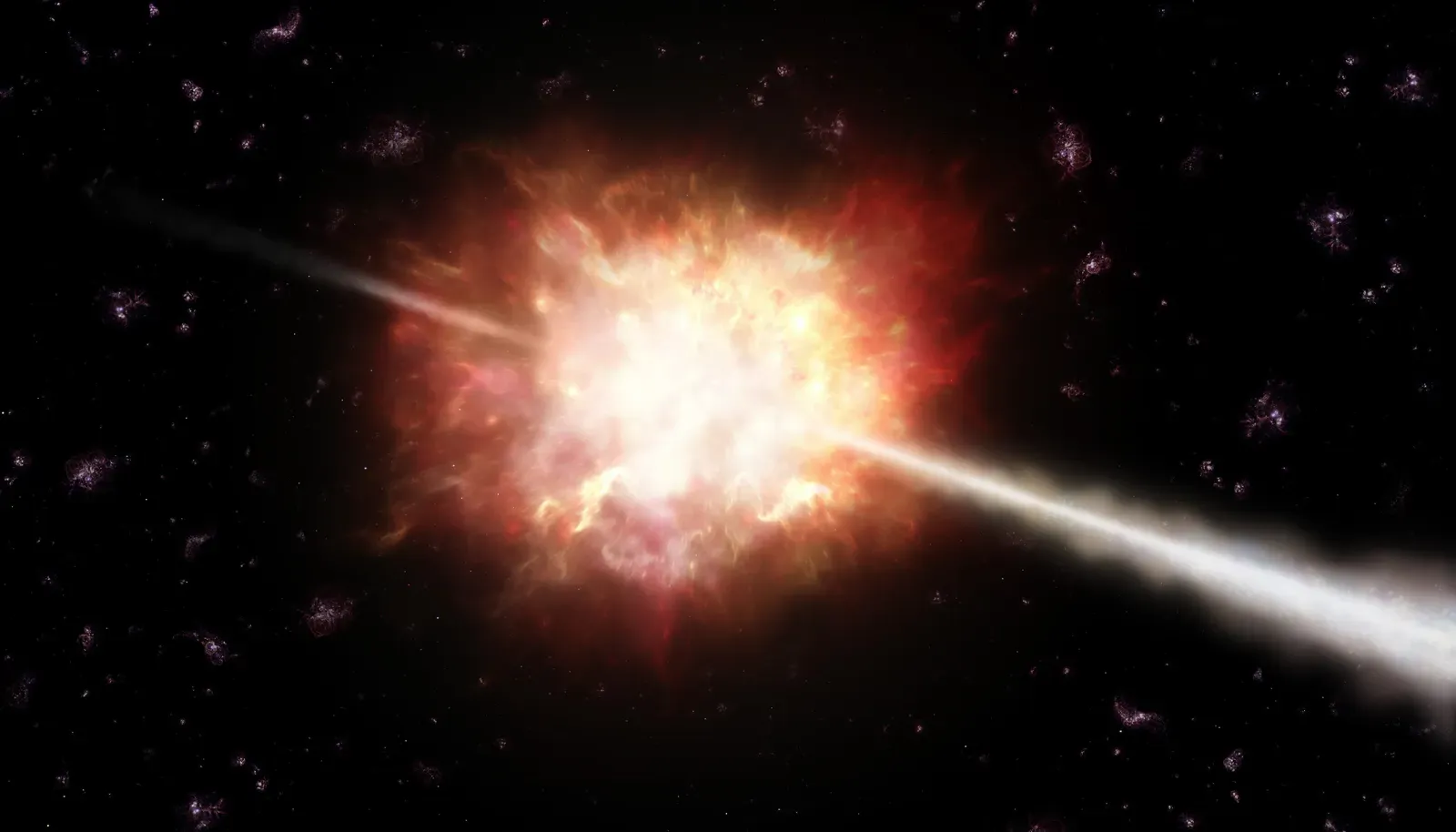
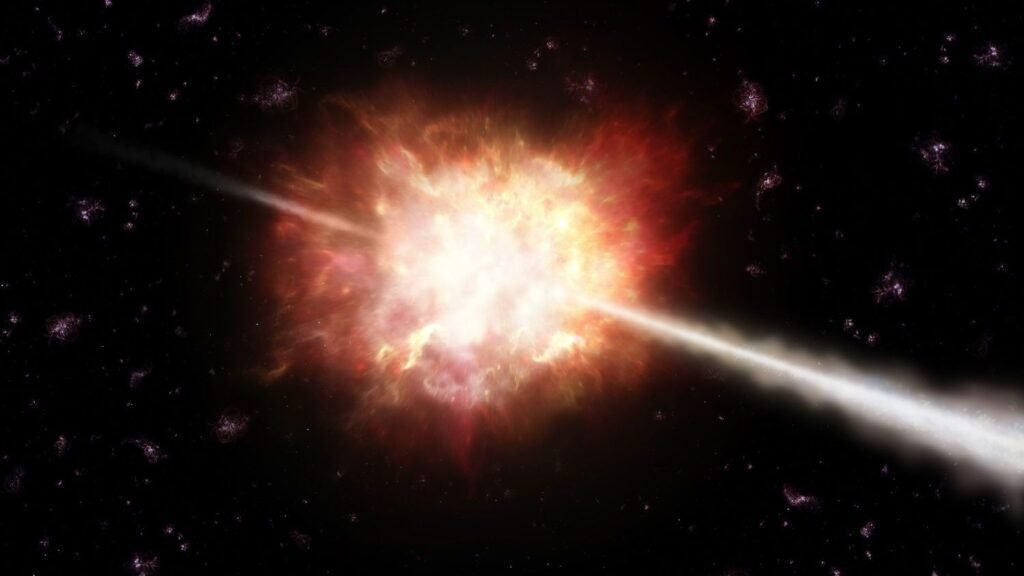
In March 2026, astronomers witnessed something that left the scientific community genuinely scrambling. A cosmic explosion called GRB 250702B was detected by NASA’s James Webb Space Telescope, and it simply refused to behave as any known gamma-ray burst should. GRB 250702B, detected by NASA’s James Webb Space Telescope and a global network of observatories, lasted an astonishing seven hours – far longer than typical gamma-ray bursts, which usually fade in under a minute. To put that in perspective, imagine a firework that was supposed to last a second but instead kept blazing for an entire day. That’s the kind of scale we’re talking about.
This powerful explosion blasted out narrow jets of particles at nearly the speed of light and exhibited repeated outbursts that lasted over seven hours. Astronomers conducting rapid follow-up observations with multiple telescopes around the world found that the burst occurred within a large, extremely dusty galaxy. The Webb Telescope spotted a mysterious explosion that defies known physics. Astronomers have spotted a bizarre cosmic explosion that refuses to play by the rules – and it’s leaving scientists scrambling for answers. No existing model for gamma-ray bursts can fully account for this behavior, and that’s both thrilling and deeply unsettling in equal measure. It suggests that the universe still harbors entire categories of violent events we have yet to classify or comprehend.
Conclusion: The Universe Keeps Winning
What makes all six of these phenomena so remarkable isn’t just that they’re strange – it’s that they’re strange in ways that make our best physics look incomplete. As telescopes grow more precise and missions probe deeper into space, scientists often uncover more questions than answers. Each discovery reshapes assumptions about physics, time, and matter itself. These unsolved universe enigmas are not failures of science, but signs that exploration is far from complete.
I think that’s the most exciting takeaway here. We live in a moment when the James Webb Space Telescope is rewriting galactic history, when a seven-hour gamma-ray burst shatters known models, and when a discrepancy in two numbers is threatening to overturn decades of cosmological consensus. The ability of current telescopes to detect changes over such short periods of time suggests that we are entering a phase of high temporal resolution astronomy – we no longer just observe still images of the cosmos, but dynamic processes unfolding before our eyes. The cosmos isn’t just vast. It’s actively bizarre, gloriously unpredictable, and still very much winning the argument.
So the next time someone tells you science has all the answers, point them toward the night sky. What do you think is out there that we still haven’t even imagined yet? Tell us in the comments.