
History is supposed to be a settled story. Dates, timelines, causes, and effects, all neatly filed away in textbooks and museum plaques. Yet every so often, something gets pulled out of the earth, or the sea, that refuses to fit the story we’ve been telling ourselves. Something small, or heavy, or intricate, that quietly demolishes centuries of confident assumptions.
These aren’t myths or legends. They’re real, tangible objects, studied by real researchers, and they keep producing more questions than answers. Some have been explained. Others remain stubbornly, fascinatingly mysterious. Either way, the story of humanity looks a little stranger once you’ve heard about them.
Let’s dive in.
The Antikythera Mechanism: An Ancient Computer That Shouldn’t Exist
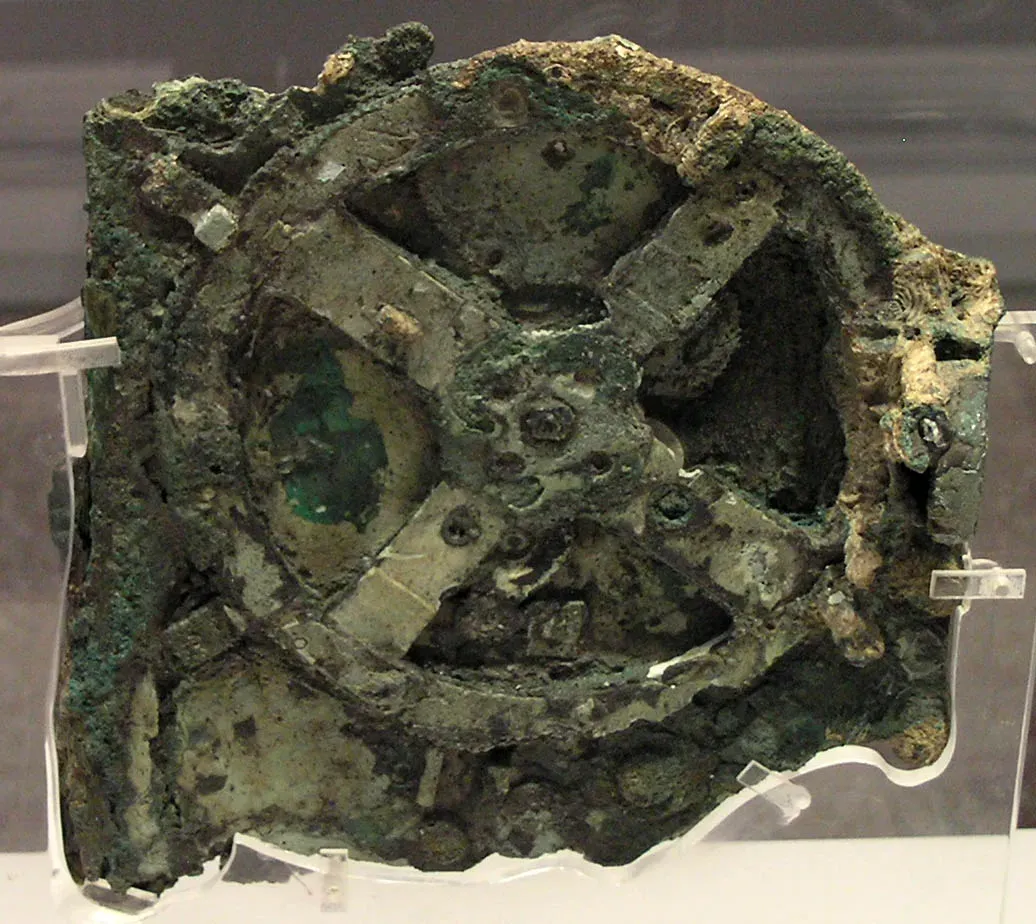
Imagine pulling a corroded, shoebox-sized lump of bronze from the bottom of the Mediterranean Sea and realizing, decades later, that it’s the most sophisticated machine built in the ancient world. That’s essentially what happened in 1901 when sponge divers recovered a strange object from a shipwreck off the Greek island of Antikythera. The Antikythera mechanism, dated to the late 2nd century or early 1st century BCE, is understood as the world’s first analog computer, created to accurately calculate the position of the sun, moon, and planets. Nobody knew quite what they had on their hands at the time.
Dating back to the first century BCE, this sophisticated apparatus was believed to have been used for astronomical calculations, showcasing a level of technological advancement that wasn’t matched until the fourteenth century CE. It featured a complex arrangement of gears and dials, allowing users to predict celestial movements, lunar phases, eclipses, and even important athletic events like the Olympics. Think about that for a second. You could hold it in your hands and navigate the cosmos. The level of sophistication utilized by the device forced scientists to accept that their perceptions of ancient Greek engineering may be faulty. Nothing similar to this exists or is mentioned in any known writings from the period of its creation. Based on the knowledge we do have, this mechanism shouldn’t even exist.
Such complex constructions only reappeared in Europe with the astronomical tower clocks in the 14th century, more than 1,000 years later. That is a gap of over a thousand years, which is not a small rounding error. It’s an entire civilizational mystery. On the front of the mechanism is a large dial with pointers for showing the position of the Sun and the Moon in the zodiac and a half-silvered ball for displaying lunar phases. The drive train for the lunar position is extremely sophisticated, involving epicyclic gearing and a slot-and-pin mechanism to mimic subtle variations in the Moon’s motion across the sky. I think what genuinely staggers people isn’t just that it existed, but that after it vanished from history, nobody built anything like it again for over a millennium.
The Baghdad Battery: Did Ancient Mesopotamians Discover Electricity?
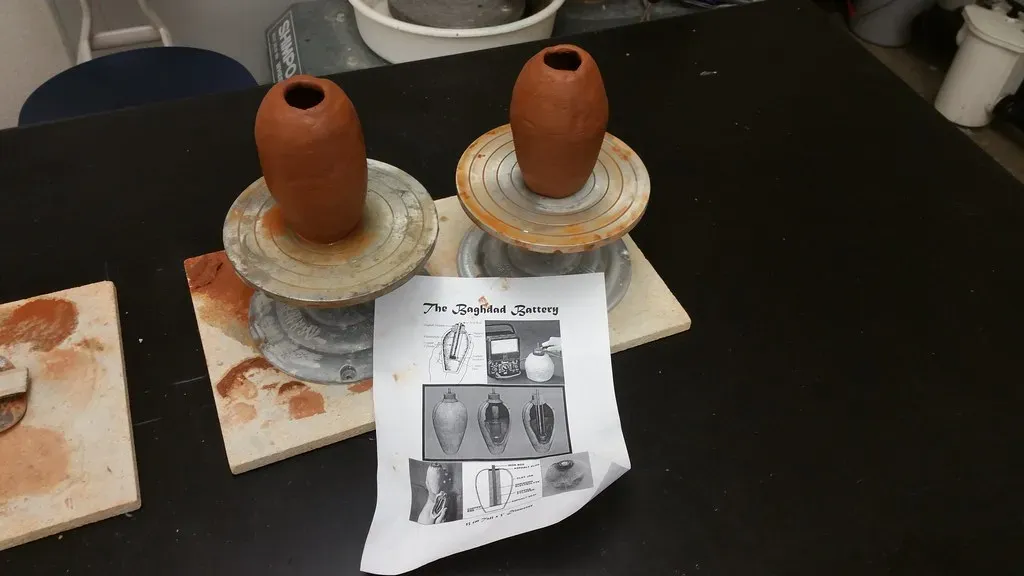
Here’s a name that sounds like it belongs in a superhero film, but is actually one of the most hotly debated archaeological finds in history. In 1938, archaeologist Wilhelm König unearthed a puzzling artifact near Baghdad. He discovered a 2,000-year-old clay jar containing a copper cylinder and an iron rod. This simple yet unusual object, estimated to date from 250 BCE to 224 CE, became known as the Baghdad Battery due to its resemblance to modern electrochemical cells. The resemblance wasn’t superficial, it was structural.
The components of a battery are, essentially, two different metals respectively acting as a positive and a negative electrode immersed in an electrolyte solution. Tests indicated that the Baghdad Battery had indeed probably once contained vinegar or wine, both possible electrolytes. Thus, with all of the requirements met, it was hypothesised that this was an ancient battery, specifically one used in gilding. Many believe it may have functioned as a galvanic cell or primitive battery capable of producing a small electric charge. If true, the existence of such technology in ancient Mesopotamia would drastically alter our understanding of electrical knowledge in the ancient world. Skeptics argue the charge it could produce was tiny, and that simpler explanations exist. Honestly, the debate itself is what makes this artifact so compelling.
The Iron Pillar of Delhi: Rust-Proof Metal From 1,600 Years Ago
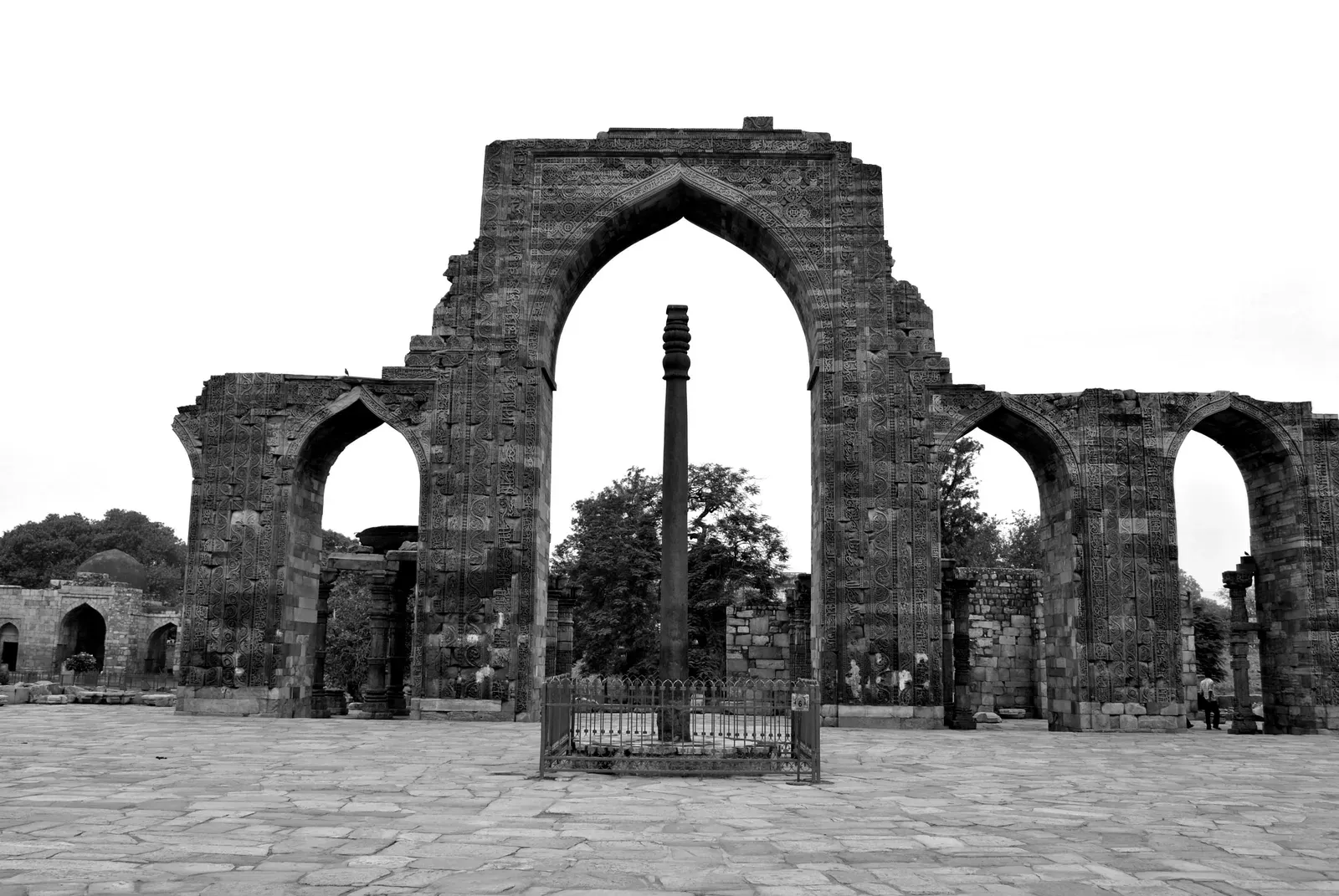
There’s a 24-foot column of iron standing in Delhi, India, that has been quietly embarrassing modern metallurgists for over sixteen centuries. The Iron Pillar of Delhi is famous for being relatively rust-free despite having been created more than 1,600 years ago, about 400 CE. That’s not a small claim. This thing has survived monsoon seasons, temperature swings, and centuries of exposure, looking almost exactly as it did when it was first erected. The iron pillar is 7.21 metres high with a 41-centimetre diameter, constructed during the reign of Chandragupta II, and the metals used in its construction have a rust-resistant composition.
The pillar’s composition reveals a unique phosphorus content of nearly 1%, combined with extremely low sulfur and manganese levels. This specific combination creates a protective oxide layer that regenerates itself, essentially making the iron self-healing. What’s remarkable is that ancient Indian metallurgists achieved this precise chemical balance without modern analytical tools or controlled furnace environments. Let’s be real, that is extraordinary. Scientific analysis revealed that the iron’s corrosion resistance is due to the formation of a thin, passive protective layer. The layer formed because ancient Indian blacksmiths had used a direct reduction process that resulted in an exceptionally high phosphorus content in the iron and a low sulfur content, which combined with Delhi’s dry atmospheric conditions, catalyzed the formation of the protective layer. Science eventually explained how, but the why, meaning how ancient craftsmen discovered this formula without modern chemistry, remains a beautiful open question.
The Saqqara Bird: Evidence of Ancient Flight, or Just a Toy?
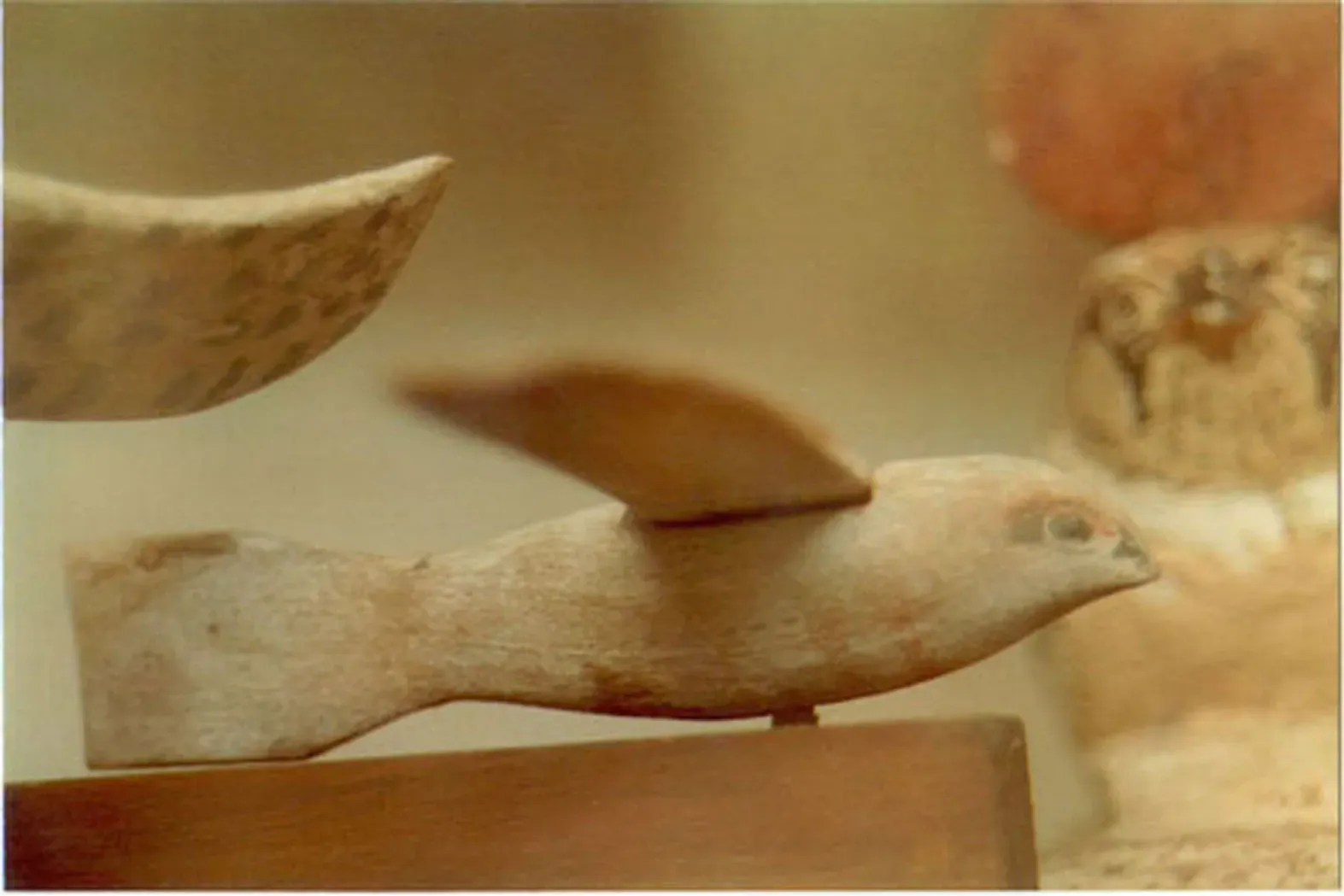
In 1898, a small wooden object was unearthed from a tomb in the Saqqara necropolis in Egypt. At first glance, it looked like a bird. On second glance, it looked like something much more provocative. The Saqqara Bird is a wooden artifact discovered in a tomb near the ancient Egyptian city of Saqqara. It is believed to be a model of a bird and has been dated back to around 200 BCE. The artifact is made of sycamore wood and measures 18.1 cm in length. So far, nothing shocking. Then you look more closely at its wings.
Unlike typical Egyptian artistic depictions of birds, which show wings flat or curved down, the Saqqara Bird features straight, stiff wings positioned at a slightly upward angle, resembling the dihedral common on modern glider wings. Those who consider it an out-of-place artifact often argue the Saqqara Bird is a fully functional, intentional model of an ancient aircraft or glider. Egyptologists, on the other hand, largely consider the bird to be an ornament or toy of some kind, possibly even a weather vane topper. It’s hard to say for sure, but the aerodynamic accuracy of its form is difficult to dismiss entirely. Several researchers suspect that the ancient Egyptians were well aware of the principles of aviation. With its vertical tail, resembling that of an airplane or glider, it resembles no known bird. Whether it was a visionary model or simply an unusually aerodynamic ornament, the Saqqara Bird keeps the conversation alive across generations of researchers.
The Piri Reis Map: A 16th-Century Chart That Knew Too Much
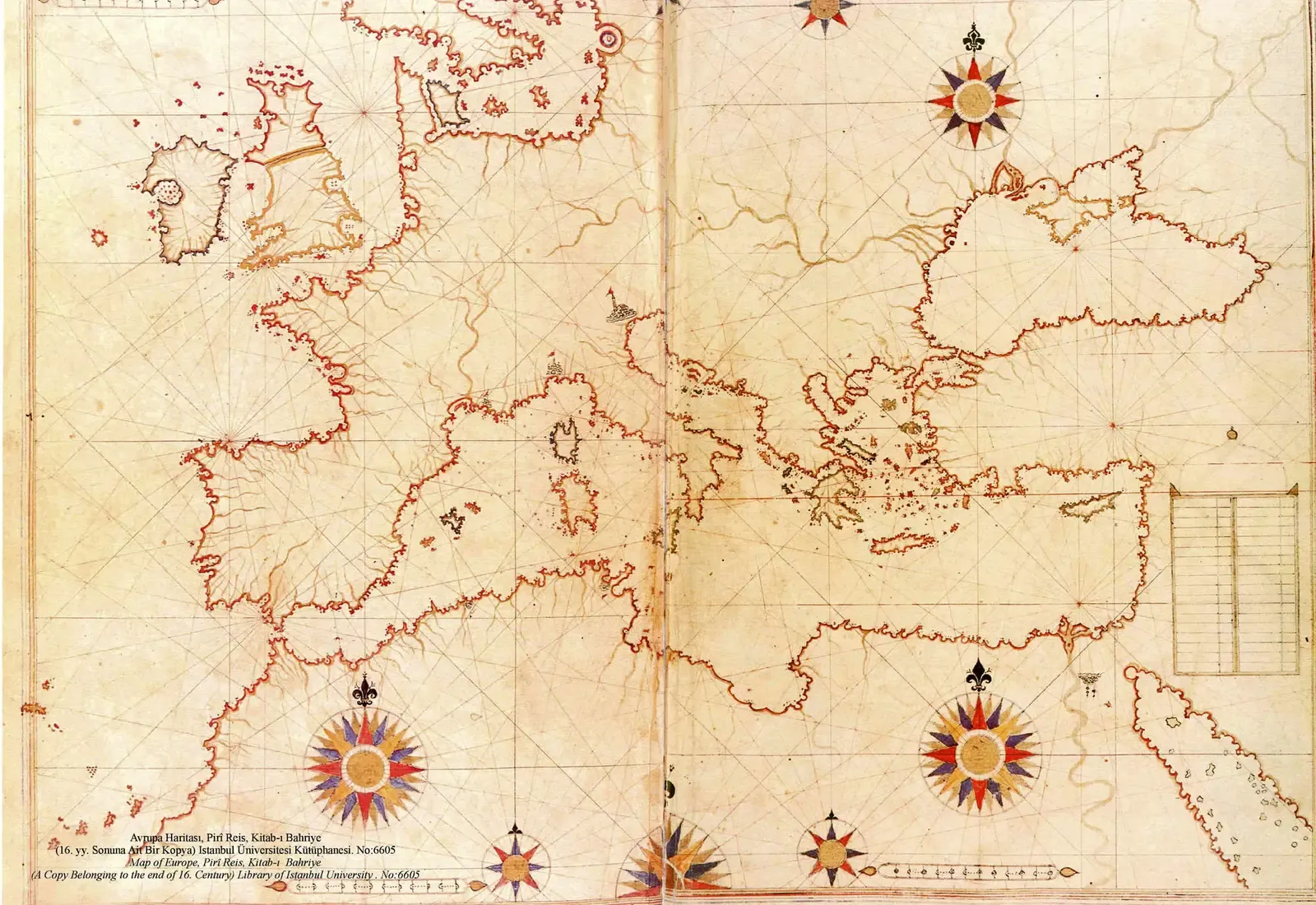
Here is where things get genuinely strange. In 1513, an Ottoman admiral named Piri Reis drew a map. The Piri Reis Map is a fragment of a world map compiled in 1513 by Ottoman Admiral and cartographer Piri Reis. On its own, a 500-year-old map isn’t that unusual. What made historians do a double-take is what it depicted. The map is considered mysterious due to its accuracy, level of detail, and the inclusion of land masses that were not officially discovered until centuries later. The map is also notable for its depiction of Antarctica, which was not officially discovered until 1820. That’s a gap of over three hundred years between the map and the supposed discovery of the continent.
The map seems to depict Antarctica without ice, suggesting knowledge of the continent’s topography that would have been impossible for people of that time. Some researchers believe it could be based on older maps from unknown civilizations, but this remains unproven. The counterargument is equally interesting. While the map is a genuine and priceless historical document, the notion that it depicts an ice-free Antarctica is widely refuted. The most accepted explanation is that the landmass is not Antarctica at all, but rather a highly distorted or speculative extension of the South American coast, bent to fit onto the animal-skin parchment. Cartographers of the era also frequently included the purely theoretical southern continent known as Terra Australis Incognita, largely for philosophical balance. The debate between these two camps is itself a window into how uncertain our grasp of the ancient world really is.
The Roman Dodecahedra: Small, Precise, and Completely Inexplicable
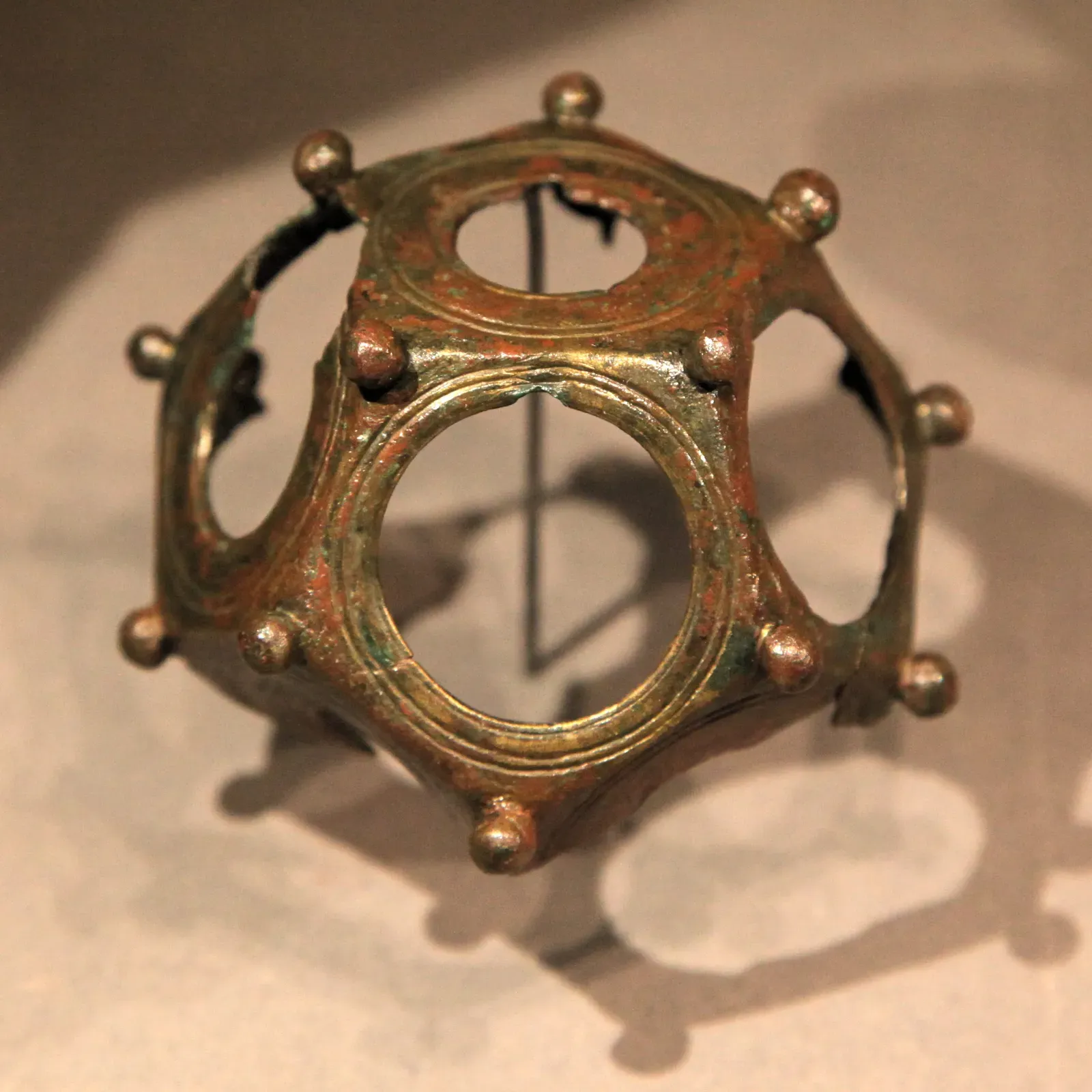
Of all the artifacts on this list, the Roman dodecahedra might be the most quietly unnerving. Not because they suggest lost civilizations or ancient electricity, but because we genuinely have no idea what they were for, and we’ve found over a hundred of them. Dodecahedra date from the Roman period in Britain, from 43 to 410 AD. About 130 have been found across the north-west provinces of the former Roman Empire, each finely crafted from copper alloy. They are twelve-sided objects, hollow, often with knobs at each corner and holes of varying sizes on each face. Beautifully made. Completely mysterious.
No representations of these objects are known in ancient art or literature. They do not conform to a standard size and rarely show use-wear which could hint at their purpose. Although armchair experts will tell you their granny used one to knit gloves, archaeologists are undecided on their intended use. Think of it like discovering over a hundred identical, precision-crafted objects scattered across a continent, with zero written records explaining what they are. An out-of-place artifact is an artifact of historical, archaeological, or paleontological interest claimed to have been found in an unusual context, which challenges conventional historical chronology. Some people might think that those artifacts are too advanced for the technology known to have existed at the time. With the dodecahedra, the mystery isn’t technological superiority. It’s the vanishing of an entire cultural practice from the historical record, which is somehow even more unsettling.
Conclusion: The Past Is Less Settled Than We Think
What you’ve just read about are six objects that push back against the comfortable idea that we’ve figured out the ancient world. These mysterious artifacts offer more than just historical curiosity. They serve as reminders of how much we still don’t know about ancient civilizations. Whether the result of lost knowledge, unexplained technologies, or misunderstood contexts, these items invite us to keep exploring and questioning our understanding of history.
Archaeologists and historians have uncovered countless ancient artifacts that defy conventional explanations. These discoveries challenge the general understanding of ancient civilizations, suggesting lost knowledge, advanced technologies, or even alternative interpretations of history. Some of these artifacts have been partially explained. Others remain wide open. The point isn’t to spiral into speculation, but to stay genuinely curious, the way good science demands.
History isn’t a finished document. It’s an ongoing excavation, literally and figuratively. The next time someone tells you the past is behind us, you might want to remind them that somewhere out there, buried in soil, shipwreck, or museum basement, there’s probably another object waiting to rewrite everything. Which of these six surprised you the most?