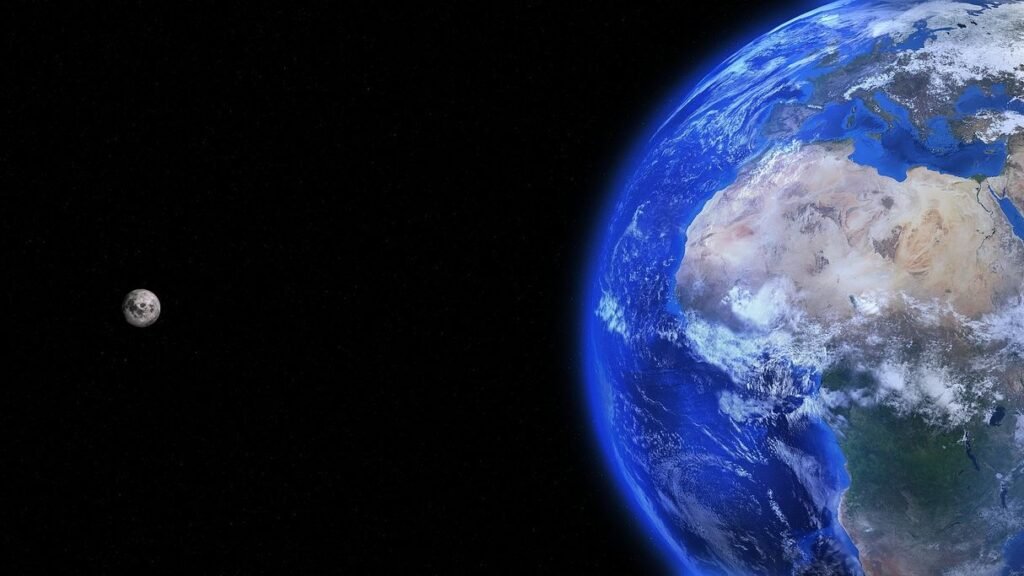

If you think physics is just about dusty equations on a chalkboard, you’re seriously missing the fun part. Physics is really a collection of strange but reliable rules that secretly shape everything from your morning coffee to the way you scroll on your phone at night. Once you see those rules, the world stops looking ordinary – and starts looking kind of magical.
I still remember the first time I learned that just walking across the room meant I was technically warping space and time, and my brain basically refused to cooperate. These “weird” physics facts don’t just explain the universe; they sneak into your daily life in ways you’d never expect. Let’s dig into five that might permanently change how you see the world around you.
1. You Are Always Falling Toward the Center of the Earth

Here’s a slightly unsettling idea: even when you’re standing perfectly still, you’re actually in a constant state of controlled fall toward the center of the planet. Gravity is always pulling you downward, and the only thing stopping you from accelerating into the ground is the upward push, or normal force, from whatever you’re standing or sitting on. That force is like an invisible counterattack, quietly balancing gravity every second of your life.
In physics terms, what feels like “rest” is really a never-ending tug-of-war you happen to be stuck in the middle of. If that upward force disappeared for even a moment, you’d instantly be in free fall. Elevators, planes, and roller coasters all play with this balance, which is why your stomach flips when the support force suddenly changes. So the next time you sigh and say you’re “doing nothing,” remember your body is locked in a nonstop wrestling match with a planet.
2. Time Moves Differently for You Than for Everyone Else

It sounds like science fiction, but modern physics shows that time doesn’t tick the same way for everyone. According to Einstein’s theory of relativity, motion and gravity slightly stretch and squeeze time, so your personal “clock” is never perfectly in sync with anyone else’s. If you spend your day flying thousands of meters above the ground in a plane or racing on a satellite, time technically moves at a different pace for you than for someone sitting on their couch.
In everyday life the difference is tiny, but it’s real enough that technology has to care about it. The satellite systems that power navigation on your phone need to adjust for these relativity effects, or your location would drift by kilometers each day. So when you casually check a map app to find a coffee shop, you’re relying on precise corrections for time warps caused by Earth’s gravity and orbital speeds. You don’t feel it happening, but you literally live in your own personal version of time.
3. Most of an Atom – And Therefore You – is Empty Space
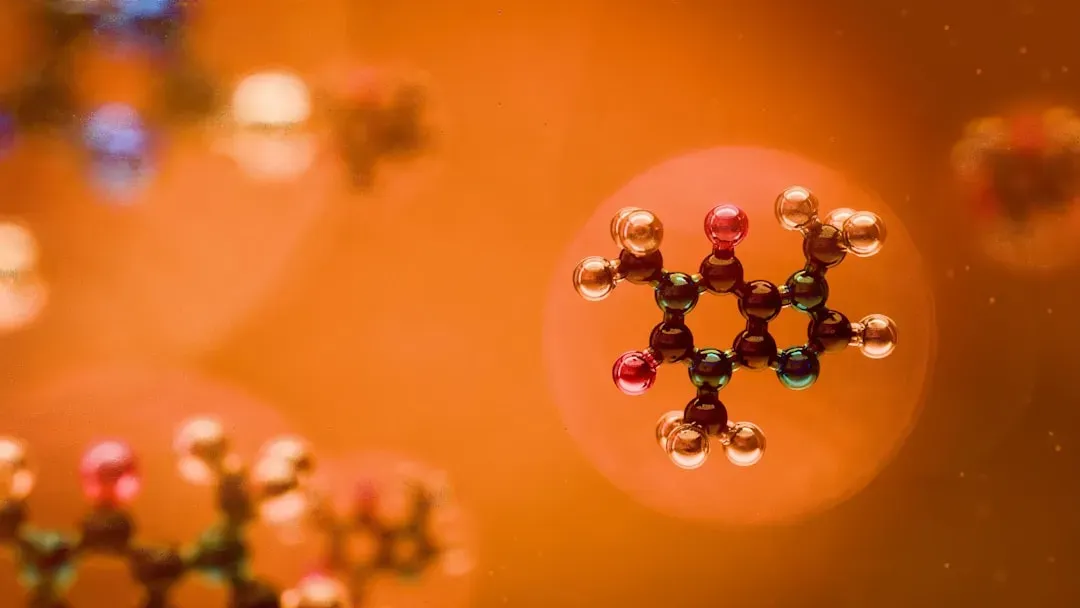
Take a moment and look at your hand. It feels solid, right? Physics says that’s mostly an illusion created by invisible forces. At the atomic level, nearly all the mass is buried in an incredibly tiny nucleus, with electrons buzzing around in regions that are mostly empty. If an atom were scaled up to the size of a big stadium, the nucleus would be like a pea at the center, and the electrons would be tiny specks darting around the outer stands. Everything in between would be almost nothing.
The reason your hand doesn’t pass straight through the table is not because atoms are packed like marbles, but because the electric fields of their electrons push against each other. You’re feeling force, not solid “stuff.” This means the chair you’re sitting on, your phone, your bones, and even the screen you’re reading this on are built out of ghostly structures held together by fields and interactions. The world feels solid, but physics quietly insists it’s mostly structured emptiness.
4. Every Object Around You Is Constantly Trading Tiny Packets of Light
When you look around a room, it seems like you’re just seeing things passively sitting there – but your eyes are actually detecting a storm of tiny light particles in constant exchange. What we call light comes in packets called photons, and every visible object around you is absorbing and re-emitting, reflecting, or scattering them every moment. The color you perceive isn’t some built-in paint; it’s the particular way an object chooses which photons to reject and which to absorb.
A red apple, for example, is essentially refusing most wavelengths of light except for those that look red to your eyes, which it bounces back toward you. Dark clothing absorbs more of those photons and turns their energy into heat, which is why a black shirt feels so much hotter in the sun. Even when you’re not aware of it, you’re living in a ceaseless negotiation between matter and light, with your brain stitching that photon traffic into what you simply call “seeing.”
5. Motion Is More About Perspective Than You Think

It feels obvious that if you’re sitting on your couch, you’re not moving. Physics gently laughs at that idea. From the universe’s point of view, you are hurtling through space at outrageous speeds: the Earth is spinning, orbiting the Sun, the Sun is orbiting the center of the galaxy, and the galaxy itself is racing through the cosmos. Even when you swear you’re perfectly still, you’re being carried along a wild cosmic ride without a pause button.
What we call “rest” is always rest relative to something else – usually the floor or the room you’re in. That’s why a coffee mug sitting on a plane tray can be “at rest” even though it’s flying hundreds of kilometers per hour through the air. This idea that motion is always relative underpins everything from space travel to the way we describe car crashes. In a way, there is no such thing as absolute stillness for you or anything else; there are only different stories you can tell about what you’re moving relative to.
The World Is Stranger – and Clearer – Than It Looks

Physics has a habit of pulling the rug out from under our everyday assumptions, then quietly handing us a clearer picture of what’s going on. You’re always falling but held up by invisible forces, living in your own personal time, built mostly from empty space, surrounded by photon traffic, and speeding through the universe even when you sit completely still. None of that changes how your morning feels, but it does change how deeply you can understand it.
Once you see these hidden layers, the ordinary world stops feeling so ordinary and starts looking like a carefully choreographed sci‑fi story you somehow woke up inside. The cool part is that you don’t need a lab or a telescope to experience any of it – you’re already living in the experiment. Knowing all this, does your everyday life still feel as simple as it did yesterday?