
Nature has always had a habit of humbling us. You’d think that in 2026, with artificial intelligence, quantum computing, and telescopes that can peer billions of light years into space, we’d have most of the natural world figured out. Honestly? Not even close. There are things happening right here on Earth, in deserts and storm clouds and quiet New Mexico towns, that no scientist alive can fully explain.
Some of these mysteries have been studied for centuries. Others crept up in just the last few decades. Yet all of them share the same maddening quality: the more closely experts look, the stranger things get. So let’s dive into five of nature’s most mind-bending unsolved mysteries.
Ball Lightning: The Floating Fireball That Defies Physics
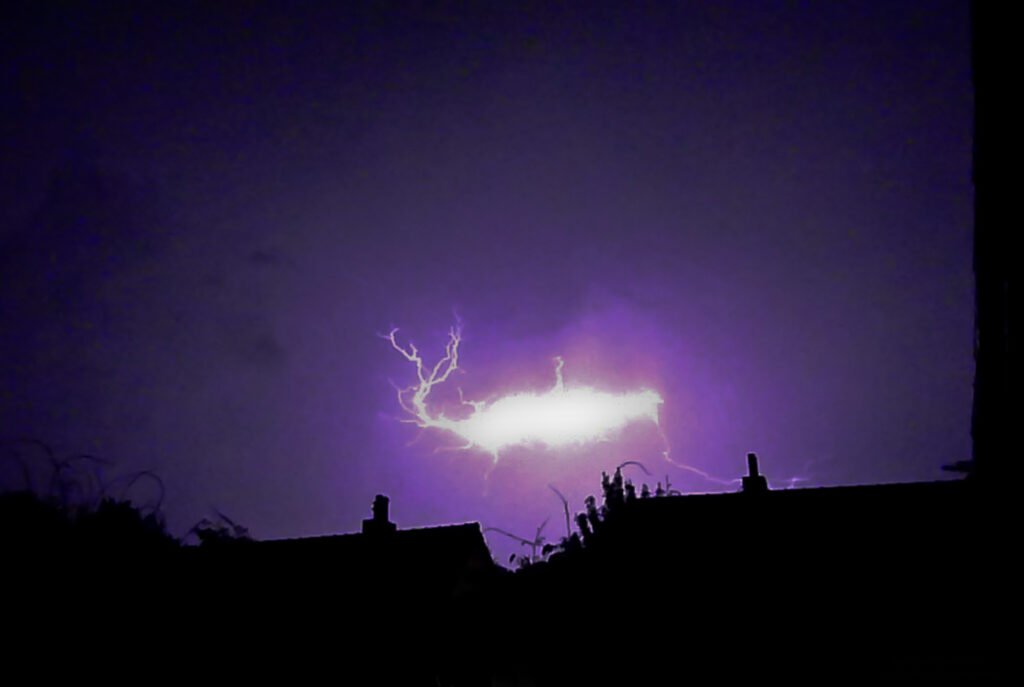
Imagine sitting on a plane and watching a glowing sphere the size of a grapefruit silently drift down the aisle, passing through rows of seats before simply winking out of existence. That’s not science fiction. A scientist from the Electronics Laboratory at the University of Kent described exactly that experience during a flight from New York to Washington in March 1963, watching a glowing sphere roughly 20 centimeters in diameter emerge from the pilot’s cabin and float down the aisle at a steady height.
Instances of ball lightning, those glowing electric orbs in the sky, have captivated and mystified people for centuries. The bizarre phenomenon usually appears during thunderstorms as a floating sphere ranging in color from blue to orange to yellow, and it is sometimes accompanied by a hissing sound and an acrid odor. There is at present no widely accepted explanation for ball lightning. That’s a remarkable thing to admit about something people have been reporting since ancient Greece.
There is no one-size-fits-all explanation for the properties of ball lightning. Over the years, theories have ranged from electromagnetic radiation to plasma bubbles. Some scientists even suggest that ball lightning consists of mini black holes or charged particles interacting with the atmosphere. Aiming to understand how ball lightning happens, scientists have tried to recreate it. In 2006, researchers at Israel’s University of Tel Aviv created a lab version using a microwave beam, and in 2018 quantum physicists demonstrated a synthetic knotted magnetic field that mirrors and possibly helps explain it. Despite all these investigations, ball lightning still refuses to be pinned down.
The Sailing Stones of Death Valley: Rocks That Move On Their Own

Here’s a scene that sounds completely impossible: boulders weighing as much as a small upright piano, sitting in one of the hottest, most arid places on Earth, somehow moving hundreds of meters across a flat desert floor, leaving long winding trails behind them. No footprints. No tire tracks. No human intervention. Just the rocks, and the tracks. Racetrack Playa is home to an enduring Death Valley mystery. Littered across the surface of this dry lake are hundreds of rocks, some weighing as much as 320 kilograms, that seem to have been dragged across the ground, leaving synchronized trails that can stretch for hundreds of meters.
These rocks, some weighing over 700 pounds, appeared to move on their own across the flat desert surface, leaving distinctive tracks behind them. Before the mystery was solved, theories ranged from magnetic fields to supernatural forces, as there was no evidence of human or animal intervention. Research eventually showed that the rocks are nudged into motion by melting panels of thin floating ice, driven by light winds, in winter. Yet even this elegant explanation leaves questions. Researchers admit that although they have seen how the smaller stones move, there may yet be a different series of events needed to move the larger rocks, so the mystery isn’t completely solved.
This phenomenon, known as “ice shove,” is common in polar regions, but had never been observed in such a desert environment before. Think about that for a second: ice, in Death Valley. The very place that holds records for the highest temperatures ever measured on Earth. Another unanswered question was why multiple rocks, but not all, showed perfectly parallel tracks, including some with synchronous sharp turns and reversals in direction. Even the “solved” mystery still carries shadows of the unexplained.
The Taos Hum: A Sound That Only Some People Can Hear

What would it be like to hear a low, maddening drone, day and night, that your neighbors simply cannot detect? That’s been the daily reality for a small but significant portion of residents in Taos, New Mexico, for decades. The Taos Hum is described as a faint, persistent, low-frequency sound. Witnesses compare it to the rumble of a distant diesel engine idling, or a deep droning vibration just at the edge of perception. Unlike ordinary background noise, this hum has no obvious source. Even stranger, only about 2 percent of the local population appears to be sensitive to the sound.
The Taos Hum gained national attention in the early 1990s, after numerous residents complained and even petitioned Congress for help. In 1993, a formal study was launched involving scientists from Los Alamos National Laboratory, Sandia National Laboratories, and the University of New Mexico. Researchers deployed sensitive equipment to measure sound waves, seismic activity, and electromagnetic fields. Yet while many witnesses could confirm hearing the sound, scientific instruments failed to detect a consistent external source during the testing period.
It turned out that residents of other cities claimed to have heard the hum prior to the Taos “hearers.” Globally, there have been instances of the hum in Australia, Canada, Germany, and New Zealand, as well as several other areas in the United States. The second possibility is internal perception, a biological anomaly rather than an environmental one. Some scientists have suggested that a fraction of people may be extraordinarily sensitive to specific low-frequency vibrations, perhaps due to variations in cochlear mechanics or neural processing. It’s the kind of mystery that blurs the line between the physical world and the human body itself.
Bioluminescent Waves: When the Ocean Glows at Night
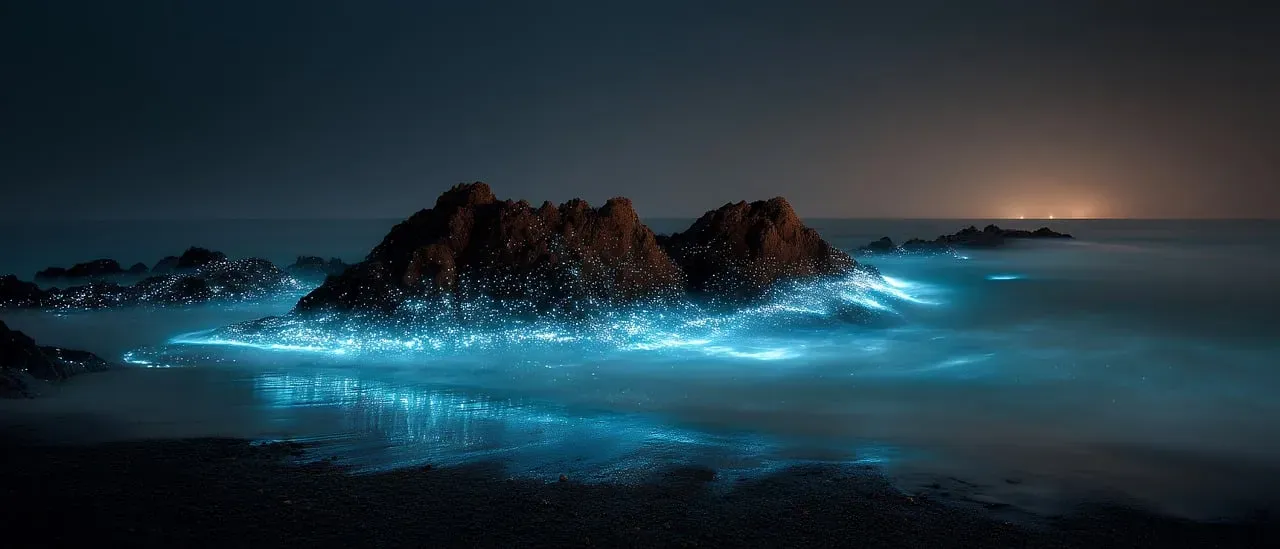
If you’ve ever stood on a beach at night and watched the ocean shimmer with a ghostly blue-green light with every breaking wave, you’ve witnessed one of nature’s most breathtaking and still poorly understood spectacles. Bioluminescent bays, also known as “glow-in-the-dark” waters, are lagoons teeming with microorganisms called dinoflagellates that emit light when disturbed. Locations such as Mosquito Bay in Puerto Rico highlight this breathtaking natural display.
While the general biological mechanisms of bioluminescence are understood, scientists are still investigating why certain areas harbor such dense concentrations of these organisms. Factors like water temperature, salinity, and nutrient levels could play a role, but the full picture remains incomplete. Bioluminescent bays continue to mesmerize and inspire those who seek the magic of nature’s light show. It’s a bit like knowing that fire burns but having no idea why some forests are full of spontaneous blazes and others never see a spark.
What makes this phenomenon even more puzzling is how unpredictable it is. Some bays glow brilliantly for years, then fade. Others appear in new locations without obvious reason. Scientists study these recurring events to uncover their causes, yet many remain unexplained due to their rarity, complexity, or the unique conditions required for them to occur. The ocean, it turns out, is still writing its own rulebook, and it hasn’t shared it with us yet.
Hessdalen Lights: Norway’s Floating Orbs That No One Can Explain
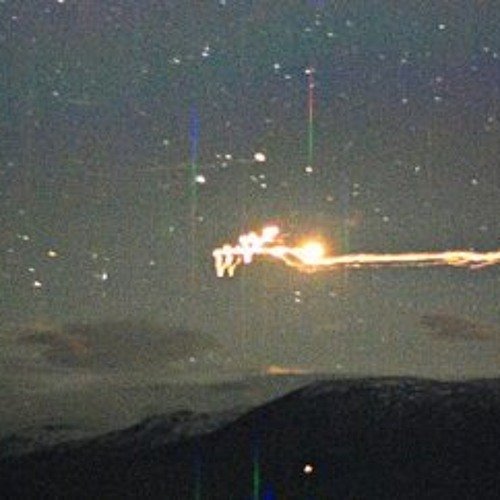
Deep in a remote Norwegian valley, something has been appearing in the sky since at least the early 1980s. Bright, floating orbs of light, sometimes white, sometimes yellow, sometimes red, drift and hover over the Hessdalen Valley without any apparent source. In the remote Hessdalen Valley of Norway, a recurring and baffling phenomenon known as the Hessdalen Lights has intrigued researchers and UFO enthusiasts alike. These unexplained lights appear as bright, floating orbs in the sky, often accompanied by reports of electromagnetic disturbances and unexplained aerial phenomena.
While various scientific expeditions have attempted to unravel the mystery, the true nature of the lights remains elusive. Proposed explanations range from ionized gases to natural electromagnetic interactions, but a definitive answer has yet to emerge. Despite extensive observation and study, scientists haven’t settled on a single explanation. Some suggest the lights might be linked to the valley’s underlying geological conditions or atmospheric interactions, yet questions remain. The Hessdalen Lights attract researchers and tourists eager to catch a glimpse of this unique phenomenon.
What makes Hessdalen particularly fascinating, I think, is that this is not ancient folklore. This isn’t a tale from a time before cameras. These lights have been documented, filmed, and studied by serious scientific teams with modern equipment. Scientists study these recurring events to uncover patterns, causes, and potential implications, yet some mysteries remain, inspiring curiosity and awe. The lights keep showing up. The answers keep not showing up. And that strange gap between observation and explanation is, honestly, where some of the most exciting science lives.
Conclusion: Nature’s Greatest Secrets Are Still Out There
There is something deeply humbling about this list. We live in an age of extraordinary scientific power. You carry more computing ability in your pocket than was used to land humans on the Moon. Yet glowing spheres of electricity still drift through airplane cabins without explanation, rocks still slide across deserts under conditions so rare they were captured on film only once, and a soft hum continues to keep people awake in New Mexico with no clear cause in sight.
These five phenomena remind us that nature is not a puzzle that humanity has nearly finished solving. It is more like an ocean we’ve only waded into up to our ankles. These phenomena remind us that, even in a world of advanced science, nature holds countless secrets yet to be fully understood. Every unsolved mystery is an open door, an invitation to keep asking questions that feel uncomfortable, strange, and wonderful all at once.
The next time you find yourself standing under a stormy sky, walking along a glowing shoreline, or lying awake listening to a sound no one else can seem to hear, maybe that’s not a problem to be fixed. Maybe that’s just nature, still refusing to give up all its secrets. Which of these five mysteries surprised you the most? Drop your thoughts in the comments.