
If you’ve ever walked out of a movie theater and thought, “Yeah, but real science could never do that,” you might be in for a surprise. Some of the wildest ideas in cutting‑edge physics and cosmology sound like they were ripped straight from a sci‑fi script, yet they sit on serious mathematical foundations and are debated in research papers, not just on fan forums. The universe, it turns out, is a lot stranger than our everyday experience lets on.
We’re going to look at five ideas that feel almost too bizarre to be real, yet are considered scientifically plausible by many researchers. They’re not proven facts, and experts sometimes disagree sharply about how likely they are, but they’re all grounded enough in known physics and careful reasoning to be taken seriously. Think of them as the borderlands where science brushes up against imagination, and where tomorrow’s “obvious” truths might be hiding in plain sight today.
1. The Simulation Hypothesis: Are We Living in a Cosmic Computer?
Imagine discovering that everything you’ve ever seen, felt, or loved is running on someone else’s hardware. The simulation hypothesis suggests that our entire universe could be a sophisticated simulation, like an unimaginably advanced video game where the characters (that’s us) don’t realize they’re inside it. It sounds like the plot of a blockbuster movie, but it’s actually discussed in philosophy journals and physics colloquia, because it raises a sharply logical question: if advanced civilizations can create many simulated universes, why assume we’re in the one “real” one?
From a scientific angle, this idea connects to how we model reality in physics and computer science. Researchers already use massive simulations to study galaxies, climate, and even hypothetical universes with slightly different laws of physics. As computing power grows and quantum technologies develop, the gap between “toy simulations” and something richer narrows in principle. Some physicists have even wondered whether there might be detectable “pixelation” in space‑time or strange regularities in high‑energy physics that could hint at an underlying computational grid, though so far, nothing like that has been clearly found.
2. The Multiverse: Infinite Universes With Different Realities
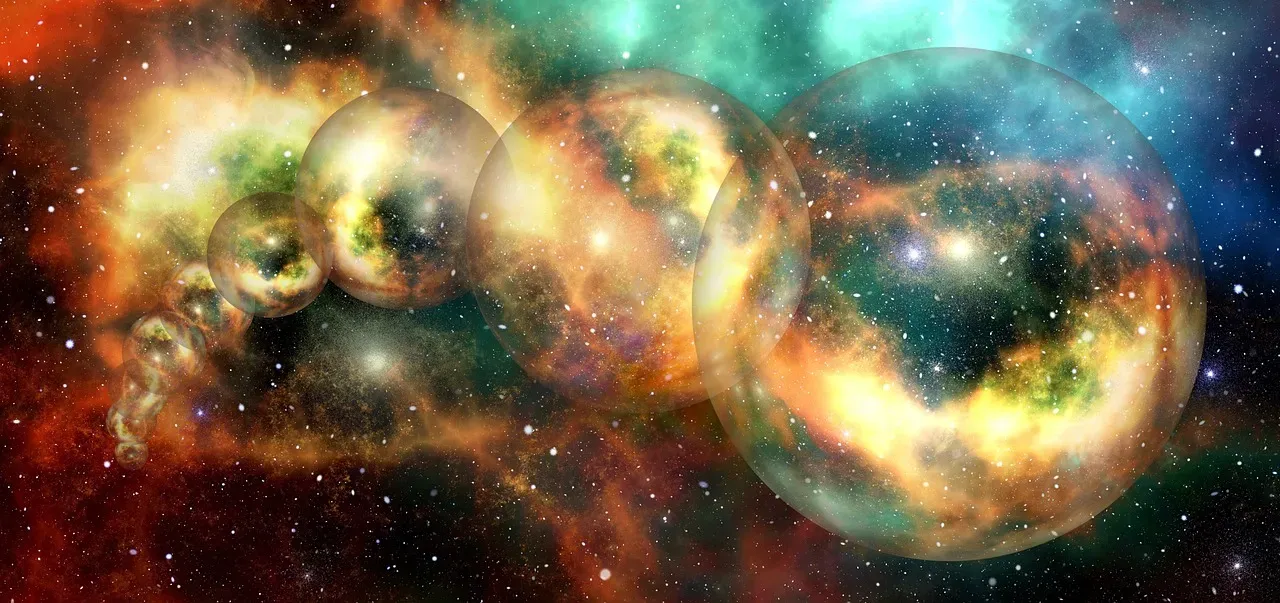
The idea that there could be many universes, not just one, sounds dangerously close to fantasy at first. Yet several serious branches of physics naturally give rise to a multiverse, a vast collection of separate cosmic “bubbles” with different properties and maybe even different laws of nature. In some models of cosmic inflation, our universe is just one region where inflation ended, while in other regions it continues or ends differently, spawning other universes we can never reach but that are, in principle, just as real as ours.
Physicists also encounter multiverse‑like ideas when studying quantum mechanics and string theory. Certain interpretations of quantum theory treat every measurement as branching reality into multiple possible outcomes, while some versions of string theory allow many possible vacuum states with different physical constants. None of this is settled, and the multiverse is controversial precisely because it’s so hard to test directly. Still, when different theories point in a similar direction, scientists take notice, even if they’re not thrilled about how weird and unsettling those implications feel.
3. Time Travel via Relativity: Bending Time Without Breaking Physics

Time travel usually conjures up images of sleek machines, blinking lights, and paradoxes about accidentally erasing your own existence. In real physics, you don’t need a magic device; you just need speed and gravity. Einstein’s theory of relativity shows that time doesn’t tick at the same rate for everyone, and this has been confirmed using precise atomic clocks on airplanes and satellites. Move very fast or stay near something extremely massive, and time will run slower for you compared with someone far away, effectively letting you “travel” into the future.
Going backward in time is far trickier and likely impossible in any practical sense, but the equations of general relativity allow solutions with closed time‑like curves, where a path through space‑time loops back on itself. These usually require exotic conditions, like wormholes or forms of matter with negative energy density that we don’t yet know how to produce in bulk, if they exist at all. Still, the fact that our best theory of gravity even permits such paths keeps the door open a crack, turning what sounds like pure fantasy into a deep and ongoing scientific puzzle.
4. Wormholes: Shortcuts Through Space and Maybe Time
The classic sci‑fi shortcut – step into a portal here, pop out on the other side of the galaxy there – has a respectable mathematical cousin in general relativity called a wormhole. In simple terms, a wormhole is a tunnel connecting two distant points in space‑time, like folding a sheet of paper so two far‑apart dots touch. The math for certain types of wormholes is well‑defined: you can write down solutions to Einstein’s equations that describe them, and physicists have studied how they might behave and what they’d require to stay open.
The catch is that every traversable wormhole solution we understand so far demands something called exotic matter, with negative energy density relative to the vacuum. At first glance that sounds impossible, but quantum field theory predicts effects where energy densities dip below the vacuum level for very short times and tiny regions, so the idea isn’t completely outside accepted physics. Modern research has even explored wormhole‑like systems in theoretical models of quantum gravity and in highly controlled condensed‑matter setups, not as literal portals, but as analogues that help us probe whether these wild ideas might have some foothold in reality.
5. Quantum Entanglement and Teleportation: Spooky Links Across Space
In the quantum world, particles can become entangled so that their properties are linked, no matter how far apart they travel. Measure one, and you instantly know something about the other, even if it’s on the opposite side of the planet. This used to sound so absurd that many thought the theory had to be incomplete, but repeated experiments have confirmed entanglement again and again. It doesn’t let you send faster‑than‑light messages, but it does force us to rethink what it means for objects to have well‑defined properties before we look at them.
Building on entanglement, physicists have demonstrated a process called quantum teleportation, where the precise quantum state of a particle is transferred to another distant particle, while the original state is destroyed. This isn’t teleporting matter like in a sci‑fi transporter, but it’s a real, lab‑tested way to move information in a manner that has no classical counterpart. Today, quantum teleportation is being explored for secure communication and quantum networks, and it hints at a future where information moves and combines in ways that feel almost magical, yet rest firmly on experimentally verified principles.
When Science and Imagination Overlap
These theories don’t ask us to abandon skepticism; they invite us to aim it in the right direction. Instead of dismissing an idea just because it feels outlandish, scientists ask whether it emerges from solid equations, agrees with what we already know, and, ideally, offers some path – however narrow – toward being tested. The fact that concepts as wild as simulated universes, multiverses, wormholes, and teleportation even show up in that conversation says something profound about how limited our everyday intuitions really are.
What makes all of this especially gripping is that we’re living at a time when experiments in quantum technology, cosmology, and high‑energy physics are pushing right up against the borders of these questions. We may find clear evidence that some of these ideas are wrong or incomplete, or we may discover hints that reality is stranger than we dared to assume. Either way, the line between science fiction and science fact is not a brick wall; it’s a shifting frontier, and we’re all standing on it together, looking out and wondering: which of these “impossible” ideas will end up feeling obvious to people a hundred years from now?