

We live by time like it’s law: alarms at seven, meetings at nine, deadlines at midnight. Yet, the deeper physicists and philosophers dig, the less time behaves like the neat, ticking line we grew up with. Instead, it warps, frays, disappears, and sometimes even runs backward in our equations. From quantum experiments that seem to let the future influence the past, to cosmological models where time simply never began, today’s science is quietly dismantling our everyday intuitions. What emerges is not chaos, but a stranger, richer picture of reality – one that forces us to ask whether time is a fundamental ingredient of the universe or just a clever trick our brains play on us.
The Block Universe: A Frozen Cosmos Where Past and Future Already Exist
Imagine pressing “pause” on the universe – not just on movement, but on history itself. In the block universe view, rooted in Einstein’s theory of relativity, the cosmos is like a four‑dimensional slab where past, present, and future all coexist at once. Your first day of school, this exact moment, and your last day alive all sit together in the same grand structure, like different pages in a single book. Time, in this picture, does not “flow”; instead, we move through a pre‑existing landscape of events. The unsettling implication is that the passage of time might be nothing more than a feeling, not a physical fact.
Physicists arrived at this idea because relativity shows that different observers can disagree about which events are “now,” depending on how they move. There is no universal, cosmic present everyone can agree on, which makes the everyday notion of a shared “now” very hard to defend. If no privileged present exists, then all moments may be equally real, and the universe looks less like a movie playing and more like the whole film reel laid out on a table. Some philosophers embrace this as a clean, mathematically elegant view; others recoil, arguing it drains life of spontaneity and choice. Yet whether we like it or not, the block universe remains one of the most serious contenders for describing time at the deepest level.
Quantum Weirdness: Can the Future Rewrite the Past?
In quantum physics, time stops behaving like a one‑way street and starts to look more like a network of branching paths. One of the most disturbing ideas comes from “retrocausality,” the suggestion that future measurements might influence what happened in the past at the quantum level. In so‑called delayed‑choice experiments, researchers decide how to measure a particle after it has already traveled through an apparatus, and yet the outcome behaves as if the particle “knew” in advance what measurement would be chosen. It is as though a later decision reaches back and alters the earlier history of the particle. To everyday intuition, that sounds impossible, almost like editing a memory after it’s already been formed.
Most physicists do not literally think we are rewriting the past, but they also admit that our classical idea of cause‑then‑effect is too simple for quantum reality. Some interpretations say that what we call “events” do not solidify until interactions are considered as a whole, across time, blurring our neat timeline of before and after. Others propose that hidden variables or many parallel branches of reality conspire to produce the strange statistics, sidestepping backward causation entirely. Still, the experiments stubbornly deliver results that refuse to fit into an everyday, forward‑only narrative. The deeper message is clear: at the smallest scales, time might not be the rigid ordering principle we imagine, but a flexible part of an underlying web of correlations.
Loop Quantum Gravity and the Possibility of a Timeless World
Loop quantum gravity, one of the leading attempts to merge quantum mechanics with general relativity, goes even further by hinting that time might not exist at the most fundamental level. In these models, space itself is built from tiny, discrete loops or “atoms” of geometry, and the usual notion of a smooth spacetime continuum breaks down. When physicists write the key equations in this framework, time often vanishes entirely, replaced by relations between different configurations of the universe. Instead of things evolving in time, you get patterns relating one possible state of reality to another, without any external clock ticking in the background. It is a world described not by when things happen, but by how different snapshots of the universe fit together.
To make sense of our everyday experience, researchers talk about “emergent time,” much like temperature emerges from countless jiggling atoms even though no single atom has a temperature. In this view, time might be a large‑scale, statistical effect of many underlying degrees of freedom, not a built‑in feature of nature’s deepest laws. That is a dramatic shift from centuries of physics, which treated time as a universal stage on which events unfold. It also raises fresh questions, such as why we experience a strong sense of flow and direction if the groundwork is timeless. Loop quantum gravity has not yet delivered final answers, but it has forced physicists to confront the possibility that the universe runs just fine without fundamental time – and that our experience is more like a story our brains stitch together from static frames.
The Arrow of Time: Why Reality Flows One Way When Physics Does Not

One of the strangest facts about time is that most fundamental equations do not care which way it runs. Reverse the direction of time in many of our best physical laws, and the math still works perfectly. Yet our everyday world is drenched in one‑way processes: eggs shatter but never un‑shatter, smoke disperses but never regathers, we remember yesterday but not tomorrow. This mismatch between time‑symmetric equations and one‑directional experience is known as the arrow of time problem. The standard explanation links it to entropy, the measure of disorder, which tends to increase from an extremely ordered early universe toward a more disordered future.
Still, this raises a deeper question: why did the universe start in such a staggeringly low‑entropy, highly ordered state in the first place? That initial condition, not the equations themselves, may be what gives time its direction, making the arrow of time less a law of nature and more a cosmic boundary condition. Some researchers explore multiverse ideas where countless universes branch with different arrows, or scenarios where time’s arrow flips in distant regions. Others argue that our psychological sense of time’s flow is rooted in how memory, causation, and thermodynamics intertwine in complex systems like brains. The unsettling possibility is that the one‑way feel of time might be a parochial feature of our corner of reality, not a universal rule.
Why It Matters: Time, Free Will, and What It Means to Be Human
These theories are not just intellectual games for physicists with a taste for paradox; they cut straight into how we understand ourselves. If the block universe is right and all moments coexist, our sense of making open, undetermined choices starts to look like a useful illusion. If quantum experiments really do blur cause and effect, then our cherished idea of a clean chain of causation becomes harder to defend. A timeless or emergent‑time universe challenges the basic way we talk about responsibility, progress, and even ethics, all of which lean heavily on assumptions about past, present, and future. In a very real sense, every major theory of time quietly smuggles in a different picture of what it means to be human.
Compared with traditional Newtonian time – a universal, absolute ticking clock – the modern view is less comforting but far more honest about what our best equations say. The old picture treated time as a steady river flowing from a well‑defined source to a distant sea. Today’s theories, in contrast, suggest the river may be a mirage generated by countless droplets of underlying structure and interaction. This matters for more than philosophy: it shapes how we interpret brain research, artificial intelligence, and even long‑term social planning, all of which rely on models of prediction and change. When your core concept of time shifts, almost everything else in science and society has to be reconsidered with fresh eyes.
Cosmic Time Tricks: From Big Bang Beginnings to Multiverse Possibilities
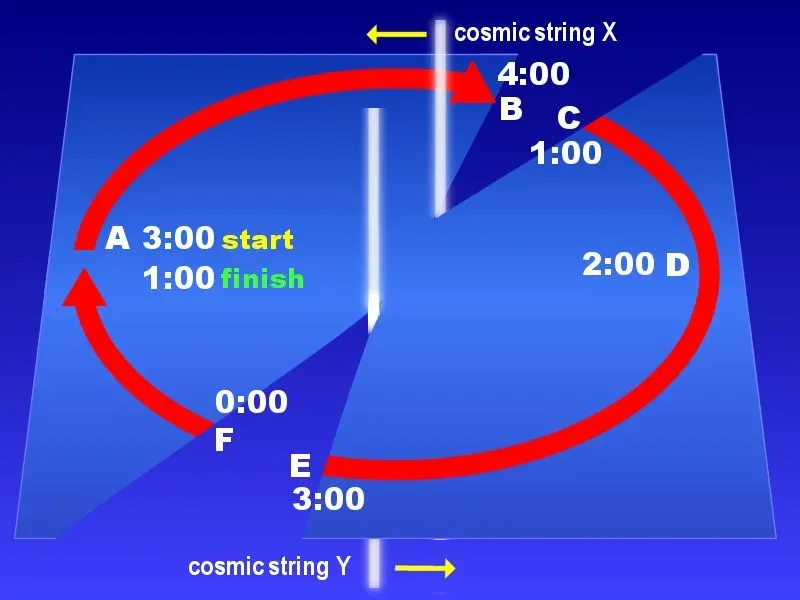
Cosmology has long told a straightforward story: time begins with the Big Bang, then stretches out as the universe expands and cools. But newer theoretical work, alongside data from cosmic background radiation and large‑scale structure, hints that the story could be more complicated. Some models propose a bounce rather than a bang, where a prior contracting universe preceded our expansion and time extends further back than we once imagined. Others explore scenarios in which time itself emerges from an earlier, timeless quantum phase of the cosmos. In these pictures, asking what happened “before” the Big Bang may be like asking what is north of the North Pole – an invitation to rethink the question entirely.
There are also multiverse models where time behaves differently in different regions of a vast cosmic landscape. In some pockets, time might run in the opposite direction from our perspective, with entropy decreasing rather than increasing. In others, what we call time could be replaced by more exotic parameters, with familiar notions of before and after losing their grip. While these ideas remain speculative, they show how far cosmologists are willing to go to reconcile data with theory. The more we learn about the universe on the largest scales, the less plausible it seems that time is simple, uniform, and universal.
The Future Landscape: New Experiments, New Clocks, New Paradoxes
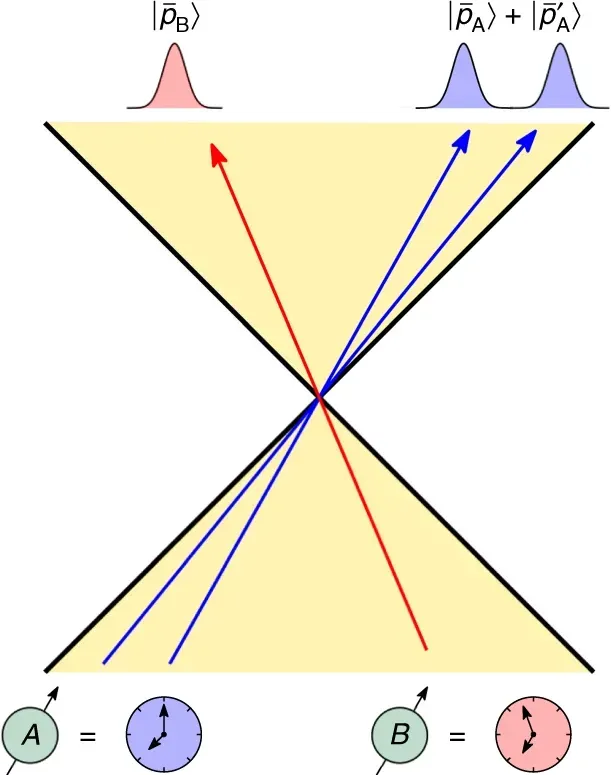
In the coming decades, the science of time will move from philosophy‑tinged thought experiments to sharper, more decisive tests. Ultra‑precise atomic clocks, already sensitive enough to notice time running slightly faster on a shelf than on the floor, will be pushed to orbiting satellites, deep mines, and even quantum networks. These devices will stress‑test relativity and might catch subtle deviations that hint at quantum gravity effects. Quantum computers, if they fulfill even a fraction of their promise, could simulate “toy universes” where different rules of time are explored in silico. Each of these advances will either reinforce or challenge our current theories, and either outcome will be scientifically explosive.
At the same time, new astronomical observatories will peer further back toward the earliest light and structure in the cosmos, tightening the constraints on models of the Big Bang, bounces, and emergent time. Lab experiments that entangle ever larger systems will probe how classical reality – along with its sense of temporal order – emerges from quantum fog. There will be philosophical fallout, too, as legal systems, ethics debates, and even personal identity questions adapt to a less rigid view of causation and choice. The future of time research is not a neat, linear progression toward a final answer; it is a branching maze of possibilities that may force us to rewrite textbooks more than once.
How You Can Engage: Living Curiously in a Stranger Universe
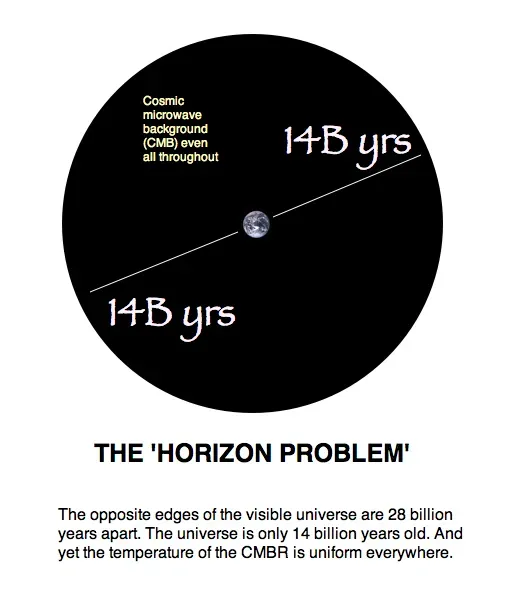
Most of us will never build an atomic clock or run a quantum gravity simulation, but that does not mean we are locked out of the conversation about time. Simply staying curious – reading about new experiments, following reputable science outlets, and resisting the urge to cling to overly simple explanations – already changes the cultural climate around these questions. Supporting basic research, whether through public funding, university programs, or science‑friendly policies, helps ensure that time theories are tested rather than left to speculation. Even small choices, like discussing these ideas with friends or in classrooms, can normalize the idea that our intuitive picture of reality might need updating. A society comfortable with uncertainty and revision is better prepared for the shocks that cutting‑edge physics can deliver.
If you want something more concrete, you can: learn the basics of relativity and quantum theory from accessible books or online lectures, join local or virtual science cafés, and support organizations that promote physics education. You can also practice a kind of “temporal humility” in everyday life, recognizing that the way we experience time might be only one layer of a deeper structure. That mindset makes room for wonder instead of anxiety when new discoveries overturn old certainties. After all, if time itself is not what it seems, perhaps our assumptions about what is fixed in our lives are more flexible than we think. What else might change once we stop taking the ticking of the clock at face value?
Suhail Ahmed is a passionate digital professional and nature enthusiast with over 8 years of experience in content strategy, SEO, web development, and digital operations. Alongside his freelance journey, Suhail actively contributes to nature and wildlife platforms like Discover Wildlife, where he channels his curiosity for the planet into engaging, educational storytelling.
With a strong background in managing digital ecosystems — from ecommerce stores and WordPress websites to social media and automation — Suhail merges technical precision with creative insight. His content reflects a rare balance: SEO-friendly yet deeply human, data-informed yet emotionally resonant.
Driven by a love for discovery and storytelling, Suhail believes in using digital platforms to amplify causes that matter — especially those protecting Earth’s biodiversity and inspiring sustainable living. Whether he’s managing online projects or crafting wildlife content, his goal remains the same: to inform, inspire, and leave a positive digital footprint.