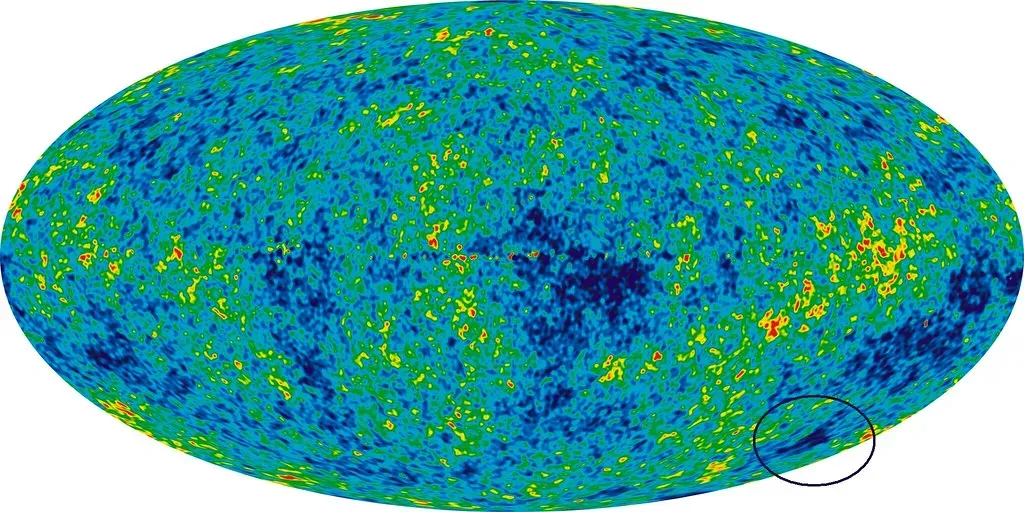
Every so often, science runs into questions that do more than stump researchers; they quietly threaten to rewrite the rules of reality itself. These puzzles sit at the edges of our best theories, where equations still work but our intuition starts to fall apart. From mysterious stuff that outweighs everything we can see, to information that may never really die, each of these problems forces us to ask whether our picture of the universe is deeply incomplete. This article looks at five such puzzles, why they refuse to go away, and how solving them could change not just physics textbooks, but the way we think about time, matter, and even existence. Think of this as a guided walk along the fault lines of modern science, where the ground beneath our everyday assumptions quietly trembles.
The Dark Universe: Matter and Energy We Cannot See but Cannot Ignore
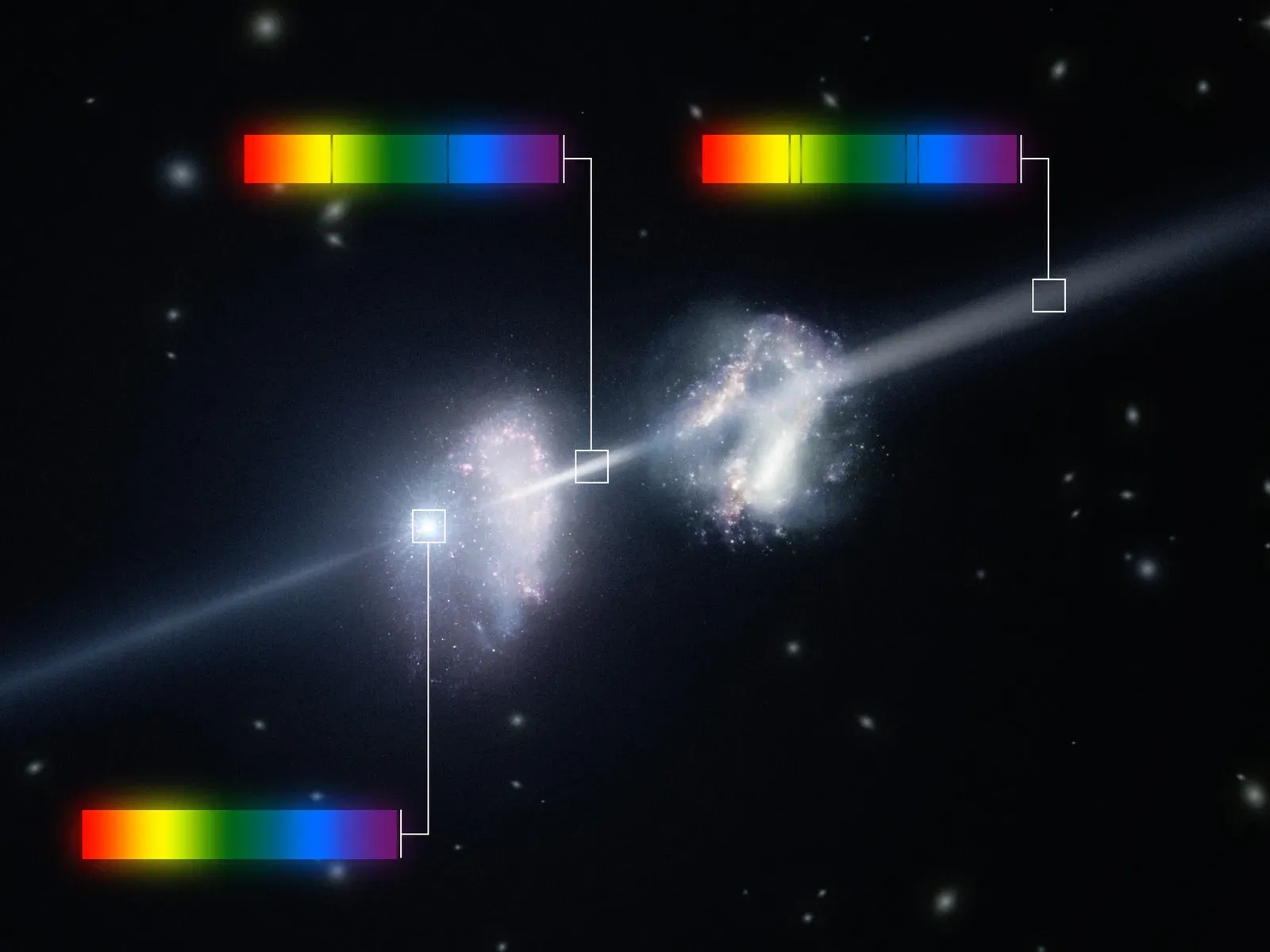
It is hard to overstate how unsettling it is that most of the universe seems to be invisible and untouchable, yet leaves unmistakable fingerprints everywhere we look. Astronomers measuring how fast galaxies rotate found that the stars are moving too quickly to be held together by visible matter alone, unless something unseen is providing extra gravity. On even larger scales, the way galaxy clusters bend light from more distant objects acts like a cosmic X-ray, revealing far more mass than any telescope can see. This missing mass is what researchers call dark matter, and by current estimates it outweighs ordinary matter by roughly five to six times.
Dark energy is even stranger: instead of pulling things together, it appears to push the universe apart faster and faster over time. Observations of distant supernovae in the late 1990s showed that cosmic expansion is accelerating, as if empty space has a built-in “pressure” that increases as the universe grows. Together, dark matter and dark energy make up nearly the entire cosmic budget, leaving normal atoms as a tiny minority ingredient. If we eventually figure out what they really are – new particles, modified gravity, or something more radical – it will not just patch a hole in our models; it will overturn our basic sense of what “stuff” and “nothing” actually mean.
The Quantum Measurement Problem: When Reality Depends on Looking
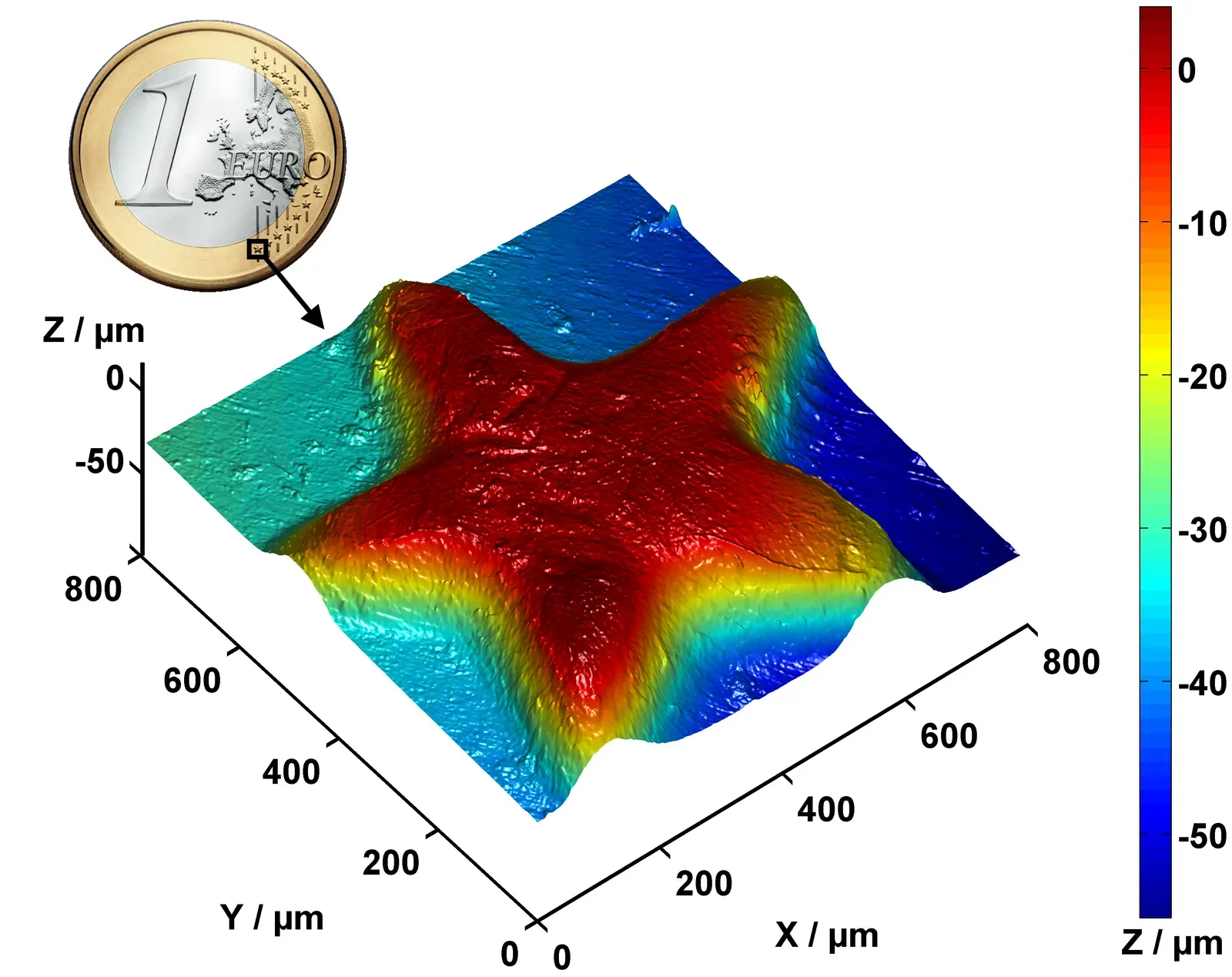
At the heart of quantum mechanics is a rule that sounds more like a Zen riddle than a physical law: particles exist in overlapping possibilities until we measure them, at which point they “choose” a definite outcome. In the classic double-slit experiment, single electrons or photons sent through two narrow openings at a time build up an interference pattern, as if each one spread out like a wave and went through both slits at once. Yet when detectors are placed to check which slit each particle actually passes through, the pattern vanishes and the particles behave like tiny bullets taking one path or the other. The measurement problem asks a deceptively simple question: what, exactly, counts as a “measurement,” and why does it have this dramatic effect?
Various interpretations of quantum mechanics offer wildly different answers while making the same predictions for most experiments. Some suggest that the wavefunction never really collapses, and that every possible outcome happens in parallel branches of reality that we never see. Others propose that collapse is a real, physical process that kicks in at a certain scale, or that interactions with the environment continuously “decohere” superpositions into the classical world we experience. The uncomfortable truth is that a theory we use to design lasers, MRI machines, and microchips still leaves us with no consensus on what is fundamentally real. If we crack the measurement problem in a decisive, experimentally testable way, it could change how we think about observation, information, and whether the universe has definite properties when no one is looking.
The Arrow of Time: Why the Equations Are Reversible but Our Lives Are Not

The basic laws of physics, from Newton’s equations to quantum field theory, mostly do not care whether time runs forward or backward. If you filmed two colliding billiard balls and then played the video in reverse, the motion would still obey the same underlying rules. Yet our everyday experience flatly contradicts this symmetry: eggs scramble but never spontaneously unscramble, smoke spreads out but never gathers itself neatly back into the chimney. This one-way feeling of time is often called the arrow of time, and it seems intimately tied to the concept of entropy, a measure of disorder that tends to increase.
The standard explanation is that the universe began in an incredibly low-entropy, highly ordered state, and has been shuffling toward higher entropy ever since. But why did the early universe start off so oddly tidy, when higher-entropy states are vastly more likely? Cosmologists have tried to connect this puzzle to the shape and evolution of spacetime itself, exploring ideas like inflation, multiverses, and deep links between gravity and thermodynamics. Despite the technical details, there is a deeply human question here: is the flow of time a fundamental feature of reality or an emergent illusion that comes from the way we, as information-processing organisms, interact with the universe? A breakthrough on the arrow of time would not just refine cosmology; it could reshape philosophy, neuroscience, and our sense of what it means to remember the past but not the future.
The Black Hole Information Paradox: Does the Universe Ever Truly Forget?
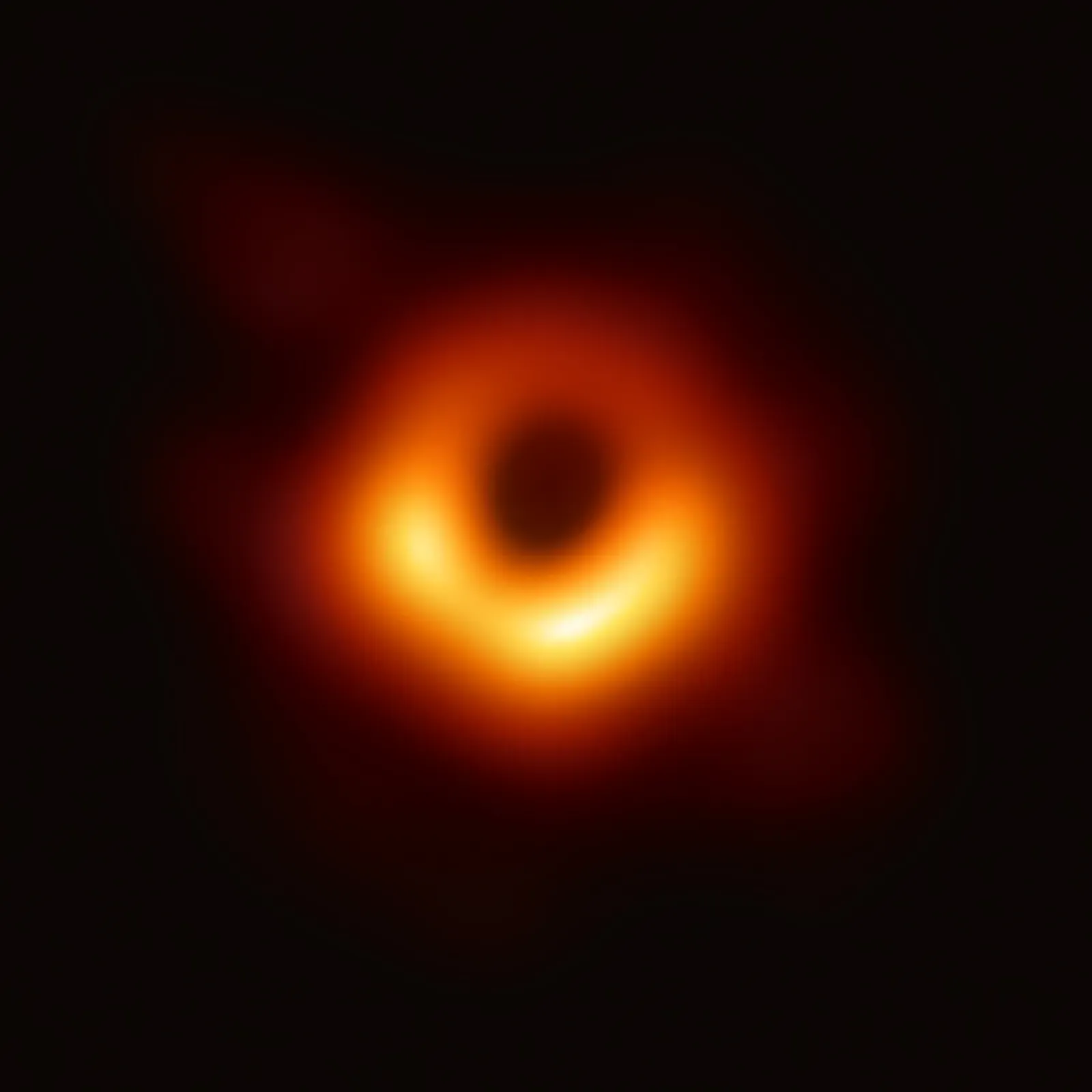
Black holes are regions where gravity is so intense that not even light can escape once it crosses a boundary called the event horizon. According to classical general relativity, anything that falls in is gone to the outside world forever, its details erased behind that horizon. Quantum theory, however, insists that information about a physical system cannot be completely destroyed, even if it is scrambled beyond recognition. When quantum calculations showed that black holes should emit a faint glow – now known as Hawking radiation – and eventually evaporate, it created a crisis: if the black hole disappears into featureless radiation, what happens to all the information about what fell in?
This black hole information paradox has driven some of the most creative work at the crossroads of gravity and quantum mechanics. Ideas such as holographic duality suggest that all the information inside a region of space might be encoded on its boundary, like a cosmic hard drive storing the entire movie of what happens within. Others explore whether spacetime itself might be woven out of quantum entanglement, making black holes a kind of knot in that fabric rather than simple holes in space. Recent theoretical advances hint that information may leak out subtly encoded in the radiation after all, but the precise mechanism is still under intense debate. Solving this paradox would give us precious clues toward a full theory of quantum gravity and answer a question that feels almost moral: can the universe truly erase its history?
Fine-Tuning and Cosmic Coincidences: Why the Numbers Look Just Right
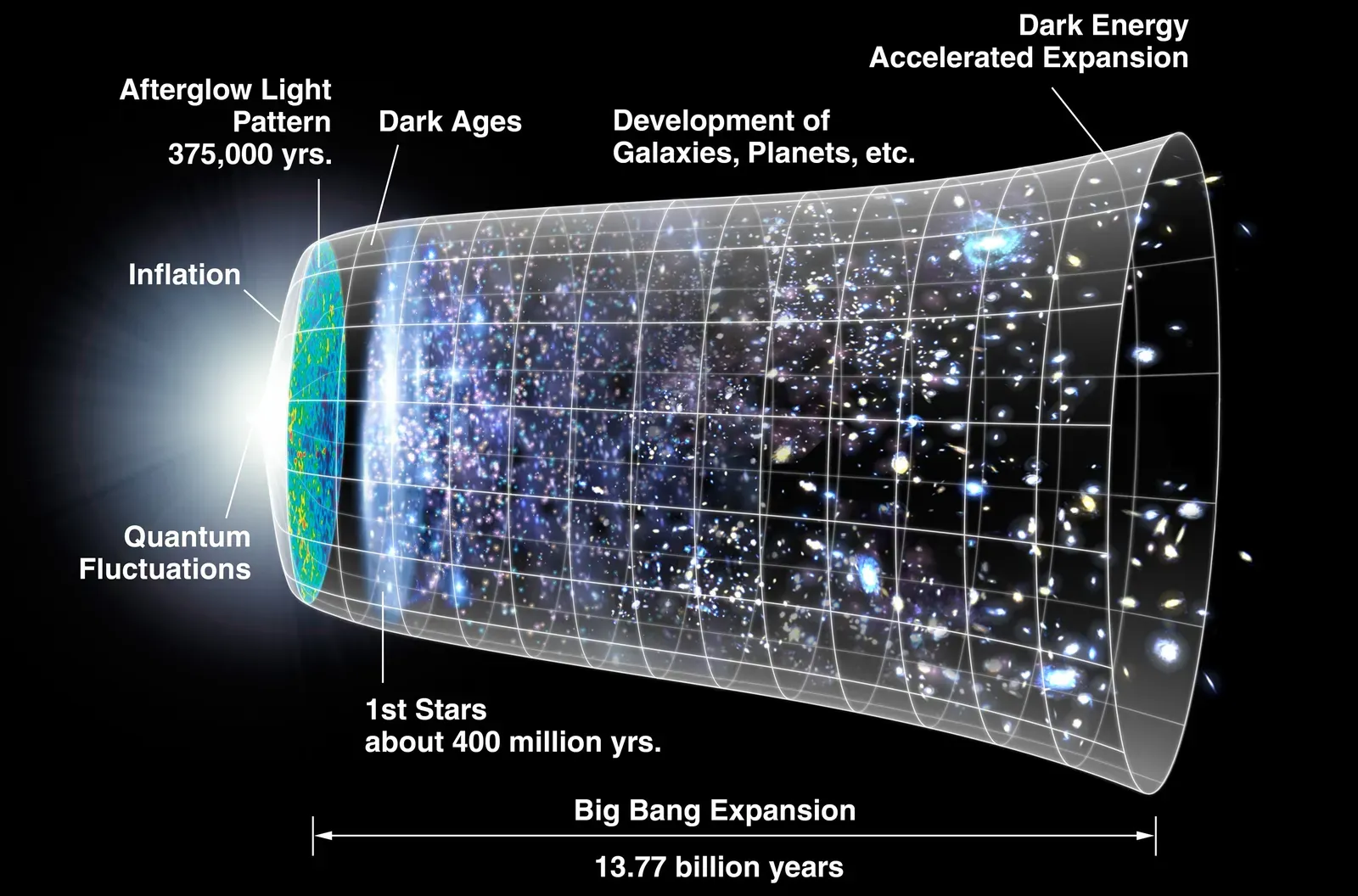
A handful of physical constants determine how our universe behaves, from the strength of gravity to the masses of fundamental particles, and the values of many of these numbers seem eerily well-suited for complex structures like stars, chemistry, and eventually life. If gravity were noticeably stronger, the universe might have collapsed or formed only short-lived stars; if it were slightly weaker, matter might have spread too thin for galaxies to form. Similar sensitivity applies to the balance between forces inside atoms, which governs whether stable elements and long-lived stars can exist. Taken together, these apparent coincidences are often called fine-tuning, and they make some scientists uncomfortable because they flirt with the language of luck and purpose.
Several explanations are on the table, none fully satisfying. One approach is purely statistical: if there is an enormous or even infinite collection of universes with different physical constants – a multiverse – then we should not be surprised to find ourselves in one that happens to permit observers. Another hopes that a deeper, more fundamental theory will show that these constants are not arbitrary but forced to their values by underlying mathematical structure. There is also the anthropic perspective, which argues that mentioning “observers like us” is not mystical at all, but a logical selection effect. Whichever way the debate turns, resolving fine-tuning would dramatically reshape our sense of whether our universe is one option among many, or the inevitable expression of deeper, hidden laws.
Consciousness and the Physical World: Is Mind Just Matter in Motion?
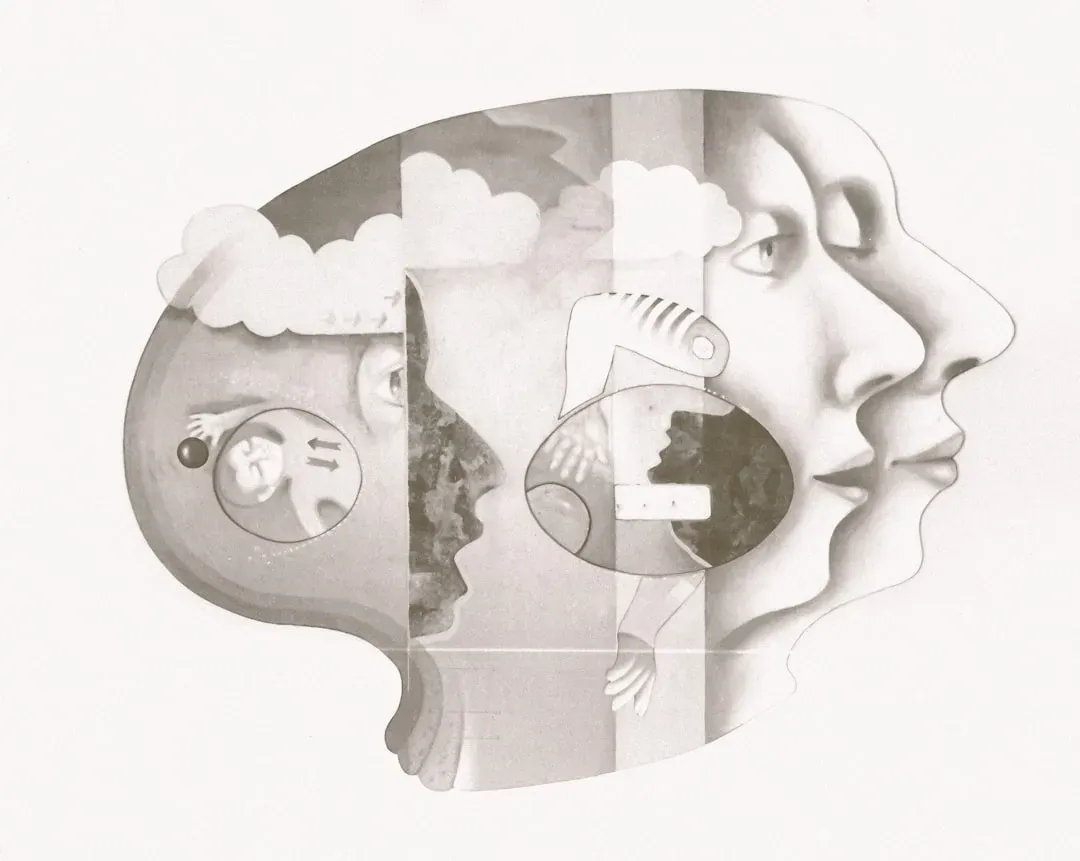
For all the progress in neuroscience, the simple fact that you have an inner life – a stream of experiences, feelings, and a sense of being you – is still profoundly mysterious. Brain scans can track patterns of electrical and chemical activity linked with perception and decision-making, and researchers have mapped networks that light up when we recognize faces, feel fear, or solve puzzles. Yet there is a stubborn gap between describing the mechanics of neurons firing and explaining why those processes should be accompanied by a first-person experience, rather than unfolding in the dark. This gap is sometimes called the “hard problem” of consciousness, and it puts the nature of reality on the table because it forces us to ask how mind fits into a world described by physics.
Most working scientists adopt some version of physicalism, the idea that conscious states are entirely the result of physical processes in the brain, even if we do not yet know exactly how the mapping works. Others explore frameworks where information, computation, or even certain patterns of interaction have a special status that could bridge mind and matter. There are also bolder suggestions that consciousness might be a more fundamental aspect of the universe than we currently allow, woven into the fabric of reality the way space, time, and energy are. Experiments probing the neural correlates of awareness, disorders of consciousness, and AI systems that mimic aspects of human cognition are slowly sharpening the questions, if not yet the answers. When we finally understand how subjective experience arises – or why our current assumptions fail – that insight will not just change neuroscience; it will change how each of us understands what it means to exist at all.
Why These Puzzles Cut Deeper Than Ordinary Scientific Problems
Not all open questions in science threaten our basic worldview in the way these five do. Measuring the mass of a new particle or refining the age of a fossil fits comfortably into existing frameworks, adding detail but not shaking the foundations. By contrast, dark matter and dark energy tell us that most of reality may be made of unfamiliar ingredients, while the quantum measurement problem undermines our naive sense that objects simply “have” properties independent of observation. The arrow of time challenges the idea that the forward flow of events is built into physics, the black hole information paradox stresses the limits of what the universe can erase, and consciousness forces us to confront whether our inner lives can be fully captured by physical descriptions.
What makes these puzzles so potent is how they entangle scientific, philosophical, and even cultural threads. Debates about fine-tuning and multiverses bleed into questions about uniqueness and purpose; arguments about consciousness echo in law, ethics, and how we treat intelligent machines. As a science journalist, I have watched researchers from wildly different fields – cosmology, quantum theory, neuroscience, information science – realize they are circling the same deep issues from different directions. When these boundaries blur, we are reminded that “reality” is not just a scientific term but a shared human concept we are collectively trying to refine. If and when these puzzles yield, the shockwaves will ripple far beyond academic journals, altering how societies talk about meaning, responsibility, and our place in the cosmos.
How You Can Keep Up with a Reality in Question
It is easy to assume that questions this deep are out of reach, locked away in equations or observatories you will never visit, but that is less true now than at any point in history. High-quality popular science books, podcasts, museum exhibits, and open-access lectures make it possible to follow the twists and turns of these debates without doing a PhD. You can watch physicists argue over the measurement problem or cosmologists dissect dark energy, often in plain language, and then form your own view of which explanations feel coherent versus ad hoc. Supporting local science museums, public lectures, or citizen science projects helps create a culture where big, unsettling questions are welcomed rather than brushed aside as impractical.
On a smaller scale, you can treat your own curiosity like a laboratory, noticing when a new idea genuinely shifts how you see the world instead of just adding another fact. Maybe a documentary on black holes changes how you think about loss and memory, or a neuroscience study nudges you to rethink free will as a spectrum rather than an on–off switch. These may sound like private reflections, but collectively they shape what kinds of research get funded, which stories make headlines, and how comfortable we are confronting the weirdness at the heart of reality. In that sense, following these five puzzles is not a passive pastime; it is a quiet way of voting for a future in which we dare to ask the most unsettling questions about the world and ourselves.
Suhail Ahmed is a passionate digital professional and nature enthusiast with over 8 years of experience in content strategy, SEO, web development, and digital operations. Alongside his freelance journey, Suhail actively contributes to nature and wildlife platforms like Discover Wildlife, where he channels his curiosity for the planet into engaging, educational storytelling.
With a strong background in managing digital ecosystems — from ecommerce stores and WordPress websites to social media and automation — Suhail merges technical precision with creative insight. His content reflects a rare balance: SEO-friendly yet deeply human, data-informed yet emotionally resonant.
Driven by a love for discovery and storytelling, Suhail believes in using digital platforms to amplify causes that matter — especially those protecting Earth’s biodiversity and inspiring sustainable living. Whether he’s managing online projects or crafting wildlife content, his goal remains the same: to inform, inspire, and leave a positive digital footprint.