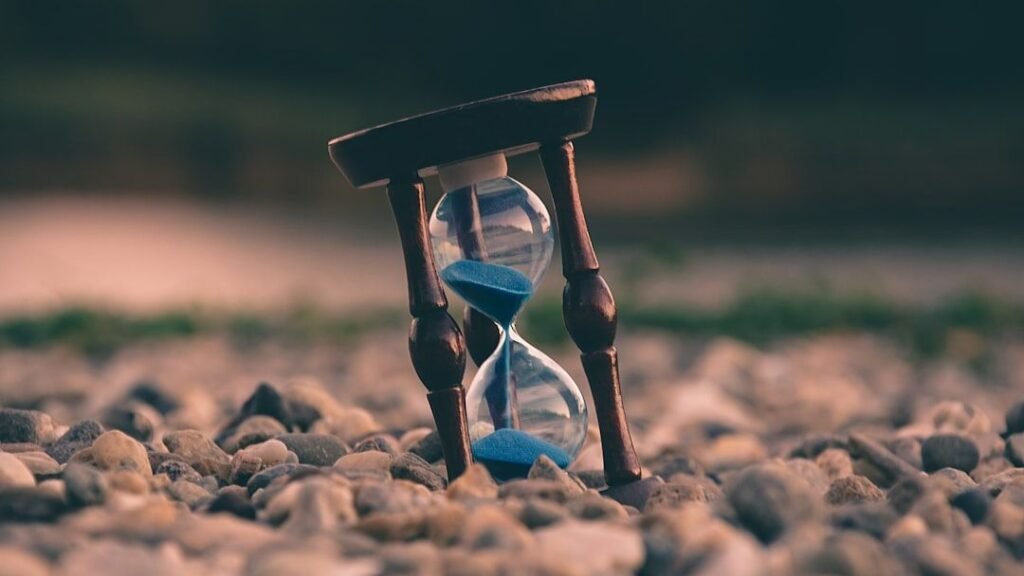

If you ask a physicist what time actually is, there’s a good chance they’ll pause for a moment longer than you’d expect. We live by the clock, age with the calendar, remember the past and imagine the future, yet the thing that seems most obvious in our daily lives is one of the most puzzling concepts in science. Time feels solid and linear when you’re waiting in traffic or watching a deadline creep closer, but under the microscope of modern physics, it behaves more like a slippery illusion.
What makes all this so fascinating is that we now understand time more precisely than at any other point in human history, and still, some of the deepest questions about it remain unanswered. Our best theories describe how time bends, slows, and stretches, but not why it exists the way it does, or why it seems to flow at all. Below are five of the biggest open mysteries about time that keep scientists arguing, imagining, and occasionally losing sleep.
1. Why Does Time Seem To Flow Only Forward?

Think about it: almost every law of physics works perfectly well if you reverse time in the equations. Play the universe backwards and the math still makes sense. But your actual life doesn’t work like that at all – spilled coffee doesn’t jump back into the cup, you remember yesterday but not tomorrow, and you age in one direction only. This mismatch between reversible fundamental laws and our one-way experience is known as the arrow of time, and nobody fully agrees on why it exists.
The most common explanation points to entropy, a measure of disorder that tends to increase over time, like ice cubes melting or a tidy room slowly getting messy. The idea is that the universe began in an incredibly low-entropy, highly ordered state, and has been drifting toward higher entropy ever since, giving time its apparent direction. But this just pushes the question back: why did the universe start out in such a bizarrely ordered way in the first place, and why does that give us a sense of “now” moving like a conveyor belt instead of all moments just existing at once?
2. Is Time a Fundamental Part of Reality or Just an Illusion?
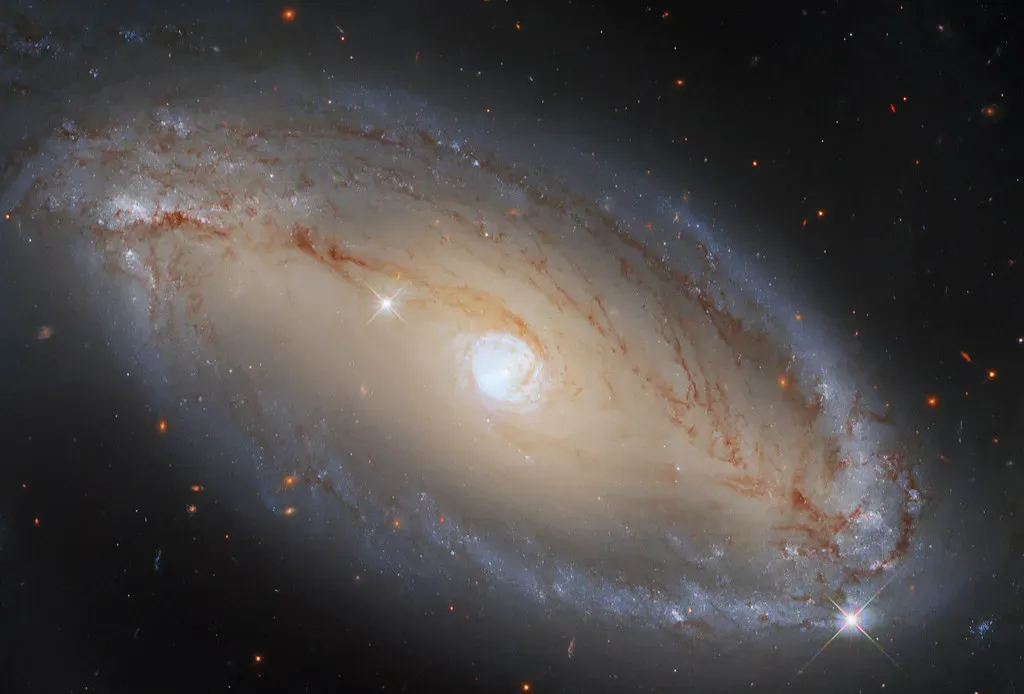
Some physicists and philosophers argue that time might not be fundamental at all, but rather something that emerges from deeper, timeless laws. In this view, the universe at its core might be like a static landscape of possible configurations, and what we call “time” is just the way our minds, and perhaps certain physical processes, move through that landscape. It sounds abstract, but it’s a serious idea being debated in cutting-edge research about quantum gravity and the foundations of physics.
There are also approaches in which the most basic equations describing the universe don’t include time anywhere; time appears only when you look at certain relationships between parts of the system. That would mean the ticking of clocks and the feeling of moments slipping by are more like the frames of a movie that our brains assemble into a story, rather than something built into the universe from the ground up. I remember the first time I encountered this idea in a physics lecture: it felt less like learning science and more like being told that the stage I was standing on might not actually exist.
3. Why Do We Experience a “Now” When Physics Treats All Times Equally?
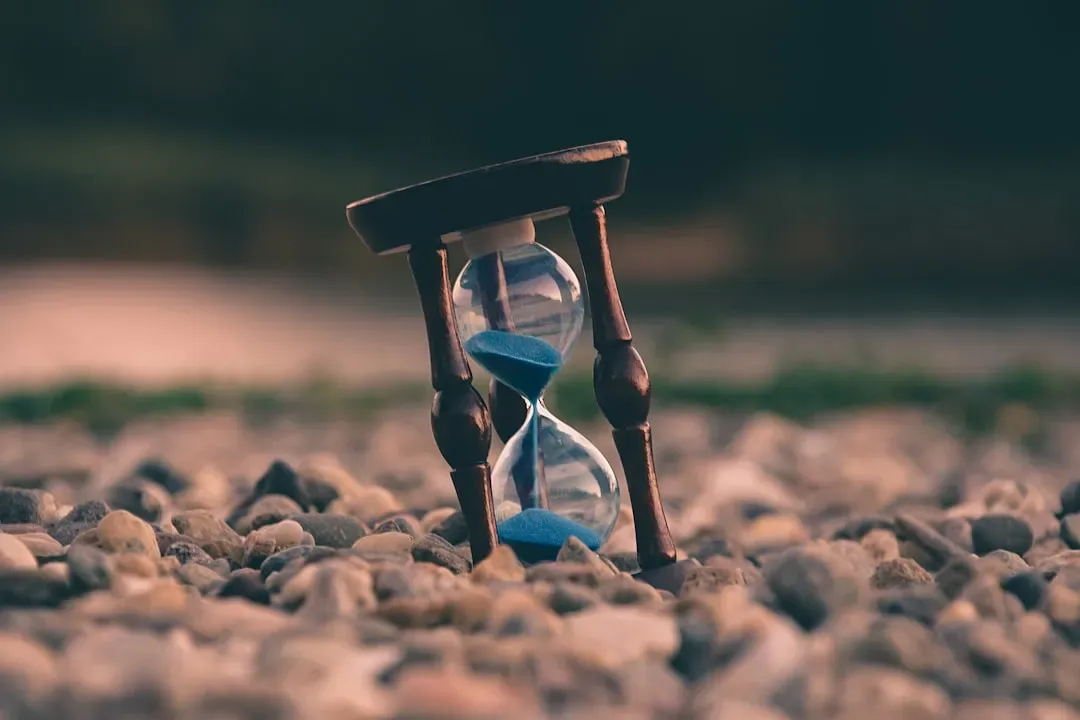
In everyday life, the present feels special. The past is fixed, the future is open, and right now is the razor’s edge where everything is happening. Yet in relativity, time is woven together with space into a four-dimensional fabric often called spacetime, and every moment – past, present, and future – can be treated as equally real. Your birth, what you’re reading at this moment, and whatever you’ll be doing five years from now all sit in that four-dimensional structure, none more privileged than the others in the equations.
This idea, sometimes nicknamed the “block universe” picture, clashes hard with our psychological sense that the present is moving. Neuroscience can study how the brain builds a sense of the present from incoming signals that arrive slightly delayed, like a mental buffering system, but that doesn’t solve the deeper physical question of why conscious beings experience a flowing “now” at all. Is the moving present just a mental construct layered on top of a static reality, or is there something about time that our current theories are missing completely?
4. Why Does Time Almost Disappear in Quantum Gravity?
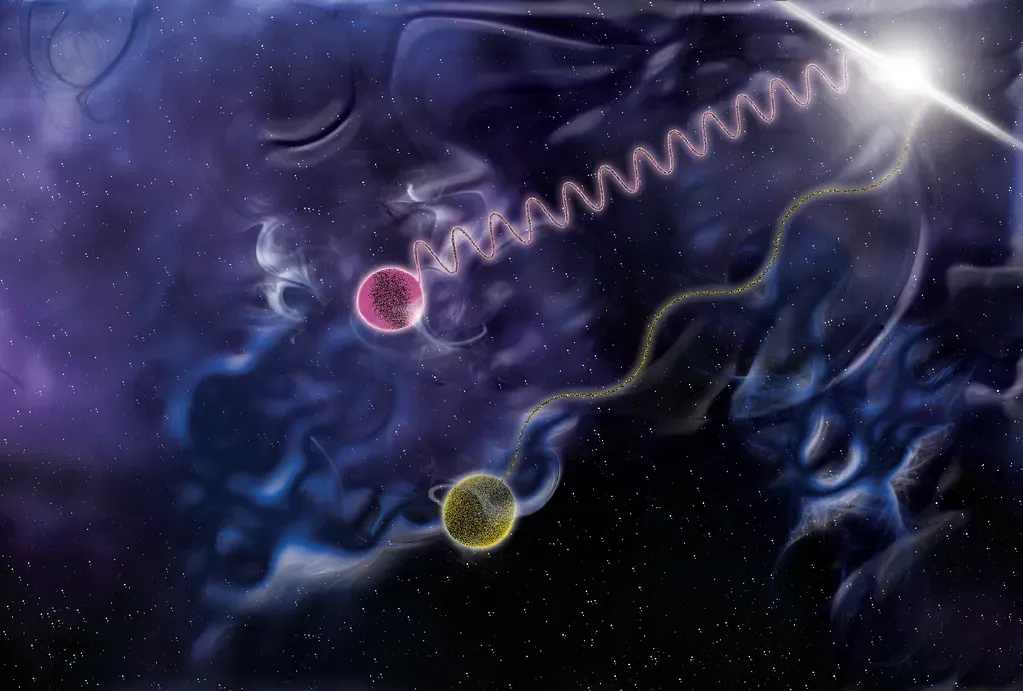
One of the biggest projects in modern physics is trying to reconcile general relativity, which describes gravity and the large-scale structure of the universe, with quantum mechanics, which governs the tiny world of particles. When researchers try to combine them into a theory of quantum gravity, something strange happens: in some of the most famous formulations, like the Wheeler–DeWitt equation, time doesn’t show up the way you’d expect. It is as if, at the deepest level, the universe just “is,” without evolving through time at all.
This so-called “problem of time” suggests that what we think of as time might emerge only when we look at certain approximate, large-scale descriptions of a more fundamental, timeless reality. Various approaches, such as loop quantum gravity or certain quantum cosmology models, try to explain how a familiar sense of time could arise from underlying timeless dynamics. The uncomfortable truth right now is that none of these proposals is decisively confirmed, so we’re left with an uneasy paradox: our best attempt at a unified theory seems to hide time rather than explain it.
5. What Really Happened to Time at the Big Bang (and Before)?
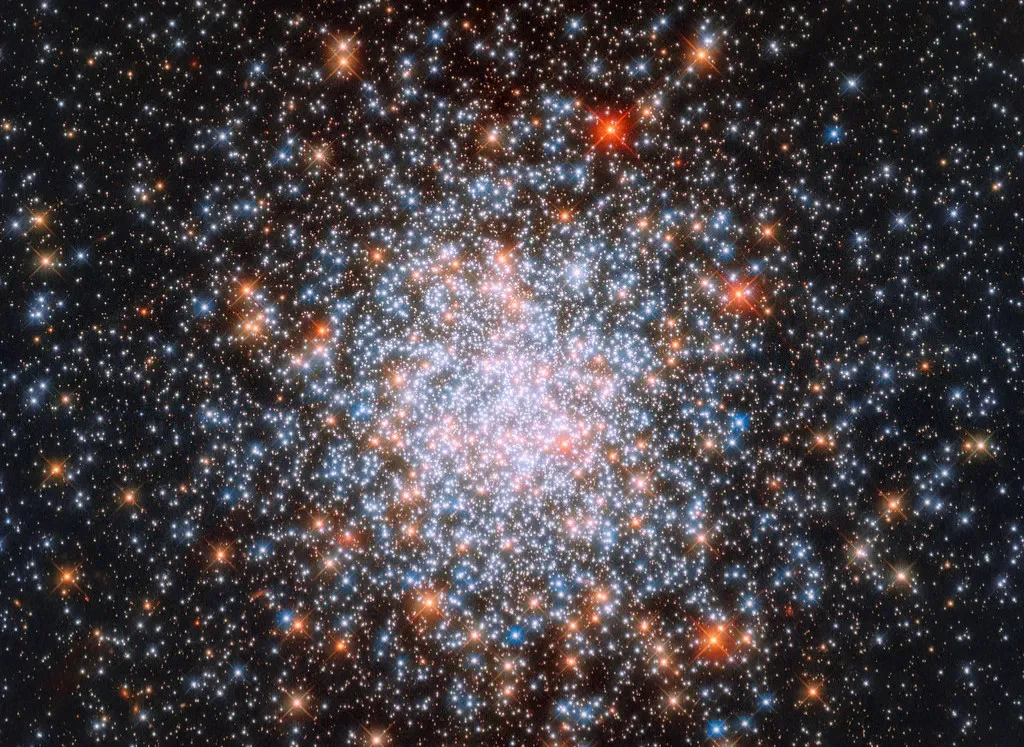
Cosmology tells us that the universe as we know it expanded from an extremely hot, dense state roughly about fourteen billion years ago. In many standard models, if you trace that expansion backward, you hit a boundary where the equations of general relativity break down: a singularity. Near that boundary, the very concept of time starts to lose meaning, like trying to talk about “north” when you’re standing on the North Pole. This raises a haunting question: did time itself begin with the Big Bang, or was there some kind of “before” that we simply can’t yet describe?
Some proposals suggest that time might have existed in a different form before the Big Bang, perhaps with a previous contracting phase of the universe or a bounce from an earlier state. Others argue that time may be a property that emerges only after the universe reaches a certain level of complexity, making “before” the Big Bang as meaningless as “outside” the edge of a circle drawn on a page. Right now, we have hints from observations of cosmic background radiation and from theoretical work in quantum cosmology, but no clear answer to what, if anything, time was doing on the other side of that cosmic curtain.
Time runs our schedules, shapes our memories, and gives our stories a beginning, middle, and end, yet at the deepest scientific level it remains stubbornly mysterious. Our best theories can measure time with astonishing precision and predict how it stretches near black holes or speeds up for astronauts in orbit, but they still leave us confused about why it flows, whether it is fundamental, and what happened to it at the birth of the universe. The more closely we look at time, the less straightforward it appears.
These unresolved questions are not just abstract puzzles; they touch how we think about free will, mortality, and what it means for something to be real at all. Maybe future experiments in quantum gravity, new astronomical observations, or even fresh ideas from philosophy will finally crack some of these riddles. Until then, we live suspended between the ticking of our clocks and the gaps in our understanding, moving forward through something we still don’t truly grasp. What do you think time really is, deep down?