
For most of human history, people stared into the dark and filled the unknown with spirits, curses, and miracles. What else could you do, if your loved one suddenly spoke in another voice, or lights danced silently across the night sky? When you don’t have a microscope, a brain scan, or a weather satellite, the world feels like a haunted house where anything might be hiding behind the next door.
Today, that haunted house looks very different. We still feel awe, fear, and wonder, but science has quietly walked through many of those old “doors” and flipped on the lights. What’s surprising is not that we were wrong before, but how close our imaginations sometimes came to the truth – and how the real explanations can be just as unsettling, beautiful, and bizarre as any ghost story.
Voices, Visions, And “Possessions”: The Brain’s Strange Glitches
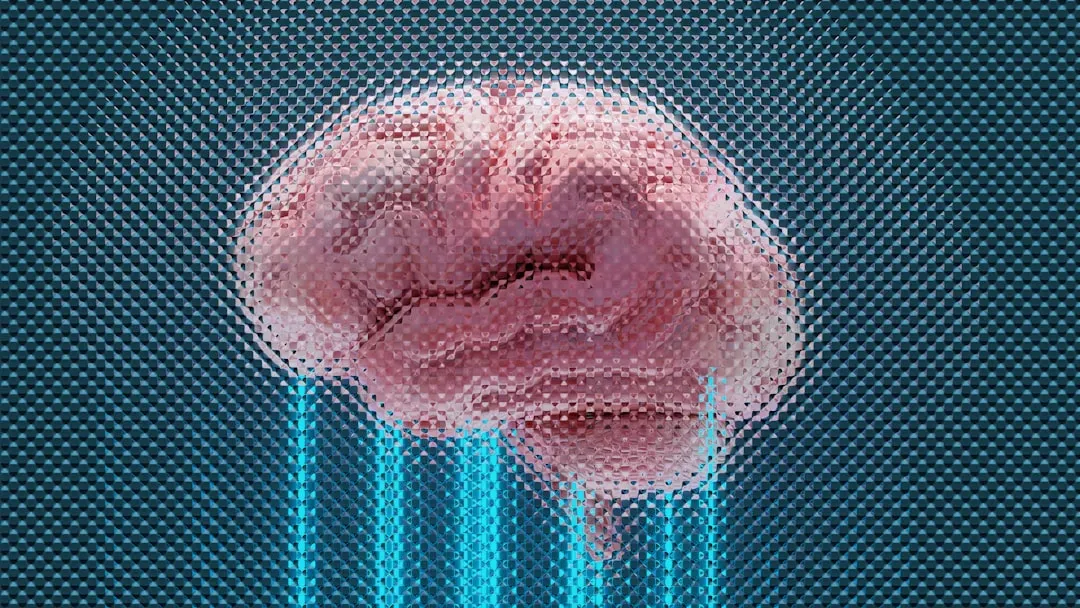
Imagine waking up and realizing your thoughts no longer feel like your own, or hearing a clear voice talking to you when no one is there. For centuries, these experiences were almost automatically labeled as possession, curses, or spiritual visitations. People who spoke in strange voices, had sudden convulsions, or reported terrifying visions were often treated as if something non-human had taken over their bodies. In many cultures, entire rituals grew around driving out these invisible forces.
Modern neuroscience paints a much more grounded, but no less eerie, picture. Conditions like epilepsy, schizophrenia, bipolar disorder, and dissociative disorders can dramatically shift perception, behavior, and even personality. Electrical storms in the temporal lobe, for instance, can trigger intense religious feelings, out-of-body sensations, or the sense that a presence is in the room. I still remember the first time I watched a neurologist calmly show a seizure on a brain scan; what once looked like a demon suddenly looked like misfiring neurons. The story changed – from moral judgment and fear to compassion and medical care.
Ghosts In The Hallway: How Our Senses Turn Shadows Into Spirits
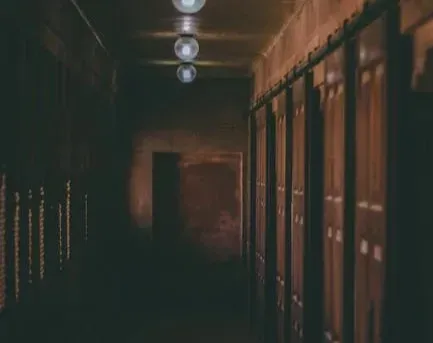
Almost everyone has had that moment: a shape in the corner of your eye, a floorboard creak when the house is still, that odd tugging sense that someone is watching you. Before electric lights, motion sensors, and cameras, these experiences fueled endless ghost stories. Old buildings, hospitals, and battlefield sites in particular became magnets for tales of wandering souls and restless spirits, often passed down for generations with uncanny details that felt too specific to ignore.
Psychology and physics offer a surprisingly down-to-earth explanation for many of these hauntings. Low light, fatigue, and stress can make your pattern-recognition systems go into overdrive, turning random shadows into human figures and muffled sounds into whispers. Carbon monoxide leaks in older houses can cause headaches, dizziness, and hallucinations, while certain frequencies of infrasound – vibrations too low to hear – can make people feel anxious, watched, or even see “figures” in the corner of their vision. I once stayed in a creaky old house where a “cold spot” turned out to be nothing more than a badly sealed window; knowing that didn’t kill the mood, but it did change the story I told myself when something bumped in the night.
Miraculous Healings And Curses: The Power Of Belief On The Body

When someone near death suddenly recovers after a prayer, ritual, or blessing, it’s easy to see it as proof of supernatural intervention. The same goes in the opposite direction: when misfortune follows a supposed curse, it feels like invisible hands are pulling strings. Stories of miraculous healings, sacred springs, and deadly hexes are woven through nearly every culture, often becoming central to faith and tradition.
Over the past century, medicine has uncovered something quietly radical: belief itself can sometimes shift the body in measurable ways. The placebo effect – when people improve after taking a treatment that has no active ingredient – can change pain levels, immune responses, and even some symptoms of depression, often triggered simply by expectation and trust. There is also a darker twin, the nocebo effect, where fear and negative expectations worsen symptoms or even produce them out of nowhere. It doesn’t mean every healing or curse story boils down to suggestion, but it does show how our brains and bodies are tightly wired together, making the line between “in your head” and “in your body” much blurrier than we once imagined.
UFOs, “Chariots Of The Gods,” And Lights In The Sky
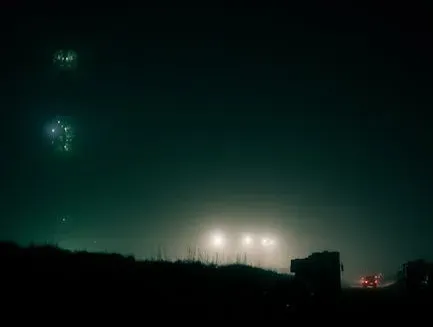
Long before science fiction took off, strange lights and objects in the sky were seen as omens, gods, or celestial messengers. Comets, meteors, and eclipses were read as warnings or signs of favor from beyond. In the twentieth century, these sky-mysteries morphed into stories of alien spacecraft, abductions, and conspiracies – an updated mythology for a technological age that still felt small beneath the stars. Some reports were so detailed and emotional that it was hard not to wonder if something extraordinary really had visited.
Modern astronomy, atmospheric science, and even military declassifications have peeled back much of the mystery, though not all of it. Many famous “sightings” have turned out to be planets low on the horizon, experimental aircraft, drones, weather balloons, re-entering rockets, or unusual cloud formations lit in just the right way. Our brains are particularly bad at judging distance and size against a featureless sky, so a nearby drone can feel like a massive craft hovering silently above a city. I once misread a bright planet rising behind thin clouds as a hovering light that seemed to follow my car – until I stopped, took a breath, and really looked. The strange thing is, understanding the physics of the sky doesn’t make it less magical; it just shifts the wonder from visitors to the vastness itself.
Visions Of The Afterlife: Near-Death Experiences And The Dying Brain
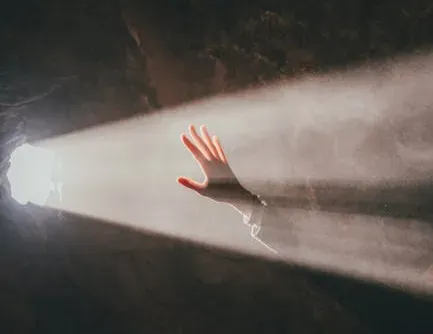
Few things feel more profound than a near-death experience: traveling through a tunnel, meeting deceased relatives, feeling a powerful sense of peace, or watching your own body from above. For a long time, these reports were taken as clear evidence that something of us leaves the body and visits another realm. The fact that people from different cultures describe similar elements only deepened the conviction that these were glimpses beyond the veil.
In recent decades, doctors and neuroscientists have started piecing together a different kind of map. As blood flow and oxygen drop, the visual system can generate tunnel-like effects, while surges of brain activity during critical moments can create vivid, hyper-real experiences. Certain drugs, including some used medically, can reproduce many of the classic features of near-death experiences, from life reviews to a sense of unity with everything. I remember reading a study where doctors recorded a last, intense burst of brain activity in a dying patient, suggesting that the most vivid “journey” might happen right as the brain is shutting down. For some, that scientific explanation feels deflating; for others, it’s oddly comforting to think the brain might offer one final, gentle story as we fade.
Looking back, it’s tempting to laugh at old explanations – demons for seizures, spirits for creaky houses, gods for comets. But if you strip away the costumes and vocabulary, what you’re left with is something very human: a deep need to make sense of fear, coincidence, and beauty in a world that often feels too big and too strange. Supernatural stories were our first drafts of understanding, born from the best tools and language people had at the time.
Science did not drain the color from these mysteries; it changed the palette. Brain glitches, atmospheric optics, social psychology, and the raw power of belief are not boring footnotes – they’re reminders that reality itself is wilder than most myths. We traded ghosts in the attic for neurons, weather fronts, and bias, but the core feeling of awe never really went away. In the end, maybe the most surprising twist is this: the more we explain, the more there still is to explore.