
Science has a funny habit of pulling the rug out from under everything you thought you knew. Just when physicists settle on a clean model of the universe, or biologists think they’ve mapped the human family tree, something extraordinary gets discovered and suddenly the textbooks need rewriting. That’s not a glitch in the system. That’s exactly how it’s supposed to work.
Right now, we are living through one of those rare and genuinely electric moments in the history of science. Several breakthroughs happening in parallel are not just adding new facts to what we already know. They are challenging the very framework through which you and I experience and interpret reality itself. The rules of the game are changing. Let’s dive in.
Quantum Computing Achieves What Classical Computers Simply Cannot
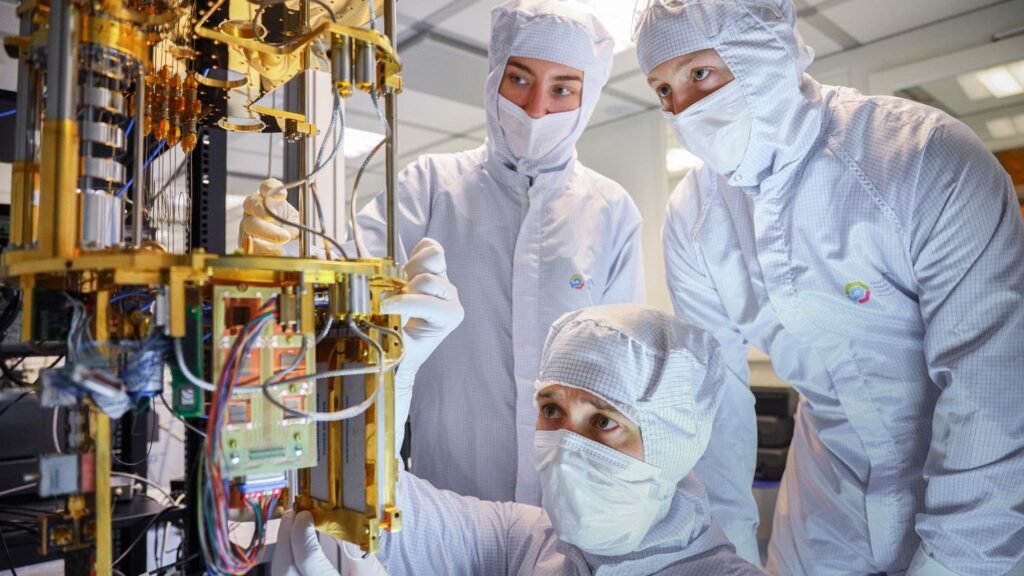
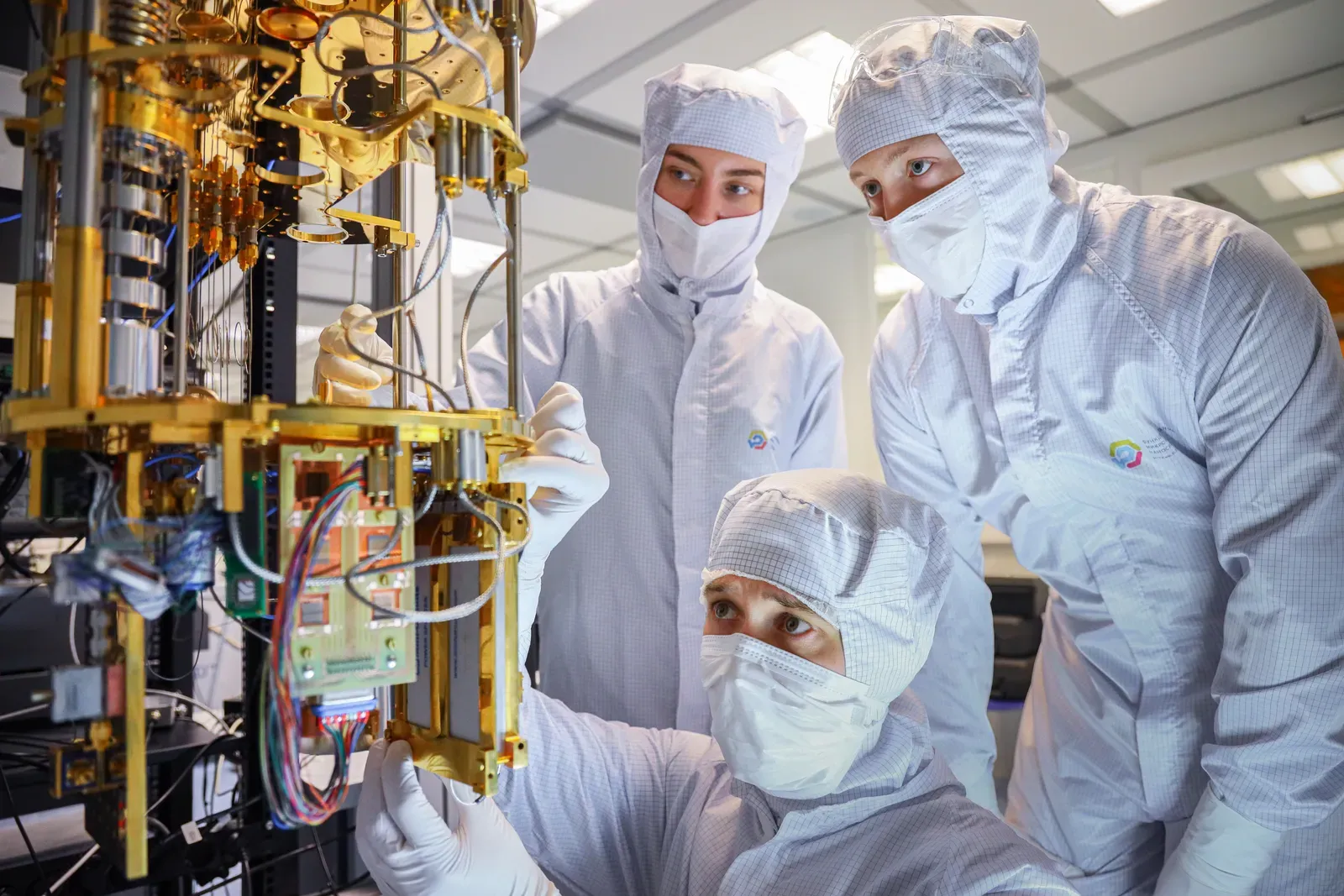
Here is something that should genuinely stop you in your tracks. Google’s “Quantum Echoes” algorithm, running on their Willow chip, executes roughly thirteen thousand times faster than the best classical algorithm on one of the world’s fastest supercomputers. That’s not an improvement. That’s a different category of existence entirely. Think of it less like a faster car and more like a teleporter compared to a bicycle.
This algorithm offers a new way to explain interactions between atoms in a real-world molecule and represents the world’s first algorithm to demonstrate verifiable quantum advantage, pointing toward practical applications that are simply beyond the capabilities of classical computers. The implications go far beyond processing speed. This work brings us closer to real-world applications of quantum computing, such as advancing drug design and helping to make fusion energy a reality. Honestly, if that doesn’t sound like the beginning of a new era in human capability, it’s hard to say what would.
Consciousness May Be the Foundation of Reality, Not a Product of It
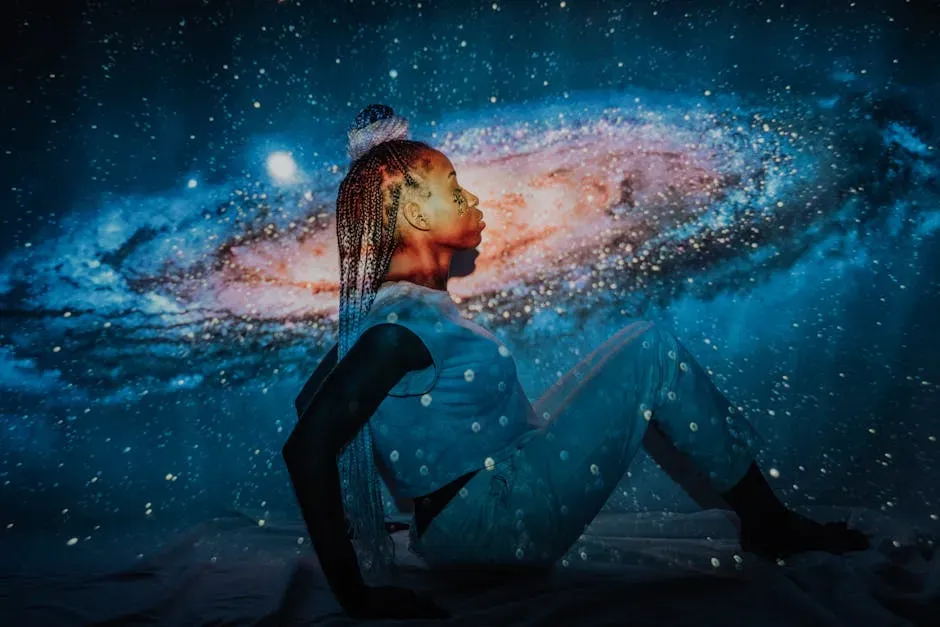
This one is probably the most mind-bending of the bunch, and I mean that literally. For centuries, scientists and philosophers assumed that consciousness was something the brain produces, like heat from an engine. A new theoretical framework published in AIP Advances in late 2025 turns that idea completely upside down. This paper presents a framework in which consciousness is not viewed as a byproduct of brain activity, but as a fundamental field underlying everything you experience, including matter, space, time, and life itself.
The theory also suggests that your individual consciousness does not cease at death, but returns to the universal field of consciousness from which it once emerged, a claim that has also been formulated in quantum-mechanical terms. Meanwhile, separate research published in Frontiers in Human Neuroscience adds another layer to this idea. New evidence indicates that conscious states may arise from the brain’s capacity to resonate with the quantum vacuum, the zero-point field that permeates all of space. If you think that sounds like something from a philosophy seminar rather than a physics journal, you would not be the first. Yet the math, increasingly, keeps pointing in this direction.
Dark Energy Is Not a Constant, and That Changes Everything About the Universe’s Fate
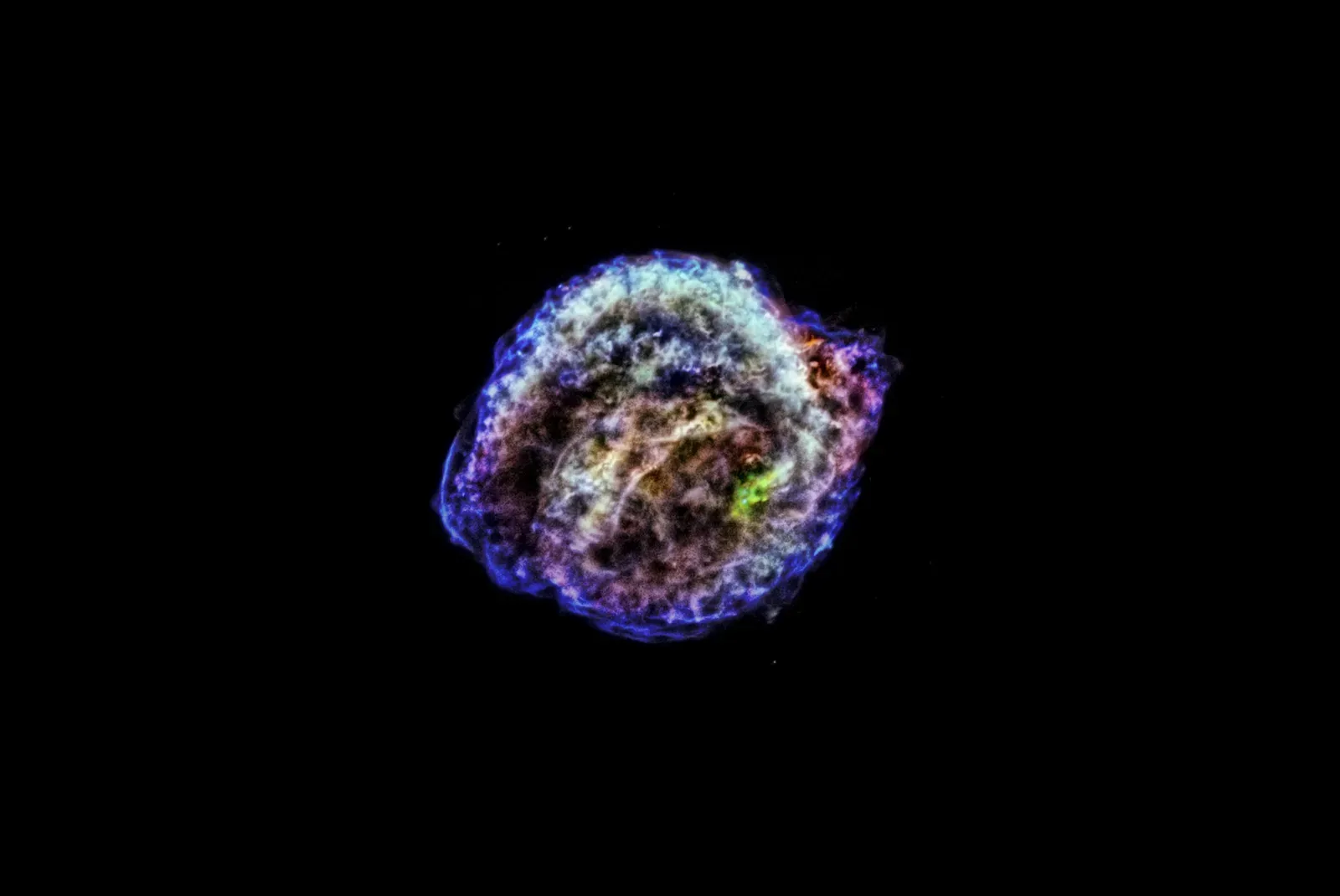
For the past three decades, astronomers have widely believed that the universe is expanding at an ever-increasing rate, driven by an unseen phenomenon called dark energy that acts as a kind of anti-gravity. That belief earned a Nobel Prize in 2011 and has underpinned cosmology ever since. Now, that foundation is cracking. Multiple lines of evidence are converging on a deeply unsettling possibility.
Corrected supernova data and baryon acoustic oscillation results both indicate that dark energy weakens and evolves significantly with time. The stakes here are almost absurdly high. If confirmed, this would suggest that the universe is no longer accelerating today and that dark energy is not a constant force but something that evolves over time, opening an entirely new chapter in our understanding of the physical nature of dark energy and what it ultimately means for the fate of the universe. Even a “Big Crunch,” the catastrophic collapse of the entire universe, is now back on the table as a genuine possibility. New results from the Dark Energy Spectroscopic Instrument use the largest 3D map of the universe ever made to track dark energy’s influence over the past eleven billion years, and researchers see hints that dark energy might be evolving over time in unexpected ways.
The Denisovans Finally Have a Face, and It Rewrites Human History
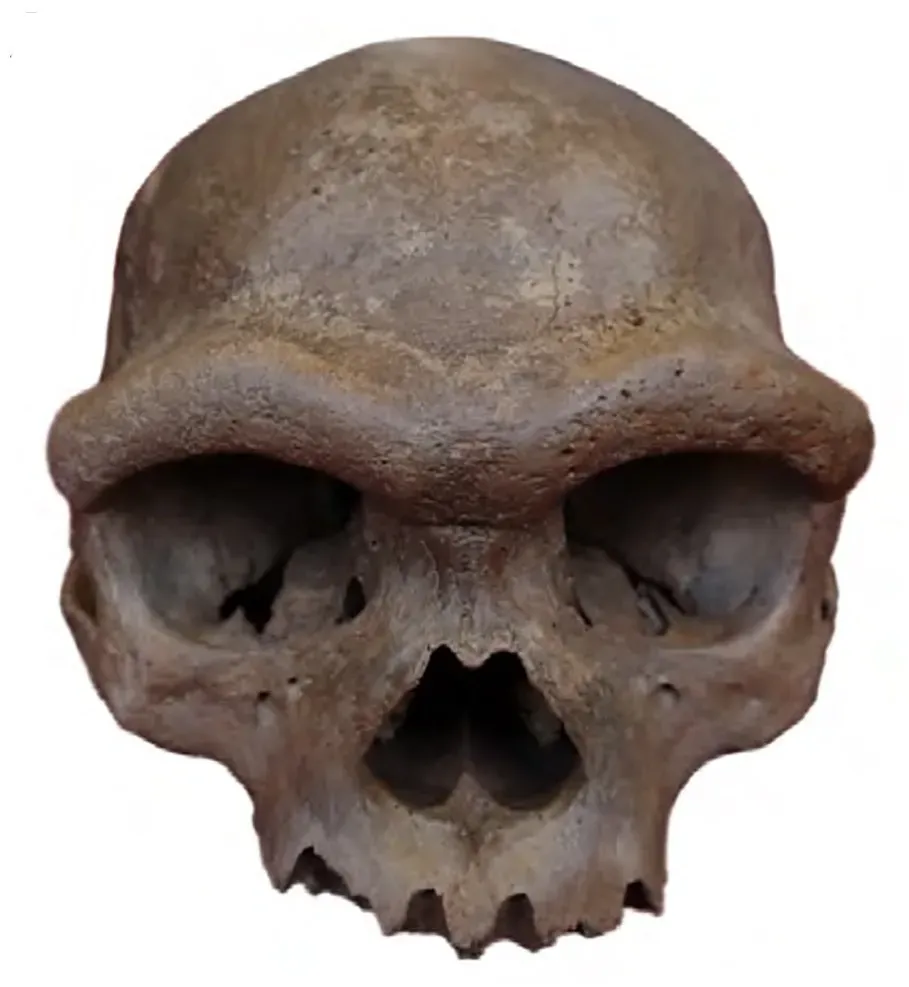
For fifteen years, scientists knew an ancient human population existed mostly through fragments, a pinky bone here, a tooth there, and the genetic shadows they left in modern people’s DNA. Despite intimate knowledge of this population’s genetic makeup, traces of which millions of people carry today, scientists knew nothing about the appearance of the Denisovans, or where they lived or why they disappeared. That mystery, at long last, started to unravel in 2025.
Two studies published in Science and Cell identified a nearly complete 146,000-year-old skull, with genetic evidence suggesting it belonged to a Denisovan, giving researchers an unprecedented glimpse into how these early humans looked. The fossil, nicknamed Dragon Man, was found in northeastern China. A prominent brow ridge with a brain as large as modern humans and Neanderthals: that is what the archaic human group, the Denisovans, looked like. On top of that, a separately reconstructed one-million-year-old skull implies that the lineages of Denisovans and modern humans diverged far earlier than previously believed, with Neanderthals now observed to have diverged first, around 1.38 million years ago. The human family tree just got a lot more complicated, and a lot more interesting.
The Simulation Hypothesis Just Got a Serious Scientific Reality Check
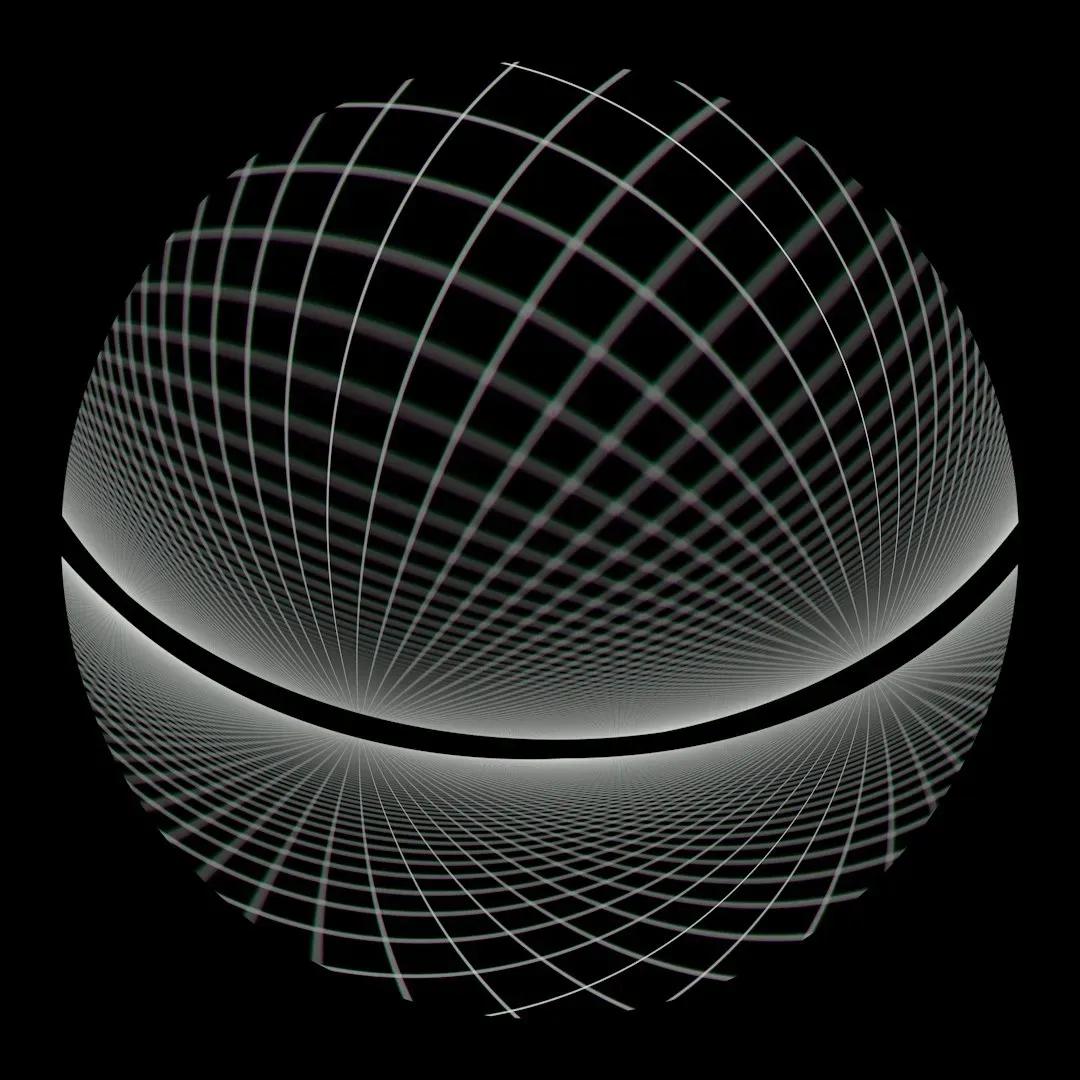
You’ve probably heard someone at a dinner party claim we might all be living inside a giant computer simulation. It’s a fun idea, popularized by philosophers and tech billionaires alike. However, science finally stepped in with some hard math. One of the most provocative ideas of our times took a serious hit in 2025, when physicists and mathematicians showed that even simulating a relatively small quantum system, such as a few hundred interacting electrons, would require computational resources larger than the known universe itself.
The computational complexity of quantum systems grows exponentially, not linearly, meaning the processing power needed quickly becomes physically impossible under known laws. The study argues that a Matrix-style simulation would violate fundamental constraints of physics, particularly those on energy, information storage, and computation. So while no one has definitively proven we are not in a simulation, the bar just got raised to an almost incomprehensible level. The work does not rule out philosophical thought experiments, but it provides a rigorous mathematical argument against physically realizable simulations of reality, with findings that impact physics, computer science, and philosophy by grounding a speculative idea in hard, natural limits. Reality, it seems, is far too extravagant and expensive to be faked.
Conclusion
What you’re witnessing across all five of these breakthroughs is something genuinely rare: science questioning its own deepest assumptions all at once. Quantum computing is redefining what computation means. Consciousness research is challenging the most basic assumption of what you are. Cosmology is reconsidering whether the universe will expand forever, or quietly collapse. Paleoanthropology just put a face to a ghost that haunted human history for a decade. Physics dealt a blow to one of the most viral philosophical ideas of the modern age.
None of these stories are finished. The data is still coming in, the debates are still fierce, and the next discovery could shift everything again. That’s the extraordinary and slightly uncomfortable truth about living in this moment of science. The map of reality is being redrawn in real time, and you’re here to see it happen.
Which of these five discoveries challenges your view of reality the most? Let us know in the comments below.