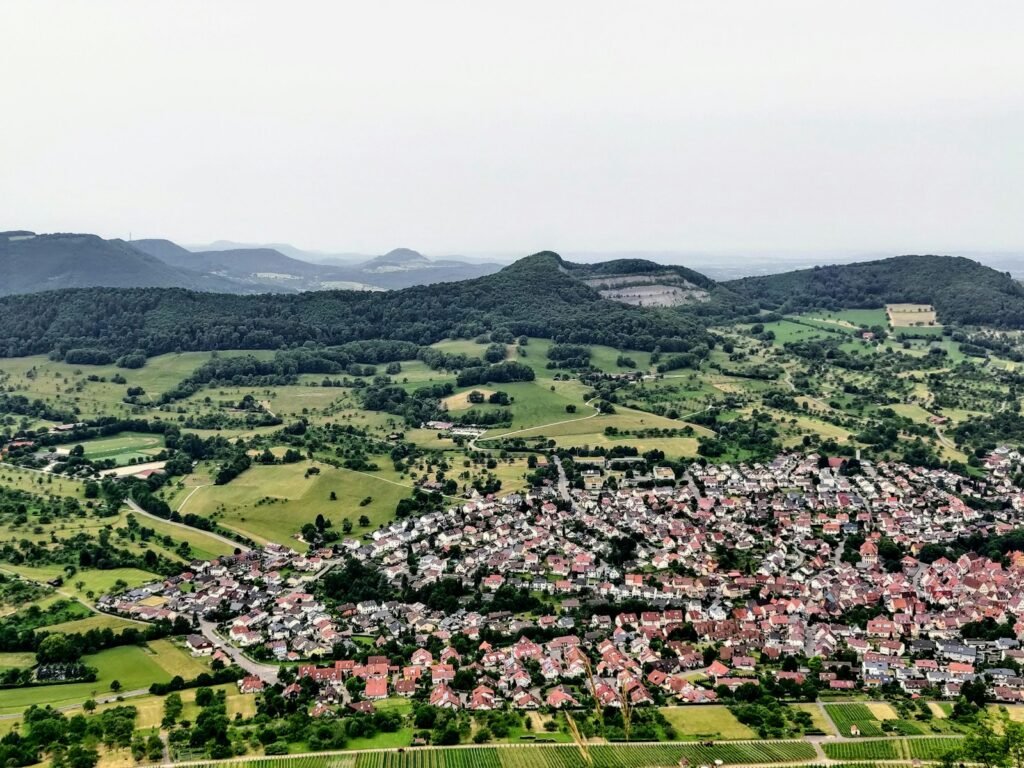

Picture this: while Silicon Valley grabs all the headlines with its gleaming tech campuses and sky-high real estate prices, some of America’s most powerful artificial intelligence is actually humming away in places where cows outnumber coders and the nearest Starbucks is miles away. These aren’t your typical tech hubs – they’re small rural towns that have become the unlikely backbone of America’s AI revolution. From former mining communities to agricultural heartlands, these hidden gems are quietly reshaping the future of computing while maintaining their small-town charm.
The Great AI Gold Rush: Why Rural Towns Are the New Silicon Valley

The tech industry’s migration to rural America isn’t happening by accident – it’s driven by cold, hard economics and practical necessity. Unlike their urban counterparts, these small towns offer something that’s becoming increasingly precious in the tech world: space, affordable land, and reliable infrastructure without the premium price tag. Major tech companies are discovering that they can build massive data centers and AI facilities for a fraction of what it would cost in traditional tech hubs. The savings are so substantial that some companies report cutting their operational costs by up to 70% by choosing rural locations over metropolitan areas. This economic advantage allows them to invest more heavily in cutting-edge AI research and development, creating a competitive edge that’s hard to match.
Quincy, Washington: The Unexpected AI Capital of the Pacific Northwest

Nestled in the Columbia River Valley, Quincy was once known primarily for its apple orchards and potato farms. Today, this town of just 7,000 residents hosts some of the most sophisticated AI computing infrastructure on the planet. Microsoft, Yahoo, and other tech giants have transformed the agricultural landscape with massive data centers that process everything from machine learning algorithms to natural language processing tasks. The transformation has been so dramatic that local farmers joke about trading their tractors for server racks. What makes Quincy particularly attractive is its access to cheap hydroelectric power from the Columbia River, providing the enormous amounts of clean energy that AI supercomputers demand. The town’s population has grown by 40% in the past decade, with tech workers now living alongside fourth-generation farmers in this unlikely fusion of old and new America.
Forest City, North Carolina: From Textile Mills to Neural Networks

In the foothills of the Blue Ridge Mountains, Forest City has reinvented itself from a struggling textile town into a high-tech computing hub. The same factors that once made it ideal for manufacturing – reliable infrastructure, skilled workforce, and strategic location – now make it perfect for AI development centers. Facebook’s massive data center here processes billions of AI-driven social media interactions daily, while local universities partner with tech companies to develop next-generation machine learning applications. The contrast is striking: you can drive past century-old textile mills in the morning and tour state-of-the-art AI research facilities in the afternoon. Local residents have embraced the change, with many former textile workers transitioning into tech support and facility management roles. The economic impact has been transformative, with the unemployment rate dropping from double digits to below the national average in just five years.
Altoona, Iowa: Where Corn Fields Meet Cutting-Edge Computing

Just outside Des Moines, Altoona has become an unlikely player in the global AI race, hosting facilities that power some of the world’s most sophisticated artificial intelligence systems. Microsoft’s Iowa data center complex here runs AI workloads for everything from autonomous vehicle research to medical diagnosis algorithms. The juxtaposition is almost surreal – you can stand in a cornfield and look across at buildings containing more computing power than entire countries possessed just a decade ago. What drew Microsoft and other companies to Altoona wasn’t just the affordable land, but the community’s welcoming attitude and the state’s business-friendly policies. The town has invested heavily in fiber optic infrastructure, creating a digital highway that connects rural Iowa directly to global AI networks. Local schools now offer coding classes alongside traditional agriculture programs, preparing the next generation for careers that didn’t exist when their parents were students.
The Power Problem: How Rural Towns Solved AI’s Energy Crisis

One of the biggest challenges facing AI development is the enormous amount of electricity required to run supercomputing systems. A single AI training session can consume as much power as several hundred homes use in a day. Rural towns have become the solution to this energy puzzle, offering access to renewable power sources that urban areas simply can’t match. Many of these communities sit near hydroelectric dams, wind farms, or solar installations that can provide the clean, cheap electricity that AI systems desperately need. This isn’t just about cost savings – it’s about sustainability and meeting corporate environmental commitments. Companies like Google and Amazon have committed to carbon-neutral operations, making rural locations with renewable energy access not just economically attractive, but essential for their long-term strategies.
Prineville, Oregon: The Desert Town That Became Facebook’s AI Nerve Center

In the high desert of central Oregon, Prineville has transformed from a logging and ranching community into one of Facebook’s most important AI computing hubs. The town’s dry climate and cool temperatures provide natural cooling for the massive server farms that power Facebook’s AI algorithms, from photo recognition to content moderation systems. What started as a single data center has expanded into a complex of facilities that employ hundreds of locals and process billions of AI computations daily. The economic impact has been remarkable – property values have tripled, new restaurants and businesses have opened, and the town has invested millions in infrastructure improvements. Yet Prineville has managed to maintain its small-town character, with the annual crooked river roundup still drawing cowboys and tech workers alike. The success story has attracted other tech companies to the region, creating a mini Silicon Valley in the Oregon desert.
The Workforce Revolution: Retraining Rural America for the AI Age

The transformation of these rural towns isn’t just about building data centers – it’s about fundamentally changing the local workforce and economy. Former coal miners in West Virginia are learning to maintain quantum computing systems, while retired farmers in Iowa are becoming cybersecurity specialists for AI facilities. Community colleges have partnered with tech companies to create specialized training programs that turn traditional blue-collar workers into high-tech specialists in a matter of months. These programs are incredibly successful, with placement rates often exceeding 90%. The career transition stories are inspiring: a former steel worker in Pennsylvania now monitors AI systems that help design better medical treatments, while a laid-off automotive worker in Michigan has become an expert in machine learning hardware maintenance. This workforce transformation is proving that you don’t need a computer science degree from Stanford to play a crucial role in America’s AI future.
Council Bluffs, Iowa: Google’s Prairie AI Laboratory

On the banks of the Missouri River, Council Bluffs has become home to one of Google’s most advanced AI research and computing facilities. This former railroad town now processes search queries, trains language models, and runs machine learning experiments that affect billions of users worldwide. The Google facility here is particularly focused on developing AI systems for agriculture, using machine learning to optimize crop yields and reduce environmental impact. The irony isn’t lost on locals – a town that was once a major shipping point for agricultural products is now using AI to revolutionize farming itself. Google has invested heavily in the local community, funding STEM education programs and providing grants for local infrastructure improvements. The partnership has been so successful that other tech companies are now eyeing Council Bluffs as a potential location for their own AI operations.
The Infrastructure Challenge: Building Tomorrow’s Networks in Yesterday’s Towns

Creating world-class AI facilities in rural locations requires more than just empty land and cheap electricity – it demands infrastructure that many small towns simply didn’t have. The transformation has required massive investments in fiber optic cables, upgraded electrical grids, and specialized cooling systems. Some towns have had to completely rebuild their telecommunications infrastructure to handle the data loads that AI systems generate. The challenge is enormous: a single AI training run can generate more data traffic than the entire town’s previous internet usage combined. However, once these infrastructure improvements are in place, they benefit the entire community. Local businesses suddenly have access to high-speed internet that rivals anything available in major cities, while residents can work remotely for companies around the world. The infrastructure investment has created a positive feedback loop, attracting more tech companies and further improving the towns’ capabilities.
Las Vegas, Nevada: More Than Gambling – AI’s Desert Oasis

While Las Vegas might not seem like a typical rural town, the areas surrounding the famous Strip have become crucial to America’s AI infrastructure. Switch’s massive data center complex in the Nevada desert processes AI workloads for companies ranging from startups to Fortune 500 corporations. The facility takes advantage of Nevada’s business-friendly regulations, abundant land, and relatively low costs compared to California. What makes Las Vegas particularly interesting is how AI is being integrated into the entertainment industry itself – casinos are using machine learning for everything from fraud detection to personalized gaming experiences. The city has also become a testing ground for autonomous vehicles, with AI systems learning to navigate the complex urban environment of the Strip. The success has led to expansion into the surrounding rural areas, where even more advanced AI research facilities are being developed away from the tourist crowds.
The Economic Transformation: From Rust Belt to AI Belt

The arrival of AI facilities in rural America has created an economic transformation that goes far beyond just job creation. Property values in these towns have increased dramatically, but unlike gentrification in urban areas, the benefits seem to be reaching longtime residents as well as newcomers. Local businesses are thriving as tech workers bring new spending power to communities that had been struggling economically for decades. The multiplier effect is substantial – every high-tech job created in these facilities typically supports three to four additional jobs in the local economy. Restaurants, retail stores, and service businesses are all benefiting from the influx of well-paid tech workers. Perhaps most importantly, young people who might have left for bigger cities are now staying home, finding career opportunities they never imagined possible in their small towns.
Columbus, Ohio: The Heartland’s AI Hub

In the geographic center of America, Columbus has emerged as a major player in AI development, particularly in applications for logistics and transportation. Amazon’s massive fulfillment centers here use sophisticated AI systems to optimize package routing and delivery schedules, while local startups are developing machine learning applications for everything from agriculture to healthcare. The city’s central location makes it ideal for testing AI systems that need to work across different regions and climates. Ohio State University has partnered with tech companies to create one of the nation’s leading AI research programs, attracting talent from around the world to this Midwestern hub. The success has been so notable that other Rust Belt cities are trying to replicate Columbus’s model, using their industrial heritage and central locations as selling points for AI companies looking to expand beyond the coasts.
The Cultural Impact: When Silicon Valley Meets Small Town America

The merger of high-tech culture with rural American traditions has created fascinating cultural dynamics in these AI-powered towns. Tech workers are joining local volunteer fire departments, while farmers are learning to code in community center classes. The result is a unique blend that’s creating new forms of American community. Local restaurants now serve both traditional comfort food and trendy dishes popular with tech workers, while community events might feature both a county fair and a technology conference in the same weekend. This cultural mixing has generally been positive, though not without challenges. Housing costs have risen, and some longtime residents worry about losing their town’s character. However, most communities have found ways to preserve their identity while embracing technological change. The key seems to be active community engagement and ensuring that the benefits of the AI boom are shared broadly rather than concentrated among newcomers.
Boydton, Virginia: Microsoft’s Southern AI Strategy

In rural Virginia, the small town of Boydton has become central to Microsoft’s AI ambitions, hosting facilities that power everything from the company’s Copilot AI assistant to advanced machine learning research. The location was chosen for its access to renewable energy, favorable business climate, and proximity to major East Coast markets without the associated costs. Microsoft’s investment has transformed the local economy, bringing hundreds of high-paying jobs to a community that had been struggling since the decline of tobacco farming. The company has worked closely with local schools to develop STEM programs and has provided funding for community infrastructure improvements. The facility here is particularly focused on developing AI applications for government and defense contractors, taking advantage of Virginia’s proximity to Washington D.C. The success has attracted other tech companies to the region, creating a growing technology corridor in rural Virginia.
The Future of Rural AI: What’s Next for America’s Hidden Tech Towns

These rural AI hubs are just the beginning of a larger transformation that’s reshaping America’s economic geography. As AI systems become more sophisticated and require even more computing power, the advantages of rural locations become even more pronounced. Several of these towns are already planning expansions, with new facilities and research centers in development. The next phase will likely focus on specialized AI applications – quantum computing centers, autonomous vehicle testing facilities, and advanced robotics research labs. Some communities are positioning themselves as centers for specific types of AI development, like agricultural applications or healthcare research. The trend is also spreading internationally, with rural communities in other countries studying the American model and trying to replicate its success. These towns have proven that the future of technology doesn’t have to be concentrated in expensive urban centers – it can thrive anywhere there’s vision, investment, and community support.
The Environmental Equation: Green AI in Rural Settings

One of the most compelling aspects of rural AI development is its potential for environmental sustainability. These facilities are often powered by renewable energy sources and built with advanced cooling systems that minimize environmental impact. Some locations are even experimenting with using waste heat from AI computers to warm greenhouses or other agricultural facilities. The rural setting allows for innovative approaches to sustainability that would be impossible in dense urban areas. Companies are partnering with local farmers to use AI-optimized irrigation systems and precision agriculture techniques that reduce water usage and chemical inputs. The result is a model of technology development that actually enhances rather than degrades the rural environment. This environmental focus isn’t just good for the planet – it’s also good for business, helping companies meet their sustainability goals while reducing operating costs.
From apple orchards to server farms, from textile mills to neural networks, these five rural towns represent a fundamental shift in how and where America’s technological future is being built. The marriage of cutting-edge AI with small-town values has created something entirely new – communities that are simultaneously rooted in tradition and racing toward tomorrow. As artificial intelligence continues to reshape every aspect of our lives, it’s reassuring to know that this transformation is happening not just in gleaming corporate campuses, but in places where neighbors still know each other’s names and local diners serve coffee with a smile. What started as an economic necessity has become a powerful demonstration that innovation can thrive anywhere, and that America’s technological leadership might just depend on its most unexpected places.