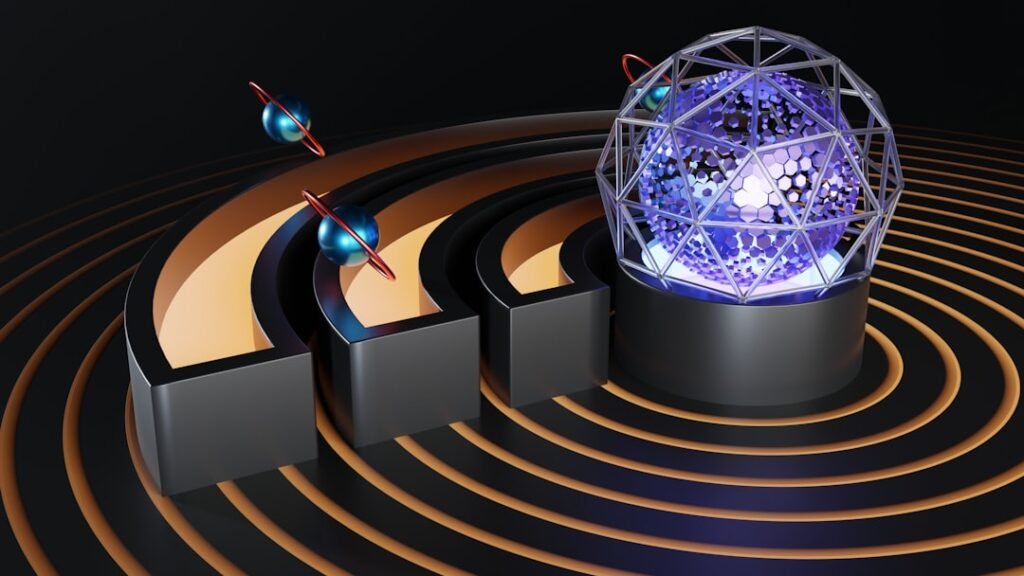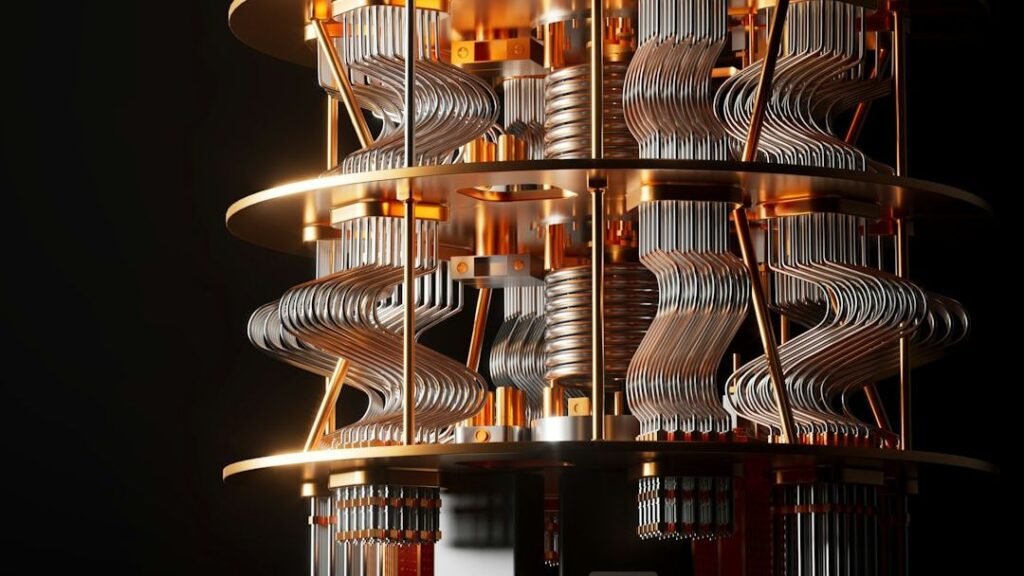

Picture a world where computers solve in minutes what would take today’s supercomputers longer than the age of the universe, where hackers can’t crack your messages even if they had unlimited power, and sensors can detect a single virus or hidden object with mind‑bending precision. That world is not pure science fiction anymore; it is quietly taking shape in quantum labs and startups across the globe. The wild part is that all of this comes from a handful of strange rules at the heart of reality that most of us never see, but which control everything.
Quantum physics is often sold as something impossibly weird and far away from daily life. Yet in 2026, governments, big tech companies, and tiny research teams are racing to turn quantum phenomena into real products: from quantum-secure networks to ultra-precise clocks powering next‑gen navigation. I still remember the first time I saw a simple quantum experiment with light splitting and recombining; it felt like watching a magic trick I knew was real. Below are five specific quantum effects that are on track to reshape the technology we use, the security we rely on, and even the way we think about information itself.
1. Superposition: The Quantum Trick Behind Exponential Computing Power
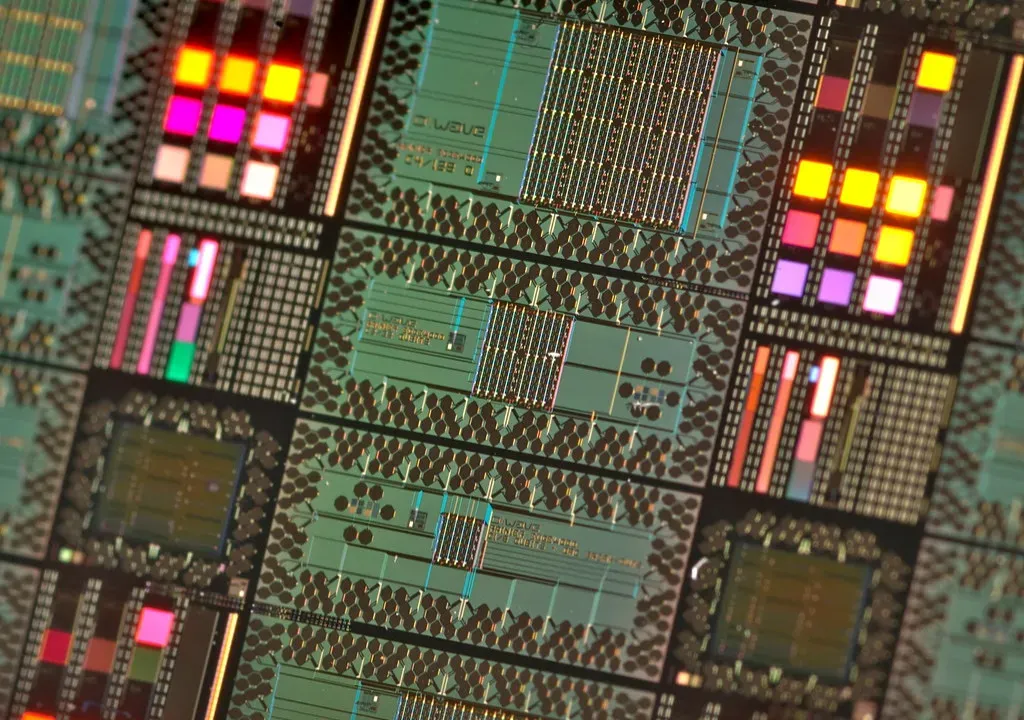
Superposition is the idea that a quantum bit, or qubit, can be in multiple states at once instead of just zero or one, like a coin spinning in the air rather than resting on heads or tails. When you link many qubits together, they can explore a huge number of possibilities in parallel, giving quantum computers their potential edge. This is why companies and research labs are investing heavily in systems with tens, then hundreds, and eventually thousands of qubits. The goal is to tackle problems that choke classical machines, such as simulating complex molecules or optimizing massive logistical networks.
We already see early signs of this shift: prototype quantum processors have demonstrated speedups on carefully crafted tasks compared with powerful classical systems. The real revolution comes when more stable qubits and better error correction allow practical applications in fields like drug discovery, materials science, and finance. Imagine designing new batteries or cancer drugs by letting a quantum computer test molecular options in a way no classical algorithm could feasibly match. It is still an open race, but superposition is the basic fuel that could turn quantum computers from fragile lab toys into engines of discovery.
2. Entanglement: The Invisible Link Powering Quantum Networks

Entanglement is the famously “spooky” connection where two particles share a state so tightly that changing one instantly affects the other, no matter how far apart they are. Instead of being just a bizarre curiosity, this phenomenon is becoming the backbone of quantum communication systems. By distributing entangled particles between distant locations, engineers can build quantum channels that reveal any attempt at eavesdropping. If a hacker tries to measure the system, the entanglement pattern changes in a detectable way, giving you a built‑in alarm.
In the past few years, there have been real‑world tests of entanglement-based links between cities, and even between ground stations and satellites. These experiments are early steps toward what many call a quantum internet: a network that uses entanglement to share quantum states securely across long distances. Such a network would not replace the classical internet but sit beside it, handling tasks that demand extreme security or distributed quantum processing. It might sound abstract, but the day you send a message over a quantum-secure link and simply do not worry about it being cracked could come sooner than most people expect.
3. Quantum Tunneling: From Shrinking Chips to Ultra-Fast Electronics

Quantum tunneling describes how particles can slip through energy barriers that they should not be able to cross according to classical physics, almost like a ghost walking through a wall. At the scale of modern electronics, where components are only a few atoms thick, tunneling is no longer optional; it happens whether we like it or not. This effect has already shaped the design of transistors and memory, forcing engineers to rethink how small we can make parts before quantum behavior breaks traditional rules. Rather than fighting tunneling, new device designs increasingly try to harness it.
Components such as tunnel diodes and single-electron transistors exploit tunneling to switch faster or use less energy than conventional devices. Quantum tunneling also underpins technologies like flash memory and scanning tunneling microscopes, which can image individual atoms. As chips approach physical limits, future processors may lean into tunneling even more, creating electronics that trade rigid on‑off behavior for probabilistic, quantum-aware designs. It is a bit like turning a leak in the plumbing into a deliberate water feature: instead of sealing every crack, we decide to shape the flow.
4. Quantum Measurement and Squeezing: Super-Sensitive Sensors and Clocks

One of the most surprising facts in quantum physics is that the act of measuring a system does not just check its state; it can change it. Researchers have learned to use this delicate interplay to “squeeze” quantum noise, reducing uncertainty in one property at the cost of increasing it in another. This might sound esoteric, but it directly feeds into sensors and clocks that can beat what was once thought to be a fundamental limit of precision. Devices using squeezed light and atoms have already improved gravitational wave detectors, helping them catch faint ripples in spacetime that would otherwise be lost in noise.
Looking ahead, the same techniques are being pushed into navigation, medical imaging, and environmental monitoring. Quantum clocks based on carefully controlled atoms are becoming so precise that they could redefine timing for GPS-like systems and make location tracking far more accurate, even deep indoors or underwater. Quantum-enhanced sensors could detect minute changes in magnetic or electric fields, hinting at better brain imaging tools or ultra‑sensitive detectors for hidden underground structures. The idea that “you cannot do better than this” keeps getting updated, and quantum measurement tricks are the reason why.
Quantum sensing also has a way of making the invisible visible, shrinking vast timescales and tiny forces into something we can actually work with. That shift could reshape industries that depend on precise measurements, from telecommunications to climate science. It is a quiet revolution, but once tools become this sharp, people tend to find surprising new uses for them.
5. Quantum Error Correction: The Unsung Hero of Reliable Quantum Machines
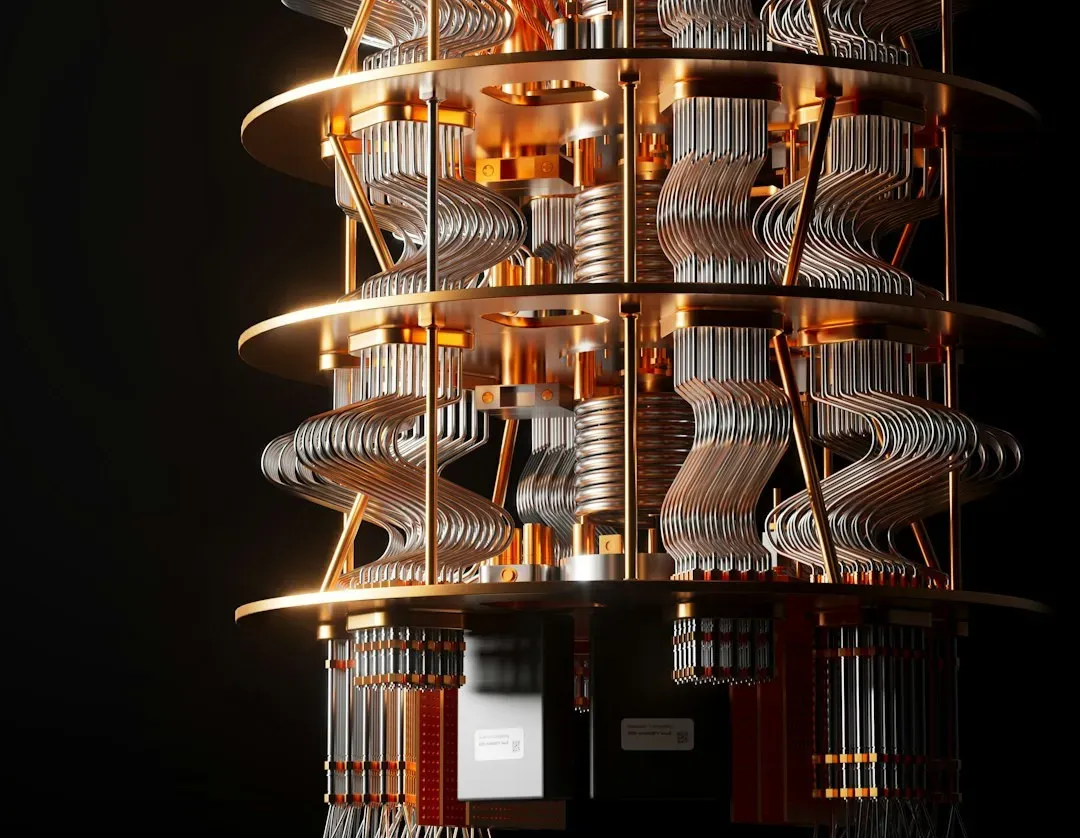
Real quantum systems are fragile: they lose their delicate states easily through interactions with the environment, a process known as decoherence. On top of that, every operation on a qubit is noisy and imperfect, which is a nightmare if you want to run long, complex calculations. Quantum error correction is the response to this problem, using clever encoding of information across many physical qubits to create a more stable logical qubit. It is a bit like spreading a secret across a group of friends so that even if a few forget parts, the group still remembers the whole story.
This approach is demanding, because building a single useful logical qubit may require many physical qubits and precise control. Nonetheless, teams around the world have recently demonstrated small but real advances: detecting and correcting certain types of errors in live systems, keeping encoded states stable longer than unprotected ones. As hardware improves and error-correcting codes become more efficient, quantum error correction is expected to turn today’s noisy prototypes into reliable platforms for serious applications. Without it, quantum computers and networks would remain fragile laboratory curiosities; with it, they can grow into dependable tools that people trust for high‑stakes tasks.
A Strange Future That Feels Closer Every Year
What ties all these phenomena together is that they force us to abandon common sense and then reward us for doing so with new capabilities. Superposition, entanglement, tunneling, quantum squeezing, and error correction each sound abstract on paper, yet they are already seeping into chips, networks, sensors, and lab equipment. Governments are drafting national quantum strategies, companies are hiring quantum specialists, and students are learning about qubits the way earlier generations learned about transistors. The shift is uneven and sometimes overhyped, but the underlying trend is real.
We are still early enough that many of the most transformative applications have not been imagined yet, much like people in the early days of classical computing could not foresee streaming video or global social networks. Quantum technologies will not replace everything we have, but they will change the ceiling of what is possible in computing, communication, and measurement. Standing here in 2026, it feels like watching storm clouds of innovation gathering on the horizon: you can sense something big is coming, even if you cannot map every lightning strike in advance. Which of these quantum phenomena do you think will surprise us the most when we look back a few decades from now?