
There’s something strangely chilling about objects that outlive their makers by thousands of years and still refuse to explain themselves. You stand in front of them in a museum or see them in a documentary, and it’s like they’re silently saying: you don’t know half of what really happened here. That tension between what we can prove and what we can only guess is exactly what makes certain ancient artifacts so addictive to think about.
Some of these relics have been studied by generations of experts, scanned, tested, and debated endlessly, yet the biggest questions around them remain stubbornly unanswered. Are they misunderstood tools? Religious symbols? Evidence of knowledge we thought humans didn’t have yet? As of 2026, technology keeps giving us new clues, but the core mysteries still stand. Let’s dive into five of the most baffling objects humanity has ever dug out of the ground.
The Antikythera Mechanism: The Ancient “Computer” That Shouldn’t Exist
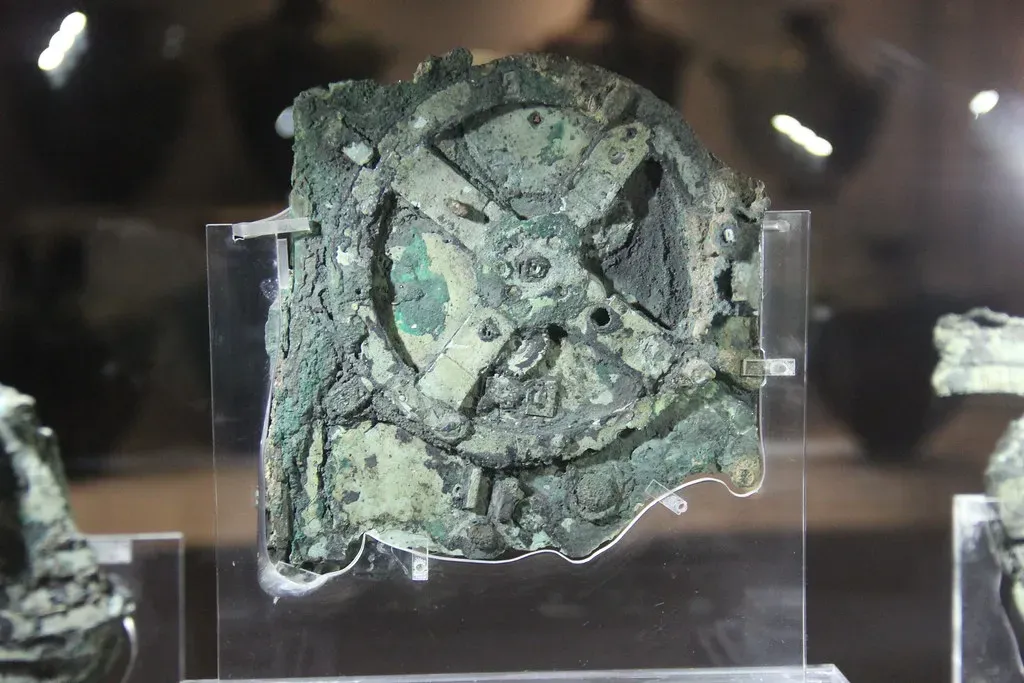
Imagine a corroded lump of bronze pulled from a shipwreck suddenly revealing dozens of tiny gears, precision cut teeth, and dials that track the movements of the sun, moon, and planets. That’s the Antikythera mechanism, recovered from the waters off a Greek island in the early twentieth century and still challenging our assumptions about what ancient engineers were capable of. Modern X-ray scans and 3D reconstructions show it was an insanely sophisticated device, often called the first known analog computer.
What no one can fully answer is how such advanced technology appeared seemingly out of nowhere and then vanished. We have no complete written manual, no factory records, no step-by-step explanation carved in stone. Was it the work of one genius or a whole tradition of lost instrument-makers? Did similar devices sit in temples, ships, or libraries that are now destroyed beyond recognition? The mechanism quietly hints that our timeline of technological progress might be less of a gentle slope and more of a jagged cliff with missing pieces.
The Phaistos Disc: A Spinning Puzzle No One Can Read
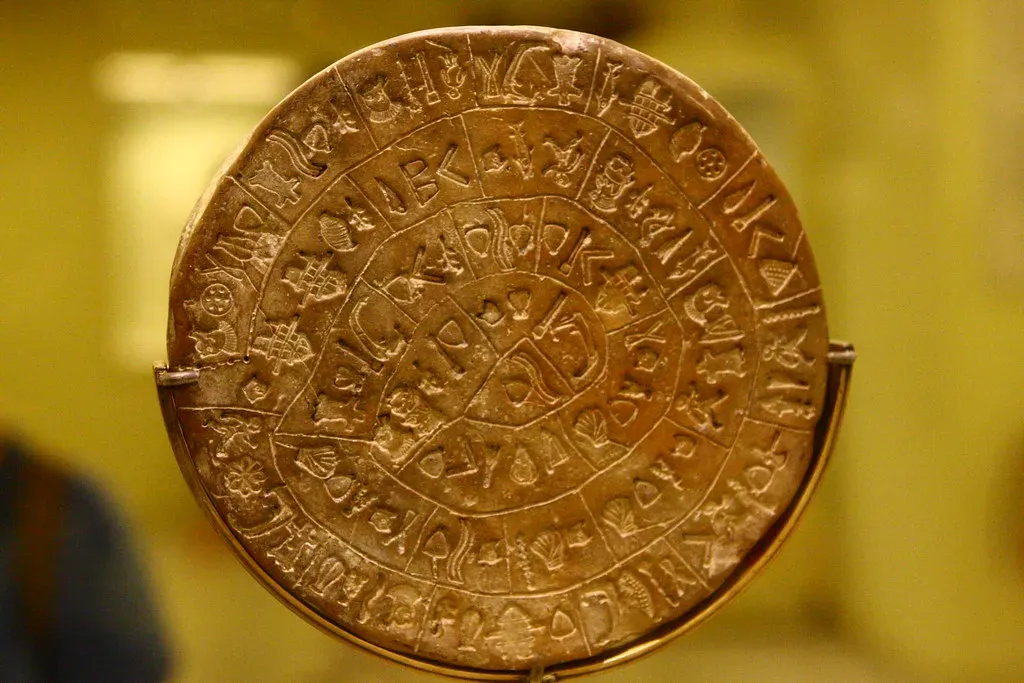
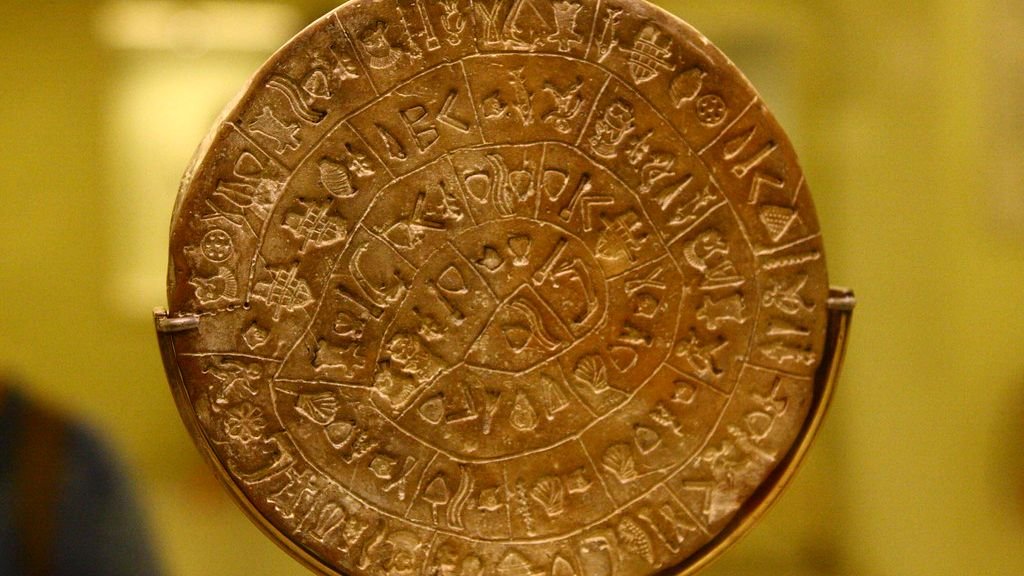
The Phaistos Disc looks almost playful at first glance: a clay disc, about the size of a small plate, stamped with little pictograms arranged in a spiral. It was found on the island of Crete in the early twentieth century and is thought to date back to the Bronze Age, yet nobody has conclusively decoded what it says. The symbols show people, animals, tools, and abstract shapes, all impressed into the clay as if with tiny stamps, making it one of the earliest examples of moveable-type style printing.
The real headache is that the disc is a linguistic orphan. We don’t have a long library of similar texts to compare it with, no bilingual inscription to act as a key, and no second disc to confirm patterns. Some think it’s a hymn, others a game, a calendar, or even a magical spell, but every proposed translation has been torn apart by counterarguments. It’s like being handed a single page from an unknown language and being asked to explain an entire culture from it; the disc sits there, compact and silent, and refuses to give up its story.
The Baghdad Battery: Ancient Power Source or Misunderstood Jar?
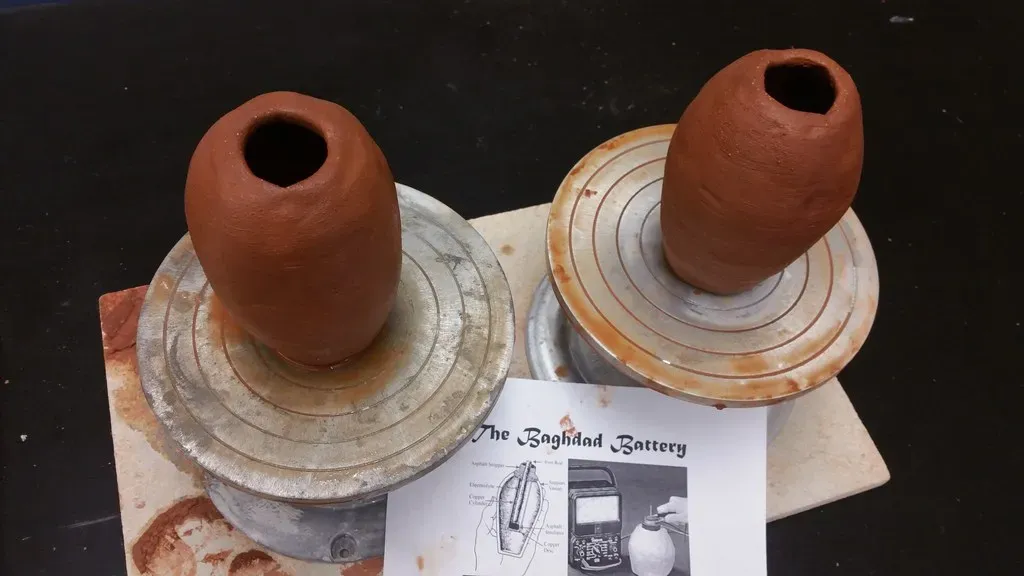
In a museum case in Iraq, there are small clay jars with copper cylinders and iron rods that have fueled arguments for decades. Known as the Baghdad Batteries, these artifacts date to ancient Mesopotamia and look suspiciously like simple galvanic cells, the basic structure of a battery. When replicated with acidic liquids like vinegar or grape juice, they can produce a small electric current, which sends imaginations into overdrive: did ancient people harness electricity long before it became “modern”?
The problem is that there’s no smoking gun to prove what they were actually used for. Some researchers suggest they might have powered early electroplating, used to coat objects with thin layers of metal, while others argue they could have been storage jars, ritual objects, or just misinterpreted entirely. There are no ancient texts calmly explaining their purpose, no contemporary illustrations showing wires attached to them. The Baghdad Battery sits at that uncomfortable intersection of “it could work” and “we have no idea if anyone ever did it,” leaving us to wrestle with how much technological intent we’re willing to project onto a few humble jars.
The Saqqara Bird: Toy, Symbol, or Evidence of Flight Knowledge?
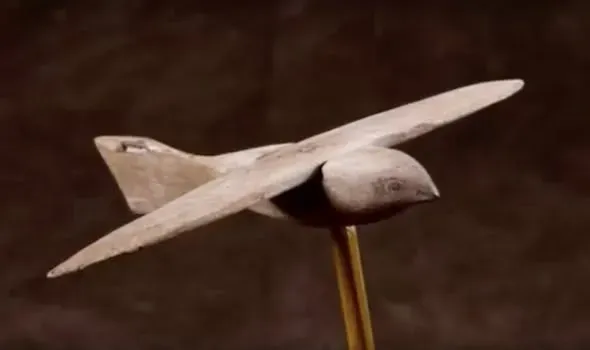
The Saqqara Bird is small, carved from sycamore wood, and at first glance could almost pass for a child’s toy. Found in an Egyptian tomb and dated to more than two thousand years ago, it has the general shape of a bird but with strangely straight wings and a tail more like a vertical stabilizer than a natural fan of feathers. Modern enthusiasts have built model versions and tested them in wind tunnels, claiming that with small tweaks it can glide surprisingly well.
This leads to a wild debate: did ancient Egyptians quietly understand principles of aerodynamics, or are people simply back-projecting modern aviation ideas onto a symbolic figure? Official interpretations usually lean toward it being a ritual object or perhaps part of a weather vane or mast ornament, but there’s no unified agreement. The artifact lives in that tantalizing space where it feels almost too “modern” to be a coincidence, yet not clear enough to declare it proof of lost aircraft design. It’s like a riddle carved in wood, daring you to decide how far your imagination is allowed to go.
The Voynich Manuscript: The Book That No One Can Crack
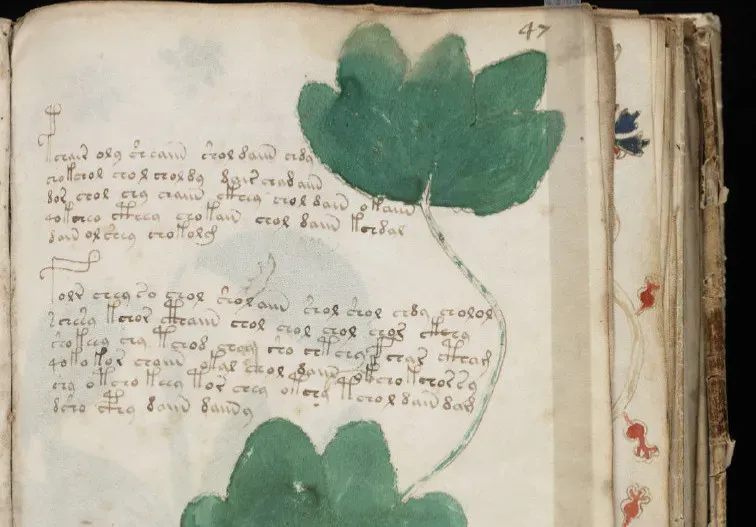
If you took a fantasy novel, a botanical guide, and a coded war manual, shredded them together, and then handed the result to the world’s best cryptographers, you’d get something like the Voynich manuscript. This mysterious book, filled with strange plants, bizarre astronomical diagrams, and an unknown script, has driven codebreakers, linguists, and hobby sleuths slightly mad for more than a century. High-resolution scans, statistical analyses, and advanced AI tools have all been thrown at it, yet its text still refuses to resolve into any known language.
Some argue it hides a lost natural science tradition, others suspect a brilliant medieval hoax created to impress a wealthy patron, while a few think it encodes an entirely invented language. What keeps it so compelling is that, despite immense effort, no one has produced a translation that holds up under serious scrutiny. It’s a reminder that even in an age of supercomputers and machine learning, a single stubborn book can still look us in the eye and say: you’re not as all-knowing as you think.
Conclusion: Silent Witnesses From a Past We Don’t Fully Understand
These five artifacts are like loose threads dangling from the fabric of history, inviting us to tug and see what unravels. The Antikythera mechanism, Phaistos Disc, Baghdad Battery, Saqqara Bird, and Voynich manuscript each tell us that the past was not simple, linear, or fully mapped, no matter how tidy our history timelines look in school textbooks. They hint at lost skills, forgotten experiments, and ways of thinking that don’t fit neatly into our existing categories.
Maybe that’s the real gift of these unsolved relics: they force us to live with uncertainty and stay curious instead of pretending we have every answer already pinned down. The questions they raise are sometimes more powerful than any theory we can comfortably settle on. When you think about it, how many other objects are still buried, sitting in private collections, or mislabelled on museum shelves, quietly keeping their secrets?