
You’ve probably heard that the universe gets weird at the smallest scales. But how weird? We’re talking about particles that can be in two places at once, objects that can pass through solid walls, and connections that seem to defy the speed of light. These aren’t ideas from science fiction or mystical theories. They’re real, verified phenomena that scientists observe in laboratories today, and they’re the foundation of technologies you might use every day without realizing it.
The quantum world operates under rules that seem to contradict everything we know from our everyday experience. Things that would be impossible for a tennis ball or a car become routine for electrons and photons. Yet these bizarre behaviors are exactly what make modern electronics, medical imaging, and quantum computers possible. Ready to explore these strange realities? Prepare to question what you thought you knew about the nature of existence itself.
Quantum Entanglement: The Universe’s Spooky Connection
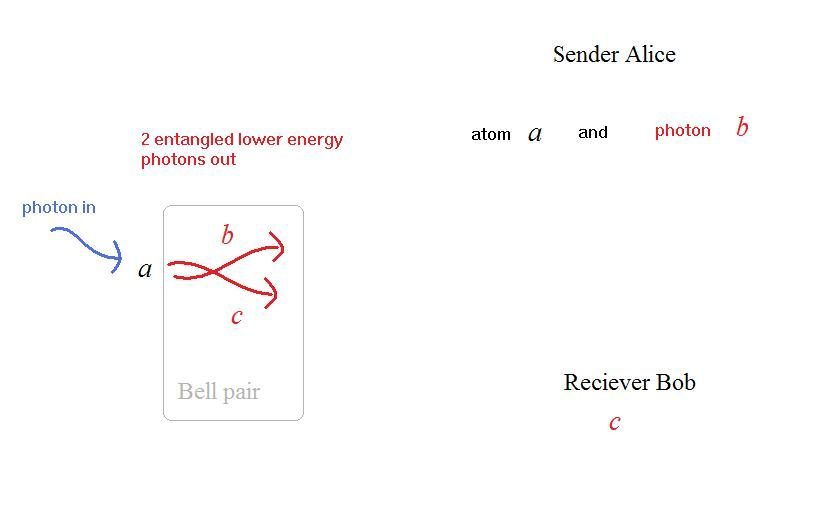
Imagine two particles that become so intimately connected that measuring one instantly affects the other, even if they’re separated by the entire width of the galaxy. Quantum entanglement is a phenomenon where two or more quantum particles become linked in such a way that the state of one particle instantly determines the state of the other, no matter how far apart they are. Albert Einstein famously referred to it as “spooky action at a distance” because it seemed to contradict everything known about how information travels in the universe.
This phenomenon isn’t just theoretical speculation. In a groundbreaking study, researchers from Brookhaven National Laboratory and the Technion – Israel Institute of Technology observed quantum entanglement between non-identical particles – specifically, oppositely charged pions (π⁺ and π⁻) produced in near-miss collisions of heavy ions. The applications are already transforming technology. Entangled particles are now forming the backbone of technologies like quantum cryptography, quantum networks, and teleportation protocols.
What makes entanglement particularly unsettling is that this connection happens instantaneously. This strange connection doesn’t involve any signal traveling between the particles. It’s as if the universe maintains a hidden information network that operates outside the normal rules of space and time. Instead, it’s as if the entangled system behaves like a single, unified whole, even when the parts are separated by light-years. This challenges our basic understanding of locality and causality, suggesting that reality at its deepest level might be far more interconnected than we ever imagined.
Superposition: The Quantum Ability to Be Multiple Things at Once
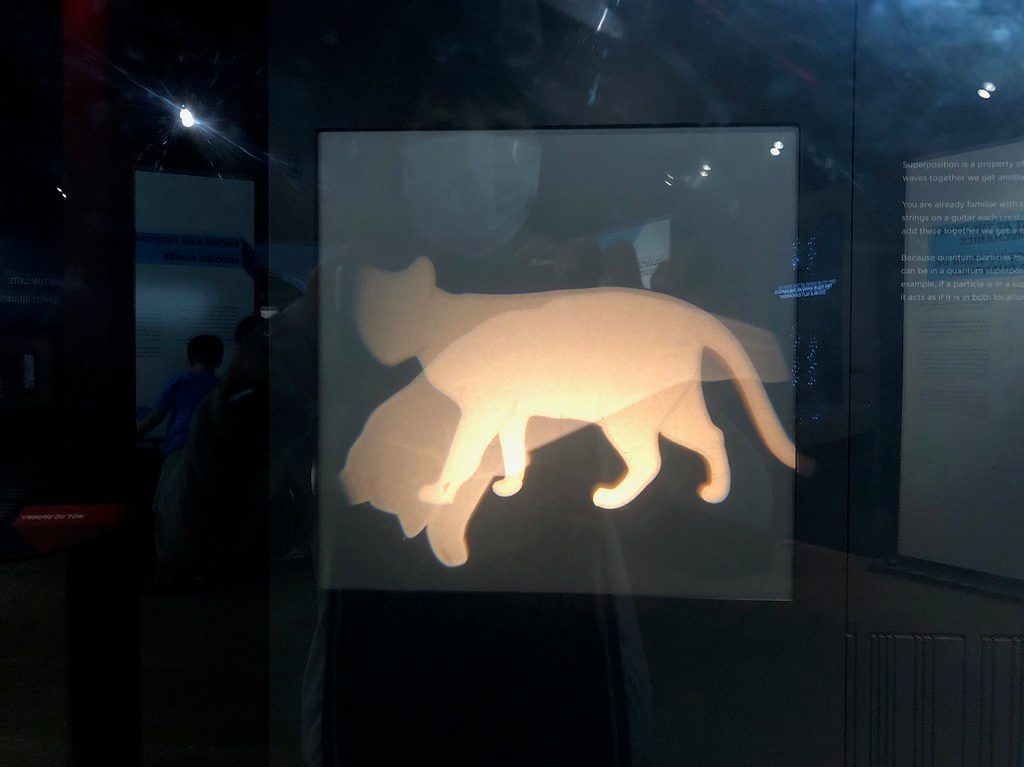
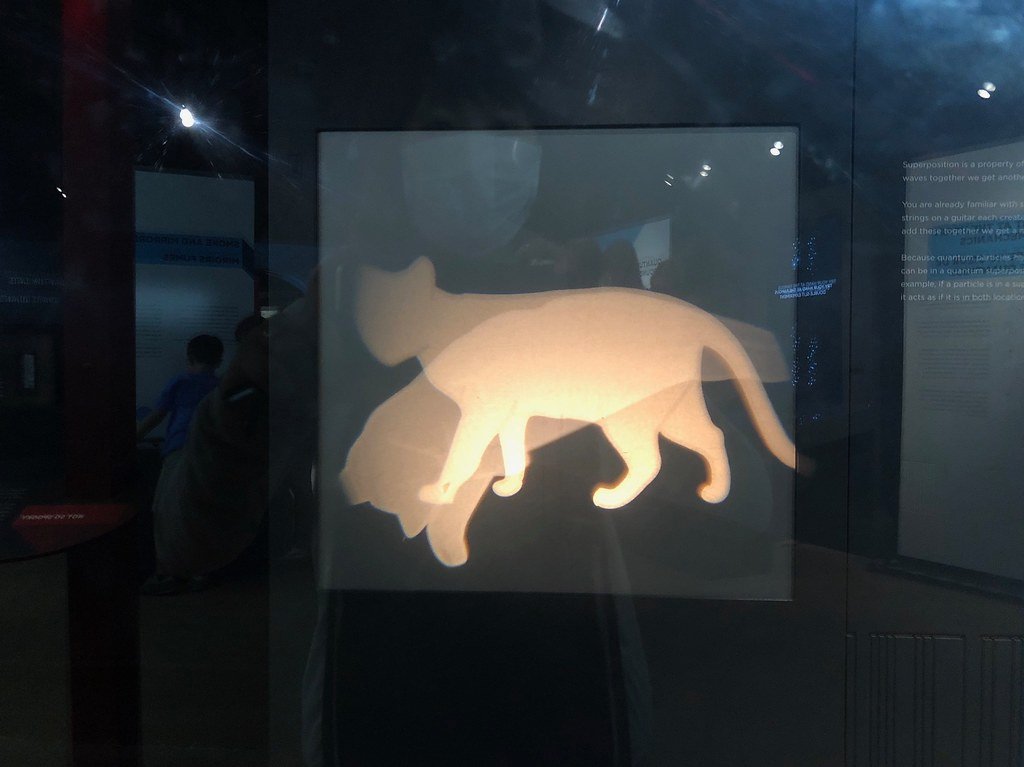
What if you could be in your living room and your kitchen at the exact same time? In the quantum world, particles don’t just do this – it’s their default state. Quantum superposition describes how a quantum particle, like an electron, a photon, or even an initial atom, can exist in multiple different states at the same time – until it’s measured. Quantum superposition is a phenomenon in which a tiny particle can be in two states at the same time – but only if it is not being directly observed.
Think of it this way: a quantum particle doesn’t “choose” to be in one state or another until something forces it to decide. When an electron is in superposition, its different states can be considered as separate outcomes, each with a particular probability of being observed. This isn’t about the particle hiding its true nature from us. It genuinely exists in multiple states simultaneously, with each possibility carrying a certain probability.
The applications are staggering. Three qubits can be in a superposition of all 8 possible states at once, meaning that quantum computers can process a much larger number of calculations simultaneously. But superposition is fragile. The more complex the object, the more interactions it has with its environment and the faster the decoherence process unfolds. This explains why you don’t see people or chairs existing in multiple locations at once – the environment constantly “measures” large objects, forcing them into single, definite states.
Quantum Tunneling: Passing Through the Impossible
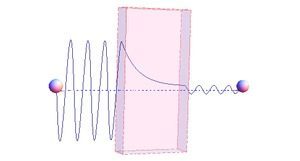
Imagine you’re playing golf, but the ball doesn’t have enough force to reach the top of a hill. In the classical world, it rolls back down every time. In the quantum world? It occasionally appears on the other side of the hill without ever going over the top. Quantum tunneling is a quantum mechanical phenomenon in which an object such as an electron or atom passes through a potential energy barrier that, according to classical mechanics, should not be passable due to the object not having sufficient energy to pass or surmount the barrier.
Tunneling is a consequence of the wave nature of matter and quantum indeterminacy. Because particles behave like waves, their probability of existence doesn’t abruptly stop at barriers – it decays gradually. In a system with a short, narrow potential barrier, a small part of wavefunction can appear outside of the barrier representing a probability for tunnelling through the barrier. The probability is small, but it’s never exactly zero.
This bizarre phenomenon isn’t just an abstract curiosity. Quantum tunneling is an essential phenomenon for nuclear fusion. The temperature in stellar cores is generally insufficient to allow atomic nuclei to overcome the Coulomb barrier and achieve thermonuclear fusion. Quantum tunneling increases the probability of penetrating this barrier. Though this probability is still low, the extremely large number of nuclei in the core of a star is sufficient to sustain a steady fusion reaction. Without quantum tunneling, the sun wouldn’t shine, and you wouldn’t exist. The effect is also exploited in modern technology through tunnel diodes and scanning tunneling microscopes, which can image individual atoms on surfaces.
Wave-Particle Duality: The Identity Crisis of Reality
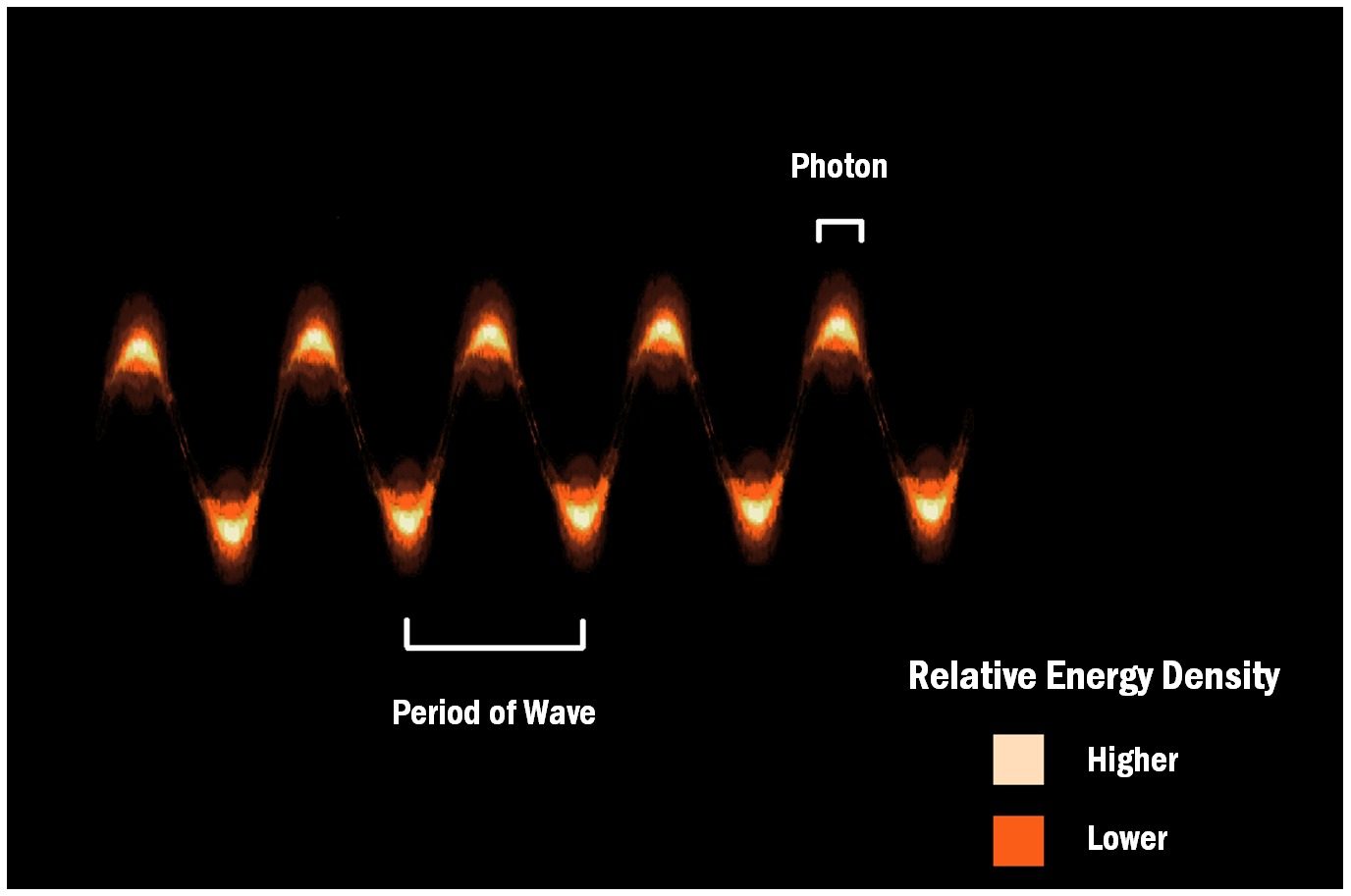
Is light a wave or a stream of particles? The answer is both, and neither, depending on how you look at it. Wave–particle duality is the concept in quantum mechanics that fundamental entities of the universe, like photons and electrons, exhibit particle or wave properties according to the experimental circumstances. This isn’t just about light – it applies to everything. During the 19th and early 20th centuries, light was found to behave as a wave, then later was discovered to have a particle-like behavior, whereas electrons behaved like particles in early experiments, then were subsequently discovered to have wave-like behavior.
The experimental evidence is undeniable. In 1927, the wave nature of electrons was empirically confirmed by two experiments. Electrons, which we typically think of as tiny particles, can create interference patterns just like water waves do – but only when they’re not being observed in a way that reveals their particle nature. With either slit open there is a smooth intensity variation due to diffraction. When both slits are open the intensity oscillates, characteristic of wave interference. Having reduced the intensity of the electron source until only one or two are detected per second, appearing as individual particles, dots in the video. Viewers can watch Thom as random. After some time a pattern emerges, eventually forming an alternating sequence of light and dark bands.
This duality reveals something profound about reality. Individuals can say is that wave-particle duality exists in nature: Under some experimental conditions, a particle appears to act as a particle, and under different experimental conditions, a particle appears to act as a wave. The properties we observe aren’t inherent to the object itself but depend on how we choose to interact with it. The universe doesn’t have a single, objective nature waiting to be discovered – it reveals different aspects depending on the questions we ask.
Quantum Decoherence: When the Quantum World Meets Reality
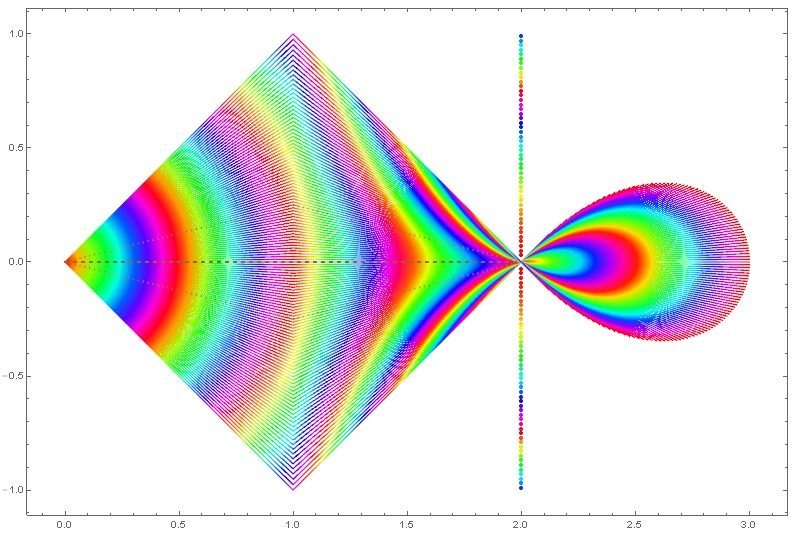
If quantum particles can be in multiple states at once, why can’t you? The answer lies in decoherence, the process that makes the quantum world appear classical. Decoherence describes the transition from a pure quantum state to a statistical mixture of states, not because of measurement in the traditional sense, but due to uncontrolled interactions with external degrees of freedom (like air molecules, photons, or vibrations in a substrate). These interactions cause the different components of the superposition to lose their phase relationship, which is crucial for interference and other quantum effects.
The process happens almost instantaneously for anything larger than microscopic particles. Decoherence represents an extremely fast process for macroscopic objects, since these are interacting with many microscopic objects, with an enormous number of degrees of freedom in their natural environment. The process is needed if we are to understand why we tend not to observe quantum behavior in everyday macroscopic objects and why we do see classical fields emerge from the properties of the interaction between matter and radiation for large amounts of matter.
This insight clarifies one of the most controversial aspects of quantum mechanics: the role of observation. The need for the “observer” to be conscious is not supported by scientific research, and has been pointed out as a misconception rooted in a poor understanding of the quantum wave function ψ and the quantum measurement process. Decoherence, on the other hand, happens continuously and naturally – even without an observer, merely through environmental interaction. In essence, quantum decoherence provides a physical explanation for the emergence of classicality: why we don’t see cats that are simultaneously alive and dead, or chairs that are here and there. It’s the invisible process that forces quantum systems to behave in classically recognizable ways. The environment itself acts as a constant observer, forcing quantum systems to “decide” on definite states.
Conclusion: The Strange Reality We Call Home
These five phenomena reveal that the universe operates under rules far stranger than our everyday experience suggests. Particles that exist in multiple states simultaneously, objects that tunnel through barriers they shouldn’t be able to cross, and connections that transcend space itself – these aren’t theoretical curiosities but verified aspects of reality. The quantum world isn’t just weird for the sake of being weird. It’s the foundation upon which everything else is built.
What makes this even more remarkable is that these phenomena aren’t just abstract concepts for physicists to ponder. They’re being harnessed right now in quantum computers, ultra-secure communication systems, and medical imaging devices. The strange rules of the quantum world are becoming the practical tools of our technological future. As we continue to explore and exploit these effects, we’re not just learning about the universe – we’re learning to use its deepest properties to our advantage.
Understanding these phenomena changes how you see reality itself. The solid, predictable world of everyday experience is just an illusion created by countless quantum interactions happening too quickly and in too large numbers for us to perceive individually. At its core, reality is uncertain, interconnected, and far more flexible than it appears. What do you think about this strange universe we inhabit? Does it make you see the world differently?