
If you’d told astronomers a decade ago that a single telescope would rewrite whole chapters of our understanding of the universe in just a few years, most would’ve smiled politely and changed the subject. Yet here we are: the James Webb Space Telescope (JWST) has turned the quiet night sky into a noisy, chaotic, wonderfully confusing lab. It hasn’t just answered old questions; it has ripped open entirely new ones.
What makes Webb so wild is that it keeps catching the universe doing things it’s “not supposed” to do – forming galaxies too fast, making stars in strange environments, hiding building blocks of life where we didn’t expect them. Every dataset seems to contain a small shock. Let’s walk through five of the most stunning discoveries so far and why they’re forcing astronomers to rethink what they thought was settled.
1. Galaxies That Seem Too Big, Too Bright, and Too Early
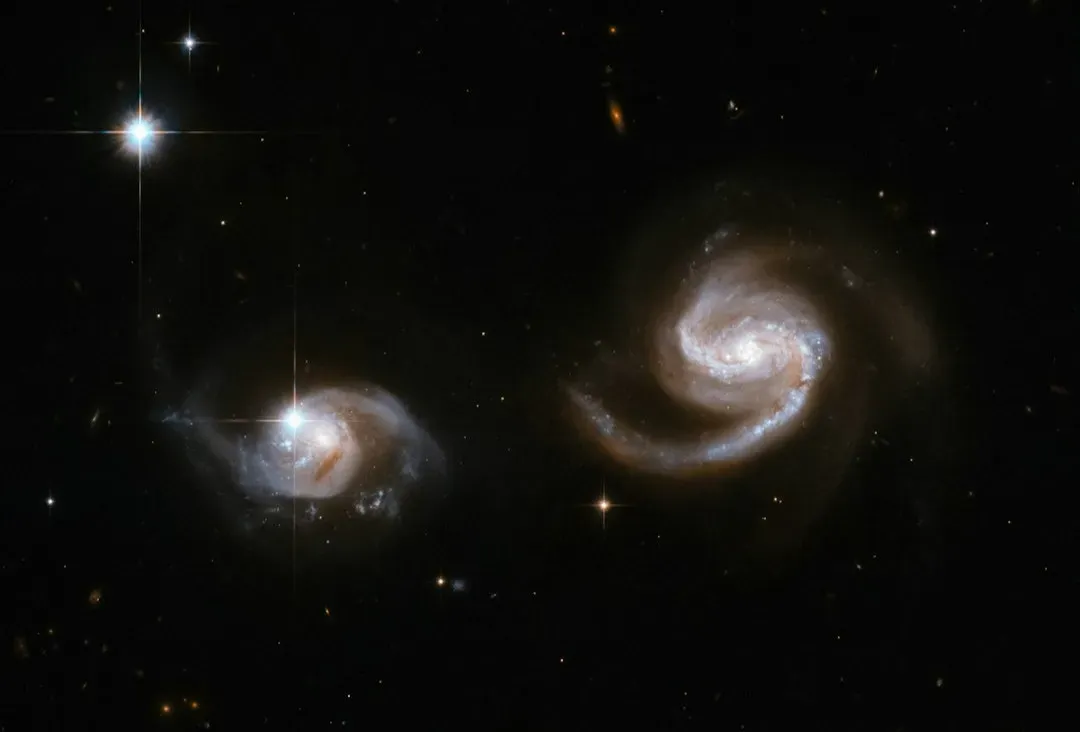
Imagine opening a baby photo album and finding pictures of a fully grown adult on the first page. That’s roughly how it felt when JWST spotted surprisingly massive, bright galaxies from a time when the universe was only a few hundred million years old. These early galaxies, seen at extreme distances, look more mature and more structured than standard models of galaxy formation predicted.
For years, simulations suggested that building large galaxies should take a long, slow grind of merging and star formation. Webb’s deep surveys instead revealed compact, dense systems that had already packed in a huge amount of mass very shortly after the Big Bang. Either galaxies grow faster than we thought, or our assumptions about early star formation, dark matter behavior, or even aspects of cosmology need tuning. No one loves rewriting the rulebook, but this discovery is pushing exactly that kind of uncomfortable but exciting rethink.
2. Shockingly Complex Chemistry in Protoplanetary Disks
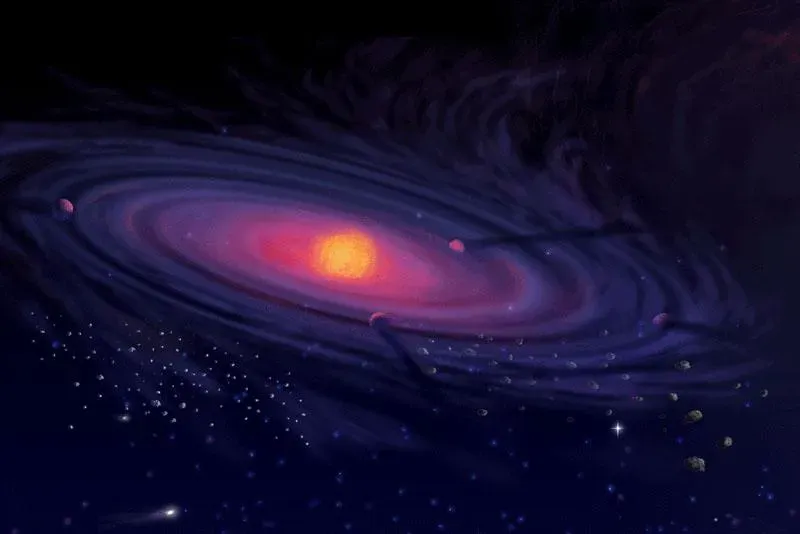
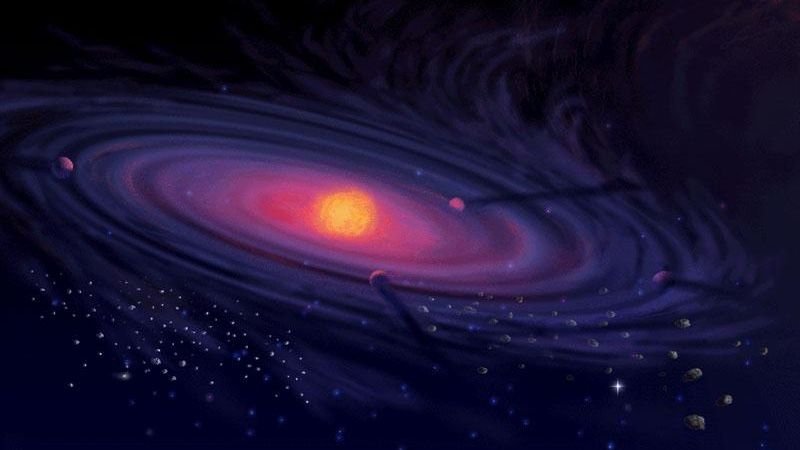
When I first saw the early reports that Webb was detecting complex organic molecules in young planet-forming disks, my reaction was basically: so much, so soon? Using its powerful infrared vision, JWST has peered into dusty protoplanetary disks around young stars and found not only water vapor and carbon dioxide, but also more complex carbon-based molecules that are considered key ingredients for life. These are not vague hints; they’re clear chemical fingerprints in the spectra.
This matters because it suggests many planetary systems may start out with rich chemical toolkits before planets are even fully formed. Instead of life’s building blocks being rare finishing touches, they could be more like standard items in the cosmic starter pack. That doesn’t mean life is common, but it narrows the gap between “dead rock” and “potentially habitable world.” Webb is essentially showing that nature likes to overstock the shelves with interesting chemistry right where new planets are being born.
3. Stunning Detail in Exoplanet Atmospheres
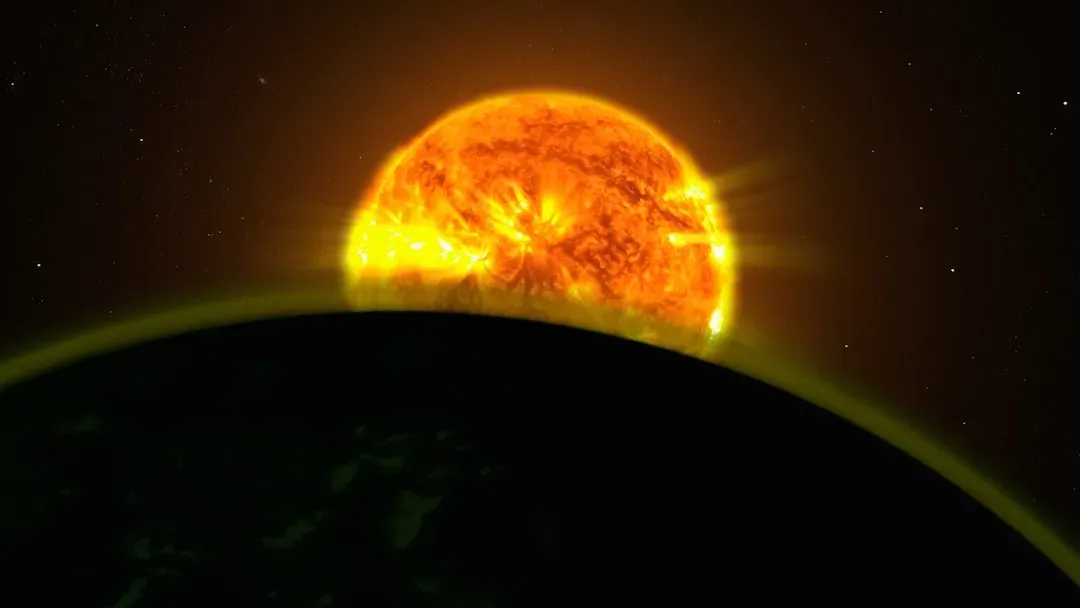
Before JWST, studying exoplanet atmospheres felt a bit like trying to guess what’s cooking in a distant kitchen by smelling it through a closed door. You could get hints – water here, maybe clouds there – but the details were fuzzy. Webb changed that. By watching planets pass in front of and behind their stars, it can measure tiny changes in starlight and decode the gases present in those alien skies with unprecedented precision.
Webb has already confirmed water vapor in several hot gas giants, found clear signals of carbon-bearing molecules, and in some cases hinted at complex atmospheric circulation and cloud structures. It’s even been able to probe smaller, cooler worlds that inch closer to the kind of planets we might one day call cousins of Earth. We’re still far from a true “biosignature” detection, but for the first time, the path from “planet discovered” to “atmosphere characterized” is becoming routine rather than miraculous, and that’s a huge psychological shift for the field.
4. New Clarity on the Cosmic Dark Ages and Reionization
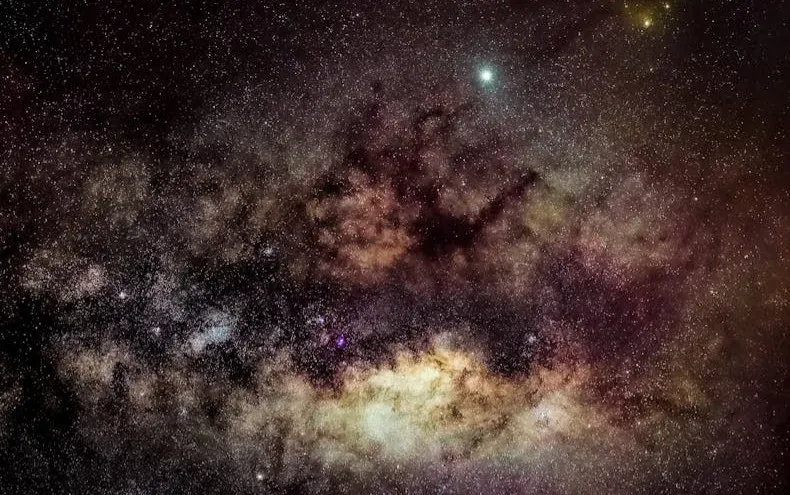
There’s a period in the early universe ominously called the “cosmic dark ages,” when the first stars and galaxies were just beginning to form and the fog of neutral hydrogen still filled space. For decades this era lived mostly in theory and crude observations, more like a sketch than a photograph. JWST is now turning that sketch into something much sharper, catching galaxies in the act of helping to reionize the universe – essentially, clearing that fog and letting light travel freely.
By measuring how much light from these early galaxies gets absorbed at different wavelengths, Webb is helping map where and when regions of space transitioned from opaque to transparent. It’s showing that small, faint galaxies likely played an outsized role, punching holes in the cosmic fog far earlier than we could see before. This is not just a pretty historical detail; it’s central to understanding how structure grew, how light escaped into space, and how the universe went from darkness to the rich tapestry of galaxies we see today.
5. Dust, Stars, and Black Holes in a New Light
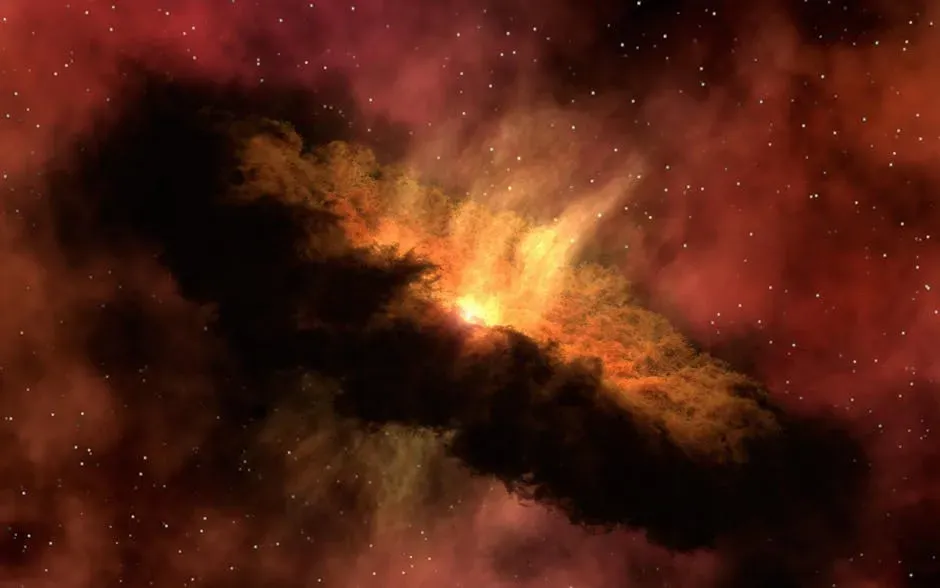
For a long time, cosmic dust had a bad reputation among astronomers: it blocks light, obscures stars, and generally gets in the way. JWST, operating in the infrared, turns that frustration into a superpower. Instead of fighting the dust, it sees through and into it, revealing how dust-rich regions are actually factories where stars, planetary systems, and even the environments around black holes are being actively shaped.
Webb has captured jaw-dropping views of star-forming regions where newborn stars carve cavities into their dusty cradles, and it has traced how dust and gas swirl around actively feeding supermassive black holes in distant galaxies. Some of these observations suggest that black holes and their host galaxies have been co-evolving in tightly linked ways even earlier in cosmic history than previously confirmed. Dust, once treated mainly as a nuisance, now looks like a central character in the universe’s story of growth, transformation, and sometimes violent feedback.
Conclusion: A Telescope That Keeps Raising the Stakes
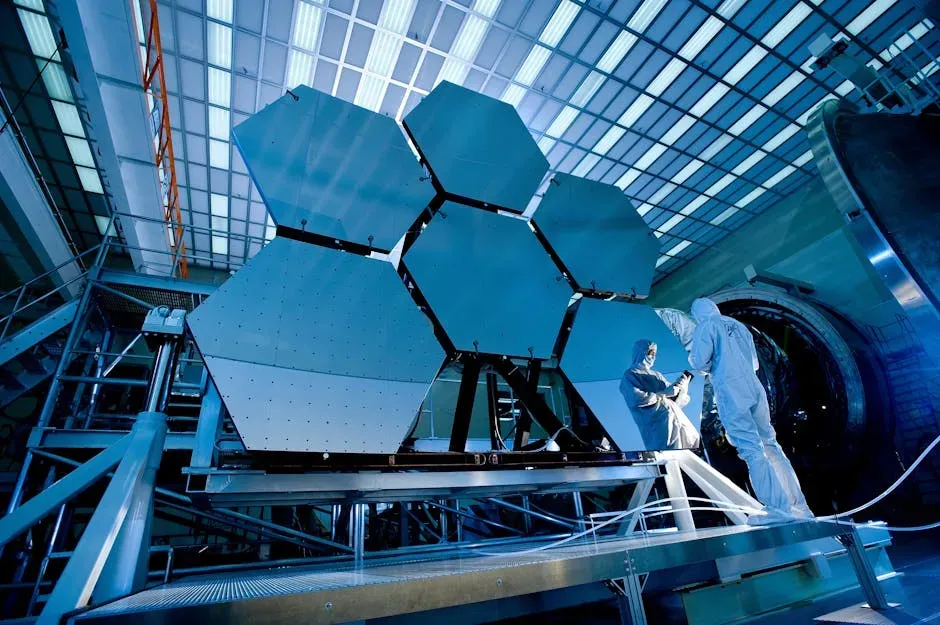
The most striking thing about the James Webb Space Telescope so far is not just any single headline discovery, but how often it forces astronomers to say, “We didn’t expect that.” Early massive galaxies, rich organic chemistry in baby planetary systems, detailed alien atmospheres, a clearer map of the universe’s first light, and a new respect for dust have all emerged in only the first few years of operation. Each of these findings sharpens the same underlying message: the universe is more efficient, more complex, and more surprising than the tidy models we drew up on paper.
We’re still just cracking open the data Webb is sending back, and many of its most important results may come from slow, careful work rather than flashy images. Yet even now, it’s obvious that future astronomy textbooks will have a clear dividing line: before JWST and after JWST. As more light from the distant past reaches its mirrors, the biggest unknown may be simple and unsettling: how much of what we take for granted today will still survive the next wave of discoveries?