
America is one of the most geologically diverse countries on the planet. You’ve got towering volcanic peaks, ancient canyons, shimmering salt flats, and landscapes so strange they barely look real. Most of it, scientists can explain fairly well. Most of it.
There’s a handful of places scattered across this country that continue to puzzle researchers, even in 2026. These aren’t just pretty landscapes. They’re active riddles, places where the ground itself seems to refuse to play by the rules of geology. From a waterfall that keeps a flame burning year-round to thousands of mysterious earthen mounds no one can fully account for, these wonders are the kind of thing that makes you realize we still don’t know everything about our own backyard. Buckle up, because this one gets wild. Let’s dive in.
The Sailing Stones of Death Valley, California
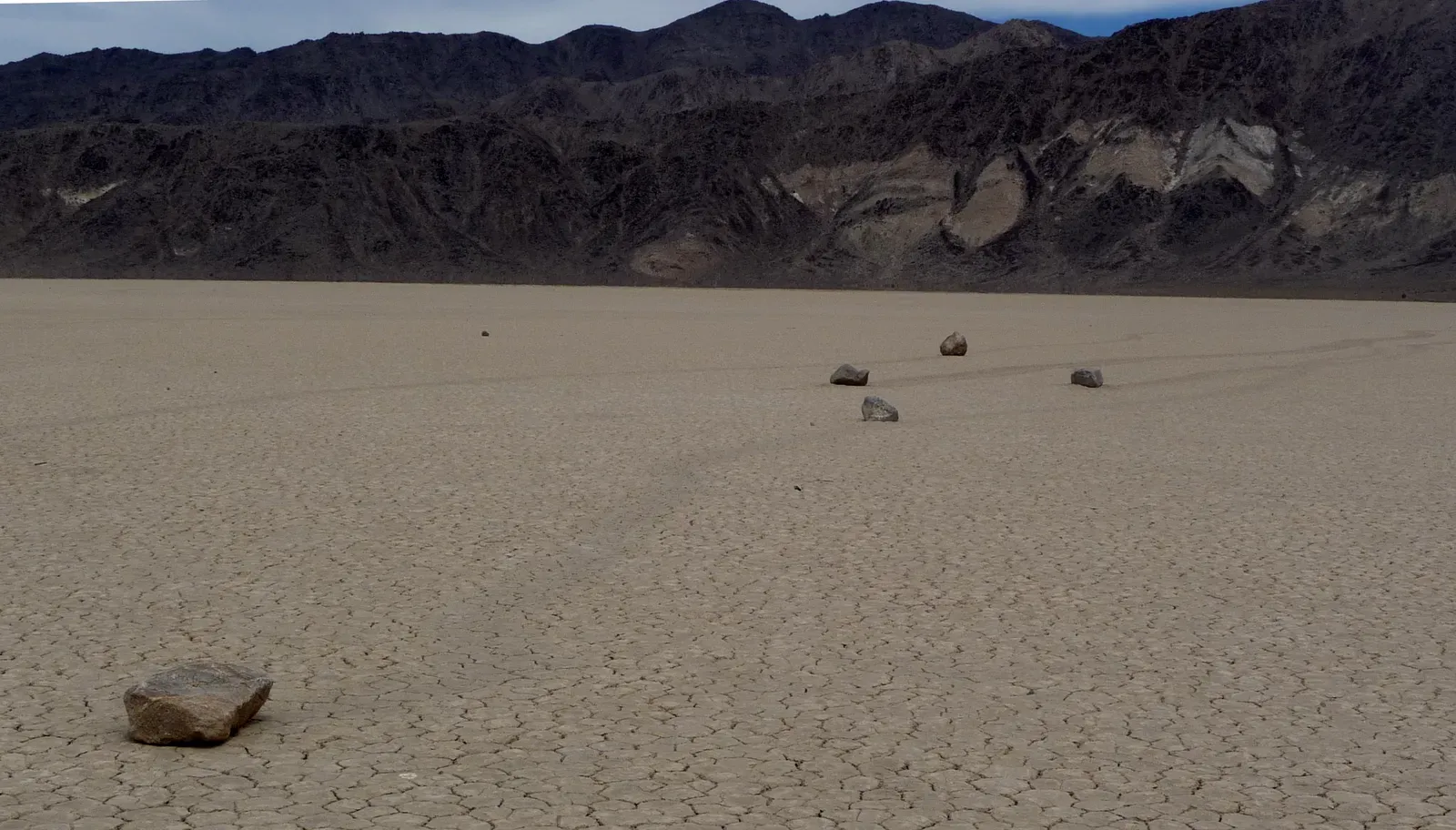
Imagine walking through a silent, bone-dry lakebed in the California desert and coming across a boulder the size of a small refrigerator, sitting completely alone with a long, winding trail etched behind it in the cracked mud. No footprints around it. No tire tracks. No explanation. For decades, heavy stones in a remote dry lake bed appeared to move across the desert floor on their own, leaving long, winding tracks behind them. It’s exactly as eerie as it sounds.
The rocks, which range from golf-ball size to several hundred pounds, inexplicably proceed to move on their own across the playa. They zigzag, loop, and even cross each other’s tracks. Scientists eventually got closer to cracking the mystery. No one had ever actually seen them move until a few years ago, when GPS tracking finally revealed the secret: under very specific weather conditions, thin sheets of windowpane ice form and are pushed by light winds, dragging the rocks across the mud. Still, one major problem remains.
The long-standing theoretical explanation is that rain causes the playa surface to become slick, and strong winds blow and push the rocks across its surface. One problem with that theory is the fact that the rocks sometimes seem to move in concert with one another, but other times split up and go their own way. Even with an explanation, the sight of these walking stones in the middle of a barren desert remains one of the most surreal natural phenomena in North America. Honestly, no matter how much science you throw at it, standing there in person would still make your hair stand up.
The Great Unconformity of the Grand Canyon, Arizona
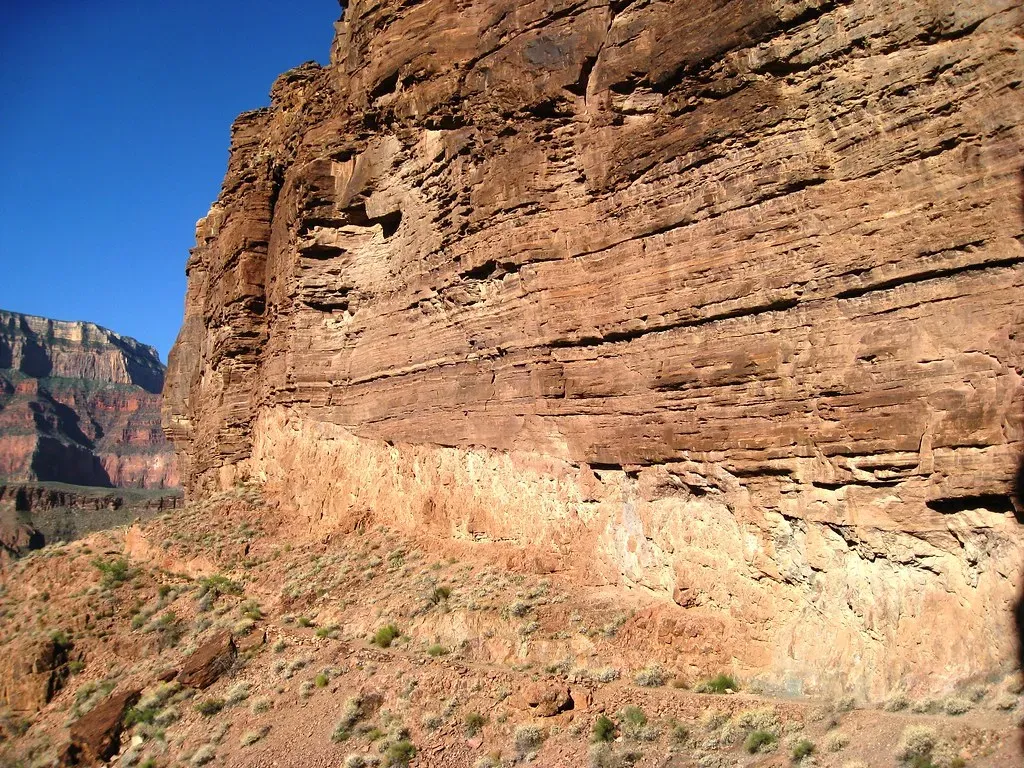
You’ve likely seen the Grand Canyon in photos, maybe even visited it yourself. The Grand Canyon in Arizona spans 277 miles in length, up to 18 miles in width, and over a mile deep, carved by the Colorado River over millions of years, exposing layers of rock that date back nearly two billion years. It looks like Earth’s biography written in stone. But here’s what keeps geologists up at night: a colossal chunk of that story is simply missing.
The Great Unconformity is a huge gap in the geological record: layers of rock dating from about 1.2 billion to 250 million years ago are completely missing from certain areas around the globe. This enormous chunk of lost time can be seen clearly in the stratigraphy of the Grand Canyon. Geologists studying the anomaly there have noted that there is plenty of rock, full of fossils, from the Cambrian period, about 540 million years ago, but the layer beneath it is basement rock formed roughly one billion years ago and empty of fossils. So what happened to roughly 500 million years of geological time?
An emerging theory called “Snowball Earth” may explain where the rock disappeared to. Around 700 million years ago, Earth was encased in snow and ice. Moving glaciers peeled off the planet’s crust with the help of lubricating sediments, pushing it into oceans, where it was reabsorbed by subducting tectonic plates. Researchers have also put forward the theory that the rock layers were lost during a period of tectonic uplift, when the ancient supercontinent Rodinia broke apart some 750 million years ago, creating faults in the rock visible today. Researchers are also studying similar unconformities across North America to find out what’s behind these mysterious periods in the planet’s history. I think the truly staggering part is that you could stand at the edge of the Grand Canyon and peer directly into one of Earth’s deepest unsolved mysteries.
The Eternal Flame Falls of New York
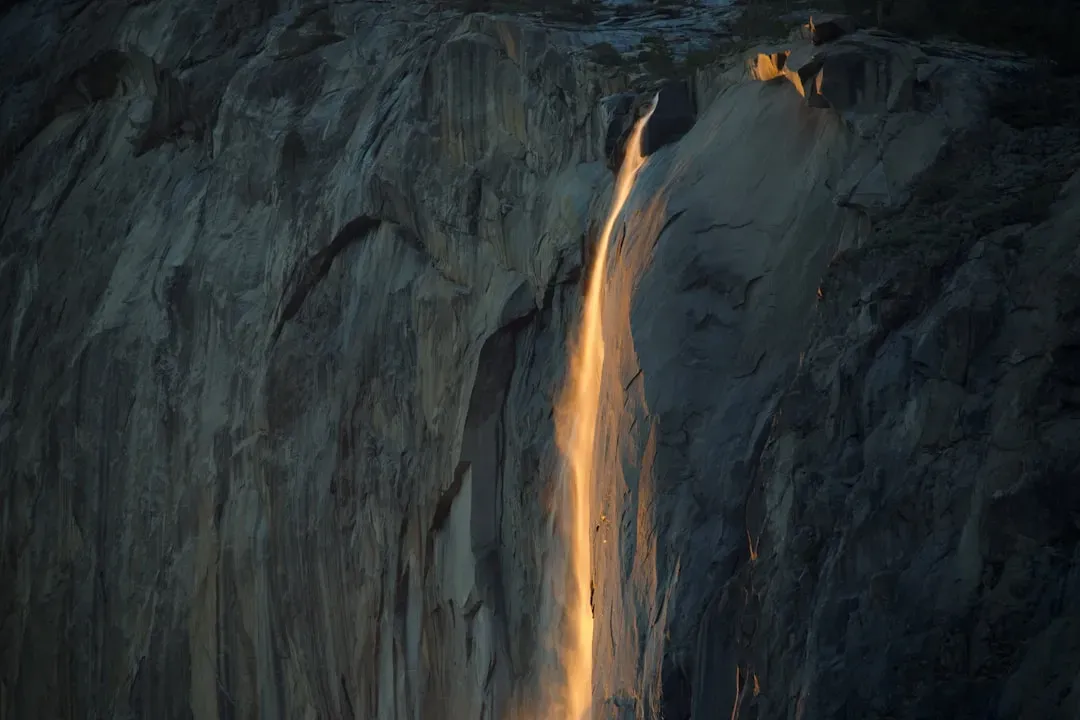
Here’s the thing: fire and waterfalls don’t exactly go together. Water puts out fire, right? That’s just basic physics. So when you hear about a small waterfall in Western New York that houses a flickering flame burning behind the cascade, nearly year-round, your first instinct might be to call it a trick. It’s not. The Eternal Flame Falls is a small waterfall located in the Shale Creek Preserve, a section of Chestnut Ridge Park in Western New York. A small grotto at the waterfall’s base emits natural gas, which can be lit to produce a small flame.
The natural gas at Eternal Flame Falls originates from decomposing organic matter in buried layers of shale. Specifically, the gas comes from a geological formation called the Hanover Shale that dates to the Devonian period, roughly 419 to 359 million years ago. Organic matter breaking down in this 90-foot-thick formation releases gases that accumulate underground. As the pressure builds, these gases escape via fissures in the rock and soil above, giving rise to seeps at the surface. That part, scientists understand. What they don’t understand is far more interesting.
For a long time, scientists believed that the fire burns because of gas pockets that rise from old, extremely hot bedrock made of shale. The rock’s high temperatures break down the carbon molecules in the shale, which in turn creates natural gas. However, a group of scientists from Indiana University found that the shale under the waterfall isn’t actually hot enough or old enough to be causing the formation of gas pockets. According to one geologist involved in the 2013 study, the seep’s apparent source could provide evidence for a previously unknown geologic mechanism by which natural gas is produced within shale. In other words: the flame burns, but the science behind exactly why the gas keeps coming remains an open question.
The Mima Mounds of Washington State
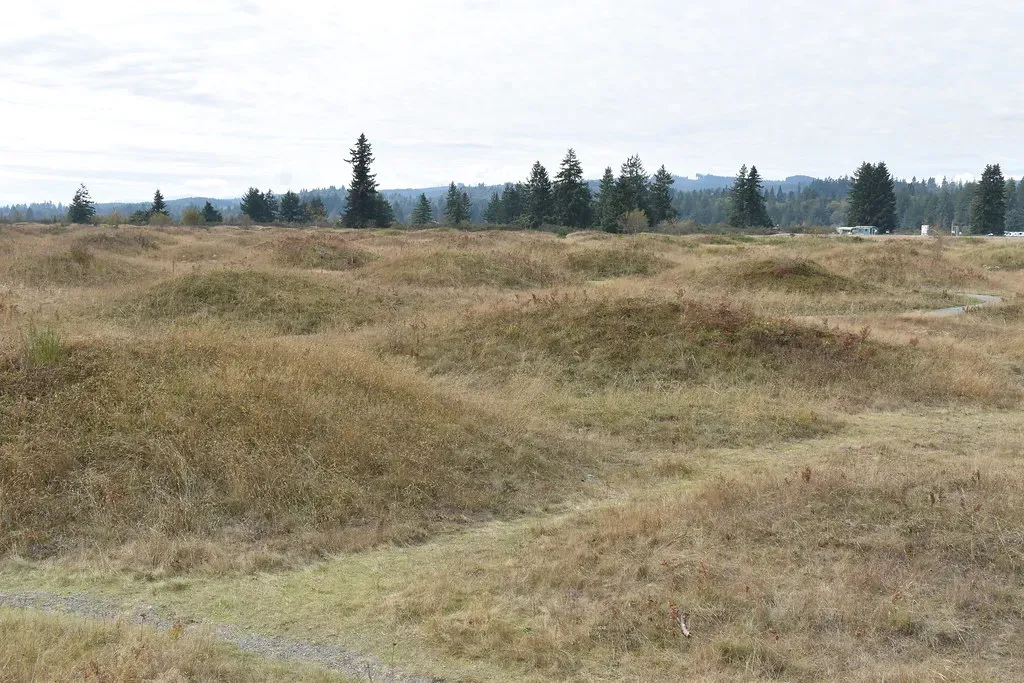
Picture a prairie that looks like it’s covered in hundreds of perfectly round, grassy speed bumps, stretching as far as the eye can see. That’s what you get at the Mima Mounds Natural Area Preserve, just south of Olympia, Washington. Thurston County’s Mima Mounds is a unique prairie ecosystem with mostly evenly spaced hills comprising 641 acres with eight to ten mounds per acre. These mysterious little knolls measure one to seven feet tall and span a diameter of eight to 40 feet. That’s a lot of mounds, and nobody agrees on how they got there.
By the department’s count, more than 30 published theories exist today, attributing the mounds to everything from earthquakes to an ancient flood to, most prominently, gophers. Gophers, honestly. Research biologists have suggested that small common pocket gophers, which still reside in the area, are capable of creating expansive Mima-like mound communities. Computer models show it could take a couple of hundred generations of gophers over 500 years to build them. Impressive little architects, if true. Yet skeptics remain unconvinced.
Scientists suggest that some of the mounds may be 30,000 years old, which makes decoding them complex; humans are believed to have arrived in North America several thousand years later than that. After decades of research, nobody knows what caused the Mima Mounds. Although scientists and explorers believed they’d solved the puzzle of this mysterious land formation at various times, virtually every one turned out to be wrong. The mounds have outlasted every explanation thrown at them, which, if you think about it, is an achievement in itself.
The Yellowstone Supervolcano, Wyoming, Montana, and Idaho
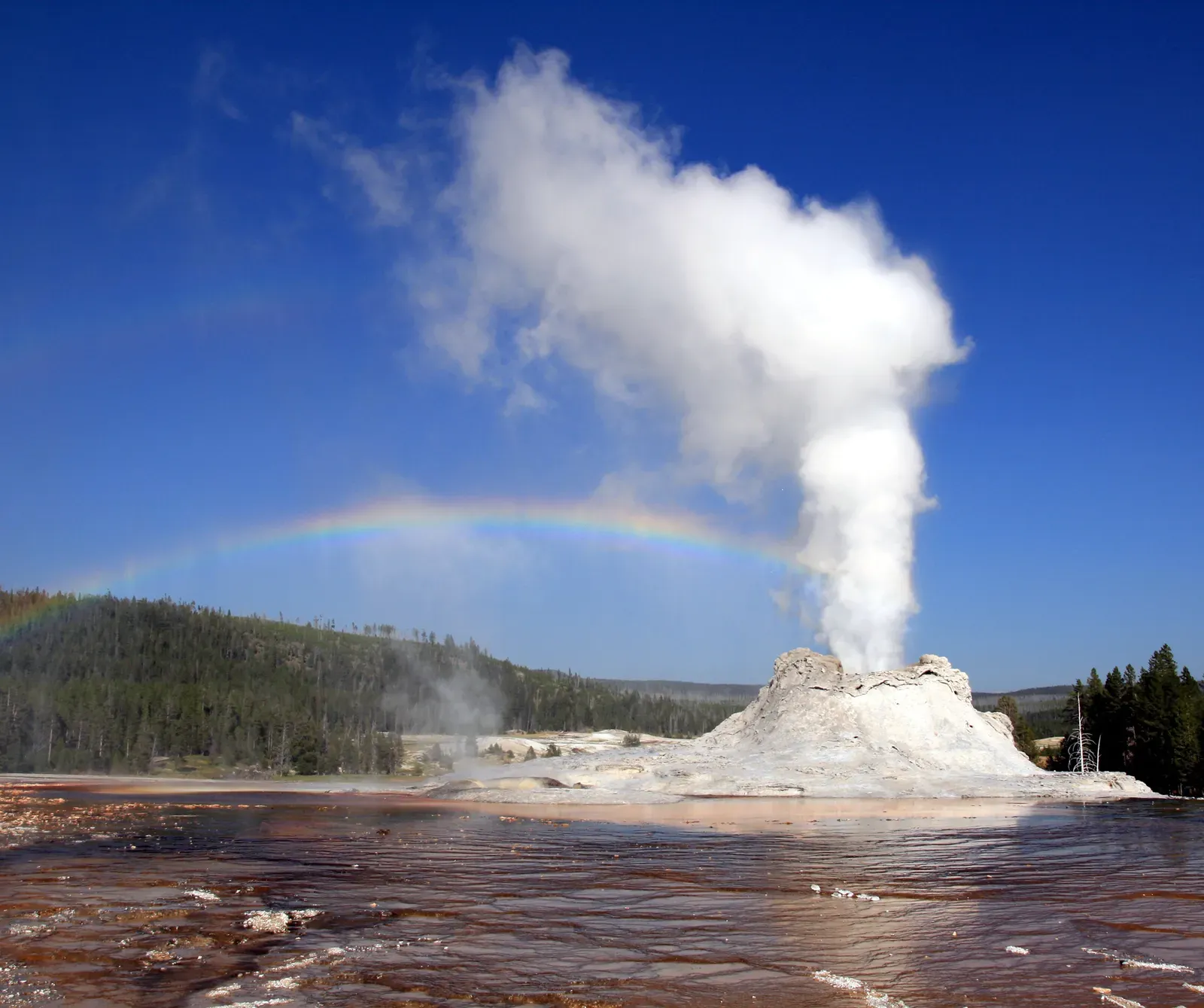
You’ve probably heard that Yellowstone sits on top of a supervolcano. What you might not fully appreciate is just how baffling the system beneath it remains to scientists. Yellowstone National Park sits inside an ancient volcanic caldera with magma, in some places only a few miles underground, powering the park’s famous geysers, hot springs, fumaroles, and mud pots. Think of it as the world’s largest geological pressure cooker, and nobody is quite sure what it’ll do next.
The Yellowstone Caldera is the largest in North America. The Yellowstone hotspot has actually produced three calderas in the Yellowstone region, the youngest of which is nearly 80 kilometers long and 50 kilometers wide. Up until two million years ago, there were caldera-forming eruptions roughly once every 600,000 years, and future eruptions are expected. The tricky part? Yellowstone contains over half of the roughly 1,000 or so known geysers in the world, including Steamboat, the world’s tallest geyser. A system this complex and powerful doesn’t come with a clear instruction manual.
What truly stumps researchers is the hotspot itself. The Yellowstone hotspot sits in the interior of the North American plate, far from any tectonic boundary, which is where volcanism usually occurs. Think of it as a campfire mysteriously burning in the middle of your living room floor, rather than in the fireplace where it belongs. Yellowstone’s landscape is a testament to past volcanic eruptions, with its most recent super-eruption occurring about 640,000 years ago. That means we are, geologically speaking, potentially overdue for something enormous, though scientists are careful to stress the complexity of predicting when, or whether, another eruption of that scale will occur.
Conclusion
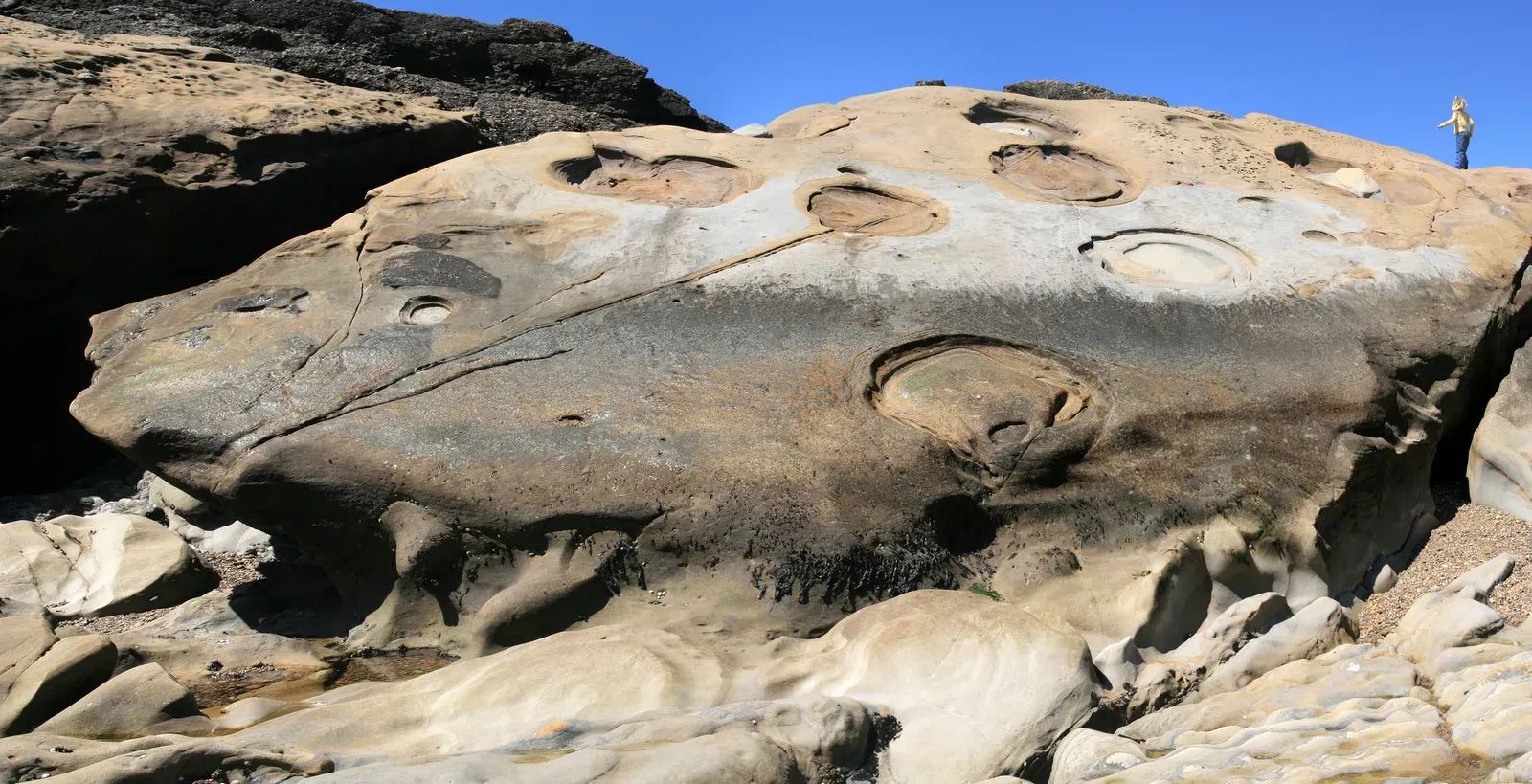
It’s worth pausing to appreciate just how humbling these five places really are. We live in an era of satellites and supercomputers, of gene-sequencing and deep-sea exploration. Yet right here in America, within driving distance for many of us, the Earth is hiding secrets in plain sight. Rocks that move on their own. Half a billion years of geological time gone missing. A flame that burns where it has no business burning. Mounds that have outlasted every theory.
These wonders remind you that science is not a finished book. It’s an ongoing conversation between curious humans and a planet that isn’t always willing to give up its answers quietly. The best discoveries often start not with confidence, but with a simple admission: we don’t fully know. Sometimes, the most thrilling thing you can say is exactly that. Which of these geological mysteries surprised you the most? Tell us in the comments.