
You probably think you know what matter is. After all, everything around you, from your coffee cup to the mountains on the horizon, is made of it. Yet here’s the thing: the matter we understand barely scratches the surface of what’s actually out there in the cosmos.
The universe holds secrets about matter that challenge everything we thought we knew. Some of it doesn’t even interact with light. Other forms explode on contact with their counterparts, releasing energy that would make atomic bombs seem tame by comparison. In the hearts of collapsed stars, matter transforms into states so bizarre they sound like science fiction.
These aren’t just abstract concepts for physicists in laboratories. They’re the building blocks of reality itself, shaping galaxies, forming stars, and possibly explaining why you exist at all. So let’s dive in and explore the profound mysteries hiding in plain sight.
The Invisible Architect Holding Galaxies Together
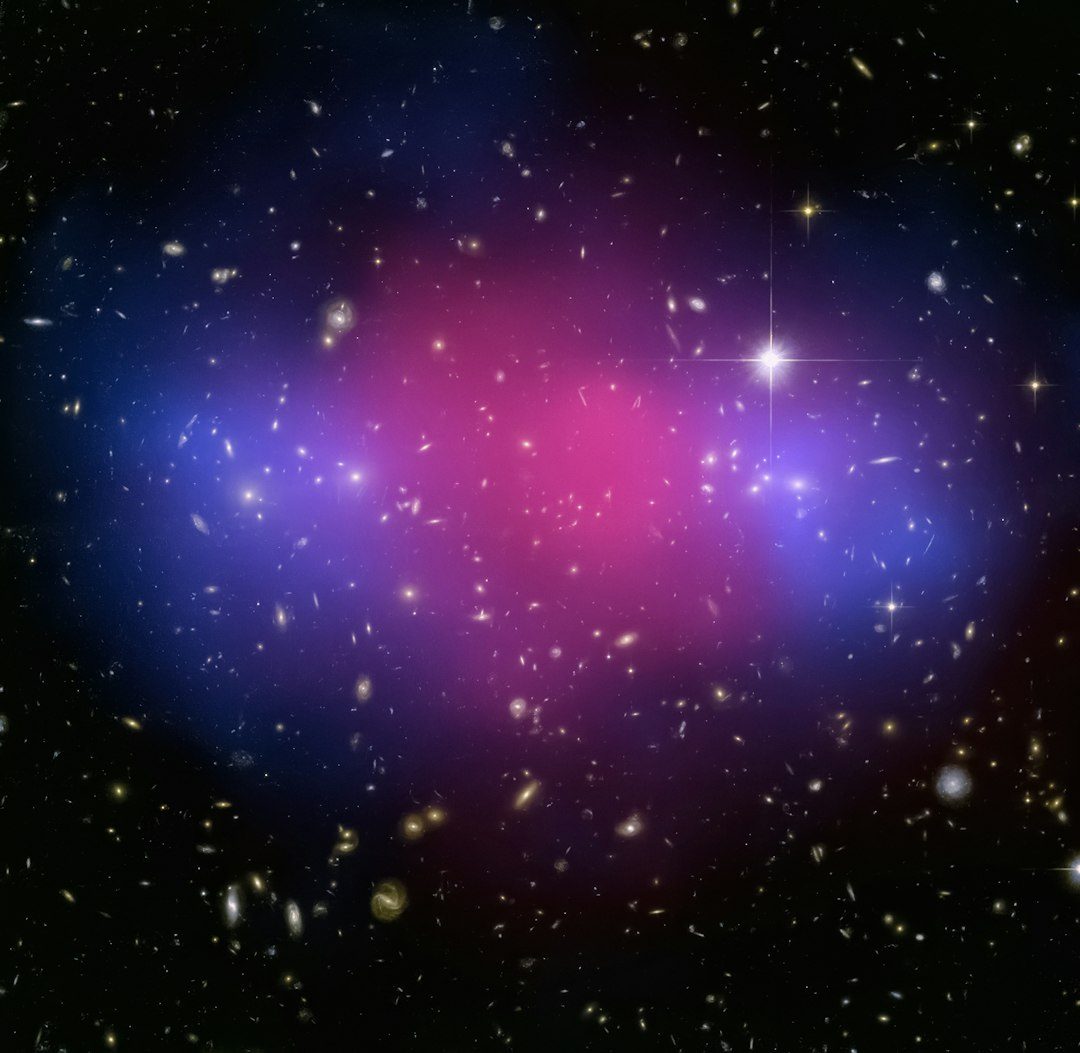
Dark matter is the invisible glue that holds the universe together, making up most of the matter in the universe. Think about that for a moment. You’re surrounded by something that shapes the entire cosmos, yet you can’t see it, touch it, or detect it directly with any instrument we’ve built.
Galaxies rotate with such speed that the gravity generated by their observable matter could not possibly hold them together; they should have torn themselves apart long ago, which leads scientists to believe that something we cannot see is at work. It’s honestly mind-blowing when you realize it.
Scientists estimate that ordinary matter makes up only about 5% of the universe, while dark matter makes up about 27%. That means roughly more than a quarter of everything that exists is this mysterious substance. It’s called “dark” because it’s invisible to us since it doesn’t absorb, reflect, or emit any light.
What’s really fascinating is how we discovered it. Fritz Zwicky’s pioneering work in the 1930s analyzed the peculiar velocity dispersion of galaxies within the Coma Cluster, concluding that the observable mass was insufficient to account for the gravitational binding of the cluster, a discrepancy dubbed the “missing mass problem”. Decades later, astronomer Vera Rubin found the same pattern in spiral galaxies. The outer edges spun just as fast as the centers, which should be impossible unless there’s far more mass present than meets the eye.
Here’s where it gets even stranger. One theory proposes a hidden physical realm with its own versions of particles and forces that gave birth to tiny, stable black hole–like objects that would account for all the dark matter observed today. Imagine an entire mirror world existing alongside ours, invisible and untouchable, yet fundamentally connected through gravity alone.
The Mirror Universe Substance That Destroys Everything
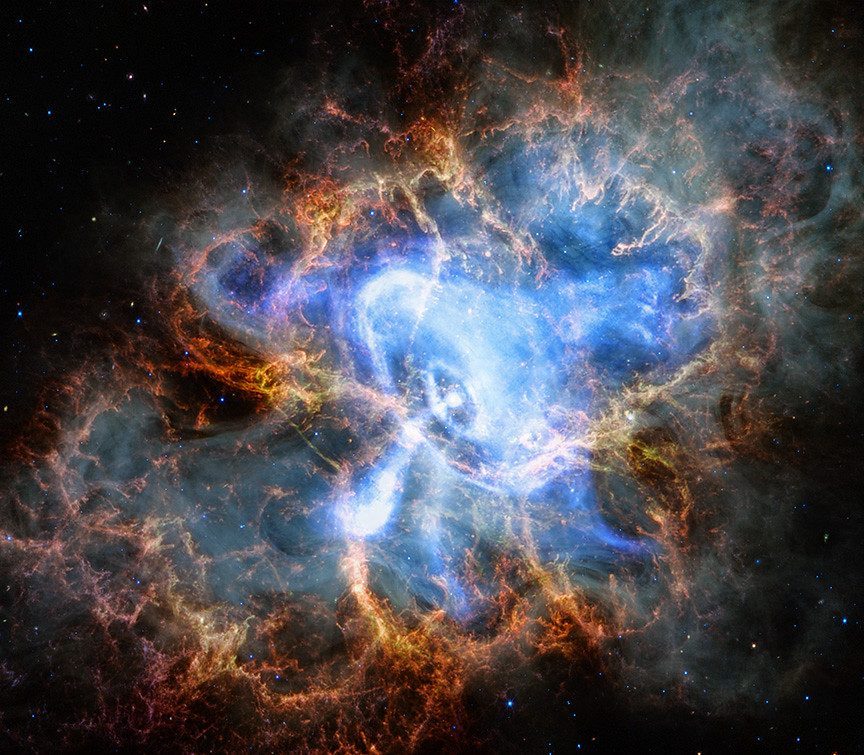
Antimatter sounds like something from Star Trek, but it’s very real. An electron has an antimatter partner known as a positron, which is a particle with the same mass as an electron but a positive charge. Every particle you know has an opposite twin with reversed properties.
Matter and antimatter cannot coexist at close range for more than a small fraction of a second because they collide with and annihilate each other, releasing large quantities of energy in the form of gamma rays or elementary particles. Einstein’s famous equation E = mc² shows that if just a single gram of antimatter comes into contact with ordinary matter, the energy released is equivalent to the detonation of an atomic bomb.
Let’s be real: this raises one of the biggest mysteries in physics. Scientists have measured the properties of particles and antiparticles with extremely high precision and found that both behave identically, so if antimatter and matter were created in equal amounts and they behave identically, all the matter and antimatter created at the beginning of time should have annihilated on contact, leaving nothing behind, which makes why matter came to dominate over antimatter a major mystery.
Calculations suggest that just after the Big Bang, when particles and antiparticles annihilated one another, there was a slight imbalance in their numbers, with less than one in every billion ordinary particles surviving the melee to form all the matter around us today. You exist because of an almost impossibly tiny asymmetry at the dawn of time. That’s both humbling and incredible.
Recent research is trying to figure out why. Physicists believe that there was one extra matter particle for every billion matter-antimatter pairs, which is more than can be explained by the Standard Model, so scientists are working to understand why. The answer could reshape our entire understanding of fundamental physics.
Strange Matter From the Depths of Dead Stars
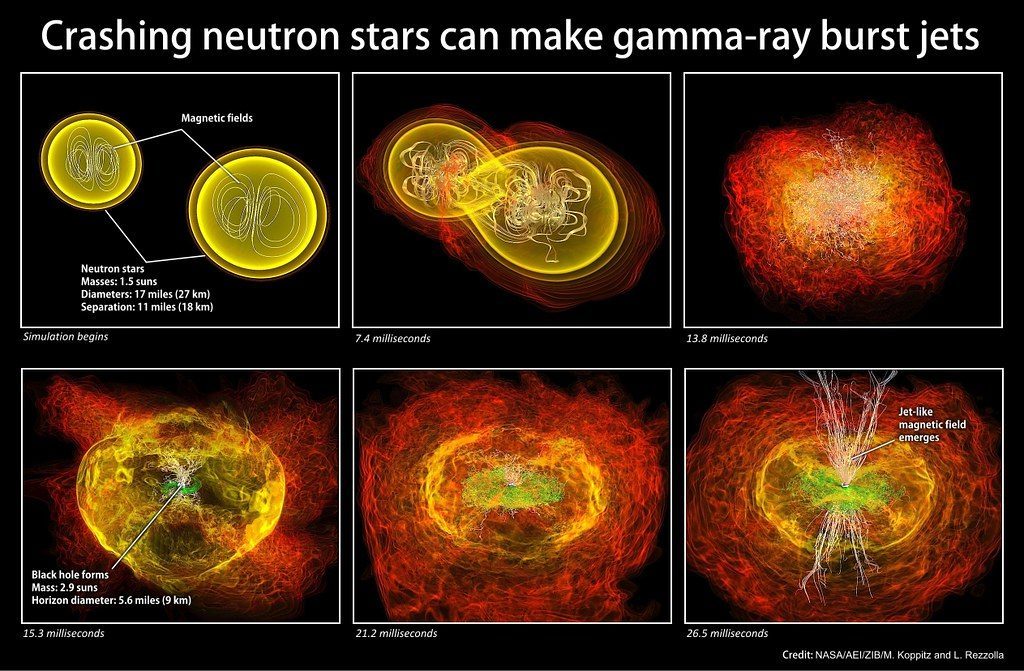
When massive stars collapse, they don’t just disappear. They compress into objects so dense that a chunk the size of a sugar cube would weigh as much as all of humanity. Strange matter is quark matter containing strange quarks, and in extreme environments, it is hypothesized to occur in the core of neutron stars, or as isolated droplets that may vary in size from femtometers to kilometers, as in the hypothetical strange stars.
You need to understand what makes strange matter so peculiar. Strange matter is any matter containing the subatomic particles known as strange quarks, which only seems to show up in truly extreme circumstances such as high-energy particle collisions and perhaps the enormously dense and pressurized cores of neutron stars. Normal matter is made of up and down quarks. Strange matter adds a third player to the mix.
In the general context, strange matter might occur inside neutron stars if the pressure at their core is high enough to provide a sufficient gravitational force, and at the sort of densities and high pressures we expect in the center of a neutron star, the quark matter would probably be strange matter. Inside these cosmic pressure cookers, the rules change completely.
What really captures the imagination is the strange matter hypothesis. If a strangelet hit a neutron star, it might catalyze quarks near its surface to form into more strange matter, potentially continuing until the entire star became a strange star. It’s like a cosmic infection that converts ordinary matter on contact. Honestly, it sounds terrifying, though scientists have shown it poses no realistic threat to Earth.
The evidence for strange matter remains elusive. Understanding its physical nature has significant implications on various astrophysical phenomena such as supernovae, gamma-ray bursts, fast radio bursts, and even dark matter and cosmic ray detections, though there is observational evidence for strange stars, a definitive verification remains an open question.
Exotic Matter and the Fabric of Spacetime
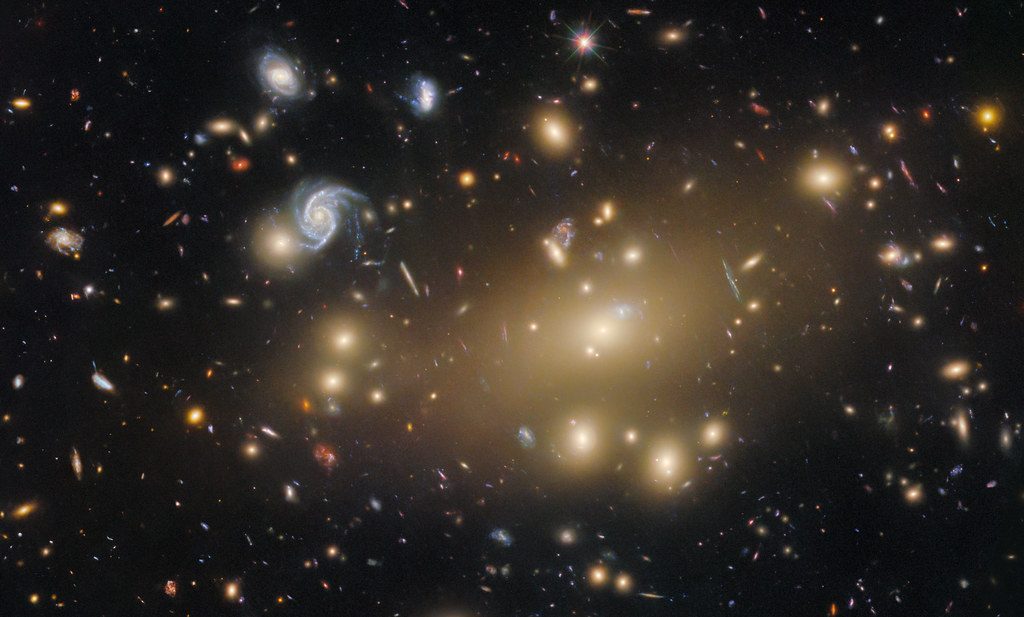
Exotic matter stands at the crossroads of advanced theoretical physics and the frontiers of cosmological exploration; unlike ordinary matter composed of protons, neutrons, and electrons, exotic matter encompasses forms of matter that differ radically in their properties and behaviors, opening the door to a plethora of mysteries and potential applications that challenge our current understanding of the universe.
One of the most intriguing aspects of exotic matter is its theoretical ability to possess negative mass and negative energy; in contrast to the positive mass of conventional matter, which generates a gravitational pull, negative mass would theoretically exhibit repulsive gravitational effects. Imagine matter that pushes instead of pulls. It defies common sense completely.
The existence of negative energy densities could allow for phenomena like wormholes and the theoretical possibility of faster-than-light travel, pushing the boundaries of what we perceive as possible in the universe. This is where theoretical physics starts sounding like pure fantasy, yet it’s grounded in Einstein’s equations.
The challenges are enormous. The primary hurdle is its detection and practical observation; as of now, exotic matter remains largely theoretical, with indirect evidence at best. We’re talking about something that might not even exist in any stable form we can study.
Quantum field theory hints at the existence of exotic matter in phenomena like the Casimir effect and quantum vacuum fluctuations; these aspects suggest that the vacuum of space might not be entirely empty but filled with virtual particles exhibiting exotic properties, and understanding these phenomena could provide critical insights into the nature of exotic matter. The emptiness of space isn’t empty at all.
Quark Stars and the Deepest Mysteries of Dense Matter
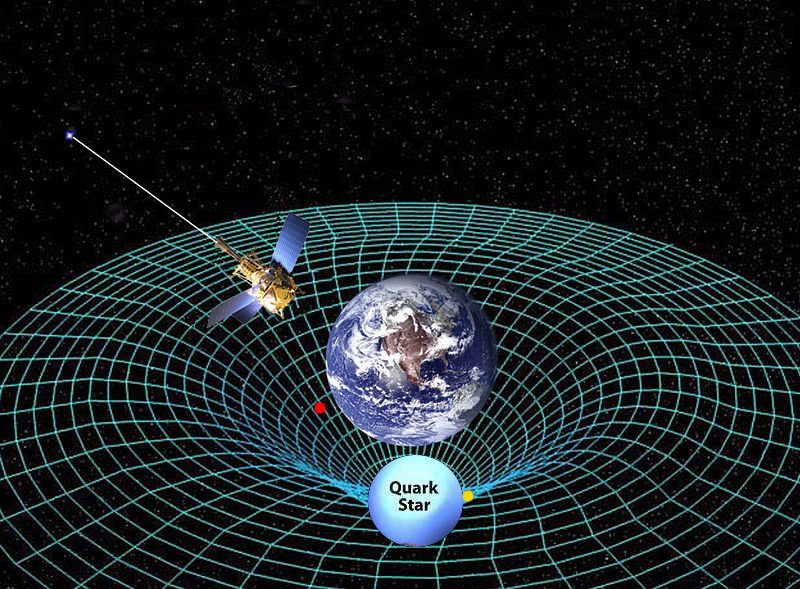
Quark stars, if they exist, would be composed almost entirely of quark matter, a state of matter where the fundamental constituents of nucleons – quarks – are not confined within protons and neutrons but exist in a free state. These hypothetical objects represent one of the most extreme forms of matter imaginable.
When a star the size of 20 suns dies, it becomes a city-size body of improbable density known as a neutron star, where a chunk the size of a Ping-Pong ball would weigh more than a billion metric tons, and below the star’s surface, under the crush of gravity, protons and electrons melt into one another to form a bulk of mostly neutrons. Yet under even more extreme conditions, even neutrons might break apart.
The study of quark stars is not merely a quest for new celestial bodies, but a journey into the heart of matter itself, where the fundamental forces of nature intertwine in profound and enigmatic ways. We’re probing the absolute limits of physics here.
How would we even recognize a quark star? Observations of pulsars, which are rapidly rotating neutron stars, might hold the key; anomalies in their spin-down rates, energy spectra, or bursts of radiation could indicate the presence of quark matter, and the study of gravitational waves from neutron star collisions offers a promising avenue to explore the internal composition of these dense objects.
Recent computational models suggest something remarkable. All of this data was fed into a model by researchers at the Chinese Academy of Sciences, including gravitational waves from binary neutron star mergers, their mass, and their radii, and another part of that model gave them a strange quark result using quantum chromodynamics, which is a branch of particle physics that deals with how quarks interact with each other. The heaviest neutron stars might already have strange matter cores.
The Cosmic Web and Structure of the Universe
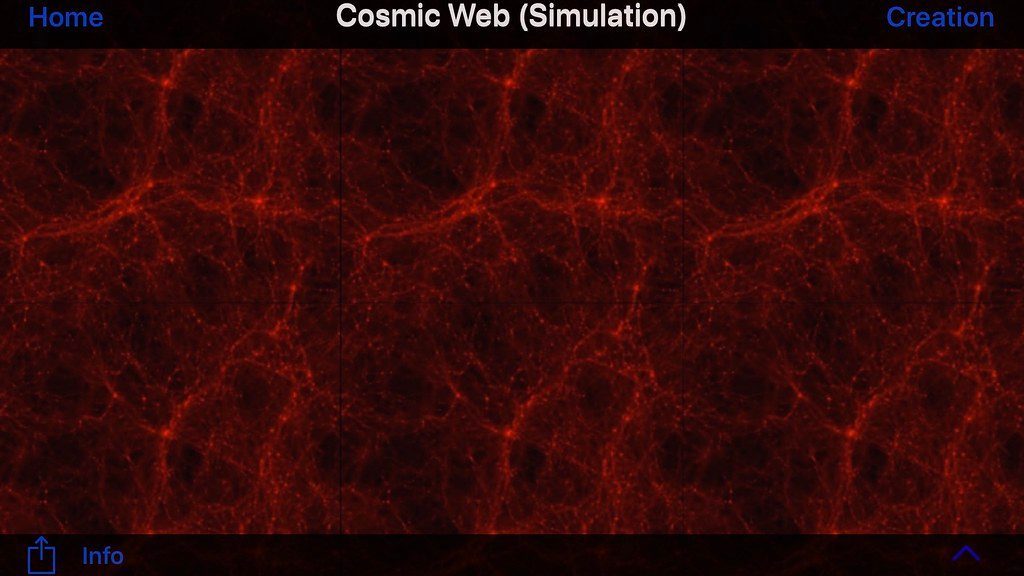
Gravity plays a central role in the formation and evolution of celestial bodies; it is the force that causes clouds of gas and dust to collapse and form stars and planets. This fundamental force has been shaping matter since the beginning of time.
Dark matter is thought to serve as gravitational scaffolding for cosmic structures; after the Big Bang, dark matter clumped into blobs along narrow filaments with superclusters of galaxies forming a cosmic web at scales on which entire galaxies appear like tiny particles. The universe isn’t random chaos. It’s an intricate structure built on invisible foundations.
Dark matter provides a solution because it is unaffected by radiation, so its density perturbations can grow first, and the resulting gravitational potential acts as an attractive potential well for ordinary matter collapsing later, speeding up the structure formation process. Without dark matter, galaxies as we know them couldn’t have formed in the time since the Big Bang.
In a mesmerizing cosmic waltz, matter takes the lead, guiding spacetime through elegant curves and graceful bends. This isn’t just poetic language. Einstein showed us that matter literally warps the fabric of space and time itself. Every atom in your body is sitting in a slight depression in spacetime caused by Earth’s mass.
The more we learn, the stranger it gets. A perplexing dissonance emerges – the theory that so beautifully describes the immense scales of the universe finds itself stumbling when confronted with the enigmatic realm of the infinitesimal, where quantum mechanics holds sway. We still can’t fully reconcile the physics of the very large with the physics of the very small. Matter at different scales seems to follow different rules.
So what does all this mean? You’re made of the ordinary five percent, but you’re surrounded by, influenced by, and fundamentally connected to forms of matter we barely understand. isn’t just an academic puzzle. It’s the mystery of existence itself, written in quarks and dark particles across the cosmic canvas. Did you expect that the universe would turn out to be so much stranger than it appears?
Hi, I’m Andrew, and I come from India. Experienced content specialist with a passion for writing. My forte includes health and wellness, Travel, Animals, and Nature. A nature nomad, I am obsessed with mountains and love high-altitude trekking. I have been on several Himalayan treks in India including the Everest Base Camp in Nepal, a profound experience.