
If you’ve ever stared at a photo of a deep-sea creature and thought, “That cannot be real,” you’re not alone. The deep ocean is so extreme, so dark, and so crushingly high-pressure that life down there has evolved in ways that feel almost alien. Biologists sometimes joke that if we ever meet extraterrestrials, they might look more like deep-sea animals than anything walking on land.
What makes these creatures so unsettling and fascinating is that they are absolutely real, yet they challenge everything we think we know about how animals should look and live. They glow with their own light, turn their own bodies inside out to feed, or survive in toxic waters that would kill most other life. Let’s dive into five of the strangest residents of Earth’s deepest waters – animals so bizarre, they genuinely feel like they belong on another planet.
The Anglerfish: The Deep Sea’s Living Nightmare
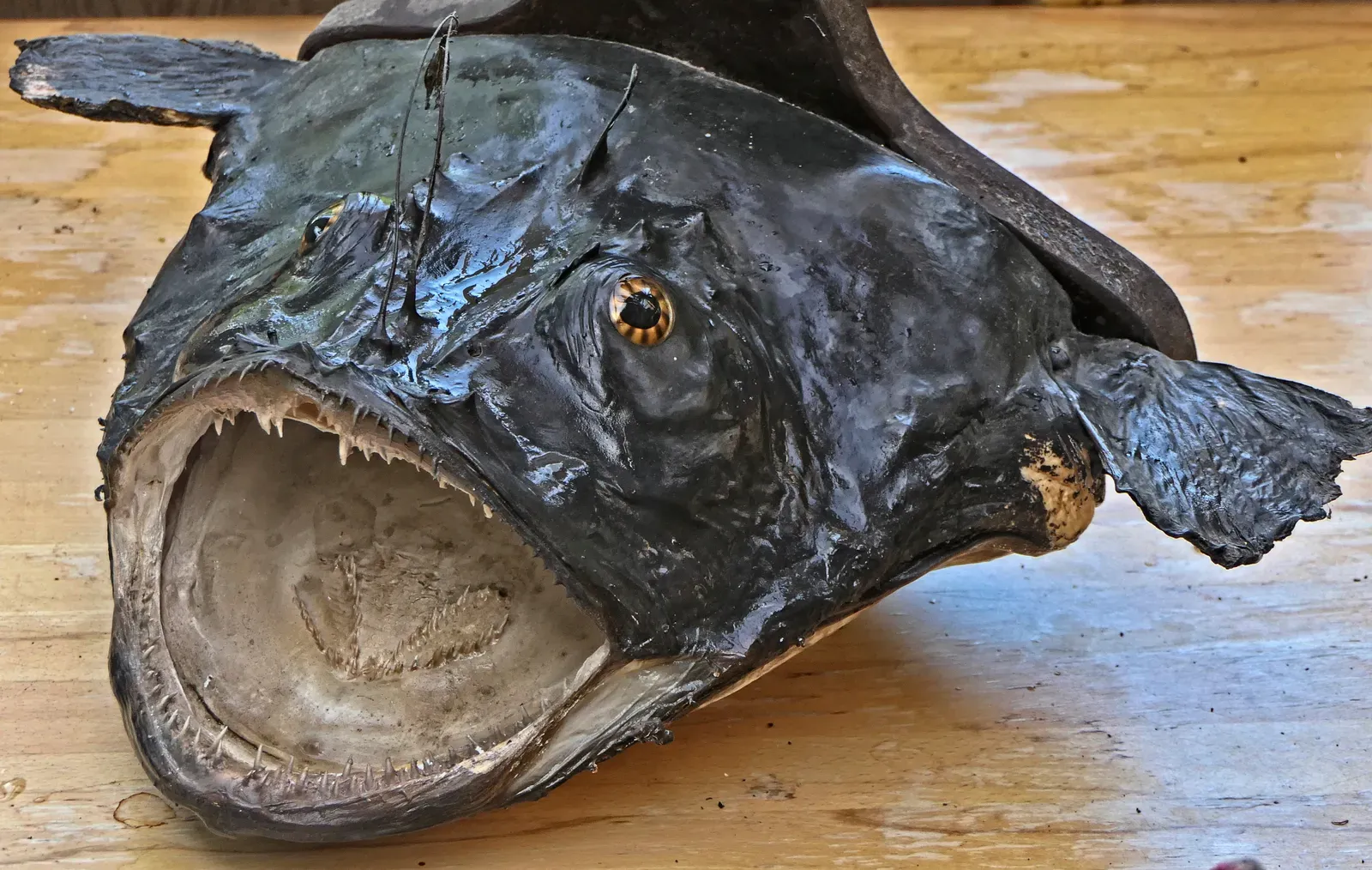
Imagine swimming in total darkness and suddenly seeing a tiny glowing orb drifting toward you, like a lonely star in black water. That light isn’t safety – it’s a trap. Female anglerfish dangle a bioluminescent lure from a spine on their heads, using it like a fishing rod to attract prey close enough to swallow in a single, horrifying gulp. Their teeth are long, curved, and needle-like, pointing inward so anything that goes in doesn’t come back out.
What really makes anglerfish feel alien is their bizarre mating strategy. In some species, the male is tiny compared to the female, more like a small accessory than a partner. When he finds a female, he bites into her skin, fuses with her body, and gradually becomes little more than a sperm-producing attachment. One body, two sets of genes, permanently merged – it sounds like science fiction, but it’s just how life works in the deep sea.
The Vampire Squid: A Ghost From The Oxygen-Starved Depths
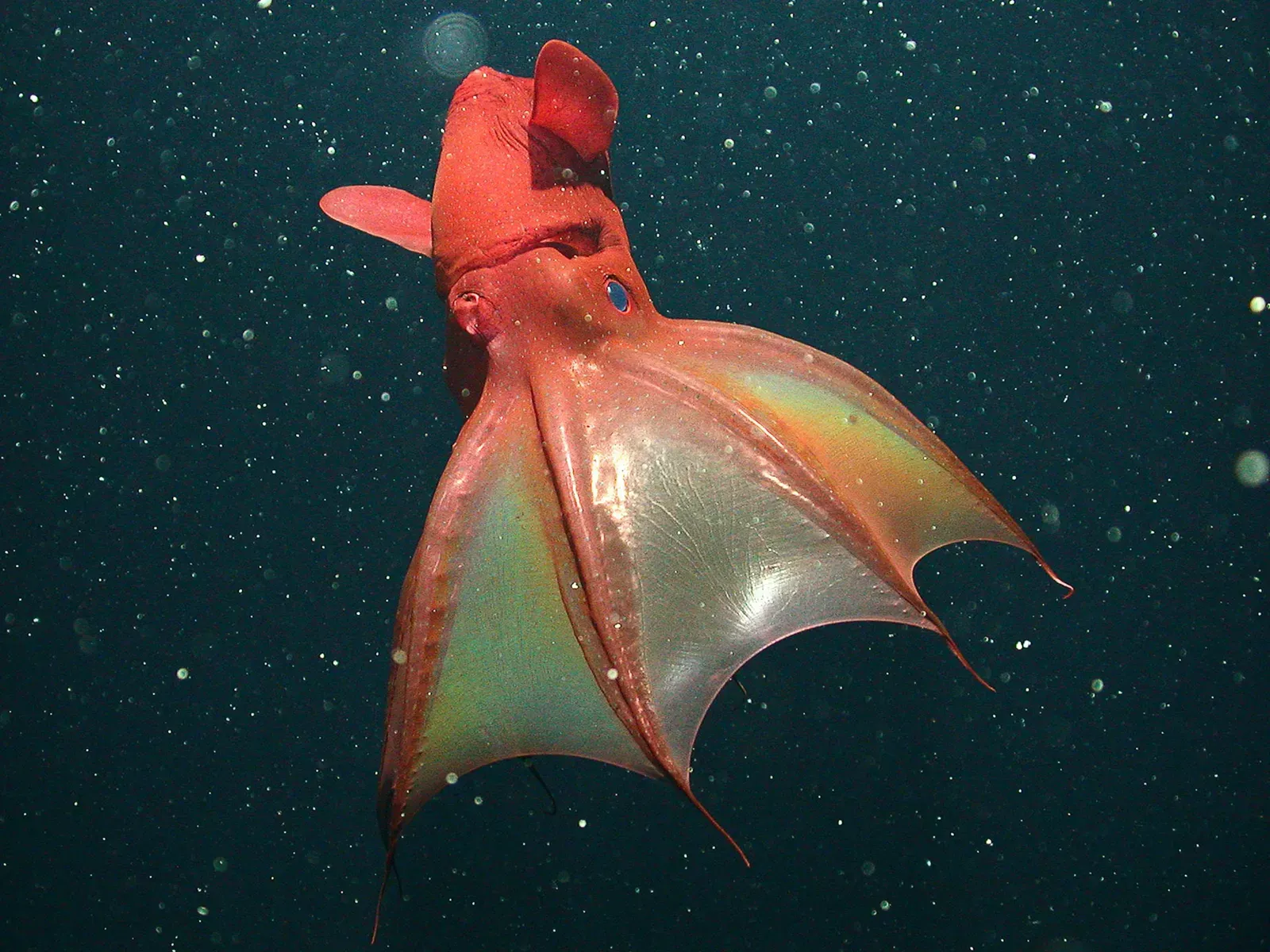
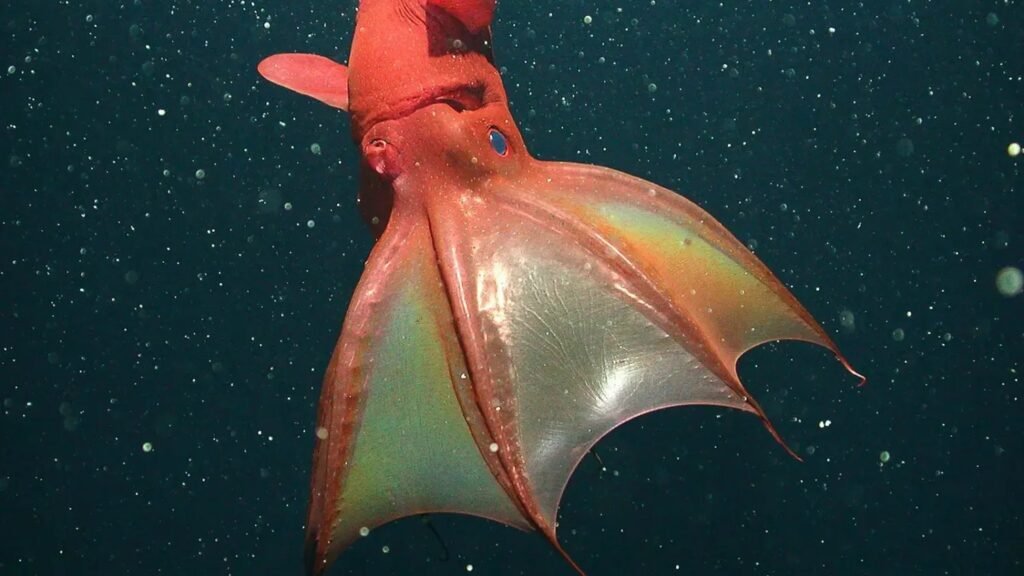
Despite the terrifying name, the vampire squid isn’t actually a bloodsucker, but its appearance is straight out of a horror movie. It has big, glassy eyes, a dark, soft body, and a cloak-like web of skin connecting its arms, which look like something a deep-sea Dracula would wear. Unlike many squids, it doesn’t chase down fast-moving prey; instead, it floats calmly in low-oxygen zones where many other animals simply can’t survive.
Its feeding strategy is surprisingly gentle and a little gross at the same time. The vampire squid extends long, sticky filaments to capture tiny bits of organic debris – dead plankton, fecal pellets, and other “marine snow” drifting down from above. Then it rolls this material into mucus-covered balls and eats them, like a deep-sea vacuum cleaner. It also performs a dramatic defense move: it flips its arms over its body to show rows of soft, spiky-looking structures, turning into a spiky red umbrella that looks far scarier than it actually is.
The Gulper Eel: A Floating Head With A Balloon For A Mouth
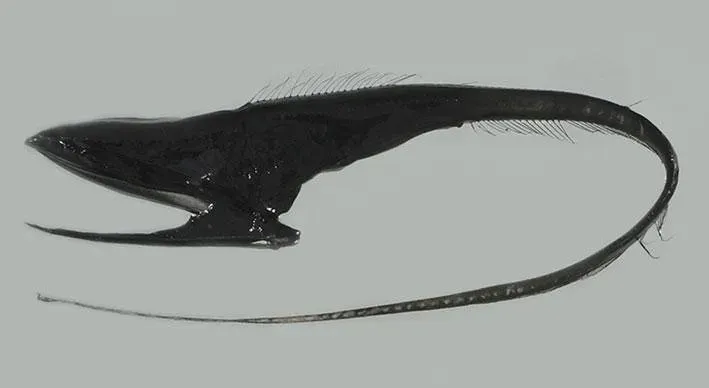
The gulper eel, sometimes called the pelican eel, looks less like a fish and more like someone’s wild sketch come to life. Its head and mouth are absurdly huge compared to its thin, whip-like body, almost as if it’s all jaws with just enough of a body attached to swim. That jaw can open into a massive, balloon-like pouch that dwarfs the rest of the eel, allowing it to swallow prey nearly as big as itself in one go.
Instead of relying only on speed, the gulper eel makes up for its awkward body with smart deep-sea tricks. The tip of its long tail often holds a bioluminescent organ that can glow or flicker, potentially luring curious prey close enough to be engulfed. It lives at depths where food is scarce and unpredictable, so being able to “overshoot” with a giant, expandable mouth is a survival advantage. It’s like wandering through a dark empty desert with the ability to turn your backpack into a huge sack whenever you finally find a meal.
The Giant Isopod: The Deep-Sea Armored Tank
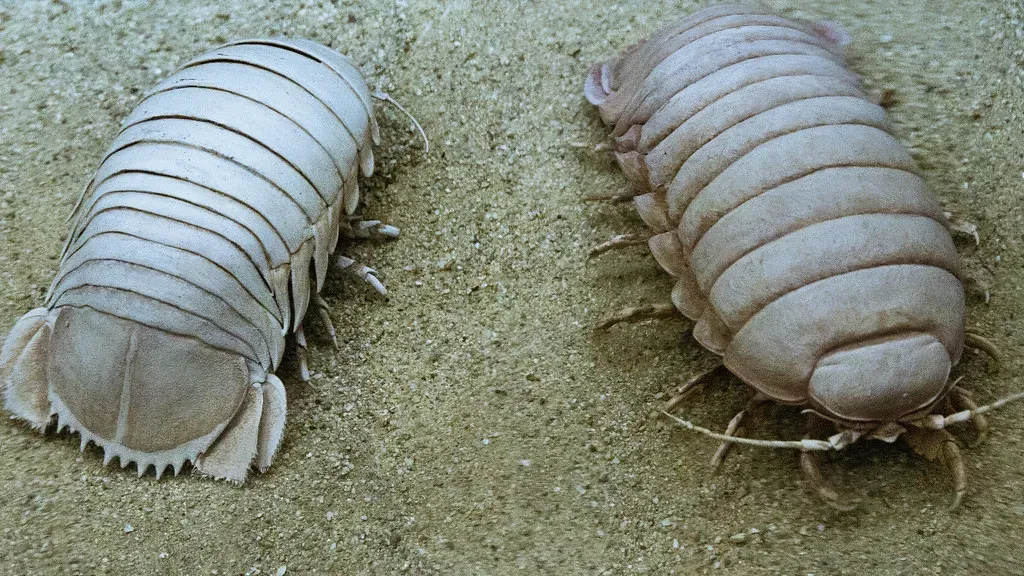
If you’ve ever seen a pill bug or roly-poly in your backyard, imagine one of those scaled up to the size of a small dog and dropped into the deep ocean. That’s essentially what a giant isopod is: a gigantic, armored crustacean with multiple leg pairs and overlapping plates along its back, giving it a prehistoric, almost mechanical look. It roams the seafloor thousands of meters down, where sunlight never reaches and the landscape is mostly mud, carcasses, and the occasional sunken object from the surface.
Giant isopods are scavengers, and their lifestyle is a brutal lesson in feasting and famine. They might go months or even longer without a substantial meal, then gorge themselves when a whale carcass or large fish finally sinks to the bottom. In captivity, some have been observed going shockingly long periods without eating at all, slowing their metabolism way down in a kind of energy-saving mode. Their whole existence is built around patience, armor, and the ability to endure long, hungry stretches in a place where food is more surprise gift than daily guarantee.
The Barreleye Fish: Transparent-Headed Stargazer
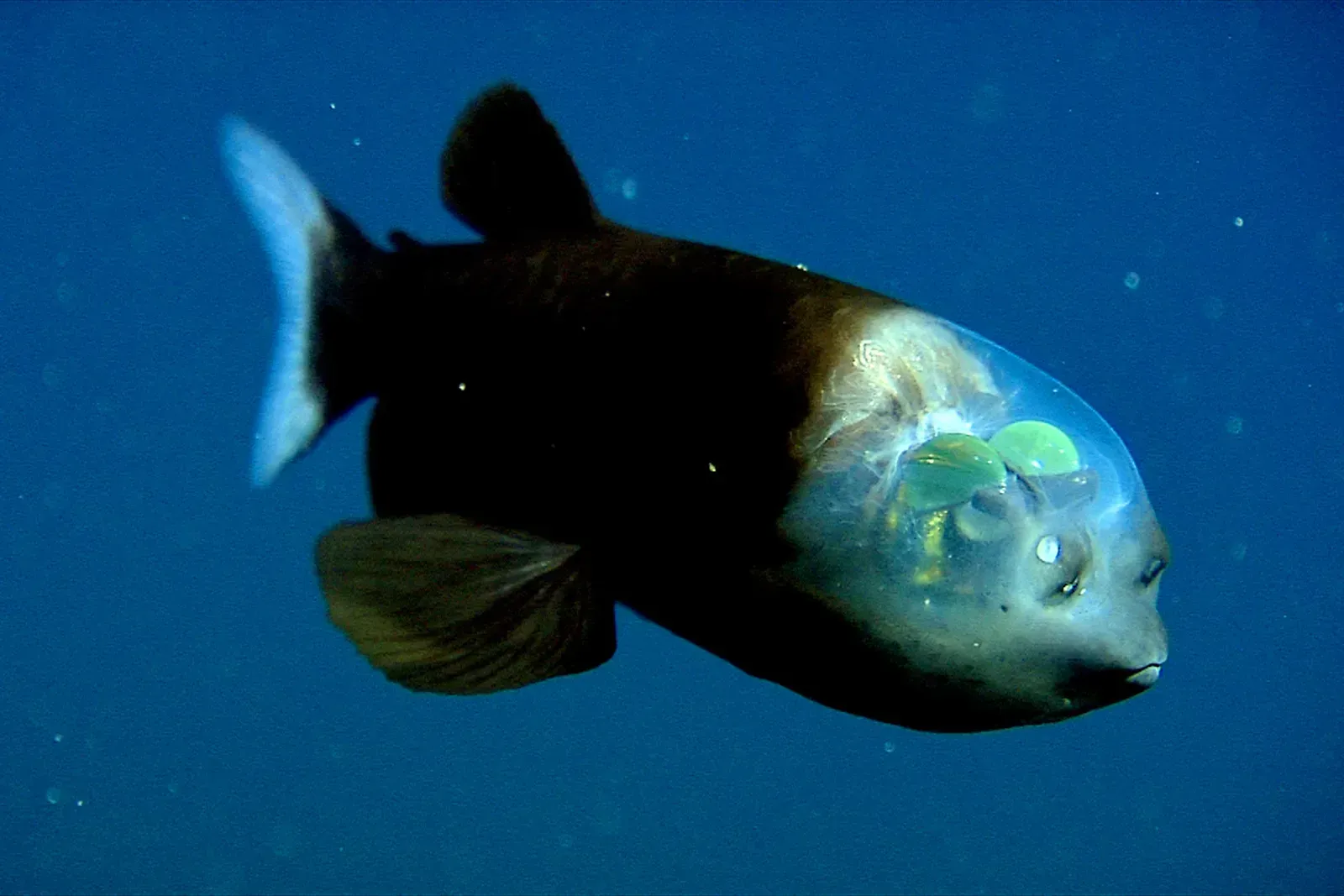
The barreleye fish is the kind of creature that makes people double-check whether a photo has been digitally edited. Its most striking feature is its transparent, dome-like head, through which you can actually see its internal structures and big, barrel-shaped eyes. Those eyes are not the tiny dark spots you see on the front of its face – those are more like nostrils. The real eyes are bright green orbs tucked inside the clear head, pointed upward like tiny telescopes.
This bizarre design solves a very specific problem: how do you spot prey silhouetted above you in nearly total darkness without giving away your position? The barreleye can aim its eyes straight up to watch for small animals caught in the faint glow from above, then rotate them forward when it’s ready to eat. Researchers think the transparent shield on its head may protect those sensitive eyes from stinging cells and other hazards as it steals food from the tentacles of deep-sea jellies. It’s a reminder that in the deep ocean, evolution is less about beauty and more about weirdly creative solutions that just happen to work.
Conclusion: The Most Alien Life Might Be Right Here On Earth
Looking at these deep-ocean creatures, it’s tempting to say they’re “like aliens,” but the truth is almost the opposite. They are as Earthly as we are; they’ve just adapted to a part of our planet that feels utterly unreachable and unforgiving to humans. Crushing pressure, permanent darkness, freezing temperatures, and scarce food have pushed evolution into directions that seem shocking from the comfort of dry land.
For me, what’s most humbling is realizing how little we still know. We’ve explored only a tiny fraction of the deep ocean, and yet we’ve already found animals with transparent heads, living lures, fused partners, and armor-plated bodies. It makes you wonder what else is down there, quietly existing in the dark while we go about our lives under the sun. If this is what we’ve discovered so far, what might be waiting in the uncharted black?