
The universe has never been politely straightforward. For every discovery that sharpens the picture, a handful of new mysteries blur it again. You might assume that with modern telescopes reaching billions of light-years into deep space, and instruments sensitive enough to detect gravitational ripples from colliding black holes, we’d be closing in on a complete understanding of the cosmos. You’d be wrong.
Some phenomena push back hard against our best models. They behave in ways that no current theory fully explains, and they keep doing it regardless of how many brilliant minds are pointed at them. What follows are five of the most unsettling celestial puzzles we know of right now.
Fast Radio Bursts: Milliseconds That Shouldn’t Exist
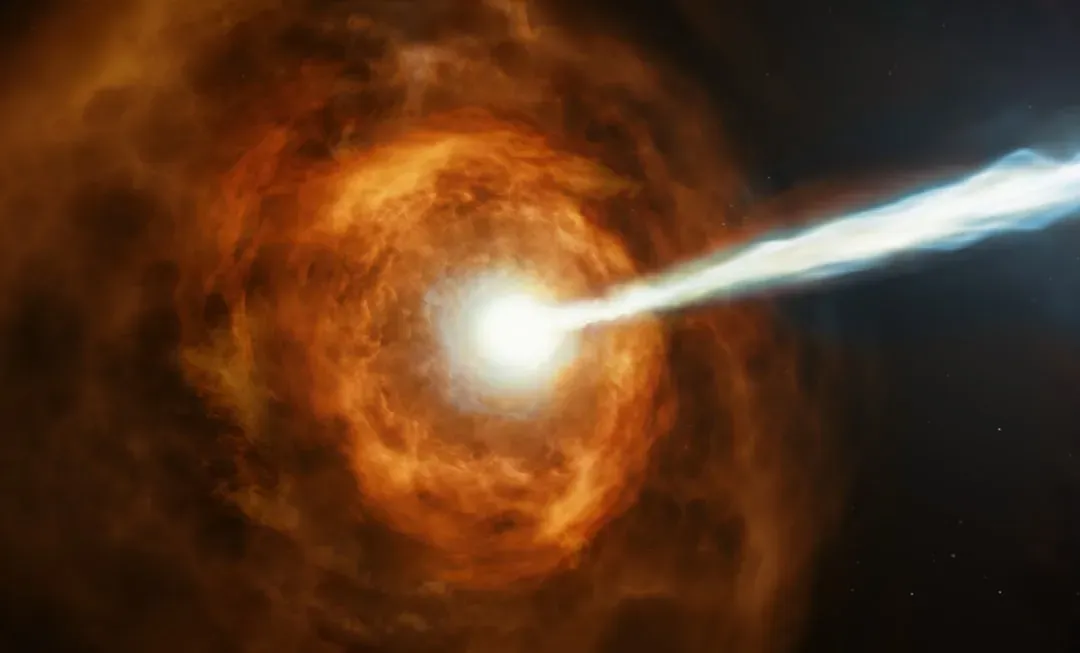
Imagine something in deep space releasing more energy in a single millisecond than our Sun produces over several days. That’s exactly what fast radio bursts are: transient radio waves lasting anywhere from a fraction of a millisecond to a few seconds, caused by a high-energy astrophysical process that is not yet understood. Astronomers estimate the average FRB releases as much energy in a millisecond as the Sun puts out in three days.
It took years of debate, additional observations, and improved detection techniques before the astronomical community accepted that fast radio bursts were real astrophysical phenomena rather than instrumental artifacts or terrestrial interference. This initial uncertainty is an essential part of the FRB story, illustrating how science advances not through immediate certainty, but through careful verification and repeated observation.
It became clear that FRBs are not a single phenomenon with a single cause, but rather a diverse class of events with potentially multiple origins. Some burst once and are never seen again; others repeat with a regularity that raises further questions. Astronomers spotted the brightest fast radio burst yet coming from a nearby galaxy in 2025. Observations of this phenomenon, a powerful flash of radio waves lasting only about a millisecond, could shed light on one of the most mysterious cosmic phenomena ever studied. Fast radio bursts were first discovered in 2007, but their exact sources remain unknown. Since their identification, astronomers have been tracing the bursts’ origins in hopes of gathering clues about what unleashes them and sends them across the cosmos.
Magnetars, incredibly dense city-sized neutron stars that possess the most powerful magnetic fields in the universe, have been speculated as plausible sources to power FRBs. The first conclusive evidence of this came on April 28, 2020, when an extremely bright radio burst was detected from a magnetar sitting about 30,000 light-years from Earth within the Milky Way. Still, magnetars explain only part of the picture. Some researchers suggest that perhaps some fraction of FRBs are not related to magnetars at all, but are instead related to some sort of black hole jet phenomenon. The debate is very much alive.
Dark Energy: The Force Reshaping Everything We Thought We Knew
You might think of the universe as expanding the way bread rises in an oven. Steady, predictable, governed by known physics. The reality is stranger. In 1998, astronomers observing distant supernovae discovered that cosmic expansion is actually accelerating. This acceleration is attributed to dark energy, which constitutes roughly sixty-eight percent of the universe in the standard cosmological model. Nobody, however, can tell you what dark energy actually is.
Astronomers dubbed this dark energy, but despite it making up about seventy percent of the universe, it is still considered to be one of the greatest mysteries in science. What makes it even more confounding is that recent research has started to question whether it even behaves the way we’ve assumed. Findings published in late 2025 in the Monthly Notices of the Royal Astronomical Society questioned the long-accepted belief that dark energy is pushing galaxies apart at an ever-increasing rate. Instead, researchers found no convincing evidence that the universe is still accelerating. If confirmed, the results could reshape scientists’ understanding of dark energy, help resolve the long-standing Hubble tension, and transform theories about the universe’s past and future.
The so-called Hubble tension, a discrepancy in the measured rate of cosmic expansion depending on the observational method used, has evolved from a simple anomaly to what many now call a full-blown crisis in cosmology. Two fundamentally different measurement approaches keep producing conflicting results, and both sets of observations appear to be correct. The Dark Energy Spectroscopic Instrument suggests that dark energy has a density that evolves with time, which may be evidence for important new physics. Allowing dark energy to vary over time ends up increasing the Hubble tension rather than easing it, which means the puzzle only deepens the more you look at it.
The Great Attractor: Something Massive Is Pulling Us In
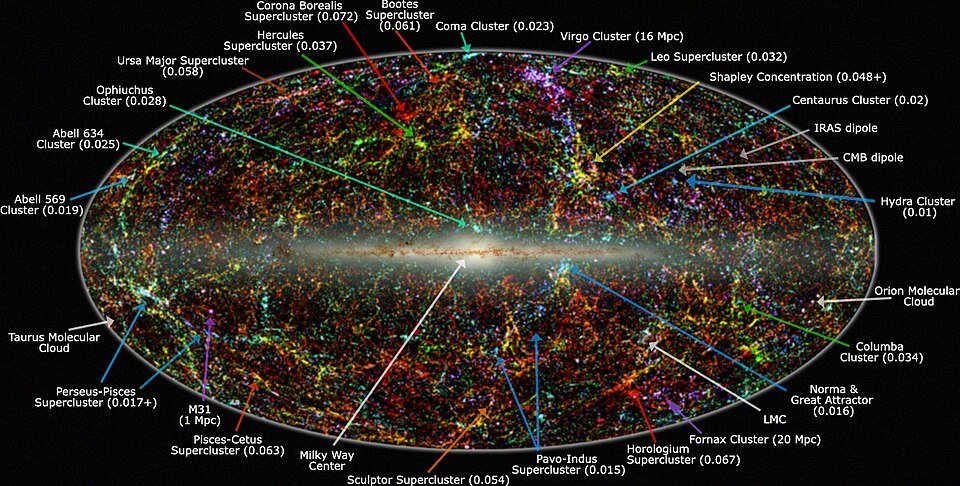
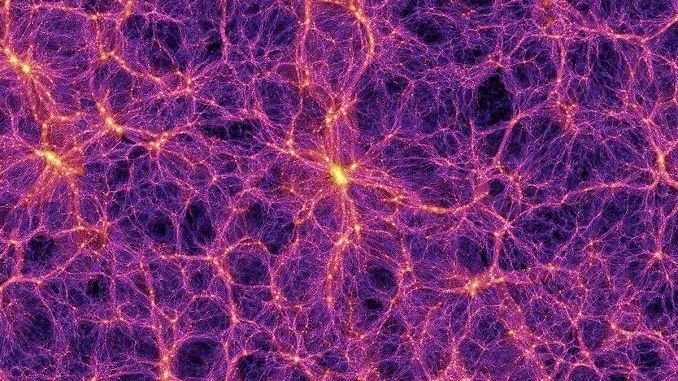
Right now, without you feeling a thing, your galaxy is being dragged through space at extraordinary speed toward something we can’t fully see. The Milky Way, along with the entire Laniakea Supercluster, is being pulled toward an enigmatic region at roughly 2.2 million kilometers per hour. Yet, according to standard gravitational models, the mass visible within the Great Attractor’s region does not account for such a colossal force. This discrepancy raises a profound question: could there be an undiscovered aspect of gravity at play?
The Great Attractor is a region of gravitational attraction in intergalactic space and the apparent central gravitational point of the Laniakea Supercluster, which includes the Milky Way as well as about 100,000 other galaxies. The observed attraction suggests a localized concentration of mass having the order of ten quadrillion solar masses. However, it is obscured by the Milky Way’s galactic plane, lying behind the Zone of Avoidance, so that in visible light wavelengths the Great Attractor is difficult to observe directly.
This anomaly caused entire galaxy clusters, including our Milky Way, to move in the same direction, as though being drawn toward a central point. This motion is far beyond what could be explained by the gravitational influence of visible objects like stars, planets, or even entire galaxy clusters. The object causing this massive gravitational pull remained elusive. To complicate things further, the survey confirmed earlier theories that the Milky Way galaxy is in fact being pulled toward a much more massive cluster of galaxies near the Shapley Supercluster, which lies beyond the Great Attractor itself.
The sheer mass required to generate the observed gravitational influence of the Great Attractor far exceeds the mass accounted for by visible matter. This has led to the strong consensus that dark matter plays a crucial role. Dark matter, an invisible substance that interacts gravitationally but does not emit or absorb light, is believed to constitute the majority of the universe’s mass. The Great Attractor and its surrounding structures are likely dominated by vast quantities of dark matter, forming an unseen scaffolding upon which visible galaxies are built.
The Methuselah Star: Older Than the Universe Itself?
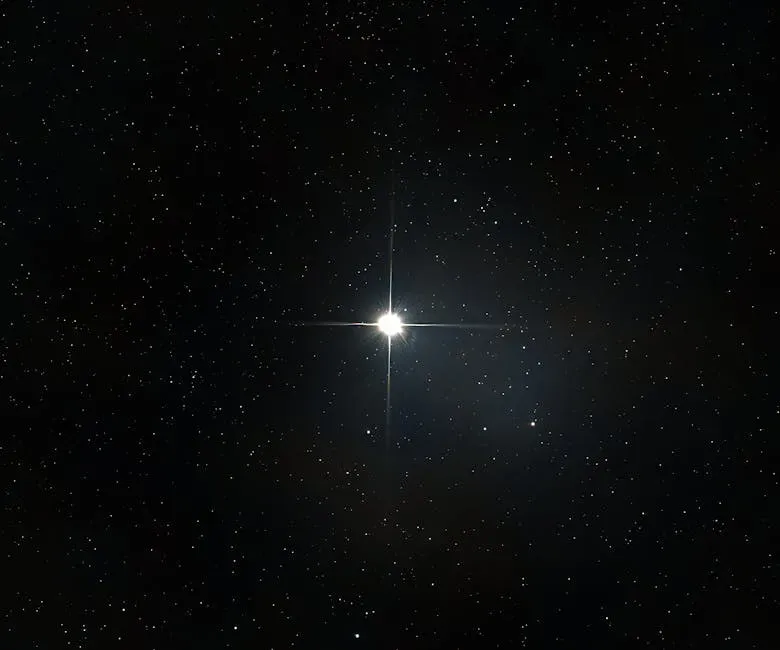
Physics draws hard lines about what’s possible. One of the firmest: nothing can be older than the universe. So when astronomers study a nearby star whose chemical fingerprints suggest it formed in the very earliest era of cosmic history, the implications are deeply unsettling. In the quest to unravel the universe’s age, scientists encountered HD 140283, a star with chemical signatures indicating it is a second-generation star. These stars form from gas and dust after the first generation of stars explode. HD 140283, known as the Methuselah star, is estimated to be at least 13.2 billion years old and possibly as old as 14.4 billion years. Regardless, it stands as one of the oldest stars near us, providing a glimpse into the early stages of cosmic evolution.
The problem is that the universe itself is currently estimated to be approximately 13.8 billion years old, which leaves almost no margin for error. If the higher age estimate for this star holds up under scrutiny, the numbers simply don’t add up. The star’s existence sits right at the edge of what our cosmological models permit, and that boundary is exactly where things get scientifically interesting. Measurement uncertainties in stellar aging techniques leave enough room that most scientists don’t declare outright contradiction, but the tension is real and has not been fully resolved.
What the Methuselah star really highlights is how tightly interconnected all our measurements of cosmic time actually are. An error in how we calculate the age of the universe would cascade through virtually every area of astrophysics. Similarly, an error in how we date old stars ripples back into our models of early stellar formation. These findings mark a golden age in astronomy where every observation challenges established models of the evolution of galaxies and planets. The Methuselah star sits squarely at that crossroads, demanding that we either refine our tools or revise our assumptions.
Saturn’s Hexagonal Storm: Geometry That Has No Business Existing
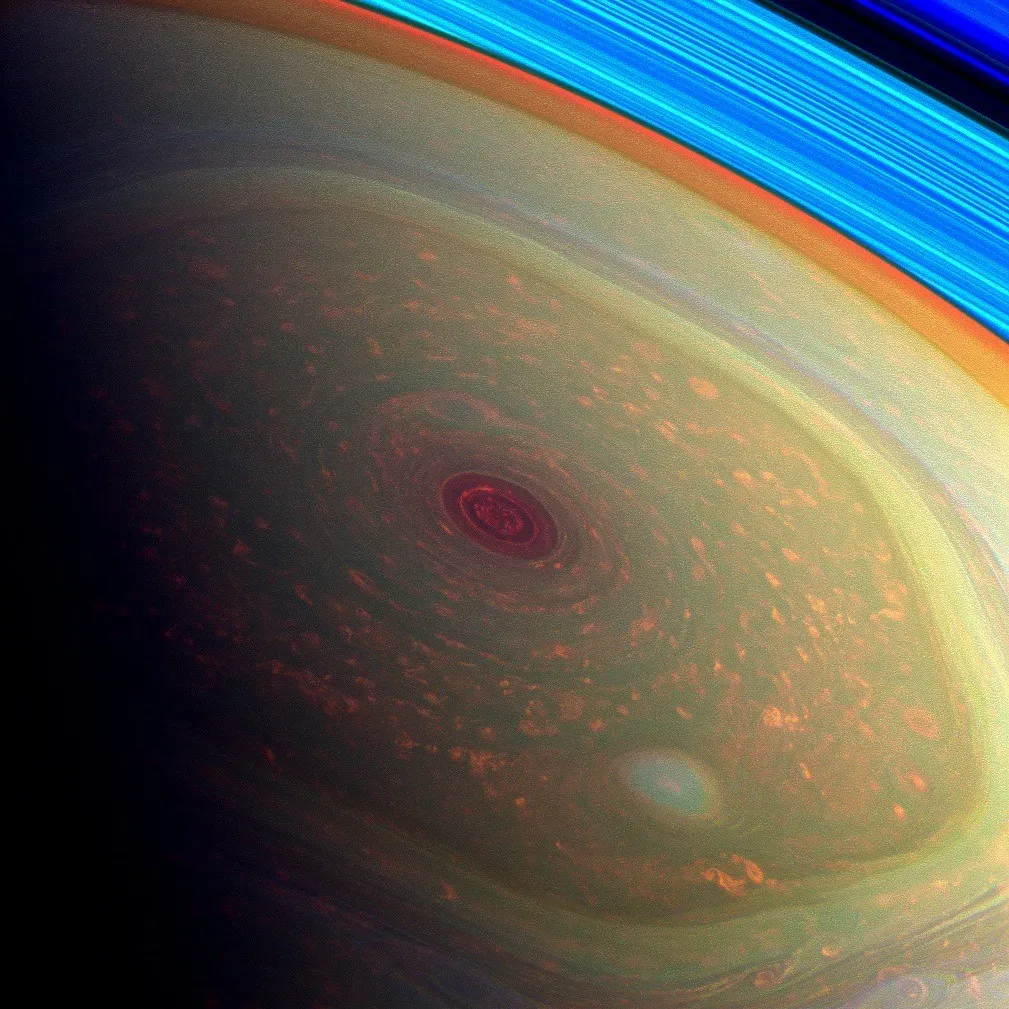
Nature, in general, prefers chaos. Wind patterns on planetary scales tend to be turbulent, asymmetric, and constantly shifting. Which makes what’s happening at Saturn’s north pole genuinely baffling. At Saturn’s north pole, a bizarre six-sided storm has been spinning for decades, and no one knows why. This perfectly geometric weather pattern defies known atmospheric dynamics and appears eerily artificial. The storm is enormous, capable of swallowing Earth whole, and has baffled scientists since it was first spotted by the Voyager mission.
You’d expect a storm of this scale to have irregular edges, to drift, to break apart over time. Instead it maintains its hexagonal shape with striking precision across decades of observation. The six sides stay remarkably consistent, and the storm rotates with a regularity that seems almost mechanical. Atmospheric scientists have reproduced hexagonal fluid patterns in certain controlled laboratory experiments involving rotating fluids at specific speeds, suggesting the shape may be a product of Saturn’s unique rotational dynamics interacting with its atmosphere. Still, a perfect hexagon persisting for decades at planetary scale remains something our models struggle to fully account for.
What makes the Saturn hexagon particularly compelling from a scientific standpoint is the sheer durability of the structure. The ability of current telescopes to detect changes over short periods of time suggests we are entering a phase of high temporal resolution astronomy, where we no longer just observe still images of the cosmos, but dynamic processes unfolding before our eyes. As spacecraft like Cassini have shown us in extraordinary detail, the hexagon features internal jets, cloud layers at different altitudes, and a central vortex that behaves almost like an eye of a hurricane. The geometry holds. The explanation, for now, does not fully satisfy.
Conclusion: The Most Honest Thing We Can Say Is That We Don’t Know
There’s something clarifying about sitting with genuine scientific uncertainty. These five phenomena don’t represent failures of science. They represent science working exactly as it should, bumping up against the edges of what current knowledge can explain and generating new questions in the process.
Fast radio bursts keep arriving from unexpected places. Dark energy may be weakening, or it may never have been what we thought. An invisible gravitational titan quietly pulls our galaxy through space. A star challenges our timelines. A geometric storm on a distant planet refuses to obey the rules of atmospheric chaos. Scientists have encountered phenomena throughout the cosmos that challenge everything we thought we knew about physics. These celestial enigmas twist the fabric of reality, defy natural laws, and leave experts with more questions than answers.
If there’s a takeaway worth carrying, it’s this: the cosmos is not waiting for our permission to be strange. The more precisely we look, the more clearly we see that our models are working sketches, not finished maps. That’s not a reason for alarm. It’s the best argument for keeping the telescopes pointed outward.