

Artificial intelligence used to feel like distant science fiction, tucked away in movies and tech blogs. Now it’s quietly threading itself into the most ordinary corners of our lives, from the way we search for answers to how doctors read scans or how factories run at night. What once felt like a futuristic promise has become a very real, very present force reshaping how we work, learn, heal, and even create.
Some of these changes are subtle, like your phone guessing what you want to type next. Others are massive and unsettling, like algorithms that can mimic your voice or generate lifelike video from scratch. The breakthroughs below are not just technical milestones; they’re shifting power, responsibility, and opportunity in ways that affect almost everyone. Let’s dig into five of the biggest ones that are actively rewriting the rules of the world we live in.
1. Foundation Models and Generative AI: Machines That Can Create
Not long ago, getting a computer to write a single coherent paragraph was a painful engineering project; today, large language models can write essays, code, marketing plans, and bedtime stories on demand. These so‑called foundation models are trained on enormous amounts of text, images, or audio, then fine‑tuned to perform specific tasks, like drafting legal-style documents or answering technical questions. The same basic idea powers systems that can turn a text prompt into an original piece of artwork, a song, or even a short film scene.
In practical terms, this is blowing up the old line between “user” and “creator.” Graphic designers now sketch concepts with text prompts instead of blank canvases, programmers lean on AI to write boilerplate code, and small businesses use generative tools to sound like they have a full marketing department. At the same time, the same power that makes it easier to write a business plan also makes it terrifyingly easy to produce realistic fake images or audio that can fool almost anyone at first glance. It’s like handing everyone in the world a movie studio and a printing press at the same time, then trying to quickly rewrite the rules for what counts as genuine.
2. AI in Healthcare: From Guesswork to Data‑Driven Diagnosis
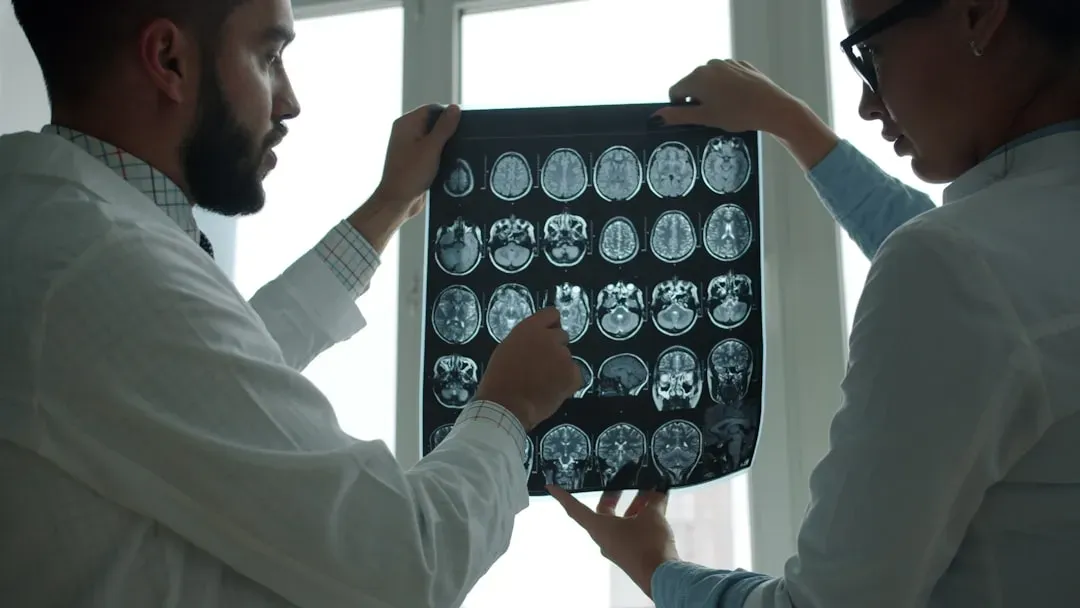
For decades, medicine has balanced between experience and evidence, with doctors relying heavily on what they’ve seen before. AI is tipping that balance toward a far more data-driven kind of care, especially in areas like medical imaging and diagnostics. Algorithms trained on hundreds of thousands of scans can now flag suspicious tissue on mammograms or CT images at a level that rivals or sometimes surpasses human specialists, especially in early detection where tiny patterns matter.
This doesn’t magically fix healthcare, but it changes the texture of care in small, powerful ways. An overworked radiologist can use AI as a second pair of eyes, reducing the risk that something subtle is missed at the end of a long shift. In some places, AI tools are helping screen for diseases like diabetic eye disease or lung cancer in clinics that don’t have local specialists, shrinking the gap between big-city hospitals and rural clinics. There are still big worries about bias in training data, privacy of medical records, and who takes responsibility when an algorithm gets it wrong, but the direction is clear: AI is slowly nudging medicine from “best guess” to “best prediction we can make from all the data we’ve got.”
3. Autonomous Systems: Teaching Machines to Move in the Real World

Seeing a chat window generate text is one thing; watching a machine navigate a messy street or factory floor without crashing is something else entirely. Autonomous systems, from self-driving cars to warehouse robots and delivery drones, are the result of AI models that not only recognize patterns but also make split-second decisions in unpredictable environments. They combine perception (cameras, sensors, radar), prediction (where will that bike go next), and planning (what should I do now) into a single, constantly updating loop.
We’re not at a world of fully driverless streets everywhere, but the change is already visible in subtle ways: trucks that can handle long highway stretches with less intervention, robots shuttling goods in warehouses while humans supervise, and drone deliveries being tested in more and more cities. The potential upside is huge – fewer accidents caused by human error, cheaper logistics, and more efficient infrastructure – but the trade‑offs are just as big. Whole job categories could be reshaped, liability law is being stretched in new directions, and we’re being forced to ask whether it’s acceptable for an algorithm to make life‑and‑death decisions in edge cases on the road. It’s like teaching a teenager to drive, except the teenager never sleeps and learns from millions of other drivers at once.
4. AI in Work and Productivity: The Rise of the “Co‑Worker Algorithm”
If you work with words, numbers, or code, there’s a good chance AI has already crept into your job – even if nobody officially announced it. Email clients predict your replies, office software summarizes long documents, and coding assistants suggest full functions as you type. Instead of replacing a whole role in one dramatic move, AI is nibbling away at tasks, especially the repetitive or highly structured ones, and turning them into something you can delegate to an algorithm.
This feels different depending on where you sit. For some, it’s a relief: boring status reports, basic research, or formulaic slide decks can be offloaded, leaving more time for judgment, strategy, or human contact. For others, especially in content-heavy or support-heavy roles, it can feel like their work is being turned into training data for an eventual replacement. I’ve seen people go from skepticism to quiet dependence in a matter of weeks, treating AI tools like a sharp intern: useful, fast, and occasionally wildly wrong. The hard questions – about wages, training, and what skills will actually matter in ten years – are only starting to get serious attention, even as the tools become part of the furniture of everyday work.
5. AI for Security, Misinformation, and the Battle Over Truth
One of the strangest twists of modern AI is that it’s both the lock and the crowbar in our digital world. The same kinds of models that power helpful chatbots can be used to generate believable phishing emails, craft targeted scams, or flood social media with tailored propaganda. Generative tools can create fake videos that look like news footage, clone voices that sound exactly like a relative or a public figure, and pump out endless variations of the same lie until it starts to feel familiar instead of obviously false.
In response, other AI systems are being developed to detect fakes, flag suspicious content, and help platforms moderate posts at a scale no human team could manage alone. It turns into a kind of arms race, where both the attackers and defenders are upgrading their tools at the same time, each learning from the other’s moves. For regular people, this means that trust, which used to rest on what you could see or hear with your own senses, now needs new habits: checking sources, being skeptical of viral clips, and recognizing that authenticity is no longer obvious. It’s unsettling, but it’s also forcing conversations about media literacy, platform responsibility, and how societies can protect open debate without drowning in manufactured noise.
Living With Powerful Tools We’re Still Learning to Use
Across creativity, medicine, transport, work, and information itself, AI has shifted from being a niche technical curiosity to a set of tools that quietly press on some of the most sensitive parts of our lives. These breakthroughs are not abstract; they change how quickly a disease is found, how safely goods reach your door, how you do your job, and what you choose to believe about the world. Like every powerful technology before it, AI amplifies both our best intentions and our worst instincts, often at the same time.
What makes this moment different is the speed and scale: systems that improve through data can spread and adapt far faster than older inventions like electricity or the printing press. That puts a lot of pressure on governments, companies, and everyday people to decide how these tools should be used before habits and business models harden around them. In the end, AI is not some separate force acting on humanity; it is something we build, steer, and either supervise responsibly or neglect. The question hanging over the next decade is simple but uncomfortable: if these are the breakthroughs today, are we ready for the ones coming next?


