
Space has never been a quiet subject. Ever since humans first looked up and wondered, the universe has been answering back with things nobody expected. Strange structures, impossible black holes, wandering cosmic visitors from other star systems – it all sounds like the plot of a science fiction movie. Honestly, reality keeps outdoing fiction these days.
What’s even more wild is how recent the most jaw-dropping revelations are. We’re not talking about ancient history here. Right now, in 2026, the scientific community is still processing discoveries that were made just months ago. You don’t need a physics degree to feel the weight of what’s been found. Let’s dive in.
Quipu: The Largest Known Structure in the Entire Universe Was Just Found
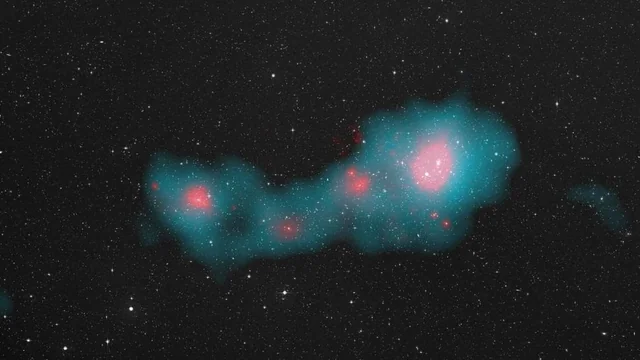
Picture the largest thing you can imagine. Now throw that out the window completely. Quipu is a cosmic superstructure, a wall of galaxies composed of knots of galaxy clusters, and as of 2025, it is the largest known structure in the Universe, stretching roughly 1.3 billion light years long and containing about 200,000 times the mass of the entire Milky Way. That number is so enormous it stops making emotional sense after a certain point.
Scientists named their remarkable discovery “Quipu,” a term from the language of the Incas, who used bundles of strings with knots for bookkeeping – and the superstructure actually resembles this ancient script, appearing as a long fibre with side strands woven into it. I find that detail genuinely beautiful. An ancient human counting tool mirrored by the universe itself at a scale of over a billion light years.
Superstructures are extremely large structures that contain groups of galaxy clusters and superclusters, and they’re so massive they challenge our understanding of how our universe evolved. The researchers found that these superstructures contain about 45% of the galaxy clusters, 30% of the galaxies, and 25% of the matter in the universe, and the structures are not only affecting their immediate environment but also distorting and modifying the wavelength of radiation passing through from deeper space.
The researchers discovered that the local velocity of streams of galaxies within the superstructures affects measurements of the universe’s overall expansion, known as the Hubble constant. In other words, Quipu doesn’t just exist passively – it actively warps how we measure and understand the cosmos around it. That’s not just big. That’s structurally important to all of cosmology.
A Black Hole That Shouldn’t Exist Yet – But Does
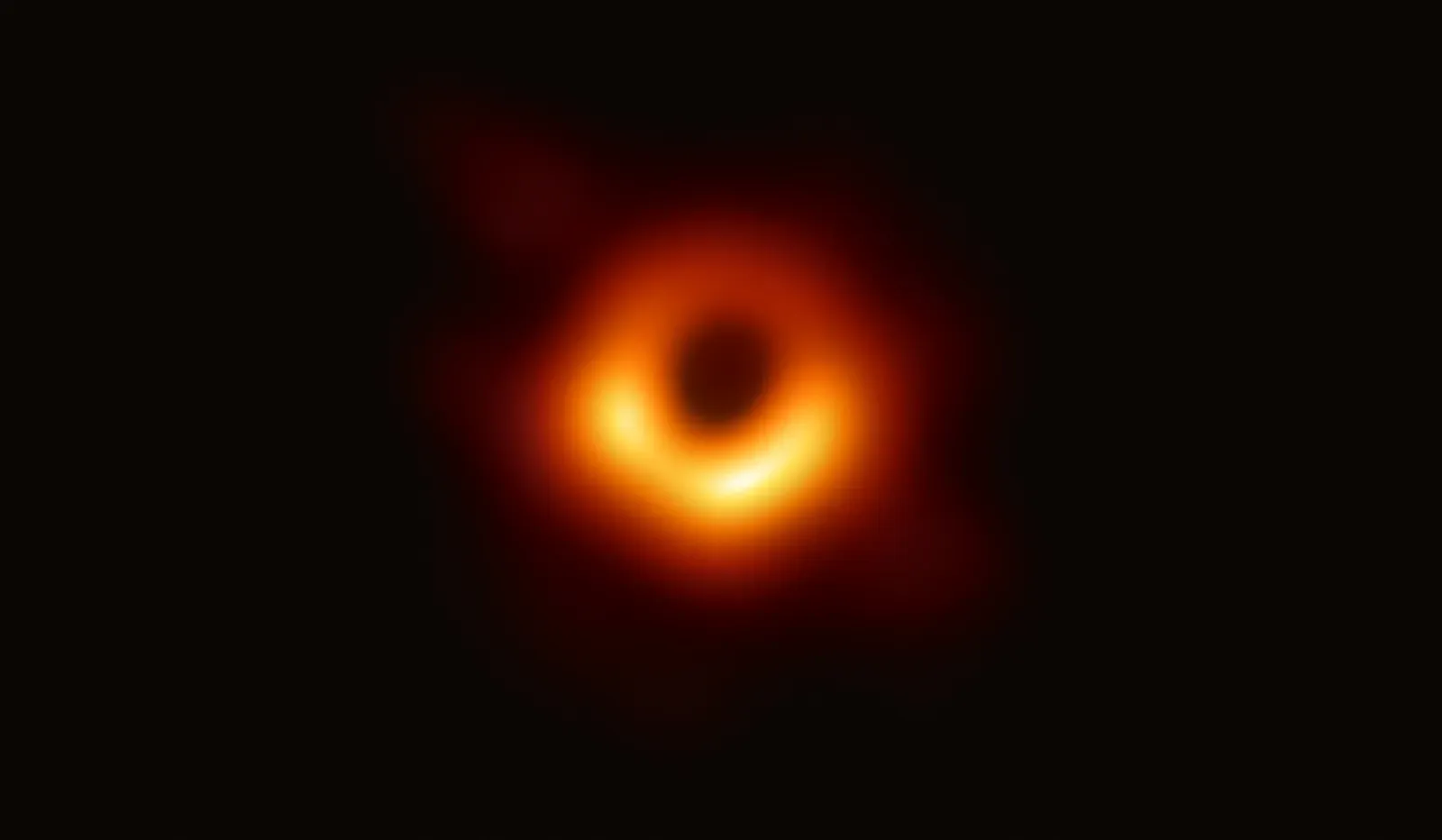
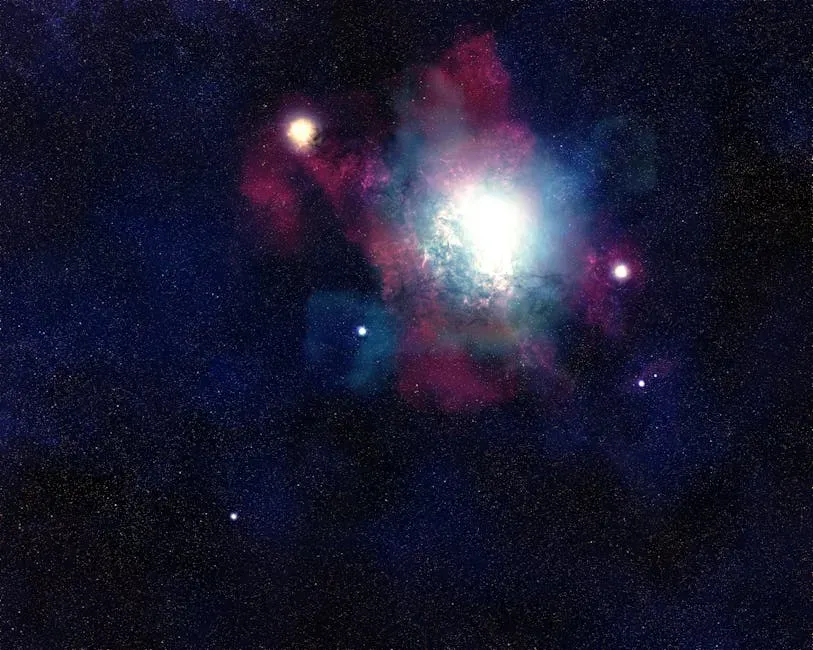
The James Webb Space Telescope identified an actively accreting supermassive black hole in a compact galaxy, CANUCS-LRD-z8.6, just 570 million years after the Big Bang. Think about what that means for a second. The universe is roughly 13.8 billion years old, and within the first few hundred million years – barely a cosmic blink – something had already grown into a supermassive black hole. That’s like expecting a newborn to bench press a car.
The black hole is unusually massive relative to its host galaxy, indicating that black holes in the early universe may have grown more rapidly than their galaxies, challenging current models of galaxy and black hole co-evolution. Little Red Dots like CANUCS-LRD-z8.6 have mystified astronomers because they don’t conform to our understanding of how galaxies evolve in step with their central supermassive black holes, and they are either way too dense to account for the masses of their stars or host a supermassive black hole that is way too massive to sit in such a small galaxy.
The team suggests that black holes may have formed and immediately begun growing at unprecedented rates in the early universe, outpacing their host galaxies – a phenomenon that would explain why CANUCS-LRD-z8.6’s black hole is unusually massive compared to its galaxy. This is genuinely one of those findings that makes astronomers quietly reconsider what the textbooks say. The rules we thought governed early cosmic formation are now officially up for revision.
An Interstellar Comet Just Blew Through Our Solar System
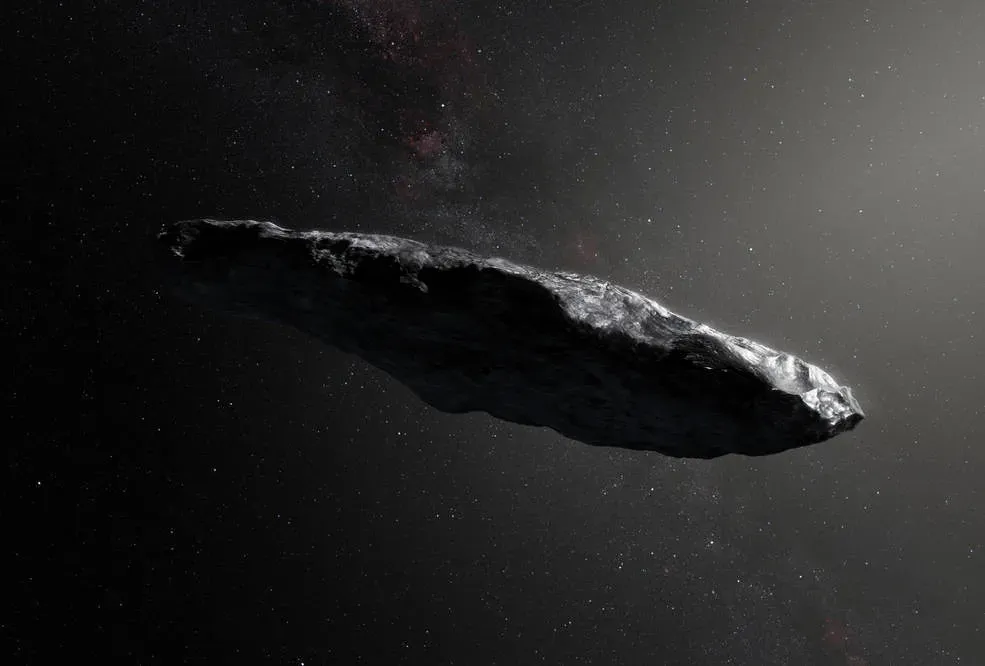
Here’s the thing about our solar system – we always assumed it was a mostly closed neighborhood. Then along comes a visitor from another star entirely. The highlight from the second half of 2025 was undoubtedly Comet 3I/ATLAS, which is only the third interstellar object ever discovered cruising through our solar system. A comet from another star system. Actually inside our neighborhood. That’s not a small thing.
The comet burst onto the scene at the beginning of July, zipping through our solar system at speeds so fast that it must have originated at a different star, astronomers rapidly determined, and within weeks, the Hubble Space Telescope had spotted the otherworldly object and photographed the glowing coma of gas surrounding the comet’s body. Multiple spacecraft scrambled to observe it before it disappeared for good.
Perhaps most mind-blowing were the observations gathered by missions stationed at Mars, which the comet flew past in early October, and now Comet 3I/ATLAS is on its way out of our celestial neighborhood – though astronomers are still working to catch more glimpses of the elusive object, and expect more science to come from this year’s visit in 2026. It’s hard not to feel a little philosophical about this one. Something traveled unimaginable distances from another solar system, passed through ours, and moved on forever. We barely had time to wave hello.
Mars May Have Once Hosted Life – and We Have the Spots to Prove It
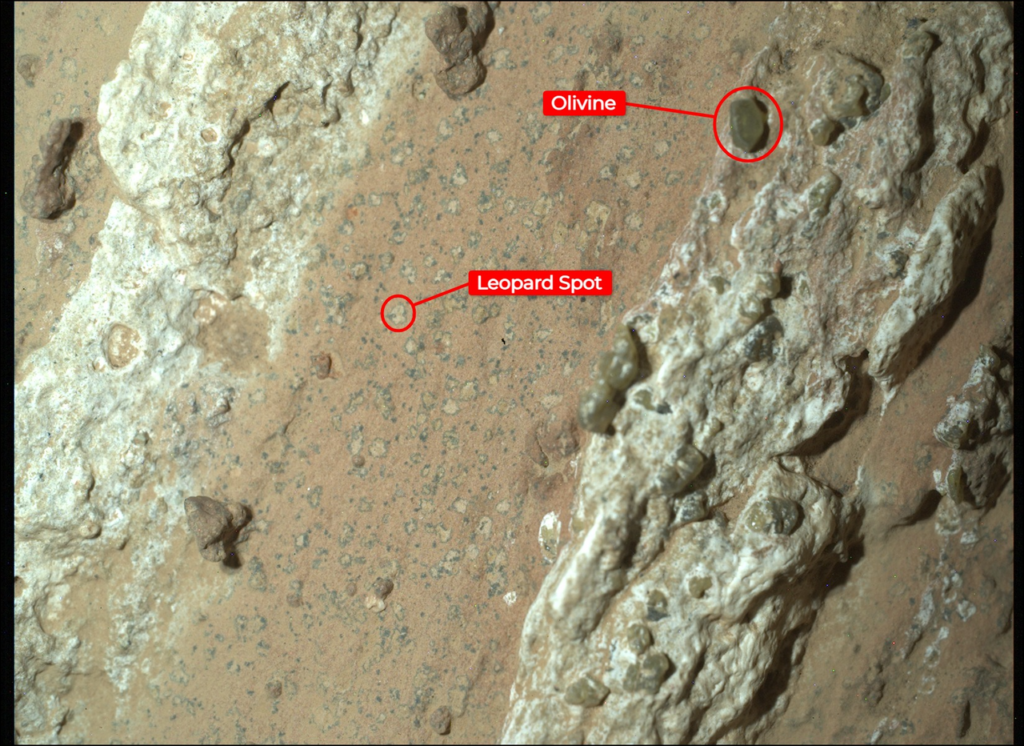
The best evidence yet for past life on Mars surfaced in September 2025, courtesy of NASA’s Perseverance rover, in the form of some light-red spots ringed by dark material called “leopard spots,” which are not uncommon on rocks on Earth and typically form either when exposed to hot, acidic conditions not present in Jezero crater, or through biological action. The biological explanation, in this case, is actually the more plausible of the two.
Organic molecules were also discovered in clay sediments within the rock, although Perseverance was unable to identify these molecules, and the discovery stands as the most compelling evidence yet that microbial life could have existed in Jezero crater 3.5 billion years ago. Three and a half billion years ago, when Mars still had flowing rivers and a warmer climate, something may have been alive there. That sentence deserves a moment of quiet reflection.
While other, non-biological explanations do exist and can’t yet be ruled out, we don’t have to dampen the excitement completely – we’ve genuinely never been closer to finding evidence of life somewhere other than Earth. If sample-return missions succeed, we’ll get to study these striking speckled rocks in our labs, and perhaps get nearer to a definitive answer. Honestly, the fact that this isn’t front-page news every single day is a failure of collective imagination.
Dark Energy May Be Evolving – and That Changes Everything
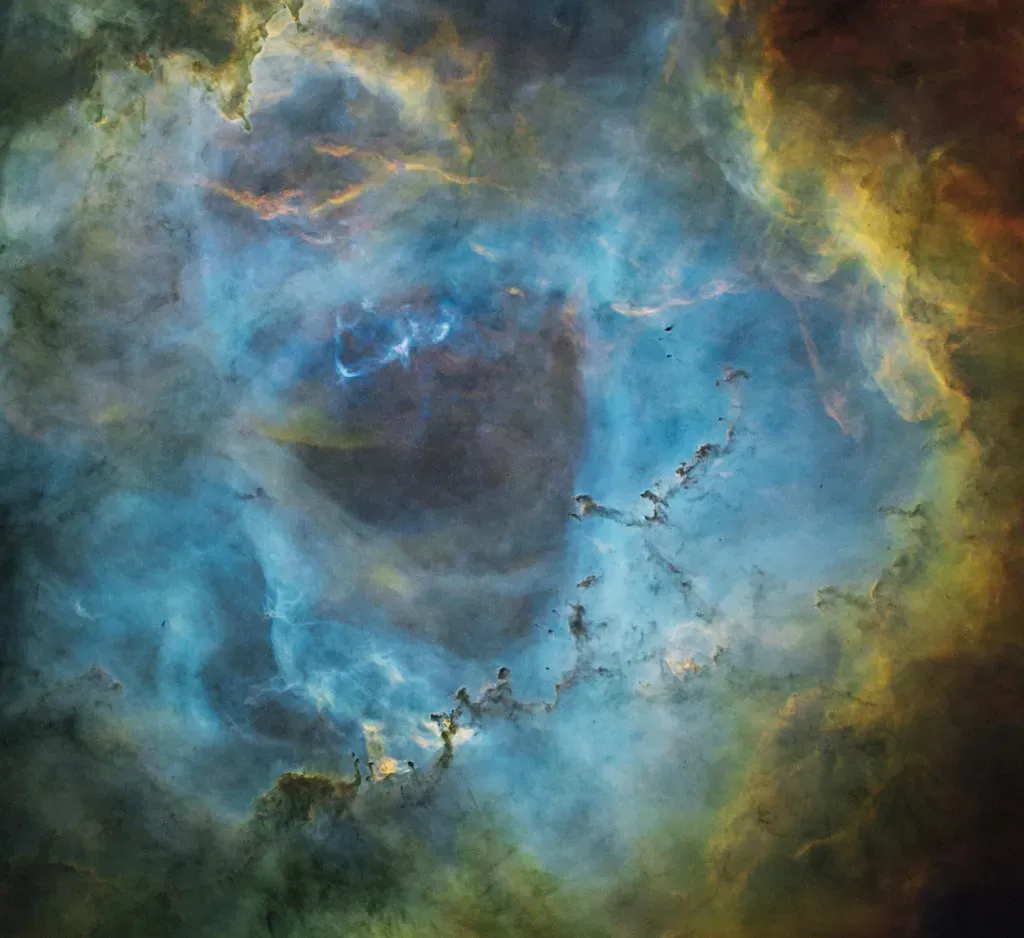
The hottest mystery in physics is dark energy, the inexplicable phenomenon thought to be powering the universe’s accelerating expansion, and astronomers at Lawrence Berkeley National Laboratory are leading a massive international study using a device called the Dark Energy Spectroscopic Instrument, or DESI. It’s hard to overstate what dark energy represents. Dark energy accounts for almost two thirds of the mass-energy of the entire universe – and we still don’t truly know what it is.
The team published its first analyses using the biggest and most precise 3D map of the universe ever created, and DESI collects information from millions of galaxies, enabling astronomers to essentially look 11 billion years back in time with unprecedented clarity – providing snapshots of how fast the universe was expanding at any point in the past 11 billion years. Think of it like a cosmic time-lapse, showing the universe accelerating and shifting in ways that surprised even the scientists running the study.
Approximately 95% of the universe is composed of dark matter and dark energy, which are invisible to us and do not interact with ordinary matter in any known way, and dark energy is a mysterious force causing the expansion of the universe to accelerate – its existence was first inferred from observations of distant supernovae, which revealed that the universe is expanding faster than can be accounted for by the known matter and energy in the universe. If dark energy truly is evolving with time, as some DESI results hint, it means the future of the universe may look very different from what our current models predict. It’s hard to say for sure, but that possibility alone is enough to keep cosmologists up at night.
The Universe Is Still Full of Surprises
It’s easy to assume that with all our satellites, telescopes, and data-crunching power, we’ve got the universe mostly figured out. These five discoveries prove otherwise. A superstructure bigger than anything we thought could exist. A black hole that grew too fast and too early. A comet from another star. Possible ancient life on Mars. And a mysterious force running the entire show that we still cannot fully explain.
What makes all of this so exhilarating is that each discovery doesn’t just answer a question – it opens ten new ones. The universe isn’t a solved puzzle slowly being assembled. It’s more like a puzzle where every new piece reveals the box was far bigger than anyone thought. And the best part? We’re living in the era where the most astonishing answers are just beginning to come in.
Which one of these discoveries surprised you the most? Drop your thoughts in the comments – because I’d genuinely love to know if you saw any of this coming.