
You live in a world where artificial intelligence writes poetry, engineers print buildings layer by layer, and satellites map the seabed from space. You’d think that leaves little room for the ancient world to impress you. Yet scattered across history are five technologies so sophisticated, so puzzlingly ahead of their time, that our best researchers still scratch their heads at them.
These aren’t myths or exaggerations – they’re real, physical objects and constructions, many of which you can visit or study today. Some of them could outperform modern equivalents. Others hint at knowledge systems that simply vanished. Buckle up, because what follows might genuinely shake your confidence in just how far we’ve come. Let’s dive in.
1. Roman Concrete: The Self-Healing Material That Puts Modern Construction to Shame

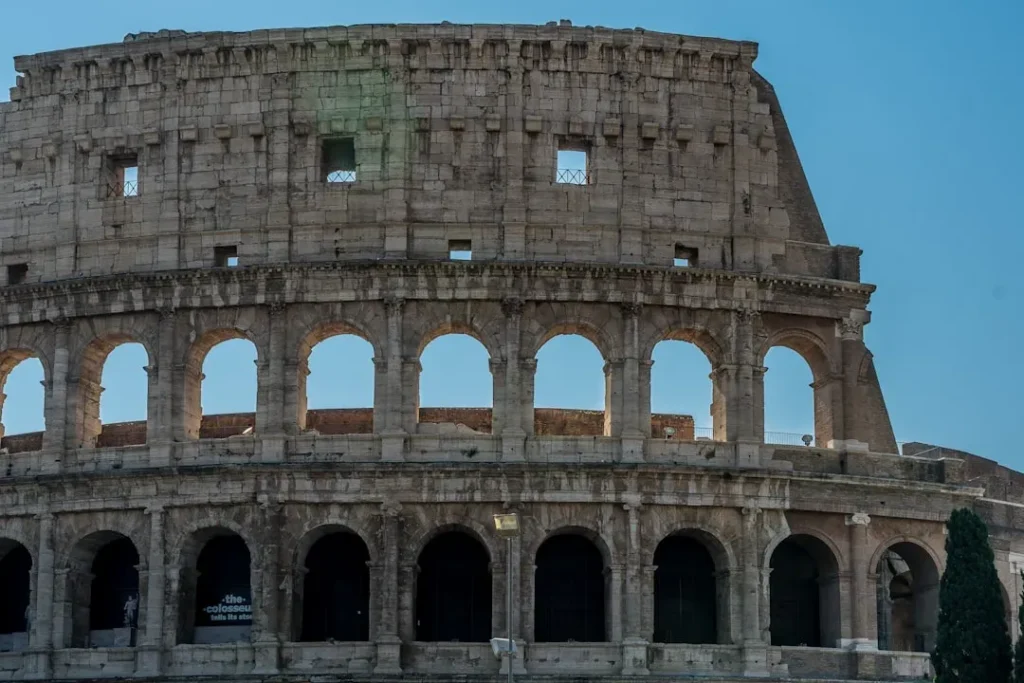
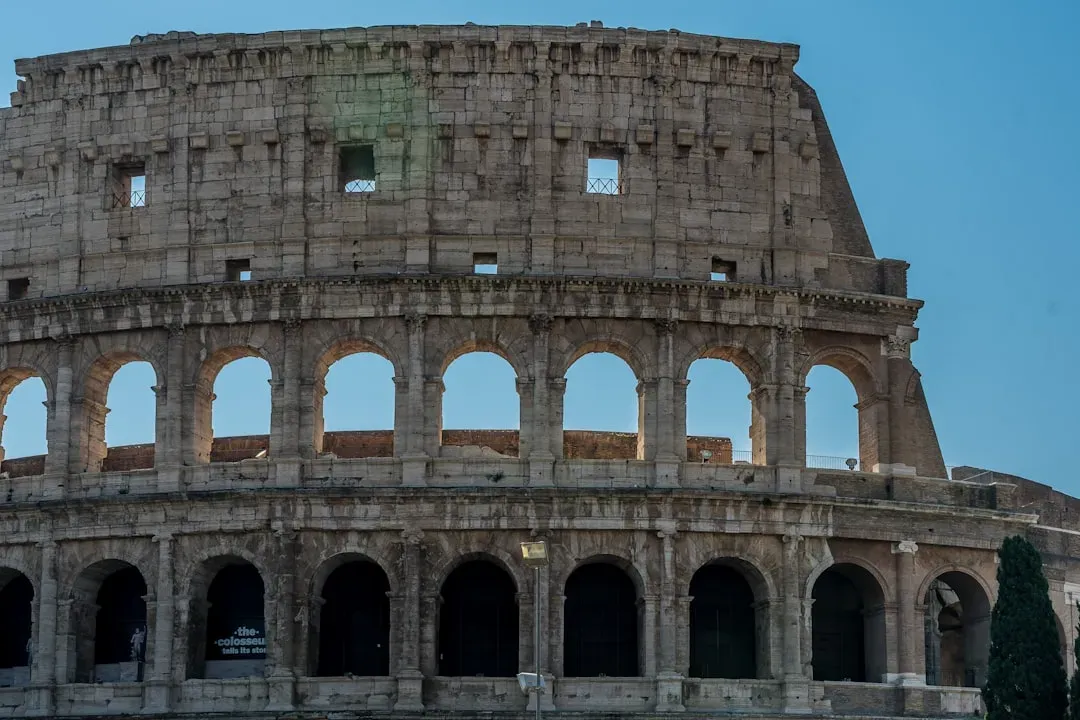
Here’s the thing – the ancient Romans constructed vast networks of roads, aqueducts, ports, and massive buildings, and Rome’s famed Pantheon, which has the world’s largest unreinforced concrete dome and was dedicated in 128 C.E., is still intact. Some ancient Roman aqueducts still deliver water to Rome today. Meanwhile, if you walk past a modern shopping center built forty years ago, you’re probably noticing cracks already forming in the walls. That comparison should deeply unsettle you.
Roman concrete, in many cases, has proven to be longer-lasting than its modern equivalent, which can deteriorate within decades. Scientists behind a major study say they uncovered the mystery ingredient that allowed the Romans to make their construction material so durable and build elaborate structures in challenging places such as docks, sewers, and earthquake zones. The secret ingredient? Not some mystical ancient formula, but something far more elegant.
Researchers found that white chunks in the concrete, referred to as lime clasts, gave the concrete the ability to heal cracks that formed over time. These white chunks had previously been overlooked as evidence of sloppy mixing or poor-quality raw material. Imagine being dismissed as careless for thousands of years, only for scientists to realize you were a genius all along. That is essentially what happened to the Roman builders.
According to MIT researchers, the hot mixing process gives the lime clasts a brittle nanoparticulate architecture. As soon as tiny cracks form in the concrete, they fracture the clasts, and when water reaches these particles, it creates a calcium-saturated solution that flows into the cracks and recrystallises to “heal” them. A 2,000-year-old material that repairs itself. Modern engineers are still trying to figure out how to do the same thing efficiently at scale.
2. The Antikythera Mechanism: The World’s First Computer, Found on the Ocean Floor
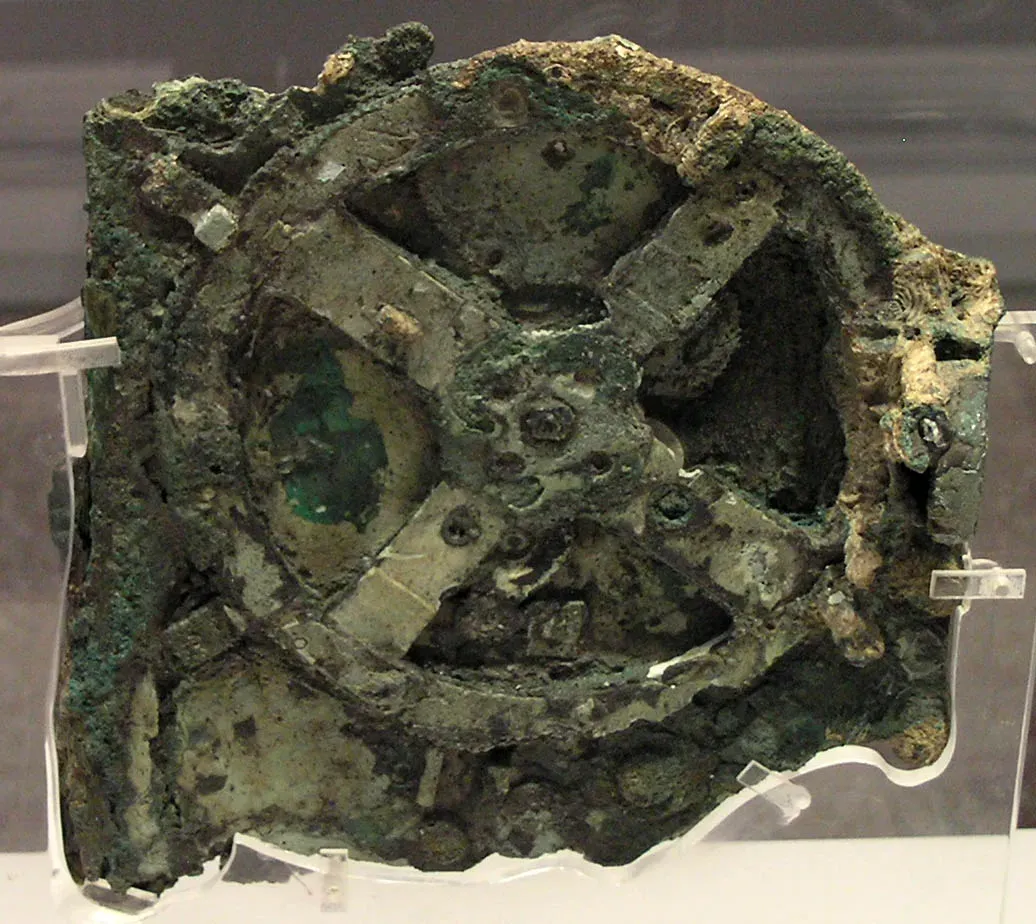
Imagine you find a corroded lump of bronze in a shipwreck, ignore it for two years, and then one day realize it contains a fully functioning astronomical computer. That is essentially what happened in 1901. Discovered in a shipwreck off the coast of Greece, the Antikythera Mechanism is often called the world’s first analog computer. It predates the next comparable mechanical device by over a thousand years. Let that sink in.
The Antikythera Mechanism was a computational instrument for mathematical astronomy, incorporating cycles from Babylonian astronomy and the Greek flair for geometry. It calculated the ecliptic longitudes of the Moon, Sun, and planets; the phase of the Moon; the Age of the Moon; the synodic phases of the planets; eclipses – including their possibilities, times, characteristics, years, and seasons; and even the Olympiad cycle. That is an almost absurd level of capability packed into something roughly the size of a shoebox.
Such complex mechanical constructions only reappear in Europe with the astronomical tower clocks in the 14th century, more than 1,000 years later. Think of it like discovering a smartphone in a medieval village – the gap in history is that dramatic. The quality and complexity of the mechanism’s manufacture suggests it must have had undiscovered predecessors during the Hellenistic period. Somewhere out there, even earlier versions of this technology may still be buried or lost.
The device appears to be a geared astronomical calculation machine of immense complexity. Today we have a reasonable grasp of some of its workings, but there are still unsolved mysteries. Even with modern X-ray computed tomography and digital reconstruction tools, researchers at University College London openly admit their reconstruction may be incomplete. Honestly, the more you learn about this device, the more questions it raises.
3. The Iron Pillar of Delhi: Rust-Free for Over 1,600 Years
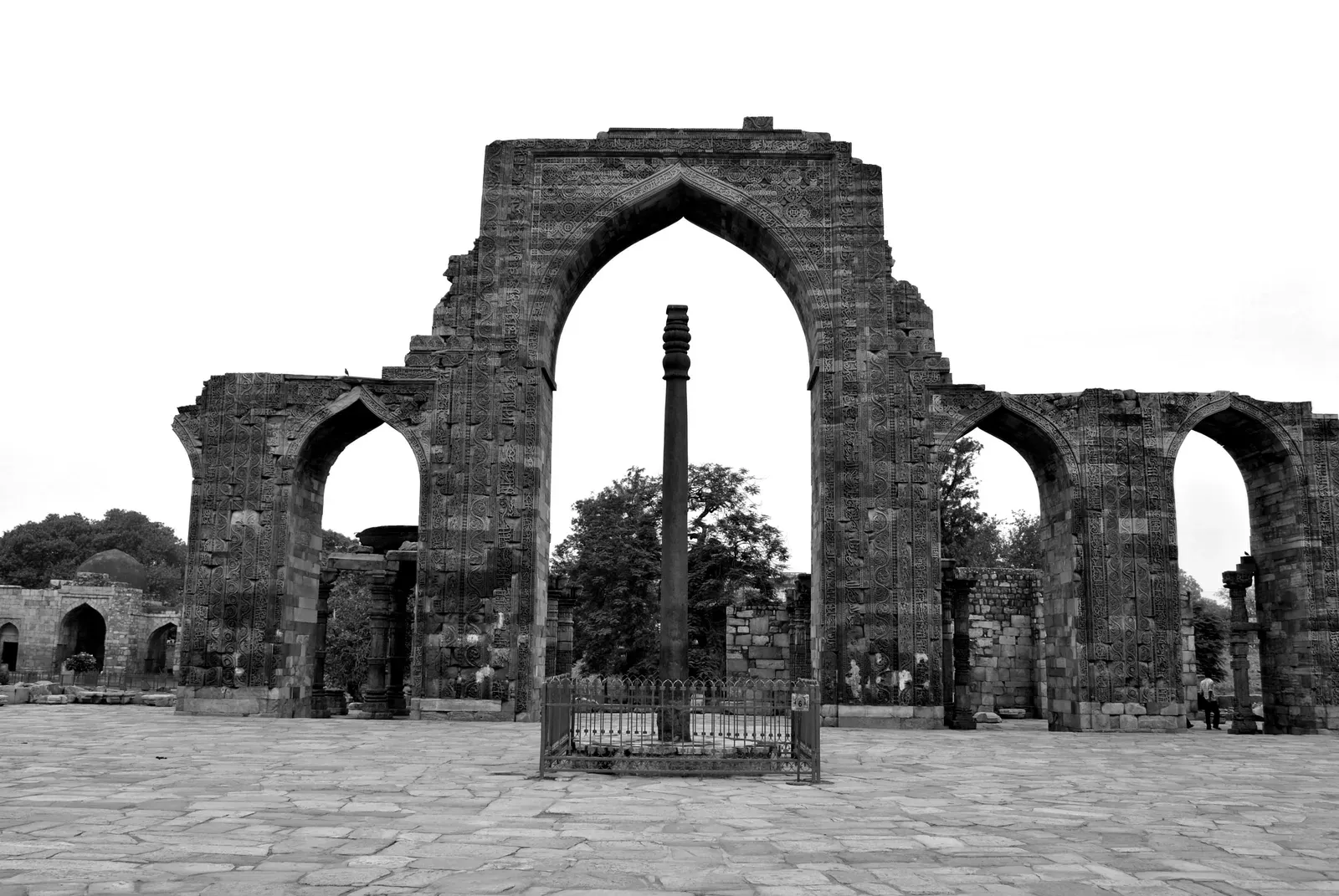
If you were told that a massive iron column has been standing outdoors in New Delhi since roughly the 4th century, exposed to monsoons, humidity, pollution, and the hands of millions of curious visitors – and that it barely shows a trace of rust – you’d probably think someone was joking. Visitors to the courtyard of the Quwwat-ul-Islam Mosque will immediately spot an imposing 7.2-meter, six-ton iron pillar with a decorative top. Remarkably, the pillar is now as pristine as the day it was forged, defying both age and environmental adversities, including intense temperatures and increasing pollution. Dating back to the 5th century, its remarkable resilience continues to captivate travelers today.
It wasn’t until 2003 that experts at the Indian Institute of Technology in Kanpur cracked the mystery, revealing the answer in the journal Current Science. They found that the pillar, primarily made of wrought iron, has a high phosphorus content of about 1%, and lacks sulfur and magnesium, unlike modern iron. Additionally, ancient craftsmen used a technique called forge-welding – meaning they heated and hammered the iron, keeping the high phosphorus content intact, a method uncommon in modern practices.
The pillar has attracted the attention of archaeologists and materials scientists because of its high resistance to corrosion and has been called a “testimony to the high level of skill achieved by the ancient Indian iron smiths in the extraction and processing of iron.” The corrosion resistance results from an even layer of crystalline iron hydrogen phosphate hydrate forming on the high-phosphorus-content iron, which serves to protect it from the effects of the Delhi climate. It is, in effect, a naturally engineered form of ancient stainless steel.
Ancient Indian iron artefacts have always fascinated researchers due to their excellent corrosion resistance, but the scientific explanation of this feature remains to be fully elucidated. Despite incredible advances in modern metallurgy, there is still something about the ancient Indian iron-making tradition that we haven’t fully decoded. That’s not a small thing – that’s a thousand-year technical gap we’re still narrowing.
4. Puma Punku: Stonework So Precise It Shouldn’t Exist
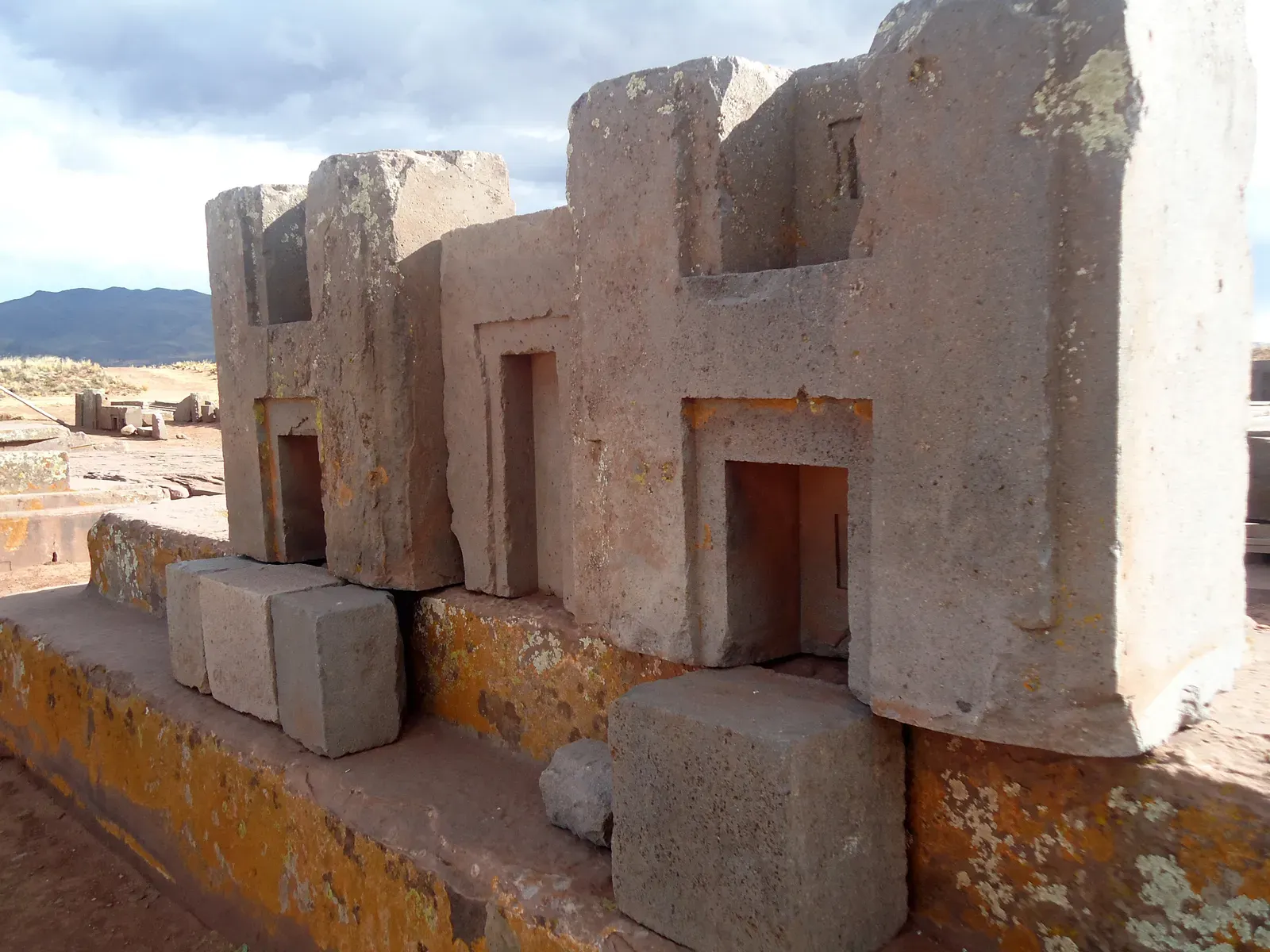
The Tiwanaku complex, located in modern-day Bolivia, is a major pre-Columbian site near Lake Titicaca. One of its sections, the so-called Puma Punku, is well known for its incredible high-precision stonework. The stone blocks at this location are massive, some weighing up to 100 tons. Moving a single one of those blocks today would require serious machinery, careful planning, and probably a few arguments among engineers about the best approach.
The precision is so advanced that even modern engineers would struggle to replicate the techniques used. All the cut surfaces are super smooth, and the cuts are astronomically straight. What is more, the blocks are all interlocked without any use of mortar whatsoever. No mortar, no filler, no margin for error. It’s like locking together thousands of custom-cut puzzle pieces – each one carved by hand, fitting so perfectly that a sheet of paper wouldn’t slide between them.
All this suggests that the builders of Puma Punku utilized advanced tools or technologies that are lost to history. To add to the prevailing mystery, archaeologists were unable to uncover any evidence for tools or methods that were used to shape the stones. No workshops, no tool debris, no construction manuals carved into a nearby wall. The evidence of how it was done has simply vanished, leaving only the result behind.
I think one of the most humbling aspects of Puma Punku is that it forces you to rethink your assumptions about what “primitive” means. A civilization without written records or iron tools produced stonework that would make a modern CNC machine operator genuinely envious. History shows us that ancient civilizations repeatedly demonstrated incredible ingenuity and engineering prowess, even in the most distant past. Puma Punku is perhaps the most unsettling proof of that.
5. Greek Fire: The Weapon That Burned on Water and Has Never Been Replicated
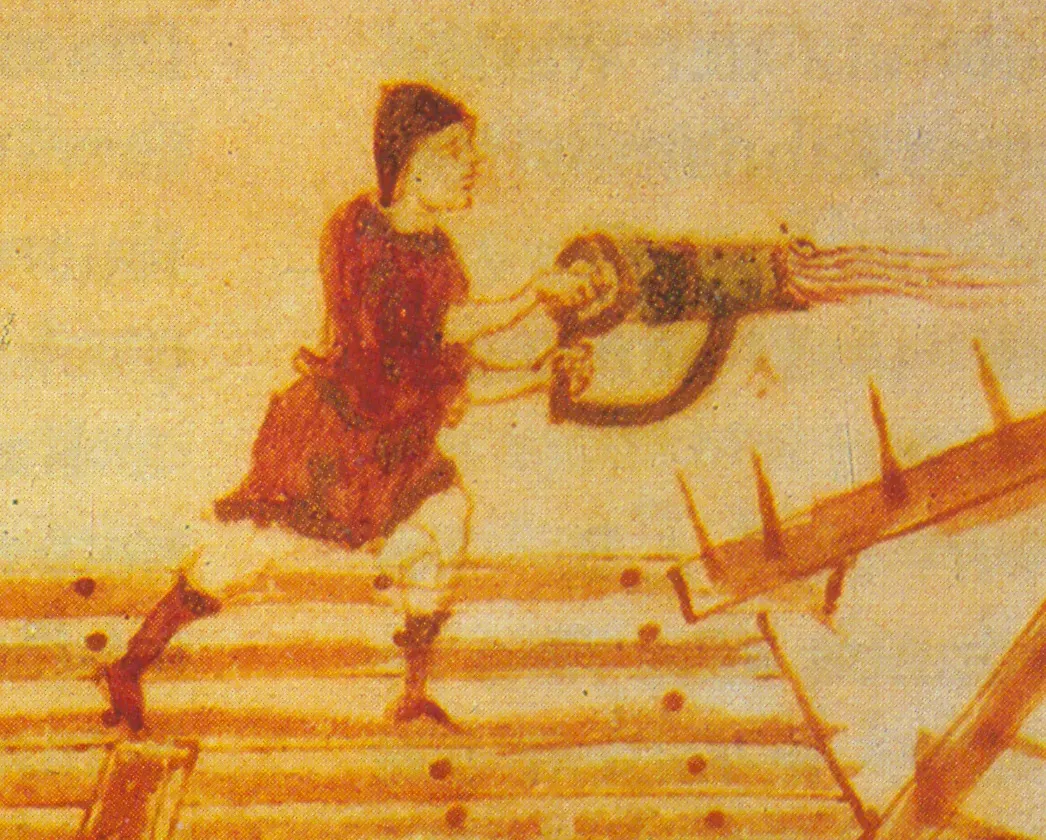
You have likely heard of chemical weapons and incendiary warfare. You probably also assume those are modern inventions. Then you meet Greek Fire and realize that assumption needs serious revision. Greek Fire was like the ancient version of a flamethrower, except it could burn on water instead of just setting things ablaze. This mysterious substance was so intense that it could effectively ignite the ocean. The Byzantines used it during naval battles, and it was so top-secret that no one knew exactly what it was made of.
Greek Fire was a weapon used by the Byzantine Empire to set enemy ships ablaze. This incendiary substance could even burn on water, making it a formidable tool in naval warfare. Greek Fire was reportedly so effective that its formula was kept a state secret and has since been lost. A state secret so well-kept that it survived the fall of an empire and has baffled chemists for centuries since. That is a kind of classified security that no modern government could dream of achieving.
The origins of Greek Fire are shrouded in mystery, but it is believed to have been invented by the Byzantines in the 7th century CE. Some historians speculate that it was developed by the Byzantine inventor and engineer Callinicus of Heliopolis, who is credited with creating several other military technologies. Regardless of who invented it, Greek Fire was a formidable weapon used significantly by the Byzantines in their wars against the Arab and Ottoman empires.
The exact composition of Greek Fire is unknown, but it is likely to include naphtha and quicklime, as it would ignite when it made contact with water. Think about what it means that water would cause this substance to burn more fiercely, not extinguish it. Every instinct a sailor in the ancient world had for fighting fire was completely useless against this weapon. It’s hard to say for sure whether we’ll ever fully replicate it – but the fact that we haven’t yet speaks volumes.
Conclusion: What Ancient Genius Tells Us About Ourselves
Each of these five technologies carries a quiet, unsettling message: the human mind at its best has always been capable of extraordinary things, regardless of the era. You don’t need a computer lab or a materials science degree to engineer concrete that outlasts modern buildings, or to forge iron that resists rust for sixteen centuries.
Certain ancient innovations and technologies remain a great enigma, as they cannot be replicated or fully understood. The mystery of ancient engineering challenges modern perception of the world’s first civilizations. We have gained so much knowledge over the millennia. Yet these five examples suggest that somewhere along the way, we also lost things – techniques, materials, and ways of thinking that may never be fully recovered.
The ancient world was not a waiting room for the modern one. It was, in many ways, a rival to it. Next time you pass a new building already showing cracks in its facade, or watch engineers debate over a bridge design, spare a thought for the Roman who mixed volcanic ash into quicklime, the Indian blacksmith who hammered phosphorous iron with patient precision, and the Greek genius who fitted thirty gear wheels into a box to map the stars. They had figured something out that we are still, even today, trying to understand.
What’s the most surprising ancient technology on this list for you? Tell us in the comments – we’d genuinely love to know.