

We like to think that modern technology is humanity’s greatest achievement. Smartphones, satellite systems, self-healing materials – surely nothing that came before us could compete. Yet every now and then, a discovery emerges from the ancient world that quietly but firmly proves us wrong.
We often think about our distant ancestors as primitive, equipped with the crudest of tools and a limited set of skills. More often than not, we are terribly mistaken. The deeper archaeologists dig, the more they find evidence of engineering genius that challenges everything we assumed about the ancient world. Some of these discoveries are so stunning that they rewrite entire chapters of history. Let’s dive in.
The Romans and Their Concrete That Literally Heals Itself
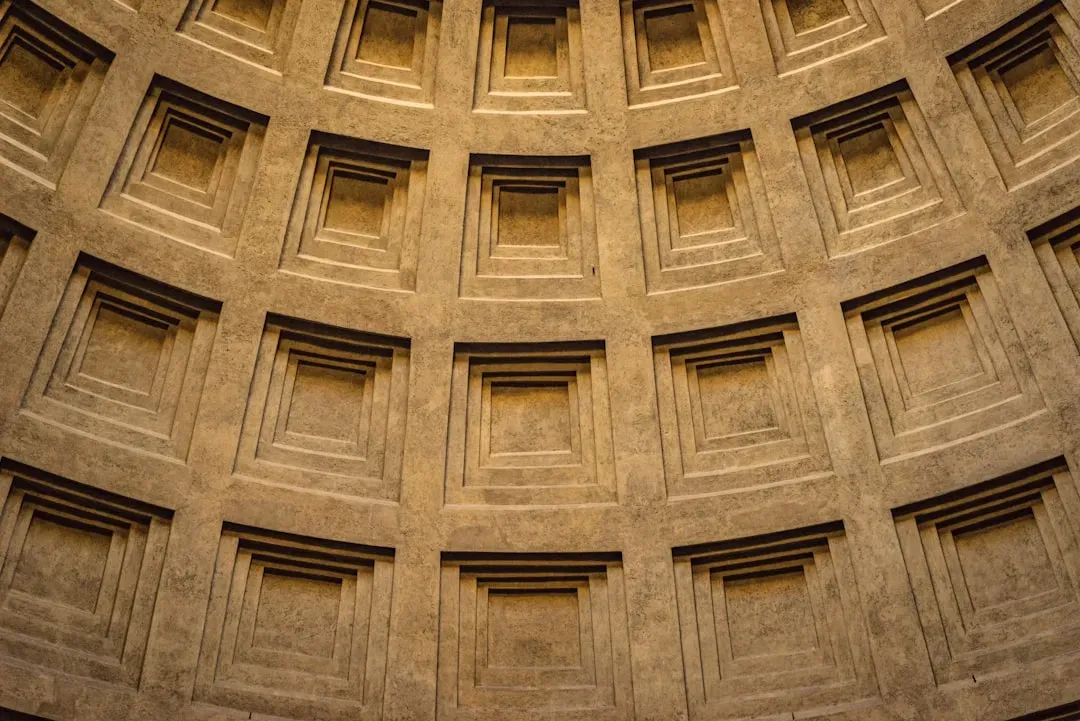
Here’s the thing – when you think of Rome, you probably picture gladiators, marble columns, and dramatic togas. But the Romans’ greatest technological achievement might be something far less glamorous: their concrete. Roman concrete has puzzled engineers for centuries. Structures built with this ancient formula have survived harsh marine environments for over 2,000 years, while modern concrete typically deteriorates within decades under similar conditions. That’s not a small gap. That’s the difference between a sandcastle and a fortress.
A team of investigators from MIT, Harvard University, and laboratories in Italy and Switzerland made progress in this field, discovering ancient concrete-manufacturing strategies that incorporated several key self-healing functionalities. The secret ingredient? Researchers concluded that lime clasts arose because of the use of quicklime, the most reactive and dangerous dry form of limestone, when mixing the concrete. Additional analysis showed that the lime clasts formed at extreme temperatures, and that “hot mixing” was key to the concrete’s durable nature. Think of it like a material that patches its own wounds – something modern engineers are still trying to properly replicate.
For the sample using ancient mixing techniques, the cracks had completely healed within two weeks, and water no longer flowed through the material. The lime clasts had aided in a chemical process that resulted in self-healing. Honestly, that’s more impressive than most things I’ve seen come out of a modern construction lab. Rome’s famed Pantheon, which has the world’s largest unreinforced concrete dome and was dedicated in 128 C.E., is still intact, while many modern concrete structures have crumbled after a few decades. When a nearly 2,000-year-old dome outlasts our best modern buildings, it’s time to pay attention.
The Ancient Greeks’ Shocking Computer from the Deep Sea
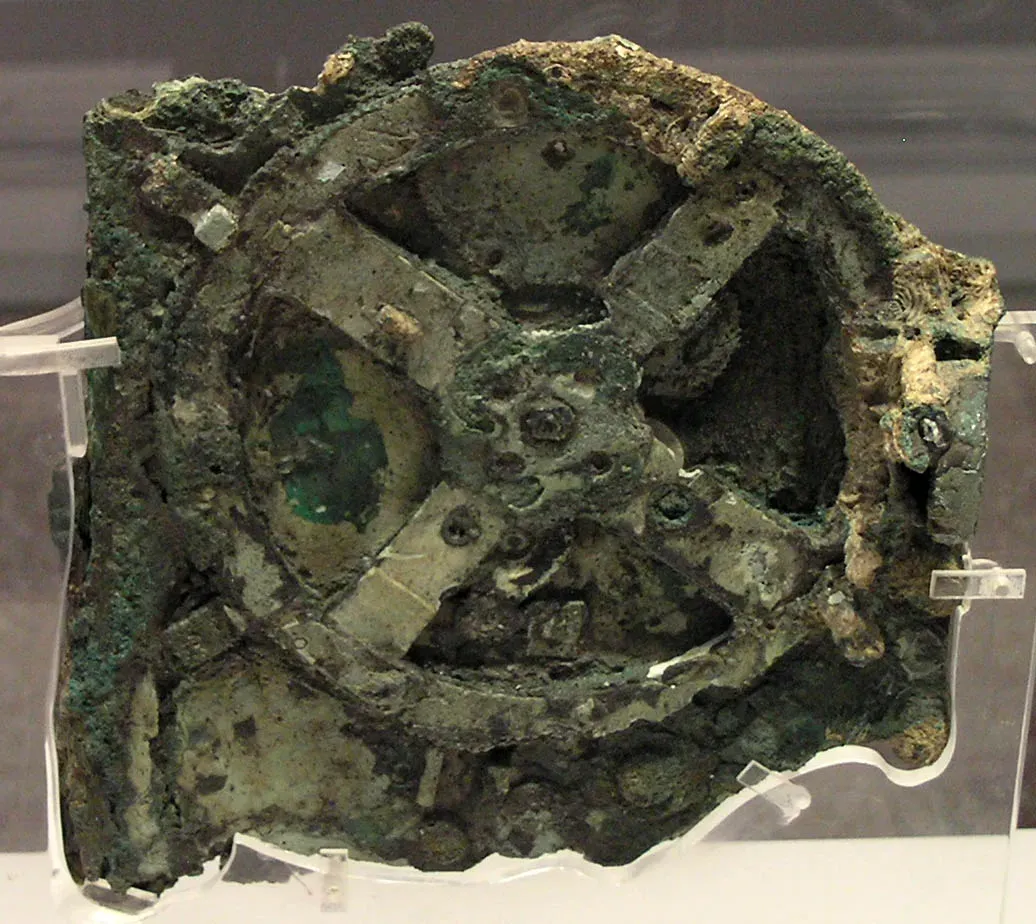
Imagine pulling a corroded chunk of bronze from a shipwreck and discovering it’s the world’s first computer. That’s exactly what happened in 1901. The Antikythera mechanism is an ancient Greek mechanical device used to calculate and display information about astronomical phenomena. The remains of this ancient “computer,” now on display in the National Archaeological Museum in Athens, were recovered in 1901 from the wreck of a trading ship that sank in the first half of the 1st century BCE near the island of Antikythera in the Mediterranean Sea.
The Antikythera mechanism had the first known set of scientific dials or scales, and its importance was recognized when radiographic images showed that the remaining fragments contained 30 gear wheels. No other geared mechanism of such complexity is known from the ancient world or indeed until medieval cathedral clocks were built a millennium later. Let that settle in. A thousand years passed before anyone built anything remotely as complex. Solving the complex 3D puzzle of this device reveals a creation of genius – combining cycles from Babylonian astronomy, mathematics from Plato’s Academy, and ancient Greek astronomical theories.
The device calculated the ecliptic longitudes of the Moon, Sun and planets; the phase of the Moon; the synodic phases of the planets; the excluded days of the Metonic Calendar; eclipses; the heliacal risings and settings of prominent stars and constellations; and the Olympiad cycle. It’s hard to say for sure just how widespread this kind of knowledge was in the ancient Greek world, but the device’s existence suggests that ancient Greek technology was far more advanced than previously believed, yet no similar mechanisms from that era have been found, leaving scientists baffled about how widespread such knowledge actually was. It remains one of history’s greatest open questions.
The Indus Valley Civilization and Their Sewers That Shame Medieval Europe
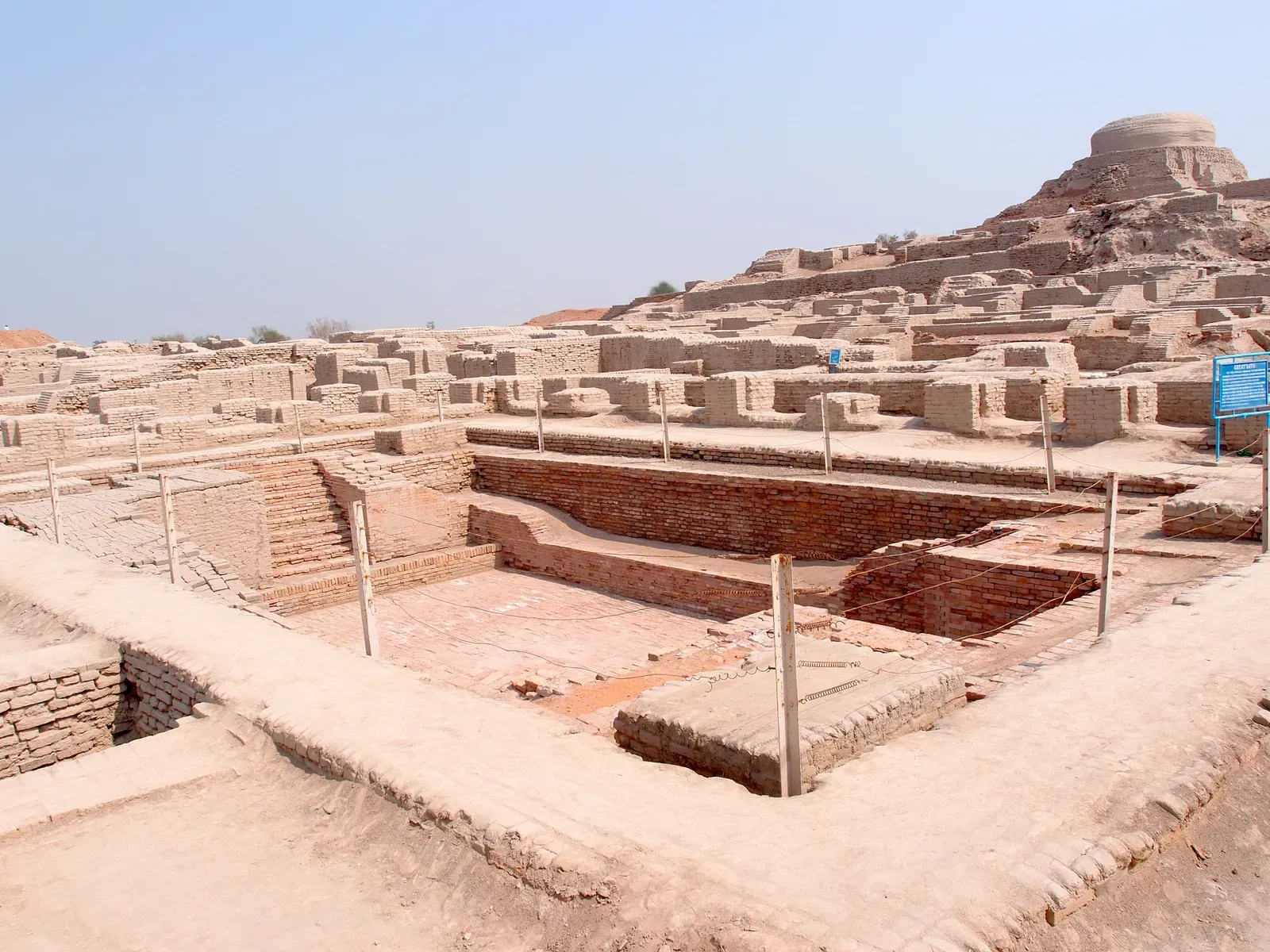
Most people have never heard of the Indus Valley Civilization. That, in itself, is a tragedy. Long before the rise of Rome or Athens, the Indus Valley Civilization, flourishing around 2600 to 1900 BCE in what is now Pakistan and northwest India, was thriving as one of the world’s earliest urban societies – astonishing archaeologists with its advanced understanding of city planning, sanitation systems, and international trade. Yet it rarely makes headlines. That’s a shame, because what they built was extraordinary.
Perhaps the most groundbreaking achievement of the Indus Valley Civilization was its infrastructure for sanitation, possibly the earliest in the world. Every major house had its own private bathing area and drainage system. Wastewater was channeled into covered street drains, kept clean through regular maintenance. Public wells provided clean drinking water, and some cities even had multi-tier reservoirs and rainwater harvesting systems. That’s not primitive. That’s genuinely sophisticated urban hygiene.
Houses in both Harappa and Mohenjo-daro had flush toilets, a sewer system, and fixtures on either side of the streets were part of an elaborate drainage system, which was more advanced even than that of the early Romans. Think about how remarkable that is. Europe’s cities were still dumping raw waste into the streets in the 18th century, while the Indus Valley had private flush toilets over four thousand years earlier. This obsession with cleanliness and sanitation likely prevented countless epidemics and contributed to their society’s stability for over 700 years. Urban planners today could genuinely learn a thing or two.
Ancient Egypt and the Engineering Precision That Defies Explanation

Few topics ignite more debate among historians, archaeologists, and enthusiastic internet theorists than the Great Pyramids of Giza. Let’s be real – the sheer audacity of what the Egyptians pulled off is breathtaking. The Pyramids of Giza, built over 4,500 years ago, remain one of the most iconic symbols of ancient engineering prowess. Among them, the Great Pyramid of Giza, constructed under Pharaoh Khufu, is the most impressive, standing at 146 meters tall upon completion. Despite millennia of weathering, it still reaches a height of 138 meters. The precision and scale of this construction continue to astonish scientists and archaeologists alike.
Scholars are still puzzled by the near-perfect symmetry of the pyramids, the massive stone blocks and the precision with which they were cut, and the pyramid’s alignment with the four cardinal points. The alignment precision is so accurate that modern surveyors using GPS equipment marvel at it. It’s the engineering equivalent of threading a needle in pitch darkness. Ancient Egyptians also utilized the pith of the papyrus plant to create paper. Strips of papyrus were woven together to create sheets, then weighted down and bound, making them strong but thin. Papyrus proved to be shockingly lasting, as many of these papyrus sheets remain in good condition, allowing us to see the hieroglyphics written on them.
What truly separates Egypt from other ancient civilizations is the sheer breadth of their technological output. You had a civilization simultaneously mastering architecture, medicine, material science, and record-keeping. The Sushruta Samhita around 400 BC contains details about performing cataract surgery and plastic surgery – though that’s more closely connected to ancient India, the Egyptians too practiced complex medicine and surgical techniques. Their achievements were not accidental flukes but the result of centuries of accumulated, carefully recorded knowledge – knowledge that made them the intellectual power of the ancient world for thousands of years.
Ancient China and the Technologies That Europe Wouldn’t See for Centuries

Ancient China deserves a standing ovation that history has often withheld. The technological contributions of Chinese civilization are staggering in both their variety and their timeline. From the Shang Dynasty through the Han Dynasty, roughly 1600 BC to 220 AD, ancient China was one of the most consistently innovative civilizations in world history. The Shang were renowned for their bronze casting, producing ritual vessels of exceptional artistic and technical sophistication. By the Zhou period, Chinese metallurgists had developed cast iron, centuries before it appeared in Europe. During the Han Dynasty, China produced a series of groundbreaking inventions, including paper, which transformed literacy and bureaucratic administration.
Chinese engineers also created the world’s first seismograph, advanced agricultural tools such as the iron plow, and early navigational instruments that prefigured the magnetic compass. Now, think about the seismograph for a moment. That’s a device for detecting earthquakes. The world’s first seismoscope was created in China in 132 AD by the scientist and inventor Zhang Heng. Researchers believe that this device was capable of predicting earthquakes with the precision of modern instruments. Historical records have preserved an accurate description of its appearance and how it functioned, but the internal construction of this ancient invention remains a mystery to this day.
The internal workings of Zhang Heng’s seismoscope are still not fully understood. Scientists have attempted to reconstruct it based on historical descriptions, but the precise mechanism remains elusive. Scientists have made multiple attempts to replicate a model of such a device, putting forward various theories regarding the principles of its operation. It’s one thing to build something impressive. It’s another entirely to build something so sophisticated that modern researchers, armed with all the technology of 2026, still can’t fully figure out how it worked. That’s the mark of a truly extraordinary civilization.
Conclusion: The Past Has More to Teach Us Than We Admit

There’s a certain arrogance in assuming that innovation is a purely modern story. The evidence says otherwise, loudly. Throughout human history, ancient civilizations have created remarkable technological achievements that continue to puzzle modern scientists and engineers. Despite our advanced understanding of physics, chemistry, and engineering, many ancient innovations remain incompletely understood, with their construction methods and purposes still subject to debate. These mysterious technologies challenge our assumptions about the capabilities of ancient peoples and demonstrate that sophisticated knowledge existed long before the modern era.
From Rome’s self-healing concrete to the Indus Valley’s world-class sanitation, from Greece’s mechanical computer to China’s earthquake-detecting seismoscope and Egypt’s gravity-defying monuments, these civilizations weren’t just surviving. They were thriving, innovating, and solving problems that still captivate us today. Studying these ancient mysteries not only helps us appreciate the accomplishments of our ancestors but may also provide solutions to contemporary challenges, from creating more sustainable building materials to developing new approaches to metallurgy and engineering. The fact that these technologies continue to baffle scientists underscores the depth of human creativity across the ages and suggests that ancient knowledge still has much to teach modern civilization.
The real question isn’t how they managed to build all of this without our tools. The real question is what else they knew that we haven’t discovered yet. What do you think – is the most astonishing of these technologies still buried somewhere, waiting to be found? Share your thoughts in the comments.