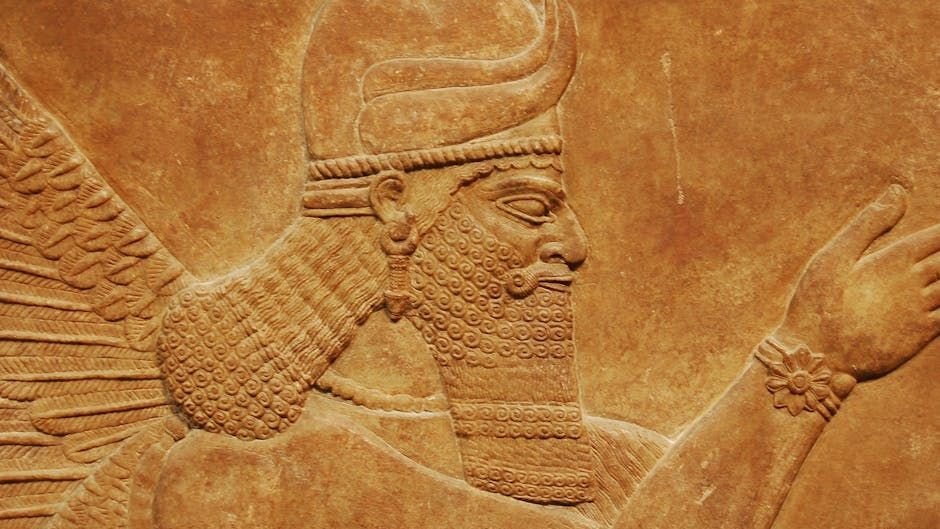

We tend to think of the ancient world as a place of superstition and primitive guesswork, where people lived short lives and barely understood the world around them. That assumption, honestly, couldn’t be further from the truth. Scratch the surface of history and you’ll find something genuinely astonishing: entire civilizations that cracked codes of engineering, medicine, astronomy, and urban planning that modern science only caught up with centuries, sometimes millennia, later.
These weren’t lucky accidents or isolated curiosities. These were systematic, repeatable, scalable achievements. The kind that make you stop, tilt your head, and ask, “Wait, how did they know that?” So buckle up, because what follows is the kind of history that doesn’t just inform you. It genuinely humbles you. Let’s dive in.
Ancient Egypt: The Original Scientific Powerhouse
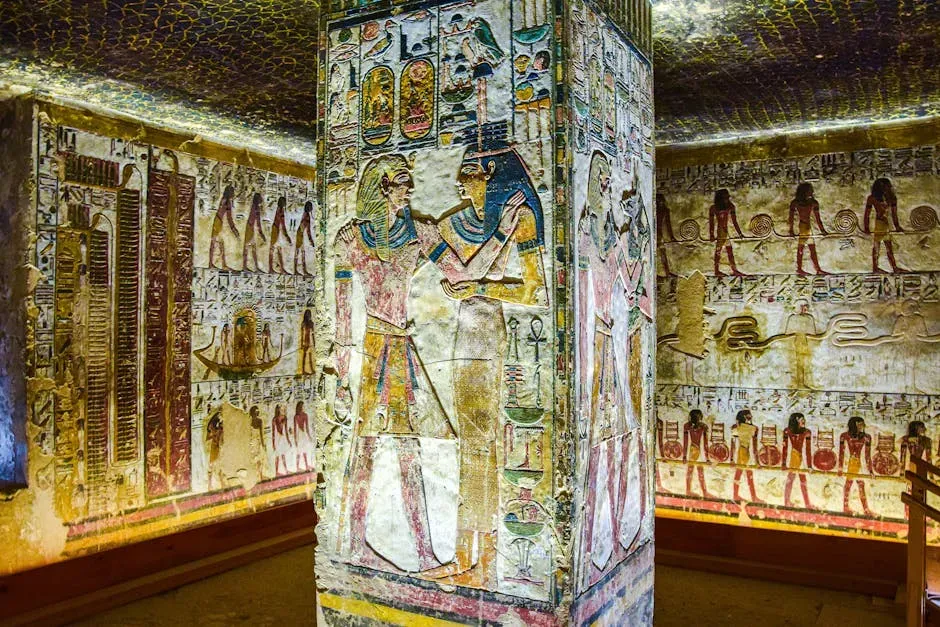
Most people hear “Ancient Egypt” and immediately picture pyramids, mummies, and pharaohs. Fair enough. But here’s the thing – those are just the appetizers. Paper and ink, cosmetics, the toothbrush and toothpaste, and even the ancestor of the modern breath mint were all invented by the Egyptians, who made advances in almost every sphere of knowledge, from beer brewing and engineering to agriculture, medicine, astronomy, and architecture. You are, in a very real sense, living in a world shaped by their discoveries.
The Egyptians created the first known solar calendar, consisting of 365 days. This calendar, based on the solar year, was crucial for predicting seasonal changes and organizing the agricultural cycle. The alignment of the pyramids with the stars is also a testament to their sophisticated understanding of astronomy. Think about that. A 365-day calendar, built from pure stargazing and mathematical reasoning, thousands of years before telescopes existed. When you look at your phone calendar today, you are using a system that traces its roots directly back to the banks of the Nile.
Egyptians possessed a vast awareness of what became arithmetic, astronomy, and anatomy, and were credited with inventing medical surgery thanks to their skills in stitching wounds and setting broken bones. Their medical knowledge wasn’t primitive guesswork either. Modern Egyptologists know about ancient Egyptian medical practices through more than a dozen surviving medical papyri. The extremely important Edwin Smith Papyrus, named for the man who purchased it in 1862, is notable because it contains almost no magic, which is unusual. Instead, it follows rational, scientific thought. In an era when most medical systems blended prayer with treatment, the Egyptians were already writing something that looked remarkably like a clinical textbook.
Ancient Greece: The World’s First Computer Builders
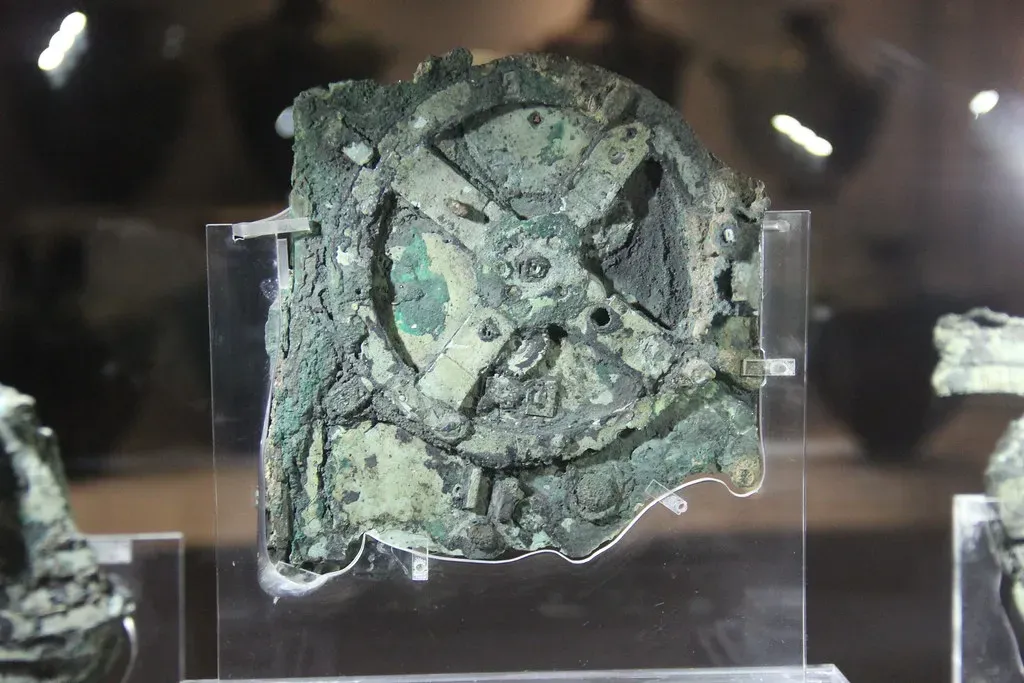
Let’s be real – when people think of ancient Greece, they think of philosophy, democracy, and marble statues. All justifiably impressive. Yet the most mind-bending achievement of the ancient Greeks wasn’t a poem or a senate. It was a machine. The Antikythera mechanism is an ancient Greek hand-powered orrery, a model of the Solar System. It is the oldest known example of an analogue computer. It could be used to predict astronomical positions and eclipses decades in advance.
Months later, at the National Archaeological Museum in Athens, a recovered lump broke apart, revealing bronze precision gearwheels the size of coins. According to historical knowledge at the time, gears like these should not have appeared in ancient Greece, or anywhere else in the world, until many centuries after the shipwreck. The find generated huge controversy. That controversy has never fully died down. The Antikythera mechanism had the first known set of scientific dials or scales, and its importance was recognized when radiographic images showed that the remaining fragments contained 30 gear wheels. No other geared mechanism of such complexity is known from the ancient world or indeed until medieval cathedral clocks were built a millennium later.
Solving the complex three-dimensional puzzle of the mechanism reveals a creation of genius, combining cycles from Babylonian astronomy, mathematics from Plato’s Academy, and ancient Greek astronomical theories. Imagine building something so complex that it wouldn’t be replicated for over a thousand years. Often regarded as the world’s first analog computer, the Antikythera Mechanism is the most technologically advanced instrument known from antiquity. Built roughly 2,100 years ago, its complex system of interlocking bronze precision gears charted the movements of the planets, sun, and moon. This Greek, hand-powered device also predicted eclipses, tracked the moon’s phases, and displayed the dates of the ancient Olympics. The ancient Greeks were, it turns out, not just thinking about knowledge. They were engineering it.
The Maya: Astronomers of Extraordinary Precision
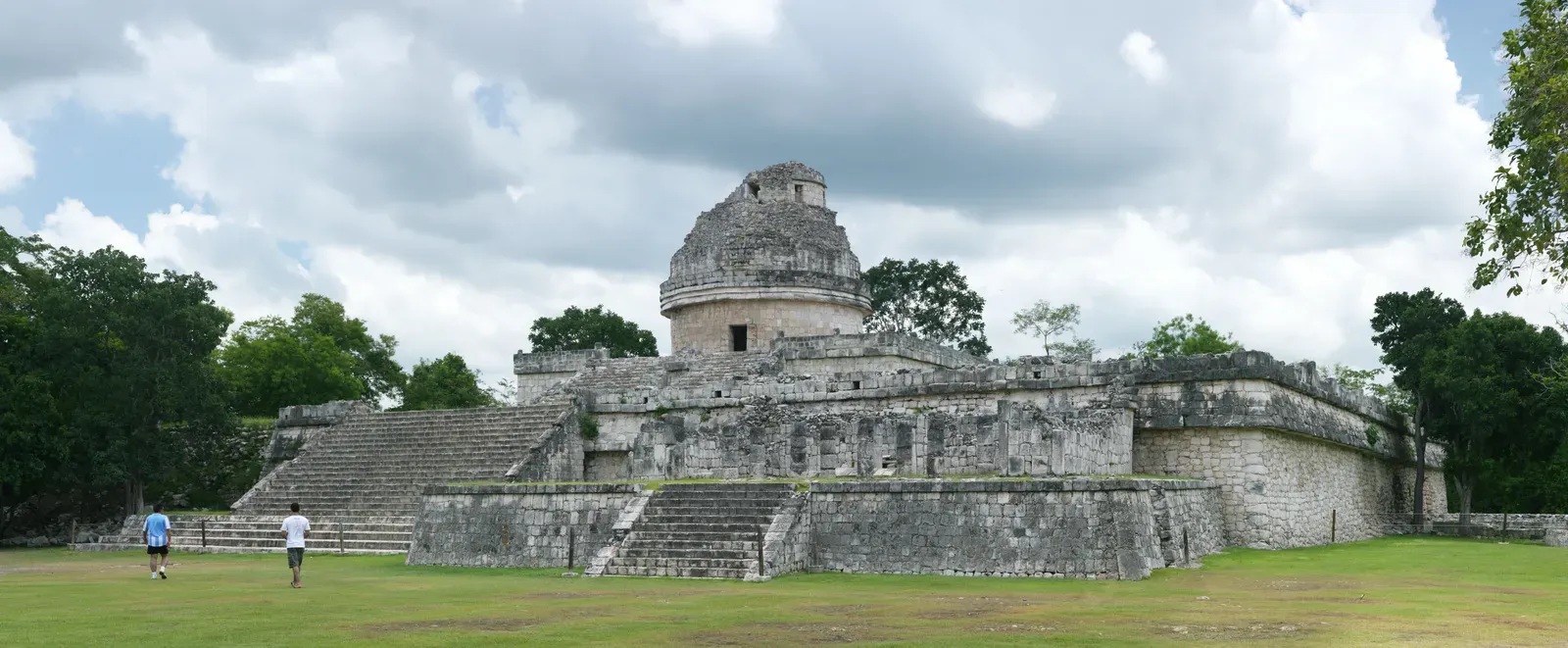
Deep in the jungles of Mesoamerica, the Maya were doing something extraordinary – they were mapping the heavens with a level of precision that still raises eyebrows among modern scientists. The Maya developed one of the most sophisticated calendar systems ever created, accurately tracking celestial movements and predicting solar eclipses thousands of years in advance. Their mathematical system, which included the concept of zero centuries before its appearance in Europe, enabled complex astronomical calculations without modern tools. That’s right. Zero. The concept that underpins all of modern mathematics and computing, discovered in the jungles of Central America, centuries ahead of the European world.
Using careful observation and mathematical genius, they calculated the solar year length to be 365.242 days, just 19 seconds off from the modern calculation of 365.242190 days. Nineteen seconds. Without satellites, computers, or even basic telescopes. That is a level of accuracy that should honestly make your jaw drop. They built large observatories and made meticulous records of planetary movement with a sophisticated system of writing that combined pictorial and phonetic characters. They also made predictions of the positions of celestial objects that rang true far into the future.
The Maya incorporated their advanced understanding of astronomy into their temples and other religious structures. The pyramid at Chichén Itzá in Mexico, for example, is situated according to the sun’s location during the spring and fall equinoxes. At sunset on these two days, the pyramid casts a shadow on itself that aligns with a carving of the head of the Mayan serpent god. The shadow forms the serpent’s body; as the sun sets, the serpent appears to slither down into the Earth. That isn’t coincidence. That is intentional, breathtaking, architectural astronomy built in stone. It’s hard to say for sure what drove the Maya to such obsessive precision, but the results speak louder than any theory.
The Indus Valley Civilization: Masters of Urban Living
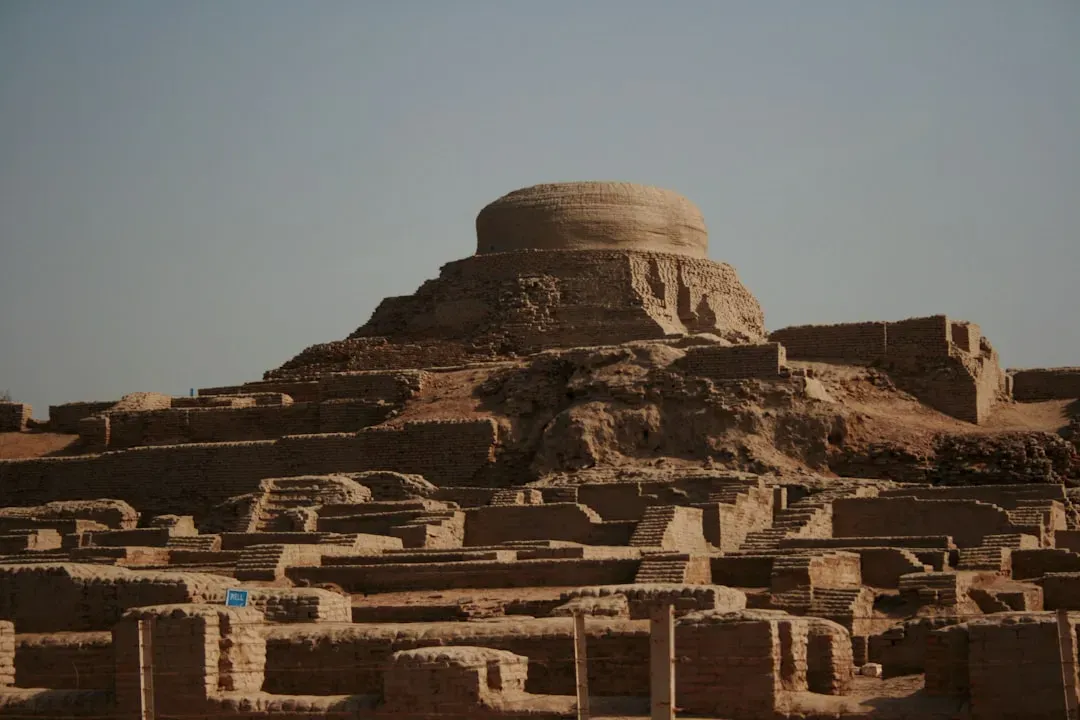
Here is a civilization that most people have barely heard of, yet it arguably had the most practical, livable cities of the ancient world. A sophisticated and technologically advanced urban culture is evident in the Indus Valley Civilisation, making them the first urban centre in the region. The high degree of forward-looking urban planning demonstrates the existence of well-organised local governments capable of formulating and executing a large-scale forward-looking development program, and which placed a high value on public health and hygiene. This wasn’t just building houses. This was city-planning at a systemic level, thousands of years before the concept had a name.
Harappa, Mohenjo-daro, and the recently, partially-excavated Rakhigarhi demonstrate the world’s first known urban sanitation systems. The ancient Indus systems of sewerage and drainage developed and used in cities throughout the Indus region were far more advanced than any found in contemporary urban sites in the Middle East, and even more efficient than those in many areas of Pakistan and India today. Individual homes drew water from wells, while waste water was directed to covered drains on the main streets. Think about that comparison for a moment. More advanced than some areas today. A civilization from roughly 2600 BCE was ahead of parts of the modern world in basic sanitation infrastructure. That is genuinely staggering.
Sewage was disposed of through underground drains built with precisely laid bricks, and a sophisticated water management system with numerous reservoirs was established. In the drainage systems, drains from houses were connected to wider public drains laid along the main streets. The drains had holes at regular intervals which were used for cleaning and inspection. The water from bathrooms on the roofs and upper stories was carried through enclosed terracotta pipes or open chutes that emptied into the street drains. Inspection holes for maintenance. Terracotta pipes on upper stories. This is not primitive civilization. This is systematic, engineered urban hygiene, over four and a half thousand years ago.
The Inca: Engineers of the Impossible

If you have ever seen a photograph of Machu Picchu, you have already glimpsed what might be the most astonishing feat of ancient engineering on Earth. Perched nearly 2,500 meters above a river valley, built without iron tools, without the wheel, and without any written architectural blueprints, it stands today as both a monument and a mystery. The most striking feature of Machu Picchu’s architecture is the precision of its ashlar masonry, where massive stone blocks fit together so perfectly that not even a knife blade can slide between them. This technique, called “ashlar,” involves cutting stones to exact specifications without mortar, creating walls that have survived centuries of earthquakes and weather. Modern engineers attempting to replicate Inca stonework using contemporary tools struggle to achieve similar precision.
Polygonal masonry provides superior earthquake resistance because the irregular shapes create multiple contact points that distribute stress forces across broader areas. During seismic events, these complex joints allow controlled movement while maintaining structural integrity. Computer modeling of polygonal walls shows that the irregular shapes actually optimize load distribution better than regular rectangular blocks. The Incas intuitively understood principles of structural engineering that weren’t formally documented by European civilization until centuries later. Let that sink in. The Incas discovered principles of structural engineering that modern science only confirmed through computer modeling. Their “intuition” was, in reality, sophisticated empirical knowledge.
Across deserts, mountains, valleys, and rainforests, the Inca road system known as the Qhapaq Ñan extended up to 40,000 kilometres. It connected administrative centres, military outposts, storage facilities, and religious shrines across the empire, and allowed the movement of goods, armies, and information. At its heart, the main route ran north to south from Quito to Cusco and continued down to Chile and Argentina. Today, remnants of the system stretch across six modern countries. A road network spanning six modern nations, built in the mountains without modern machinery. The Incas didn’t just build for the moment. They built for the ages.
Conclusion: The Past Is Smarter Than You Think
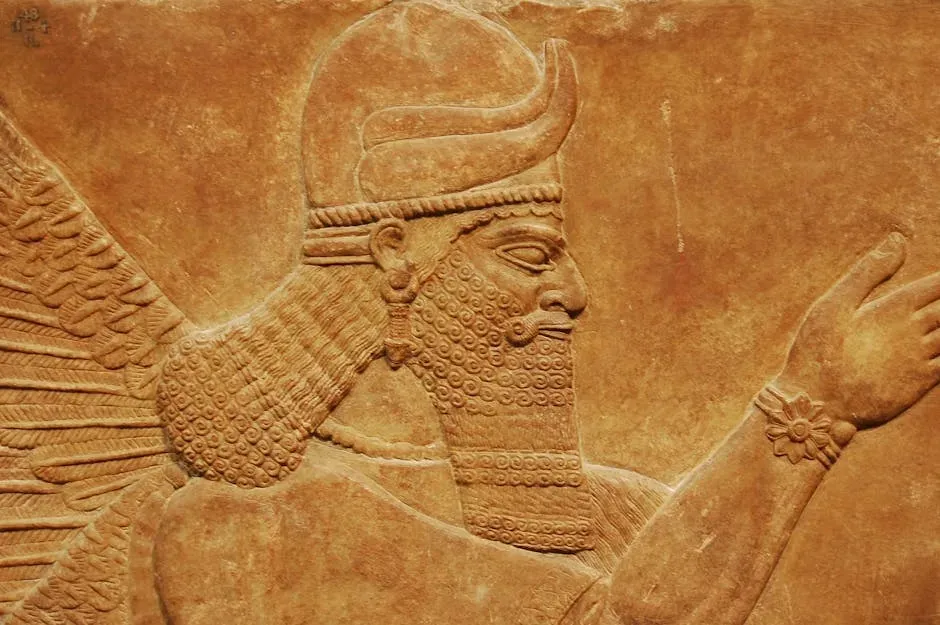
There is something deeply humbling about stepping back and looking at what these five civilizations actually accomplished. Some of these ancient civilizations developed technologies and knowledge so sophisticated that their achievements wouldn’t be matched for thousands of years. While certain discoveries were lost to time, only to be reinvented in the modern era, others created foundational concepts and technologies that have influenced human development continuously since their creation, proving that innovation isn’t limited to any single era or region.
We live in an age that worships the new. We celebrate every app update and tech launch as if human ingenuity is a recent invention. But the Egyptians were building precision observatories, the Greeks were engineering analog computers, the Maya were calculating the solar year to within seconds, the Indus Valley was building flush toilets, and the Incas were constructing earthquake-proof cities – all thousands of years before anyone alive today was born.
I think the most powerful takeaway here isn’t just that these civilizations were smart. It’s that intelligence, curiosity, and the drive to understand the universe are deeply, fundamentally human. They always have been. The next time someone suggests that “the ancients” were primitive or unsophisticated, you’ll have quite a lot to say in response. Which of these five civilizations surprised you the most?