
Imagine picking up what looks like a lump of corroded bronze from the ocean floor, only to realize it contains clockwork precision that your own century cannot yet fully explain. That is not science fiction. That is archaeology. All around the world, objects keep surfacing that challenge our comfortable timelines of human progress, quietly insisting that the ancient world was far more connected, more sophisticated, and more mysterious than most textbooks ever dared to suggest.
You might assume that civilizations of the distant past lived in isolated bubbles, cut off from one another by oceans and mountains and language barriers. The artifacts below beg to differ. Each one hints at a cross-pollination of ideas, techniques, and astronomical knowledge that stretches across cultures and continents in ways that are, honestly, a little mind-bending. Let’s dive in.
The Antikythera Mechanism: The World’s First Computer
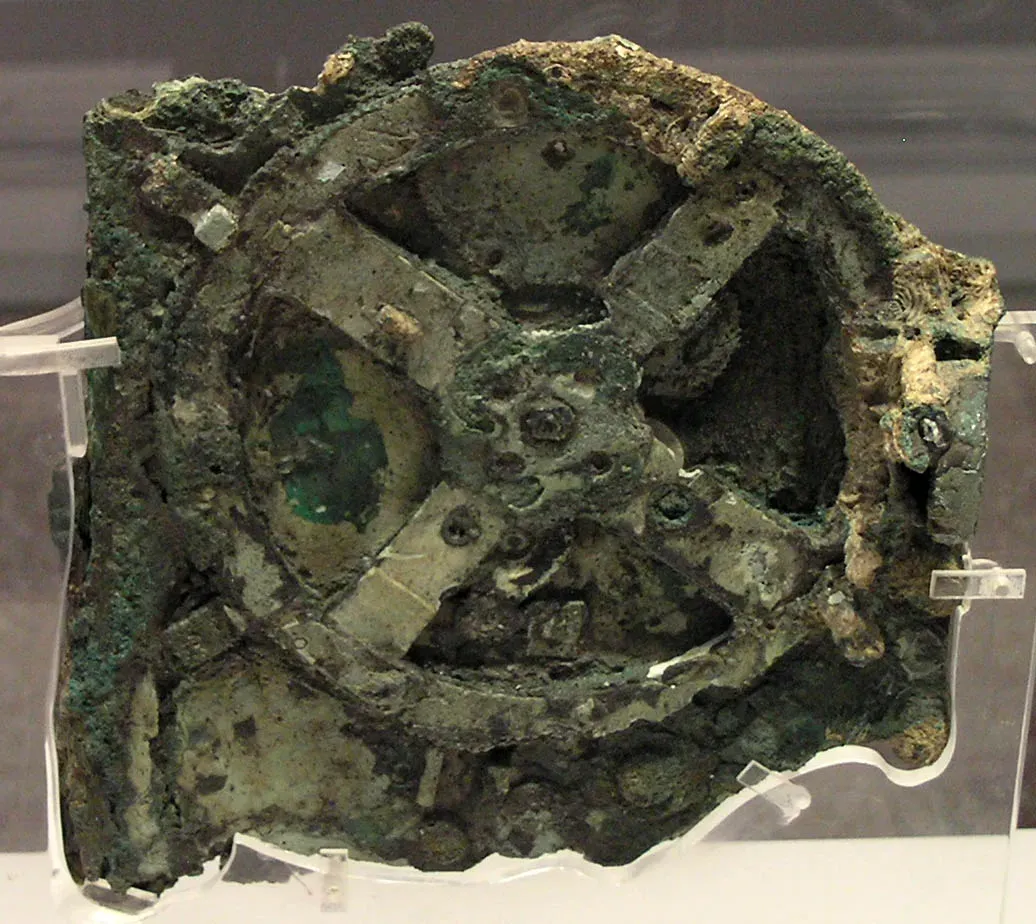
Picture this: a corroded, fist-sized lump of bronze pulled from a Roman-era shipwreck near a Greek island in 1901. Nobody thought much of it at first. Then, in 1902, a researcher at the National Archaeological Museum in Athens peered closer and noticed something that stopped him cold. Several of the bronze fragments contained interlocking gears that had never before been observed on objects from this era of human history. The history of technology, as the world knew it, cracked right down the middle.
The Antikythera mechanism, dated to the late second or early first century BCE, is understood as the world’s first analog computer, created to accurately calculate the position of the sun, moon, and planets. No other geared mechanism of such complexity is known from the ancient world, or indeed until medieval cathedral clocks were built a millennium later. Think about that for a second. Roughly a thousand years of technological silence separates this device from anything even remotely comparable.
Solving the complex three-dimensional puzzle of the mechanism reveals a creation of genius, combining cycles from Babylonian astronomy, mathematics from Plato’s Academy, and ancient Greek astronomical theories. This evidence that the Antikythera mechanism was not unique adds support to the idea that there was an ancient Greek tradition of complex mechanical technology that was later, at least in part, transmitted to the Byzantine and Islamic worlds. That transmission of knowledge across cultures is precisely what makes this artifact so tantalizing. It was not made in isolation. It was a product of a world that was already talking to itself.
The Piri Reis Map: Cartography From an Impossible Future
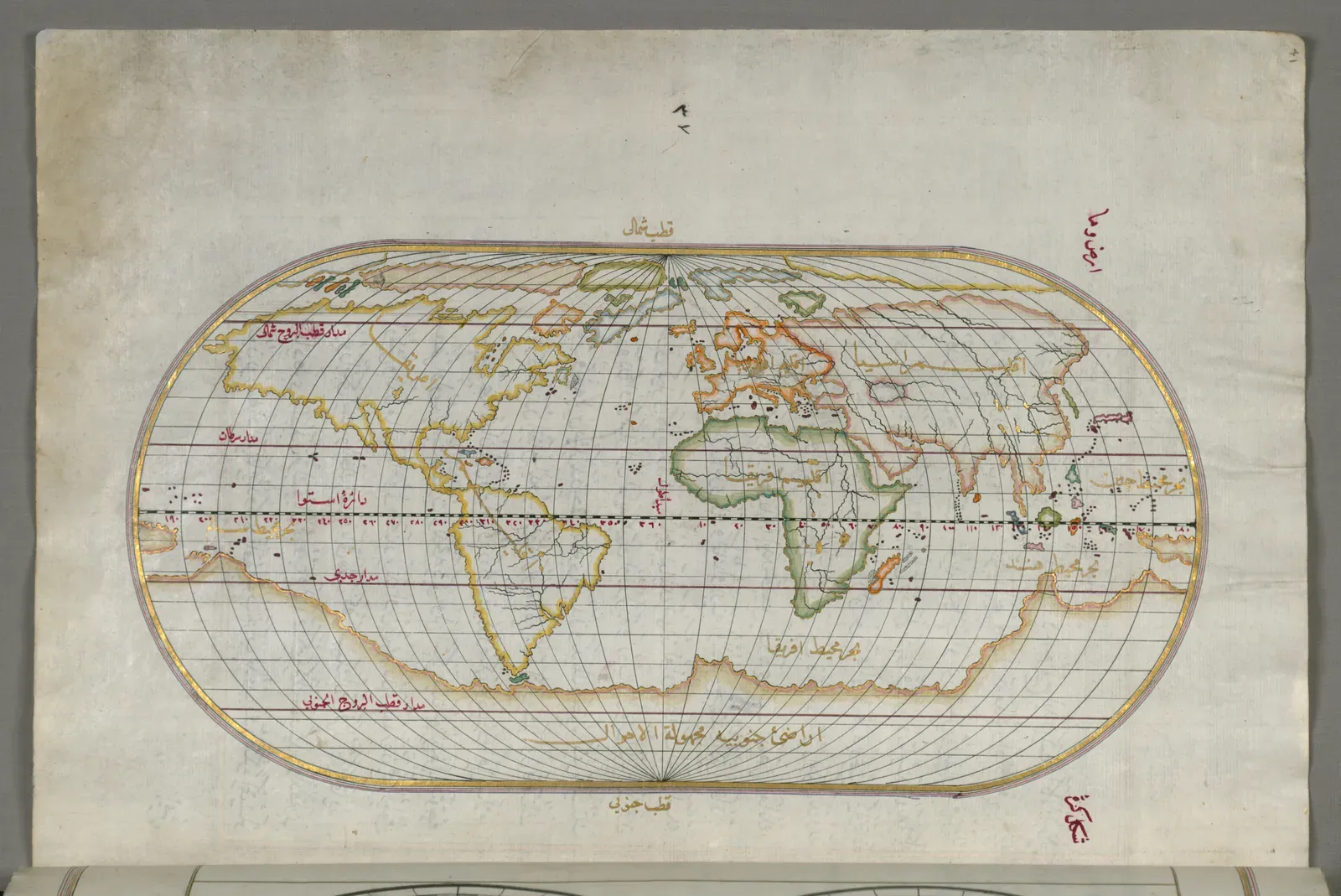
The Piri Reis map is a world map compiled in 1513 by the Ottoman admiral and cartographer Piri Reis, with approximately one third of the map surviving, housed in the Topkapı Palace in Istanbul. Here’s where it gets truly strange. The most intriguing element of the map, the one that has baffled cartographers, geographers, and academics for almost a century, is the mysterious southern landmass. There’s a section that some speculate depicts the northernmost part of Antarctica without its ice cover, a depiction only possible today thanks to advanced satellite imagery.
According to a handwritten note found with the ancient document, Piri Reis compiled it using multiple other maps and charts as primary sources, including eight Ptolemaic maps, four Portuguese maps, one Arabic map, and one drawn by Christopher Columbus. Not only was there the issue of Antarctica without its ice cap, but researchers noticed that the map was drawn using the Mercator Projection, a methodology not used by European cartographers until the late 16th century. It’s hard to say for sure exactly how to interpret all of this, but the question it raises is undeniable. If he did include Antarctica, the most obvious question requiring an answer is how did he even know about it, given that the ice shelves weren’t seen until the 1820s, some three centuries later?
The Baghdad Battery: Ancient Electricity From Mesopotamia?
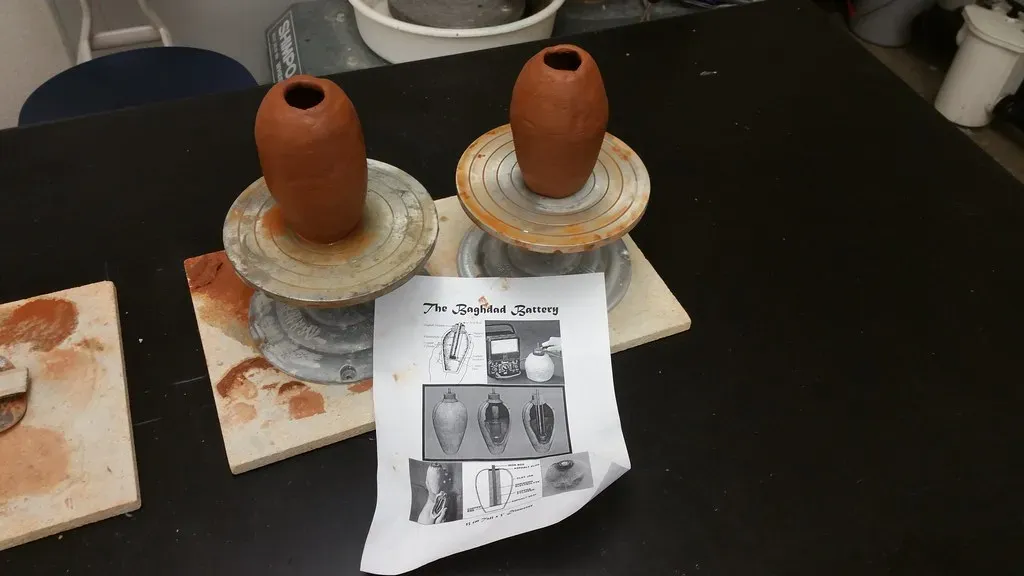
The Baghdad Battery is the name given to an artifact consisting of a ceramic pot, a tube of copper, and a rod of iron fixed together with bitumen. It was discovered in present-day Khujut Rabu, Iraq, in 1936, close to the ancient city of Ctesiphon, the capital of the Parthian and Sasanian empires. Let’s be real, when you describe that combination of materials to a modern engineer, their eyebrows go up immediately. Some researchers believe it could have been used for electroplating gold onto silver objects, effectively making it one of the world’s first batteries, and experiments have shown it might generate a small electrical charge when filled with an acidic liquid.
The Baghdad Battery remains a contentious topic in archaeological circles, with established academia viewing it with skepticism. While prevailing opinion leans towards conventional uses such as storage, alternative historians and enthusiasts of ancient mysteries find its enigmatic nature captivating, proposing speculative theories about its potential as a primitive electrical device or for electroplating. The truth remains elusive, as no definitive ancient texts describe its use. Still, the Baghdad Battery stands as a tantalizing clue that technological leaps may have occurred in places and times we least expect. The fact that such a deceptively simple object can still divide expert opinion after nearly a century of study tells you everything about how much we still don’t know.
The Dendera Light: A Carved Mystery That Won’t Stay Quiet
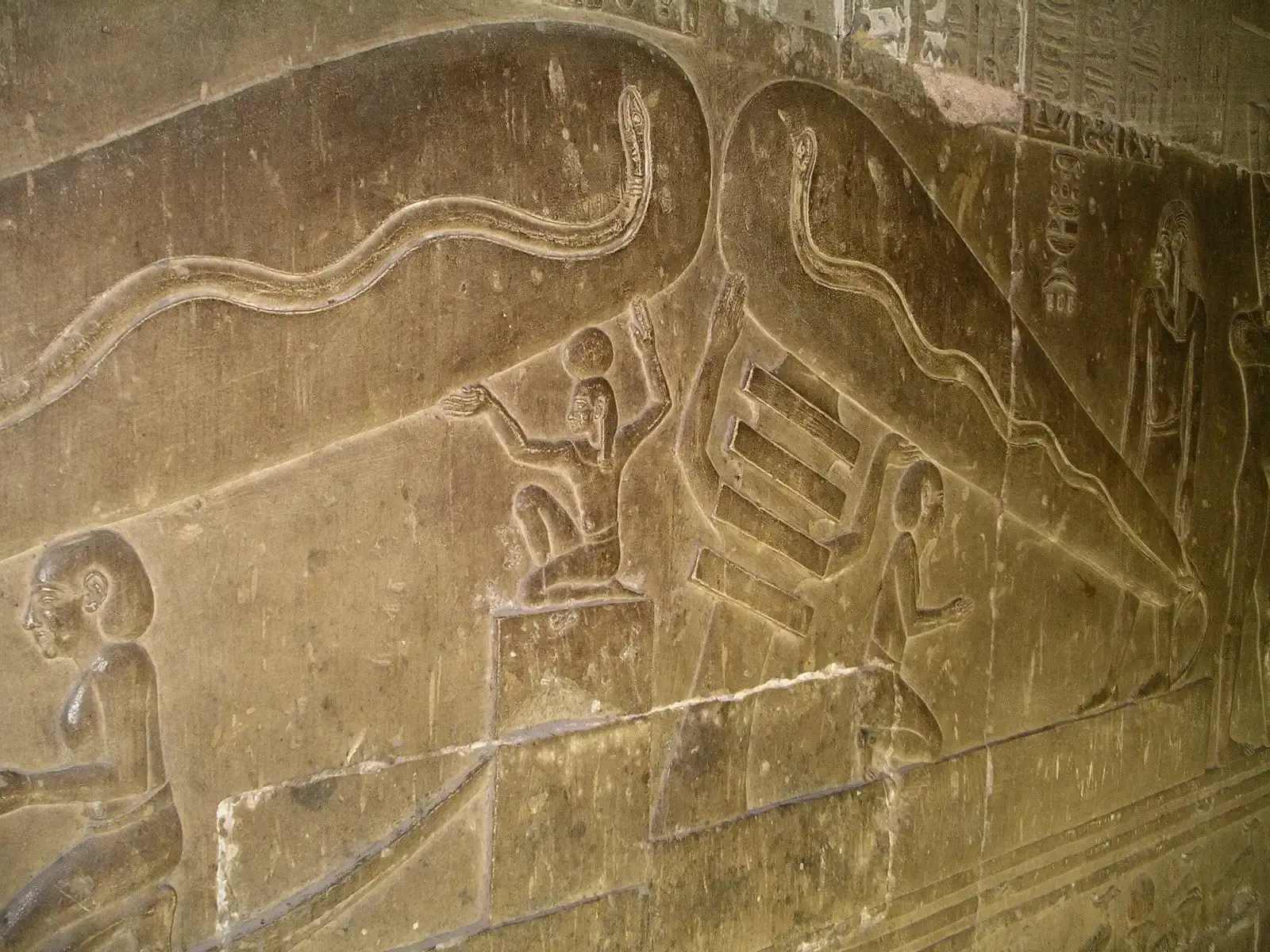
Deep inside the Hathor Temple at Dendera, Egypt, a carved relief depicts what looks eerily like a giant light bulb, complete with a cable and a lotus-shaped socket. This image, known as the Dendera Light, has fueled endless debates between mainstream Egyptologists and alternative historians. The Dendera Light hypothesis arises from carvings in the Temple of Hathor dated to the late Ptolemaic period. These carvings depict what some interpret as oversized light bulbs, with a snake-like figure enclosed within a lotus-shaped bulb and connected to a base resembling a socket or pedestal.
Conventional scholars interpret the relief as a mythological scene showing a lotus flower birthing a snake, symbolizing creation and fertility. Yet proponents of ancient technology argue the depiction is too literal to ignore, suggesting the Egyptians may have had electrical knowledge far ahead of their time. Mainstream Egyptologists attribute depictions like the Dendera reliefs to religious and cosmological themes rather than advanced technology. Honestly, I think the real value of the Dendera Light is not in the answer it gives, but in the question it forces you to sit with. Why does an ancient religious carving look so uncannily modern? The Dendera Light remains a symbol of the enduring mystery of Egypt’s lost knowledge.
The Saqqara Bird: A Glider Carved in Ancient Egypt?
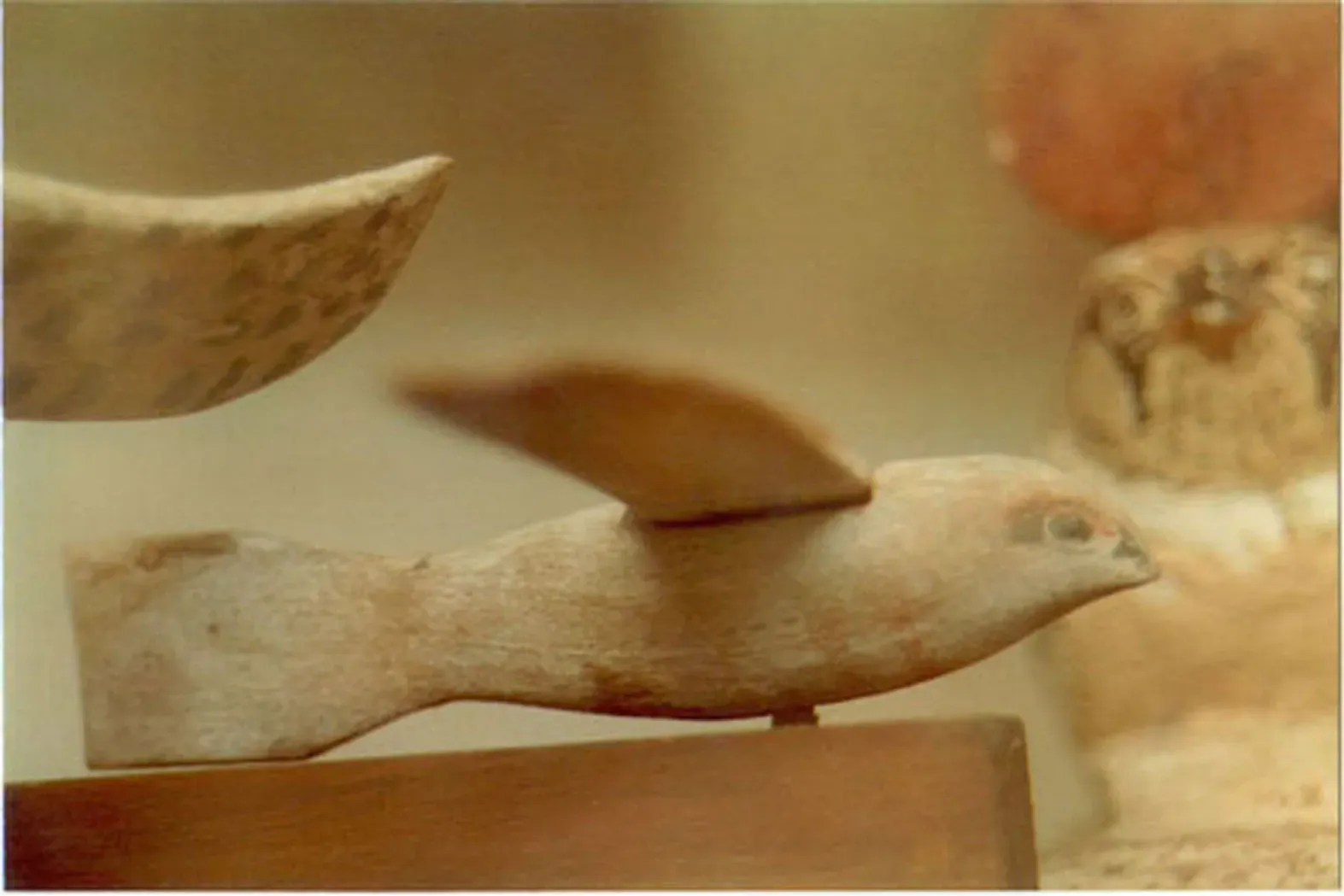
The Saqqara Bird is a wooden model of a bird made from sycamore wood and mounted on a stick, discovered during the excavation of the tomb of Pa-di-Imena in Saqqara, Egypt, in 1898. The artifact dates back to approximately 200 BC and is currently housed in the Egyptian Museum in Cairo. The model has a wingspan of 18 cm and weighs approximately 39 grams. Small enough to hold in one hand, yet large enough to have sparked decades of fierce academic argument. The model is made in the form of a falcon, a bird that was often used to depict important Egyptian deities such as Horus and Ra Horakhty.
In the late twentieth century, an alternative and much more controversial interpretation of the Saqqara Bird emerged. Some researchers, including Egyptian physician Khalil Messiha, suggested that the artifact might be a model of an ancient flying machine. Supporters of this theory point to the aerodynamic shape of the model and have experimented with copies, claiming that with the addition of a tail stabilizer, it is capable of gliding. The traditional interpretation of the Saqqara Bird as a religious artifact remains the most reasonable in terms of the historical and cultural context of ancient Egypt. Still, the aerodynamic debate refuses to go away entirely, and that tension between the ceremonial and the technical makes the Saqqara Bird one of the most quietly fascinating objects in any museum case. Think of it like discovering a paper airplane in the ruins of a medieval church. You’d have questions too.
Conclusion
These five artifacts, each extraordinary in its own right, point toward something that conventional history has often been reluctant to fully acknowledge. Ancient societies, seemingly unconnected, constructed similar architectural structures, used common symbols, and practiced comparable religious rituals. Such evidence suggests that prehistoric civilizations might have shared a universal body of scientific and technological knowledge. Whether through active trade routes, lost libraries of accumulated maps, or simply the universally curious nature of the human mind, the ancient world appears to have been far less fragmented than we like to imagine.
You don’t need to believe in lost continents or alien architects to find these objects deeply compelling. The real wonder is simpler and perhaps even more profound. Human beings, thousands of years ago, were already reaching across the world, sharing ideas, borrowing knowledge, and building things that still leave us speechless. The question worth sitting with is this: how much more knowledge was shared, invented, and then simply lost to time, waiting to be rediscovered? What do you think? Share your thoughts in the comments below.