
Something about ancient human history always manages to disturb us in the best possible way. Just when you think you’ve heard it all, a new discovery reaches back tens of thousands of years and completely rewrites what we thought we knew about our closest evolutionary relatives.
This time, the evidence points to something deeply unsettling. Neanderthals, those stocky, intelligent hominids who once roamed across Europe and western Asia, may have routinely eaten their own dead. The marks left on their bones tell a story that’s equal parts fascinating and chilling. Let’s dive in.
The Discovery That Sparked the Debate
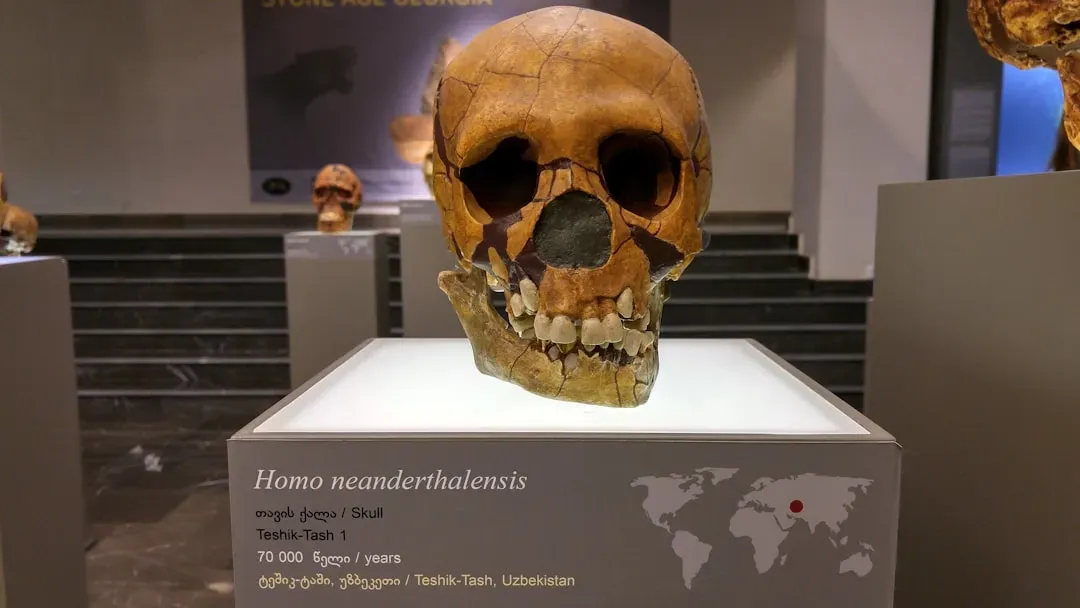
Researchers examining Neanderthal fossil remains have identified a striking pattern of cut marks, scraping, and deliberate bone fracturing that is consistent with flesh removal and marrow extraction. These aren’t random scratches. The marks are precise, methodical, and placed in ways that mirror known butchering techniques.
The bones in question come from multiple Neanderthal individuals and show signs of processing that closely resembles how these same hominids handled animal prey. That parallel is what makes this so difficult to explain away. Honestly, when the evidence mirrors prey-handling behavior this closely, it’s hard to argue coincidence.
Reading the Evidence Written Into Bone
Forensic analysis of ancient bones is painstaking work, and it’s genuinely impressive how much story a fragment of fossilized femur can tell. Scientists use high-resolution imaging and microscopic tools to identify the origin, angle, and depth of every mark. The technique is almost like reading handwriting.
Cut marks consistent with defleshing were found at attachment points for major muscle groups, which suggests intentional removal of meat rather than accidental damage. Bones were also cracked in patterns that indicate marrow was being deliberately extracted, a calorie-rich resource that hunter-gatherers regularly prioritized. The sheer consistency of these marks across multiple specimens strengthens the cannibalism hypothesis considerably.
This Wasn’t an Isolated Incident
Here’s the thing that really raises the stakes. Evidence of Neanderthal cannibalism isn’t appearing at just one site or from one time period. Multiple excavations across Europe have uncovered similarly processed Neanderthal remains, which suggests this was not a rare, desperate act but something more routine.
Sites in France, Spain, and Belgium have all yielded bones with comparable processing marks over the years. That geographic spread is significant. It suggests that consuming the dead, whether for nutritional, ritual, or social reasons, may have been a fairly normalized behavior across different Neanderthal populations and time periods.
Was It Survival, Ritual, or Something Else Entirely?
This is where things get genuinely complicated, and I think the debate here is one of the most interesting in all of paleoanthropology. Cannibalism in ancient and modern human societies has occurred for a wide range of reasons, from extreme resource scarcity to deeply spiritual practices. Attributing motive from bones alone is incredibly difficult.
Some researchers lean toward a nutritional explanation, especially given the evidence of marrow extraction, which is a pure survival-driven behavior. Others argue that the deliberate nature of the defleshing could indicate a more ritualistic dimension, perhaps tied to burial customs or beliefs about the dead. It’s hard to say for sure, but the truth may involve a blend of both motivations rather than a single clean answer.
What This Tells Us About Neanderthal Intelligence and Society
Neanderthals have had a serious image problem throughout much of scientific history. For a long time they were portrayed as brutish, simple creatures. More recent research has painted a very different picture, showing they made tools, used fire, buried their dead with apparent intention, and may have created art.
The cannibalism evidence, strangely enough, adds nuance rather than reducing them to something monstrous. If their treatment of the dead involved deliberate, structured ritual behavior, that requires cognitive sophistication. It actually points to a social and cultural life far more complex than the old stereotypes suggested. Let’s be real, the ability to develop customs around death is something we associate with deeply human thinking.
How Neanderthal Cannibalism Compares to Early Modern Humans
Here’s something worth sitting with for a moment. Early Homo sapiens also practiced cannibalism in various contexts, and the archaeological record documents this across multiple continents. So in a strange way, this behavior may be less a mark of otherness and more a point of unexpected kinship between us and Neanderthals.
Some researchers note that distinguishing between ritual and nutritional cannibalism in ancient Homo sapiens faces the exact same challenges as it does with Neanderthal remains. The bones tell you what happened but rarely why. That interpretive gap is both the frustration and the fascination of this entire field of study.
What Comes Next in the Research
Scientists are continuing to analyze Neanderthal remains with increasingly sophisticated tools, including ancient DNA extraction and isotopic analysis, which can reveal diet, migration patterns, and even stress events in an individual’s life. These methods are opening doors that physical examination alone could never unlock.
Future excavations, particularly at known Neanderthal sites in southern Europe and the Near East, are likely to bring more processed remains to light. As the sample size grows, researchers will be able to build a clearer statistical picture of how widespread this behavior actually was. The bones have been silent for tens of thousands of years, but science is slowly learning to make them speak.
A Final Thought Worth Sitting With
Cannibalism is one of the deepest taboos in human culture, and discovering that our closest ancient relatives practiced it regularly forces a kind of uncomfortable mirror moment. Were they so different from us? Or does this actually close the gap in ways we weren’t expecting?
I think the most honest takeaway is this: Neanderthals were complex, adaptable beings navigating a brutal world with the tools and customs available to them. Judging them by modern standards is a bit like judging someone for eating without utensils. Context is everything. The cut marks on those bones aren’t a verdict. They’re an invitation to keep asking better questions.
What does this discovery change about how you think of Neanderthals? Tell us in the comments.