
Lunar Landings Redefined by Private Innovation (Image Credits: Cdn.mos.cms.futurecdn.net)
The year 2025 unfolded as a transformative era for space exploration, where private ventures and government initiatives alike shattered long-standing barriers and ignited new possibilities for humanity’s cosmic ambitions.
Lunar Landings Redefined by Private Innovation
Private companies took center stage in lunar exploration this year, achieving feats once reserved for national space agencies. Firefly Aerospace made headlines with the first fully successful commercial landing on the Moon, a milestone confirmed by NASA officials. The mission deployed scientific instruments and demonstrated reliable soft-landing technology, paving the way for future resource utilization on the lunar surface.
This achievement highlighted the growing role of commercial players in spaceflight. Earlier attempts by other firms faced setbacks, but Firefly’s success boosted investor confidence and accelerated plans for sustained lunar presence. Engineers refined propulsion systems and navigation protocols, ensuring the lander touched down precisely in a preselected highland region. The event underscored a shift toward collaborative models between startups and established agencies.
Starship’s Meteoric Rise and Record-Breaking Tests
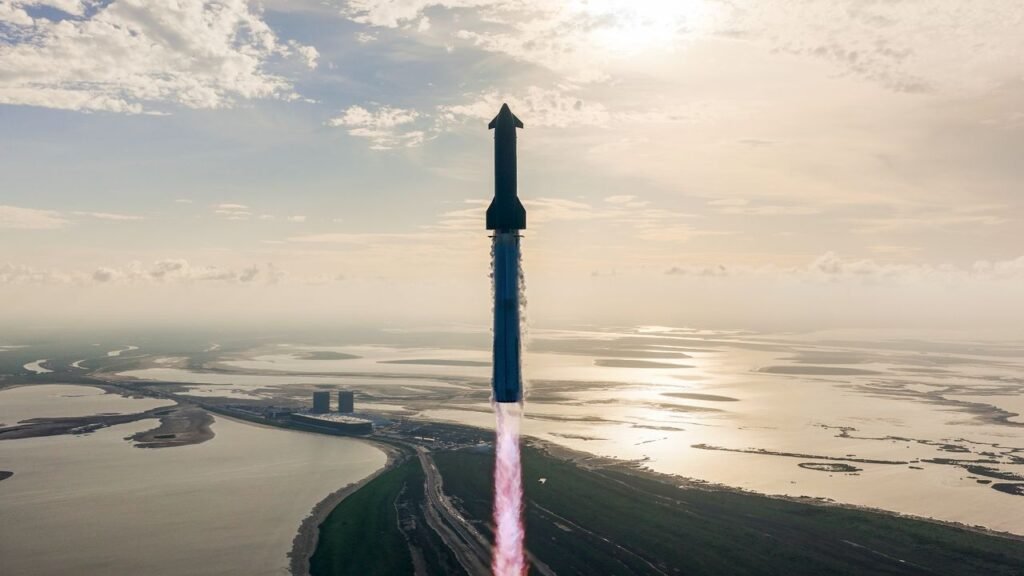
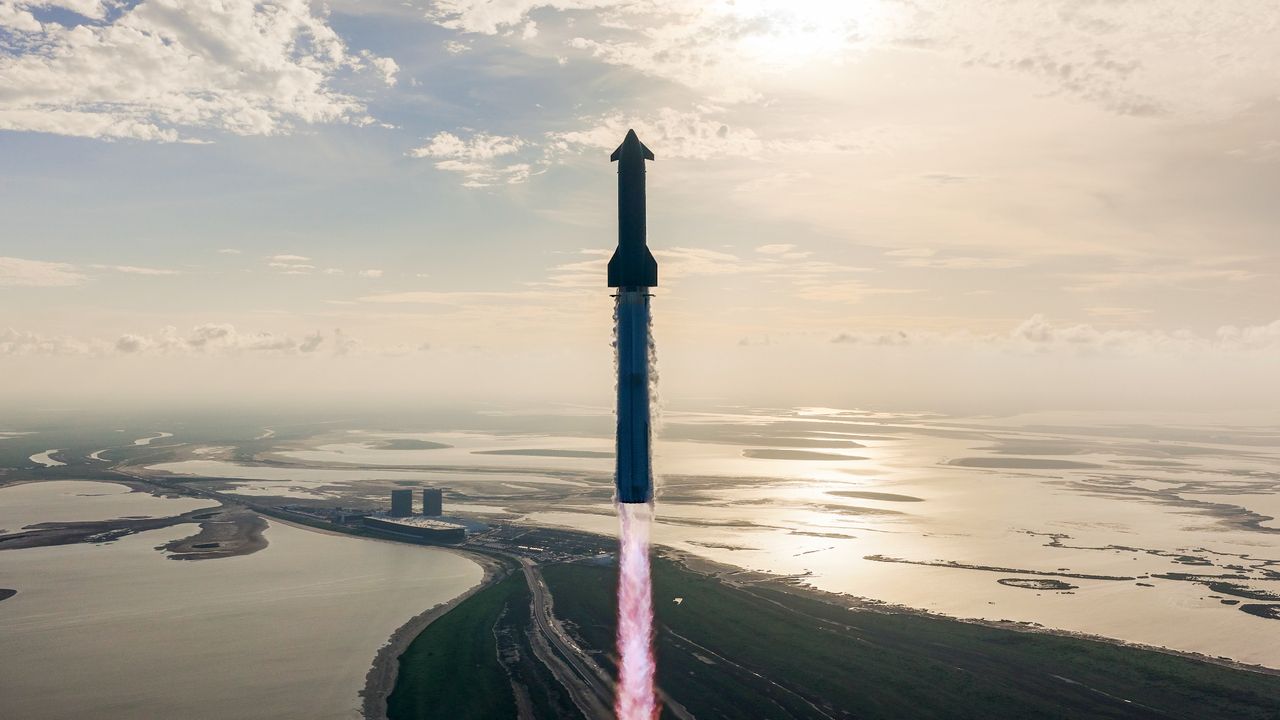
SpaceX’s Starship program dominated discussions with a series of triumphant test flights that validated its potential as a game-changer for deep-space travel. The vehicle completed multiple integrated launches, each pushing the envelope on reusability and payload capacity. By year’s end, over two dozen flights had occurred since 2023, with 2025 marking the debut of operational configurations aimed at lunar missions.
These successes addressed previous challenges, including rapid prototyping and anomaly resolutions during ascent phases. The program’s progress aligned closely with NASA’s Artemis goals, positioning Starship as a key enabler for crewed returns to the Moon. Teams at launch sites in Texas and Florida optimized infrastructure, from massive launch towers to recovery barges at sea. Observers noted how these flights not only broke altitude records but also gathered invaluable data on orbital refueling techniques essential for Mars-bound journeys.
Deep Space Probes and Celestial Surprises
Astrophysicists celebrated the detection and study of interstellar comet 3I/ATLAS, which streaked through our solar system and sparked debates on interstellar object interception. As it approached its closest point to Earth, scientists mobilized telescopes worldwide to analyze its composition, revealing insights into distant stellar nurseries. The comet’s rapid outbound trajectory prompted proposals for swift spacecraft pursuits to capture trailing samples before it vanished forever.
Meanwhile, comet Lemmon (C/2025 A6) provided another spectacle, passing near the Sun and offering a rare view of solar interactions. Ground-based observatories and space telescopes captured detailed spectra, advancing models of cometary evolution. These events enriched astrophysical databases, informing theories on the origins of water and organic molecules in our own solar system. Researchers emphasized the urgency of developing faster response missions for such transient visitors.
Crewed Missions and Station Advancements
NASA’s preparations for the Artemis II mission reached a crescendo with the full stacking of the Space Launch System rocket at Kennedy Space Center. This step signaled readiness for the first crewed lunar flyby since Apollo, involving astronauts from multiple nations. Ground crews meticulously integrated components, from solid rocket boosters to the Orion spacecraft, ensuring structural integrity for the high-stakes voyage.
On the International Space Station, Expedition 74 crew members conducted experiments on human physiology in microgravity, focusing on brain adaptation and cardiovascular effects. These studies supported long-duration mission planning, with findings published in real-time to guide crew health protocols. Additionally, the Polylingual Experimental Terminal demonstrated seamless network switching between government and commercial satellites, enhancing communication reliability for future outposts.
- Private sector lunar landing by Firefly Aerospace marked a commercial first.
- Starship achieved 22 integrated flight tests, advancing reusability.
- Interstellar comet 3I/ATLAS inspired interception mission concepts.
- Artemis II SLS rocket stacking completed, targeting 2026 launch.
- ISS research on microgravity effects yielded key health insights.
- Blue Origin’s New Glenn rocket prepared for inaugural flight.
- NASA’s Space Apps Challenge highlighted global innovation in space tech.
- Leadership transitions at major agencies streamlined policy directions.
- Comet Lemmon observations refined solar system formation theories.
- Crew-12 mission planning advanced international collaboration.
Key Takeaways
- 2025 accelerated private-public partnerships, reducing costs and risks in spaceflight.
- Technological breakthroughs like Starship’s tests expanded access to deep space.
- Celestial events such as comets drove urgent advancements in observational tools.
As 2025 drew to a close, these milestones collectively reinforced spaceflight’s role in unlocking astrophysical mysteries and fostering global unity. The year’s progress not only expanded our reach beyond Earth but also inspired a new generation of explorers. What aspect of 2025’s space achievements excites you most? Share your thoughts in the comments below.