
Every time we think we’ve got the universe “mostly figured out,” it throws something wild at us. A star that should not exist, a black hole that’s too big for its age, a galaxy that formed way too early – these discoveries don’t just tweak our theories, they sometimes shred them. That’s the unsettling, thrilling part of modern astronomy: the sky is not quietly cooperating with our textbooks.
What follows isn’t just a list of pretty things in space. These are 15 very real celestial objects that make scientists sit up, stare at the data again, and ask: “Wait… how?” Some break the rules we thought were solid, others stretch them so far we’re forced to rewrite the rulebook. Let’s walk through them one by one – not as distant curiosities, but as cosmic clues that something deep about reality is still missing from our story.
1. Sagittarius A*: The Quiet Monster at the Heart of the Milky Way
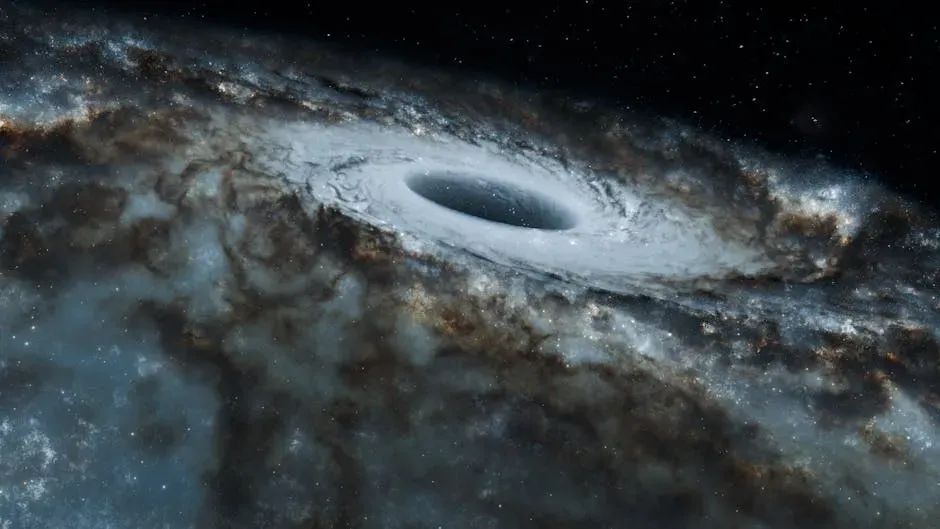
Right at the center of our galaxy lurks Sagittarius A*, a supermassive black hole containing about a few million times the mass of our Sun, squeezed into a region smaller than our solar system. For decades, astronomers watched nearby stars whip around an invisible point at breakneck speeds, finally confirming that only a black hole could explain such extreme orbits. In 2022, the Event Horizon Telescope collaboration unveiled the first direct image of its shadow, a fuzzy donut of light warped by gravity in a way that seemed to match Einstein’s relativity almost eerily well.
Here’s the weird part: given how much gas, dust, and stellar debris is swirling around our galactic center, Sagittarius A* is surprisingly faint and underfed. It behaves more like a picky eater than the ravenous monster you’d expect, accreting just enough material to glow, but not enough to shine as brightly as many active galactic nuclei. That mismatch between how massive it is and how quietly it’s behaving forces astronomers to rethink how black holes grow, why some are blazing beacons and others like ours are strangely subdued, and whether we’re catching it in a rare quiet phase or misunderstanding the feeding process itself.
2. TON 618: The Nearly Impossible Ultra-Massive Black Hole
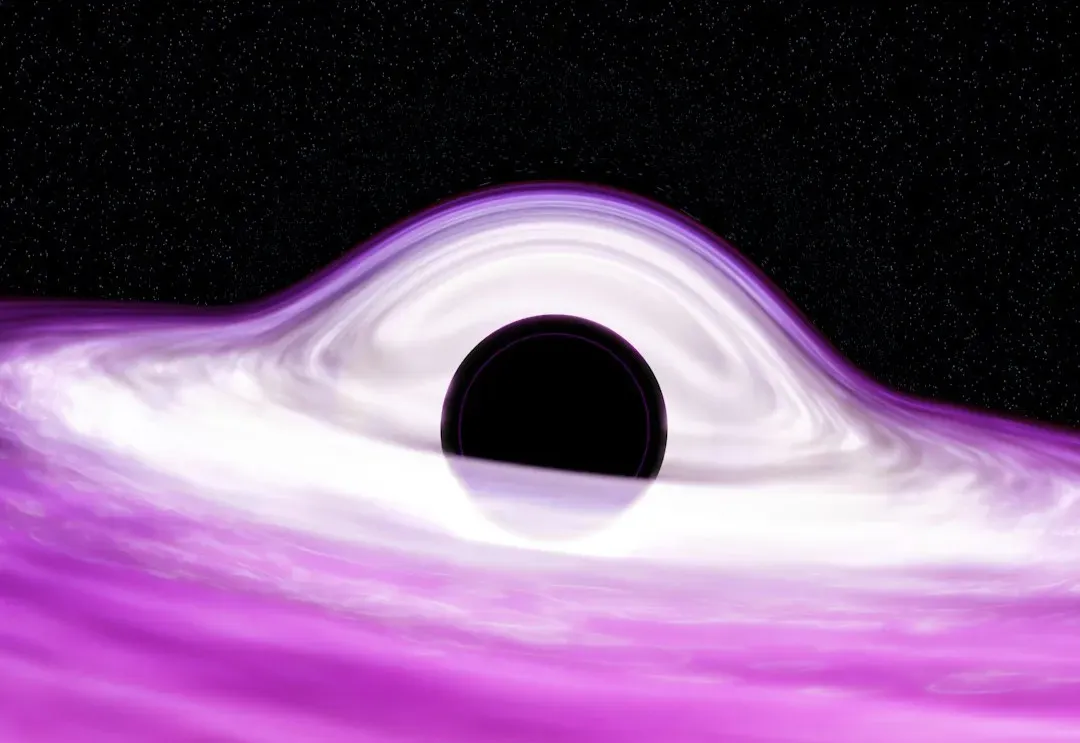
If Sagittarius A* seems big, TON 618 feels almost obscene. This distant quasar hosts one of the most massive black holes known, containing tens of billions of solar masses, shining from more than ten billion light-years away. You’re looking at something that existed when the universe was only a fraction of its current age, yet somehow had already grown into a skyscraper among mountains. Just wrapping your head around that growth in such a short cosmic time frame is like hearing about a newborn baby that somehow already weighs as much as a cruise ship.
The challenge is simple to phrase and hard to solve: how do you build something that big, that fast, without breaking physics? Known growth processes – like gas accretion and black hole mergers – struggle to reach such huge masses so early unless they start from already enormous “seed” black holes or accrete in ways that push, or bend, theoretical limits. TON 618 sits there like a cosmic dare, telling astronomers that something about early black hole formation, the nature of the first stars, or the environment of the young universe is still very wrong or very incomplete in our models.
3. Tabby’s Star (KIC 8462852): The Baffling Flickering Sun
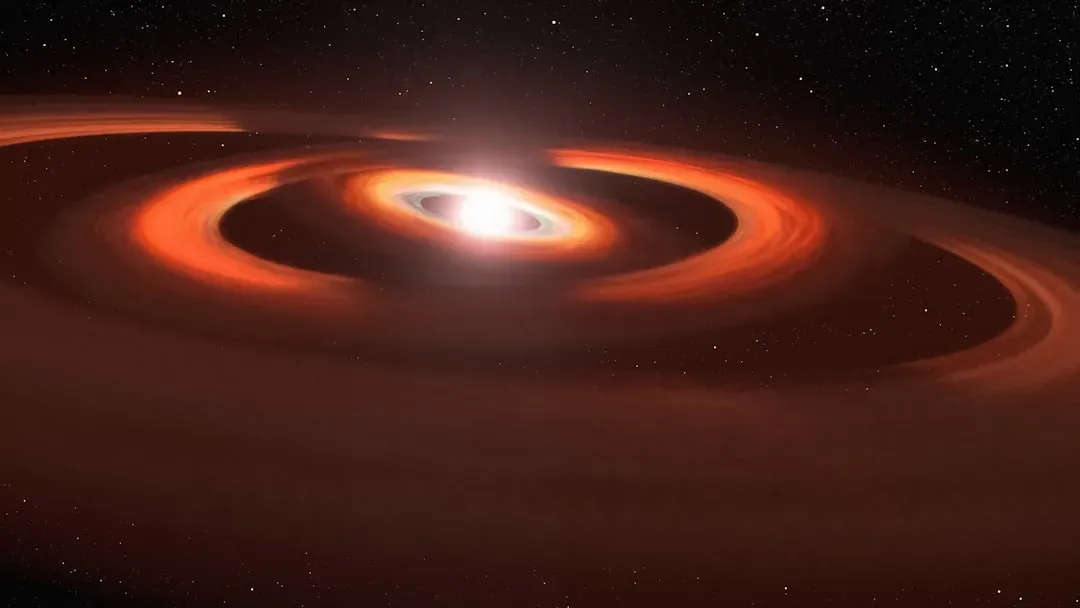
When Tabby’s Star first hit the headlines, people jokingly tossed around the idea of alien megastructures, because the data looked that odd. This otherwise ordinary-looking star shows wild, irregular dips in brightness – not the neat, repetitive pattern you get from planets passing in front of their host star, but chaotic, sometimes deep dimmings that don’t match the usual suspects. It doesn’t follow a simple rhythm, and some of the drops are so large that entire planets or clouds of debris would be needed to explain them.
Over the years, astronomers have proposed dusty comets, torn-up planetary fragments, and thick clouds of fine dust as possible culprits, and those natural explanations now look far more likely than anything exotic. But even with all that, there’s no single neat answer that fully explains the star’s long-term fading and erratic behavior in every wavelength of light. Tabby’s Star is a reminder that even something as “basic” as a star’s light curve can surprise us, and that we still don’t fully grasp how complex and messy planetary systems, dust, and stellar environments can become over billions of years.
4. Fast Radio Bursts: Millisecond Screams from the Deep Sky
Fast radio bursts, or FRBs, are intense, millisecond-long flashes of radio energy coming from far beyond our galaxy. First noticed in archival data in the early 2000s and then confirmed by multiple radio observatories, they’re so energetic that a single burst can briefly outshine an entire galaxy in radio wavelengths, all in less time than it takes you to blink. Some FRBs repeat, firing off bursts again and again from the same spot; others flash once and vanish, never to be seen again.
We now know at least some FRBs are linked to magnetars – neutron stars with magnetic fields so intense they almost defy imagination – based on a burst detected from within our own galaxy. Still, that’s not the end of the story. The range of energies, repetition patterns, and environments we’ve seen suggests FRBs might come from multiple types of sources, or from processes we don’t fully understand in extreme magnetic fields. They’ve even become tools to probe the “missing” matter in the universe, but their chaotic, varied nature keeps hinting that we’re just scratching the surface of what’s really going on in those distant explosions.
5. The Oumuamua Mystery: A Visitor that Didn’t Behave
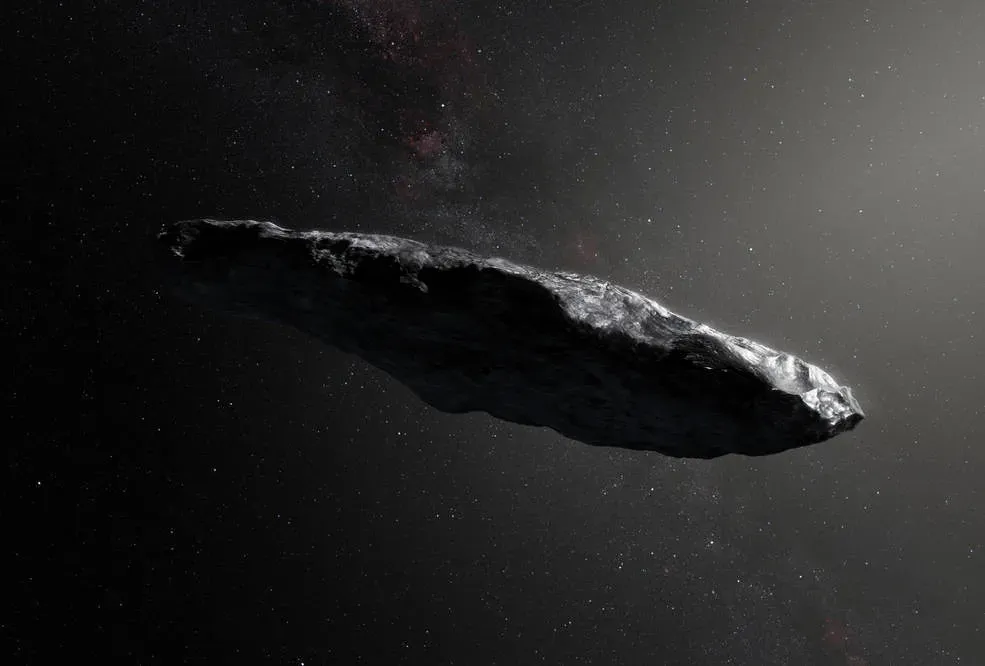
In 2017, astronomers spotted something passing through our solar system on a trajectory that made one thing clear: it came from outside. This interstellar object, dubbed Oumuamua, sped in, swung around the Sun, and shot back out into deep space, never to return. Its brightness changes suggested a stretched, elongated shape, and its motion showed a slight but measurable push that couldn’t be explained by gravity alone, as if some extra force was gently nudging it.
For a while, speculation ran wild, including imaginative thoughts about alien spacecraft or artificial origins, but more grounded explanations gradually emerged. The leading ideas now involve natural outgassing from exotic ices or unusual compositions that don’t create the typical fuzzy comet tail we’re used to seeing, combined with a strange, possibly flattened shape. Still, the exact mix of factors that produced its weird behavior isn’t settled, and the fact that we caught such a strange visitor on our very first confirmed interstellar object makes you wonder what else is drifting between the stars that we’ve never seen – or recognized – before.
6. The Bullet Cluster: A Smash-Up That Points at Invisible Matter
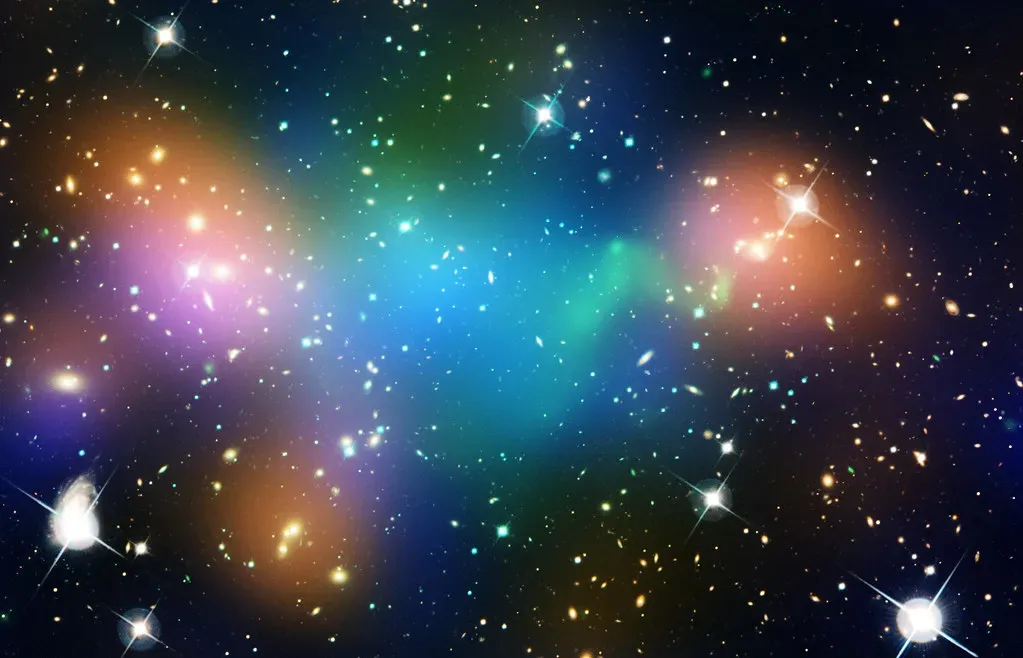
The Bullet Cluster is actually two galaxy clusters that have collided, sending their hot gas slamming through each other like cars in a high-speed crash while their galaxies mostly sailed through. Using X-ray observations and gravitational lensing – the way gravity bends light from more distant galaxies – astronomers mapped where the mass actually lies compared to the visible matter. The result is jarring: most of the mass appears displaced from the glowing hot gas, sitting instead where the galaxies are, suggesting there is a huge amount of invisible stuff not interacting like normal matter.
That invisible component is what we call dark matter, and the Bullet Cluster has become one of the most striking pieces of evidence that it’s real and not just a quirk of how we calculate gravity. Yet, by making the presence of dark matter so blatant, the cluster also deepens the puzzle: we still don’t know what dark matter is made of, why we’ve never detected its particles directly, or how it fits into our fundamental physics. It’s like seeing clear footprints in the snow with no visible creature in sight – the trail is obvious, but the identity of the walker remains maddeningly out of reach.
7. The Hubble Tension: A Universe That Expands at Two Different Speeds
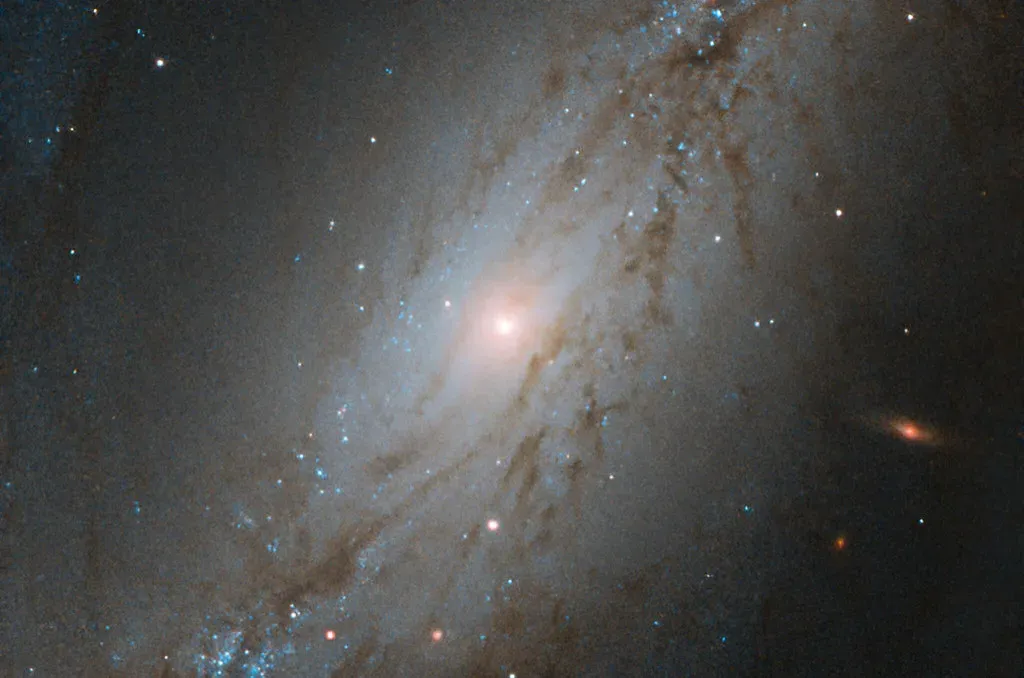
When you ask, “How fast is the universe expanding?” you’d think there’d be one answer. Instead, we have two stubbornly different measurements that refuse to meet in the middle, a problem known as the Hubble tension. One method uses the cosmic microwave background – the afterglow of the Big Bang – to infer the expansion rate based on conditions in the early universe. The other relies on observing relatively nearby objects like supernovae and variable stars to measure how quickly space is stretching today.
Both approaches are precise, and both are done by independent teams using different telescopes and techniques, yet they consistently disagree by more than what simple measurement errors can explain. This mismatch might be our biggest hint that the standard cosmological model is missing a key ingredient, whether that’s an extra form of dark energy, new interactions in the early universe, or something stranger. The Hubble tension turns a single number into a flashing warning sign, telling us that our beautiful, successful model of cosmic history might need a major, uncomfortable upgrade.
8. HD 140283, the Methuselah Star: Older Than the Universe?
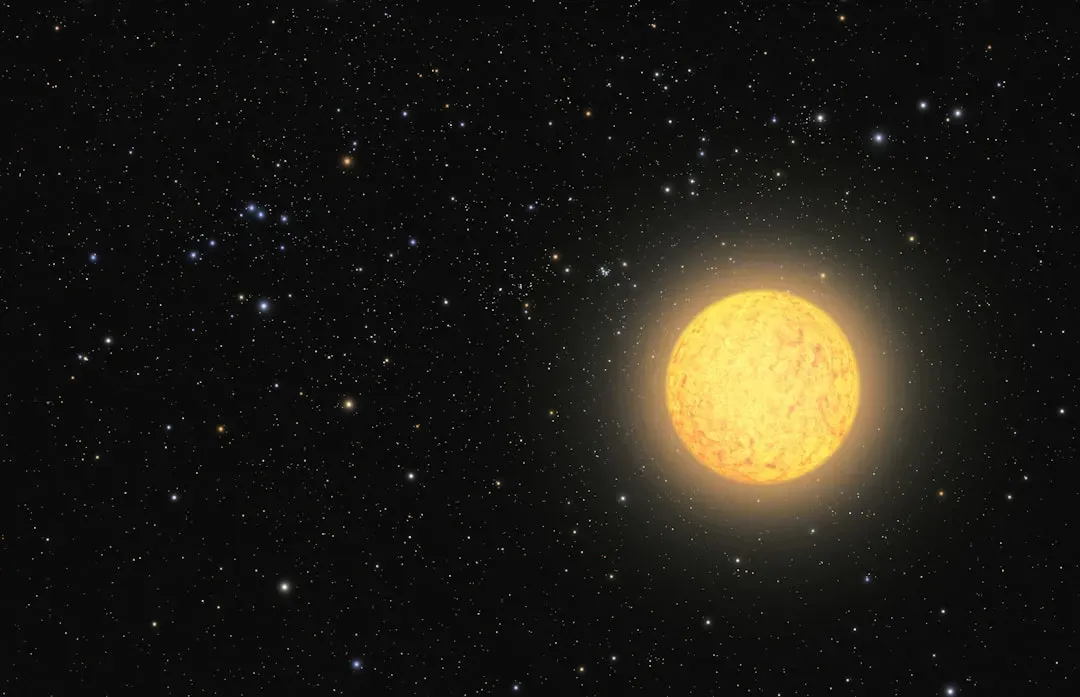
HD 140283, often nicknamed the Methuselah star, is a nearby ancient star that seems almost too old for comfort. By looking at its composition and properties, astronomers estimate it formed not long after the Big Bang, with an age that once appeared to be slightly older than the universe itself as we currently date it. That obvious contradiction forced a closer look at both stellar age modeling and our estimates of the universe’s age, pushing the limits of precision in both fields.
More refined measurements have pulled the star’s age back just enough to be compatible, within errors, with a universe that’s a bit more than thirteen billion years old, but it still lives right near the edge of what seems possible. This star is like a witness from the cosmic dawn, quietly demanding that our theories of stellar evolution, nuclear reactions in stellar cores, and cosmological timelines all line up perfectly. The fact that a single star can strain our entire cosmic chronology shows how tightly interwoven our understanding of small-scale and large-scale physics really is.
9. The Boötes Void: A Giant Hole in the Cosmic Web
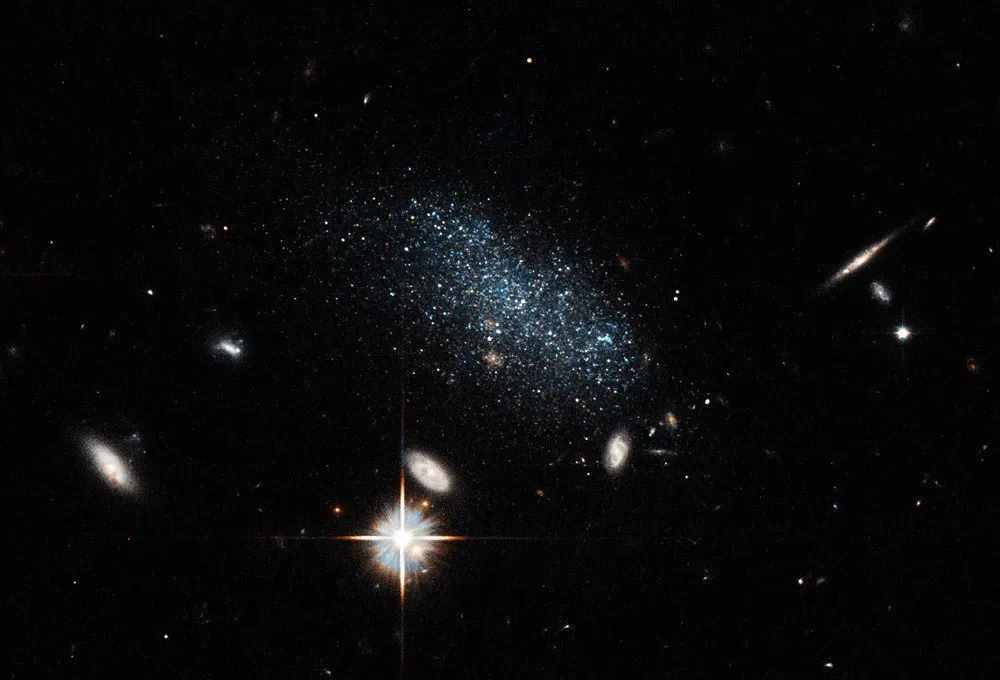
The Boötes Void is a vast, almost eerie region of space with far fewer galaxies than expected, a kind of cosmic desert stretching hundreds of millions of light-years across. If you picture the universe as a three-dimensional web of filaments and clusters, this void is like a gigantic missing chunk, where the usual structure thins out dramatically. For something so large, you’d instinctively expect it to be filled with at least a typical number of galaxies, but it instead looks strikingly empty.
Voids themselves aren’t rare – they’re a natural part of how matter clumps under gravity over time – but the sheer size and degree of emptiness of the Boötes Void raise interesting questions about how such a structure could have formed. It pushes cosmological simulations to reproduce something similar, testing whether our models of dark matter, dark energy, and initial fluctuations in the early universe are really on the right track. Standing back, it’s hard not to see it as a tangible reminder that most of the universe, even on the grandest scales, is defined as much by emptiness as by what’s actually there.
10. GRB 221009A: The Brightest Gamma-Ray Burst Ever Seen
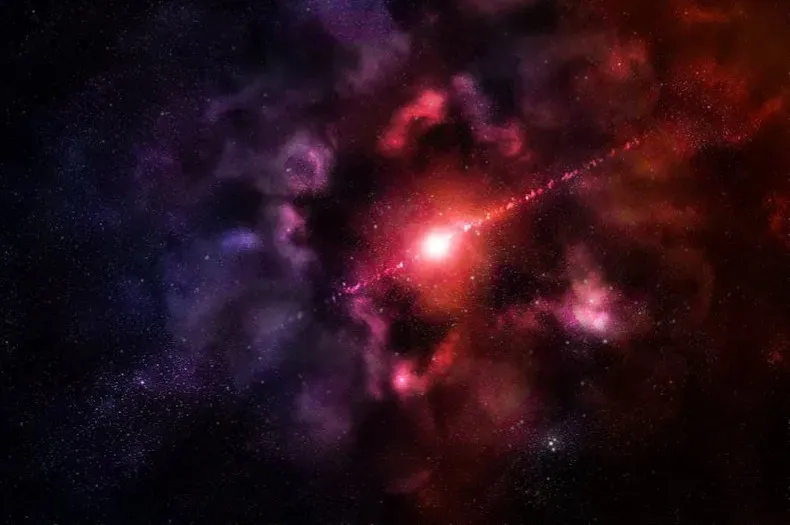
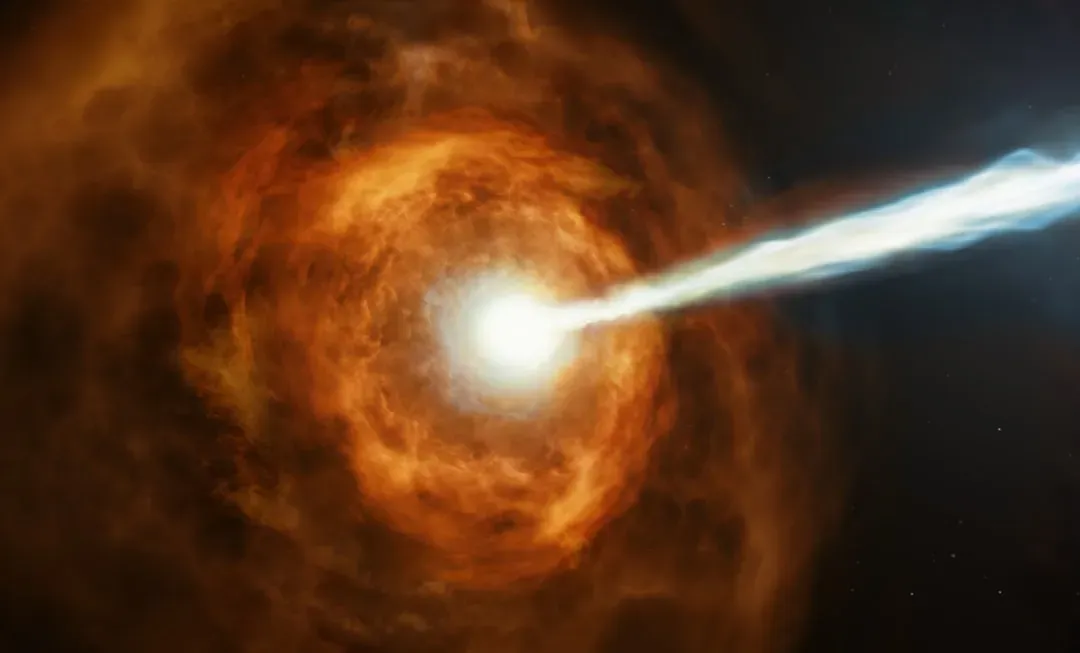
In 2022, telescopes across the world and in orbit detected a gamma-ray burst so powerful it was quickly dubbed the brightest of all time in our recorded history. Designated GRB 221009A, it came from a galaxy billions of light-years away, yet it was still so intense that it temporarily saturated multiple gamma-ray detectors. Gamma-ray bursts are thought to arise from the deaths of massive stars or the mergers of compact objects, releasing staggering amounts of energy in very narrow jets pointed almost directly at us.
This particular burst wasn’t just another powerful event to log and forget; its extreme brightness tests our understanding of how such jets are launched, how they interact with surrounding material, and what kind of progenitor star could produce such a monster. It also gave astronomers an unprecedented opportunity to study the impact of such energetic photons on Earth’s upper atmosphere and to examine the intervening space between us and the source. GRB 221009A is like a cosmic floodlight, temporarily illuminating both the life cycle of massive stars and the transparent, nearly invisible material that fills the void between galaxies.
11. The Great Attractor and Laniakea: A Hidden Gravitational Pull
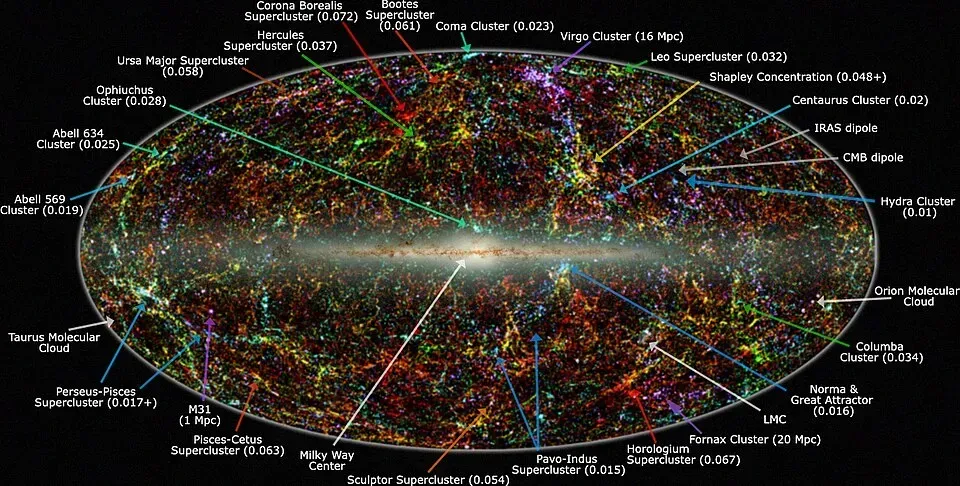
When astronomers map the motions of galaxies in our cosmic neighborhood, they see something odd: many of them, including our Milky Way, are drifting in a particular direction, as if being drawn toward a region of space called the Great Attractor. The trouble is that this area lies mostly behind the dense disk of our own galaxy, making it hard to observe directly in visible light. For years, this hidden gravitational influence was a kind of cosmic rumor, inferred from motions rather than clearly imaged structures.
More recent work has shown that the Great Attractor appears to be part of an even larger arrangement called the Laniakea Supercluster, a vast basin of attraction containing tens of thousands of galaxies. Yet despite these advances, the precise distribution of mass – visible and dark – responsible for the flows we observe is still not fully pinned down. It’s a bit like feeling a strong current under your feet in a murky river; you know there’s something powerful down there guiding your motion, but you’re still piecing together the shape of the submerged landscape that makes the water run that way.
12. Dark Energy: The Invisible Hand Accelerating the Cosmos
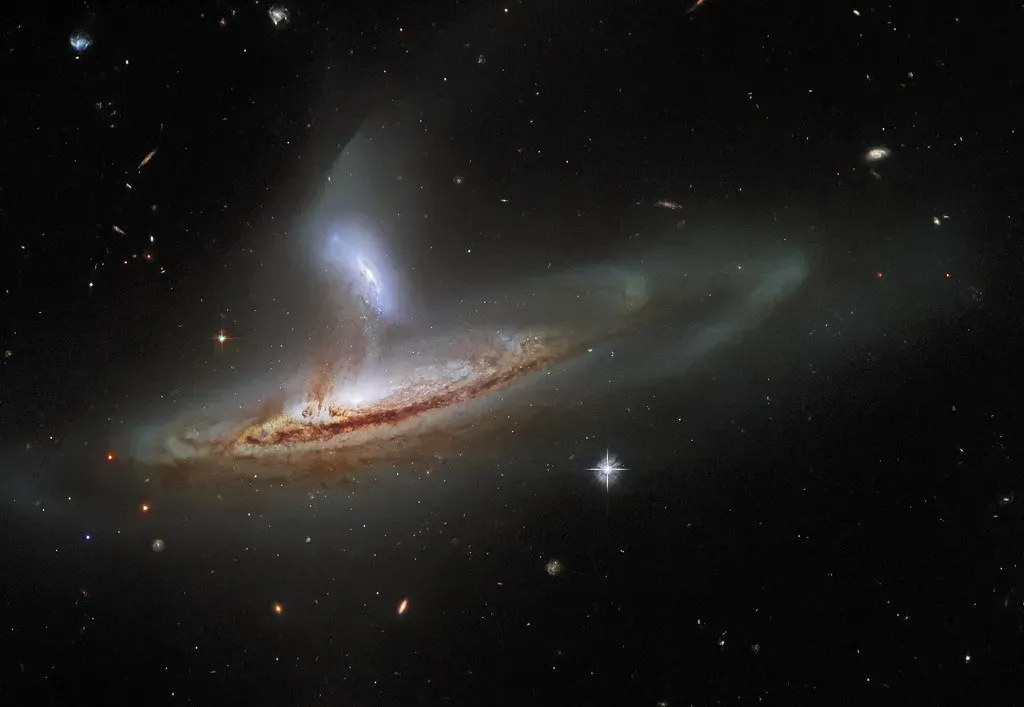
In the late nineteen-nineties, observations of distant supernovae revealed something completely unexpected: the expansion of the universe isn’t slowing down under gravity, it’s speeding up. To account for this, cosmologists invoked dark energy, a mysterious form of energy permeating space that drives accelerated expansion. Today, dark energy is thought to make up roughly about two thirds of the total energy content of the universe, dominating the cosmic budget despite being utterly invisible and elusive.
We can describe dark energy mathematically, treat it as a property of space itself, and see its fingerprints in precise measurements of cosmic structure and the cosmic microwave background. But describing is not the same as understanding. We don’t know what dark energy actually is, why its density has the value it does, or whether it’s truly constant in time or slowly evolving. It’s a bit like living in a house where most of the support beams are hidden behind walls: you know they’re holding everything up, yet you have almost no idea what they look like or how they were built.
13. Rogue Planets: Worlds Adrift Between the Stars
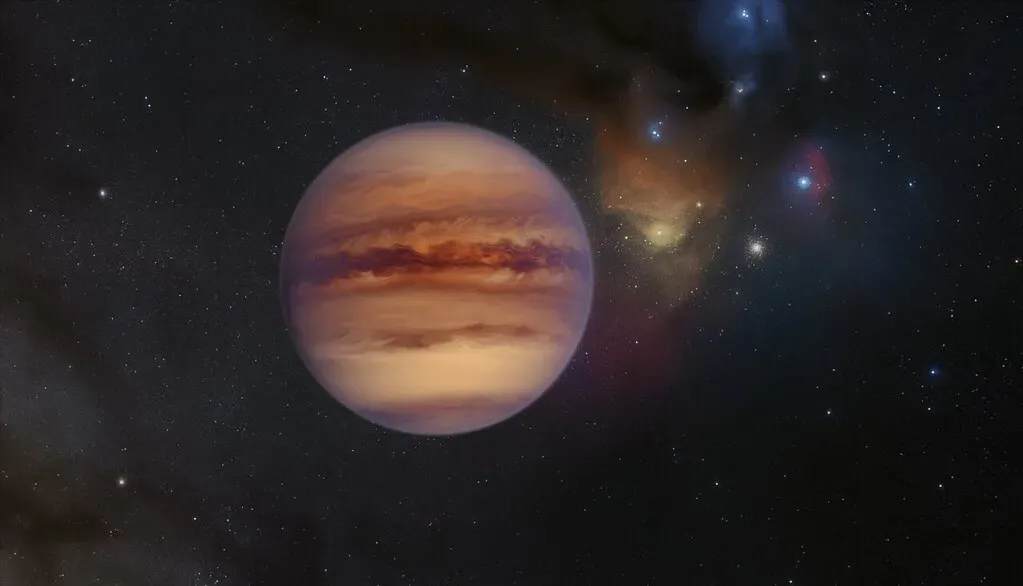
Not all planets have the decency to orbit a star. Rogue planets wander through interstellar space, untethered, likely ejected from their original systems during violent gravitational encounters or never bound to a star in the first place. Recent surveys using gravitational microlensing and powerful infrared telescopes suggest there may be a staggering number of these lonely worlds in our galaxy, possibly comparable to or even exceeding the number of stars.
These cosmic orphans challenge our ideas of what a “planet” really is and how planetary systems evolve over time. Some might retain internal heat or thick insulating atmospheres that keep subsurface oceans liquid, sparking questions about exotic forms of habitability far from any sunshine. The very fact that we’re only now starting to count them, and mostly through indirect means, hints at how incomplete our inventory of even nearby mass in the galaxy still is. If the night sky looks sparse to our eyes, the reality beneath that darkness might be a crowded sea of unseen, drifting worlds.
14. Ultra-Diffuse Galaxies: Ghost Cities of Stars
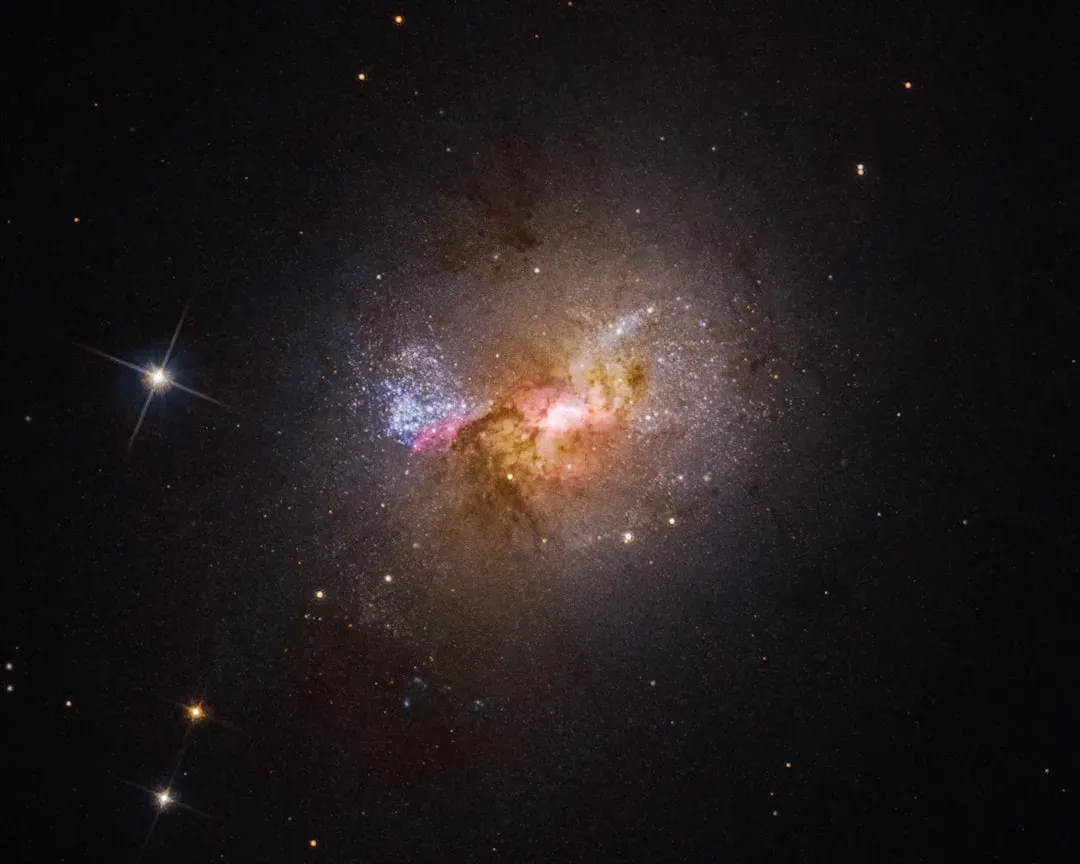
Ultra-diffuse galaxies are sprawling systems with sizes comparable to the Milky Way but only a tiny fraction of its stars, so faint that they can be hard to spot even when they’re reasonably close by. Some seem to be held together mainly by dark matter, with very few visible stars sprinkled across an enormous volume, like a ghost town spread thin over a huge plain. Others have sparked controversy by appearing to have surprisingly little dark matter, defying expectations about how galaxies stay bound.
These galaxies don’t fit neatly into our standard picture of galaxy formation, where mass, light, and dark matter typically track together in more predictable ways. Their existence forces theorists to consider more extreme histories involving tidal stripping, violent encounters, and unusual star formation processes that end very early. They’re like the strange outliers in a dataset that you’re tempted to ignore, but that often end up pointing toward the missing piece in your theory. By figuring out why these ghostly galaxies look and behave the way they do, we stand to learn a lot about how normal galaxies come to be.
15. The First Galaxies Seen by JWST: Too Big, Too Early?
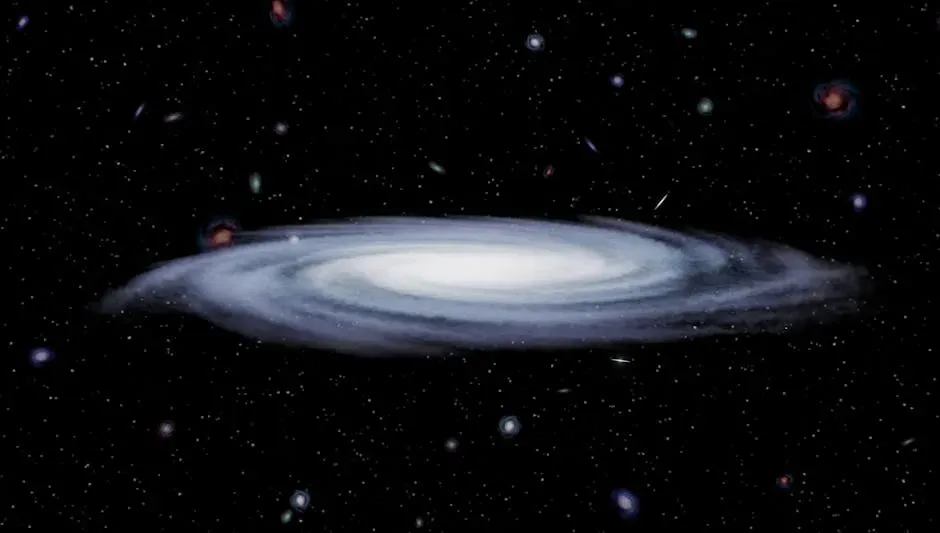
When the James Webb Space Telescope began peering deep into the early universe, it quickly found what appeared to be surprisingly massive, bright galaxies existing far sooner after the Big Bang than many models had predicted. Some of these candidates, observed when the universe was just a few hundred million years old, seemed to contain more stars and structure than our simulations comfortably allow at such a young age. It’s like walking into a kindergarten classroom and finding fully functioning skyscrapers already built on the playground.
As observations have improved, and distances and masses have been refined, some of the initial shock has softened, but the overall trend still pushes the limits of our understanding of early star formation, gas cooling, and the buildup of structure. These galaxies force astronomers to revisit assumptions about how quickly gas can collapse, how efficiently it can form stars, and how feedback from those stars and black holes shapes their growth. The early universe is turning out to be busier and more mature than expected, and each new deep-field image from JWST feels less like a confirmation and more like a fresh challenge thrown at our best theories.
Conclusion: A Universe That Refuses to Sit Still on the Page
Looking across these 15 objects and phenomena, a pattern pops out: the universe keeps hitting the edges of our models and politely, or not so politely, pushing past them. From overgrown black holes and strangely behaved stars to hidden gravitational pulls and oddly early galaxies, each of these cases exposes a crack in what we thought was settled knowledge. Instead of a tidy, completed puzzle, we’re staring at an image with whole regions still smudged, distorted, or flat-out missing.
For me, that’s the best part. Every time the cosmos breaks our favorite theory, it’s handing us a clue that the next, deeper layer of reality is still out there to be uncovered. Maybe the biggest mistake we can make is assuming we’re close to done. When you look up at the night sky, do you see familiar constellations – or the next surprise waiting to rewrite the story?