You probably grew up hearing that the deepest parts of the ocean were mostly empty, too dark, too cold, and far too pressurized for anything but a few weird microbes to survive. Over the last decade, that idea has quietly fallen apart. As new submersibles and deep-sea robots started dropping into the hadal zone, you began to see a very different picture: crowded communities, strange predators, delicate protists clinging to rock walls, and fishes thriving at pressures that would crush a submarine from just a generation ago. In the span of only a few years, scientists went from hoping to spot a lonely shrimp on the seafloor to being overwhelmed by entire ecosystems in places no one thought could sustain that much life. When you look trench by trench, you see the same pattern repeat: unexpected abundance, unique adaptations to pressure, and forms of life that seem to have reinvented how to be an animal, a protist, or even a bacterial community. As you read through these 14 trenches, you can almost feel your old mental map of the ocean being torn up and redrawn in real time.
1. Mariana Trench: Hard-Substrate “Carbon Hotspots” in the Deepest Known Waters
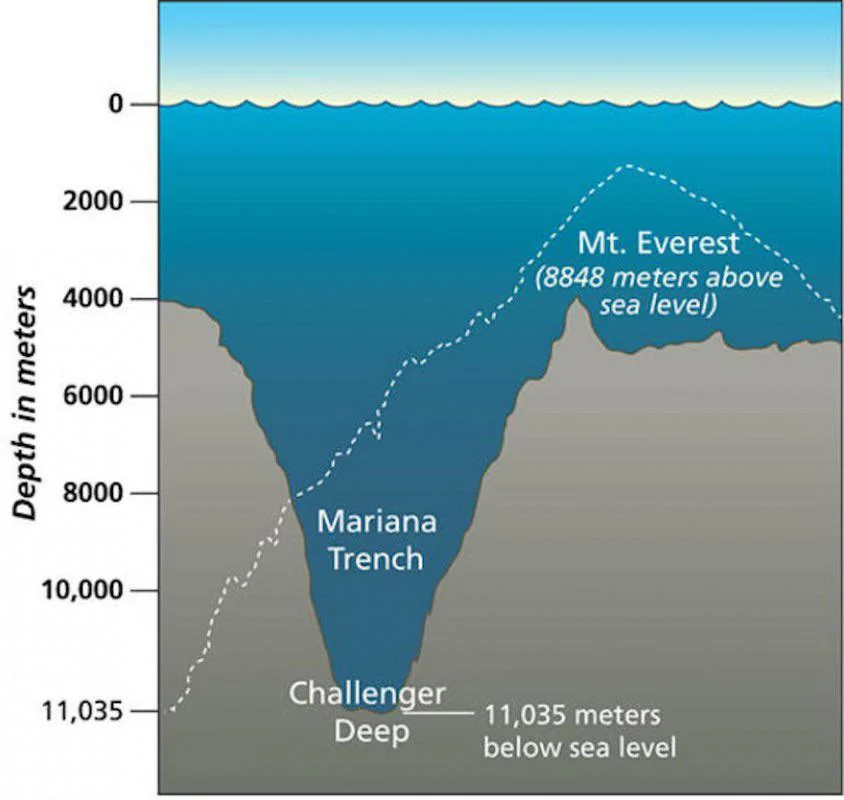
If you could ride a submersible down the Mariana Trench, you might expect soft mud and a few lonely scavengers. Instead, recent dives have shown you something far stranger: hard rock outcrops along the trench walls cloaked in tiny, pressure-adapted communities dominated by protists. These millimeter-scale organisms cling to bare rock at depths approaching nearly eleven kilometers, forming a hidden layer of life that had simply been missed when attention focused only on soft sediments. ([lifescience.net](https://www.lifescience.net/publications/2018854/protist-dominated-hard-substrate-faunas-thrive-at-/?utm_source=openai)) What really flips your expectations is how active these rock-bound micro-communities appear to be. By turning trench walls into “carbon hotspots,” they seem to process organic matter funneled down from above far more intensely than scientists had predicted for such a dark and cold realm. In other words, instead of a dead-end sink, you are looking at a dynamic, pressure-hardened system where eukaryotic life has carved out a niche on every scrap of available rock.
2. Kermadec Trench: Deepest Bryozoans and a Hidden Energy Engine
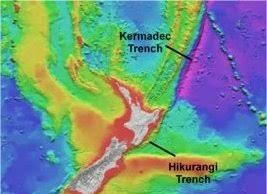
Travel southeast from the Mariana Trench and you hit the Kermadec, another deep Pacific trench that has forced you to rethink how far complex life can go. Recent work using the Chinese submersible Fendouzhe and other platforms revealed that the same kind of rock-dwelling, protist-rich communities thrive here between about nine and nearly eleven kilometers down. Among them, scientists identified a bryozoan lineage that traces back to Cretaceous shallow seas, now living in crushing pressure on trench walls. ([lifescience.net](https://www.lifescience.net/publications/2018854/protist-dominated-hard-substrate-faunas-thrive-at-/?utm_source=openai)) You are also seeing that the Kermadec is not just a biological curiosity; it is a crucial part of the deep ocean’s carbon engine. The V-shaped trench topography funnels falling organic material into its depths, where pressure-adapted microbes and animals rapidly transform and recycle it. That means when you think about global carbon cycling or how the ocean stores carbon, you cannot ignore these high-pressure hot zones anymore; they are quietly doing a big share of the work.
3. Tonga Trench: Layered Scavengers Living at Pressure Limits
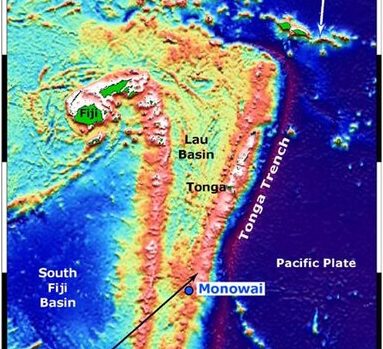
In the Tonga Trench, you discover that even scavengers, which you might think of as generalists, are sliced into depth-based “neighborhoods” by pressure. Studies of scavenging amphipods here show distinct species occupying narrow vertical bands, with some living comfortably at depths that would explode the cells of most shallow-water crustaceans. Each layer hosts animals tuned to a specific combination of pressure, temperature, and food availability. ([sciencedirect.com](https://www.sciencedirect.com/science/article/pii/S0967063705002335?utm_source=openai)) This vertical zoning tells you something important: life is not just pushing into the hadal zone; it is specializing there. Instead of one tough species ruling the deep, you have multiple pressure-adapted lineages carving up the trench like a high-rise apartment building where each floor demands a different body plan and biochemical toolkit. That level of fine-tuned adaptation is exactly what many scientists did not expect to see so clearly in such an extreme, remote environment.
4. Atacama Trench (Peru–Chile Trench): Ghostly Snailfish and a New Apex Predator
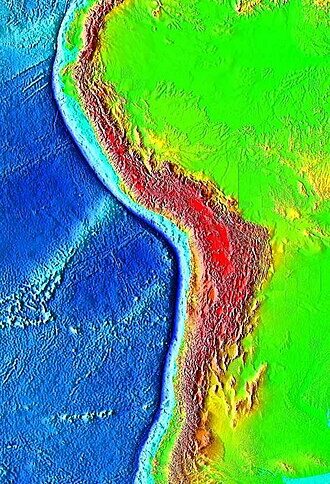
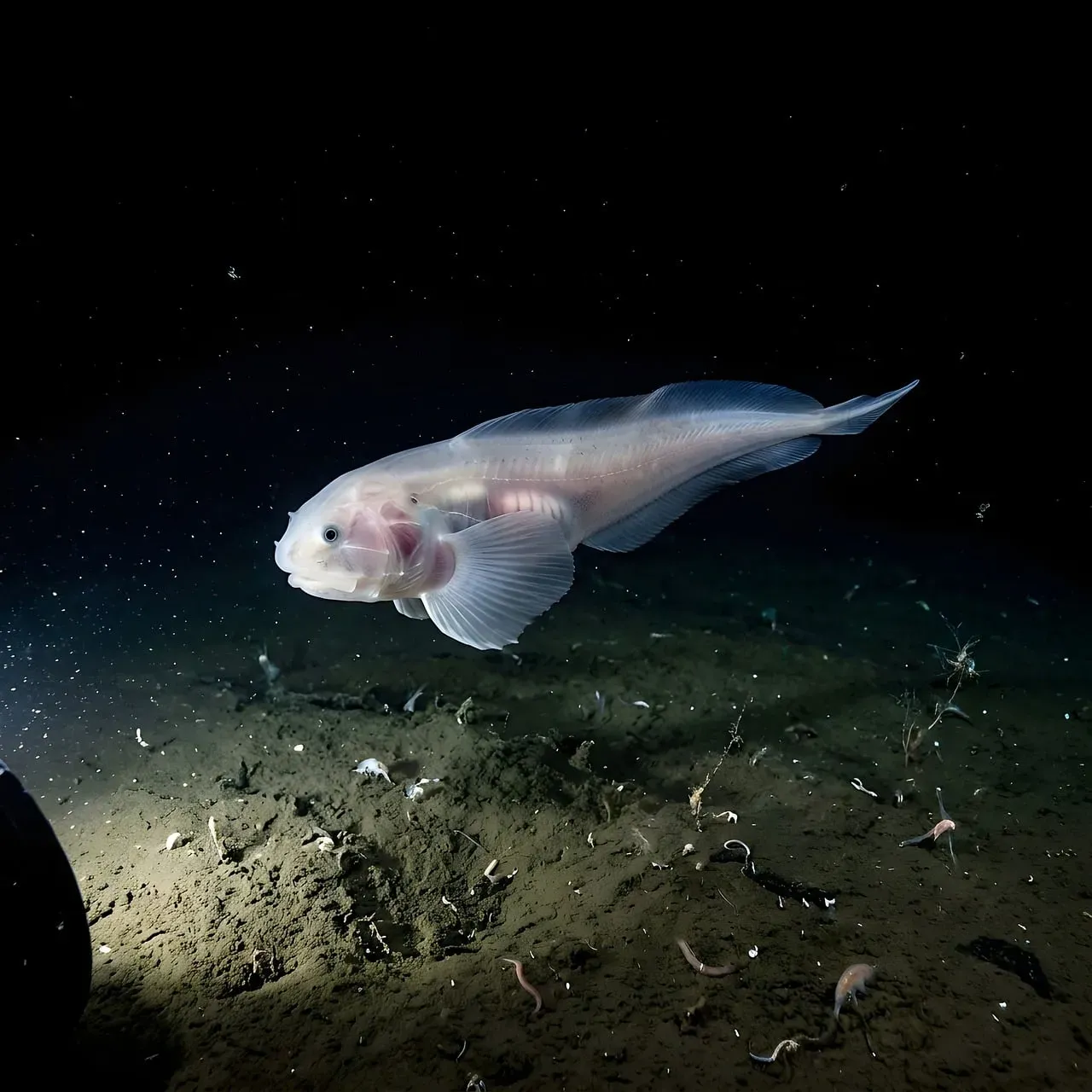
Head to the Atacama Trench off South America and you encounter one of the most dramatic rewrites of deep-sea biology. Here, researchers filmed a pale blue snailfish at more than six and a half kilometers down, a delicate, gelatinous creature that somehow thrives under pressures hundreds of times higher than what you experience at sea level. Instead of being a sluggish oddity, this fish is an active predator, a top player in an ultra-deep food web. ([es.wikipedia.org](https://es.wikipedia.org/wiki/Paraliparis_selti?utm_source=openai)) Then, more recently, you meet something even more startling: a large, previously unknown amphipod nicknamed a “darkness” predator, roaming nearly eight kilometers deep. This crustacean is not a feeble bottom-sifter; it actively hunts other animals in the hadal zone, flipping the script on the idea that extreme pressure forces life into small, slow forms. Together, the blue snailfish and the giant amphipod show you that full-blown predator–prey dynamics are alive and well at depths where older textbooks implied you would find only scraps.
5. Kuril–Kamchatka Trench: Thriving Chemosynthetic Gardens in the Northwest Pacific
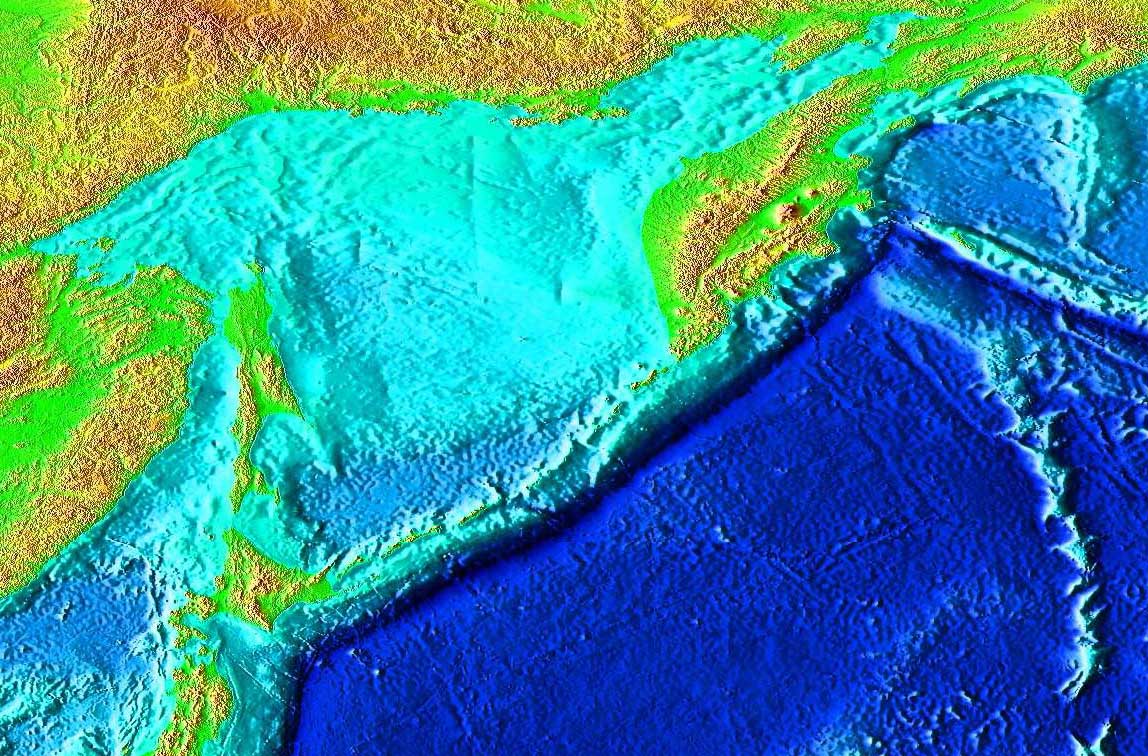
When you picture chemosynthetic ecosystems, you probably imagine mid-ocean hydrothermal vents, not the deepest reaches of long, cold trenches. Yet in the Kuril–Kamchatka Trench, dives around nine and a half kilometers down revealed dense communities of tubeworms, mollusks, and other invertebrates clustered around seeps of methane and hydrogen sulfide. These animals are not relying on sunlight at all; instead, their symbiotic microbes turn chemical energy into food, just like at classic black smokers. ([sdu.dk](https://www.sdu.dk/en/om-sdu/fakulteterne/naturvidenskab/nyheder-2025/deep-chemosynthesis?utm_source=openai)) For you, the shock is twofold. First, these chemosynthetic “gardens” sit in places you once considered beyond the reach of complex ecosystems. Second, they appear relatively extensive, hinting that deep trench systems can host networks of such oases, supporting rich, pressure-adapted life over wide areas. It forces you to see the hadal zone less as scattered, isolated pockets and more as a connected landscape of chemical energy and biological innovation.
6. Aleutian Trench: Unexpected Continuity of Life Along a Cold, Stormy Margin
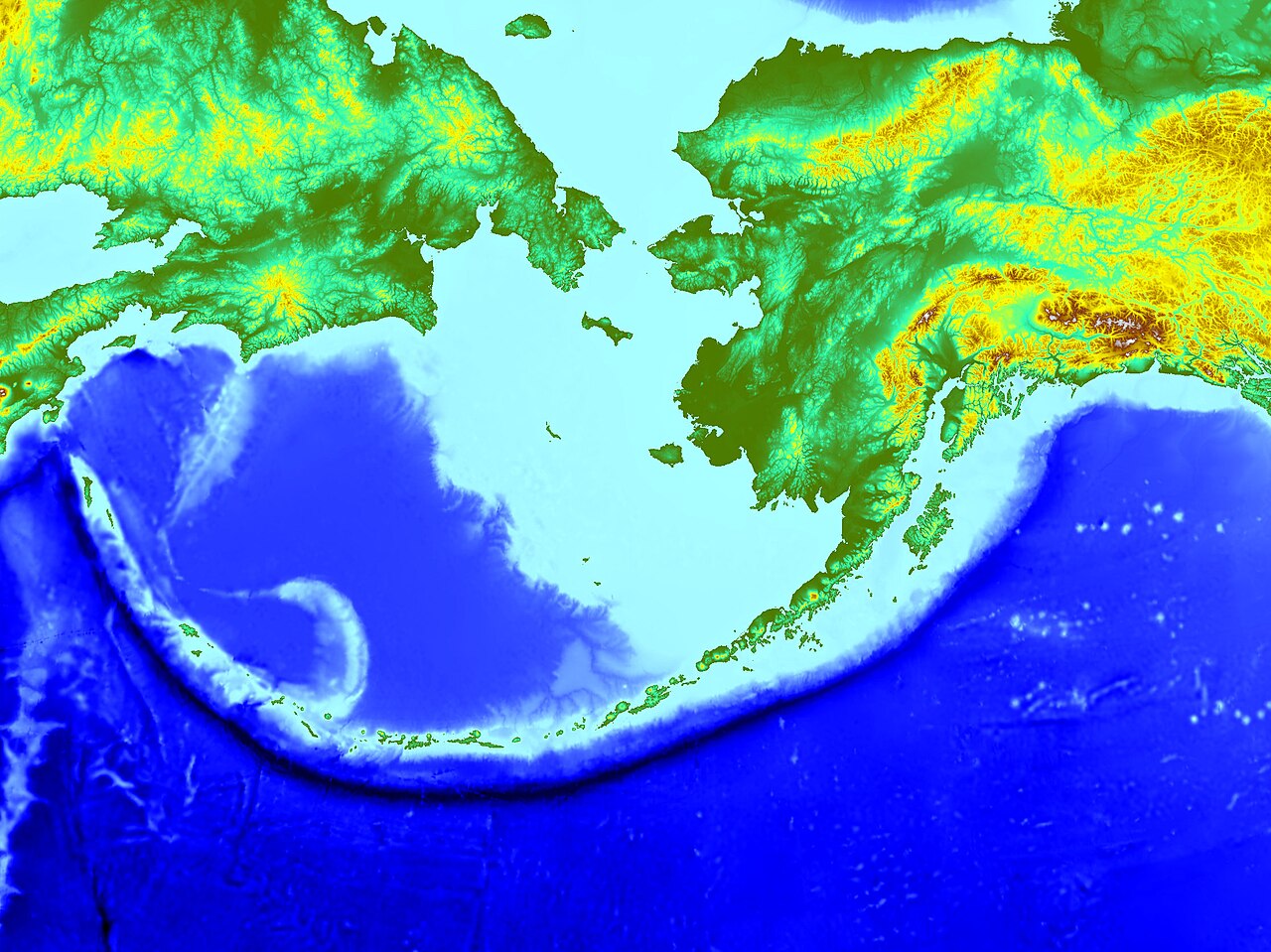
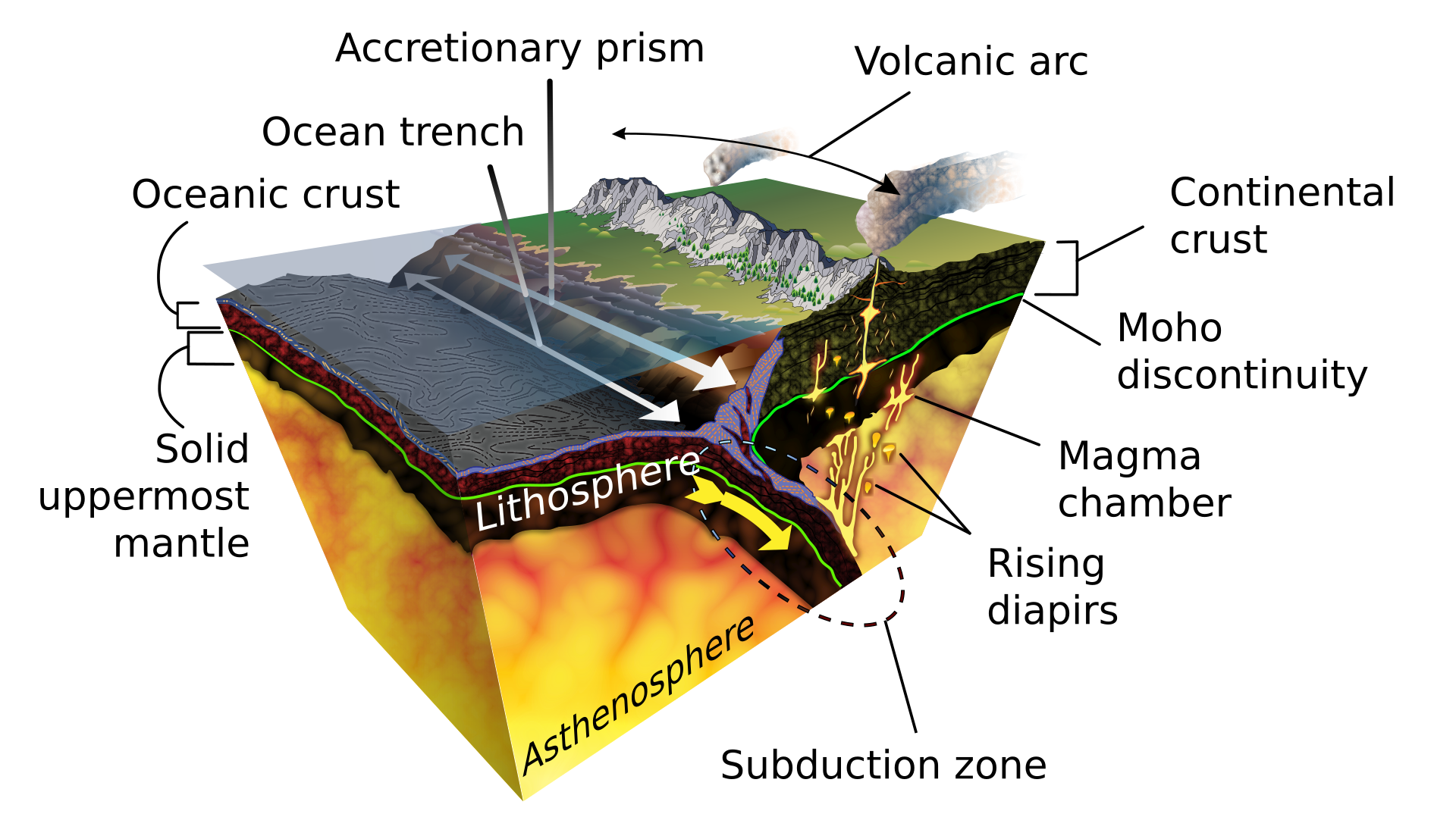
Slide east along the North Pacific and you hit the Aleutian Trench, part of a rugged subduction zone you might associate more with earthquakes than with thriving deep-sea communities. Yet the same expedition that explored the Kuril–Kamchatka system found that the Aleutian Trench also harbors dense chemosynthetic assemblages, including beds of clams and clusters of tubeworms, far deeper than many scientists ever suspected such communities could persist. ([sdu.dk](https://www.sdu.dk/en/om-sdu/fakulteterne/naturvidenskab/nyheder-2025/deep-chemosynthesis?utm_source=openai)) For you, this suggests a continuity of extreme life across thousands of kilometers of trench. Instead of isolated exceptions, you are looking at a broad belt of high-pressure ecosystems tracking the subduction of tectonic plates. The implications are huge: wherever fluids seep out of the seafloor under the right conditions, you can expect pressure-adapted, chemically fueled communities, even if they lie under nearly ten kilometers of crushing water.
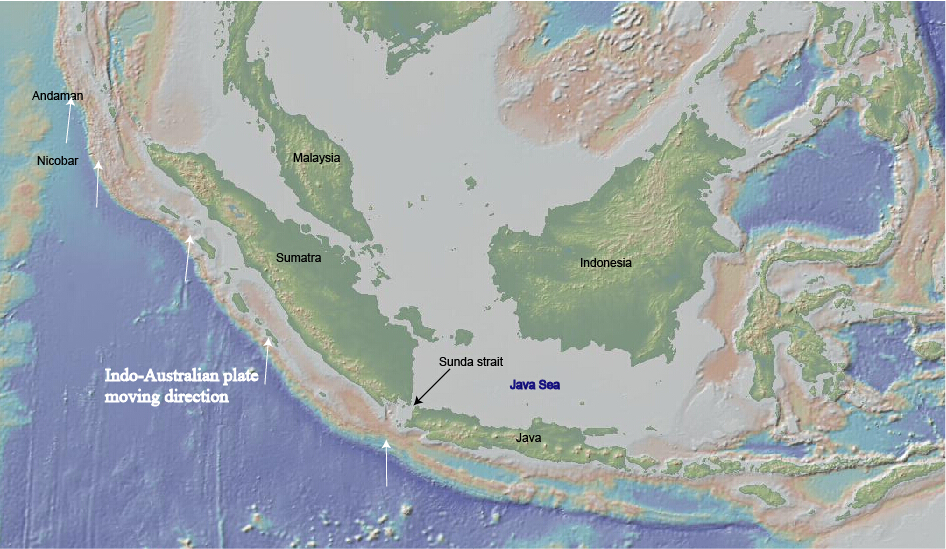
7. Java (Sunda) Trench: A Chemosynthetic Surprise in the Indian Ocean’s Only Hadal Trench
The Java Trench is the Indian Ocean’s lone gateway into true hadal depths, and for a long time, you barely had any images of its seafloor. That changed when deep-rated landers and submersibles finally probed its deepest parts, revealing a patchwork of habitats: soft sediments, scattered rock, and potential cold seeps that support diverse invertebrates, including sea cucumbers, amphipods, and likely chemosynthesis-based communities. ([frontiersin.org](https://www.frontiersin.org/journals/marine-science/articles/10.3389/fmars.2022.856992/full?utm_source=openai)) What stands out to you is not just the biodiversity, but how strongly it is shaped by microhabitats. Where the seafloor is rougher or where fluids seep, you see higher densities and different assemblages, even at similar depths. That pattern tells you that pressure alone does not dictate who can live here; local geology, chemistry, and food supply interact to create niches that pressure-adapted animals and microbes eagerly fill.
8. Java Trench’s “Mystery” Predatory Tunicate: A Floating Trap in the Hadal Dark
One of the most unsettling creatures recorded in the Java Trench in recent years looked at first like a drifting jellyfish, hovering several meters above the bottom at around seven kilometers deep. Closer analysis suggested you were seeing a rare kind of predatory tunicate, a relative of the humble sea squirt, that anchors itself to the seafloor by a thin tether while its balloon-like body hangs above, ready to engulf passing prey. ([reddit.com](https://www.reddit.com/r/Romania_mix/comments/1saoicg/this_mystery_creature_filmed_45_miles_7000m_deep/?utm_source=openai)) For you, this organism is a perfect symbol of pressure-driven innovation. Instead of crawling along the sediment or filter-feeding from a rock, it uses the three-dimensional space of the hadal water column as a hunting ground. Its gelatinous tissues, likely loaded with pressure-tolerant proteins and flexible membranes, turn the crushing depths into an advantage: few things can swim fast down here, so a “hanging trap” becomes a brilliantly efficient way to feed.
9. Puerto Rico Trench: A North Atlantic Outlier With Its Own Microbial and Nematode Signature
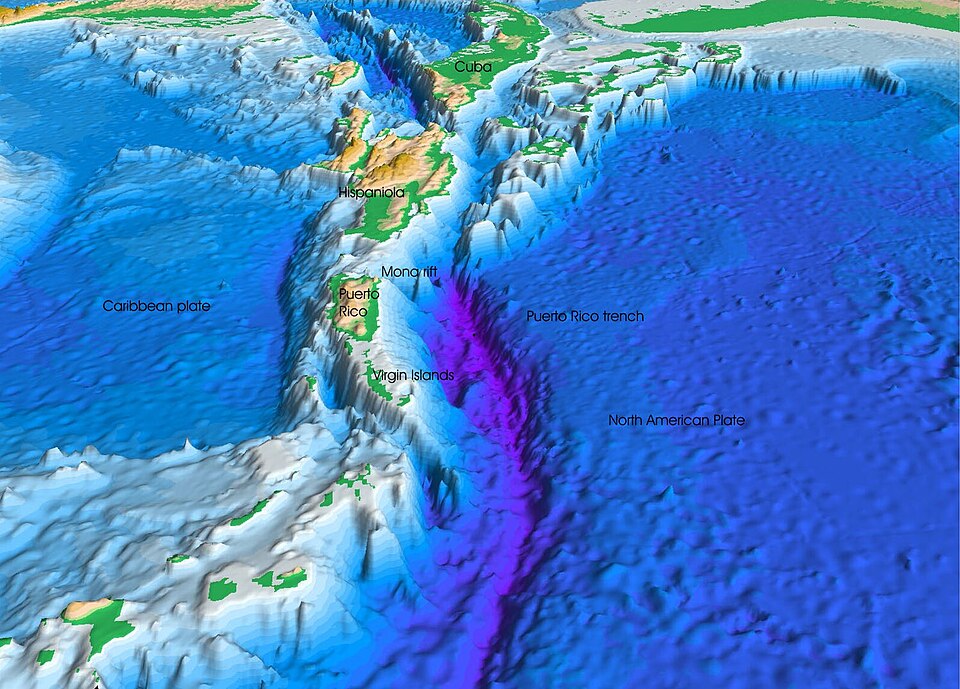
When you think about hadal trenches, your mind might jump to the Pacific, but the Puerto Rico Trench quietly holds the title of deepest point in the Atlantic. Recent surveys of its sediments and tiny infauna revealed nematode communities that form their own distinct cluster compared with other trenches like Kermadec, Tonga, Atacama, and South Sandwich. That means when you zoom into microscopic life, the Puerto Rico Trench looks like a world unto itself. ([sciencedirect.com](https://www.sciencedirect.com/science/article/abs/pii/S0967063716300206?utm_source=openai)) Microbial and meiofaunal studies here show you how strongly regional oceanography and organic matter supply shape pressure-adapted life. Even though the physics of depth and pressure should be similar between trenches, the species you find in the Puerto Rico Trench differ significantly from their Pacific cousins. That tells you that evolution is not just solving a single “high pressure” problem; it is solving it over and over in different ways, leaving unique genetic and ecological fingerprints.
10. Atacama Trench Microbes: Pressure-Loving Decomposers Feasting on Sinking Carbon
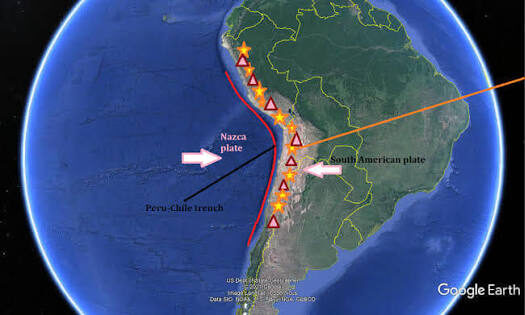
If you zoom even further in within the Atacama Trench, you find microbial communities that are not just tolerating high pressure, but actually performing best under it. Sediments rich in organic matter support dense bacterial and archaeal populations that help degrade sinking carbon from the highly productive surface waters off Chile and Peru. In some cases, lab experiments have shown that certain hadal microbes grow faster or metabolize more efficiently when you recreate trench pressures. ([pmc.ncbi.nlm.nih.gov](https://pmc.ncbi.nlm.nih.gov/articles/PMC8454626/?utm_source=openai)) For you, that flips a common assumption on its head. Instead of pressure being a purely negative stressor, it becomes a defining feature these microbes are built around. Their enzymes, membranes, and DNA-repair systems all appear tuned for depths that would instantly kill most surface organisms. As a result, trenches like Atacama act as powerful biological reactors, turning the constant rain of organic particles into new biomass even in almost absolute darkness.
11. South Sandwich Trench: Cold, Remote, and Surprisingly Rich in Tiny Life
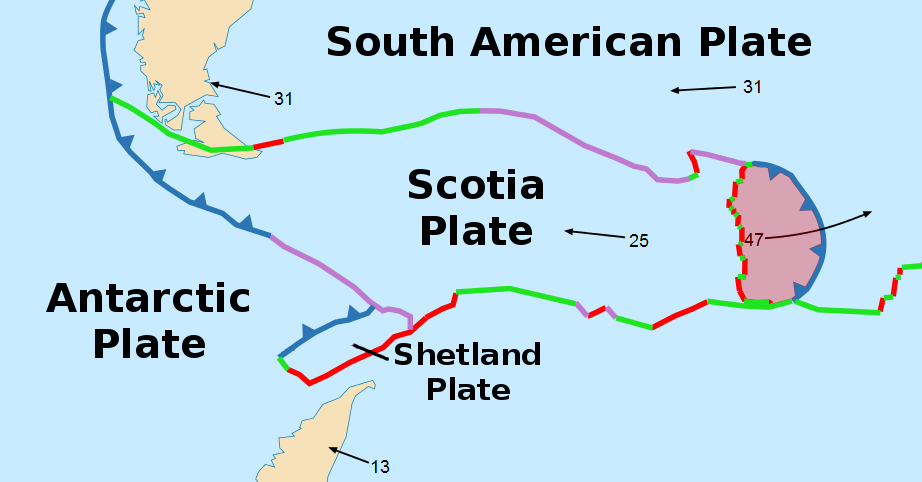
Far in the South Atlantic near Antarctica, the South Sandwich Trench sits in frigid, storm-fed waters that you might assume would starve deep communities of food. Yet detailed sampling of sediments and meiofauna has revealed rich nematode and microbial assemblages here too, with their own distinct composition when you compare them to other trenches worldwide. Even at these polar margins, pressure-adapted life has found ways to exploit whatever organic material trickles down. ([sciencedirect.com](https://www.sciencedirect.com/science/article/abs/pii/S0967063716300206?utm_source=openai)) This challenges your sense of where “extreme” really starts and ends. The South Sandwich system combines intense cold, high pressure, and variable food input, yet still hosts complex and structured communities. For global models of deep-sea ecology, that means you cannot simply write off polar trenches as barren; they are active players in how the planet processes carbon and maintains biodiversity at the edge of what seems physically possible.
12. New Hebrides and Neighboring Trenches: Snailfish Pushing the Depth Envelope
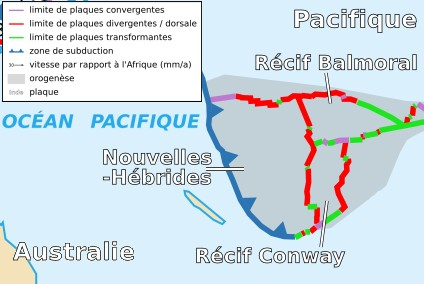
Work across multiple Pacific trenches, including the New Hebrides and nearby systems, has highlighted one animal group that seems almost built for high pressure: the hadal snailfishes. When you encounter them on camera, they look fragile, nearly translucent, and almost toy-like compared with robust shallow-water fish. But genetically and physiologically, they carry unique adaptations – such as altered osmolytes and membrane chemistry – that let their cells function effectively at depths well past six kilometers. ([pmc.ncbi.nlm.nih.gov](https://pmc.ncbi.nlm.nih.gov/articles/PMC8454626/?utm_source=openai)) For you, their success is startling because larger vertebrates were once thought to be largely excluded from the deepest trenches. Instead, snailfishes have repeatedly evolved to exploit hadal niches, often dominating the vertebrate fauna at these depths. They remind you that evolution does not simply stop at some arbitrary pressure threshold; given enough time and the right pathways, even bony fish can turn the crushing dark into their preferred home.
13. Diamantina Fracture Zone and Other Ultra-Deep Features: Beyond Classic Trenches
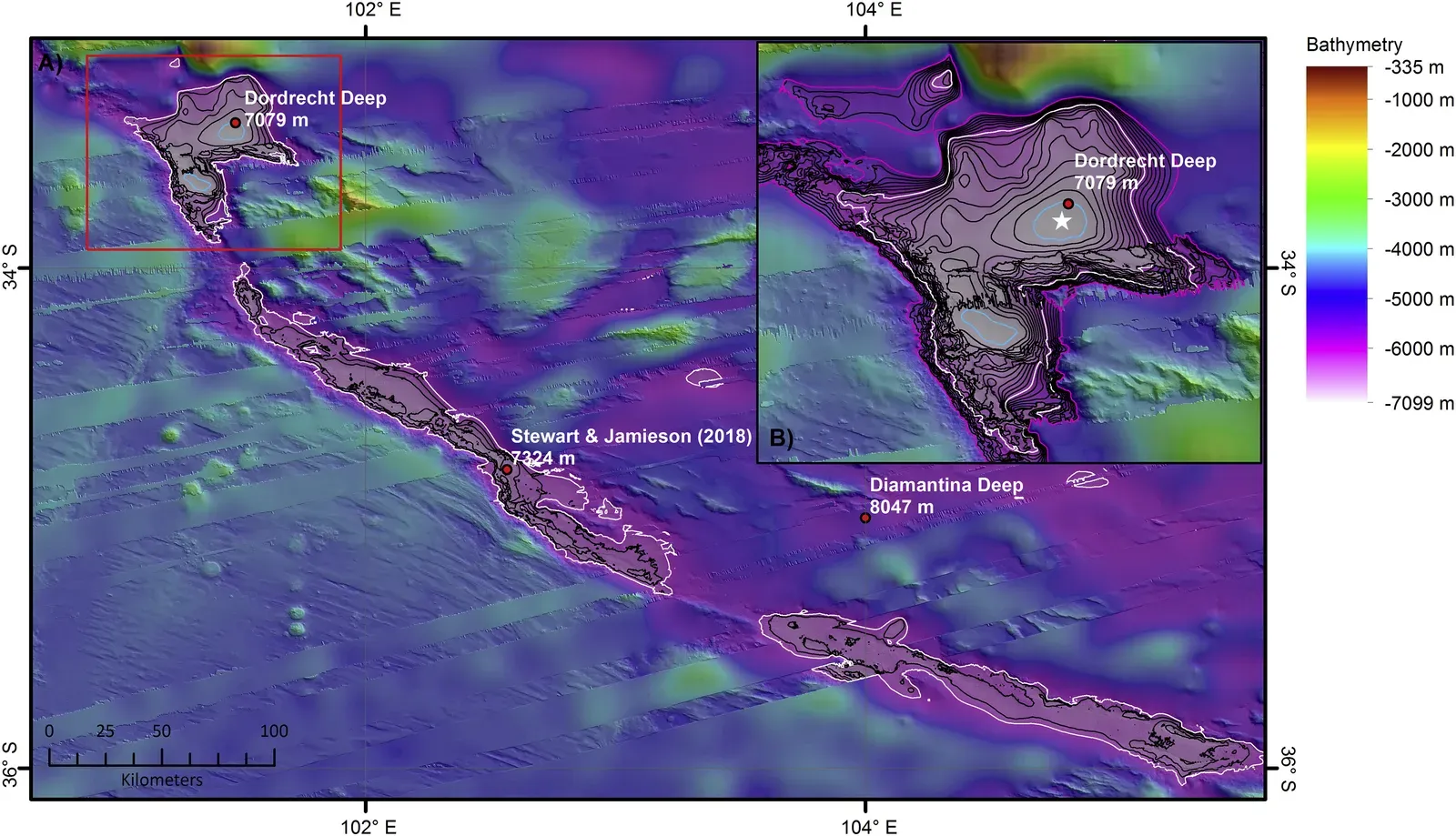
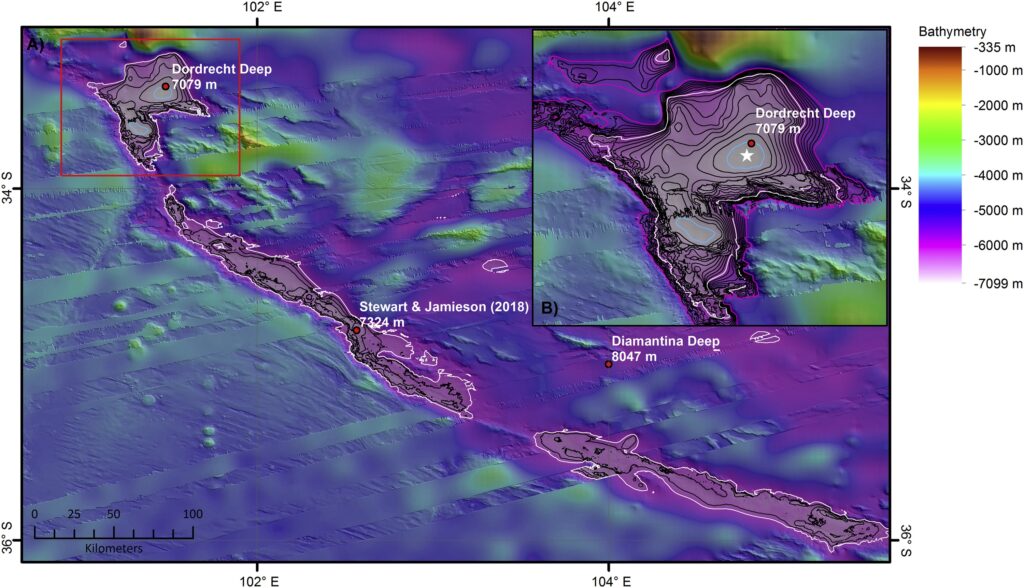
Over the last decade, robotic campaigns have also pushed into ultra-deep fracture zones and non-traditional “trenches,” such as the Diamantina Fracture Zone in the Indian Ocean region. While not always reaching quite the same depths as the Mariana, these features still pierce far into the hadal range and host communities you did not anticipate seeing outside classic arc-trenches: amphipods, holothurians, and complex microbial mats thriving along steep rocky slopes and sediment pockets. ([theses.ncl.ac.uk](https://theses.ncl.ac.uk/jspui/bitstream/10443/5406/1/Weston%20Johanna%20E-Copy.pdf?utm_source=openai)) For you, these findings expand the map of where to look for pressure-adapted life. It is no longer just the long, bow-shaped subduction trenches that matter, but any deep structural depression capable of funnelling organic matter and fluids into high-pressure environments. That means the area of seafloor available to hadal-style life is bigger than early estimates suggested, and there are likely more surprises waiting in other deep fracture zones that have barely been visited.
14. Global Picture: Trenches as a Patchwork of Pressure-Driven Ecosystems
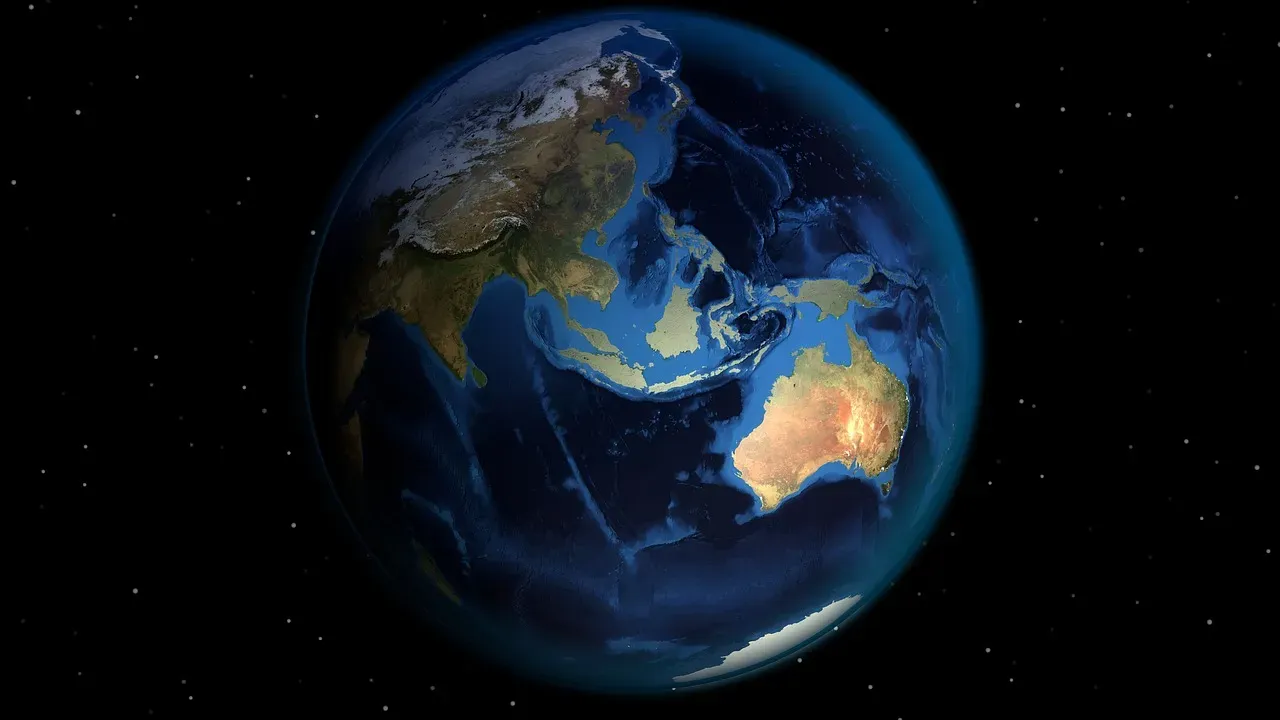
When you step back from individual trenches and look at the global picture, a pattern emerges that is both humbling and exhilarating. Across the Pacific, Atlantic, and Indian oceans, you see repeated themes: pressure-loving microbes, vertically stratified scavengers, specialized fishes, chemosynthetic oases, and rock-clinging protists turning bare walls into living carpets. Each trench has its own flavor, but all share the same basic story: life does not just endure pressure; it reshapes itself around it. ([pubs.usgs.gov](https://pubs.usgs.gov/publication/70170921?utm_source=openai)) For you, the next decade will probably deepen that picture even further as more crewed submersibles and long-lived landers venture into unvisited depths. The biggest shift is not just the tally of new species, but the way these discoveries force you to reconsider where habitable space exists on Earth – and, by extension, on other worlds with deep oceans. When you realize that thriving ecosystems can exist in places once written off as sterile, you have to ask yourself: how much of the planet’s living story have you still not seen?
Conclusion: Rethinking Life at the Limits
If you started this journey picturing the deep ocean trenches as silent graveyards, you probably see them very differently now. From predator amphipods stalking the Atacama depths to rock-bound protists carpeting the walls of the Mariana and Kermadec, the hadal zone has emerged as a mosaic of pressure-adapted ecosystems that routinely defy your expectations. These communities show you that evolution is far more inventive under extreme pressure than many scientists dared to imagine even a decade ago. As new technologies keep pushing the boundaries of exploration, you are likely to witness even stranger forms of life pulled from the dark: new chemistries, new body plans, and new ways of turning crushing force into opportunity. In a sense, every trench dive is a reminder that the map of life on Earth is still wildly incomplete, especially in the deepest blue. When you think about what might still be living out there in the unvisited folds of the ocean floor, what do you imagine you will discover next?