The Appalachian Mountains look soft from a distance – those blue ridges, misty hollows, and sleepy small towns tucked into the folds. But once you step under the trees, the mountains change character fast. This is not a tame landscape. It’s one of the wildest, most densely forested regions in the eastern United States, and some of the continent’s most dangerous animals are quietly living just a few steps off the trail.
“Deadly” in Appalachia almost never looks like a movie-style ambush. It looks like a snake you did not see, a black shape you got too close to for a selfie, a spider in a forgotten boot, or a tick the size of a sesame seed. Most of these creatures want absolutely nothing to do with you. But if you surprise them, ignore warning signs, or treat the woods like a theme park, the mountains will remind you how small you are. Let’s walk through fourteen of the most dangerous animals hiding in the Appalachians right now – and how they actually threaten people who wander into their world.
1. American Black Bear – The Unpredictable Heavyweight
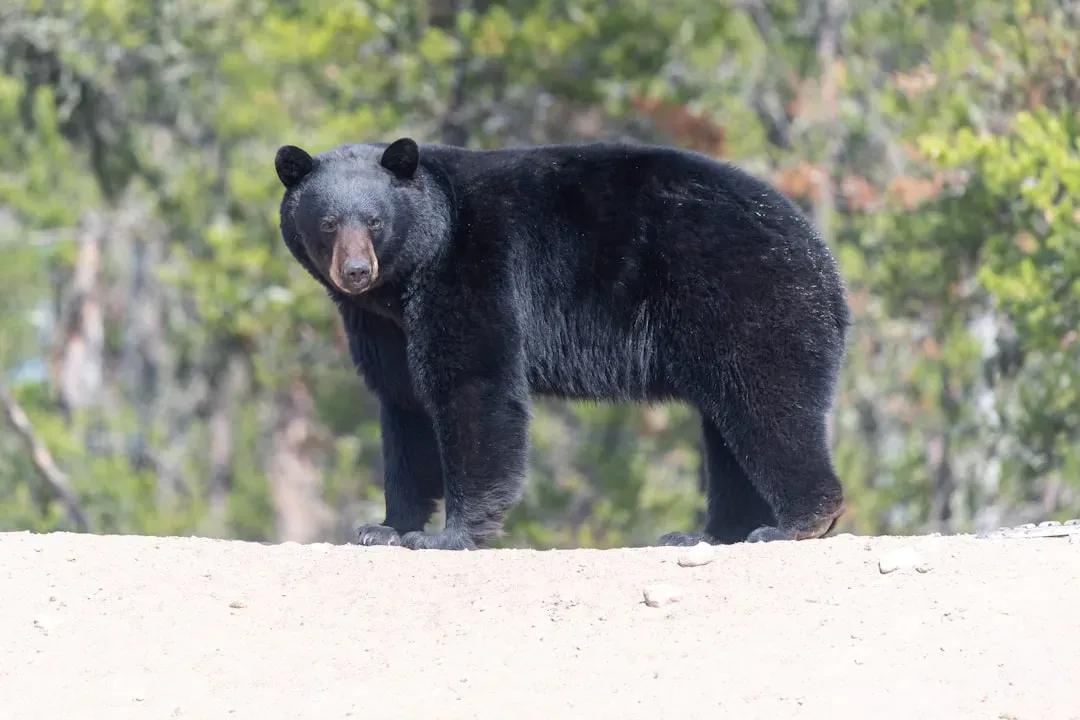
American black bears are the undisputed icons of Appalachian wildlife, roaming everywhere from Georgia’s Chattahoochee forests up through the Smokies and Shenandoah and into New England. They are powerful, fast, and capable of doing serious damage in seconds, even though fatal encounters are rare compared with how often hikers actually see them. The danger with black bears comes from their unpredictability: a bear that seems calm while browsing berries can turn defensive if it thinks you’re a threat to its cubs or its food. In some high-use parks, bears have learned that humans mean easy calories, which can make them bolder and more willing to approach campsites or vehicles.
Most close calls happen when people behave like bears are props instead of wild animals – trying to get closer for photos, leaving food out, or feeding them “just once.” A single bad encounter can end with injuries to people and the bear being killed as a “problem animal,” which is lose–lose all around. The real “deadliness” here is a combination of raw strength and human carelessness. Keep distance, store food properly, back away slowly if a bear notices you, and you turn a terrifying encounter into a memorable story instead of a headline.
2. Timber Rattlesnake – The Coiled Warning
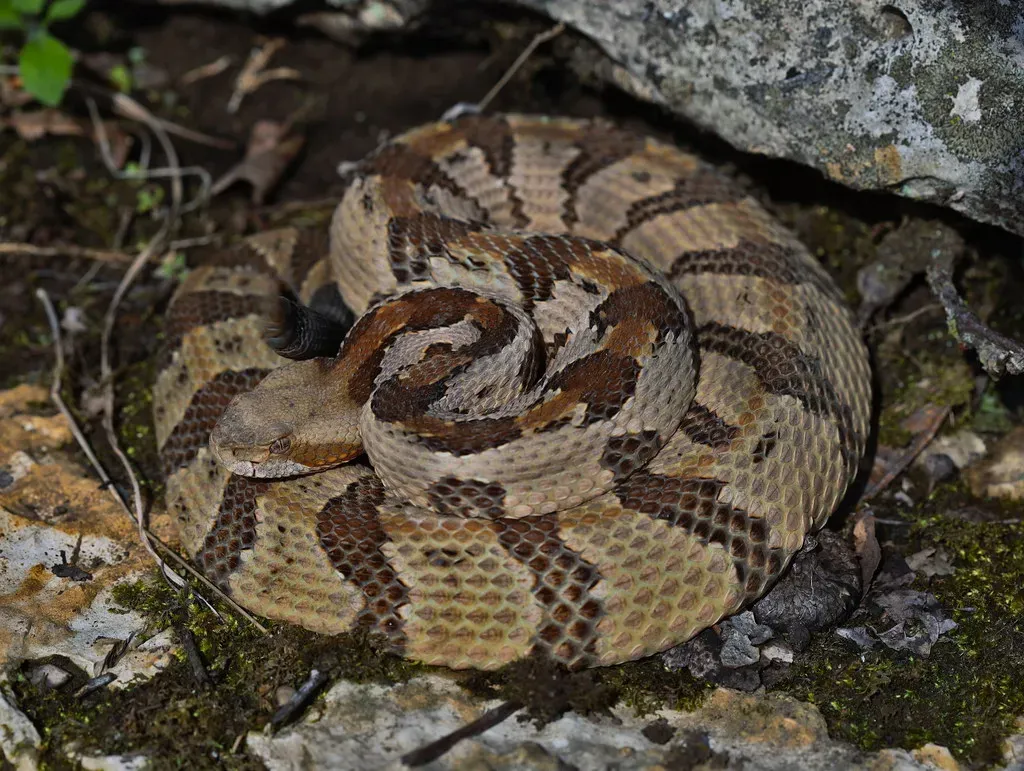
Timber rattlesnakes are the Appalachian serpent everyone imagines when they think “mountain danger.” They prefer rocky outcrops, dry ridges, and sun-warmed ledges, sometimes right beside popular trails along the Blue Ridge and in parks like Great Smoky Mountains. Their camouflage is so good that hikers often walk within a step or two before realizing a snake is there at all. A timber rattler’s venom is potent enough to be life-threatening without prompt medical care, causing intense pain, tissue damage, and potential systemic effects.
The twist is that timber rattlesnakes are surprisingly patient neighbors. They rely on stealth and usually warn you with that famous buzz before striking, provided they have space and do not feel cornered. Most bites happen when someone tries to move, harass, or pick up the snake, or when a foot or hand is placed directly on top of it. Good boots, attention to where you put your hands, and the discipline to step back rather than play hero are usually all it takes to avoid becoming another venomous snake statistic in the mountains.
3. Copperhead – The Snake You Never Saw
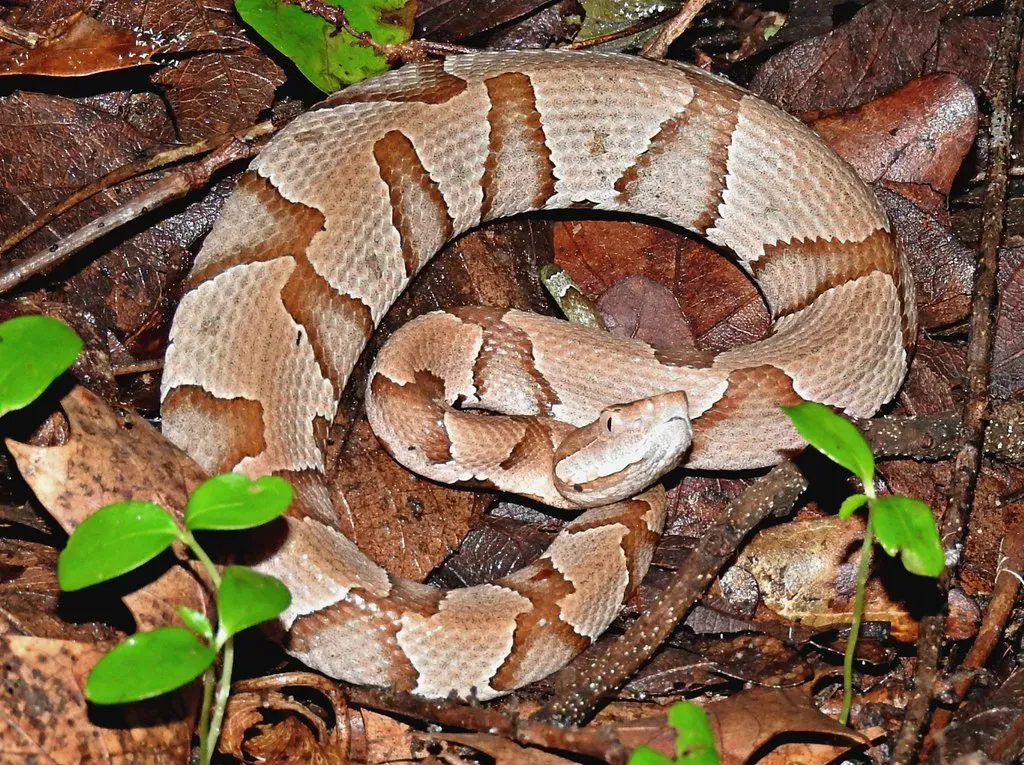
If timber rattlesnakes are the dramatic danger, copperheads are the sneaky ones. They thrive in lower and mid-elevation forests, rocky slopes, stone walls, and the edges of streams and campsites all along the Appalachian chain. Their warm, leaf-like pattern blends almost perfectly into fallen leaves and forest litter, making them incredibly easy to overlook. Copperheads are responsible for a large number of venomous snakebites in the eastern U.S. simply because people step on or near them without ever knowing they were there.
The good news is that copperhead venom is rarely fatal to healthy adults with access to modern medical care, but it can still be viciously painful, damaging, and dangerous to children, older adults, or people with underlying health issues. Many bites happen around houses, cabins, firewood piles, or yard debris in mountain communities rather than deep in the backcountry. Wearing shoes instead of flip-flops, using a light at night, and never sticking your hands into dark crevices or under rocks without looking drastically cut your odds of discovering a copperhead the hard way.
4. Eastern Cottonmouth (Water Moccasin) – The Ambush by the Water’s Edge
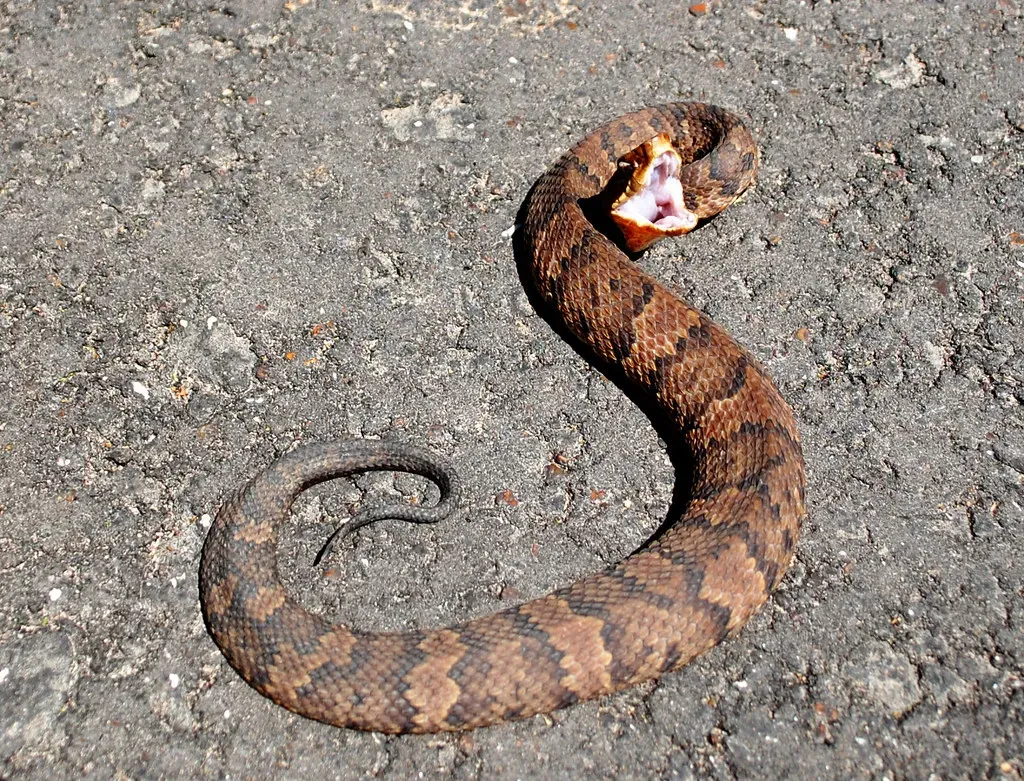
The classic “water moccasin” is more of a southern lowland snake, but in the southern reaches of the Appalachian region – foothills, swampy valleys, and slow-moving streams – eastern cottonmouths can overlap with mountain terrain. They are heavy-bodied, semi-aquatic pit vipers that like wet places: backwaters, flooded timber, and still ponds rather than fast, cold mountain creeks. Their venom can cause severe tissue damage and systemic illness, making them one of the more feared snakes in the Southeast. People sometimes misidentify nonvenomous water snakes as cottonmouths, but real cottonmouths have a thick, blocky head and that infamous white, gaping mouth display when threatened.
Most cottonmouth bites happen when someone wades into murky water, steps near a basking snake, or tries to kill or move it. Because these snakes are more common in lower, warmer elevations, many hikers on high ridgelines will never see one – but paddlers, anglers, and people exploring southern river corridors absolutely can. The smartest approach is to assume any chunky, dark snake near slow water deserves distance. Watch where you place feet and hands along banks, never reach blindly into root tangles, and remember that the water’s edge in the South is not just scenic – it is prime ambush habitat.
5. Black Widow Spider – Tiny Body, Nasty Bite
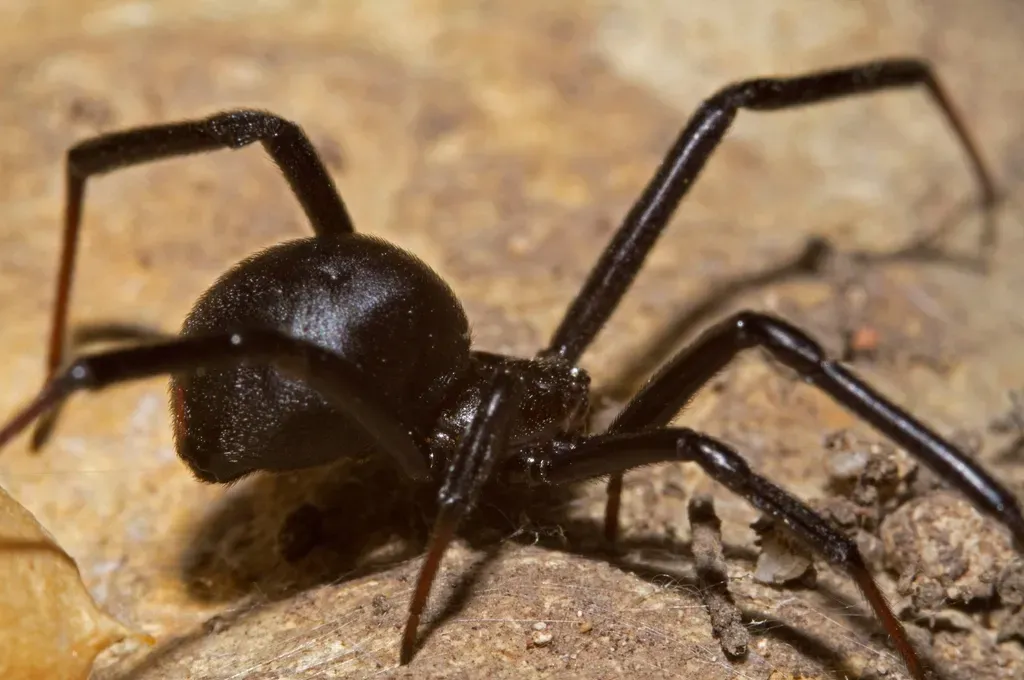
In the Appalachian imagination, spiders often rank just behind snakes and bears on the fear scale, and the black widow actually earns some of that reputation. This small, glossy black spider with the red hourglass marking is widely distributed in the Appalachian region, including wooded areas, rock piles, sheds, outhouses, and the underside of logs and benches. Its venom acts on the nervous system and can cause intense pain, muscle cramping, sweating, and systemic symptoms that feel far worse than the tiny bite mark looks. For children, older adults, or people with health problems, the risk can be more serious.
The crucial nuance: black widows are not out “hunting” people. They build messy webs in tucked-away corners – under rocks, in firewood, forgotten boots, stacked boards – places where human hands sometimes go without looking. Most bites happen when someone presses a widow against their skin by accident. Shake out gear and footwear, wear gloves when moving firewood or debris, and resist the urge to blindly grab into dark crevices. Medical care and modern antivenom mean deaths are exceedingly rare, but this is one Appalachian animal that can turn a weekend trip into a hospital visit astonishingly fast.
6. Brown Recluse Spider – The Flesh-Eating Legend (With a Catch)
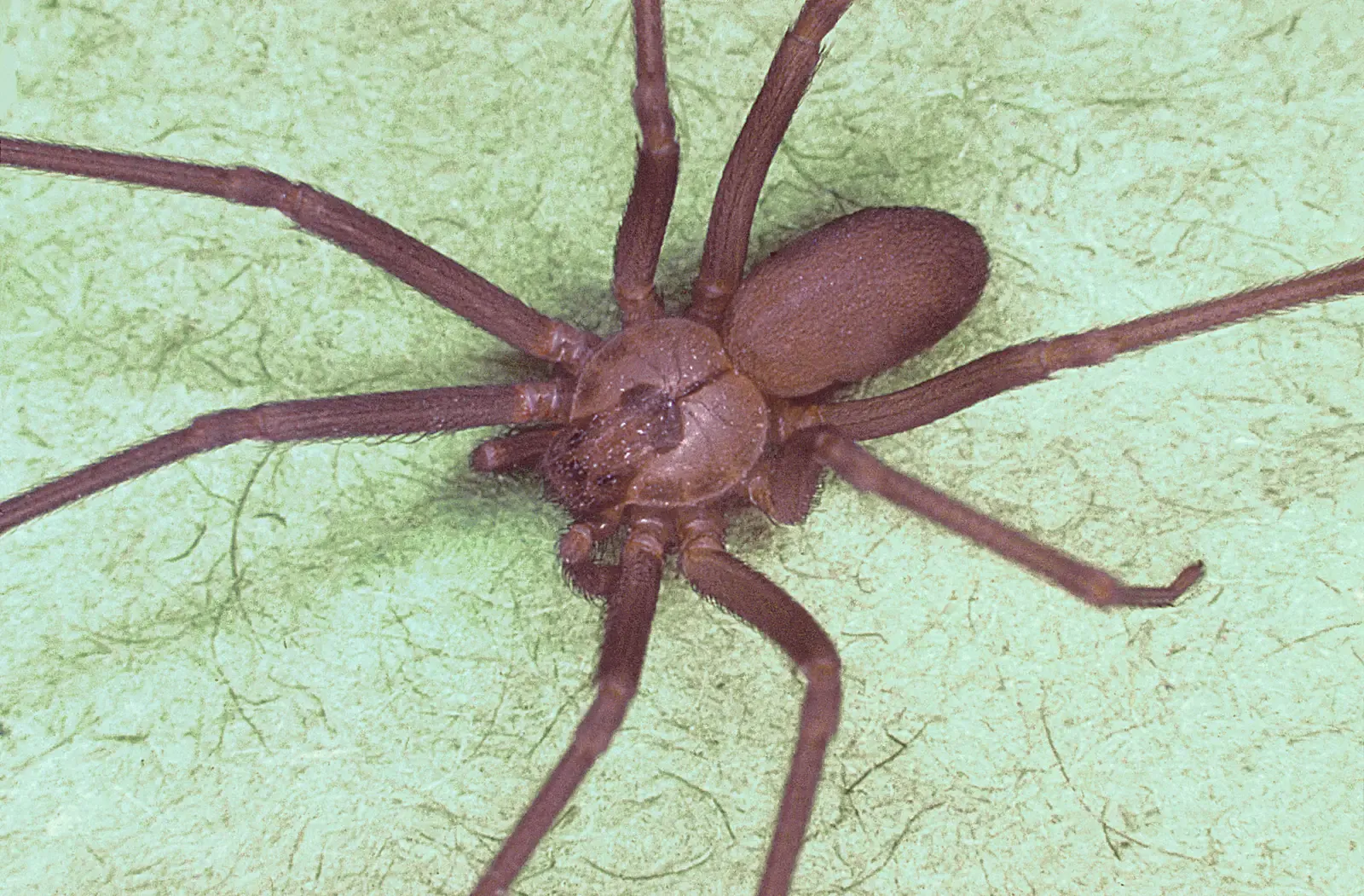
The brown recluse might be the most mythologized spider in America, and the Appalachians are no exception. Stories about bites that “eat away” limbs circulate in every mountain town, and the idea is genuinely horrifying. True brown recluses have a limited natural range centered more in the Midwest and central South, but their range may brush up against parts of the Appalachian region, especially in lower-elevation areas and human-made structures. Their venom can cause significant localized tissue damage in a minority of cases, and severe reactions absolutely do happen.
However, many supposed recluse bites turn out to be other infections or different injuries entirely, which makes the legends bigger than the actual spider. The real danger is that people underestimate any serious wound because they are busy arguing about what bit them. If you live or travel in areas where recluses are confirmed and wake up with a painful, worsening lesion, you should treat it as a medical problem, not a campfire debate. Store gear off the floor, avoid cluttered, undisturbed piles of clothing and cardboard, and understand that while the brown recluse can be dangerous, it is also a shy, hiding spider that would rather never share a cabin with you at all.
7. Coyotes – The Adaptable Opportunists
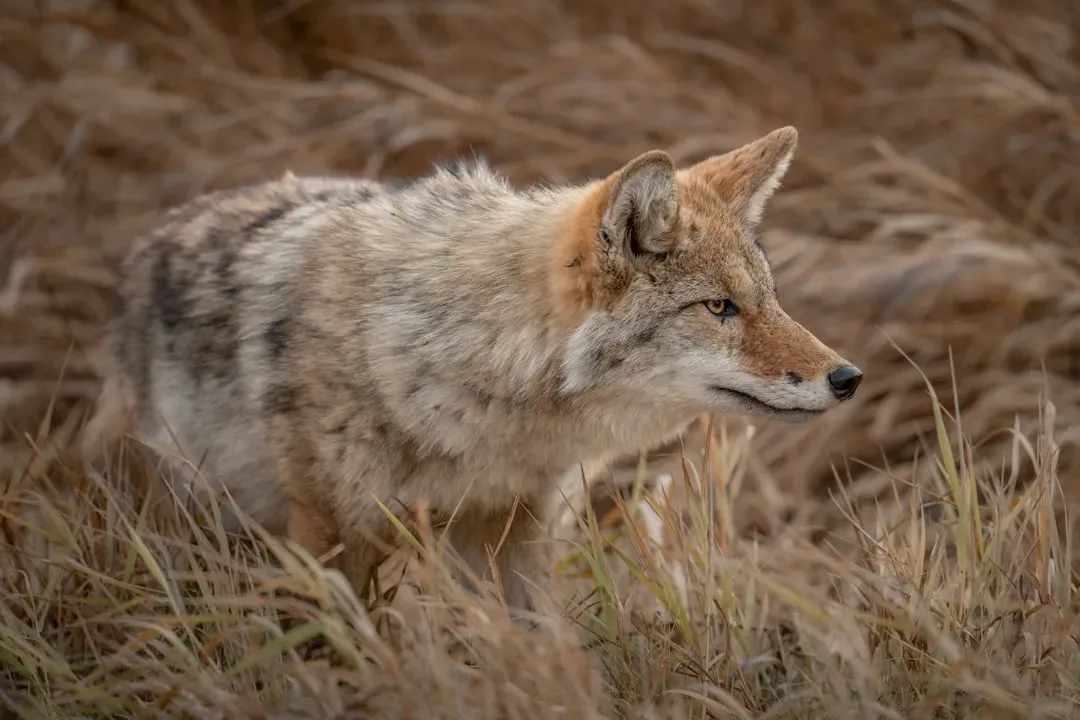
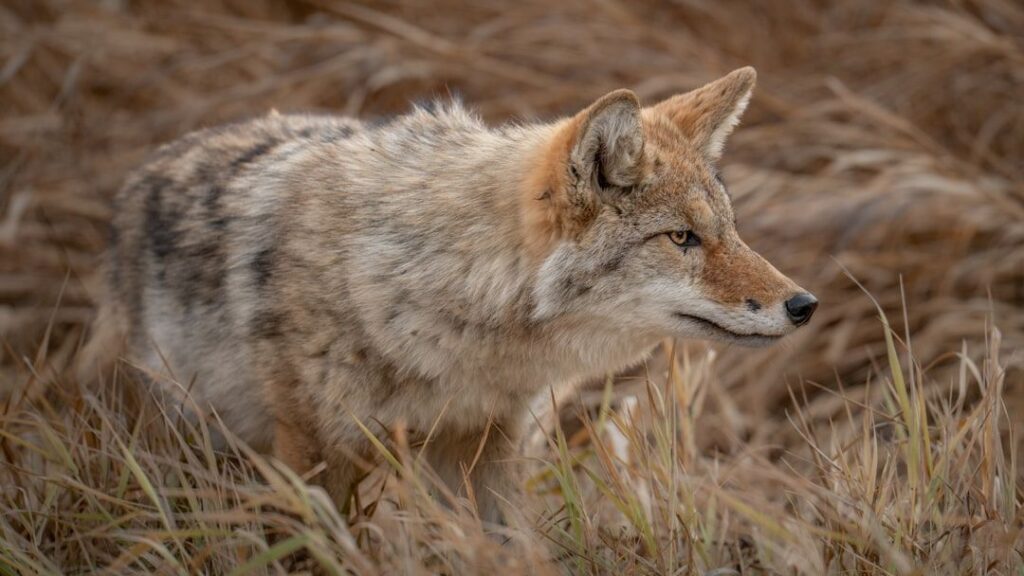
Coyotes are relative newcomers to much of the Appalachian region, having expanded eastward over the last century as wolves and cougars disappeared. Now they are firmly part of the mountain ecosystem, hunting rodents, rabbits, and sometimes deer, and scavenging almost anything edible. Attacks on humans are still rare, but coyotes are bold, intelligent, and increasingly comfortable at the edges of rural towns and even suburbs. The real danger they pose is often to pets and small livestock, which can vanish quickly if left unattended near coyote country.
Because coyotes are naturally wary of people, most will bolt the second they realize you have seen them. The problem starts when they lose that fear – usually because they are being fed intentionally or indirectly through trash, outdoor pet food, or easy pickings around camps and cabins. A coyote that has learned humans equal food is far more likely to stand its ground, approach, or test boundaries. Never feed them, haze any that linger near homes or camps by shouting and throwing sticks or rocks, and keep pets on leashes or inside at night. Coyotes are unlikely to be your personal nightmare in the Appalachians, but when they turn from ghostly howls to bold thieves, they quickly earn their spot on the “deadly” list.
8. Bobcats – The Silent Stalkers You’ll Probably Never See
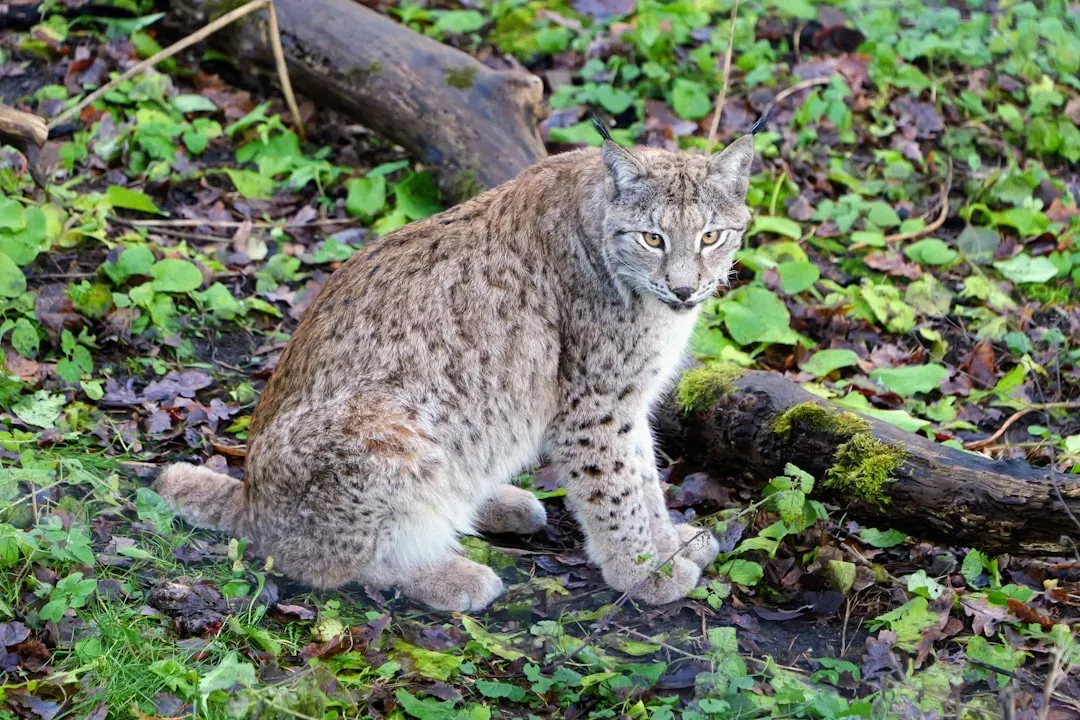
Bobcats are small compared to big cats, but they are still muscular predators armed with claws and teeth built for ambush. They haunt thickets, rocky ledges, and dense forests throughout the Appalachian range, preying on rabbits, squirrels, birds, and sometimes fawns. Most people hiking the Appalachian Trail for months will never lay eyes on one, even though bobcats may have watched them walk past more than once. Attacks on humans are very rare, but when a bobcat is rabid, cornered, or defending young, the outcome of a close encounter can be bloody.
The “deadliness” of bobcats is more theoretical for most hikers and very real for prey animals and the occasional unlucky house cat or small dog. They are powerful enough to do serious damage in a grapple, especially to a child, but their instinct is to avoid people completely. If you ever do see one acting strangely – staggering, approaching without fear, or attacking without provocation – assume disease could be involved and back away while finding shelter and help. Respecting bobcats as wild, avoiding feeding wildlife that could attract them, and securing pets keeps these beautiful ghosts of the Appalachian woods where they belong: in stories and trail camera photos, not emergency room reports.
9. Free-Roaming Dogs and Feral Dog Packs – The Overlooked Threat
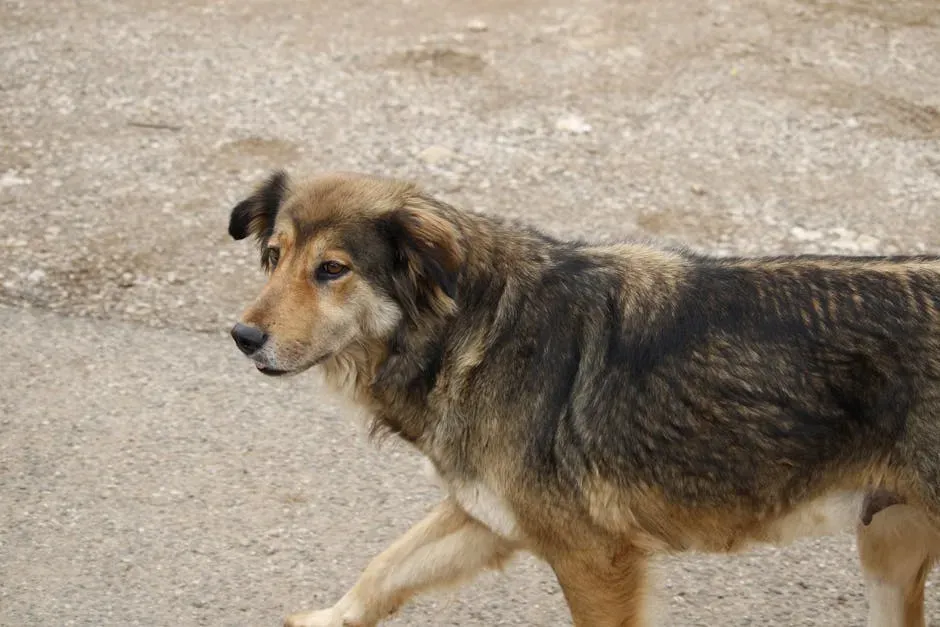
It feels strange to admit, but in some Appalachian communities, the most dangerous canid you are likely to encounter is not a wolf or coyote – it is a dog. Free-roaming dogs, neglected yard dogs that slip chains, and loosely managed hunting hounds can form aggressive packs, especially in rural hollows and on little-used forest roads. Unlike wild predators that usually want nothing to do with humans, dogs raised around people may be less fearful and more willing to bluff-charge, harass, or outright attack if they feel territorial or keyed up as a group.
Packs of feral or semi-feral dogs can outrun a hiker and deliver serious bites, and they do not give the same clear, instinctive signals as wolves or coyotes that want to avoid a fight. The danger feels personal because these animals recognize humans yet do not always respect them. If you are walking near backroads, isolated houses, or hunting leases and hear multiple dogs barking and closing distance, you need to take it seriously. Keeping trekking poles ready, avoiding cutting directly through yards or posted land, and carrying a deterrent spray can make a real difference. It is uncomfortable to admit that the “family animal” can be one of the more likely threats, but in the real Appalachia, that is sometimes exactly the case.
10. White-Tailed Deer – Deadly at Highway Speed
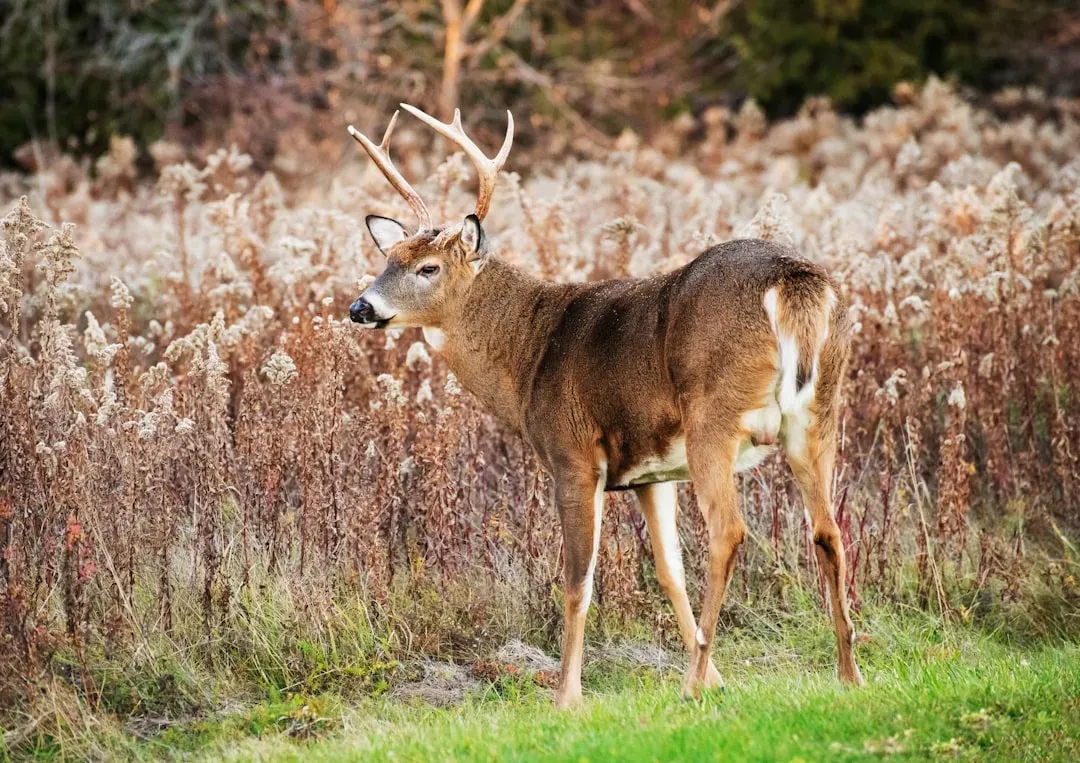
White-tailed deer do not feel like a “deadly animal” when you see them grazing calmly along a meadow or slipping through the rhododendron. Yet across the Appalachian states, they are implicated in huge numbers of vehicle collisions every year, some of which are fatal. A panicked deer can explode onto a road at the worst possible second, turning a casual mountain drive into a life-threatening crash. The higher the speed and the curvier the road, the less time drivers have to react. At night or during rut season in autumn, the risk goes up sharply.
There is another quieter danger deer bring: they are major hosts for ticks that transmit diseases such as Lyme. One deer can carry many ticks that then drop off into leaf litter, waiting for the next warm-blooded host – which might be you. So while no deer is going to stalk you through the pines, their role in traffic injuries and tick-borne illness is undeniable. Driving slower on mountain roads, especially at dawn and dusk, scanning edges for movement, and doing careful tick checks after being in tall grass or brush are not paranoia – they are respect for how dangerous a gentle-looking herbivore can become when human infrastructure intersects with wild behavior.
11. Ticks – The Smallest, Most Relentless Killers
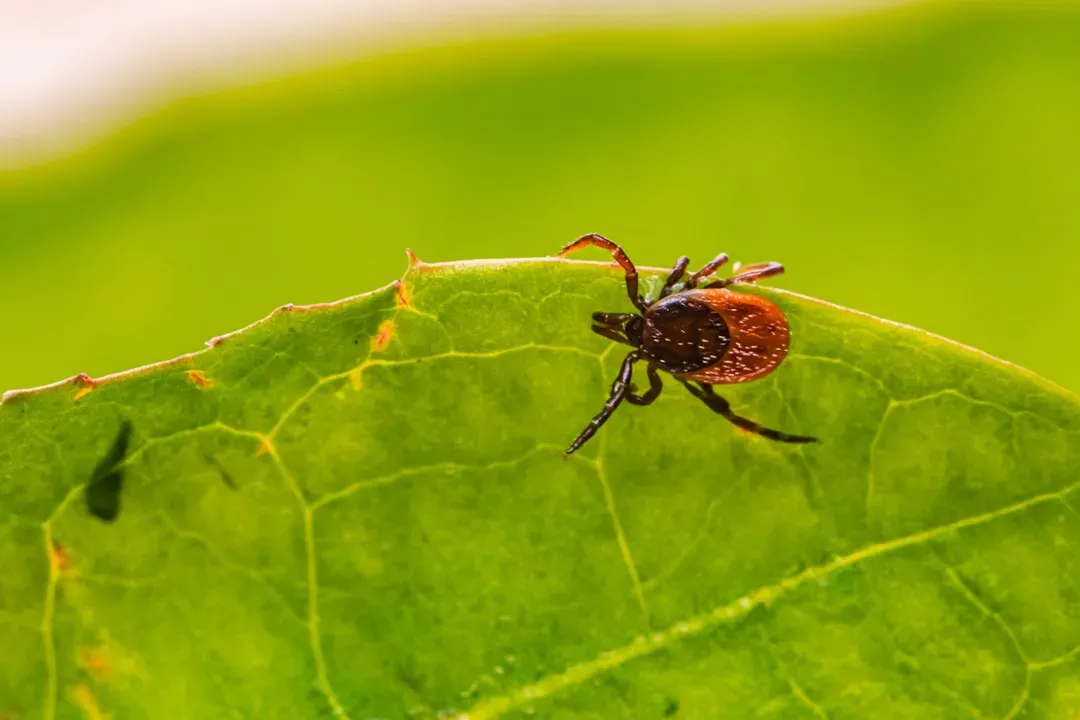
If we are being brutally honest, the most statistically dangerous animal in the Appalachians is not a bear, not a snake, and not a cat. It is the tick. Tiny, silent, and nearly invisible against your skin, ticks in this region can carry Lyme disease and other infections that ruin lives slowly rather than in a dramatic, cinematic moment. All it takes is a brush against tall grass, a kneel in leaf litter, or sitting on a log where deer, mice, or other hosts have passed. Many people never feel the bite itself, only noticing later when a rash, fever, joint pain, or brain fog shows up.
Part of what makes ticks so insidious is that they ride the boundary between “outside adventure” and “everyday life.” You do not need to be deep in a wilderness area to pick one up; they are found in backyard edges, park fields, and woodland trails all across the Appalachian region. Long pants, light-colored clothing, repellents, and obsessive tick checks after being outdoors may feel tedious, but they are far more pleasant than months or years of managing a chronic illness. In a way, ticks are the perfect reminder that in the mountains, danger often comes wrapped in the smallest possible package.
12. Mosquitoes – The Whining Vector
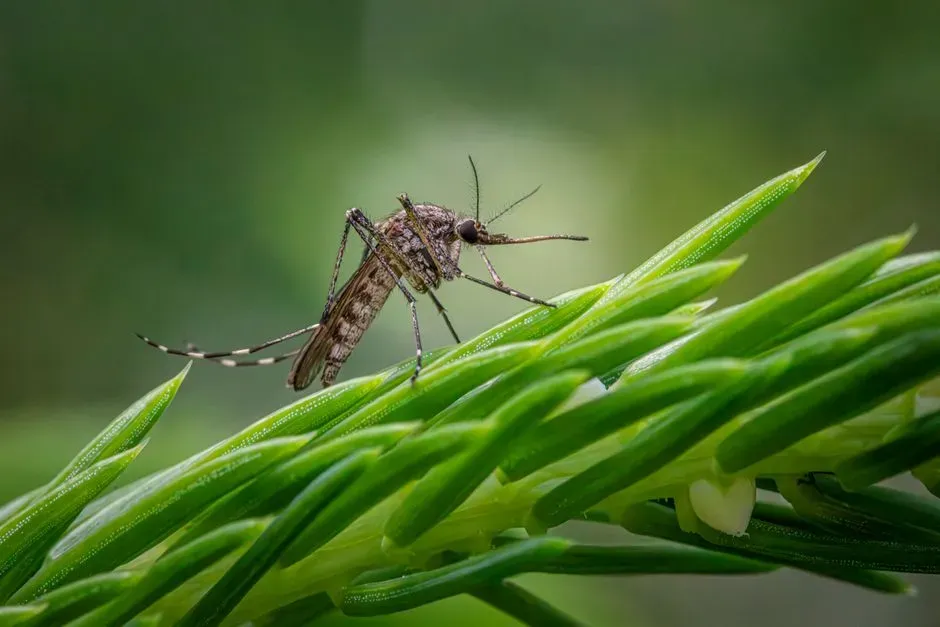
Mosquitoes are so universally hated that it is easy to forget how dangerous they can be as disease carriers. In the Appalachians, they are more annoyance than apocalypse, but they still transmit illnesses like West Nile virus and can trigger severe allergic reactions in some people. Warm, humid summers, standing water in old tires, ditches, and beaver ponds, and thick vegetation give mosquitoes all the habitat they need. Around campsites and cabins, they can swarm at dusk, making it miserable to just sit outside without protection.
The human tendency is to shrug them off because each individual bite is small and familiar, but over the course of a season they can still contribute to real health risks. People with compromised immune systems, outdoor workers, and frequent backcountry travelers experience a cumulative burden of bites that is more than just annoying. Using repellents, eliminating standing water around living areas, and employing physical barriers like nets and long sleeves are not overreactions; they are simply acknowledging that the Appalachian food chain of danger includes insects as well as charismatic megafauna. The whine in your ear at night is more than irritating – it is a reminder that some killers in the mountains fly, not stalk.
13. Feral Hogs – Muscle, Tusks, and Attitude
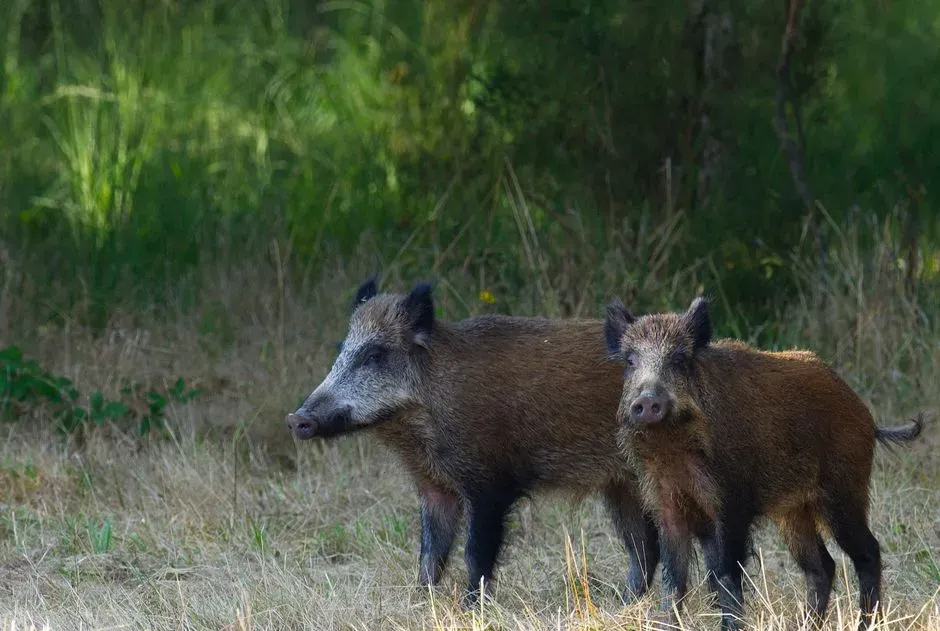
In some southern and central Appalachian areas, feral hogs have become a rapidly growing problem. These are not cute farm pigs – they are powerful, sharp-tusked animals descended from escaped domestic pigs and wild boar, and they behave like a wrecking ball with legs. They root up fragile mountain soils, destroy native plant communities, and can spread disease to wildlife, livestock, and even people. A cornered or wounded hog is fully capable of charging a human, and a hit from a tusk at knee or thigh level can cause deep, dangerous lacerations.
While direct attacks on hikers are still relatively uncommon, the risk is not theoretical, especially for hunters, dogs, and anyone moving quietly through dense understory where visibility is low. Hogs can also carry parasites and bacteria, making any contact with their blood or carcasses a health risk if not handled properly. Land managers in parts of the Appalachians treat feral hogs almost like an invading army, and with good reason. If you see signs of fresh rooting, wallows, or tracks, it is smart to be more alert, make noise, and give any hogs a wide berth. Few animals combine raw physical power, aggression, and ecological destruction quite like these four-legged rototillers.
14. Stray Cattle and Aggressive Livestock – The Farm You Should Not Cross
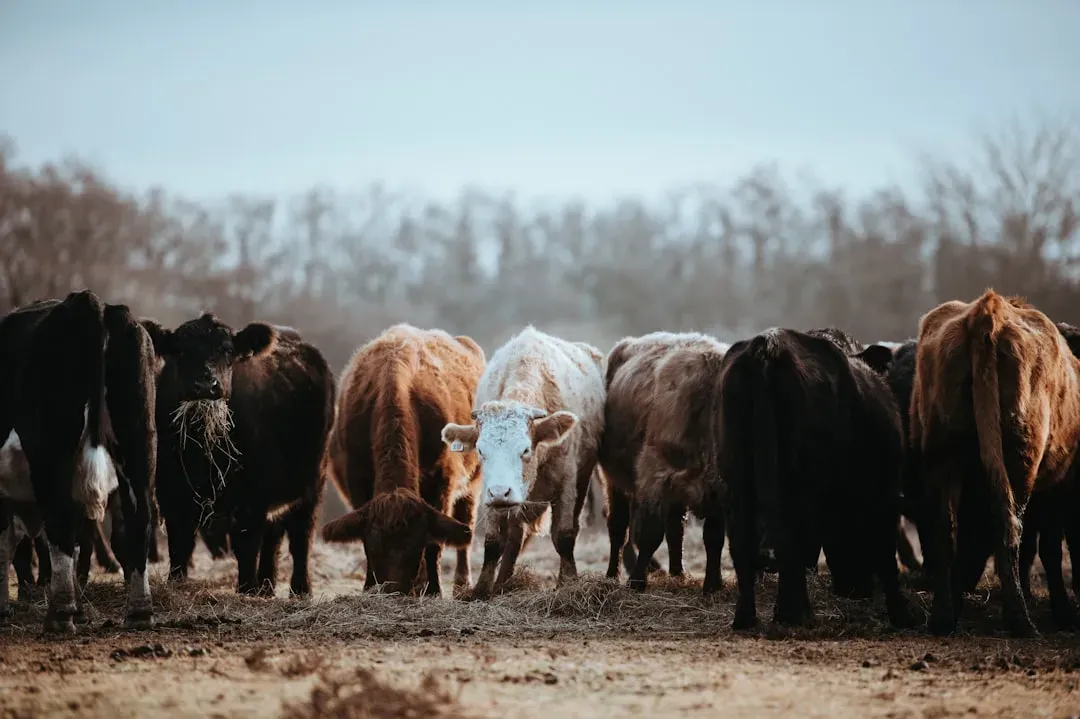
One of the strangest but very real threats in some Appalachian valleys and ridgelines comes from animals people assume are docile: cattle, protective bulls, and even certain pasture-kept horses or guard animals. In regions where trails cross or skirt open grazing land, hikers sometimes find themselves between a cow and her calf, too close to a territorial bull, or walking near animals that are not used to human strangers. A charging bovine is incredibly fast over short distances and vastly heavier than any person; a direct hit can be fatal or cause life-changing injuries.
Because this danger feels so un-wild, many people do not take it seriously enough, cutting across fields, trying to pet livestock, or letting dogs run loose among grazing animals. From the animal’s perspective, a dog looks like a predator and a human like a threat to its young. The smartest move is to treat fenced land and livestock with the same respect you would a known bear den or snake nesting site. Stay on marked rights-of-way, keep dogs leashed, avoid walking between adults and young, and give any animal showing signs of agitation more space, not less. The Appalachians blur the line between wild and working landscapes, and sometimes that means the “deadly animal” wears a cowbell instead of a set of fangs.
Conclusion: The Mountains Are Not Out to Get You – But They Will Not Babysit You Either
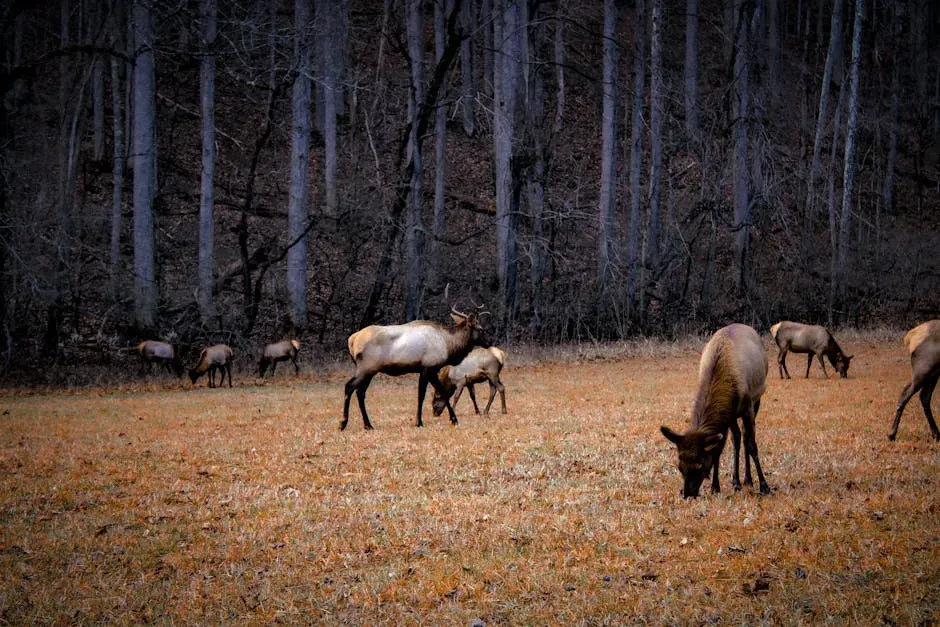
When you lay all these animals side by side – from black bears and rattlesnakes to ticks and feral hogs – a pattern jumps out: in the Appalachian Mountains, danger is almost always conditional. Most of these creatures do not want a fight, and the vast majority of people who venture into these hills will never be seriously hurt by wildlife. But the mountains also do not bend to wishful thinking. If you treat the forest like a backdrop and the animals like extras, you raise the odds that one day you will step on the wrong snake, brush off the wrong tick, or meet the wrong bear at the wrong time.
My own bias is clear: I think the Appalachians are far safer than their spooky reputation, but only for people who show up with humility. Knowing what actually lives out there, accepting that some of those animals can absolutely kill you, and then choosing to move with respect instead of fear is the real survival skill. In a world where so many wild places have been flattened or paved over, the fact that these mountains still hide deadly neighbors is not just frightening – it is proof that the land still has teeth. The question is not whether the Appalachians are dangerous; it is whether we are willing to be the kind of visitors who deserve to walk among things that can bite back.