In the vast realm of nature, there exist creatures so large and magnificent that they defy our imagination. These super-sized animals are not just peculiarities of the wild, but powerful reminders of the planet’s incredible biodiversity. From the deep oceans to the dense jungles, these colossal beings have adapted in fascinating ways to thrive in their respective environments. Join us as we explore the astonishing world of these 12 super-sized animals that are bigger than you might think.
1. The African Elephant: Giants of the Land
The African elephant is the earth’s largest land animal, towering over the savannas with its formidable size. These magnificent creatures can weigh up to 14,000 pounds and stand as tall as 13 feet. Their sheer size is not just for show; it plays a crucial role in their survival. The elephants’ massive ears and long trunks help regulate their body temperature, while their size deters most predators. They are known for their intelligence and strong social bonds, often displaying behaviors that suggest empathy and grief. With such an impressive stature, these gentle giants are a true testament to nature’s grandeur.
2. The Blue Whale: Ocean Titans
Swimming gracefully through the vast oceans, the blue whale holds the title of the largest animal to have ever existed on Earth. Reaching lengths of up to 100 feet and weighing around 200 tons, these marine mammals are truly awe-inspiring. Their tongues alone can weigh as much as an elephant, and their hearts are comparable to the size of a small car. Despite their massive size, blue whales feed on tiny krill, consuming up to 4 tons a day. Their songs, which can travel thousands of miles underwater, serve as a haunting reminder of the mysteries hidden beneath the waves.
3. The Saltwater Crocodile: Ancient Predators
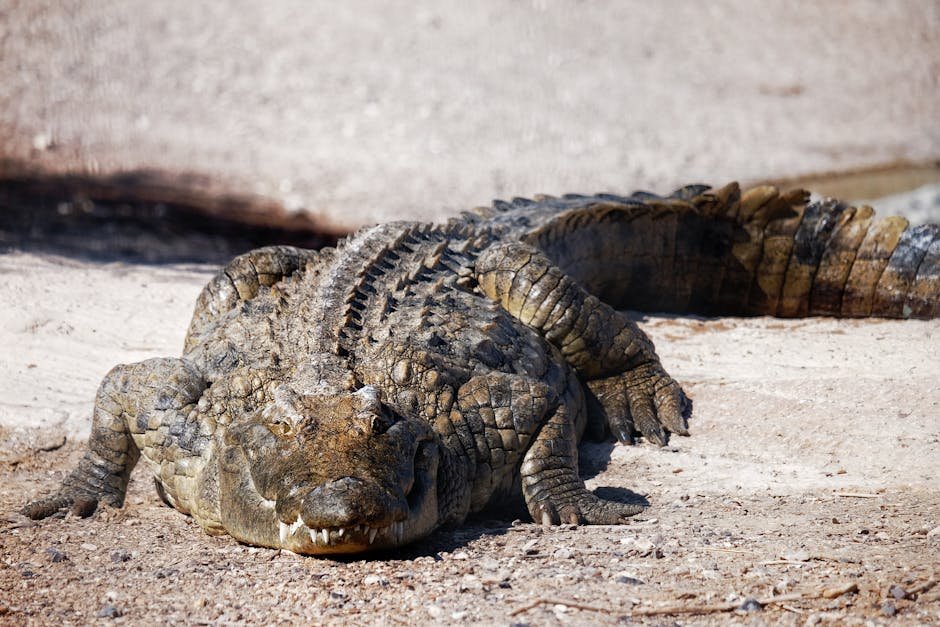
The saltwater crocodile, often referred to as “salties,” is the largest living reptile and a formidable predator. Found in the brackish and freshwater regions of Southeast Asia and Australia, males can grow up to 23 feet long and weigh over 2,200 pounds. Their powerful jaws can exert a bite force of over 3,700 pounds per square inch, making them one of the most dangerous predators in their habitat. These ancient reptiles have remained relatively unchanged for millions of years, showcasing the effectiveness of their evolutionary design. With their stealthy nature and impressive size, saltwater crocodiles truly embody the term “living dinosaur.”
4. The Giraffe: Towering Elegance
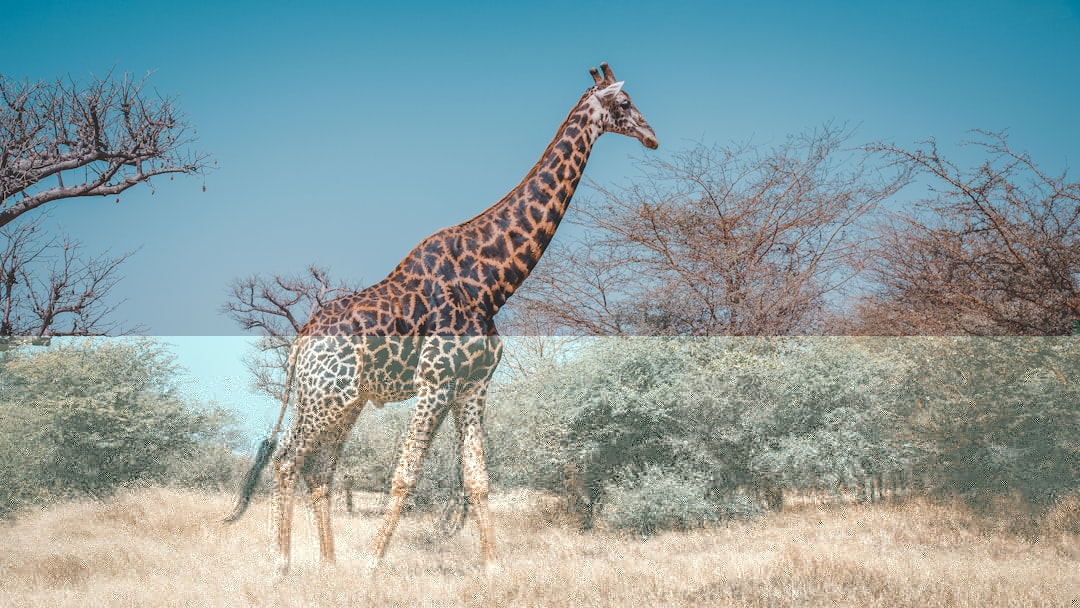
Standing tall in the African savannas, the giraffe is a marvel of nature’s design. With necks stretching over 6 feet and overall heights reaching up to 18 feet, giraffes are the tallest land animals in the world. Their long necks allow them to browse on leaves high up in trees that other herbivores cannot reach. Interestingly, despite their long necks, giraffes have the same number of neck vertebrae as humans, just more elongated. Their unique spots serve as camouflage, blending with the dappled light of their environment. The giraffe’s towering presence and gentle demeanor make them a favorite among wildlife enthusiasts.
5. The Giant Squid: Deep Sea Enigma
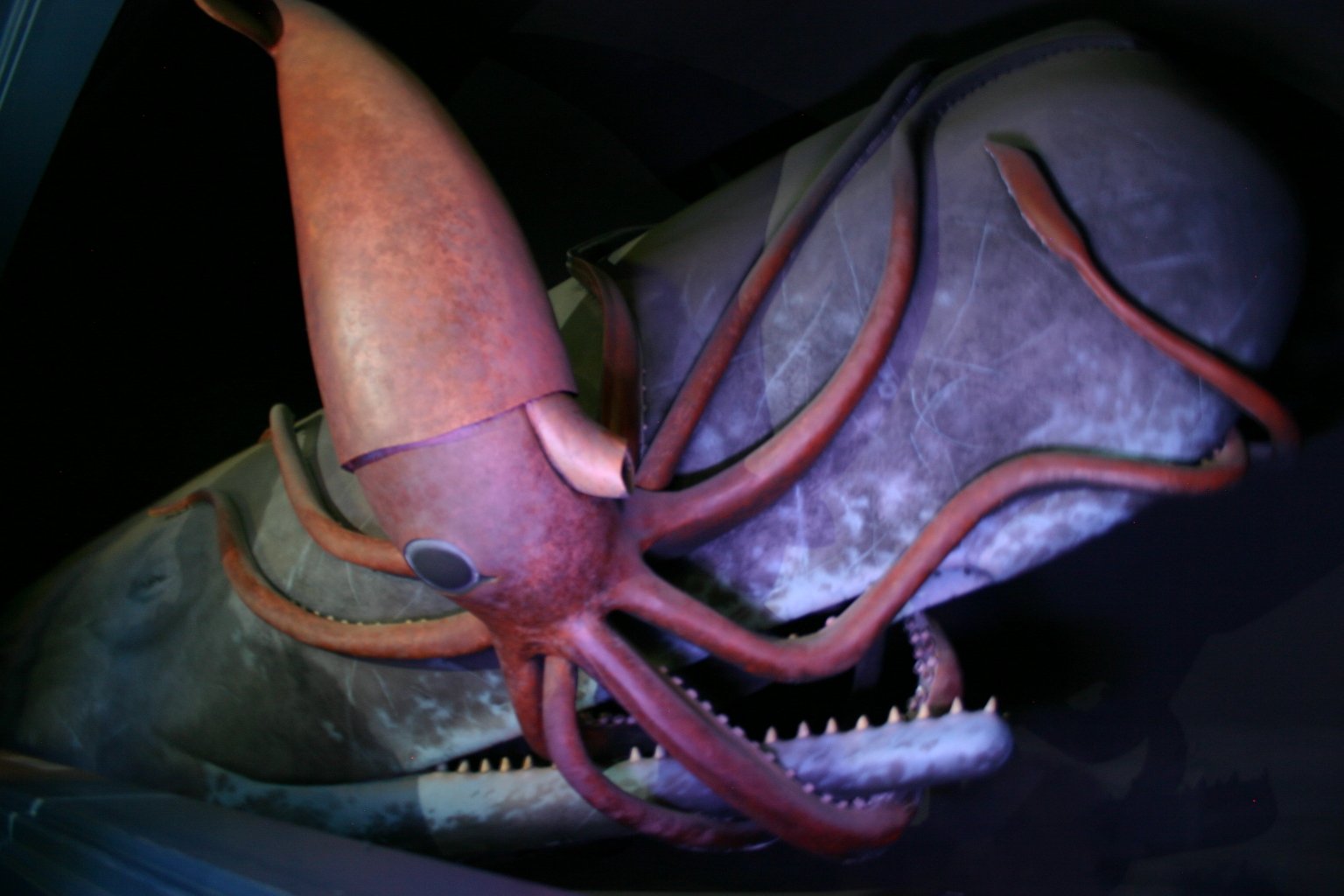
Shrouded in mystery, the giant squid is a deep-sea marvel that has fascinated scientists and storytellers alike. With lengths reaching up to 43 feet, these elusive creatures are rarely seen by humans. The giant squid’s enormous eyes, the size of dinner plates, help them spot prey in the pitch-black depths of the ocean. Their tentacles are equipped with powerful suckers, enabling them to capture and hold onto their prey with ease. While much remains unknown about these enigmatic beings, their existence continues to fuel our fascination with the uncharted territories of the deep sea.
6. The Hippopotamus: River Behemoths
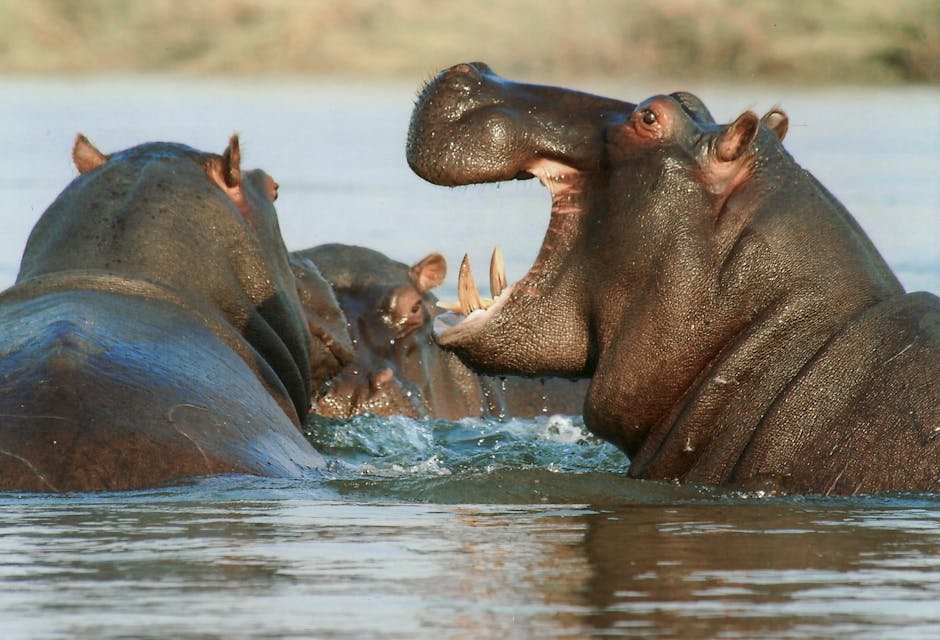
Often underestimated, the hippopotamus is one of Africa’s most dangerous and surprisingly large animals. Weighing up to 4,000 pounds and measuring 16 feet in length, these semi-aquatic mammals are well-adapted to life in the water. Despite their hefty size, hippos can run faster than humans, reaching speeds of up to 19 miles per hour on land. Their large mouths can open up to 150 degrees, revealing tusks that can be over a foot long. Hippos spend most of their time submerged in water to keep cool, emerging at night to graze on grass. Their presence is a vital part of the riverine ecosystem.
7. The Komodo Dragon: Island Giants
The Komodo dragon, native to a few Indonesian islands, is the largest living species of lizard. Growing up to 10 feet in length and weighing over 150 pounds, these reptiles are formidable predators. Known for their keen sense of smell and powerful limbs, Komodo dragons can detect carcasses from miles away. Their saliva contains toxic bacteria, which helps them take down prey. Despite their fearsome reputation, they are also opportunistic scavengers. The Komodo dragon’s impressive size and unique adaptations make it a fascinating subject of study for scientists and reptile enthusiasts alike.
8. The Polar Bear: Arctic Titans
Roaming the icy landscapes of the Arctic, the polar bear is the largest carnivorous land mammal. Males can weigh over 1,500 pounds and measure up to 10 feet in length. These majestic bears are well-adapted to their cold environment, with a thick layer of blubber and dense fur providing insulation. Their powerful limbs and enormous paws enable them to swim vast distances in search of food. As apex predators, polar bears primarily hunt seals, using their keen sense of smell to locate prey. The polar bear’s survival is intricately linked to the health of the Arctic ecosystem.
9. The Ostrich: Flightless Giants
The ostrich is the world’s largest bird, towering over the savannas at heights of up to 9 feet. Despite their inability to fly, ostriches are incredibly fast runners, capable of reaching speeds of 45 miles per hour. Their long legs and powerful muscles make them formidable sprinters, while their sharp claws serve as defense mechanisms. Ostriches have large eyes, giving them excellent vision to spot predators from afar. They are social animals, often found in groups, which helps them stay vigilant against threats. The ostrich’s unique adaptations and impressive size make them a captivating subject of study.
10. The Green Anaconda: Slithering Giants
The green anaconda, native to the swamps and rivers of South America, is the largest snake in the world by weight. These massive serpents can grow up to 30 feet long and weigh over 500 pounds. Despite their size, green anacondas are excellent swimmers, often lurking beneath the water’s surface to ambush prey. Their powerful, muscular bodies allow them to constrict and subdue a variety of animals, from fish to large mammals. Anacondas play a crucial role in their ecosystem, helping to regulate populations of prey species. Their sheer size and strength make them an enduring symbol of the Amazonian wilderness.
11. The Moose: Forest Giants
The moose, found in the northern reaches of North America and Eurasia, is the largest member of the deer family. These majestic creatures can stand over 7 feet tall at the shoulder and weigh up to 1,600 pounds. Moose are well-adapted to their forested habitats, with long legs that help them navigate through deep snow and dense underbrush. Their antlers, which can span up to 6 feet, are used for display and defense. Moose are solitary animals, often seen grazing on aquatic plants in marshy areas. Their imposing size and distinctive appearance make them a symbol of the northern wilderness.
12. The Japanese Spider Crab: Marine Marvels
Dwelling in the depths of the Pacific Ocean, the Japanese spider crab is the largest known arthropod. With a leg span of up to 12 feet, these crustaceans resemble something out of a science fiction tale. Despite their intimidating appearance, they are generally scavengers, feeding on dead animals and plant material. Their long limbs allow them to navigate the ocean floor with ease, while their hard shells provide protection from predators. The Japanese spider crab’s unique adaptations and remarkable size make them a fascinating subject for marine biologists.
Each of these super-sized animals offers a glimpse into the astonishing diversity of life on Earth. Their impressive sizes and unique adaptations highlight the incredible ways in which nature has evolved to meet the challenges of different environments. As we marvel at these giants, we are reminded of the importance of preserving the habitats that sustain such awe-inspiring creatures.