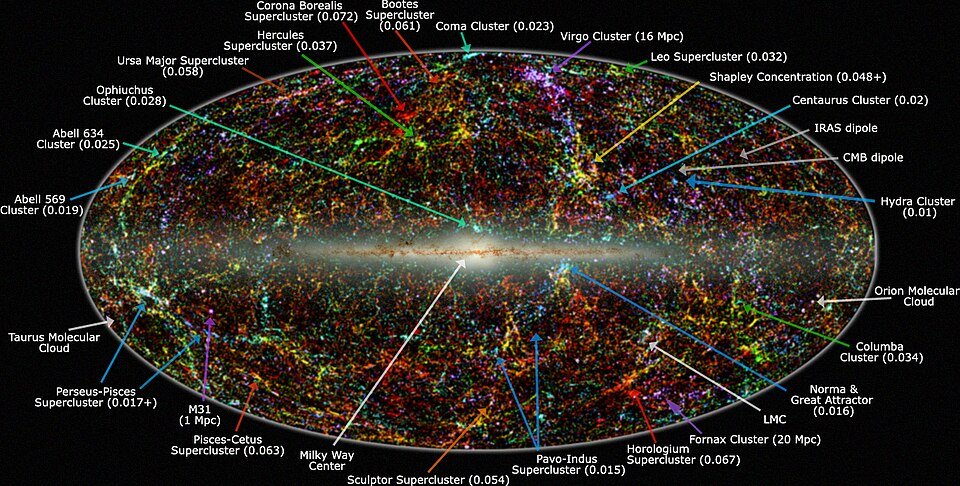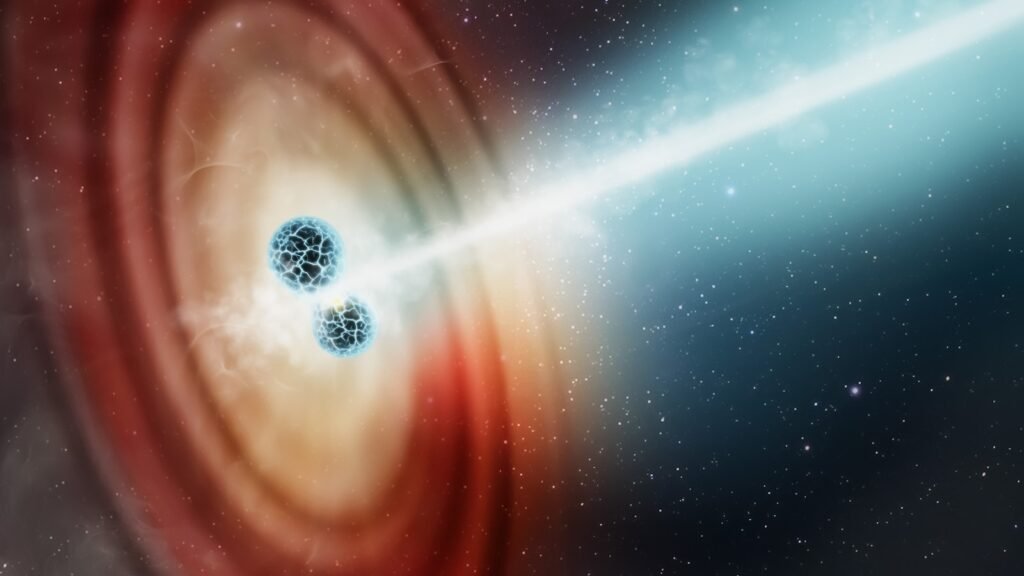

Space has a reputation for being cold, empty, and predictable, but the closer scientists look, the weirder it gets. Black holes hum, planets rain metal, and there are entire stars so dense a teaspoon of them would outweigh skyscrapers. With every new telescope and mission, the universe behaves less like a neat physics textbook and more like a wild laboratory full of extreme experiments. In this feature, we unpack a dozen of the strangest that sound like science fiction but are grounded in cutting-edge observation and theory. Along the way, we’ll explore what they reveal about how the cosmos really works – and how much we still don’t understand.
1. There Is a Planet Where It Probably Rains Glass Sideways
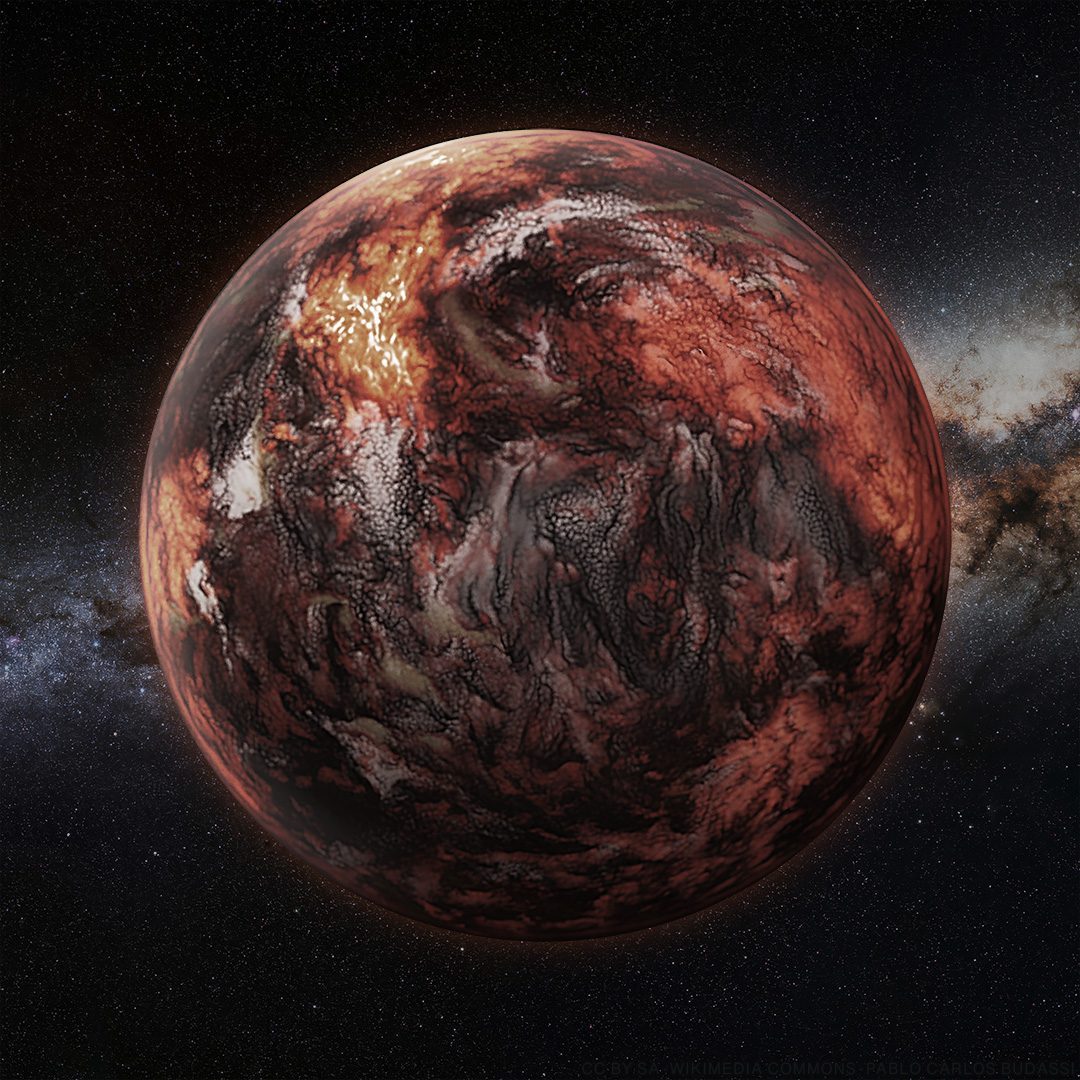
The idea of a planet where it rains glass sounds like a bad sci‑fi script, but one real-world candidate is the exoplanet HD 189733b. This world, discovered orbiting a star about sixty light-years away, is a “hot Jupiter” so close to its star that its atmosphere roils at thousands of degrees. Astronomers studying its spectrum have detected signatures of silicate particles high in the atmosphere, tiny bits of glass that likely form clouds. Combine those glassy particles with estimated winds whipping around the planet at several thousand miles per hour, and you get a plausible scenario: razor-like glass shards, driven sideways by supersonic gales.
It is not just the weather that makes HD 189733b unsettling; the whole planet is an experiment in extreme physics. The world is tidally locked, with one side perpetually staring into its star and the other trapped in endless night, creating massive heat gradients that fuel violent atmospheric flows. The planet also appears an eerie deep blue in Hubble observations, not because of oceans, but likely because those same silicate clouds scatter blue light. When planetary scientists model such atmospheres, they are not just chasing shock value – they are testing how clouds, chemistry, and radiation interact under conditions utterly unlike Earth’s. In the process, they refine the tools that will one day probe more Earth-like worlds for signs of life.
2. Neutron Stars Pack a Sun’s Mass into a City
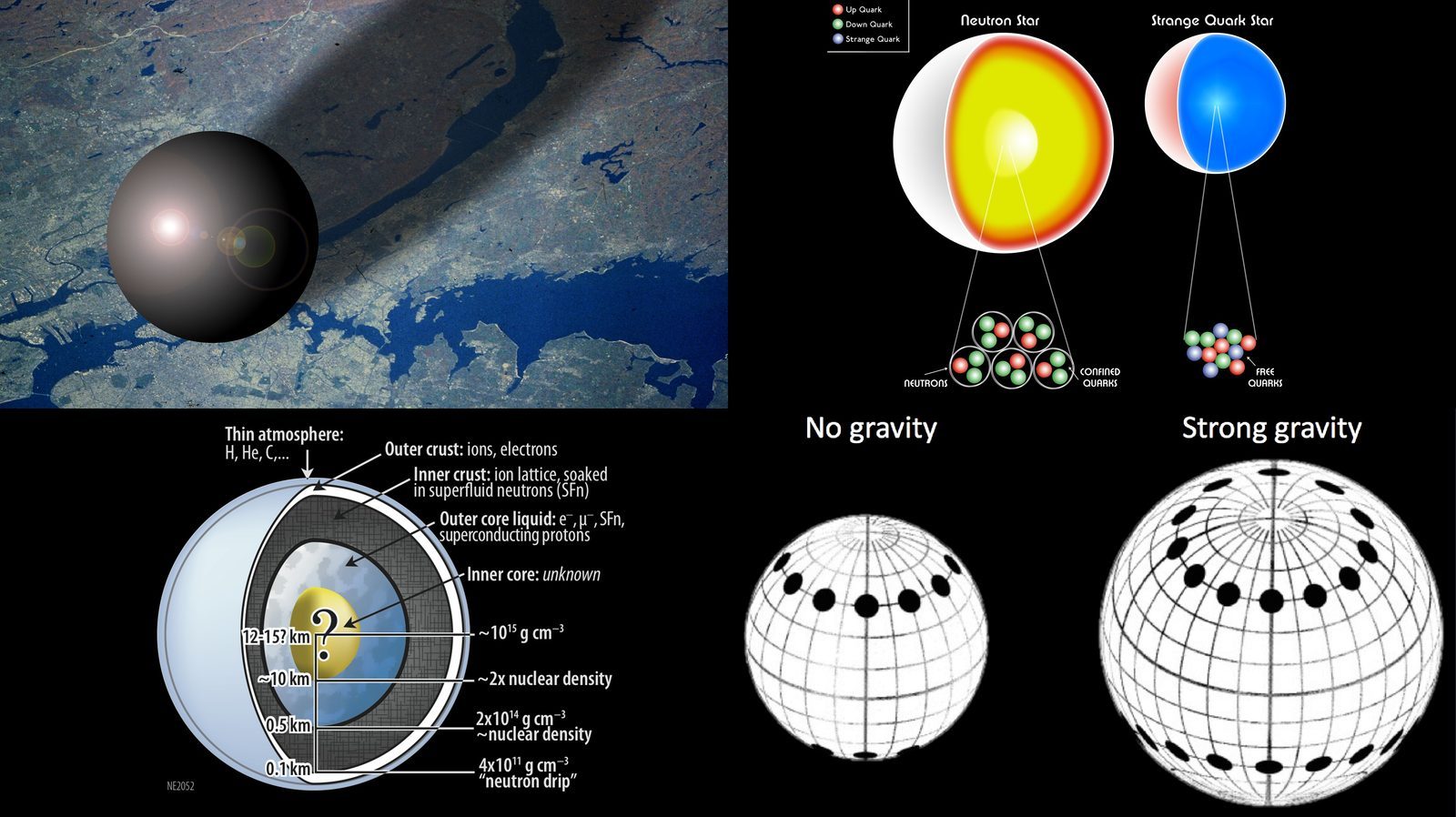
Imagine compressing the mass of our Sun into a sphere the size of a mid-size city – that is a neutron star. These objects are the collapsed cores of massive stars that exploded as supernovae, leaving behind matter so dense that atoms are crushed and electrons and protons merge into neutrons. A teaspoon of neutron star material would weigh more than a billion tons, a mind-bending figure that routinely leaves even seasoned physicists momentarily stunned. On their surfaces, gravity is so intense that if you dropped something from a meter up, it would hit the ground at a significant fraction of light speed.
Neutron stars are not just dense; they are dynamic laboratories for extreme physics that we cannot reproduce on Earth. Many spin hundreds of times per second, sweeping beams of radiation across space like cosmic lighthouses and creating pulsars that tick more steadily than atomic clocks. Their magnetic fields can be trillions of times stronger than Earth’s, twisting and snapping in ways that may produce intense X-ray and gamma-ray bursts. By timing pulsars and watching how pairs of neutron stars spiral together and merge, scientists can test Einstein’s theory of gravity and study matter at densities far beyond our experimental reach. In a sense, every neutron star is both an astronomical object and an ongoing natural experiment running on laws of physics we are still trying to fully decode.
3. There Is a “Diamond Planet” Rich in Carbon Crystals
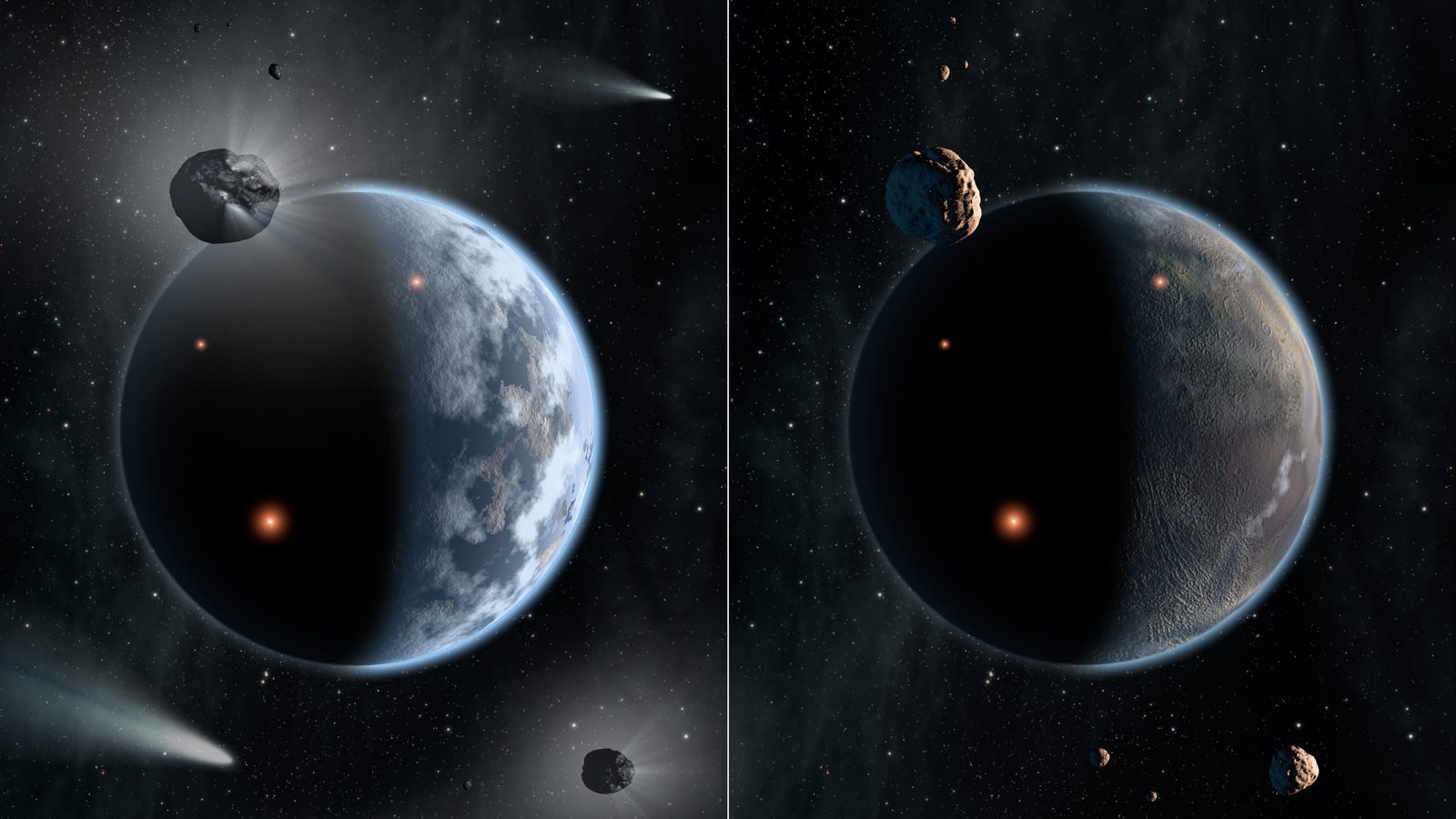
The phrase “diamond planet” sounds like clickbait, but there are strong indications that at least one exoplanet, 55 Cancri e, may be loaded with carbon-rich material that could form vast amounts of diamond under the right conditions. This planet is roughly twice Earth’s size and several times its mass, orbiting perilously close to its star in a blistering, short-period orbit. Early models suggested its interior composition might be dominated by carbon rather than oxygen, which, under enormous pressure, would favor diamond and other carbon phases. More recent observations have refined the picture, but the idea that nature can build diamond-heavy worlds is still very much on the table.
Crucially, the “diamond planet” headline is not about some sci-fi mining rush; it is about how varied planets can be. Our solar system primed us to think of rocky planets as Earth-like, with silicate rocks and iron cores, but exoplanet surveys are revealing worlds governed by wildly different chemistry. A carbon-rich planet would have geology, volcanism, and atmospheric chemistry unlike any world we know, potentially with hydrocarbon seas or exotic crusts. Studying these possibilities pushes planetary science beyond the cozy templates set by Mars and Venus. It forces researchers to treat the galaxy as a vast experiment in planetary building, where carbon, oxygen, and other elements recombine into landscapes we have not yet imagined up close.
4. Space Is Not Silent – It Vibrates with Hidden “Sounds”

We often hear that space is silent, and in one important sense that is true: sound waves need air or another material medium, and the vacuum between stars does not carry the kind of sound you hear with your ears. But the universe does seethe with waves and oscillations that scientists translate into sound-like signals using instruments and clever data processing. Gas clouds vibrate, black holes merge and send ripples through spacetime, and charged particles spiral along magnetic fields, all creating patterns that can be “sonified.” When astronomers convert those patterns into audio frequencies, they reveal eerie, rising whoops from black hole mergers and unsettling hums from plasma waves around planets.
These cosmic “sounds” are more than audio novelties; they are powerful diagnostic tools. The first detection of gravitational waves in 2015, for example, was often described as listening to the chirp of two black holes colliding, even though detectors like LIGO really measure tiny changes in distance. Sonifying the signal helped researchers and the public alike visualize (and “hear”) the smooth, rising tone of spacetime ripples as the black holes spiraled together. Similar approaches are used with radio waves and X-ray data to help spot repeating patterns that might be harder to see on a flat plot. In effect, scientists have learned to treat the universe like an orchestra where instruments we cannot see still leave measurable vibrations, and our detectors are the microphones picking up a performance that has been playing for billions of years.
5. There Are “Rogue” Planets Drifting Through the Dark
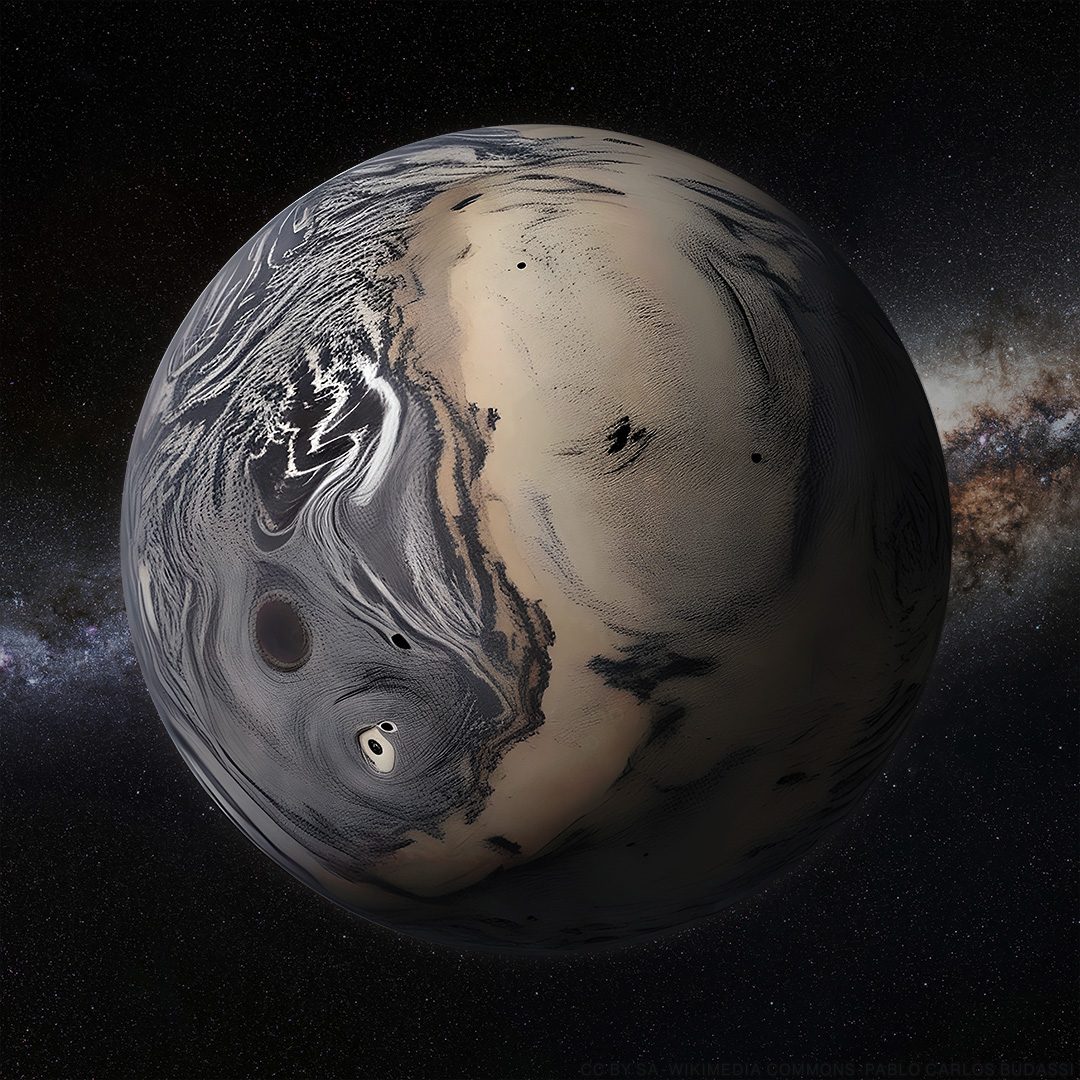
Not every planet is loyal to a star; some roam the galaxy alone, unbound, and almost impossible to see. These so-called rogue planets likely formed in planetary systems like ours but were flung out by gravitational encounters with larger planets or passing stars. Others may have formed directly from collapsing clouds of gas, more like scaled-down stars than traditional planets. Surveys using subtle gravitational lensing effects have suggested there could be vast numbers of these starless worlds wandering the Milky Way, perhaps rivaling or even outnumbering the planets that orbit stars.
The existence of rogue planets forces a rethink of what we mean by a planetary system and where interesting environments might exist. A lonely planet drifting between stars seems like an unlikely place for anything to happen, but if it carries a thick atmosphere or a subsurface ocean insulated by ice, it could retain internal heat for eons. Some models suggest that a planet with a dense hydrogen atmosphere could even stay warm enough at the surface to host liquid oceans, lit only by starlight from distant suns. For planetary scientists, each rogue world is like an uncontrolled experiment in long-term isolation, potentially revealing how planets evolve when they are cut off from the energy of a parent star.
6. Black Holes Can Power Beams Longer Than Galaxies
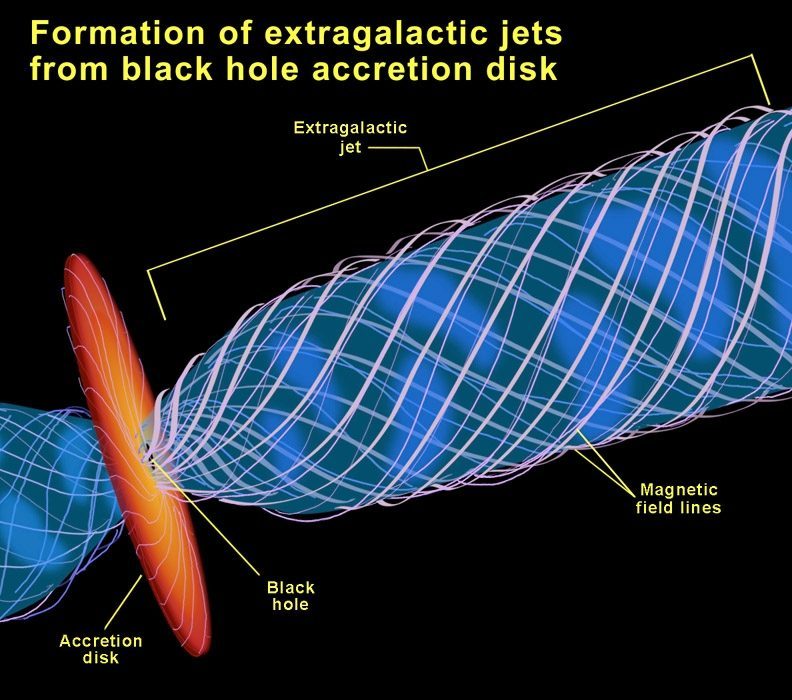
Black holes are famous for their appetite, but some of the strangest things they do happen not when they swallow matter, but when they almost do. In the hearts of active galaxies, supermassive black holes surrounded by spinning disks of infalling gas can launch colossal jets that shoot out at nearly light speed. These jets, made of charged particles guided by twisted magnetic fields, can extend far beyond their host galaxies, stretching for hundreds of thousands or even millions of light-years. Seen in radio or X-ray images, they look like narrow, glowing lances stabbing into intergalactic space.
What makes these beams so bizarre is their efficiency and scale. A region barely larger than our solar system can, under the right conditions, channel enough energy to light up volumes of space larger than entire clusters of galaxies. The jets inflate vast bubbles in surrounding gas, heating and stirring it in ways that can throttle or trigger star formation on cosmic scales. For astrophysicists, these black hole engines are not just curiosities; they are central players in the story of how galaxies grow and evolve. Studying them is like watching a controlled fusion experiment, except the device is a black hole and the lab spans millions of light-years.
7. Space Smells Like Hot Metal and Burnt Steak (If You Could Smell It)
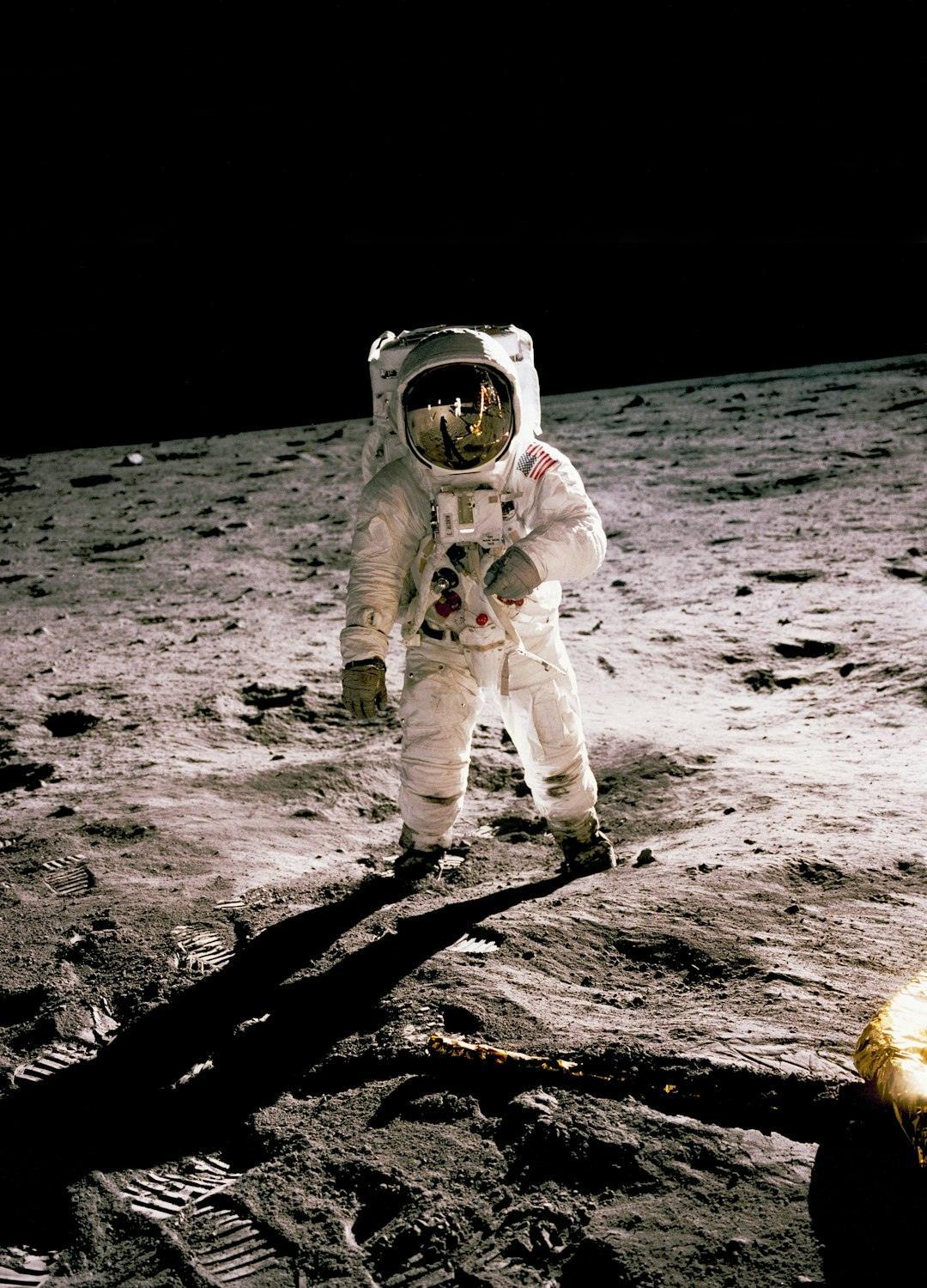
There is no air in space to carry smell to your nose, but astronauts who have worked on the exterior of spacecraft report something surprising when they come back inside. After spacewalks, their suits and equipment are often described as carrying a scent reminiscent of hot metal, seared meat, or welding fumes. The leading explanation is that high-energy particles in space create complex, reactive molecules on exposed surfaces, especially polycyclic aromatic hydrocarbons, which have strong, smoky odors in Earth-like conditions. When those molecules hitch a ride back into the spacecraft, they finally have an atmosphere in which to volatilize and reach human noses.
On a broader scale, the galaxy is threaded with the same kinds of carbon-rich molecules that likely contribute to that smell. Spectroscopic surveys of interstellar clouds have revealed rich chemical soups that include organic compounds, alcohols, and simple sugars. While no one is opening a window in space to sniff the interstellar medium, these detections do show that the universe is chemically busy and surprisingly fragrant in theory. For astrobiologists, these complex molecules are not about aroma, but about ingredients for life, seeding future solar systems with carbon-based building blocks. Still, there is something disarmingly human about the thought that the Milky Way, in some sense, carries the tang of overcooked barbecue and hot metal.
8. The Universe Has a Cosmic “Speed Limit” That Shapes Everything
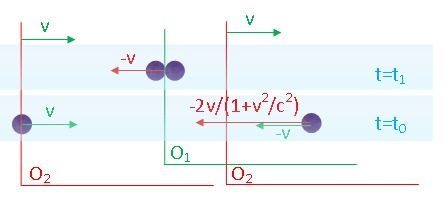
One of the strangest truths in physics is that there is a hard speed limit in the universe, and it is not just a guideline – it is the rulebook. According to Einstein’s theory of relativity, nothing with mass can accelerate to or beyond the speed of light in a vacuum. As objects move faster, their energy and effective inertia rise dramatically, requiring more and more energy for each extra fraction of speed. Near light speed, that energy requirement becomes effectively infinite, slamming the door on any hope of breaking the limit with conventional matter.
This cosmic speed limit is not just a quirk; it shapes almost every aspect of how we explore and understand space. It sets a floor on how long messages take to travel between Earth and distant spacecraft, and an upper bound on how quickly any future crewed missions could traverse the solar system. On interstellar scales, it makes the distances between stars feel even more daunting, turning our galaxy into a patchwork of neighborhoods separated by travel times longer than human lifespans. Yet this same limitation preserves cause and effect and underpins modern technologies like GPS, which rely on relativistic timing corrections. In a sense, the speed of light is the referee of the universe’s grand experiment, quietly enforcing the rules behind every discovery we make.
9. Why These Strange Matter
It is tempting to treat glass rain, diamond planets, and rogue worlds as mere trivia, but each of these oddities is a data point in a much bigger scientific story. For centuries, our understanding of the cosmos was shaped by a handful of local examples: one Sun, a few planets, and a small sample of stars overhead. Telescopes like Hubble, Kepler, and now the James Webb Space Telescope have blown that provincial view apart, revealing a universe full of extreme cases that routinely defy our expectations. Where earlier astronomers relied heavily on elegant but idealized theories, today’s researchers have to wrestle with messy, surprising realities.
Compared with traditional textbook astronomy, which often focused on neat orbits and simple stellar types, modern space science is far more experimental and exploratory. Astronomers simulate storms on glass-rain worlds, model the interiors of hyper-dense stars, and recreate black hole jets inside supercomputers. Particle physicists mine neutron star mergers for clues about fundamental forces, while chemists study interstellar molecules to understand how life’s ingredients spread. Each bizarre finding forces theories to stretch or break, sharpening our understanding in the process. These strange facts matter precisely because they are uncomfortable – they are the outliers that keep science honest.
10. The Future Landscape of Weird Space Discoveries
If the last few decades of space science have taught us anything, it is that the universe is better at being weird than we are at imagining it. The next generation of observatories – from more sensitive gravitational-wave detectors to massive radio arrays and advanced X-ray telescopes – will almost certainly reveal phenomena we do not yet have names for. Future exoplanet missions will be able to sniff the atmospheres of smaller, cooler worlds, searching not just for life but for exotic weather and chemistry. Meanwhile, improved computer models will let scientists run more detailed experiments in silico, testing how planets form, migrate, and sometimes get ejected into the darkness.
Alongside the big observatories, a new wave of small satellites, cubesats, and private missions is adding scrappy creativity to the mix. These projects can target niche questions, from microgravity experiments to focused surveys of specific star systems. There will also be challenges: dealing with satellite congestion in orbit, managing data floods from observatories that generate more information than we can easily process, and ensuring that discoveries are shared fairly across the global scientific community. Yet the overall trajectory is clear. We are moving into an era where “strange but true” will not be rare headlines, but a steady drumbeat that keeps rewriting what we think the universe can do.
11. How You Can Engage with Space Science

You do not need a PhD or a telescope the size of a house to take part in this unfolding story of strange cosmic discoveries. Many observatories and missions run citizen science projects where volunteers help classify galaxies, spot exoplanet transits, or sift through gravitational-wave candidates. Public data archives allow anyone with a laptop and some curiosity to download real observations and play with them, sometimes even turning up overlooked oddities. Local astronomy clubs offer access to telescopes and shared expertise, turning a vague interest in the night sky into hands-on experience.
Supporting space science can also be as simple as staying informed and amplifying good information. Following reputable research institutions, space agencies, and science journalists helps cut through the noise and keeps attention on discoveries that actually move the field forward. Voting for policies and funding that sustain basic research and Earth-observing missions matters too, because the same tools that study distant galaxies also monitor our changing planet. Even small actions, like sharing a particularly mind-bending image with a friend or taking a child to a planetarium, help cultivate the next generation of people who will ask better, stranger questions. In a universe this weird, curiosity itself is one of the most powerful tools we have.
Suhail Ahmed is a passionate digital professional and nature enthusiast with over 8 years of experience in content strategy, SEO, web development, and digital operations. Alongside his freelance journey, Suhail actively contributes to nature and wildlife platforms like Discover Wildlife, where he channels his curiosity for the planet into engaging, educational storytelling.
With a strong background in managing digital ecosystems — from ecommerce stores and WordPress websites to social media and automation — Suhail merges technical precision with creative insight. His content reflects a rare balance: SEO-friendly yet deeply human, data-informed yet emotionally resonant.
Driven by a love for discovery and storytelling, Suhail believes in using digital platforms to amplify causes that matter — especially those protecting Earth’s biodiversity and inspiring sustainable living. Whether he’s managing online projects or crafting wildlife content, his goal remains the same: to inform, inspire, and leave a positive digital footprint.