Some of Egypt’s greatest cities no longer rise in stone above the Nile; they lie broken and silent under dunes, salt flats, and tilled fields, erased from maps but not from history. Over the last few decades, archaeologists armed with satellites, magnetometers, and even drone-mounted lasers have begun to trace their outlines again, almost like developing an ancient photograph. These lost cities challenge the neat, textbook version of ancient Egypt as a simple procession of pyramids and pharaohs along the river. Instead, they reveal a restless landscape of shifting trade routes, climate shocks, wars, and religious revolutions. Their rediscovery is rewriting what we thought we knew about the world’s most famous civilization – and raising new questions that scientists are only beginning to answer.
Thonis-Heracleion: The Drowned Gateway of the Nile Delta
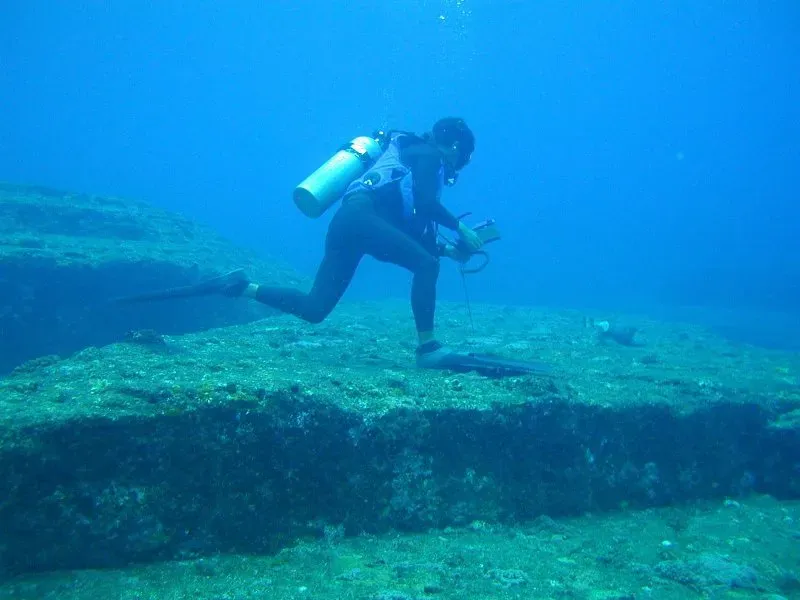
For centuries, Thonis-Heracleion lived mostly in legends, a bustling port somewhere in the Delta where Greek and Egyptian worlds collided, supposedly lost to the sea. Then, in the early 2000s, underwater archaeologists began to pull colossal statues, temple blocks, and cargoes of ancient ships from the seafloor of Abu Qir Bay, confirming that a real city had indeed slipped beneath the waves. What they found was the outline of a port that once controlled access to Egypt from the Mediterranean, a kind of customs bottleneck for foreign traders. Massive temple complexes, canals, and quays show that religion, trade, and royal power were tightly woven together here.
Scientific surveys using side-scan sonar and sub-bottom profiling revealed that the city’s foundations rested on fragile, waterlogged sediments that slowly compacted and liquefied, helping drag its monuments downward. Combined with creeping sea-level rise and occasional earthquakes, this soft geology likely turned stone streets into submerged ruins over several centuries. Among the finds were ritual deposits, coins, and imported ceramics that map out a dense web of trade between Egypt, Greece, and the wider Mediterranean. The very fact that such a major hub could vanish from memory for so long is a sharp reminder of how incomplete the written record can be.
Tanis: The Sand-Choked Capital That Rivaled Thebes
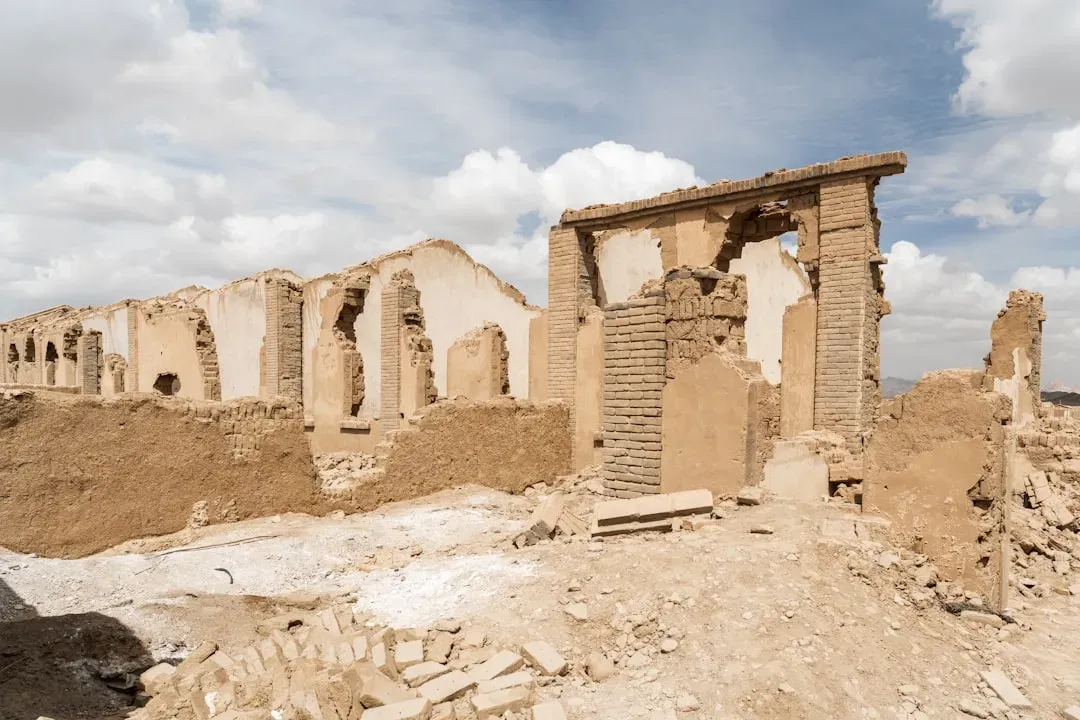
Tanis, once a royal capital in Egypt’s Third Intermediate Period, lay hidden under mounds of dust and debris in the northeastern Delta, its grandeur dulled by time and neglect. When excavators first began peeling back the layers in the twentieth century, they found colossal statues, temple walls, and royal tombs that had been largely overlooked by the public compared with the Valley of the Kings. The city flourished when central power fragmented and local rulers in the Delta asserted their autonomy, reshaping what it meant to be “pharaoh.” Stone blocks originally carved for earlier kings at Pi-Ramesses and other sites were hauled here and reused, turning Tanis into a patchwork of recycled glory.
Modern surveys combining ground-penetrating radar with magnetometry have sketched out a sprawling temple district that still lies mostly unexcavated beneath the village and fields. Burial chambers discovered at Tanis held intact royal treasures made of gold, silver, and precious stones, yet they are less famous simply because they do not carry the brand-name appeal of Tutankhamun. To archaeologists, however, the graves at Tanis are just as important, documenting a messy, improvisational era when Egypt’s elite adapted to political instability. The fact that such a capital could quietly slip into the background shows how history tends to favor dramatic moments over long, complicated transitions.
Avaris: The Hyksos Stronghold Beneath a Later Pharaoh’s Pride
Beneath the great Ramesside city of Pi-Ramesses in the eastern Delta lies an older settlement that once horrified Egyptian scribes: Avaris, the capital of the foreign Hyksos rulers. For a long time, Avaris was mostly a name in hostile texts that painted its kings as usurpers who disrupted the natural order. Excavations at Tell el-Dab’a, however, have uncovered a busy port city lined with palaces, warehouses, and sprawling cemeteries, revealing a more complex story of migration and cultural mixing. Archaeologists found Levantine-style houses, foreign burial customs, and imported pottery alongside very Egyptian temples and art.
By tracking microscopic pollen grains, animal bones, and isotopes in human teeth, researchers have pieced together a picture of a city plugged deep into Near Eastern trade networks. This kind of multi-proxy science shows that Avaris was less an “invasion base” and more a frontier hub where different populations gradually mingled. When later pharaohs expelled the Hyksos and built Pi-Ramesses over the site, they tried to overwrite this history with stories of liberation and triumph. Today, the buried layers of Avaris challenge that official narrative and remind us that ancient Egypt’s borders were often more porous than patriotic inscriptions suggest.
Pi-Ramesses: The Vanished City of a Warrior King
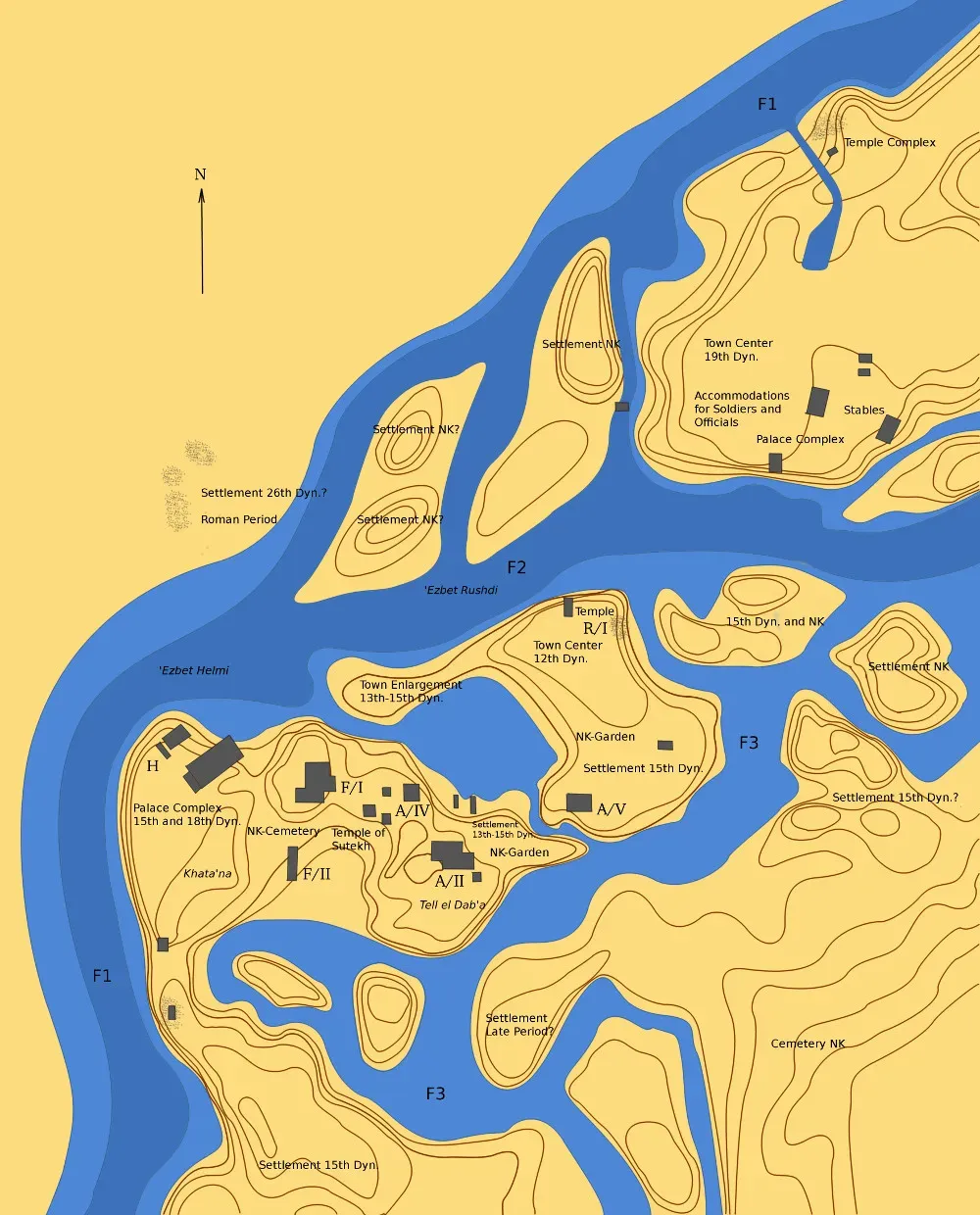
Pi-Ramesses, the palace city of Ramesses II, was once promoted by royal inscriptions as a dazzling metropolis packed with chariots, granaries, and monumental temples. Yet for years, archaeologists struggled to find it where early explorers thought it should be, near the modern town of Tanis. Only when survey teams started using geomagnetic mapping and reexamining ancient river courses did a surprising conclusion emerge: the city had been built where the Nile’s Pelusiac branch once flowed, then effectively stranded when the river shifted. Stone blocks were carted off to build Tanis, leaving only ghostly street patterns in the soil.
From the air and in magnetometer data, Pi-Ramesses now appears as an intricate lattice of streets, industrial zones, and stables stretched along the abandoned riverbank. Evidence of large-scale bronze and chariot production points to a city that was both political showpiece and military engine. The site demonstrates how vulnerable capitals can be to environmental change; a slowly migrating river essentially killed a royal city without a single decisive catastrophe. This makes Pi-Ramesses a textbook case for how climate, hydrology, and human ambition can collide, with repercussions that outlast even legendary pharaohs.
Amarna (Akhetaten): The Desert Capital of a Religious Revolution
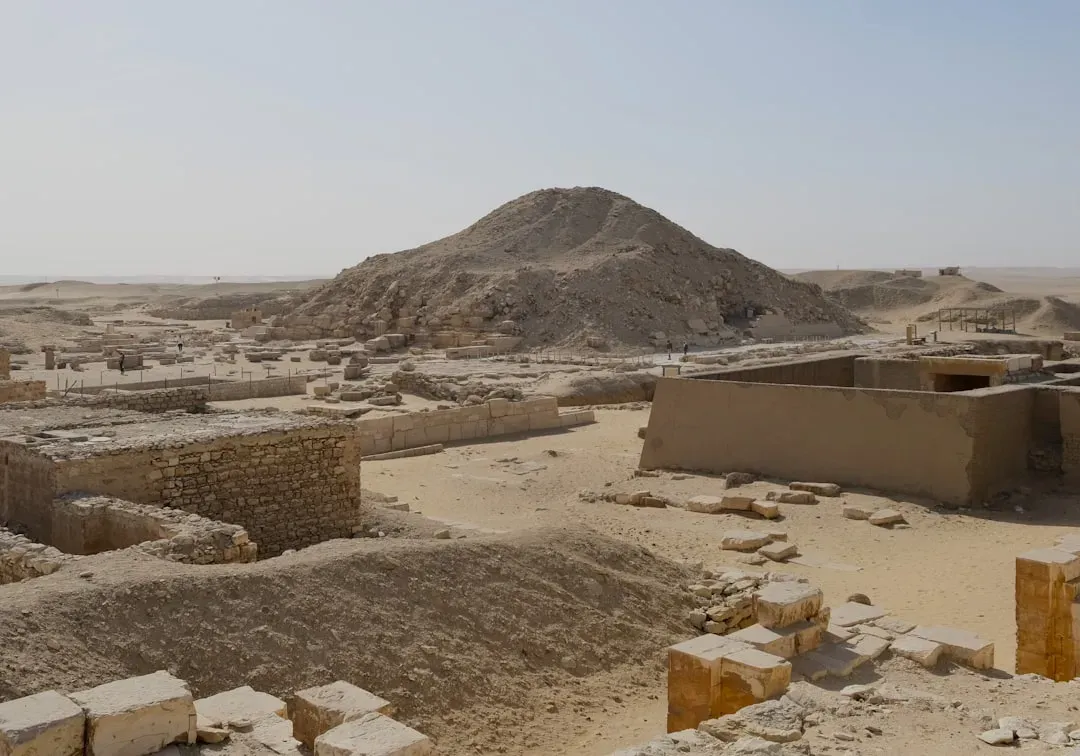
Akhenaten’s city of Akhetaten, better known today as Amarna, rose quickly on a stark desert bay in Middle Egypt and fell almost as fast, abandoned within a generation. Built to serve a radical religious experiment centered on the sun disk Aten, the city boasted wide avenues, open-air temples, and palaces that broke with older architectural traditions. When Akhenaten died and his successors restored the old gods, they systematically erased his cult, smashed reliefs, and marched the court back to traditional centers. Amarna, exposed and isolated away from the Nile’s main floodplain, was left to crumble into the sand.
For archaeologists, that short life has turned out to be a gift. Because the city was not continuously inhabited for centuries, its urban layout is unusually clear, preserving everything from palaces to workmen’s villages and even private altars in simple houses. Bioarchaeological studies of the city’s cemeteries have revealed signs of hard physical labor, malnutrition, and high child mortality among non-elite residents, complicating any romantic image of Akhenaten’s utopian vision. Amarna thus serves as both a snapshot of rapid urban planning and a cautionary tale about top-down religious and political experiments that ignore economic and social realities.
Buhen and Nubian Fort Cities: Stone Guardians Now Underwater
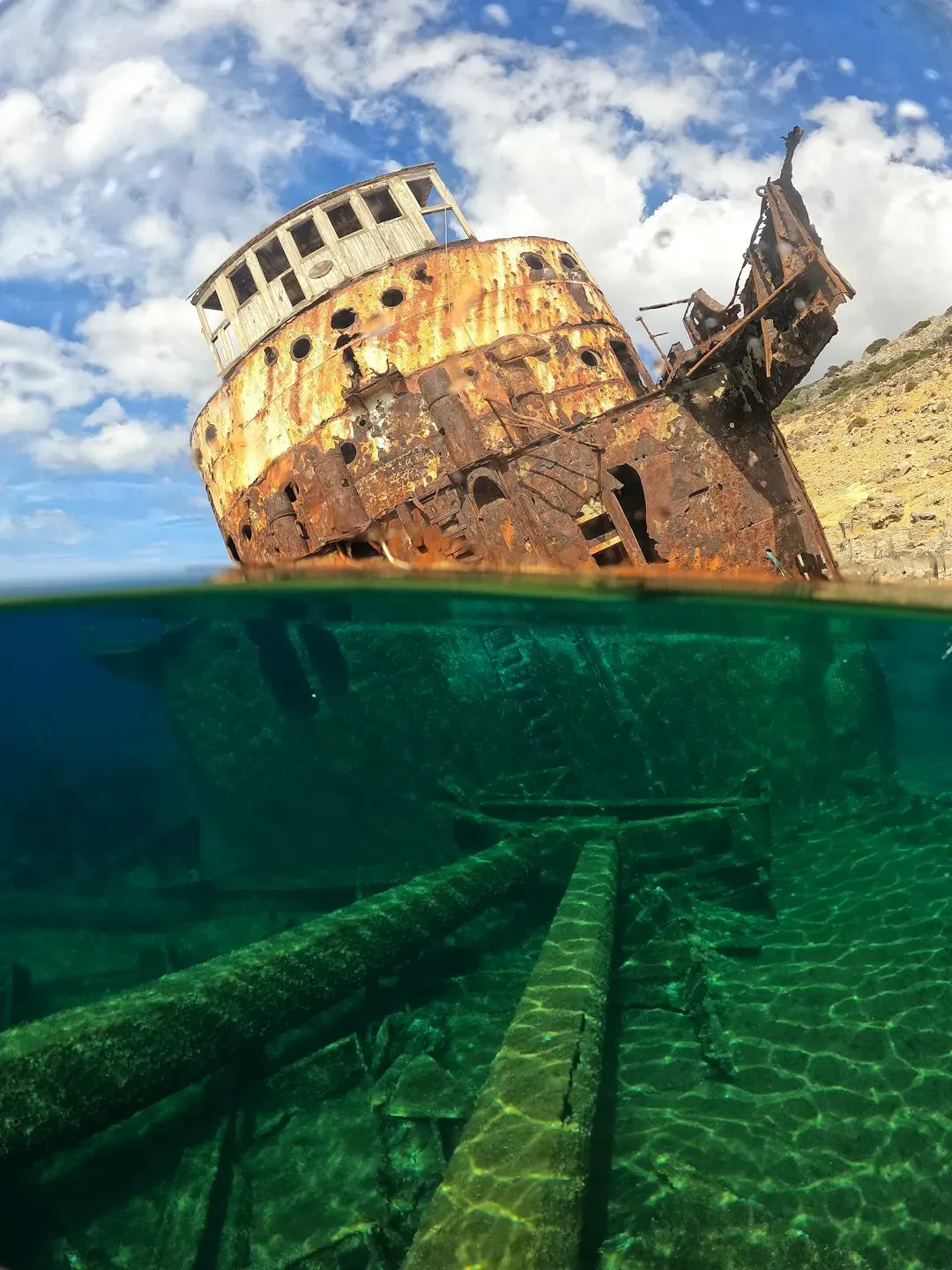
Far to the south, the fortress-city of Buhen once guarded Egypt’s gateway into Nubia, its thick walls looming over the Nile cataracts like a stone battleship. Inside those walls were streets, workshops, temples, and barracks that supported soldiers, administrators, and families for centuries. In the 1960s, however, the rising waters behind the Aswan High Dam flooded this entire stretch of the Nile Valley. Buhen and several neighboring fort cities were documented as hastily as possible and then left to disappear under Lake Nasser.
What we know comes from those rescue excavations: tightly packed housing quarters, industrial zones for metalworking, and evidence of intense cultural exchange between Egyptians and Nubians. Today, underwater surveys and remote-sensing techniques continue to refine our understanding of where exactly these sites sit beneath the lake’s surface. The story of Buhen is a stark example of how modern development can erase ancient landscapes even as it helps preserve others through reduced erosion. It also highlights the ethical tension facing archaeologists who must choose what to save when an entire region is about to vanish beneath the waterline.
Tell el-Borg and the Desert Forts: Ghost Cities of the Eastern Frontier
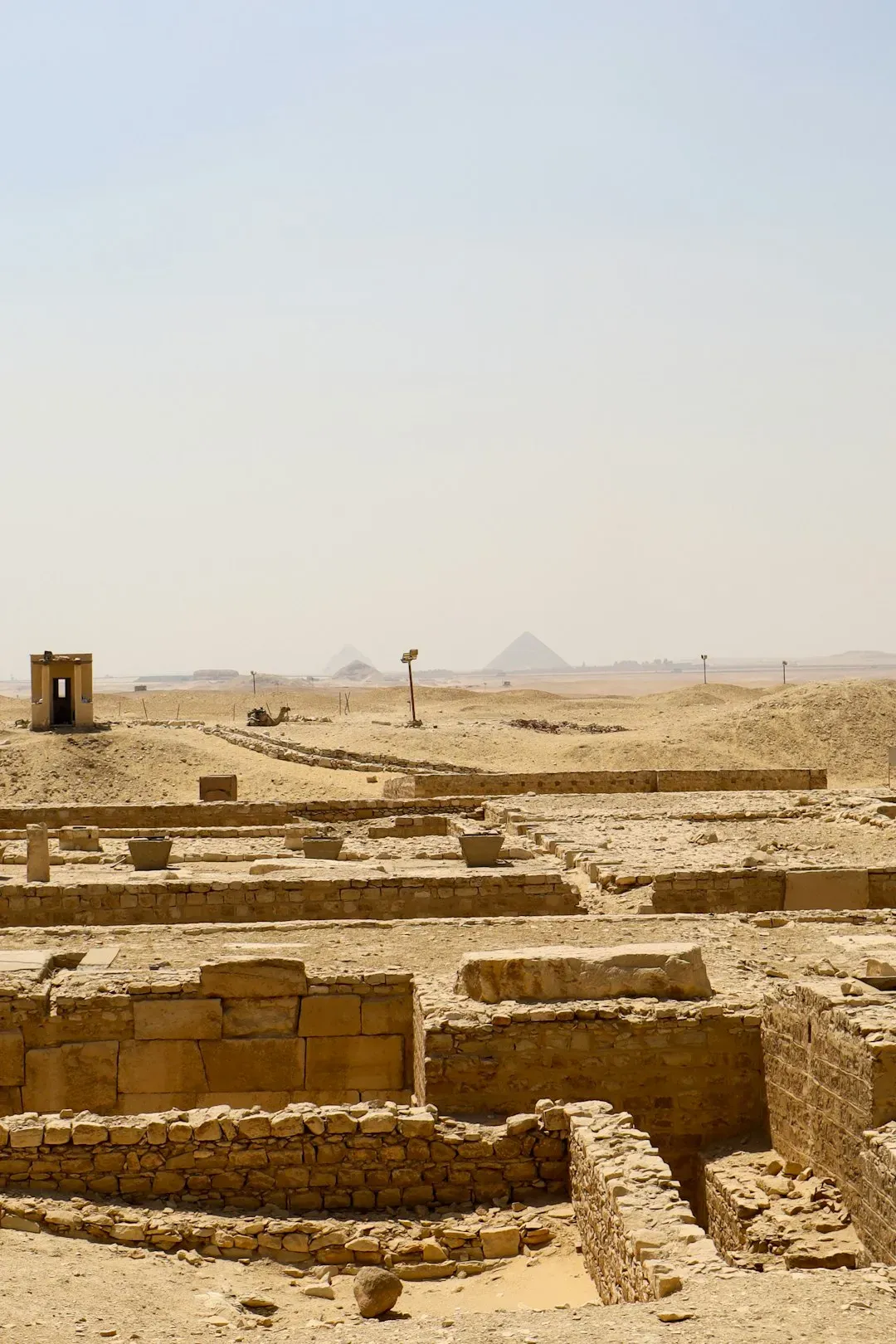
Along Egypt’s sandy northeastern borders, a chain of little-known forts and way stations once monitored traffic in and out of the Nile Valley. Tell el-Borg, near the modern Suez Canal, is one of these buried guardians, its ramparts and barracks half-swallowed by desert dunes. Archaeologists working here have uncovered mudbrick walls, gatehouses, and arrowheads that point to an active defensive role in the New Kingdom period. Yet the forts also held granaries, wells, and shrines, underscoring that life at the edge of empire mixed routine domestic work with the constant possibility of conflict.
Modern satellite imagery and drone mapping have been crucial in connecting sites like Tell el-Borg into a coherent frontier system, something that would be almost impossible to reconstruct from ground-level views alone. These forts show how geography shaped Egypt’s security strategy, forcing pharaohs to anchor their power not just with grand temples but with gritty outposts. As modern construction and military zones spread across the same terrain, the risk is that many of these small, crucial cities will be damaged beyond recovery before they are fully studied. Their partial preservation in the sand offers a narrow window into how ancient states managed borders long before modern passports and checkpoints.
Why These Buried Cities Matter Far Beyond Archaeology
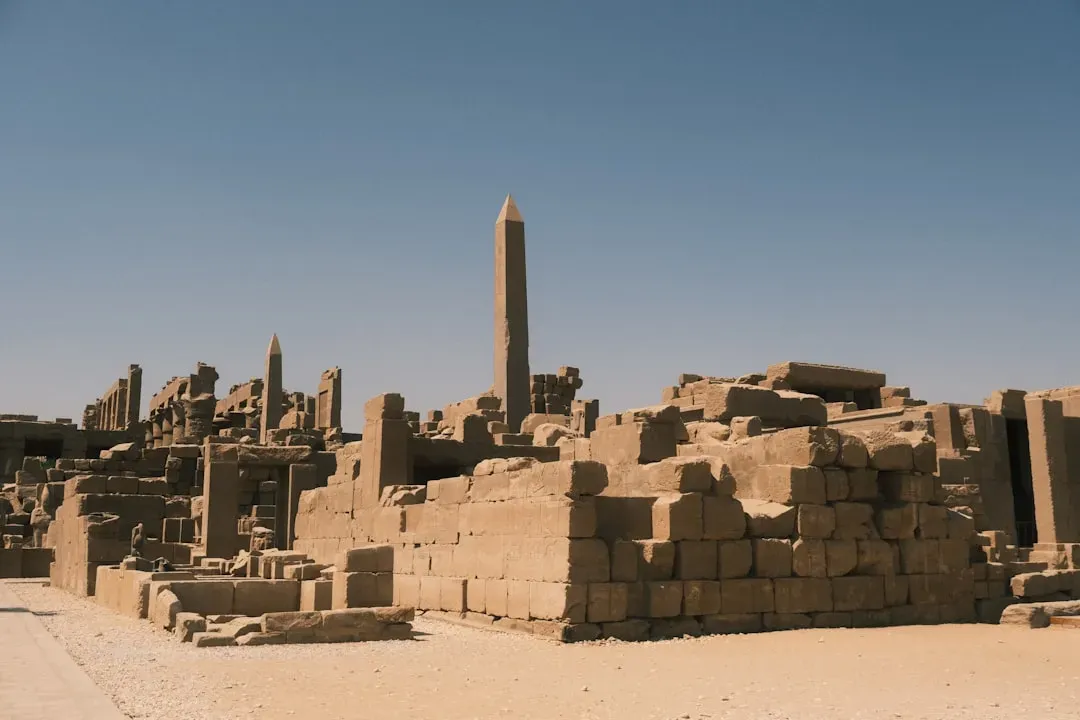
It might be tempting to think of these forgotten Egyptian cities as mere curiosities, dusty footnotes to the “real” story told by pyramids and famous tombs. In reality, they force historians and scientists to rethink big assumptions about how complex societies grow, adapt, and collapse. When you compare places like Pi-Ramesses, abandoned because a river shifted, with Thonis-Heracleion, slowly drowned by creeping sea-level rise, patterns begin to emerge about environmental vulnerability. Cities such as Avaris, rich in evidence of immigrants and cultural mixing, contradict the idea of a closed, homogenous Egypt and instead suggest a dynamic, sometimes messy frontier culture.
These sites also expose the limits of traditional archaeological methods that focused narrowly on monumental architecture and elite burials. New discoveries often come not from glamorous digs but from patient analysis of remote-sensing data, soil chemistry, and microscopic remains. By folding in climate reconstructions, river modeling, and isotopic studies, researchers build a far more holistic picture of how ancient Egyptians navigated risk, opportunity, and identity. In a world today where coastal cities face rising seas and river deltas are rapidly changing, the lessons from these buried capitals and forts feel uncomfortably familiar rather than distant.
The Future Landscape: Satellites, Algorithms, and Shifting Sands
What may be most astonishing is that many of Egypt’s lost cities are still genuinely lost, existing only as faint shadows in satellite images or as anomalies in geophysical surveys. Advances in high-resolution radar and multispectral imaging are allowing researchers to see through sand and soil in ways that would have sounded like fantasy only a generation ago. Algorithms trained to spot geometric patterns are starting to flag possible city plans, canal systems, and fort lines across vast stretches of the desert and Delta. Combining these digital maps with limited, targeted excavations helps protect fragile sites while still expanding knowledge.
At the same time, the race is on against modern pressures: expanding agriculture, urban sprawl, looting, and climate-driven changes to groundwater all threaten to erase what remains in the ground. Future work will depend heavily on international collaboration, careful management of tourism, and policies that recognize buried archaeological landscapes as non-renewable resources. There is also a technological gap between what wealthier institutions can do with cutting-edge tools and what local teams on the ground can actually sustain year after year. The fate of Egypt’s forgotten cities will likely hinge on whether this mix of innovation and stewardship can stay a step ahead of destruction.
How You Can Stay Engaged with Egypt’s Hidden Cities
For most of us, the idea of walking through a newly uncovered Egyptian city feels impossibly remote, something reserved for specialists in sun-bleached hats. Yet there are surprisingly direct ways to engage with this unfolding story from anywhere in the world. Many research projects now share open-access reports, digital reconstructions, and field diaries online, turning distant digs into something closer to a collaborative adventure. Museums are gradually updating their exhibits and labels to reflect new findings about places like Thonis-Heracleion, Avaris, and Amarna, so paying attention to those quieter updates can be incredibly revealing.
- Support reputable archaeological and heritage organizations that fund fieldwork and conservation.
- Visit museum exhibitions that highlight new science, not just the most photogenic artifacts.
- Be a critical consumer of sensational “lost city” headlines and look for projects that publish real data.
- Encourage policies and tourism practices that protect sites rather than overexpose them.
On a more personal level, staying curious about how these buried cities connect to modern issues – migration, climate change, cultural identity – keeps them from being reduced to mere spectacle. The sands of Egypt are still hiding stories that will surprise us, unsettle us, and occasionally force us to rewrite familiar chapters. The question is not whether more forgotten cities wait to be found, but how much of their message we will still be able to hear when we finally uncover them.
Suhail Ahmed is a passionate digital professional and nature enthusiast with over 8 years of experience in content strategy, SEO, web development, and digital operations. Alongside his freelance journey, Suhail actively contributes to nature and wildlife platforms like Discover Wildlife, where he channels his curiosity for the planet into engaging, educational storytelling.
With a strong background in managing digital ecosystems — from ecommerce stores and WordPress websites to social media and automation — Suhail merges technical precision with creative insight. His content reflects a rare balance: SEO-friendly yet deeply human, data-informed yet emotionally resonant.
Driven by a love for discovery and storytelling, Suhail believes in using digital platforms to amplify causes that matter — especially those protecting Earth’s biodiversity and inspiring sustainable living. Whether he’s managing online projects or crafting wildlife content, his goal remains the same: to inform, inspire, and leave a positive digital footprint.