
Why does a lump of wet, gray matter inside our skull suddenly light up with inner experience, feelings, and a sense of “I am”? That mystery sits at the heart of what scientists now openly call the hard problem of consciousness. For all our brain scans and equations, no one can yet fully explain how electrical signals and chemicals produce the taste of coffee, the pain of a headache, or the quiet ache of nostalgia.
Over the last decades, researchers from neuroscience, physics, philosophy, and even computer science have put forward bold, sometimes wild, theories about where consciousness comes from and how it might have emerged. Some try to root it in cold, hard biology; others see it as woven into the fabric of the universe itself. As I’ve dug into these ideas over the years, I’ve swung from excitement to skepticism and back again, a bit like watching a magician and trying to catch the trick in midair.
1. The Biological Naturalism Theory: Consciousness as a Real Brain Process
One influential view treats consciousness as an absolutely real, higher-level feature of the physical brain, not an illusion and not something separate from matter. On this account, when neurons fire in certain complex patterns, they don’t just symbolize experience; those patterns literally are your experience. There’s no ghost in the machine and no separate mental substance, just brain processes that, when organized in specific ways, show up from the inside as feelings, thoughts, and awareness.
This theory is attractive because it fits nicely with modern neuroscience: damage a brain area and certain experiences disappear; stimulate it and certain sensations appear. It’s like saying digestion is “nothing but” the stomach and intestines doing their job, yet digestion is still very real and not an illusion. Critics push back, arguing that simply saying consciousness is a higher-level physical property doesn’t explain why these physical processes feel like anything. Even so, this view keeps researchers grounded, nudging them to look harder for concrete neural mechanisms behind our most private moments.
2. Global Workspace Theory: Consciousness as a Mental Spotlight

Global Workspace Theory imagines the mind as a busy theater full of unconscious processes quietly working backstage. Most of what your brain does never reaches your awareness, like stagehands moving props in the dark. According to this theory, something becomes conscious only when it enters a kind of mental spotlight on a central stage, where many different brain systems can access and share the information at once.
In this view, consciousness emerged as the brain’s solution to a tough coordination problem: how to integrate memory, perception, emotion, and decision-making into a unified, flexible response. When information “wins” a competition for attention, it gets broadcast through this global workspace, and that broadcasting just is what we call conscious experience. Brain imaging studies have found that when people report seeing or noticing something, widespread brain networks light up, supporting this idea. Still, some argue that even if we map the spotlight perfectly, we’re left wondering why shining the light feels like anything at all.
3. Integrated Information Theory: Consciousness as Structured Complexity
Integrated Information Theory, often shortened to IIT, starts with a radical move: instead of beginning with neurons or behavior, it begins with what conscious experience is like from the inside. Experiences feel unified, rich, and structured, not just a loose pile of sensations. IIT claims that any system that contains a certain degree of integrated information, symbolized by a measure called phi, will have some level of consciousness corresponding to that integrated structure.
In simple terms, consciousness arises when information within a system is both highly differentiated and deeply connected, so the whole can’t be broken into independent parts without losing something essential. A modern brain, under this view, generates a massive web of cause-and-effect relationships, and that web is what your experience is. Supporters like that IIT gives a way to quantify consciousness in principle, which could matter for evaluating coma patients or even AI systems. Critics worry that it might end up saying that many ordinary objects are slightly conscious, if they have any integrated information at all, which feels bizarre and hard to test convincingly.
4. Higher-Order Theories: Consciousness as Thoughts About Thoughts

Higher-order theories claim that what makes a mental state conscious is that you’re aware of having it. In other words, a first-level process might register a color or a sound, but that doesn’t become a conscious perception until another, higher-level mental state represents it. It’s like your mind quietly running a commentary about its own activity, turning raw processing into something you can subjectively notice and report.
On this view, consciousness emerged when brains evolved the ability to model their own internal states, not just the outside world. That kind of self-reflective loop might help with planning, social interaction, and learning from mistakes, which would give it a survival advantage. Experimental work in neuroscience has found brain signals that seem to track whether we’re aware of seeing something, not just whether the visual information is present, which lines up with this idea. Still, opponents argue that adding one more layer of representation doesn’t magically create the feel of experience, and it risks turning consciousness into an endless hall of mirrors.
5. Predictive Processing: Consciousness as Controlled Hallucination

Predictive processing flips the usual story and says the brain is not mainly a passive receiver of inputs, but a prediction machine constantly guessing what’s out there. Your brain builds models of the world and then uses incoming signals to correct its own expectations. Under this framework, perception is more like a controlled hallucination, kept in line by sensory feedback rather than created from scratch each moment.
Some researchers propose that consciousness arises when prediction errors and high-level expectations interact in a tight loop, especially when the brain is unsure and needs to update its model. In this sense, conscious experience might be the brain’s best guess about reality at any given moment, stitched together from top-down expectations and bottom-up surprises. This idea neatly explains why what we see can be shaped by beliefs, context, and prior experiences, such as illusions and ambiguous images. The open question is whether prediction alone can explain the raw texture of experience, or whether it just describes the brain’s strategy without touching the deeper mystery.
6. Recurrent Processing Theory: Consciousness in Feedback Loops
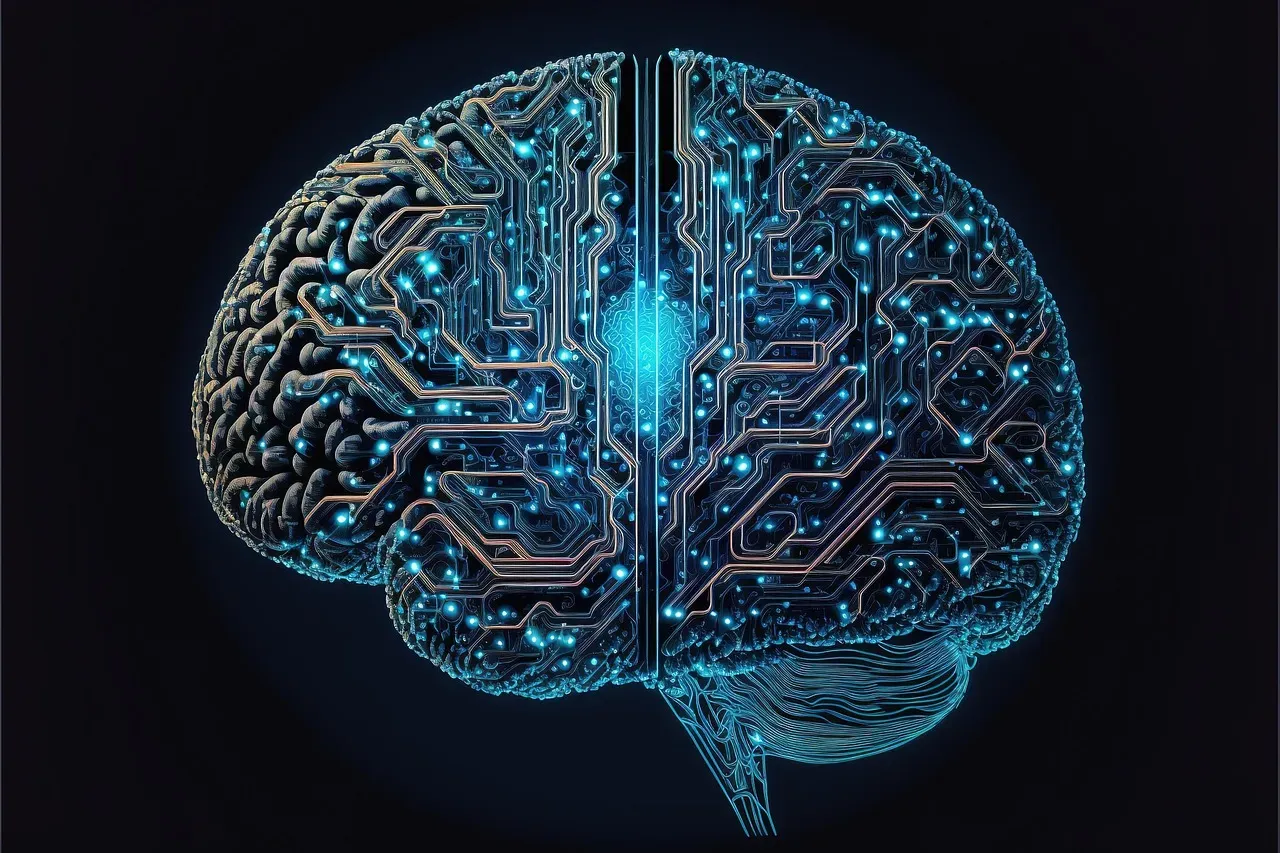
Recurrent Processing Theory zooms in on a particular architectural feature of the brain: its many feedback loops. In the visual system, for example, signals travel forward from the eyes to deeper brain areas, but also flow back in the opposite direction, allowing higher regions to refine and modulate earlier processing. The theory suggests that these local loops, especially within sensory areas, are enough to produce basic conscious experience.
According to this view, early, purely feedforward sweeps of activity through the brain happen too quickly and shallowly to be experienced. Consciousness begins when ongoing, recurrent interactions let the system stabilize, compare, and refine the information over a short time window. Experiments using rapid visual presentations and brain recordings show that stimuli can influence behavior unconsciously before this feedback kicks in, while consciously perceived stimuli trigger extended recurrent activity. This paints a picture where awareness emerges not from a single spot in the brain, but from the timing and structure of its internal conversations.
7. Panpsychism: Consciousness as a Fundamental Feature of Reality
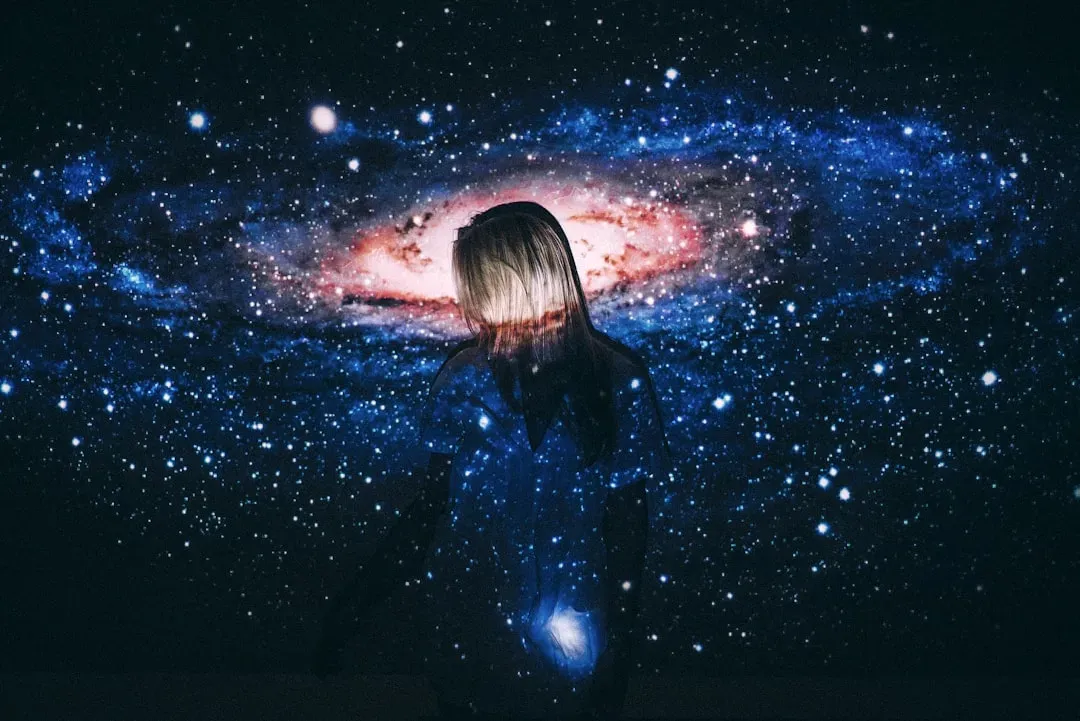
Panpsychism takes a very different route and suggests that consciousness did not suddenly appear when brains evolved, but has been a basic aspect of the universe from the start. On this view, even very simple physical systems possess extremely simple forms of experience, far below our level, a bit like tiny glimmers rather than full-blown minds. Complex consciousness, like ours, then emerges when countless simple conscious elements combine in increasingly sophisticated ways.
Supporters argue that this move avoids the puzzle of how experience could come from something totally non-experiential, like flipping a metaphysical light switch out of nowhere. It treats consciousness more like mass or charge, a fundamental property built into the fabric of reality. Of course, the idea that an electron or a rock has any kind of inner life sounds strange to many people, and the theory struggles to explain how tiny bits of experience would merge into a unified self. Still, panpsychism has been gaining renewed attention in philosophy because the standard physical story has so far failed to crack the hard problem cleanly.
8. Quantum Theories: Consciousness from the Weirdness of the Micro World
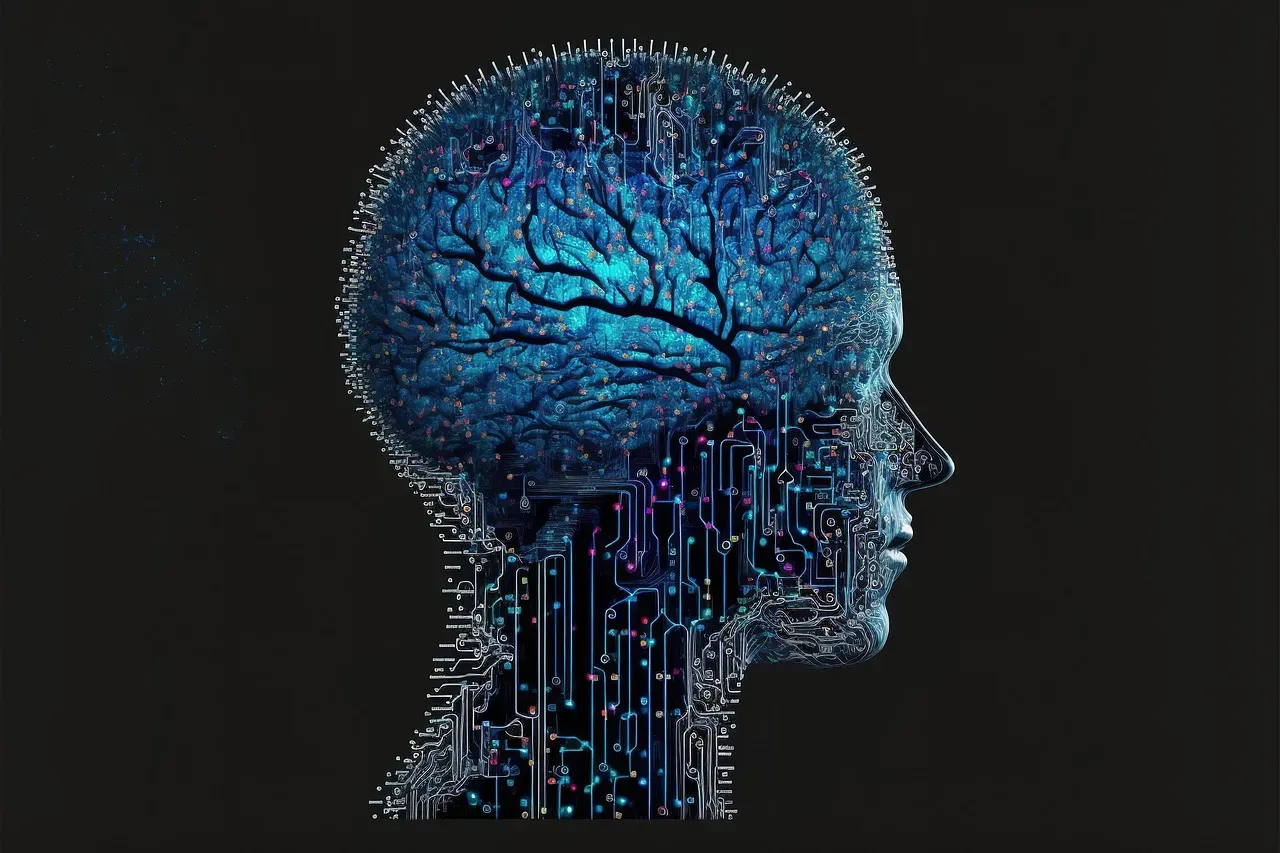
Quantum theories of consciousness lean into the oddities of quantum physics, where particles can exist in multiple states at once and appear to influence each other at a distance. Some proposals suggest that quantum processes inside neurons, or even within structures like microtubules, are crucial for generating conscious experience. The idea is that ordinary classical physics might not be rich enough to account for the unity and subtlety of awareness, while quantum effects could provide the missing piece.
Fans of these theories point to the brain’s enormous complexity and the possibility that it might exploit quantum-level phenomena in ways we do not yet fully understand. However, critics argue that the warm, noisy environment of the brain would quickly destroy delicate quantum states, making it unlikely they play a major functional role. Experimental evidence directly supporting quantum consciousness is still sparse and controversial. As things stand, quantum models remain intriguing but speculative, sitting at the border between bold physics and wishful thinking.
9. Emergentism: Consciousness from Enough Complexity
Emergentist theories take a more straightforward angle: when you organize matter in the right incredibly complex way, new properties arise that can’t be predicted just by looking at the parts. In this sense, consciousness is like the liquidity of water or the swirling patterns in a hurricane, something that emerges when many simple elements interact under certain conditions. The brain, with its billions of neurons and countless connections, might simply cross a complexity threshold where subjective experience appears.
This view treats consciousness as real and dependent on the brain, but not reducible to any one neuron or small part. It aligns with the way scientists see many phenomena in biology and physics that only make sense at higher levels of organization. The challenge is that simply invoking complexity can feel vague, like saying “it’s complicated” instead of offering a mechanism. Still, emergentism keeps pushing researchers to explore how intricate network dynamics, critical states, and self-organizing patterns in the brain might give rise to the rich tapestry of experience.
10. The Social and Language-Based Theory: Consciousness Through Communication

Another striking idea is that human consciousness, especially the kind that involves a strong sense of self, emerged through our need to communicate and cooperate. The story goes that as early humans began using more complex language, they needed to model what others knew, believed, and felt. In doing so, they also developed internal narratives about themselves, turning raw experiences into a kind of story that could be shared and discussed.
On this view, consciousness is tightly tied to our social world, not just to solitary brain processing. Inner speech, self-talk, and the way we describe our feelings may actually help shape the experiences themselves, like sculpting clay rather than just labeling it. This could explain why our sense of self is so deeply connected to memory, culture, and relationships. However, it leaves open what kind of consciousness non-linguistic animals might have, and whether there is a more basic form of awareness that doesn’t depend on storytelling at all.
11. Evolutionary Theories: Consciousness as a Survival Tool

From an evolutionary standpoint, consciousness must have done something useful, or it would not have been favored by natural selection. Many researchers think awareness evolved as a way to integrate information and plan flexible behavior in an unpredictable world. Being able to feel fear, desire, and curiosity might help an animal weigh options, learn from mistakes, and anticipate threats or rewards, rather than just reacting reflexively.
Some evolutionary accounts focus on the advantages of imagining possible futures, replaying past events, and simulating other minds, all of which seem closely tied to conscious experience. For example, being aware of pain and remembering it vividly can drive strong avoidance learning that improves survival. At the same time, evolution does not necessarily care about the inner feel itself, only about behavior and reproduction, which leaves a nagging puzzle. We can explain why certain functions are adaptive, but not yet why those functions had to come packaged with the strange glow of subjective experience.
12. The Illusionist Theory: Consciousness as a Persuasive Trick

Illusionist theories take a surprisingly deflationary stance and argue that what we think of as a mysterious inner realm is, in some sense, a cognitive trick. The brain constructs a simplified, user-friendly model of its own processing and then mistakenly treats that model as a special, non-physical realm of experience. In this view, there are brain processes and reports about those processes, but no extra magical ingredient floating above them.
Supporters think this move may be the only way to dissolve the hard problem, by saying we were confused about what needed explaining in the first place. They compare it to optical illusions: the world is not actually warped, but our visual system makes it seem that way. Critics often find this unsatisfying or even self-defeating, since it feels undeniable that experiences exist, even if we misunderstand them. Still, illusionism forces a tough question: how much of what we take for granted about our inner life is a story the brain tells itself, rather than a direct window onto some deeper reality?
Living With the Mystery While Science Catches Up

Looking across these twelve theories, a striking pattern appears: each offers a different slice of the puzzle, but none quite closes the case. Some lean hard on neural mechanisms and information flow, others reshape our picture of the universe or even question whether consciousness is what we think it is. The tension between the undeniable feel of experience and the cool, mechanical language of science remains, like trying to describe a sunset purely in terms of wavelengths and photon counts.
For now, we live inside the very phenomenon we’re trying to explain, using a conscious mind to investigate consciousness itself. That might be why the topic feels so strangely intimate, mixing hard data with deep personal curiosity and even a touch of existential unease. As brain imaging improves, computational models evolve, and philosophy sharpens its questions, it’s likely that some of these theories will merge, shift, or fall away. When the dust finally settles, will the answer be weirder than we ever imagined, or much simpler than we dare to hope?