
Space is enormous. Honestly, “enormous” doesn’t even scratch the surface. You’re talking about a cosmos so vast and strange that even the sharpest minds on Earth, armed with the most powerful instruments ever built, still stare at their data screens in complete bewilderment. Every time scientists think they’ve figured out another piece of the puzzle, the universe quietly flips the table.
From ghost galaxies that are barely there, to stars that seem to dim for no good reason, to colossal cosmic structures no one expected to find, the universe has a habit of refusing to behave itself. What’s even more fascinating is that the more you look, the more questions pile up. What follows is a tour through twelve discoveries that have genuinely shaken the world of astronomy. Be prepared to question everything you thought you knew.
1. The “Ghost Galaxy” CDG-2: A Universe Made Almost Entirely of Darkness
Picture a galaxy. You’re probably imagining billions of blazing stars, swirling arms of light, a radiant cosmic structure. Now imagine something almost the exact opposite of that. One of the most haunting recent objects, known as CDG-2, could rank among the most dark matter dominated galaxies ever identified. It’s basically a galaxy-shaped hole in the sky, and it’s real.
What makes this discovery so deeply unsettling is the sheer ratio involved. Early measurements indicate that CDG-2 shines with the equivalent light of about six million Sun-like stars, with its four globular clusters accounting for roughly one sixth of all the visible light in the galaxy. Even more striking, about ninety-nine percent of the galaxy’s total mass appears to consist of dark matter. Think about that. You’re looking at something that is almost entirely invisible, yet still technically a galaxy. The universe, it turns out, has a very different idea of what “visible” means.
2. Tabby’s Star: The Dimming That Nobody Can Fully Explain
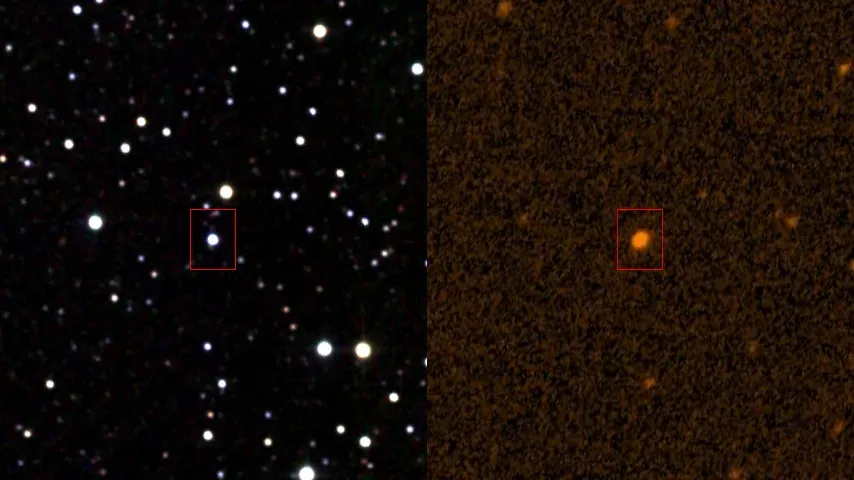
You’d think a star simply getting dimmer would be easy enough to explain. A planet passes in front of it, light dips slightly, done. Not with Tabby’s Star. Located roughly fifteen hundred light-years away in the constellation Cygnus, this F-type star exhibits some of the most bizarre behavior astronomers have ever recorded, dimming by up to twenty-two percent in completely unpredictable patterns. Compare that to the less than one percent dip you’d expect from a planet, and you start to feel the strangeness of this thing.
The erratic brightness drops lack any consistent timing, and some evidence suggests the star has been gradually dimming over the past century. While scientists favor explanations involving circumstellar dust from colliding asteroids or disrupted moons, no single theory fully accounts for these dramatic, irregular light variations. Some researchers have even, somewhat awkwardly, entertained the idea of alien megastructures. Let’s be real, that’s a long shot, but it tells you something when even that ends up on the whiteboard.
3. Fast Radio Bursts: Milliseconds of Cosmic Mystery
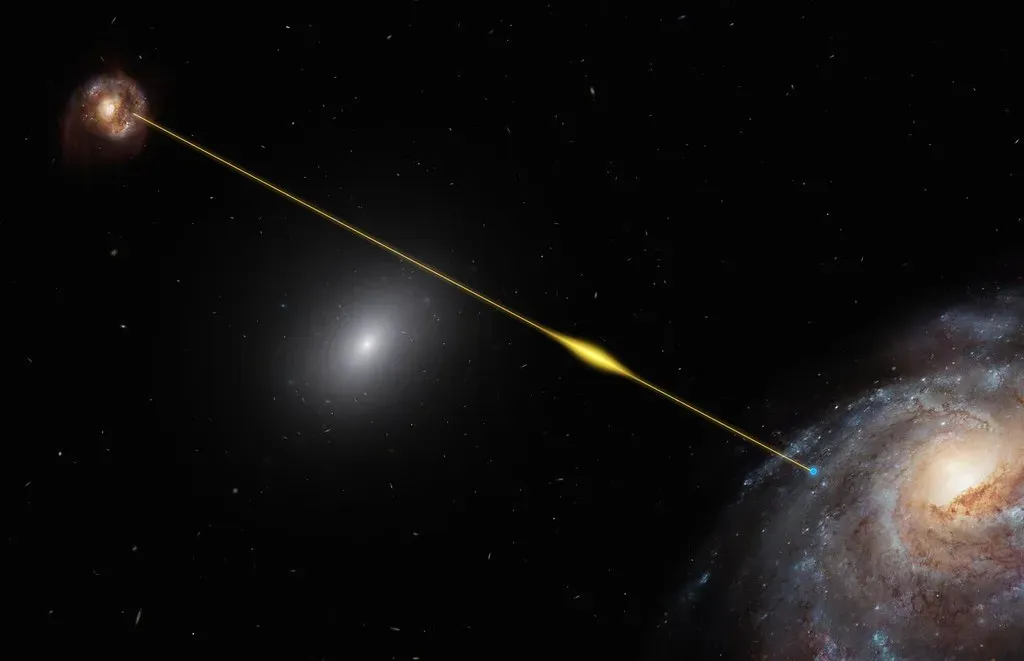
Fast Radio Bursts, or FRBs, are brief but bright flashes of radio waves coming from distant galaxies, lasting just milliseconds but capable of releasing as much energy as the sun does in an entire day. They appear, blaze across the cosmos, and vanish before most instruments can even blink. Scientists have been chasing them ever since. And the more they catch, the more confused they get.
One intense signal, named FRB 20220610A, was first detected on June 10, 2022, and it traveled eight billion light-years to reach Earth. Astronomers traced one of the most powerful and distant fast radio bursts ever detected back to its unusual cosmic home, a rare blob-like group of galaxies, and the unexpected discovery could shed more light on what causes these mysterious bursts, which have puzzled scientists for years. Eight billion light-years. Imagine a sneeze crossing the length of eight billion light-years, and you start to appreciate why these things are so hard to wrap your head around.
4. The Hubble Tension: The Universe Expanding at Two Different Speeds at Once
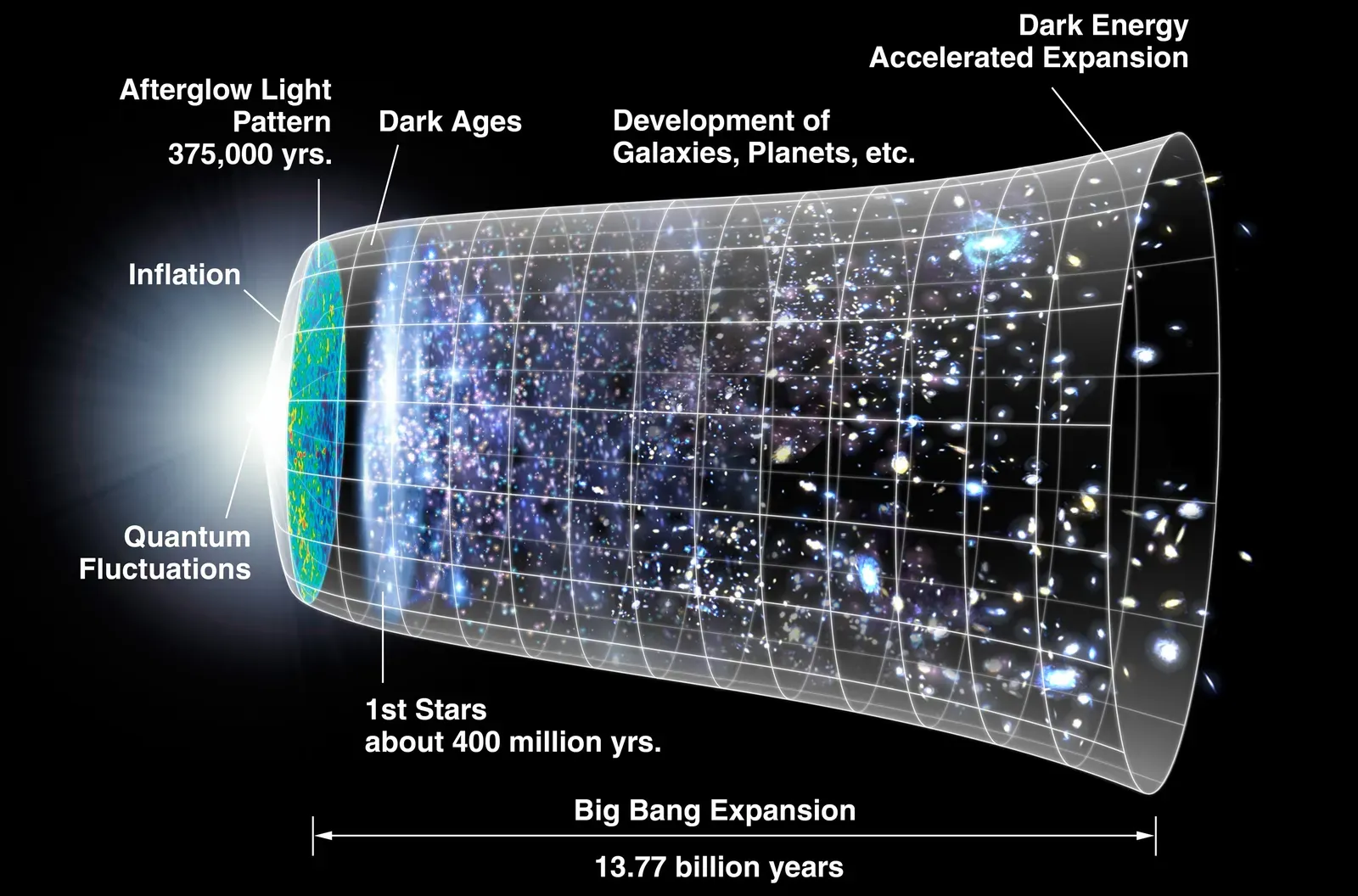
Here’s the thing about physics: it’s supposed to be consistent. Laws don’t change depending on how you measure them. So when scientists realized the universe appears to be expanding at two measurably different rates depending on which method you use, it caused something close to a collective meltdown in cosmology. The Hubble tension is an unresolved discrepancy between two independent methods of determining the universe’s expansion rate, yielding differing values for the Hubble constant.
Recent measurements show a disagreement known as the Hubble tension, where different methods of measuring the expansion rate give different results, leading to serious questions about what we actually know about the universe. Scientists are now using Fast Radio Bursts as a new independent tool to try to crack this problem, but results continue to underscore the ongoing tension between early and late-time measurements of the Hubble constant. It’s hard to say for sure, but some researchers think this could mean entirely new physics, things beyond our current models, are lurking in the shadows.
5. Odd Radio Circles: Giant Cosmic Rings Nobody Was Expecting
This tag does not indicate the copyright status of the attached work. A normal copyright tag is still required. See Commons:Licensing., CC BY 4.0)
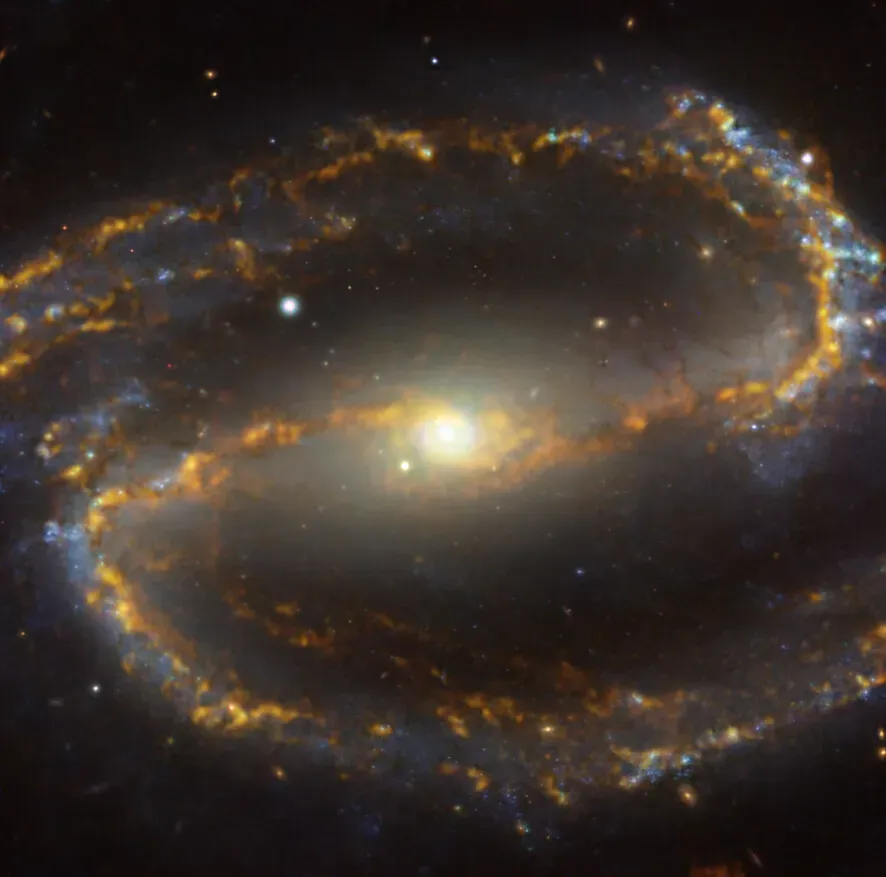
When astronomers first spotted them, some thought it was a data error. Clean, perfect, enormous rings in the radio sky, with nothing obviously inside them to explain their existence. These enormous ring-shaped structures span roughly one million light-years across and emit exclusively in radio wavelengths, making them invisible to optical telescopes. First spotted in 2019, these perfectly circular halos don’t match any known cosmic phenomena like supernova remnants or galaxy clusters.
Think of it like finding a perfectly drawn circle in a meadow with no footprints leading to it. The scale of these things is almost impossible to process. One million light-years across. Our entire Milky Way galaxy is roughly one hundred thousand light-years wide, meaning these rings could swallow ten Milky Ways end to end. Theories range from enormous explosions to exotic galactic wind events, but honestly, no single explanation has landed yet. The rings remain one of the most genuinely mysterious structures in modern astronomy.
6. The Interstellar Comet 3I/ATLAS: A Stranger From Another Star System
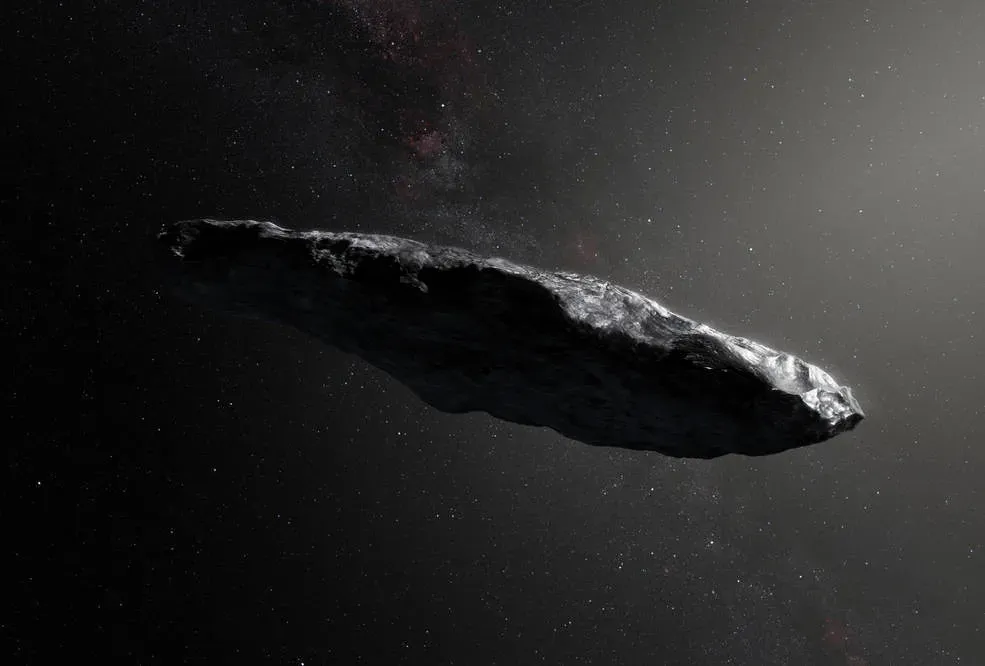
Imagine a rock from another solar system dropping in for an unannounced visit, and then leaving forever before you can really study it. The comet 3I/ATLAS was first spotted making its way through our part of space in July 2025, and astronomers have been pointing every available telescope at it ever since. It’s only the third interstellar object ever found, which makes every second of observation priceless.
3I/ATLAS was likely ejected during the early formation of another planetary system, meaning that examining its composition could provide insights into the formation environment around other stars. The results have already been surprising: lots of carbon dioxide, nickel vapour, and water activity all hint at chemical behaviour very different from comets formed in our own solar system. It’s essentially a postcard from a completely alien world, written in chemistry instead of words. Fascinating, deeply strange, and already racing away from us.
7. Betelgeuse’s Secret Companion: The Star With a Hidden Friend
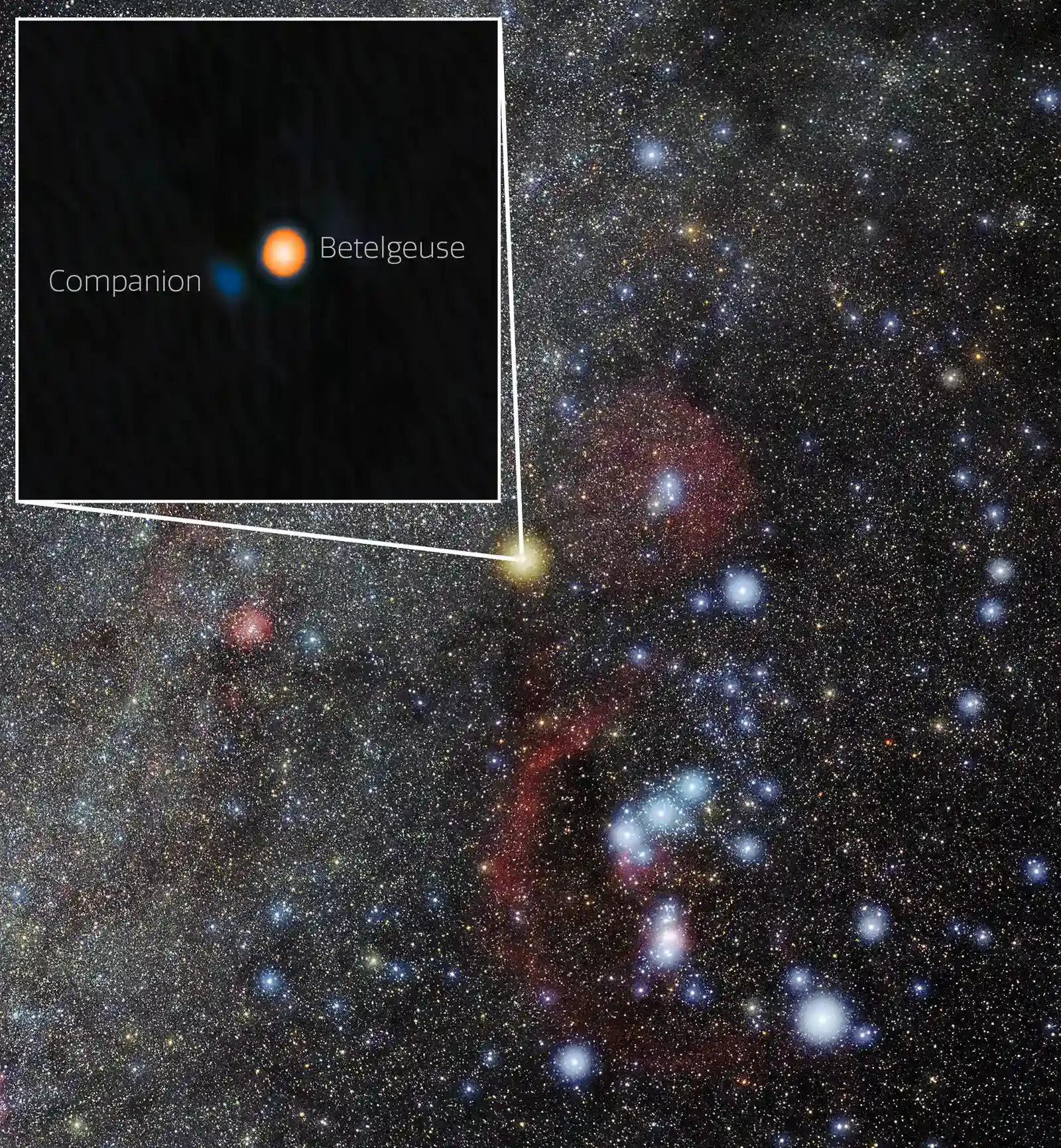
Betelgeuse has been one of the most watched stars in the night sky for decades, largely because it occasionally dims in ways that sent the internet into a frenzy about an impending supernova. The bizarre glowing patterns of Betelgeuse, a red supergiant star in the constellation Orion, have puzzled astronomers for years. It turns out, it had help all along.
In 2024, astronomers hypothesized that Betelgeuse might have a tiny stellar companion, a so-called BetelBuddy, that could explain this strange phenomenon, and a team of scientists led by Steve B. Howell, a senior research scientist at NASA’s Ames Research Center, confirmed this to be true. With the discovery of this small, dim companion star, astronomers finally understand why Betelgeuse’s brightness varies on a roughly 400-day cycle, with a secondary period lasting about six years. A hidden partner, quietly tugging at one of the most famous stars in our sky. Sometimes the universe hides things in plain sight.
8. Supermassive Black Holes That Grew Too Fast, Too Soon
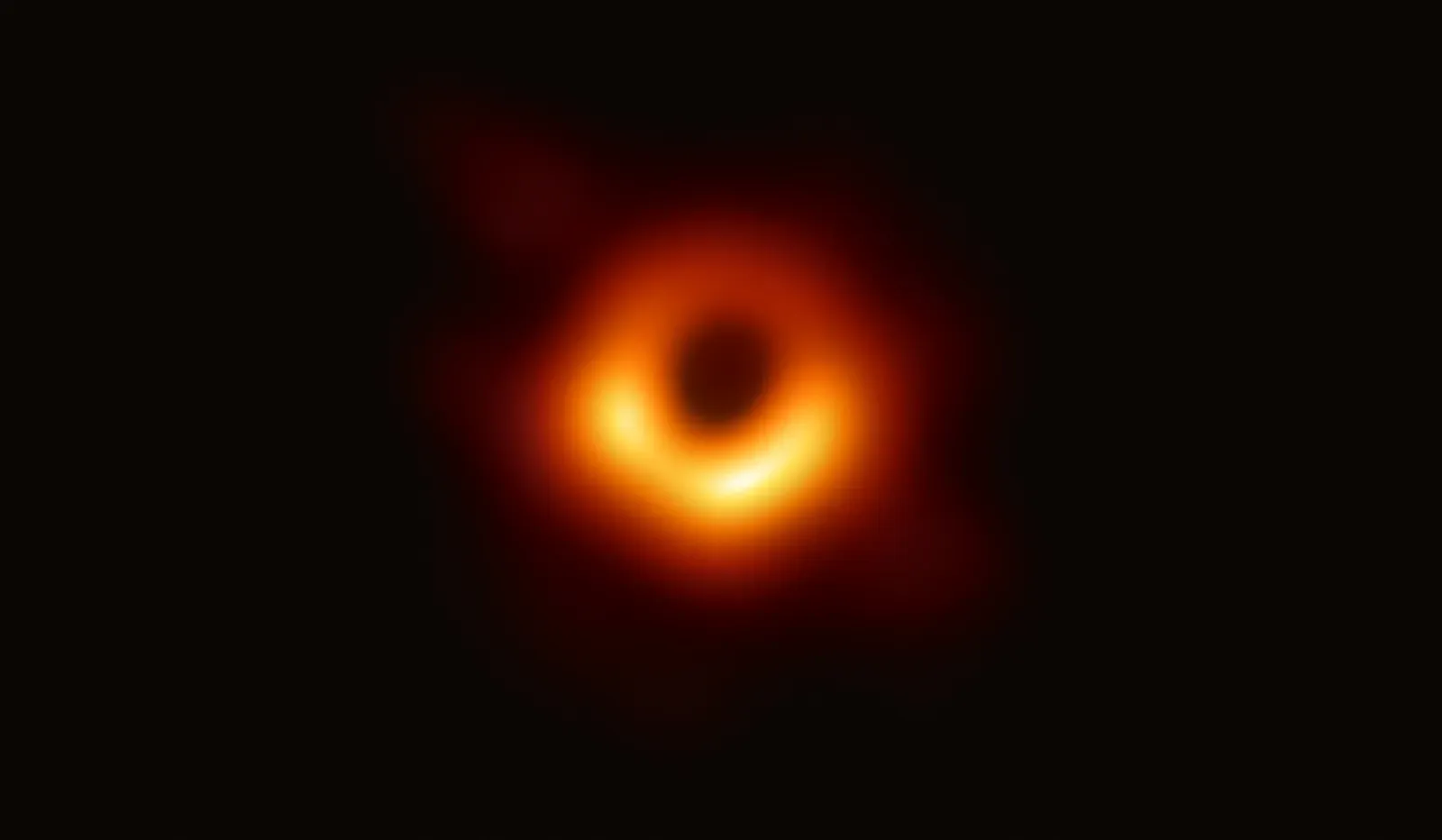
Conventional understanding says that supermassive black holes should take enormous stretches of time to grow to their mind-bending sizes. So when the James Webb Space Telescope started finding them fully formed in the extremely early universe, it caused a genuine crisis in the field. Researchers using the James Webb Space Telescope confirmed an actively growing supermassive black hole within a galaxy just 570 million years after the Big Bang, and this object, part of a class of small distant galaxies that have mystified astronomers, challenges existing theories about the formation of galaxies and black holes in the early universe.
There is one problem that the James Webb Space Telescope has made significantly worse: the telescope has excelled in discovering supermassive black holes at the dawn of the universe, and while that sounds like a good thing, it has been a little worrying for scientists. How do you grow something billions of times the mass of the sun in just a cosmic blink of time? As one researcher previously described the baffling situation, it’s a bit like finding a fully grown adult in a nursery, with no explanation for how they got there so fast.
9. The Fermi Bubbles: Mystery Lobes Over Our Own Galaxy
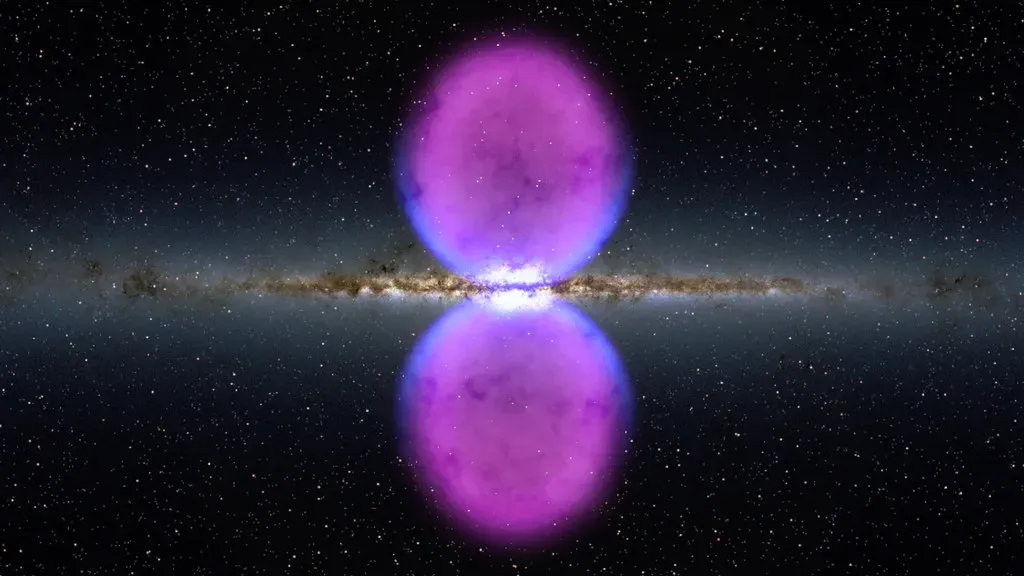
You’d think that if our own galaxy had something unusual attached to it, we’d have noticed sooner. Apparently not. The Fermi Bubbles were first discovered in 2010 when data from NASA’s Fermi Gamma-ray Space Telescope spotted a massive and mysterious structure in our galaxy, with the feature resembling a pair of bubbles extending above and below the galaxy’s structure. These are not small features either. From end to end, the newly discovered gamma-ray bubbles extend roughly fifty thousand light-years, which is approximately half of the Milky Way’s diameter.
The two lobes blast out in opposite directions from the galactic center, like the universe is blowing bubbles from the inside of our home galaxy. Scientists suspect they are remnants of a massive burst of star formation, though no one knows for certain. Others think they could be leftover energy from when our central supermassive black hole was in a more active, voracious phase. Either way, something enormous happened right at the heart of the Milky Way, and whatever it was left a mark so big we almost missed it while looking outward at the rest of the universe.
10. The Quipu Superstructure: A Cosmic Chain That Defies the Models

Cosmological models have a firm prediction: there’s a limit to how large a single cosmic structure can be. The universe expands too fast, the thinking goes, for gravity to knit things together beyond a certain scale. Then Quipu arrived and politely ignored that rule. Early in 2025, astronomers revealed the largest cosmic superstructure ever detected, a vast chain of galaxy clusters linked together in three-dimensional space, named “Quipu” after Incan knotted cords used for record keeping.
Quipu consists of sixty-eight galaxy clusters, stretches at least one point four billion light-years in length, and carries a mass of approximately two hundred and forty million billion times the mass of the Sun. That’s not a typo. And superstructures such as Quipu help us understand how matter is distributed across the universe, though right now, understanding is the one thing they’re complicating. Structures this large push hard against the boundaries of what current physics allows, and no one is quite sure yet what to do with that.
11. The Mysterious Leopard-Spotted Mars Rock: Life, or Not?
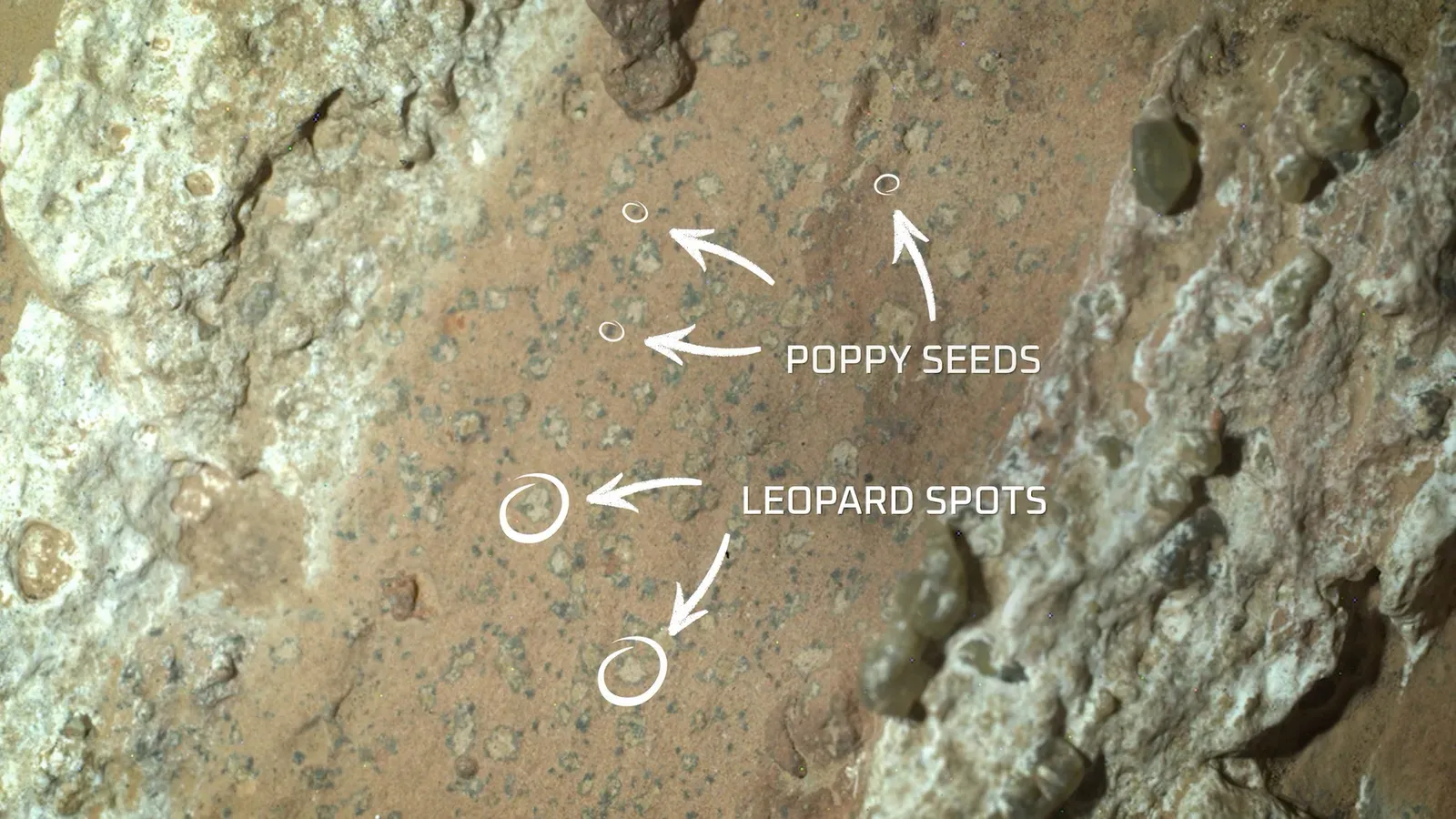
Few discoveries in recent years have generated as much breathless excitement as a single, strange-looking rock on the Martian surface. The rock, thought to be around three and a half billion years old and discovered by NASA’s Perseverance rover in the Jezero Crater in July 2024, left planetary scientists trying to work out what created the unusual markings. The leading theory is that they came from ancient Martian microbes. It’s called Cheyava Falls, and it’s become one of the most debated rocks in the history of science.
In 2024, NASA’s Perseverance rover recovered the rock sample with what looked like leopard spots on it, and in 2025, researchers announced they had identified them as minerals and textures that on Earth are often associated with microbial activity. It’s a strong indication that once there might possibly have been life on Mars. While other, non-biological explanations do exist and can’t yet be ruled out, we’ve genuinely never been closer to finding evidence of life somewhere other than Earth. That sentence alone is worth sitting with for a moment.
12. A Massive Star That Collapsed Into a Black Hole Without Exploding
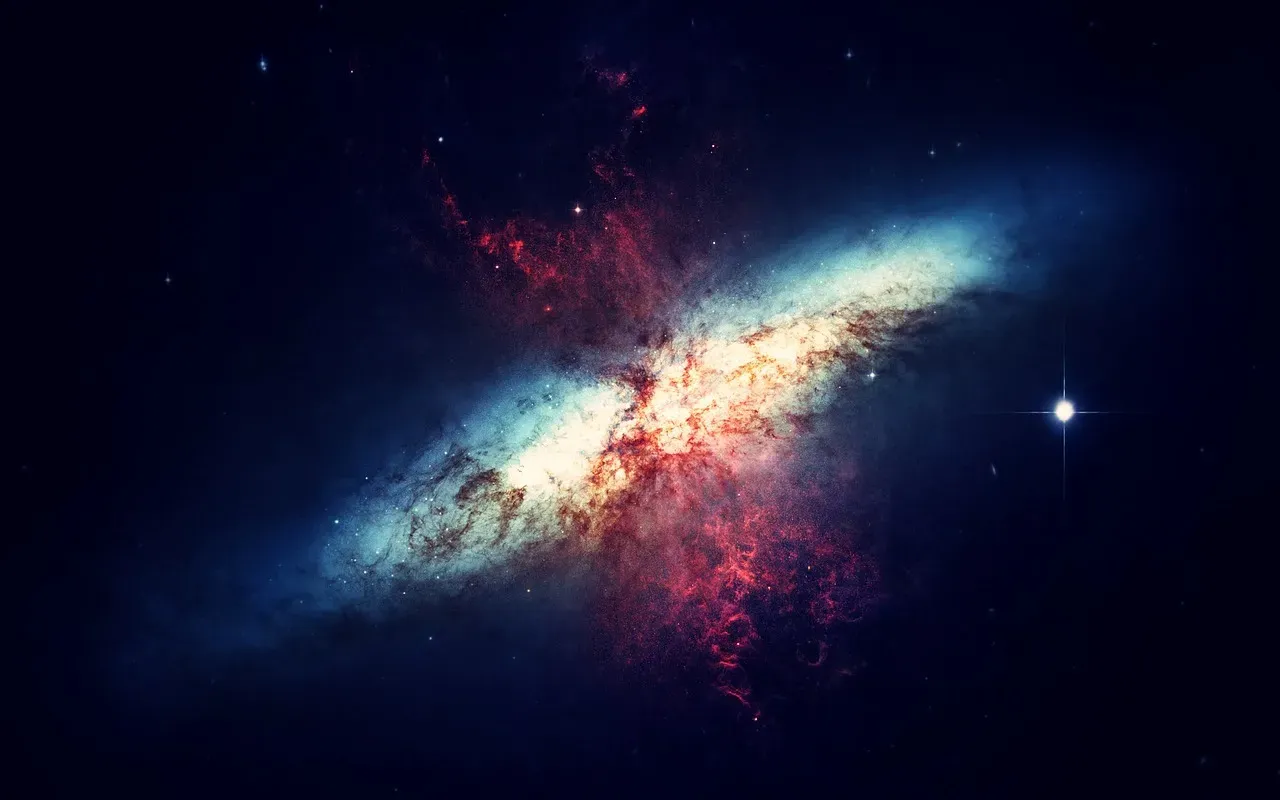
When a massive star dies, the universe is supposed to throw a spectacular party. A supernova, one of the most violent and luminous events in all of astronomy, should blaze across the cosmos. Stars don’t just quietly disappear. Except, apparently, sometimes they do. A massive star two and a half million light-years away simply vanished, and astronomers now know why: instead of exploding in a supernova, it quietly collapsed into a black hole, shedding its outer layers without the expected fireworks.
This discovery rewrites part of the playbook for stellar evolution. Scientists had always assumed supernovae were the obligatory final act for stars massive enough to collapse. The idea of a star just silently winking out of existence, no explosion, no dramatic light show, just gone, feels almost eerie. It raises a significant question: how many other stars have done this throughout cosmic history, vanishing without a trace while we were looking elsewhere? The universe, it turns out, keeps some of its most dramatic moments entirely to itself.
Conclusion: The Universe Refuses to Be Solved
The universe continues to surprise us with phenomena that challenge our understanding of physics and astronomy, and despite years of advanced technology and scientific research, some cosmic mysteries remain stubbornly unsolved. That’s not a failure of science. That’s exactly how science is supposed to work: each answer cracking open a dozen new doors, each door hiding something stranger than what came before.
What’s genuinely thrilling about this moment in astronomy is the sheer pace of discovery. From ghost galaxies to inexplicable interstellar visitors, from stars with secret companions to rocks that might hold the first evidence of life beyond Earth, we’re living through a golden era of cosmic revelation. The tools are sharper, the telescopes are deeper, and the questions are better than ever. The universe still holds most of its secrets. But we’re getting closer, one baffling discovery at a time.
Which one of these twelve discoveries struck you the hardest? The nearly invisible ghost galaxy? The leopard-spotted rock on Mars? The star that disappeared without a sound? Tell us in the comments. Because honestly, the universe is stranger than any of us expected, and it’s just getting started.