
Have you ever wondered if scientists can truly see into the future? You’re about to discover something remarkable. Throughout history, brilliant minds have made bold predictions based purely on mathematics, patterns, and theoretical frameworks. Then, against all odds, reality confirmed they were right.
History is full of wild predictions that have come true, from world events to groundbreaking inventions where some of the biggest moments in history were shockingly foreseen long before they happened. These weren’t just lucky guesses. They were calculated insights that changed how you understand the universe. Let’s dive into twelve of the most stunning predictions that science got absolutely right.
Einstein’s Gravitational Waves Ripple Into Reality
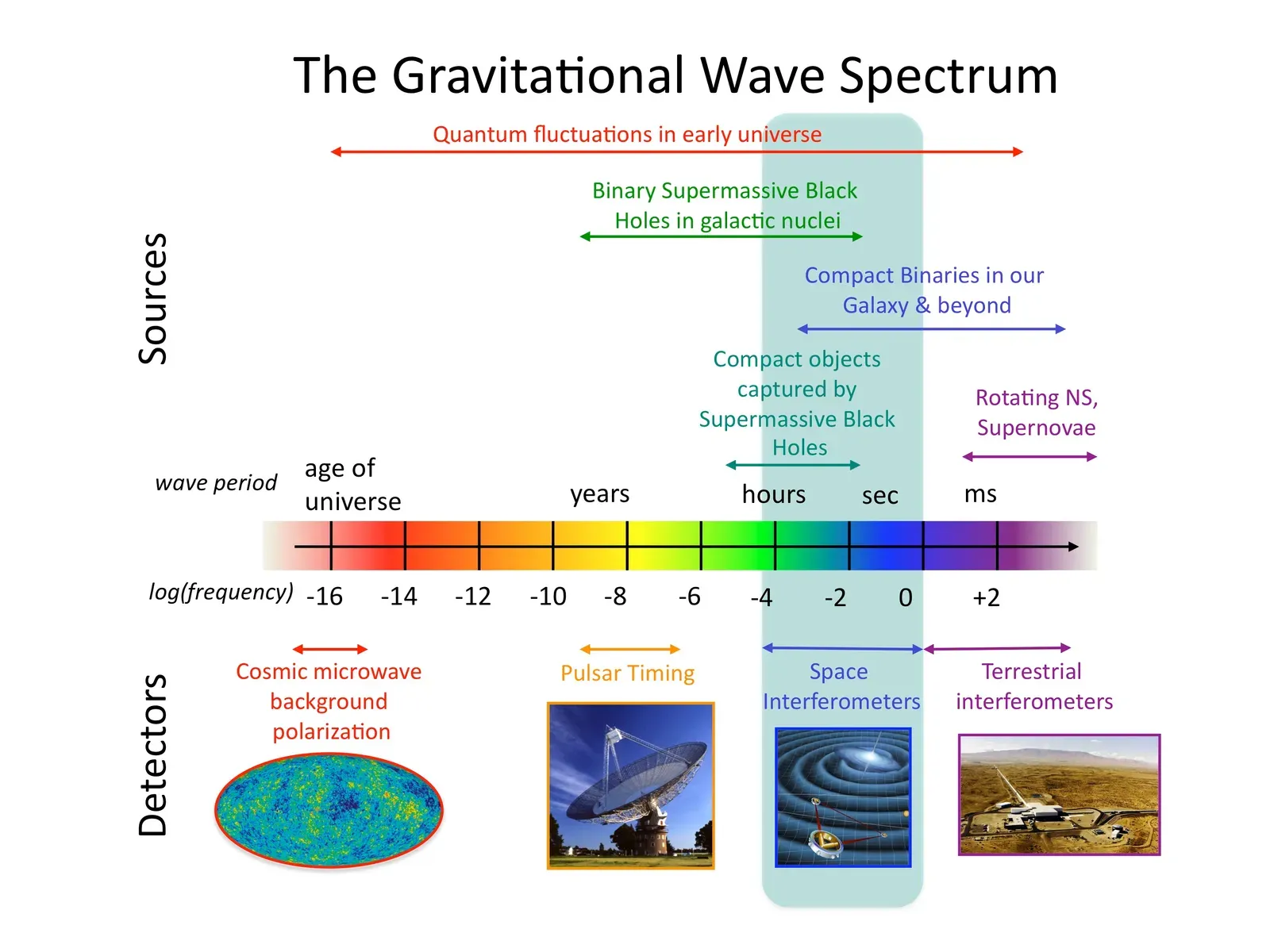
Gravitational waves are ripples in spacetime caused by some of the most violent and energetic processes in the Universe, and Albert Einstein predicted their existence in 1916 in his general theory of relativity. Let’s be real, even Einstein doubted his own prediction would ever be confirmed. He thought no instrument on Earth would ever be sensitive enough to detect these tiny ripples.
On September 14, 2015, the Laser Interferometer Gravitational-Wave Observatory physically sensed the undulations in spacetime caused by gravitational waves generated by two colliding black holes 1.3 billion light-years away. By the time gravitational waves from LIGO’s first detection reached us, the amount of spacetime wobbling they generated was 10,000 times smaller than the nucleus of an atom. That’s almost impossibly small to measure. The detection proved Einstein’s century-old theory beyond any doubt and opened an entirely new way to observe the cosmos.
Mendeleev’s Periodic Table Predicted Missing Elements
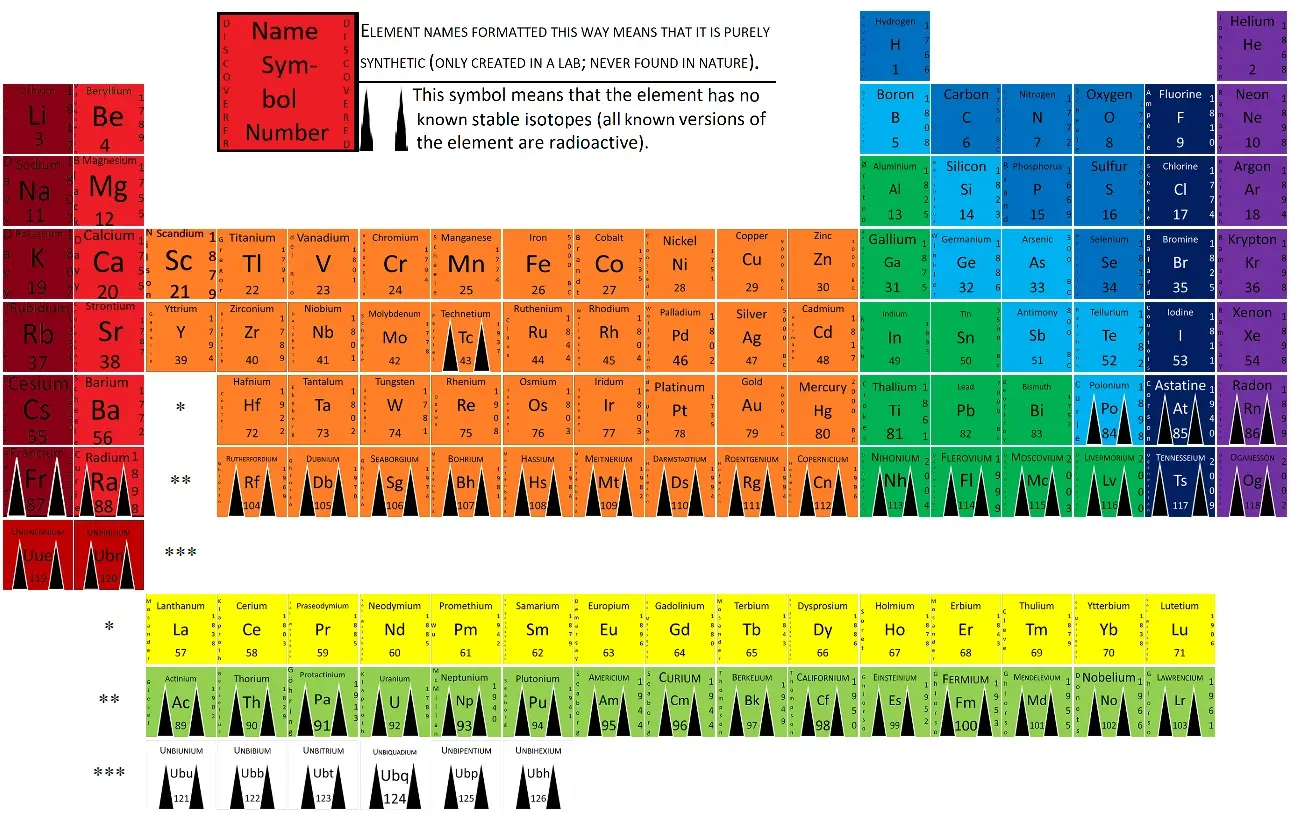
Dmitri Mendeleev published a periodic table of the chemical elements in 1869 based on properties that appeared with some regularity, and when he proposed his periodic table, he noted gaps in the table and predicted that then-unknown elements existed with properties appropriate to fill those gaps. This was audacious. Most scientists back then thought he was just guessing.
He predicted the existence of an element he called eka-aluminum, even describing its properties like its density and melting point, and years later when gallium was discovered it matched his predictions almost perfectly. Mendeleev correctly predicted the existence of three elements: gallium (which he called eka-aluminum), scandium (eka-boron), and germanium (eka-silicon). Within 15 years of Mendeleev’s predictions, these elements were discovered, and their properties were found to closely match his predictions, which went a long way toward convincing any remaining doubters of the infallibility of the periodic table.
Paul Dirac’s Prediction of Antimatter
Here’s where things get truly wild. In 1928, British physicist Paul Dirac wrote down an equation that combined quantum theory and special relativity to describe the behaviour of an electron moving at a relativistic speed. The math was elegant but presented a bizarre problem: it suggested particles could have negative energy.
Dirac interpreted the equation to mean that for every particle there exists a corresponding antiparticle, exactly matching the particle but with opposite charge, and for the electron there should be an antielectron identical in every way but with a positive electric charge. In 1932, Carl Anderson discovered the positron while measuring cosmic rays in a Wilson chamber experiment. Dirac’s prediction came true just four years after he published his equation. It was one of the most stunning confirmations of a purely mathematical prediction in physics history.
The Higgs Boson Emerges After Nearly 50 Years
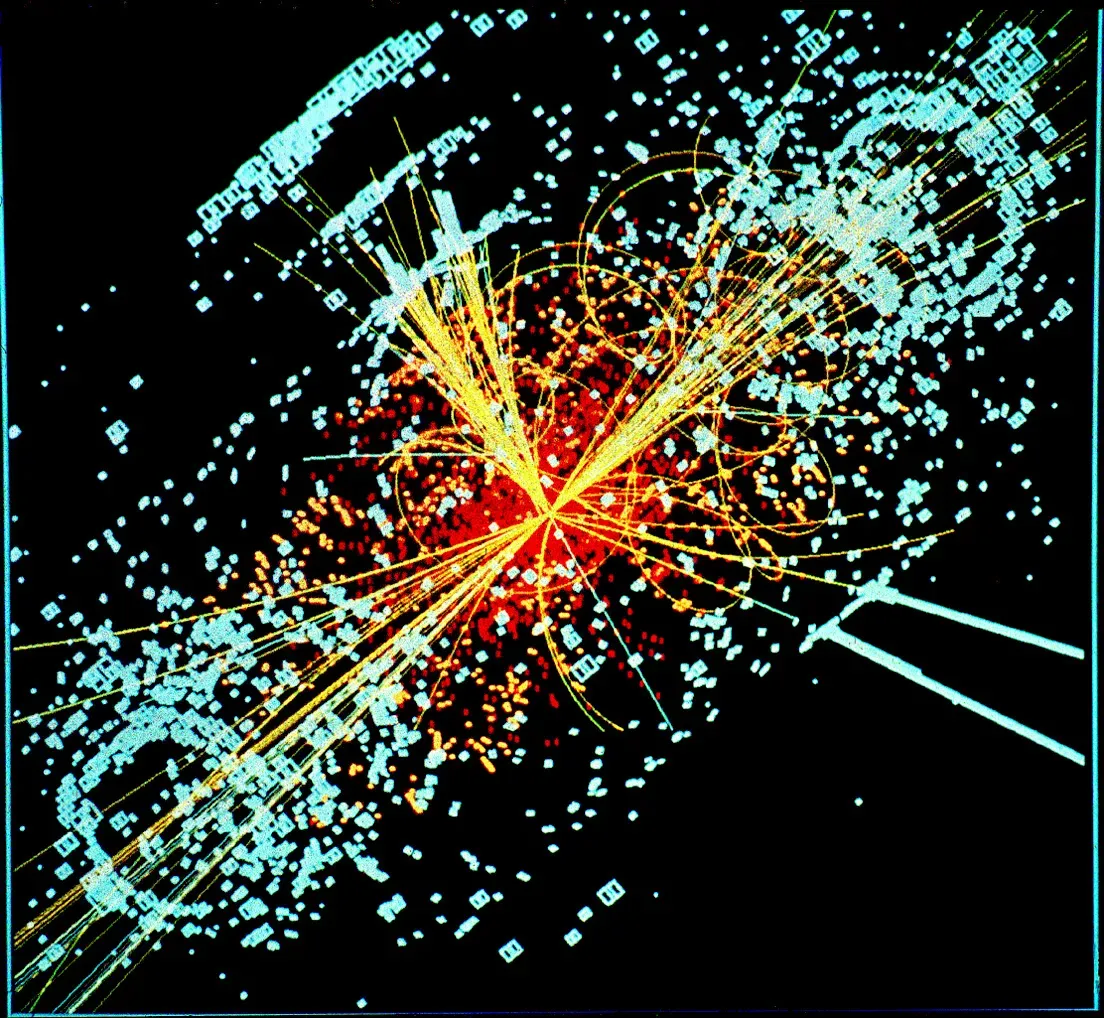
The Higgs field was proposed in 1964 as a new kind of field that fills the entire Universe and gives mass to all elementary particles. For decades, physicists couldn’t prove this invisible field existed. They needed to find its associated particle, which became known as the Higgs boson.
After a 40-year search, a subatomic particle with the expected properties was discovered in 2012 by the ATLAS and CMS experiments at the Large Hadron Collider at CERN near Geneva, Switzerland, and the new particle was subsequently confirmed to match the expected properties of a Higgs boson. Physicists from two of the three teams, Peter Higgs and François Englert, were awarded the Nobel Prize in Physics in 2013 for their theoretical predictions. Honestly, it’s hard to imagine the patience required for that verification.
Jules Verne’s Remarkably Accurate Moon Journey
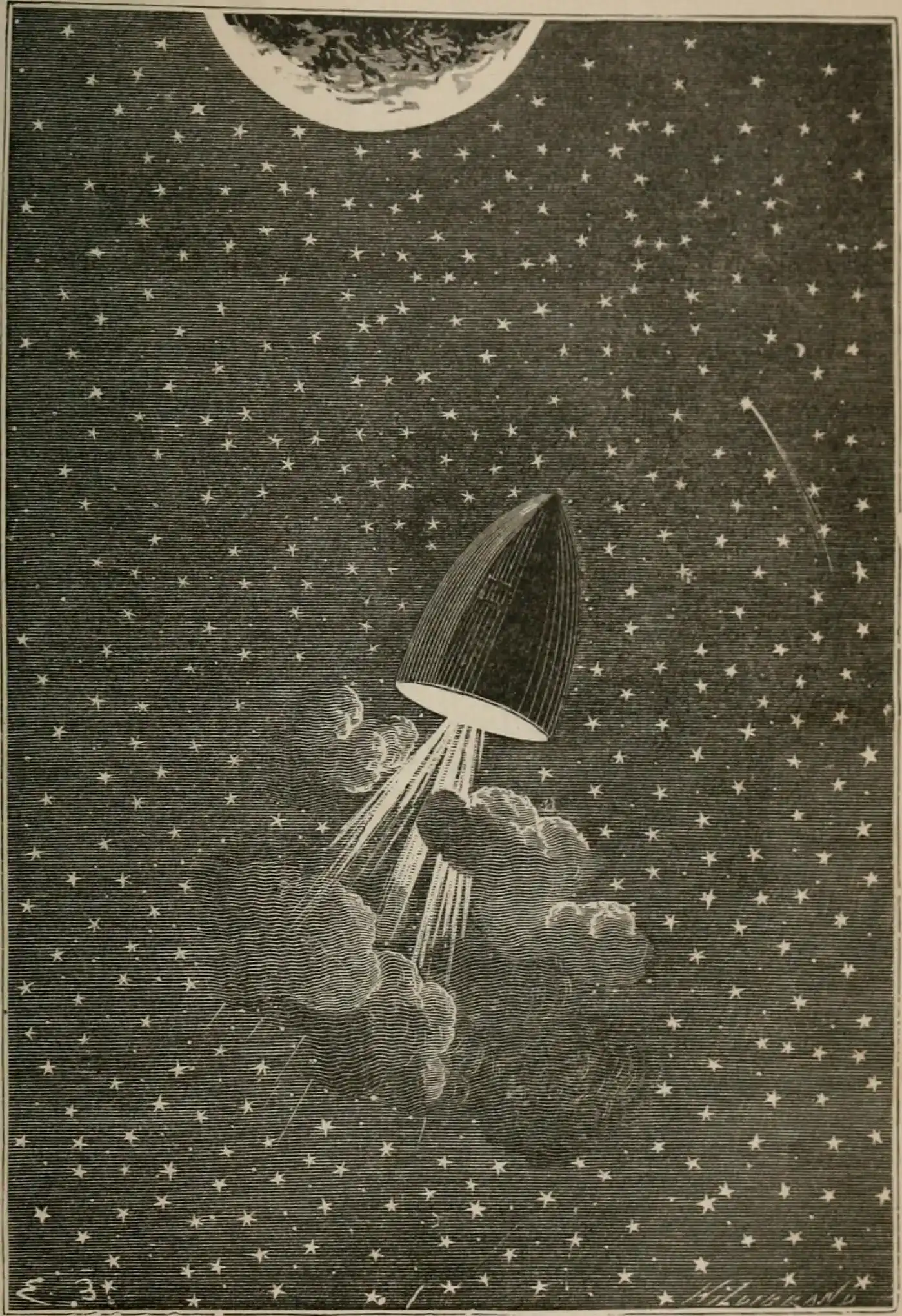
In 1865, more than 100 years before Apollo 11, Jules Verne wrote about humankind’s first trip to the moon in a short story titled From the Earth to the Moon, and he even knew the rocket would launch from Florida, the name of the ship, the correct number of astronauts aboard, and the feeling of weightlessness they would experience. That level of accuracy seems almost supernatural.
Verne placed the rocket launch in Florida which is now the site of the Kennedy Space Center where the famous Apollo missions were launched from, and he also placed the crew number at three and called his spacecraft Columbiad. Think about that for a moment. Over a century before anyone reached the moon, Verne nailed the details with remarkable precision, all from careful thought and imagination.
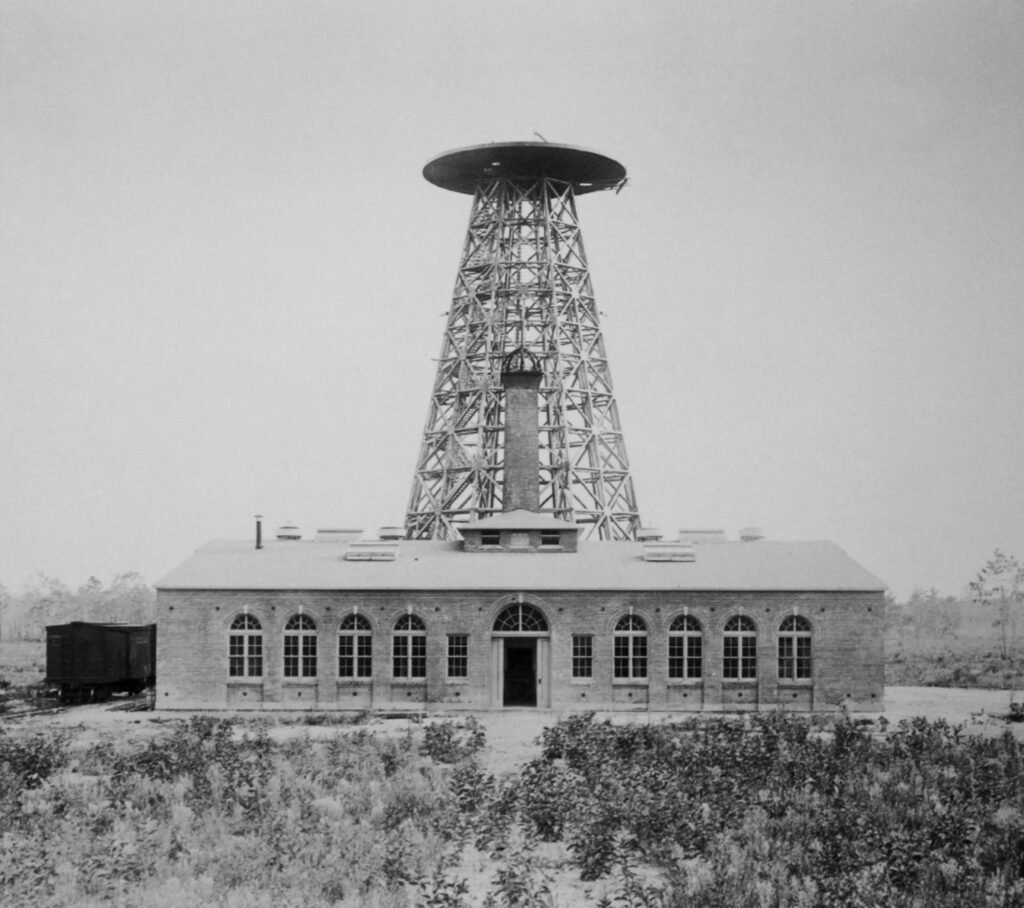
Nikola Tesla Envisioned Wireless Communication
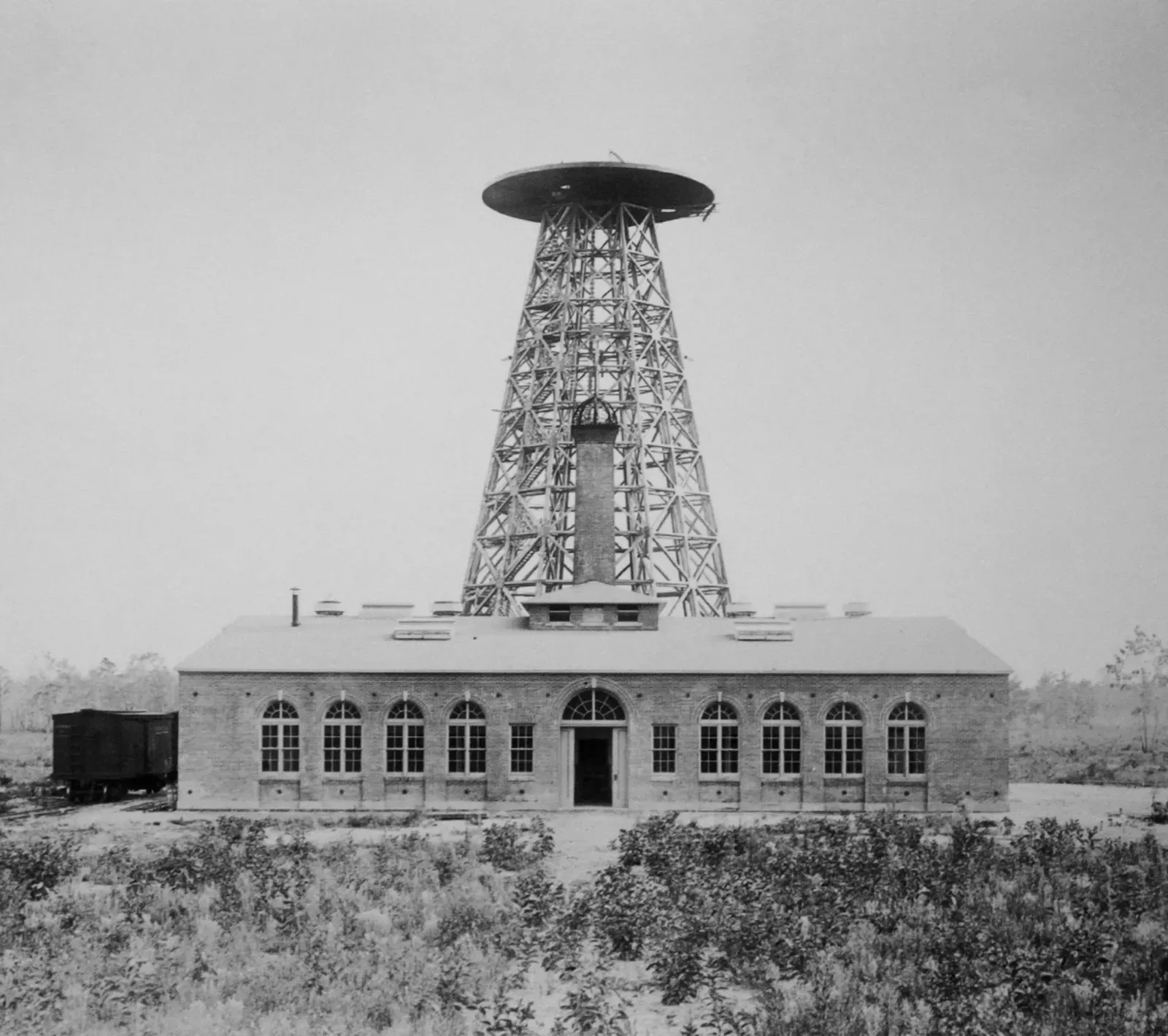
Serbian-American Nikola Tesla was not only a remarkable scientist and inventor during his lifetime but also a skilled futurist who made several correct predictions about the advancement of technology beyond his time, and in a 1909 interview with the New York Times he predicted the invention of Wi-Fi and mobile phones decades before they were created. Can you imagine describing smartphones in 1909?
Tesla saw a future where people carried personal wireless devices. Tesla’s early 1900s vision of personal wireless devices connecting the world seemed impossibly futuristic as he described instant news access and interconnected global markets decades before the technology existed, and modern mobile networks and internet culture directly echo his systems-scale wireless communication predictions. His foresight shaped the technology you use every day.
Fred Hoyle Predicted the Carbon Resonance Level

An experimental group at the California Institute of Technology led by Ward Wahling found a carbon-12 state at 7.68 plus or minus 0.03 MeV by doing magnetic analysis of the alpha particle spectrum from nitrogen-14 decay, thereby proving that Hoyle had correctly predicted the origin of one of the most important elements in the universe. Fred Hoyle realized that for carbon to exist in the quantities we observe, there had to be a very specific energy level in the carbon nucleus.
Without this precise energy resonance, carbon couldn’t form efficiently in stars. Life as you know it relies on carbon, so Hoyle’s prediction essentially explained why you exist. The experimental confirmation came within months after his bold theoretical prediction, validating his understanding of stellar nucleosynthesis.
Lee and Yang Predicted Parity Violation
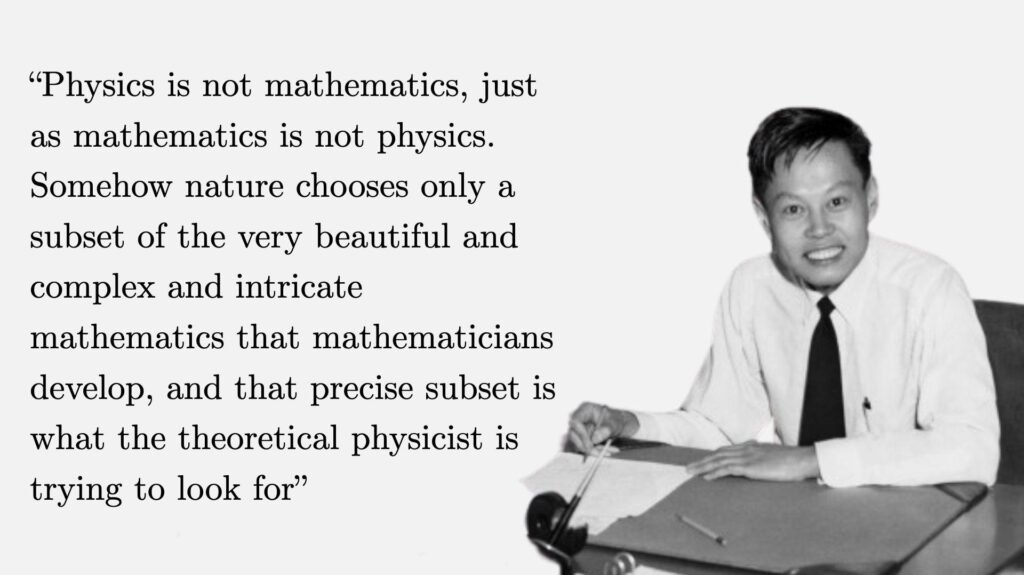
Parity conservation, the idea that the world looks and behaves the same way whether viewed in a mirror or not, had been firmly established for electromagnetic and strong interactions by the 1950s, and almost all physicists expected the same to be true of the weak force. It seemed like a fundamental law of nature.
The Chinese-American theorists Tsung-Dao Lee and Chen-Ning Yang formulated a theory that left-right symmetry is violated by the weak interaction, working with experimentalist Chien-Shiung Wu they devised several experiments to look at different particle decays that proceeded via the weak force, and Wu observed an asymmetry that indicated parity violation and therefore confirmed Lee and Yang’s prediction. Lee and Yang won the 1957 Nobel Prize for Physics for their prediction only 12 months after their paper was published, one of the quickest Nobel prize awards in history.
Stephen Hawking’s Black Hole Area Theorem Confirmed
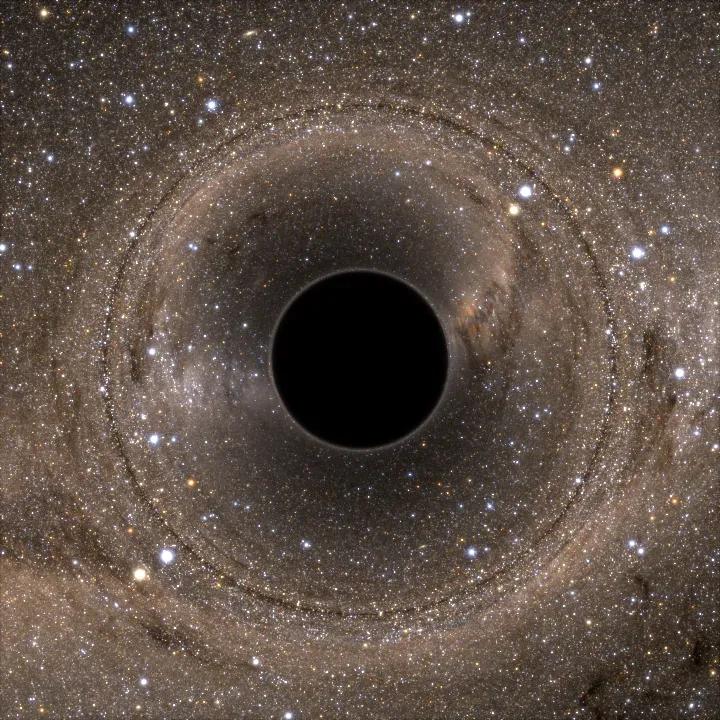
One of the most famous black hole laws predicted by physicist Stephen Hawking has been confirmed with gravitational waves. Hawking theorized in the 1970s that the surface area of a black hole’s event horizon can never decrease. It seemed impossible to test at the time.
MIT astrophysicist Maximiliano Isi and others used ripples in spacetime stirred up by two black holes that spiraled inward and merged into one bigger black hole, and according to the area theorem the area of the newly formed black hole’s event horizon should be at least as big as the areas of the event horizons of the two original black holes combined. The team analyzed data from the first gravitational waves ever spotted which were detected by the Advanced Laser Interferometer Gravitational-Wave Observatory in 2015, and the researchers calculated the surface areas of the black holes in each period. Hawking’s prediction held up perfectly.
Gordon Moore’s Law About Transistor Density

In 1965 Gordon Moore predicted that the number of transistors on a microchip would double about every two years, industry experts doubted it could last, but for decades chipmakers hit that pace driving exponential growth in computing power. This prediction became known as Moore’s Law and shaped the entire computer industry.
Gordon Moore predicted that the number of transistors on a microchip would double about every two years, industry experts doubted it could last, but for decades chipmakers hit that pace driving exponential growth in computing power and proving Moore’s prediction right. Your smartphone’s incredible processing power exists because engineers took Moore’s prediction seriously as a roadmap for technological development.
The Poisson Spot Validates Wave Theory of Light
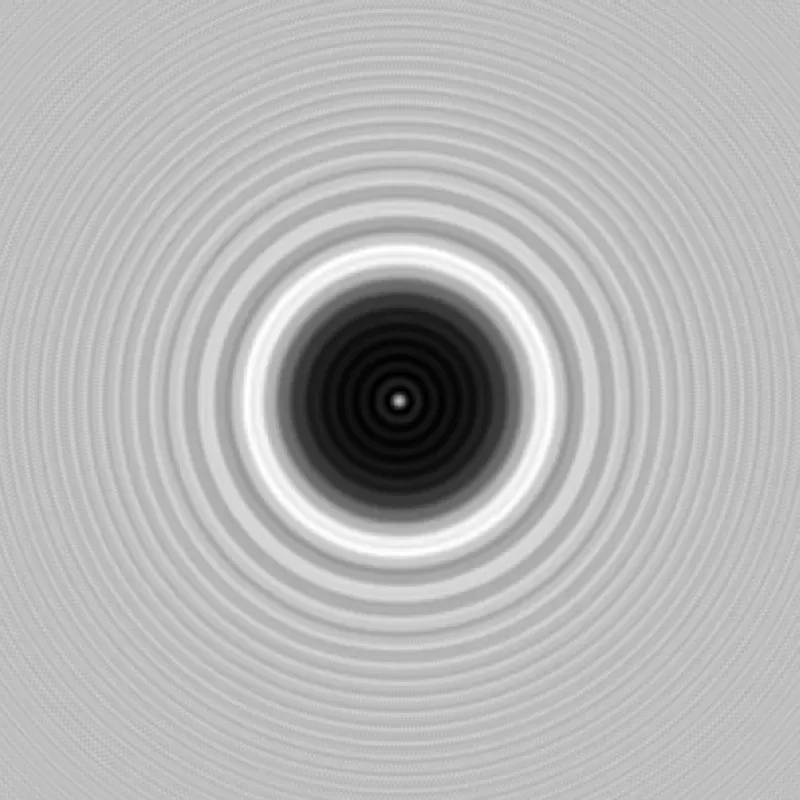
Poisson studied Fresnel’s theory in detail and realized that Fresnel’s diffraction integrals implied that at least for a point light source illuminating a disc or sphere a bright spot would lie on the axis behind the disc, and Poisson thought this was absurd as corpuscular theory clearly predicted there would be total darkness. Poisson presented this as an argument against Fresnel’s wave theory of light.
François Arago swiftly carried out the experiment in his laboratory with a flame, filters and a 2 mm metal disc attached to a glass plate with wax, and to everyone’s surprise and Poisson’s chagrin Arago observed the predicted spot, and Fresnel won the competition. The spot has since been called the Arago spot or Poisson spot. Sometimes the most convincing predictions are the ones that seem impossible.
Democritus and the Ancient Atomic Theory
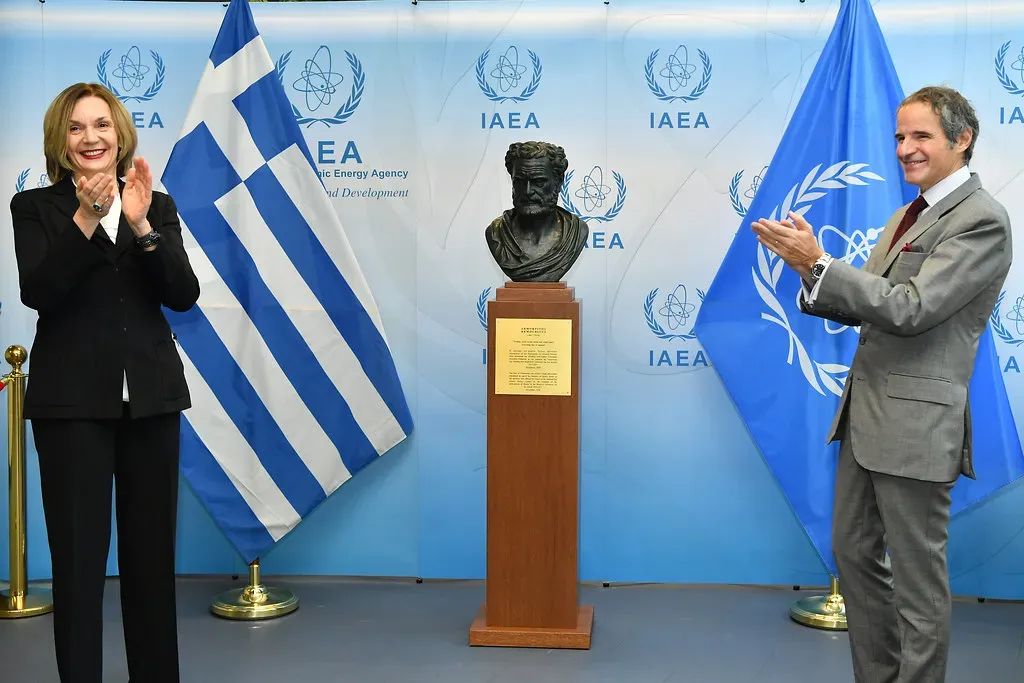
Leucippus and Democritus imagined the universe made of tiny indivisible particles, and two thousand years later science proved them right with the discovery of the atom. These ancient Greek philosophers had no microscopes or laboratories. They relied entirely on logic and philosophical reasoning.
Their prediction that matter consisted of fundamental, indivisible units was revolutionary for its time. It took more than two millennia for experimental science to catch up with their insight. While they didn’t have all the details right, the core concept of atoms as building blocks of matter turned out to be remarkably accurate for a prediction made in the fifth century BCE.
Conclusion

These twelve predictions showcase the extraordinary power of human reasoning and scientific thinking. You’ve seen how mathematics, careful observation, and bold theoretical leaps allowed scientists to glimpse truths about the universe before technology could confirm them. From Einstein’s gravitational waves to ancient atomic theory, these predictions prove that science isn’t just about observing what exists – it’s about imagining what must exist based on patterns and principles.
Each confirmation strengthened your understanding of nature and opened new frontiers for exploration. What other hidden truths might scientists be predicting right now that you’ll see confirmed in your lifetime? What do you think about these remarkable predictions? Which one surprised you the most?
Hi, I’m Andrew, and I come from India. Experienced content specialist with a passion for writing. My forte includes health and wellness, Travel, Animals, and Nature. A nature nomad, I am obsessed with mountains and love high-altitude trekking. I have been on several Himalayan treks in India including the Everest Base Camp in Nepal, a profound experience.