

There is something almost unsettling about quantum physics. It tells you that particles can be in two places at once, that measuring one thing instantly affects another thing on the other side of the planet, and that reality itself might not be the solid, predictable thing you thought it was. For most people, that sounds like science fiction. It is not. It is science, and it is accelerating faster than almost anyone predicted.
We are living through a period that many physicists are calling a golden era for quantum discovery. The breakthroughs of the past few years represent more than incremental progress – they signal a fundamental shift in our understanding of reality, reshaping our worldview and opening unprecedented possibilities for human advancement. Some of these discoveries shake the foundations of classical physics. Others quietly slot into everyday technology in ways most people never notice. All of them matter. Let’s dive in.
1. Google’s Willow Chip Cracked the Code on Quantum Errors
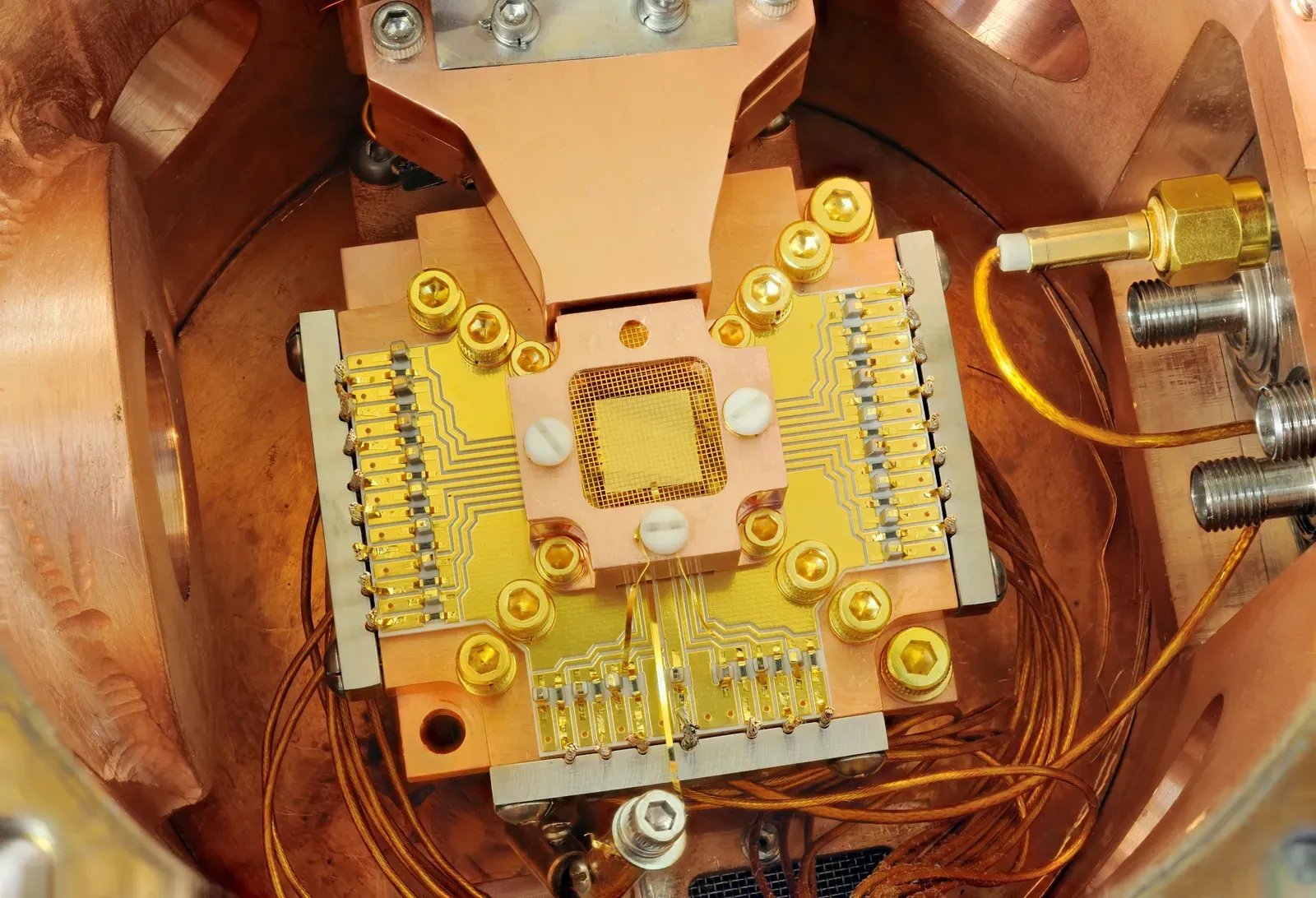
For decades, the biggest obstacle to practical quantum computing was not raw power – it was noise. Quantum systems are so delicate that even the tiniest disturbance from the environment causes errors, and traditionally, adding more qubits only made things worse. That all changed in December 2024 when Google unveiled the Willow processor. The Willow processor is a 105-qubit superconducting quantum computing processor developed by Google Quantum AI, and it was announced in a Nature paper claiming that Willow can reduce errors exponentially as the number of qubits is scaled – achieving below-threshold quantum error correction.
Each time researchers increased the encoded qubits from a 3×3 to a 5×5 to a 7×7 lattice of physical qubits, the encoded error rate was suppressed by a factor of two – demonstrating exponential error suppression, a nearly 30-year-old goal for quantum computing and the key element to unlocking large-scale quantum applications. Willow’s performance was equally astonishing in raw speed: it performed a computation in under five minutes that would take one of today’s fastest supercomputers 10 septillion years. That number is so large it barely fits into human imagination, yet here we are.
2. Quantum Teleportation Between Independent Quantum Dots Is Now Real
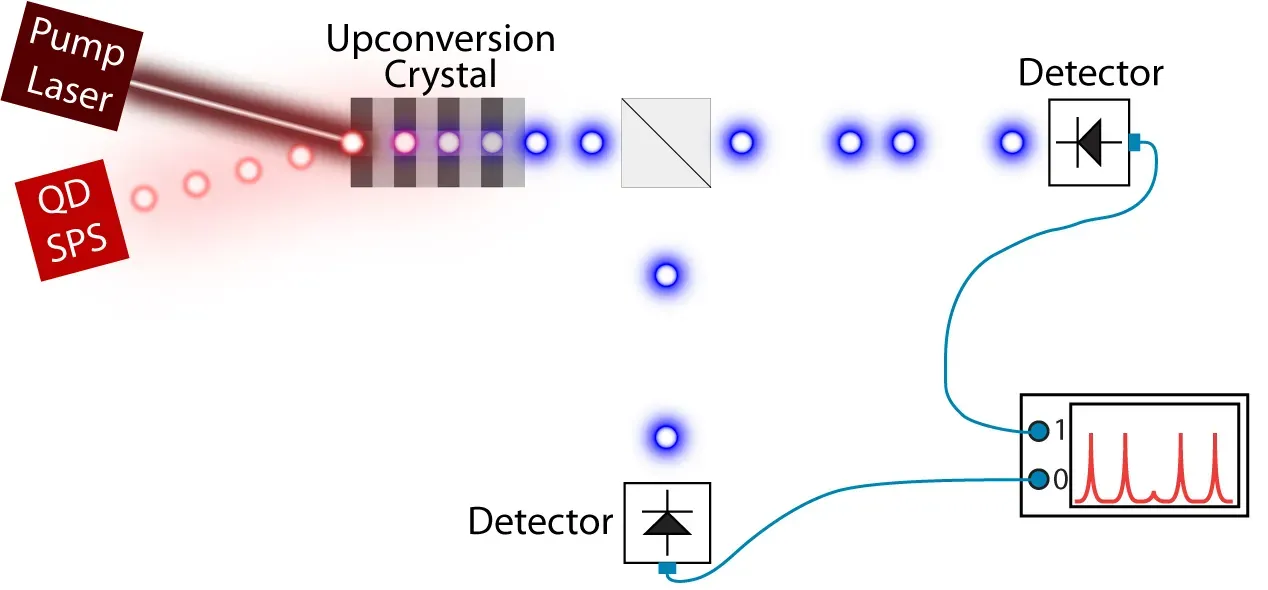
The word “teleportation” still makes people think of Star Trek, but the real version is both stranger and more consequential. In early 2026, an international research team achieved something that had long been considered out of reach. Scientists took a significant step toward building a future quantum internet by successfully teleporting the quantum state of a photon between two separate quantum dots – a first successful demonstration of quantum teleportation between two different quantum dots involving scientists from Paderborn University.
During the experiment, researchers used a 270-meter free-space optical link to connect the systems, with GPS-assisted synchronization and ultra-fast single-photon detectors. The experiment achieved teleportation state fidelity reaching as high as 82 percent, a value that exceeds the classical limit by more than ten standard deviations. This is not magic. This is a protocol that, when scaled up, could form the backbone of a quantum internet more secure than anything classical technology can offer.
3. Quantum Entanglement Was Controlled at the Attosecond Scale

Honestly, this one might be the most mind-bending on this entire list. Researchers at the Max Born Institute, the Universidad Autónoma de Madrid, and IMDEA Nanociencia recently managed to control quantum entanglement in real time, at nature’s own timescale. This collaboration explored entanglement at its natural timescale – attoseconds, which are billionths of a billionth of a second – and their findings, published in Nature, link ultrafast electron motion with controllable quantum correlations in molecules.
The results reveal a direct trade-off: stronger entanglement between the ion and the photoelectron reduces coherence within the molecular ion. In other words, by adjusting the timing of attosecond pulses, researchers can tune the balance between entanglement and coherence in real time – opening new directions for manipulating molecular systems. Think of it like adjusting a volume knob on entanglement itself, in real time, at the speed of electron movement. That is genuinely new territory.
4. A Hidden 48-Dimensional World Was Found Inside Quantum Light

Here is something that sounds almost too strange to be real. Scientists at the University of the Witwatersrand in South Africa, working with collaborators from Huzhou University, made a discovery inside one of the most widely used tools in quantum optics that nobody expected. A routine quantum optics technique revealed an extraordinary secret: entangled light can carry incredibly complex topological structures, and researchers found these hidden patterns reach up to 48 dimensions, offering a vast new “alphabet” for encoding quantum information.
One of the most notable aspects of this breakthrough is how accessible it is – the required resources are already present in most quantum optics laboratories, meaning no specialized equipment is needed to take advantage of the effect. Although orbital angular momentum entanglement has been widely explored, it had often been considered fragile – but viewing it through the lens of topology could change that perspective, allowing scientists to develop more reliable quantum systems and opening the door to practical, real-world applications.
5. Entanglement Between Atomic Nuclei Was Demonstrated in Silicon
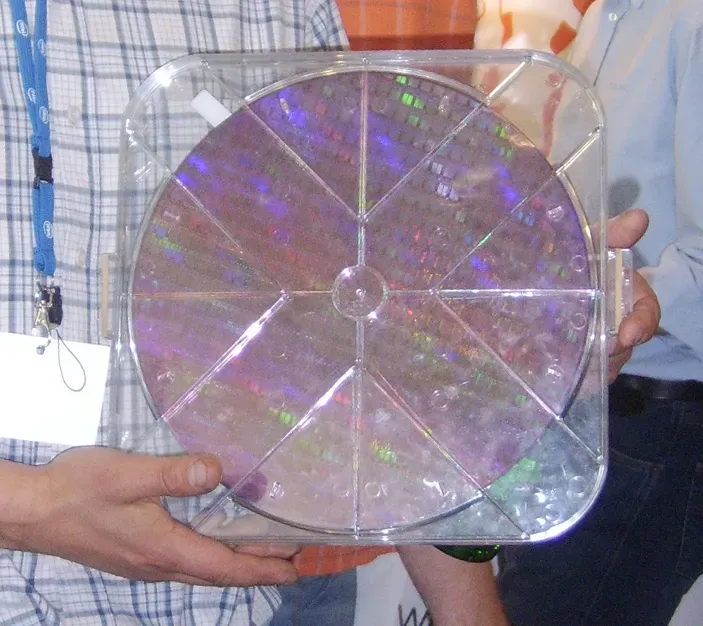
You might think quantum entanglement only works with exotic lab setups, far removed from the technology in your phone. Think again. Researchers demonstrated quantum entanglement between two atomic nuclei separated by about 20 nanometres – and the significance of that specific number is staggering. This is precisely the scale at which everyday silicon transistors are fabricated, which means creating quantum entanglement at the 20-nanometre scale allows for integrating long-lived, well-shielded nuclear spin qubits into the existing architecture of standard silicon chips.
Researchers used the electron channel to create quantum entanglement between the nuclei by means of a method called the “geometric gate” – and for the first time in silicon, showed this method can scale up beyond pairs of nuclei attached to the same electron. The method used is a practical and conceptual breakthrough that may help build quantum computers using one of the most precise and reliable systems for storing quantum information. The implication is enormous: a quantum computer built using the same manufacturing processes as every chip being made today.
6. A Quantum Spin Liquid Was Confirmed in Three Dimensions

For years, quantum spin liquids were like the platypus of physics – theorized to exist, occasionally glimpsed, never definitively confirmed. That changed in late 2025. Scientists finally observed ghostly “photons” emerging from a solid, confirming a bizarre quantum state once thought to exist only on paper. A global research team led by Rice University physicist Pengcheng Dai verified this in the crystal cerium zirconium oxide, reporting the work in Nature Physics as a clean three-dimensional example of this exotic state of matter.
Quantum spin liquids have fascinated physicists for years because they could eventually support transformative technologies, including quantum computing and dissipationless energy transmission. In this three-dimensional material, researchers observed both emergent photons and spinons – key hallmarks of quantum spin ice – and the result resolves a long-running debate in condensed matter physics while giving scientists a strong platform for studying next-generation quantum phenomena and potential technology pathways. Let’s be real – the idea of electricity transmitted without any energy loss whatsoever should excite anyone who pays a utility bill.
7. A Room-Temperature Quantum Communication Device Was Built at Stanford

One of the most persistent and expensive problems in quantum technology is the need for near absolute zero temperatures to keep quantum states stable. We are talking about temperatures colder than outer space. Getting useful quantum devices out of the laboratory and into everyday life has always stumbled on this barrier – until researchers at Stanford University changed the equation. Materials scientists at Stanford introduced a new nanoscale optical device that works at room temperature to entangle the spin of photons and electrons to achieve quantum communication – an approach that uses the laws of quantum physics to transmit and process data.
The researchers developed a room-temperature quantum communication device removing the need for super-cooling, utilizing twisted light from molybdenum diselenide to entangle photons and electrons and stabilize quantum states. They are now refining the device to achieve greater quantum performance, aiming to eventually miniaturize quantum systems for embedding in everyday devices. The device could eventually lead to the introduction of quantum technologies in broader applications, potentially reshaping cryptography, advanced sensing, high-performance computing, artificial intelligence, and other fields. That is a remarkable list for one small chip.
8. Scalable Topological Entanglement Was Unlocked for Photonic Quantum Computing
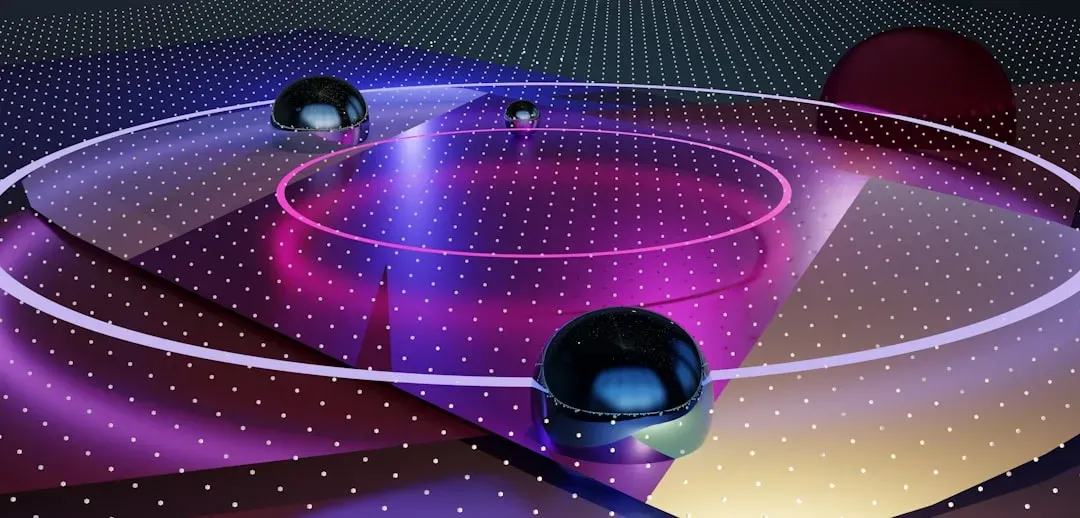
UCF researchers made a breakthrough in early 2026 that could fundamentally change how quantum computers are built. The challenge has always been producing entangled states of light that are robust enough to survive imperfections in real hardware – because in the real world, nothing is perfect. Topological modes are special ways for light to propagate within a structure, and they are immune to imperfections because their existence is protected by the system’s overall global properties. One example is superlattices, which have been known to generate these modes.
The breakthrough enables larger capacities for quantum information using complex states of light that are less affected by imperfections, paving the way for potential innovations in medicine, materials science, data management, and security. The end result is a larger capacity to encode quantum information resiliently – marking the second time this research group was featured in a major research journal in the past year, after their feature in Nature Materials in 2025, where their discoveries demonstrated a platform to precisely control the dissipation of states of light. This is the kind of engineering that quietly makes the impossible practical.
9. The 2025 Nobel Prize Validated Macroscopic Quantum Tunneling
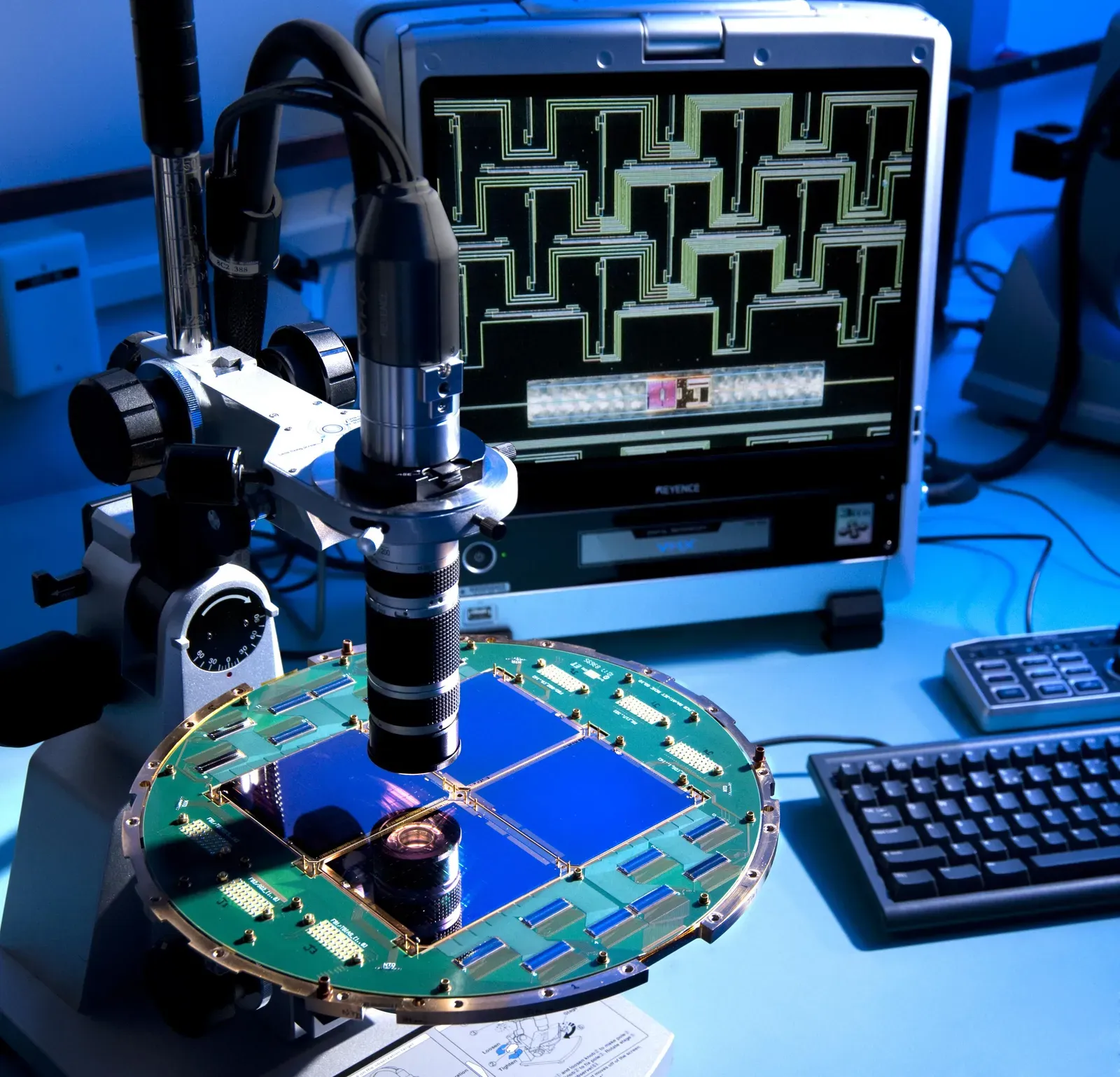
Not every world-changing discovery makes headlines the day it happens. Sometimes, the world takes a few decades to catch up. That is exactly the story behind the 2025 Nobel Prize in Physics. The 2025 Nobel Prize in Physics was awarded to John Clarke, Michel H. Devoret, and John M. Martinis for their discovery of macroscopic quantum mechanical tunneling and energy quantization in electrical circuits – recognition that underscores how fundamental quantum discoveries continue to drive technological innovation and reshape our understanding of reality.
Martinis himself played a direct role in translating this into practice, leading quantum computing research at Google that culminated in the December 2024 announcement of Willow, a 105-qubit superconducting processor demonstrating exponential error correction – the “break even” point needed for practical quantum computing. Recognition of quantum physics breakthroughs has translated into substantial investment – in 2024 alone, quantum computing startups attracted roughly 2.2 billion dollars in venture capital funding, quadrupling investment levels from five years earlier. Quantum physics is no longer purely academic. It is now a financial force.
10. Scientists Finally Unlocked the Elusive W State of Quantum Entanglement
Most people have never heard of the W state, but inside quantum physics it has been a decades-old puzzle. It is a specific type of multi-particle entanglement that carries remarkable properties – but identifying it had stumped researchers since it was first proposed. Scientists finally unlocked a way to identify the elusive W state of quantum entanglement, solving a decades-old problem and opening paths to quantum teleportation and advanced quantum technologies.
The entangled measurement for the W state had been neither proposed nor discovered experimentally – until a team of researchers at Kyoto University and Hiroshima University took on this challenge and ultimately succeeded in developing a new method of entangled measurement to identify it. The team focused on the W state’s cyclic shift symmetry and theoretically proposed a method to create an entangled measurement using a photonic quantum circuit that performs quantum Fourier transformation, then created a device to demonstrate the proposed method for three photons using high-stability optical quantum circuits. It is the kind of discovery that sounds technical but opens an entire new toolbox for quantum communication.
11. Dark Energy May Be Weakening – and Quantum Physics Is Central to Understanding Why

Step back from the laboratory for a moment and look up. The entire universe is expanding, driven by a mysterious force called dark energy. For decades, physicists assumed this force was constant. New data is suggesting otherwise, and the implications are genuinely staggering. In April 2024, a map of the cosmos released by the Dark Energy Spectroscopic Instrument hinted that dark energy, the repulsive agent driving the expansion of space, has been weakening over time.
Luckily, the Vera C. Rubin Observatory, a powerful new telescope in Chile that began operations in the summer of 2025, will map the locations of around 20 billion galaxies over the next decade – which ought to be enough for researchers to say for sure whether dark energy is varying or not. Alternative dark matter candidates are also gaining attention, alongside theories that modify Einstein’s equations to explain accelerated expansion without dark energy. If dark energy is truly changing, it would force a complete rethink of the standard model of cosmology. That is a very big deal.
12. Quantum Sensors Can Now Detect Fields of Individual Atoms
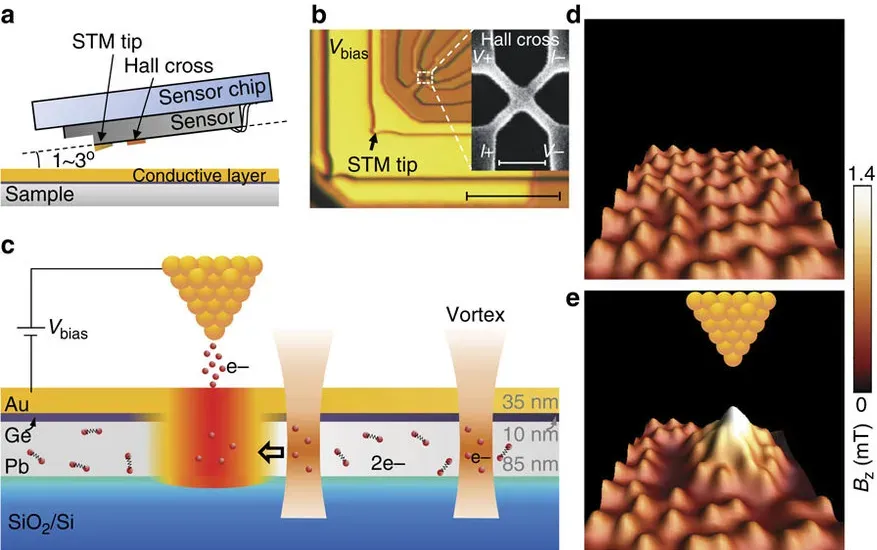
Imagine a tool sensitive enough to detect the electric and magnetic signature of a single atom. That is not a hypothetical anymore. In July 2024, physicists at Germany’s Forschungszentrum Jülich and Korea’s IBS Center for Quantum Nanoscience reported that they had fabricated a quantum sensor that can detect the electric and magnetic fields of individual atoms – consisting of a molecule containing an unpaired electron attached to the tip of a scanning-tunnelling microscope, which they then used to measure the magnetic and electric dipole fields from a single iron atom.
Researchers at the University of Basel and the Laboratoire Kastler Brossel have also demonstrated how quantum mechanical entanglement can be used to measure several physical parameters simultaneously with greater precision than previously possible. Researchers are now designing materials that enable topological quantum computing, implementing new quantum sensors to characterize topological states and detect dark matter, and designing quantum algorithms and simulations to provide a greater understanding of quantum materials and chemistry. In other words, quantum sensors are not just laboratory curiosities – they are becoming science’s sharpest eyes.
Conclusion: The Quantum Revolution Is No Longer Coming – It Is Already Here

What is most striking about this list is not any single entry. It is the sheer speed at which the entire field is moving. The recent years have witnessed unprecedented advances in quantum computing, with several milestones bringing us closer to practical quantum advantage across multiple domains. From room-temperature quantum devices to entanglement inside silicon chips and ghostly photons emerging from solid crystals, the pace of discovery has outrun even optimistic predictions from a decade ago.
There is something almost poetic about the fact that physics at its smallest scale – the realm of particles, waves, and probabilities – turns out to hold the keys to our largest challenges: faster computing, unbreakable security, new materials, even our understanding of the universe’s own fate. In the hundred years since Werner Heisenberg successfully formulated quantum theory, quantum mechanics has transformed the world – yet physicists remain divided over the theory’s meaning and what it implies about the nature of reality. That honest uncertainty, from the very scientists making these breakthroughs, is itself somehow reassuring. It means the story is far from over.
Which of these discoveries surprised you the most? Tell us in the comments – because honestly, any one of these would have seemed like science fiction just twenty years ago.