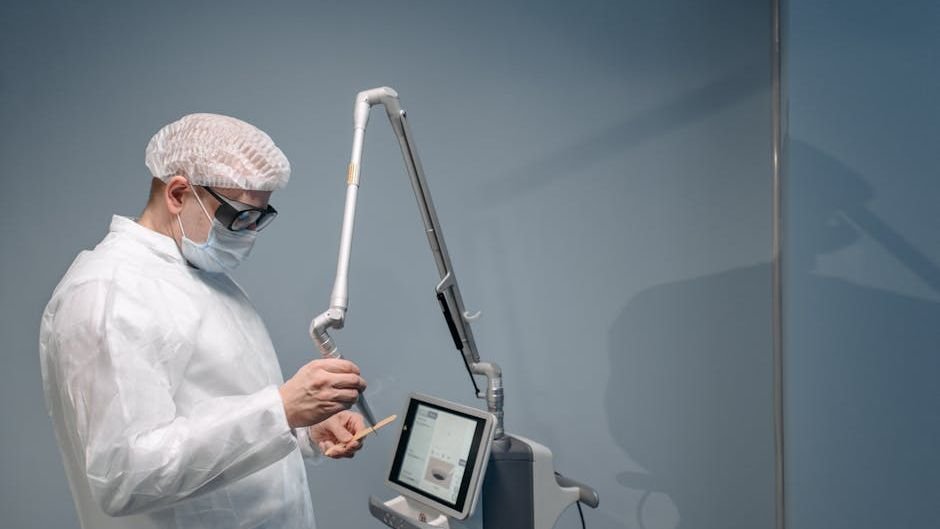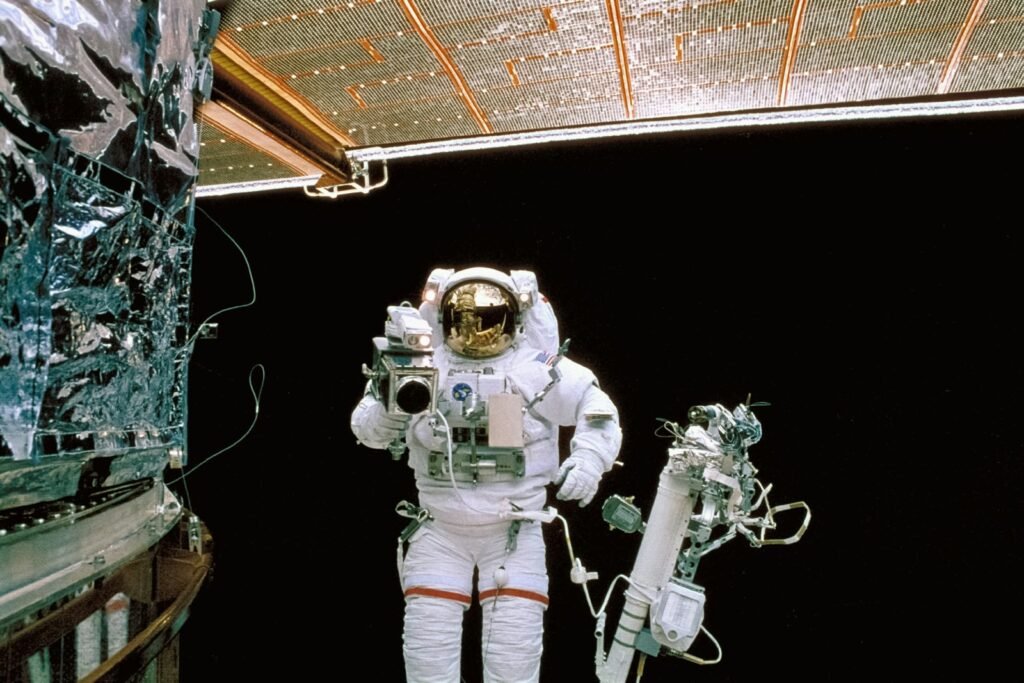

Every great discovery story usually starts with a careful plan, but some of the most important advances in science began with something far messier: an accident, a miscalculation, or a strange result no one expected. Again and again, chance observations have cracked open mysteries that years of deliberate work failed to solve. Yet these coincidences only became breakthroughs because someone was curious enough not to look away. In an age of ultra-precise instruments and data-driven research, these stories are a reminder that serendipity still has a seat in the lab. They also hint at a deeper truth: the future of science may depend as much on how we react to the unexpected as on what we set out to find.
The Mold That Wouldn’t Behave: Penicillin’s Accidental Arrival
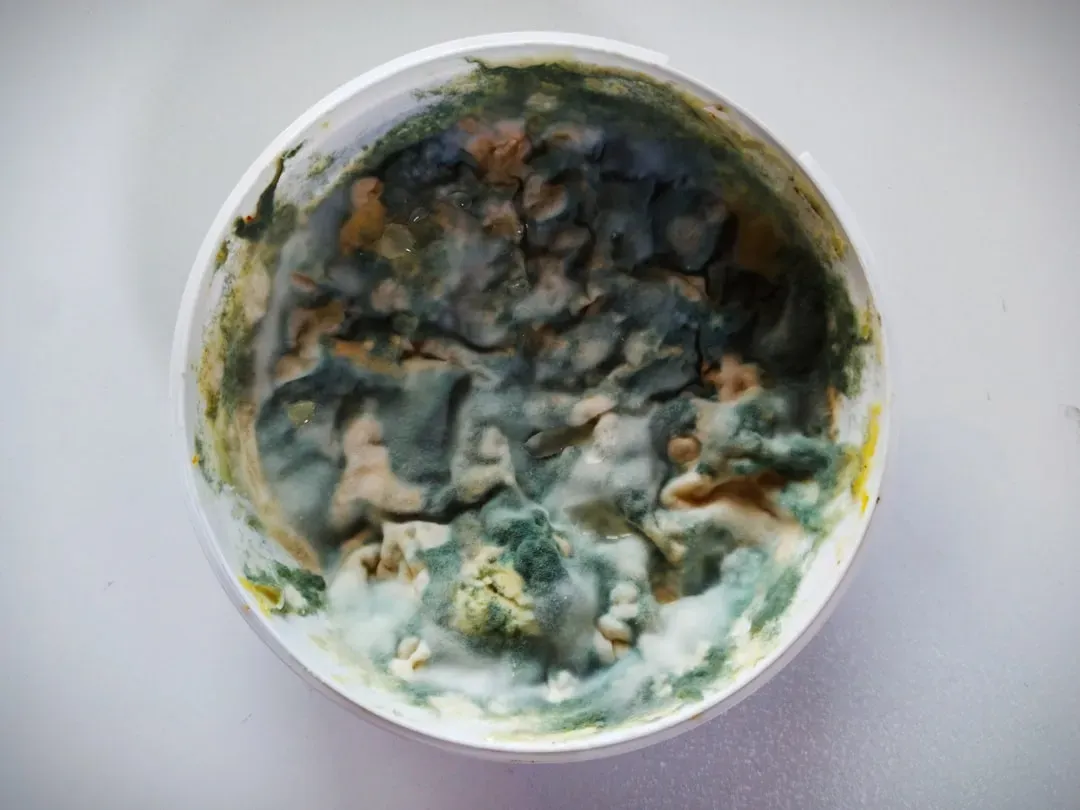
It began with a messy lab bench and a spoiled petri dish. In 1928, Scottish bacteriologist Alexander Fleming returned from holiday to find one of his Staphylococcus culture plates contaminated with a mysterious mold. Instead of discarding it, he noticed something odd: bacteria were dying in a clear halo around the invading fungus. That visual coincidence, a mold landing in just the right place on just the right plate, might easily have gone unnoticed or been dismissed as routine contamination.
Fleming’s curiosity drove him to isolate the mold, later identified as Penicillium notatum, and study its antibacterial properties, laying the foundation for the first true antibiotic. A decade later, teams in Oxford turned his observation into a life-saving drug, transforming medicine during World War II and beyond. Today, penicillin and its descendants have saved many millions of lives, reshaping surgery, childbirth, and infection control. The episode is a stark reminder that a world-changing breakthrough can start with what looks like a ruined experiment and a scientist who refuses to ignore an inconvenience.
Sticky Fingers and Space Hardware: Velcro’s Cosmic Coincidence
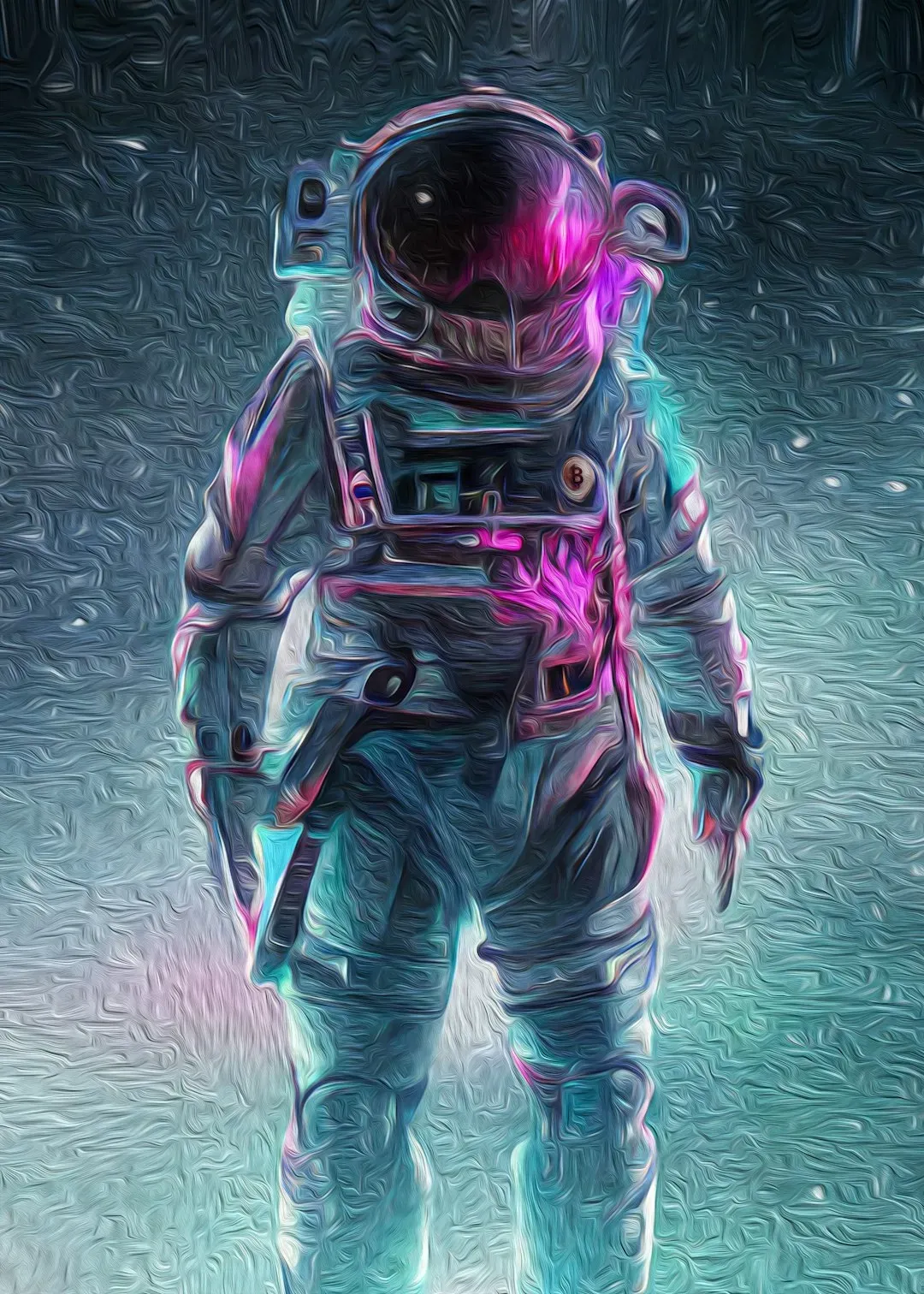
In the late 1940s, Swiss engineer George de Mestral returned home from a walk with his dog covered in burrs. Most people would have brushed them off with annoyance, but he wondered how those plant seeds clung so stubbornly to fabric and fur. Under a microscope, he saw hooks on the burrs that latched onto loops in cloth fibers, a simple mechanical trick refined by evolution. That chance snag on his clothing became the seed of a new fastening technology.
After years of trial and error, he developed the hook-and-loop fastener now widely known as Velcro, a name derived from “velour” and “crochet.” The invention found its most dramatic showcase in space exploration, where astronauts needed reliable ways to secure tools and equipment in weightlessness. From baby shoes to medical devices and airline seats, Velcro now quietly underpins everyday life. A random brush against a plant on a hike turned into one of the most versatile fastening systems ever created.
Glowing Cats and Invisible Rays: X-Rays Stumbled Into View
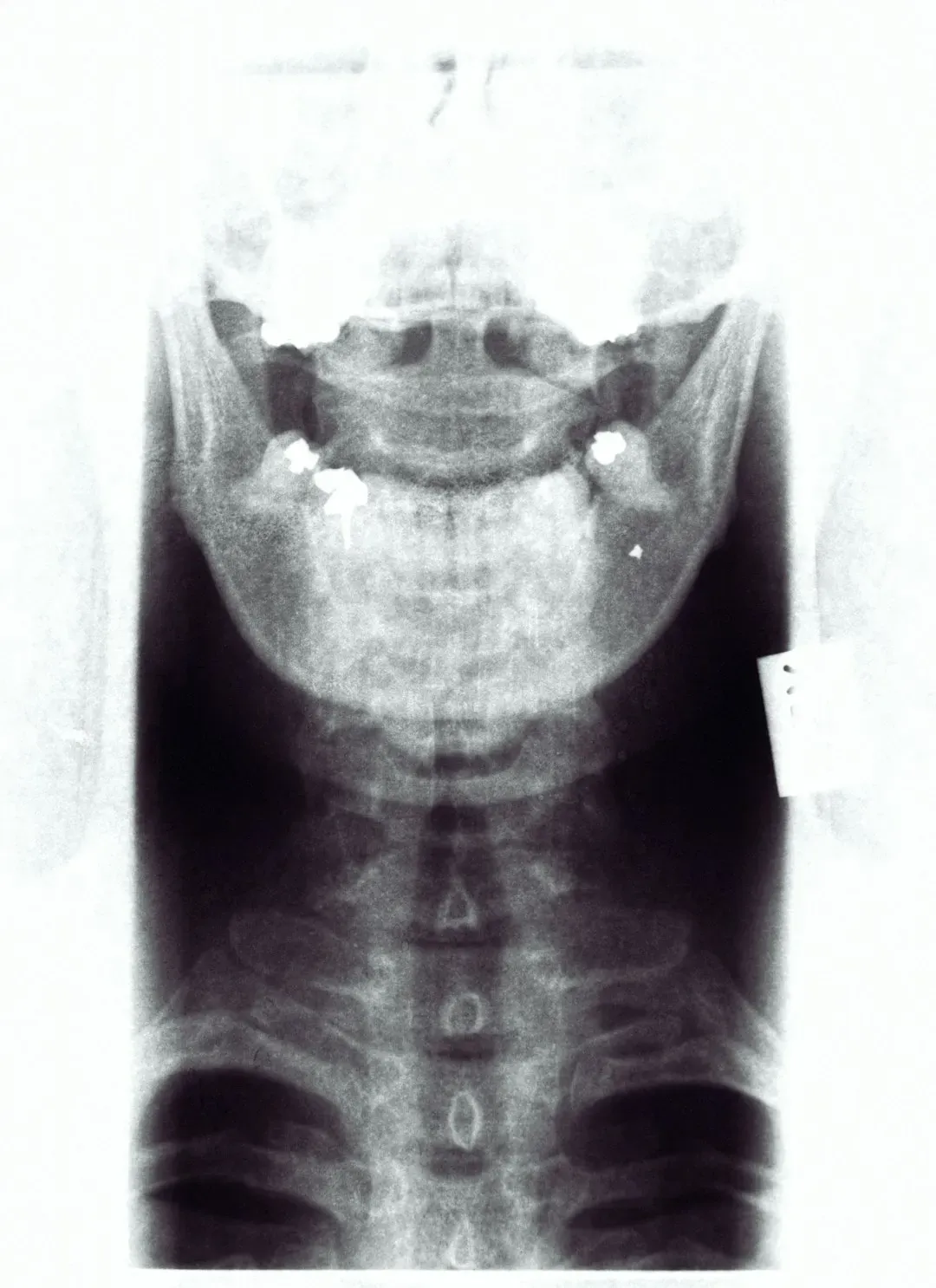
When German physicist Wilhelm Conrad Röntgen was experimenting with cathode rays in 1895, he noticed something that made no sense. A nearby screen coated with a fluorescent material glowed, even though it was shielded from direct light. He realized some unknown, penetrating radiation must be escaping his tube and reaching the screen. This was not the phenomenon he had set out to study; it was an unexpected side effect.
Röntgen called them X-rays, with “X” marking the unknown, and quickly realized they could pass through flesh but not bone or metal, revealing the hidden structures inside living bodies. Within months, early X-ray images stunned the public and physicians alike, showing skeletal hands, swallowed objects, and fractures without a single incision. Hospitals rapidly set up rudimentary X-ray rooms, even before the risks of prolonged exposure were fully understood. A stray glow in a darkened lab had opened an entirely new window into the human body and laid the groundwork for modern medical imaging.
Radio Static and the Birth of the Big Bang
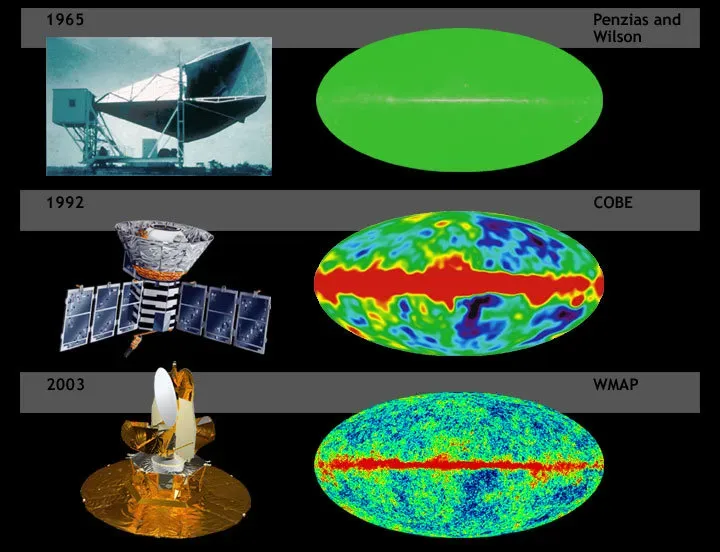
In the mid-1960s, two radio engineers, Arno Penzias and Robert Wilson, were trying to track down an annoying hiss in a sensitive microwave antenna in New Jersey. The noise persisted no matter what they did: they checked the electronics, recalibrated the system, and even cleaned out bird droppings from the dish. Yet the static remained, arriving uniformly from every direction. It was a technical nuisance that refused to go away.
What they had stumbled onto, without intending to, was the faint afterglow of the early universe: the cosmic microwave background radiation. At roughly just a few degrees above absolute zero, this signal matched predictions from cosmologists who argued that the universe began in a hot, dense state and has been expanding ever since. Their “instrument problem” became some of the most compelling evidence for the Big Bang model over competing steady-state ideas. A stubborn background noise turned out to be the universe’s own echo of its violent birth.
Why It Matters: The Power of Paying Attention to the Wrong Result
These stories are not just charming footnotes in science history; they highlight a deeper pattern about how discovery really works. Many of the breakthroughs we now take for granted came from results that initially looked like mistakes, contaminants, noise, or annoyances. The difference between a dead end and a revolution often lay in a researcher deciding to look twice instead of throwing the data away. In that sense, coincidence on its own is rarely enough; what matters is how humans respond to it.
Traditional textbook narratives often emphasize linear progress: hypothesis, experiment, conclusion. In reality, the path is more zigzag, full of wrong turns and surprises that force scientists to update their models of the world. The serendipitous discovery of penicillin reshaped microbiology and medicine, just as accidental radiation findings reshaped physics. By valuing anomalies rather than suppressing them, science becomes more resilient, more creative, and more capable of self-correction. The lesson for researchers today is clear: unexpected data should trigger curiosity, not panic.
Sticky Notes, Sweeteners, and the Taste of Pure Accident

Not every coincidence-driven discovery is as dramatic as an antibiotic or a new window on the cosmos; some are hiding in your desk drawer or your coffee mug. In the 1960s, chemist Spencer Silver at 3M was trying to make an ultra-strong adhesive and instead created a surprisingly weak one that could be repositioned. For years, no one knew what to do with it, until a colleague realized it was perfect for bookmarks that would stick to paper without tearing it. The result eventually became the ubiquitous sticky note, a tool born from a “failed” glue.
Artificial sweeteners have similar origin stories. Early non-sugar sweeteners like saccharin and others were discovered when chemists accidentally tasted residues on their hands or lab equipment and noticed an intense sweetness. Today, low-calorie sweeteners are woven into global food and beverage industries, influencing public health debates about sugar and obesity. These small, personal coincidences in the lab have scaled up into everyday objects and ingredients that subtly shape modern life.
Unexpected Signals from Space: Pulsars and the “Little Green Men” Joke
In 1967, astrophysicist Jocelyn Bell Burnell was combing through long rolls of chart paper from a new radio telescope in Cambridge when she noticed a strange, highly regular signal. The blips were so precise that some jokingly labeled the source “LGM” for “little green men.” The team quickly realized the signal was not from aliens but from an entirely new class of astronomical object. This was the first observation of a pulsar, a rapidly spinning neutron star emitting beams of radiation like a cosmic lighthouse.
The discovery came not from a search for exotic stellar remnants, but from Bell Burnell’s determination to investigate an anomaly that others might have dismissed as interference. Pulsars have since become essential tools in astrophysics, helping researchers test general relativity and map extreme states of matter. They have even been proposed as part of futuristic navigation systems for spacecraft traveling deep into the solar system. An odd squiggle on paper turned out to be the heartbeat of dead stars, ticking across the galaxy.
From Broken Thermometers to Liquid-Crystal Displays

Liquid crystals, the molecules behind modern displays, were initially a curiosity more than a technology. In the late nineteenth century, Austrian botanist Friedrich Reinitzer noticed a strange behavior in an organic compound derived from cholesterol: it had two distinct melting points and formed a cloudy, intermediate phase. This was not the simple solid-to-liquid transition he expected. That odd thermal behavior hinted at a new form of matter, but it was not clear what to do with it.
Decades later, researchers realized that liquid crystals’ ability to change their optical properties in response to temperature or electric fields could be harnessed in screens. Combining this with semiconductor advances and backlighting led to liquid-crystal displays, now found in watches, laptops, televisions, and airplane dashboards. The original discovery emerged from classic physical chemistry, but what made it special was that an inconvenient, confusing result was carefully recorded and pursued. A quirky melting curve eventually reshaped how humanity reads, works, and entertains itself.
The Future Landscape: Can Serendipity Survive in an Algorithmic Age?
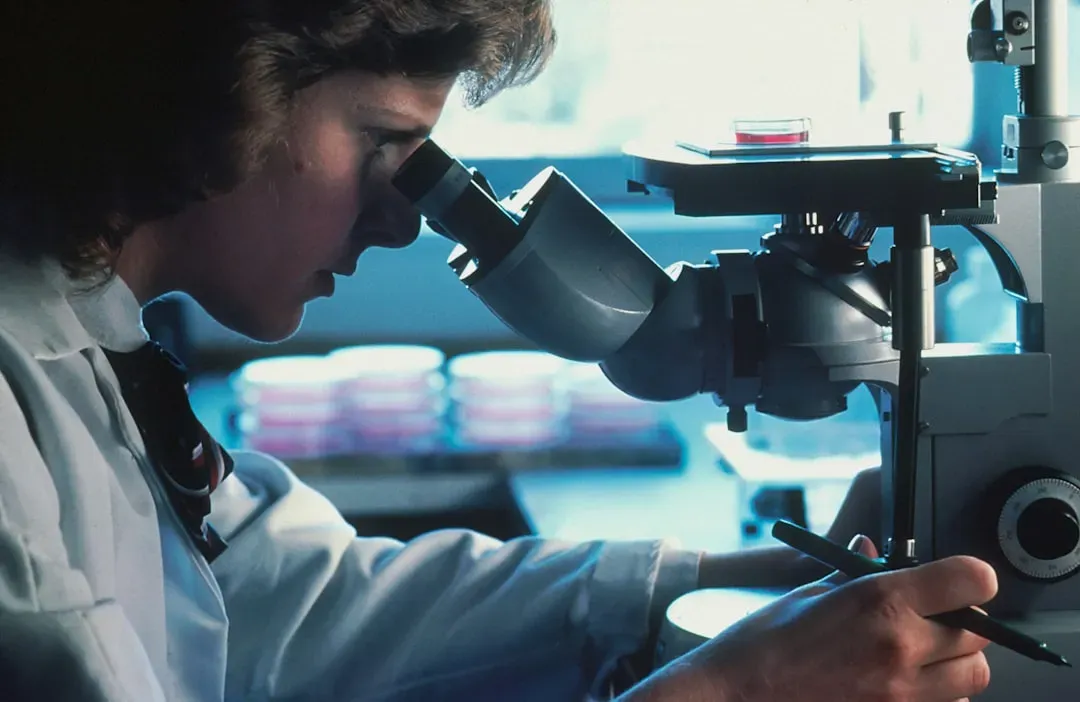
As science leans more heavily on automation, machine learning, and enormous datasets, some researchers worry that we might accidentally filter out the very surprises that fuel breakthrough discoveries. Algorithms are excellent at spotting patterns they have been trained to find, but unusual outliers can be labeled as errors and quietly discarded. In highly optimized industrial labs, there is pressure to push for predictable outcomes and quick wins. That environment can make it harder for an unexpected signal or sticky petri dish to get the attention it deserves.
On the other hand, new tools may actually supercharge serendipity if used wisely. Advanced anomaly-detection systems can flag data that do not fit existing models, giving scientists a shortlist of “weird” results worth a second look. Collaborative platforms allow unusual findings from one lab to be instantly shared with others who may recognize their significance. The scientific culture of the next few decades will likely be defined by how well it balances precision with openness to surprise. Protecting space for curiosity, even in hyper-efficient research pipelines, may be one of the quiet keys to future revolutions.
How You Can Keep Serendipity Alive in Science
Most of us are not running particle colliders or scanning the cosmos, but there are still simple ways to support the kind of science that turns lucky breaks into lasting breakthroughs. One is to back institutions, charities, or public funding programs that protect basic research, even when the outcome is uncertain. Many of the stories in this article emerged from curiosity-driven projects with no obvious commercial payoff at the start. When societies only fund targeted, short-term goals, they risk missing the unexpected detours that lead somewhere bigger.
On a personal level, staying informed about how discovery really happens can shift how you see scientific news. Instead of treating accidents as flukes, you can recognize them as part of a deeper pattern of exploration. Sharing these stories with students, friends, or kids can help build a culture that values questions as much as answers. And in your own work or hobbies, whether it’s gardening, coding, or cooking, paying attention when something goes “wrong” might reveal a new way of doing things. Sometimes the most important step is simply not to look away when the data refuse to behave.
Suhail Ahmed is a passionate digital professional and nature enthusiast with over 8 years of experience in content strategy, SEO, web development, and digital operations. Alongside his freelance journey, Suhail actively contributes to nature and wildlife platforms like Discover Wildlife, where he channels his curiosity for the planet into engaging, educational storytelling.
With a strong background in managing digital ecosystems — from ecommerce stores and WordPress websites to social media and automation — Suhail merges technical precision with creative insight. His content reflects a rare balance: SEO-friendly yet deeply human, data-informed yet emotionally resonant.
Driven by a love for discovery and storytelling, Suhail believes in using digital platforms to amplify causes that matter — especially those protecting Earth’s biodiversity and inspiring sustainable living. Whether he’s managing online projects or crafting wildlife content, his goal remains the same: to inform, inspire, and leave a positive digital footprint.