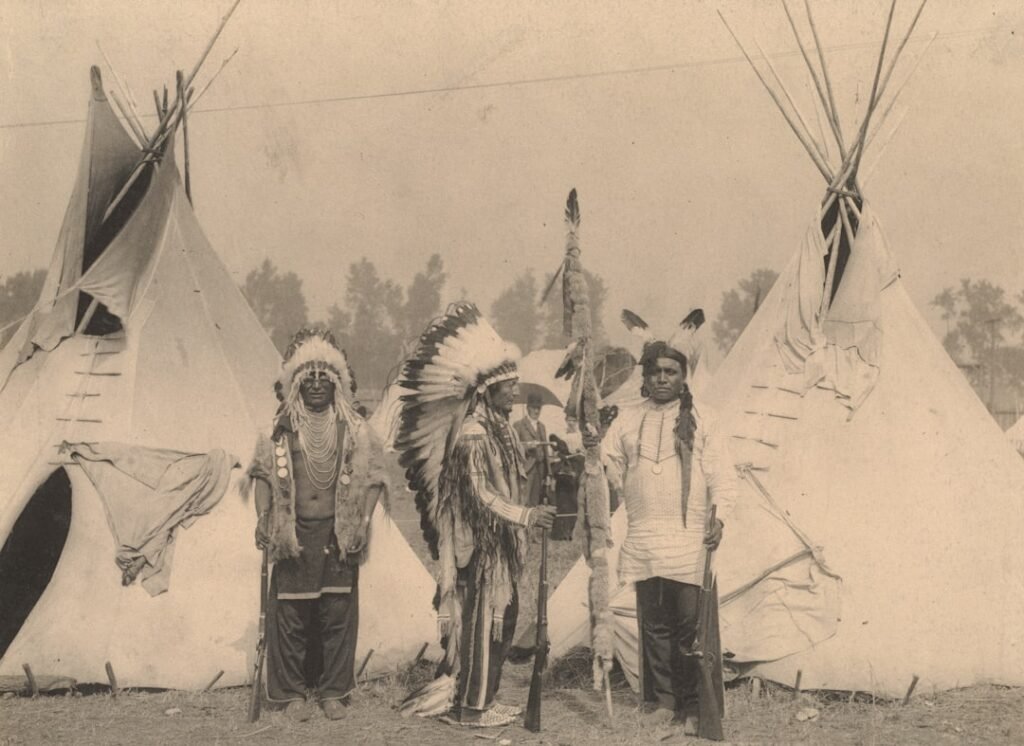

You’ve probably heard about the Trail of Tears. Maybe you know the Cherokee were one of the so-called Five Civilized Tribes. Those are the stories that make it into textbooks, but they barely scratch the surface of how profoundly this nation influenced the formation of America itself.
What you might not realize is that the Cherokee weren’t just witnesses to American expansion. They were active participants, negotiators, and innovators who left fingerprints all over the country’s early development. From the battlefields of the American Revolution to the creation of a written language that astonished scholars, the Cherokee made choices and contributions that directly shaped the nation we know today. Let’s be real, most of this gets left out of the mainstream narrative. So let’s dig into the stories that deserve your attention.
1. They Created One of the World’s Most Remarkable Writing Systems

In 1821, a Cherokee man named Sequoyah developed a syllabary for the Cherokee language, and honestly, this achievement is nothing short of mind-blowing. Sequoyah was monolingual and did not read or write in any language, yet he created a written language from scratch. Think about that for a moment. He observed the power of written communication among European settlers and spent over a decade developing a system of 86 symbols representing the syllables of spoken Cherokee.
The syllabary was so successful that almost the entire Cherokee group became literate within a short time. Within just a few years of its adoption in 1825, roughly nine out of ten Cherokee could read and write in their own language. The Cherokee Nation reached a literacy rate of almost 100 percent, surpassing that of surrounding European-American settlers. This wasn’t just a cultural triumph; it was a tool for unity and political resistance during some of the darkest chapters of Cherokee history.
2. They Published America’s First Bilingual Newspaper
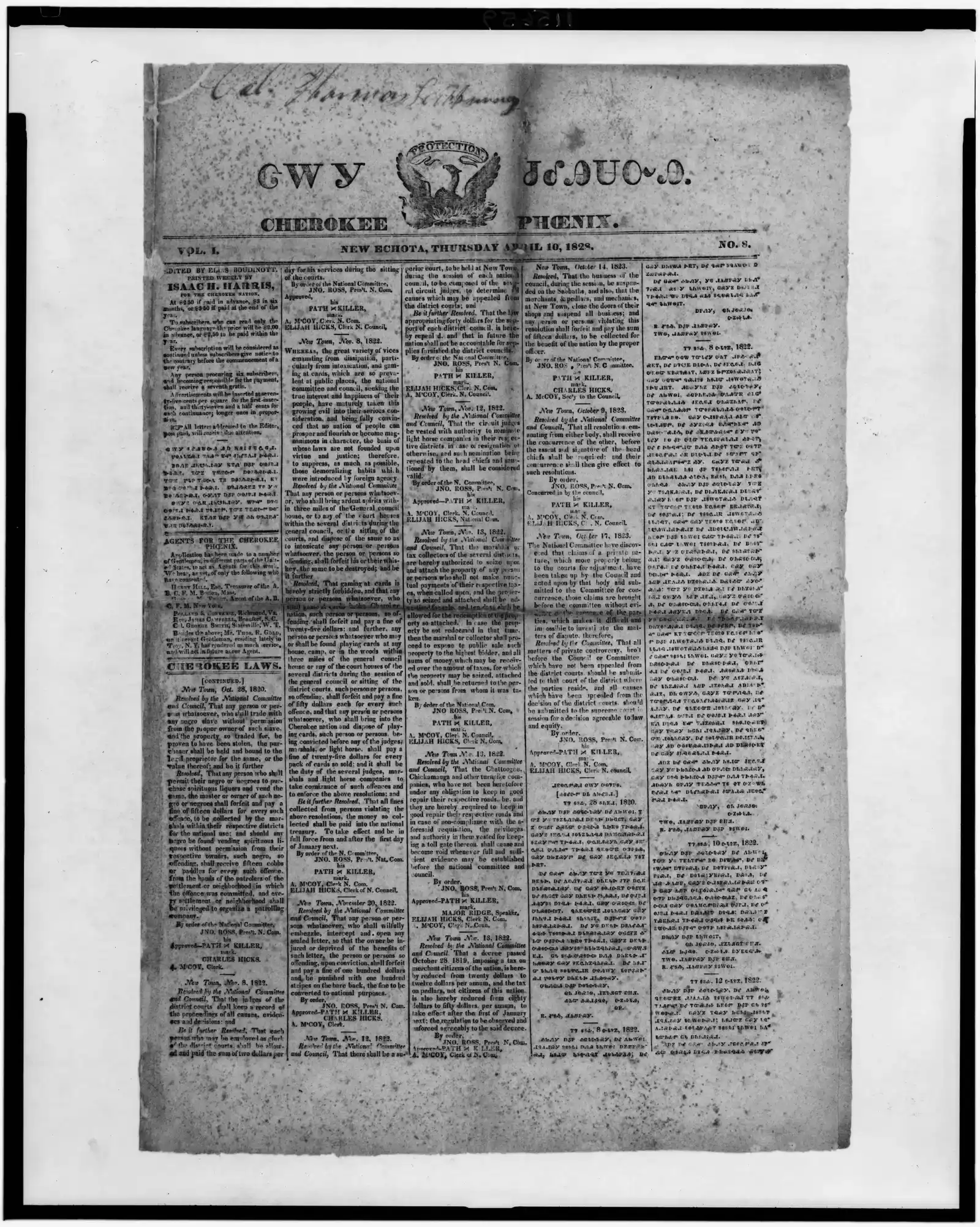
Native Americans’ first newspaper, the Cherokee Phoenix, began publication in February 1828, and it was groundbreaking in every sense. This wasn’t just a tribal newsletter. It was the first bilingual newspaper in U.S. history, printed in English and a slightly modified version of the Cherokee syllabary.
The Cherokee Phoenix became a powerful voice during the removal debates of the 1830s. It published laws, editorials, and news that kept the Cherokee Nation informed and connected across vast distances. The newspaper helped maintain Cherokee unity and solidarity at a time when the Cherokee nation was dispersed geographically and divided politically. Imagine the threat this posed to those who wanted Cherokee lands. Here was a people who could organize, communicate, and advocate for themselves in two languages.
3. They Pioneered Sophisticated Agricultural Techniques That Fed Early Settlers
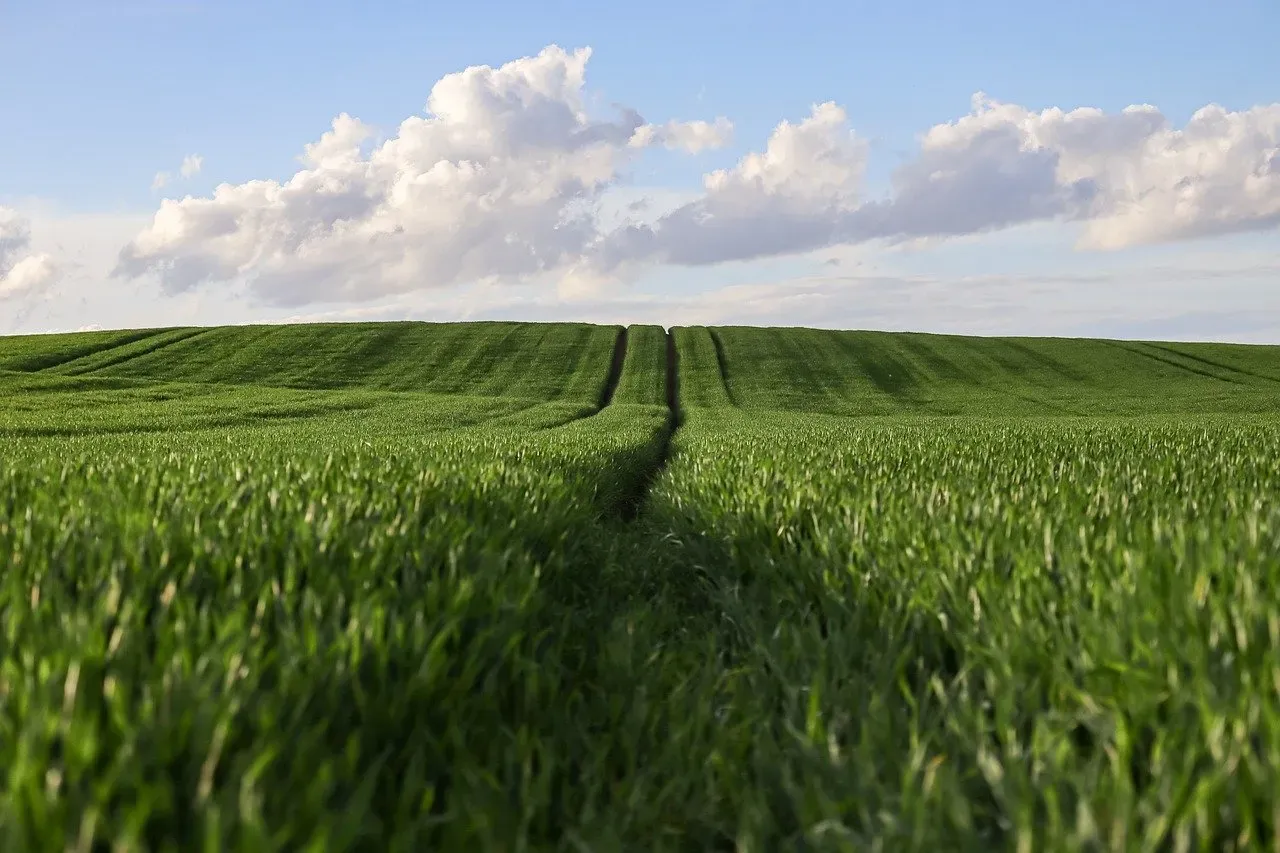
The Cherokees taught early settlers how to hunt, fish, and farm in their new environment, introducing them to crops such as corn, squash, and potatoes. This wasn’t charity; it was survival knowledge that European colonists desperately needed. Without Cherokee agricultural expertise, many settlements would have failed.
The Iroquois and the Cherokee called corn, bean, and squash the three sisters because they nurture each other like family when planted together. This companion planting method was agronomically brilliant. Beans naturally absorb nitrogen from the air and convert it to nitrates, fertilizing the soil for the corn and squash, while squash leaves provided ground cover that prevented weeds and retained moisture. Modern sustainable agriculture is only now catching up to techniques the Cherokee mastered centuries ago.
4. They Fought Alongside American Forces in Critical Early Wars
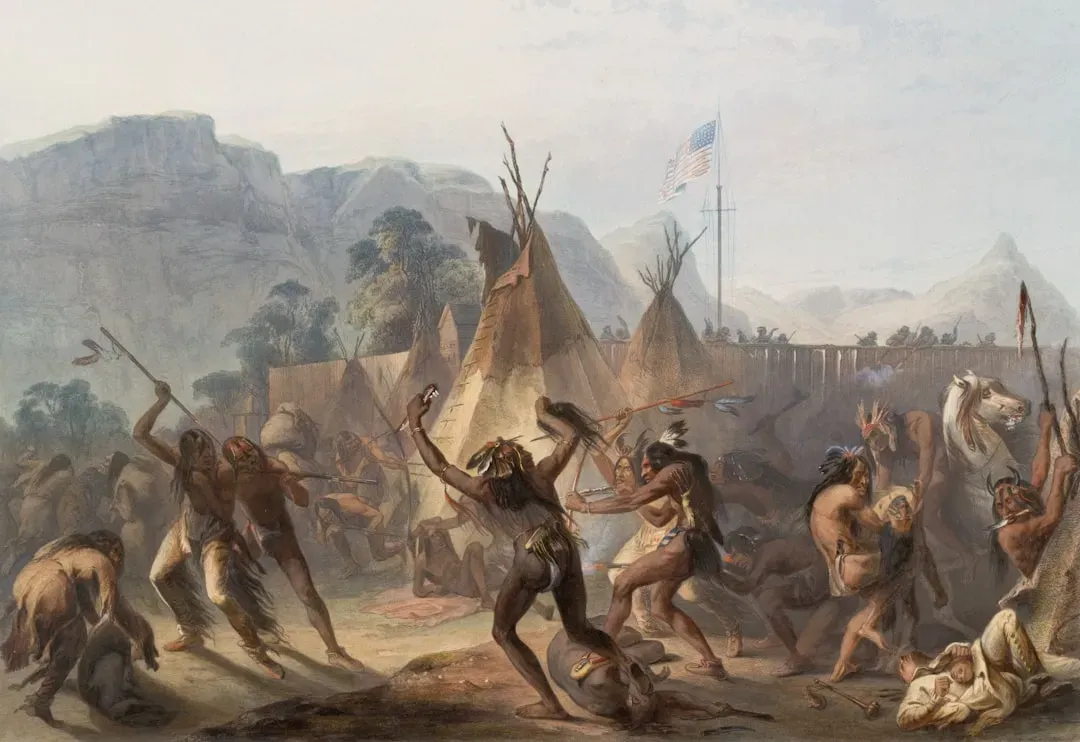
Under Chief Junaluska, the Cherokee aided Andrew Jackson against the Muscogee in the Creek War, particularly in the Battle of Horseshoe Bend, which took place between 1813 and 1814. The Cherokee contribution to this victory was substantial, providing warriors and strategic knowledge that helped secure American dominance in the Southeast. It’s hard to say for sure, but many historians believe Jackson’s later career might have looked very different without Cherokee support.
Yet here’s the painful irony. They aided Andrew Jackson, the very man who would later become president and champion their forced removal. Cherokee military service to the United States was repaid with betrayal. Still, their participation in these conflicts demonstrates how deeply intertwined Cherokee and American histories truly are.
5. They Established a Constitutional Government That Influenced American Political Thought
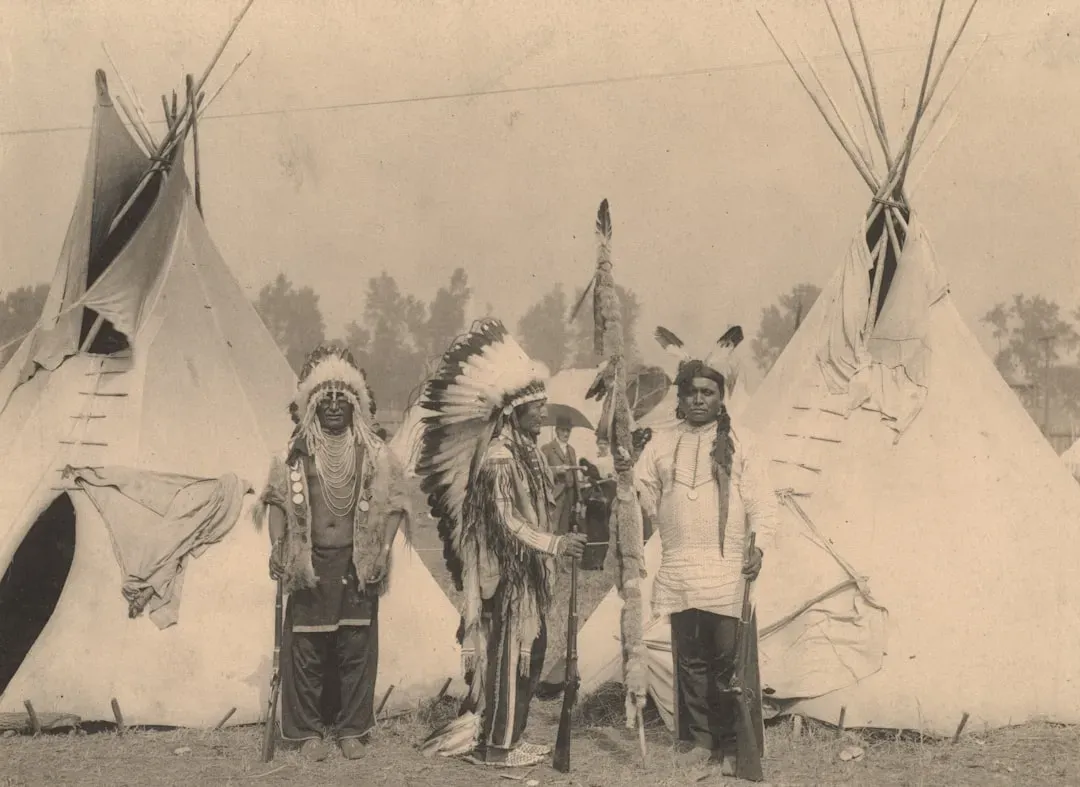
The tribal nation formed a government modeled on that of the United States, and in 1827 they proposed a written constitution. This wasn’t mimicry; it was strategic adaptation. The Cherokee Nation adopted a written Constitution modeled on that of the United States, complete with executive, legislative, and judicial branches.
The Cherokee constitution was a bold statement of sovereignty and self-governance. Major Ridge and John Ross shared a vision of a strong Cherokee Nation that could maintain its separate culture and still coexist with its white neighbors. By adopting the political forms that Americans claimed to respect, the Cherokee hoped to secure recognition as equals. They understood that survival meant meeting settlers on their own political terms while preserving Cherokee identity.
6. They Negotiated Dozens of Treaties That Shaped Territorial Boundaries
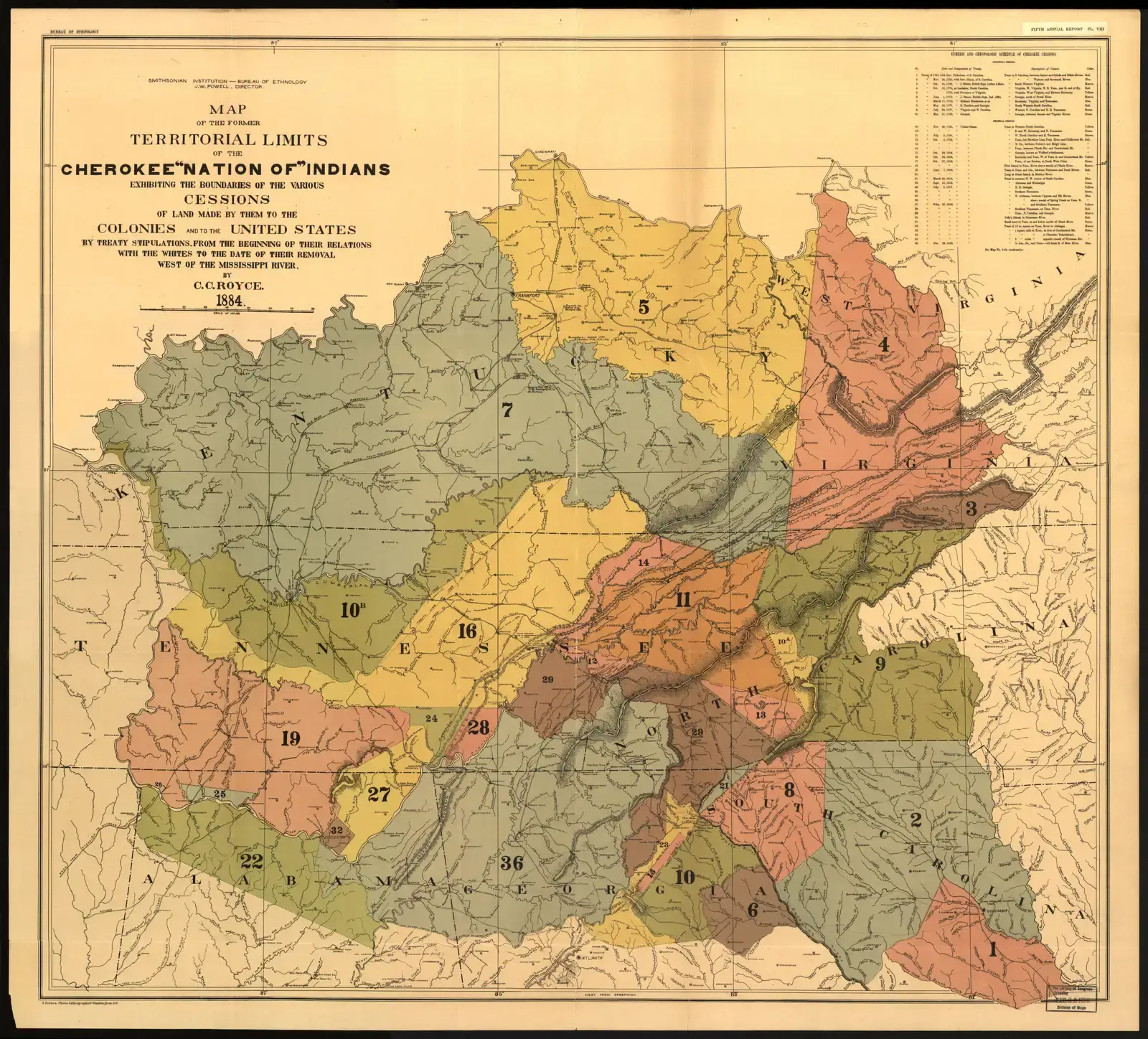
The Cherokee have participated in over forty treaties in the past three hundred years. These weren’t just legal documents; they were the framework through which vast stretches of American territory changed hands. In 1773 the Cherokee and the Muscogee had to exchange more than two million acres in Georgia through the Treaty of Augusta.
In 1775, at the Treaty of Sycamore Shoals, the Overhill Cherokee sold an enormous tract of land in central Kentucky to the Transylvania Land Company, which became the basis for colonial settlement of that area. Think about that. Kentucky’s settlement, its entry into statehood, its entire early development rested on a land deal with the Cherokee. The geography of America itself was negotiated at treaty grounds with Cherokee leaders present.
7. They Served as Critical Diplomatic Buffers Between European Powers
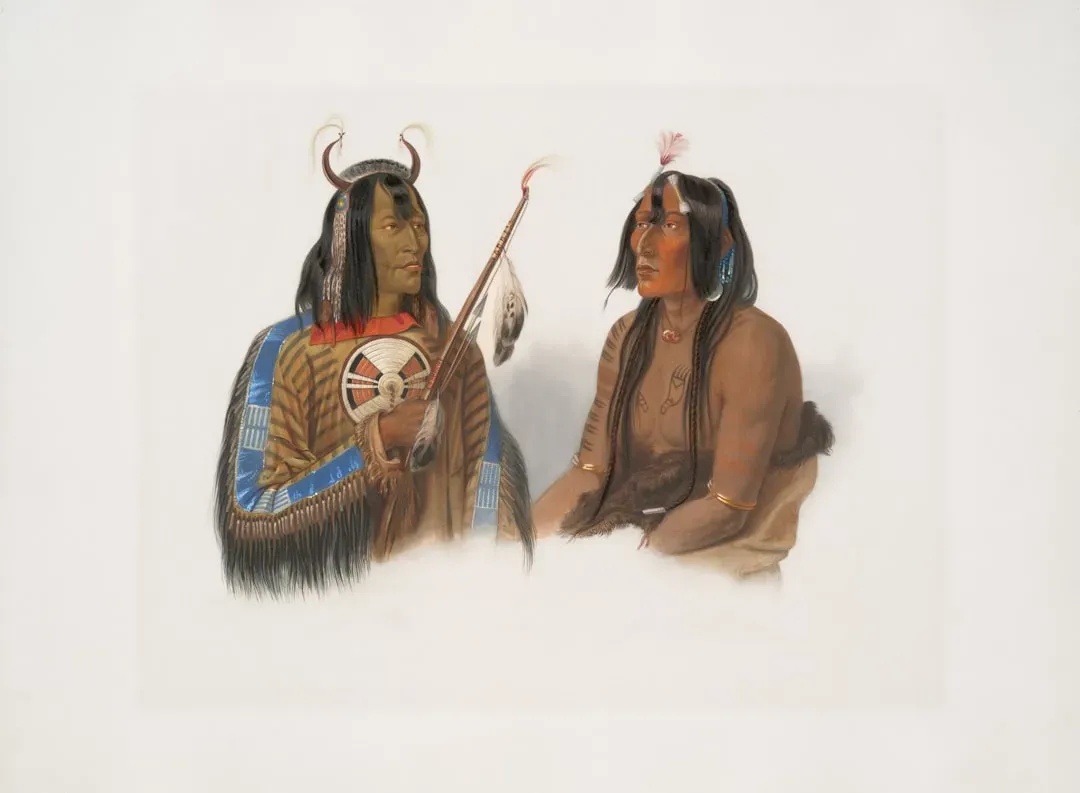
The Cherokees were one of the most populous Indian societies in the Southeast during the eighteenth century and were close allies of the British for much of that century. As British and French colonial aspirations began to clash, the Cherokee became increasingly important as a buffer, shifting alliances based on survival and strategic advantage.
This wasn’t passive victimhood. The Cherokee played European powers against each other, leveraging their geographical position and military strength to maintain autonomy as long as possible. They understood the game being played and participated actively in colonial geopolitics. Their diplomatic maneuvering bought time and influenced the balance of power in North America during a critical period.
8. They Revolutionized Medicinal Knowledge for Frontier Communities
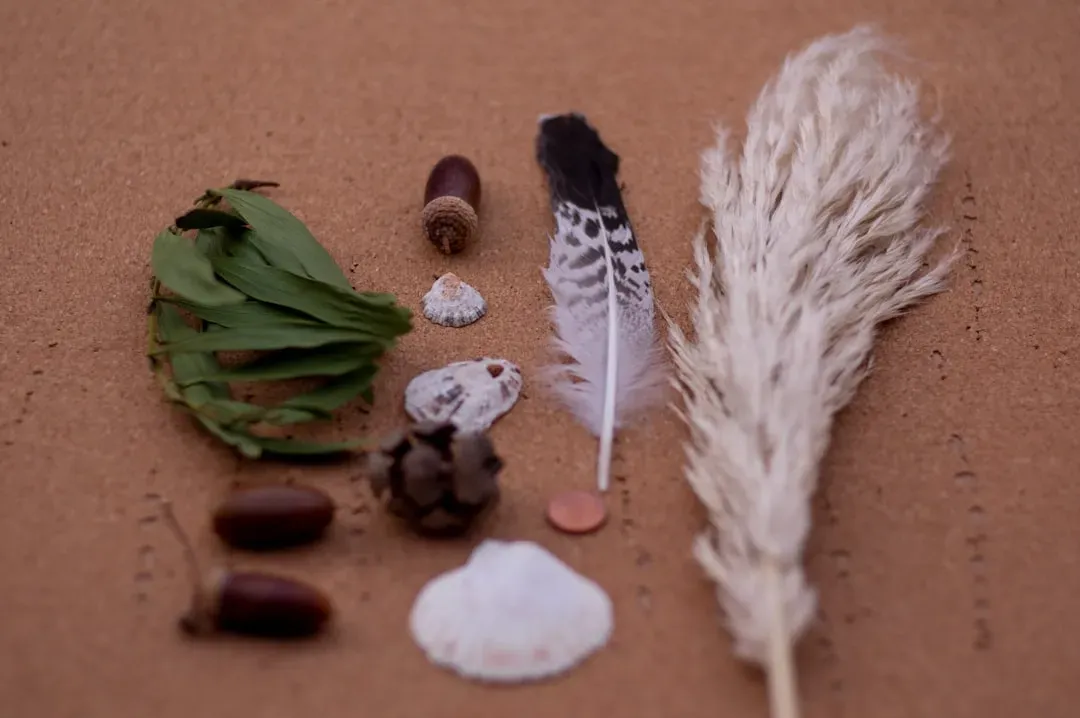
The Cherokee taught early settlers how to use herbal medicines for illnesses, knowledge that became essential for survival on the frontier. Cherokee healers possessed sophisticated understanding of the plants native to the Southeast, using them to treat everything from fevers to wounds.
Besides food, the environment provided all that the people needed, including medicine, clothing, weapons, shelter, musical instruments, and personal adornments. This holistic relationship with the land meant Cherokee medical knowledge was extensive and effective. Settlers who learned these practices greatly increased their chances of survival in a landscape that was harsh and unfamiliar to European-trained doctors.
9. They Developed Economic Systems That Rivaled European-American Communities
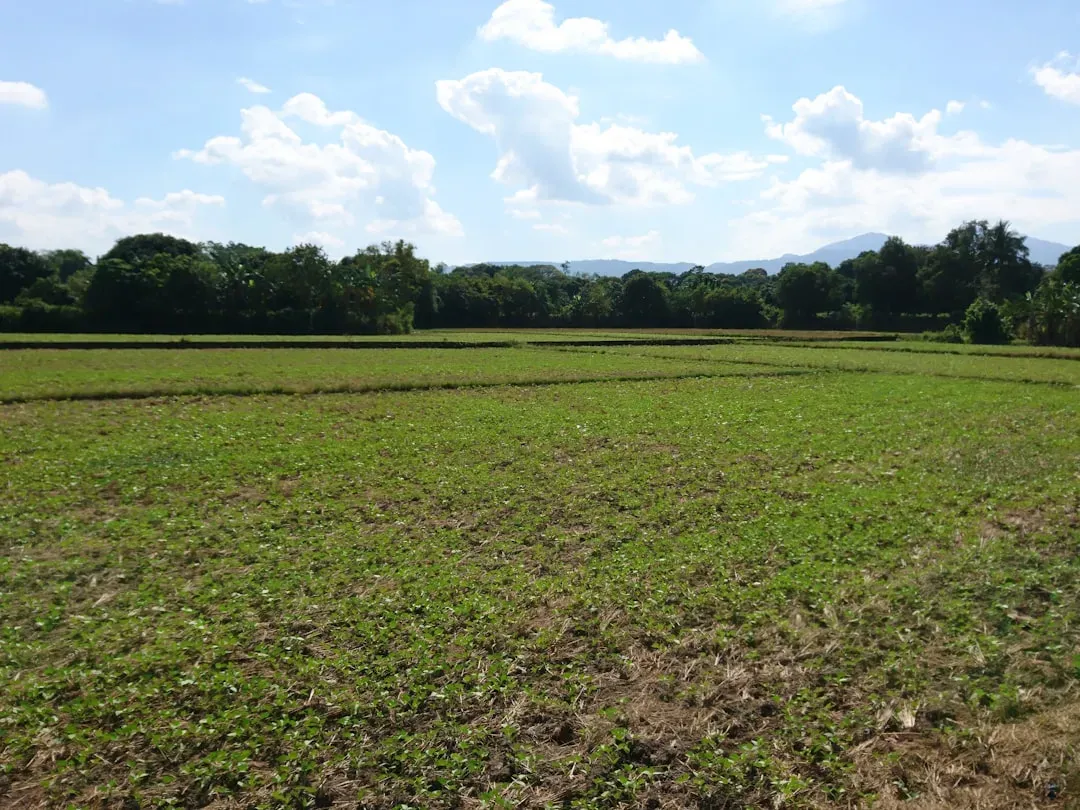
By the 1820s, the era between the Cherokee civil war and the American Civil War, known as the Golden Age, saw the average Cherokee enjoy a standard of living as high as, if not higher than, their neighbors. This prosperity was built on adaptation and innovation. By 1859 there were over 100,000 acres in cultivation, Cherokee farmers were averaging over 35 bushels of corn an acre, and the tribe had over 240,000 head of cattle.
The Cherokee economy was diverse and robust. They ran schools, published newspapers, operated businesses, and engaged in long-distance trade. The tribe established college-level education and public schools, demonstrating a commitment to education that was progressive by any standard of the time. This wasn’t a people struggling to survive; this was a nation thriving on its own terms.
10. They Influenced the Legal Definition of Tribal Sovereignty in America
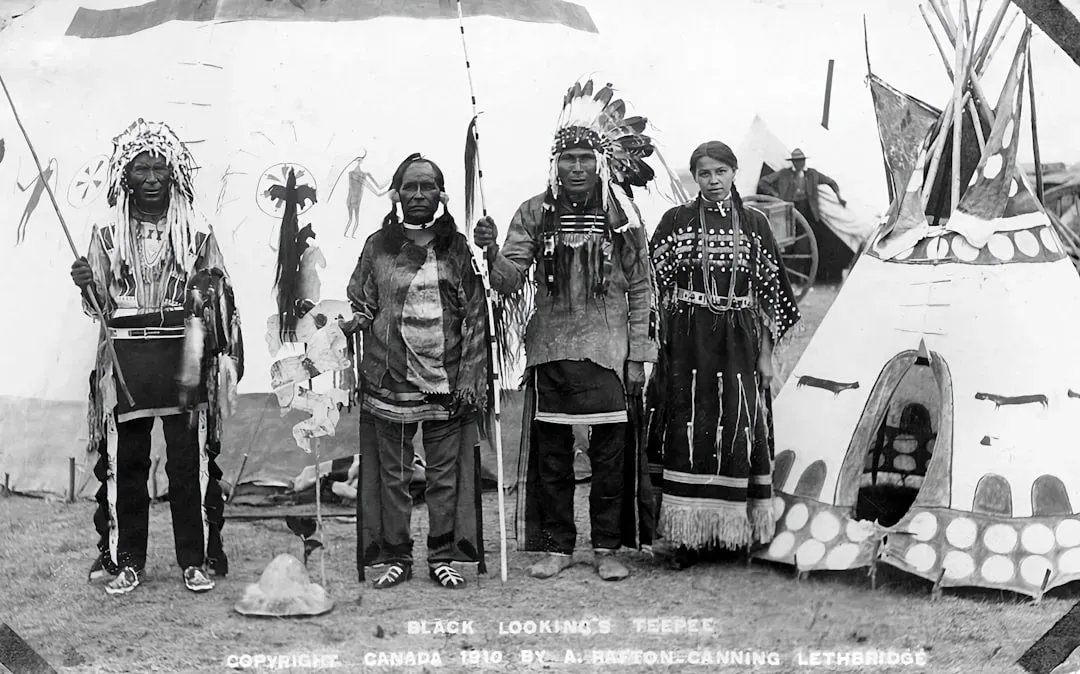
In Worcester v. Georgia (1832), the U.S. Supreme Court held that the Cherokee Indians constituted a nation holding distinct sovereign powers. This landmark case established legal precedents about tribal sovereignty that remain relevant in federal Indian law today. Chief Justice John Marshall’s decision recognized the Cherokee Nation as a distinct political entity with rights that states could not simply override.
In Cherokee Nation v. Georgia (1831), the Court decided the Nation was not a foreign State but a domestic dependent nation. These cases, born from Cherokee resistance to removal, fundamentally shaped how the United States government would interact with Native nations going forward. The legal concepts developed in these cases continue to influence tribal law and sovereignty debates in 2025.
Conclusion
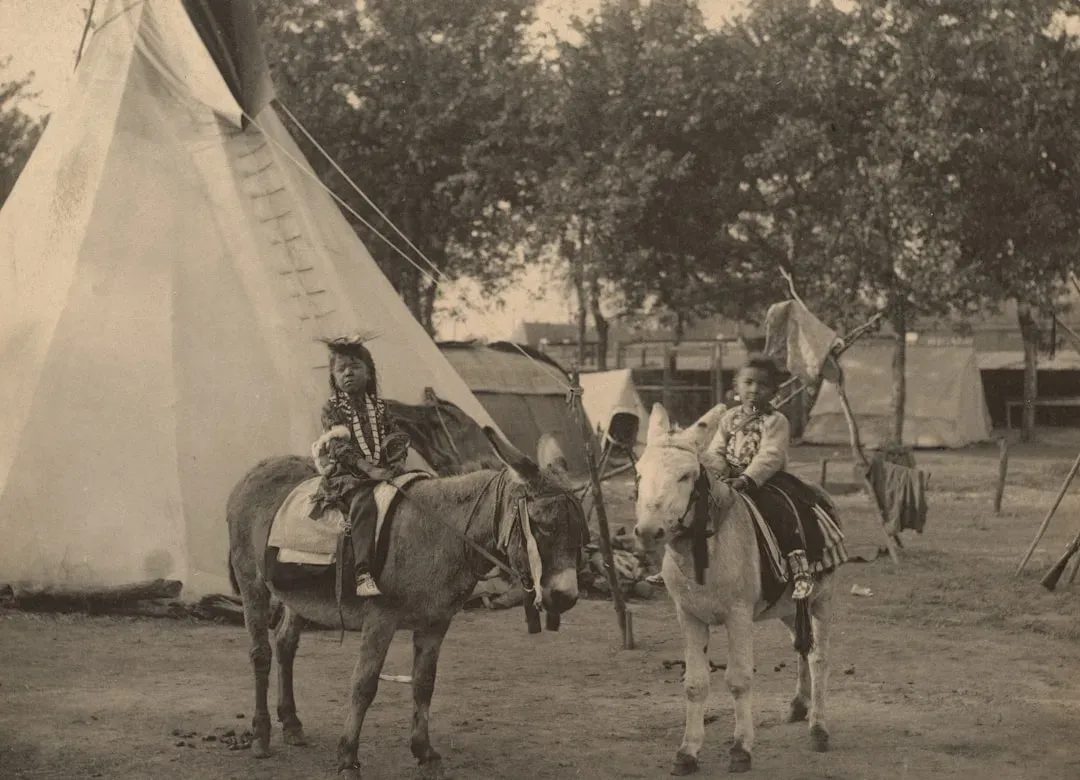
The Cherokee didn’t just experience American history. They actively shaped it through innovation, diplomacy, military service, and legal resistance. From creating a written language that defied expectations to establishing legal precedents that endure today, their contributions run far deeper than most textbooks acknowledge.
These stories matter because they challenge the simplistic narrative of westward expansion. The Cherokee were strategic, sophisticated, and resilient in ways that demand respect and recognition. Their influence can be traced through agriculture, law, education, medicine, and politics. Next time someone mentions early American history, remember these ten contributions. Did you expect that the Cherokee would leave such an indelible mark on the nation that displaced them?
Jan loves Wildlife and Animals and is one of the founders of Animals Around The Globe. He holds an MSc in Finance & Economics and is a passionate PADI Open Water Diver. His favorite animals are Mountain Gorillas, Tigers, and Great White Sharks. He lived in South Africa, Germany, the USA, Ireland, Italy, China, and Australia. Before AATG, Jan worked for Google, Axel Springer, BMW and others.