
Alaska is often called “The Last Frontier,” and honestly, that nickname earns its keep. You can fly for hours over forests, glaciers, tundra, and coastlines without spotting a single road or building. It is a place where nature still runs the show, completely and unapologetically. The wildlife of Alaska cannot be separated from the isolated environment, harsh climate, and rough landscapes that have led to the evolution of species suited to live in such extremes.
What makes it even more remarkable is the sheer variety. Nearly 1,100 vertebrate species regularly occur in Alaska, and although no one has an exact count, thousands of invertebrates are also thought to live in diverse marine, aquatic, and terrestrial habitats across the state. From colossal bears to creatures smaller than your fist, this wild land holds animals that exist nowhere else on Earth. Buckle up, because what you are about to discover will leave you genuinely speechless.
1. The Kodiak Brown Bear – The World’s Largest Land Predator
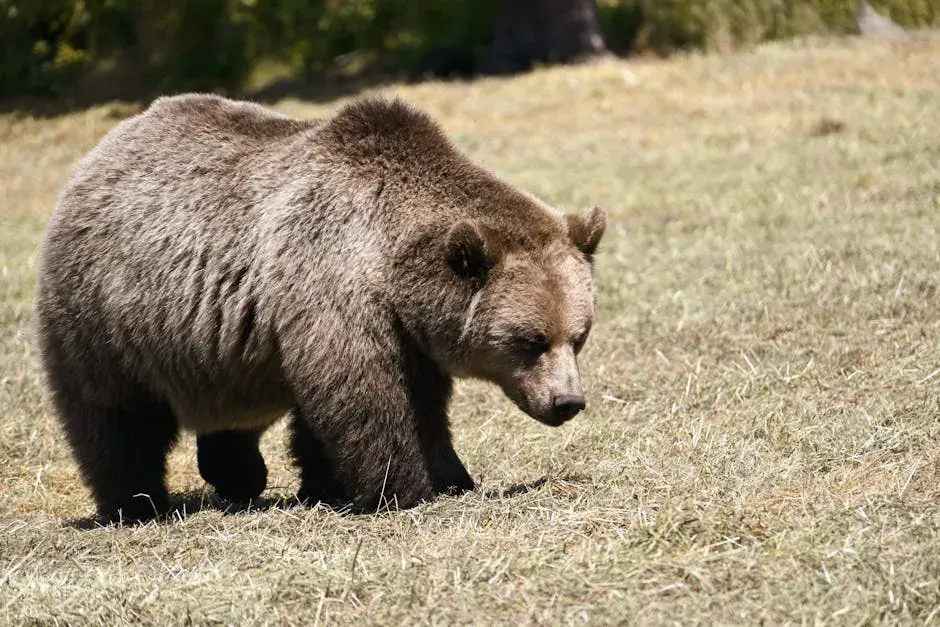
Let’s start with the heavyweight champion of Alaska, quite literally. The Kodiak bear is a unique subspecies of the brown or grizzly bear, and it lives exclusively on the islands of the Kodiak Archipelago, having been isolated from other bears for about 12,000 years. Imagine being genetically cut off from your closest relatives for twelve millennia – you would probably turn out pretty different too. Kodiak bears are the largest bears in the world. A large male can stand over 10 feet tall when on his hind legs and 5 feet when on all four legs, and they weigh up to 1,500 pounds.
Brown bears on Kodiak Island are classified as a distinct subspecies from those on the mainland because they are genetically and physically isolated. They even look different than their mainland relatives – the shape of their skulls is different, and they tend to be larger on Kodiak Island, lending this subspecies its mythic reputation. If you ever visit Kodiak, be warned: the bears know the land better than you do, and one of the reasons they thrive there is that they have plenty of space and high-quality food.
2. The ABC Islands Bear – The Bear With a Polar Bear Secret
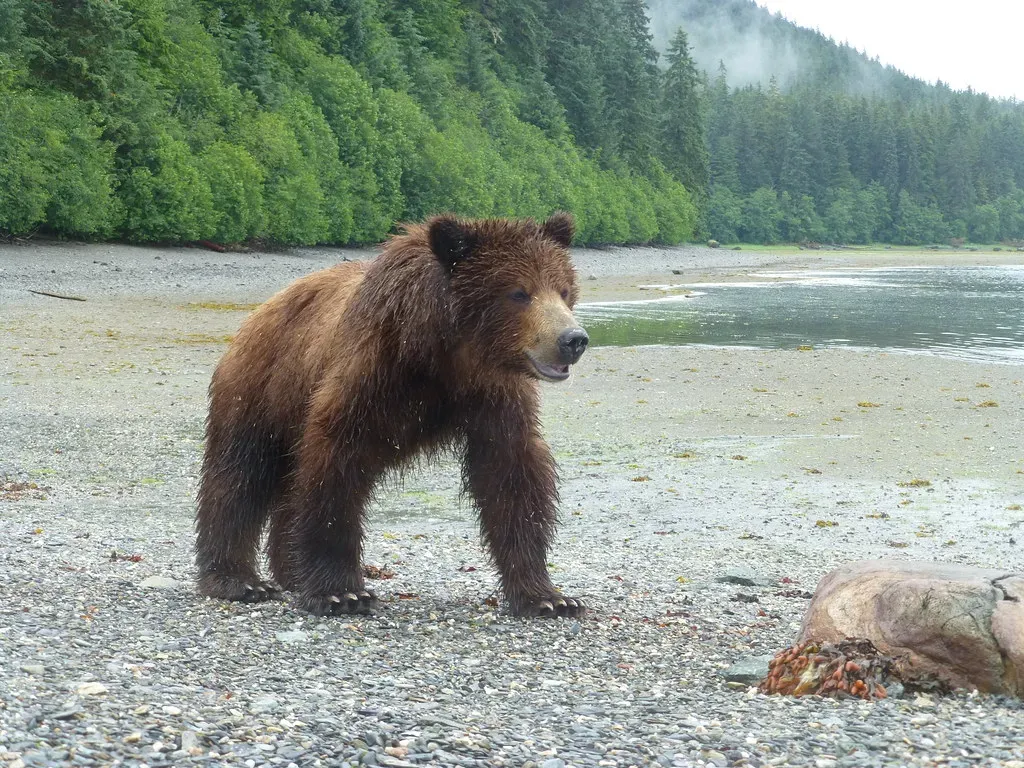
You might think one extraordinary Alaskan bear is enough. Nope. The ABC Islands bear is a subspecies of brown bear found in southeast Alaska on Admiralty, Baranof, and Chichagof Islands, commonly known as the ABC Islands, part of the Alexander Archipelago. Specifically, they live in the Tongass National Forest, relying on the plants and animals found in this forest, including small mammals, carrion, berries, fish, and roots. This is essentially a bear living inside a rainforest, which sounds like something from a fantasy novel.
Here’s the thing that truly blows minds about this animal. What makes this bear truly special is its genetic makeup. While it is similar in appearance and behavior to the typical brown bear, research has found that it has mitochondrial DNA that makes it closer to polar bears. Think about that for a second. You are looking at what appears to be a regular brown bear, but its genes whisper stories of a polar ancestry. The ABC Islands bear closely resembles the Alaska Peninsula brown bear, with a humped back, large size, and thick fur ranging in color from blonde to brown to black. Adult males weigh on average between 430 and 860 pounds.
3. The Alaskan Hare – The Tundra’s Cold-Weather Sprinter
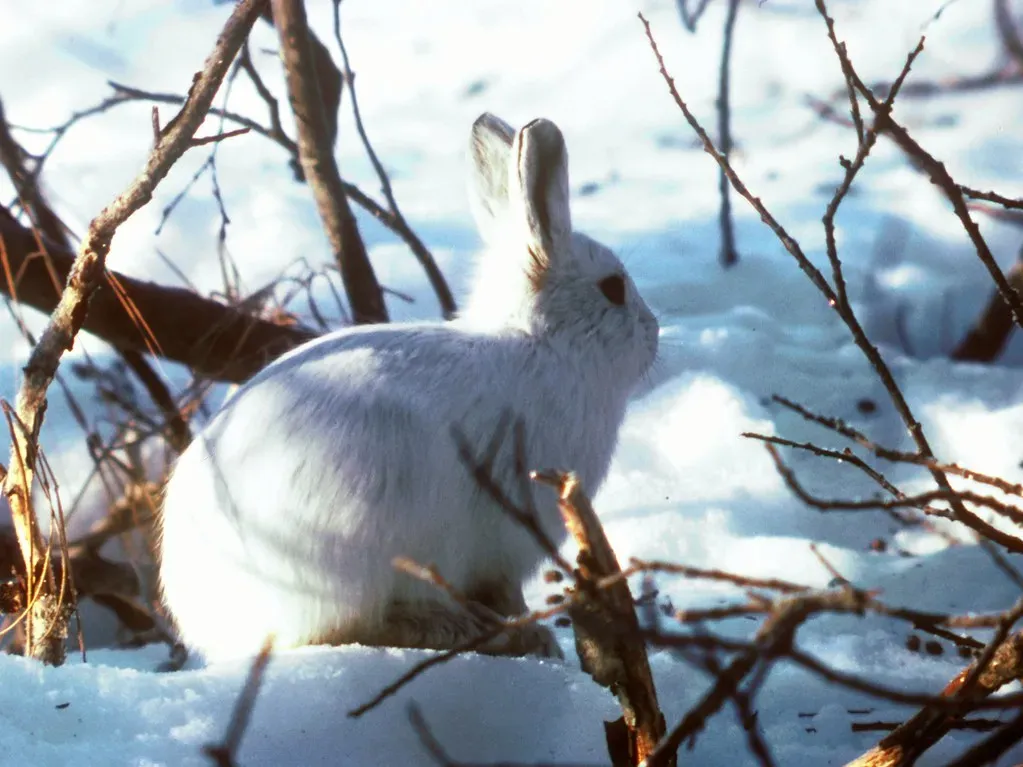
Most people think of rabbits as backyard creatures nibbling on garden lettuce. The Alaskan hare has absolutely nothing in common with that image. The Alaskan hare, also known as the Tundra hare, is a species of mammal found in the open tundra of western Alaska and the Alaska Peninsula. They are one of the largest species of hares, typically weighing between 6.4 to 15.9 pounds. For a hare, that is an impressive number – more like a small dog than a fluffy garden visitor.
The Alaskan hare has fairly short ears, smaller than those of other hares, that are thought to be an evolutionary adaptation for preventing heat loss. They also change color, growing a white fur coat with black-tipped ears in winter, and shifting to a brown coat with white underneath in summer. That is the tundra equivalent of a perfect camouflage wardrobe. Their hind feet are around 20 centimeters in length, which is believed to let them move easily in the snow, and they also use their large feet as a defense against predators.
4. The Kodiak River Otter – A Tiny Island Specialist
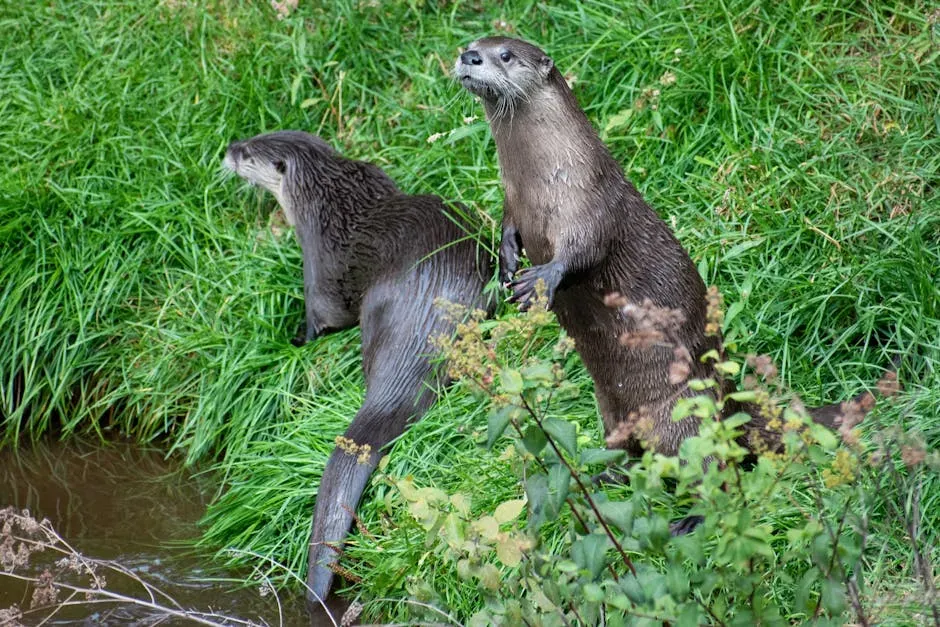
Not everything iconic in Alaska needs to be enormous. Sometimes, the most fascinating creatures are the ones quietly paddling through a remote river when nobody is watching. A subspecies of the North American river otter, the Kodiak River otter is only found in Alaska, on the Kodiak Archipelago. Related to badgers and weasels, these cute-looking animals are one of nature’s most playful creatures, known for their intelligence and strong bonds with one another.
The Kodiak River otter is unique from its North American river otter cousin in that it is smaller, and found in one limited location in Alaska, specifically the Kodiak Archipelago. Their island isolation, much like the Kodiak bear, has shaped them into something genuinely distinct. Hunting and pollution, particularly mercury, are the two major threats to the Kodiak River otter, as they move between fresh and saltwater to hunt and breed, and they cannot escape one type of water to be safe in another. It’s a reminder that even the smallest, most playful creatures face serious, real-world challenges.
5. Dall’s Sheep – The Clifftop Acrobat in a White Coat
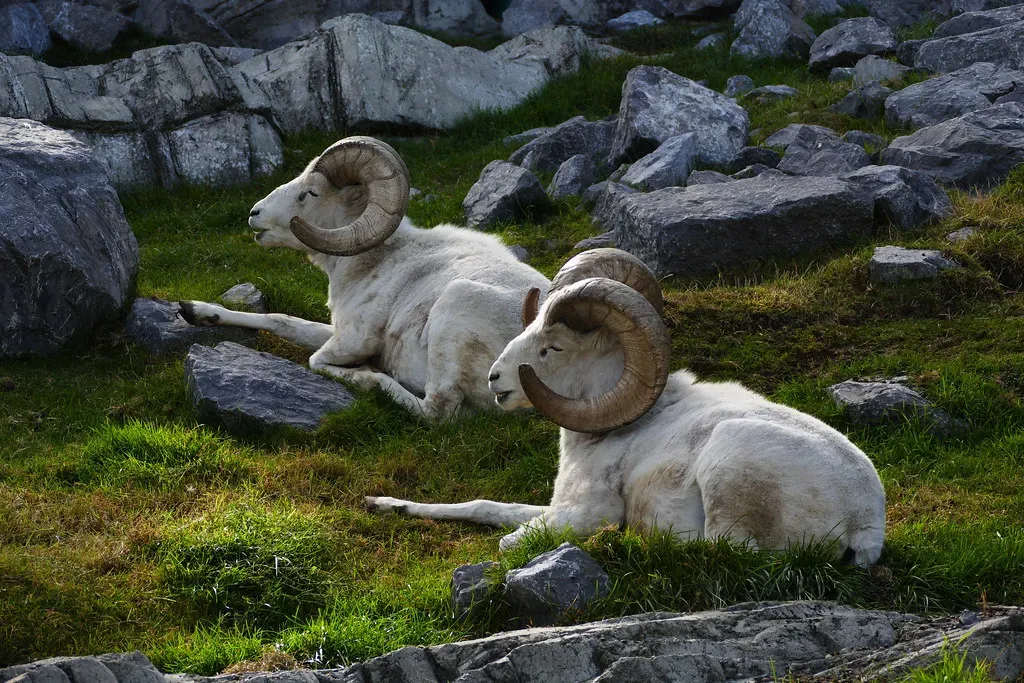
If you have ever looked up at a sheer mountain cliff and wondered what could possibly live up there, you now have your answer. Dall sheep inhabit some of Alaska’s most rugged alpine areas, thriving on the wind-swept exposed cliffs and peaks of mountains in central and northern Alaska. Watching one navigate a near-vertical rockface is like watching an athlete perform a stunt you genuinely did not think was biologically possible.
Dall’s sheep inhabit the mountain ranges of Alaska and are most notable for the males’ massive curled horns. Females, known as ewes, also carry horns, but theirs are shorter and more slender, and only slightly curved. What’s particularly clever is how you can read a Dall sheep’s biography right off its horns. The start-and-stop horn growth results in a pattern of rings called annuli, spaced along the length of the horn, which can help determine age. Think of it like tree rings, but on a set of spectacular, curling amber horns perched on a mountain ridge.
6. The Collared Pika – Alaska’s Tiniest Survivalist
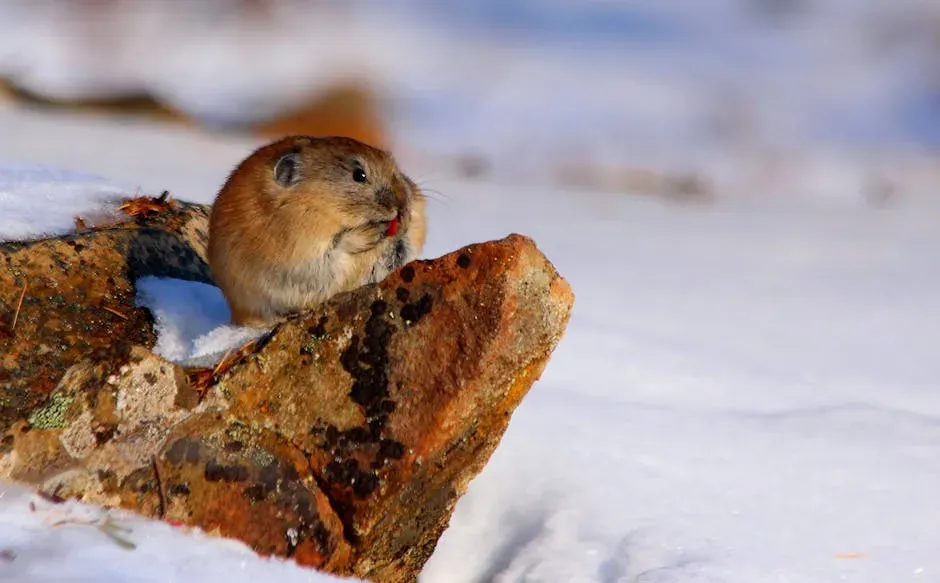
Do not underestimate something just because it weighs less than a bar of soap. There are two pika species found in North America, separated by a gap of about 500 miles across British Columbia and Alberta. American pikas reside in mountainous western states and provinces, while collared pikas live exclusively in Alaska and western Canada. The collared pika is, in every sense of the word, Alaska-made.
Collared pikas are about the size of two tennis balls in both weight and length, and they may be small, but they are truly built for Alaska. What they lack in size, they more than make up for in strategy. They stack greens in hay piles under rocks, keeping the greens within view of the sun to dry them out for over-winter storage. They also harvest specific plants at different times as the nutritional value changes throughout growing seasons, and since plant toxins serve as a natural preservative, those with high concentrations, like willows, last longer – so pikas store them until late winter after the toxins have broken down. Honestly, that is smarter meal prep than most people manage.
7. The Gray Wolf – Alaska’s Haunting Pack Hunter
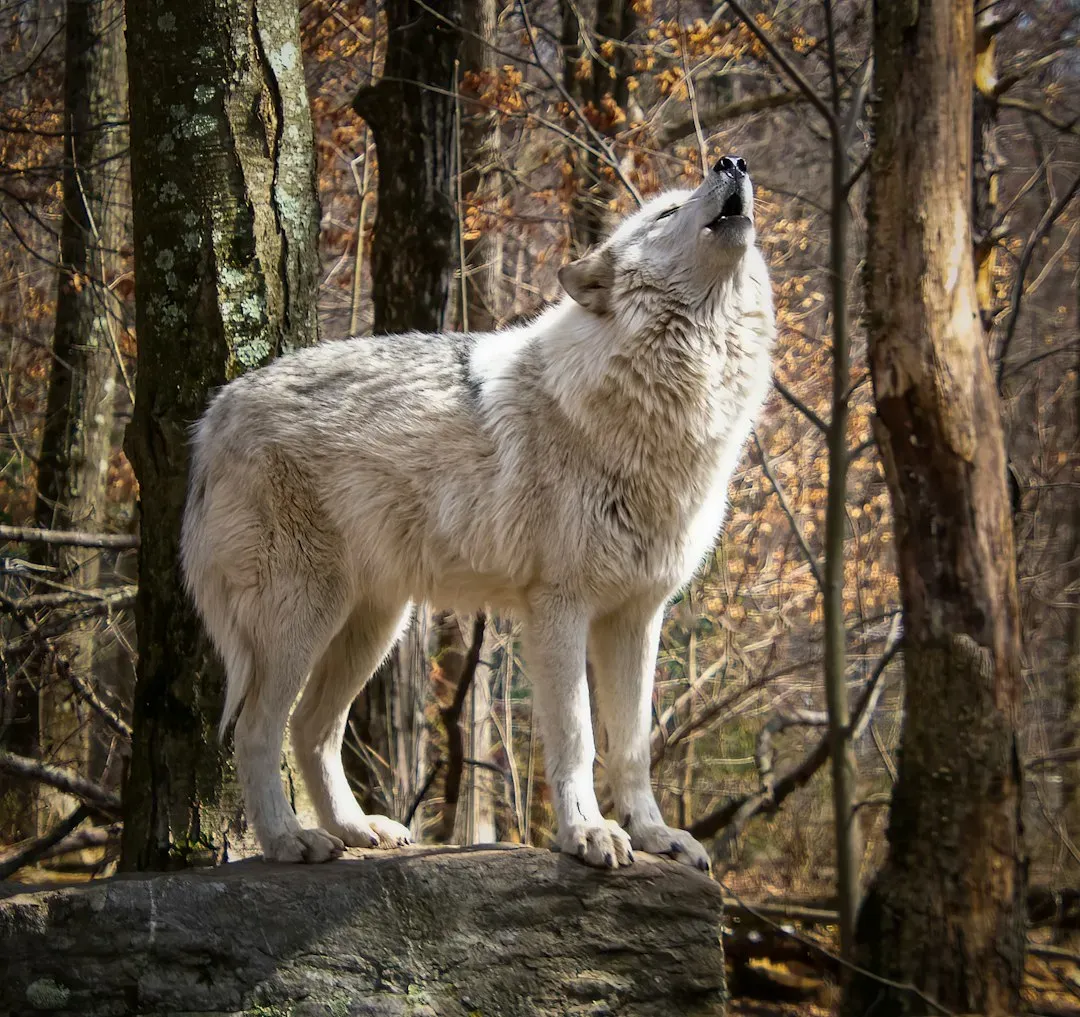
You could spend years hiking Alaska’s backcountry and never once see a gray wolf. Alaska’s broad, uninterrupted swaths of wilderness are home to animals like lynx and wolves that are usually so shy, even locals are thrilled to catch a quick glimpse. There is something deeply moving about an animal that holds that much power and still chooses invisibility.
Easily the largest of Alaska’s canine species, the gray wolf can grow to six feet and comes in colors ranging from white to black and all shades in between. They are found in approximately 85 percent of the state’s wilderness areas, living in packs of two to 30 animals. Their social intelligence is genuinely impressive. Wolves communicate through a variety of vocalizations, including howls that echo across the landscape, and their hunting strategies are coordinated and efficient, allowing them to take down large prey such as moose and caribou. Hearing that howl echo across a frozen valley is, by all accounts, one of the most spine-tingling sounds wild Alaska has to offer.
8. The Musk Ox – A Living Relic of the Ice Age
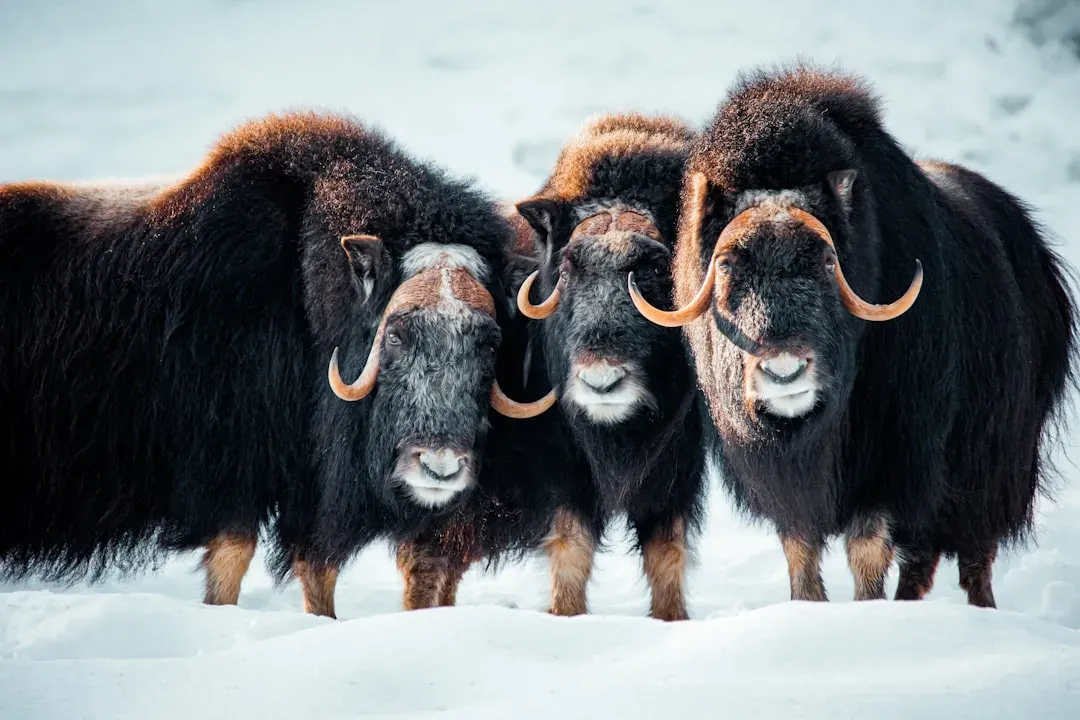
Some animals make you feel like you have stepped back in time. The musk ox is absolutely one of them. Musk oxen, with their shaggy coats and formidable presence, are iconic inhabitants of the Alaskan tundra. These prehistoric-looking animals are well-adapted to the harsh Arctic climate, with thick fur and a strong build. Standing in front of one feels less like wildlife watching and more like a visit to the Pleistocene.
There are about 4,000 muskoxen in Alaska, found in very specific places: the northeast and northwest Arctic, the western Yukon-Kuskokwim Delta, the Seward Peninsula in the western Arctic, Nunivak Island, and Nelson Island. In summer, they gravitate toward river valleys to feast on sedges and grass, and in winter they move to higher ground to avoid deep snow. What makes musk oxen truly extraordinary is their defense strategy. Musk oxen live in herds, providing protection against predators by forming a tight circle, with their horns facing outward – a technique that has kept them alive through millennia of Arctic predation.
9. The Tufted Puffin – The Sea’s Most Theatrical Seabird
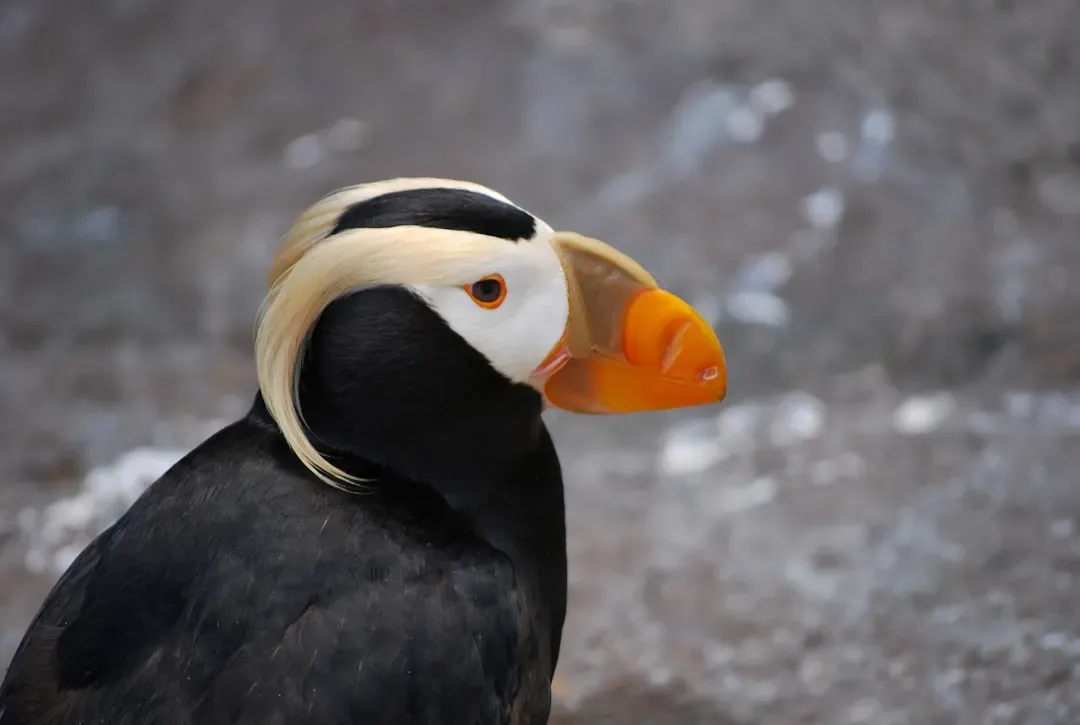
If Alaska’s wildlife had a mascot for sheer personality, the tufted puffin would campaign hard for the role. With its vibrant beak and expressive eyes, the puffin is one of Alaska’s most charismatic seabirds. Often referred to as “clowns of the sea,” these birds are skilled swimmers, using their wings to “fly” underwater in search of fish. The idea of a bird essentially flying through water rather than air is still one of nature’s more delightful contradictions.
During the breeding season, thousands of puffins gather on remote cliffs, creating a spectacular sight, and their social nature and comical appearance endear them to birdwatchers and nature lovers alike. Here is a quirky detail worth sharing at your next dinner party: puffins can hold several small fish in their beaks at once, thanks to a specialized hinge mechanism, allowing them to efficiently feed their chicks during the breeding season. Engineering built right into the beak. Nature really is the best designer.
10. The Canada Lynx – Alaska’s Only Wild Cat
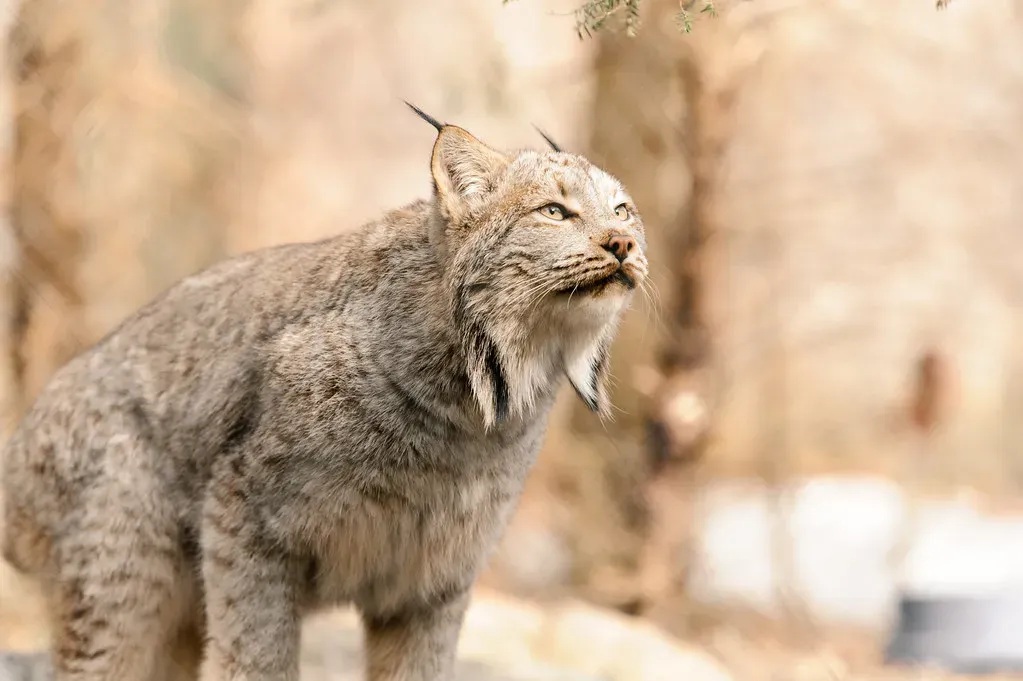
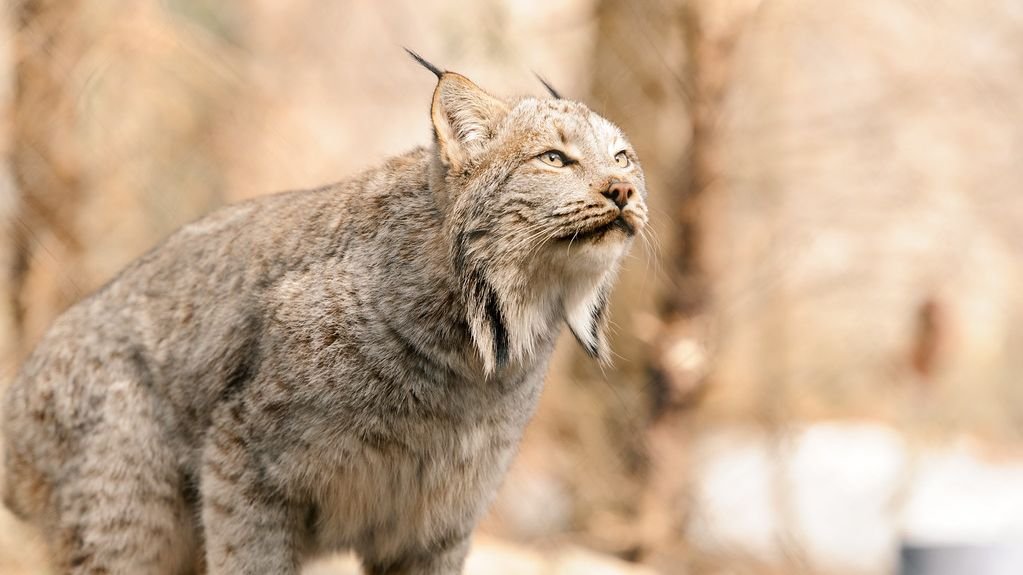
Alaska has bears, wolves, wolverines, and eagles – but it also quietly harbors a wild cat that most visitors never see. Special to Alaska because they are the only cat species native to the state, the lynx is also – unusually for a cat species – quite fond of swimming. A swimming cat in Alaska. Somehow that feels very on-brand for this place.
Alaskans only tend to see lynx in springtime, when the mothers are having to hunt and care for their playful kittens. They are graceful animals, resembling a large bobcat with longer legs and ears, and the lynx spends much of its time chasing down local snowshoe hares, mice, and birds to eat. The relationship between the lynx and the snowshoe hare is one of ecology’s most famous boom-and-bust cycles – when hare populations rise, lynx numbers climb right behind them, and when hares crash, the lynx population follows. Alaska’s broad, uninterrupted swaths of wilderness are home to animals like lynx that are usually so shy, even locals are thrilled to catch a quick glimpse. If you are ever lucky enough to spot one slipping between the spruce trees, consider yourself among the truly fortunate.
Conclusion: A Wilderness Worth Protecting
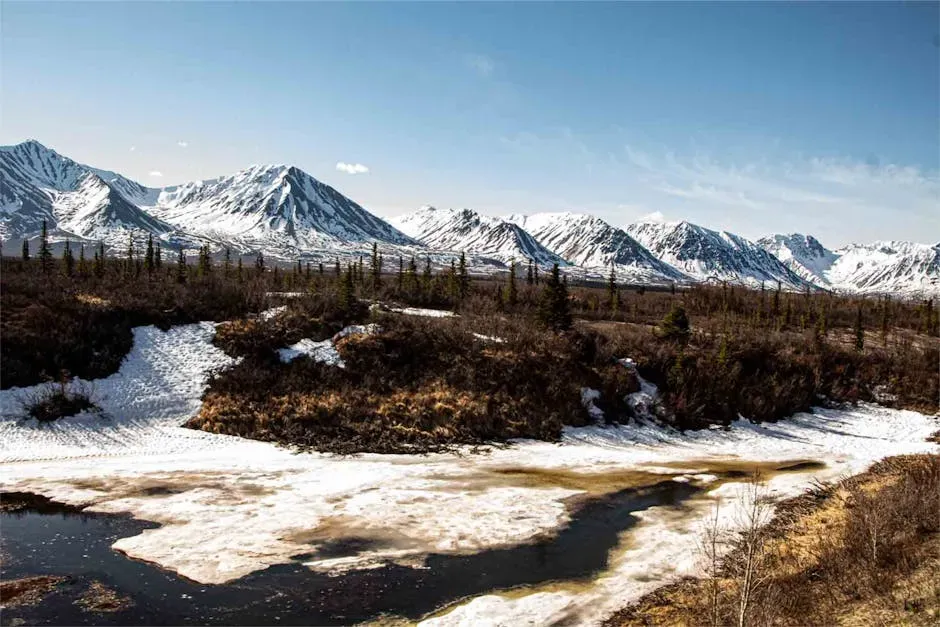
Alaska is not just a place on a map. It is a living, breathing archive of what the natural world looked like before humans started rearranging it. From the goliath Kodiak bear to the tennis-ball-sized collared pika, every creature in this list represents millions of years of adaptation, survival, and evolutionary brilliance. Many species that are rare, endangered, or have been extirpated elsewhere in the United States are thriving in Alaska. Geographical isolation, relatively recent population growth, limited development, and conservative laws on the introduction of exotic animals all contribute to these relatively favorable conditions.
The real question is not just how these animals survive – it’s whether we will do enough to make sure they keep doing so. Climate change, oil and gas drilling, seismic testing, and natural resource management policies are all threatening this region and its wildlife. Alaska’s wilderness is both astonishing and fragile in ways that are easy to underestimate from the outside. So the next time you see a photograph of this wild land, remember it is not a museum exhibit – it is a living place, still wild, still improbable, still worth fighting for. Which of these ten creatures surprised you most? Share your thoughts in the comments below.