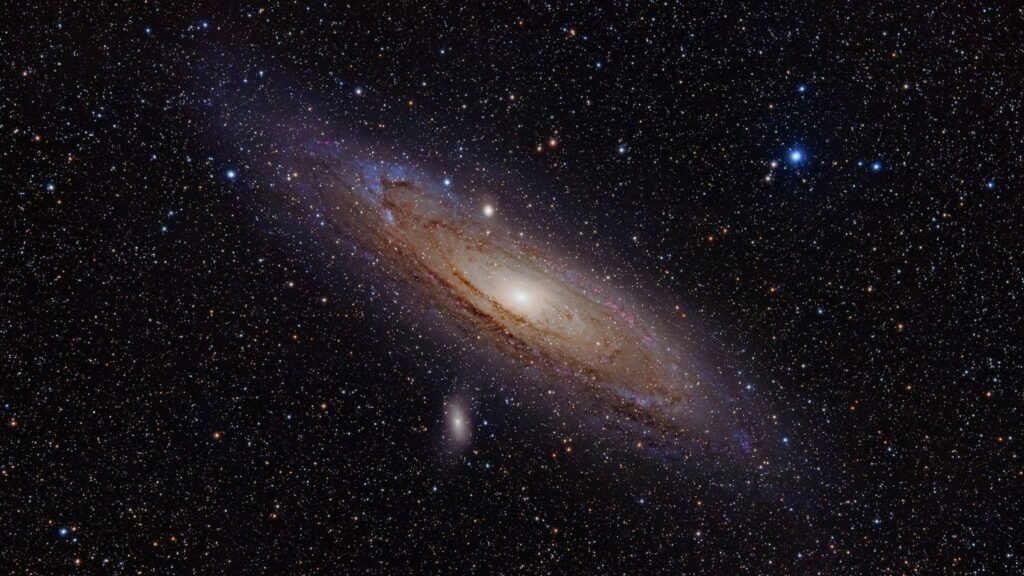

You’ve looked up at the stars and wondered about the mysteries swirling above us. Maybe you’ve even tried to wrap your mind around concepts like infinity or what existed before everything began. Let me tell you, even the most brilliant minds in physics find themselves scratching their heads over questions that seem to have no satisfying answers. The universe isn’t just mysterious because we haven’t studied it enough; it’s genuinely strange, contradictory, and downright unsettling in ways that challenge our most fundamental understanding of reality. So, let’s dive in and explore these cosmic conundrums that refuse to let scientists sleep soundly.
What Is Dark Matter and Why Can’t We Find It?
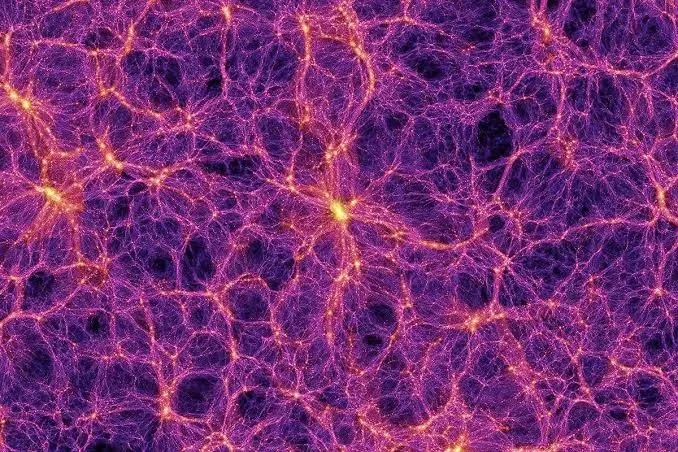
Here’s the thing: roughly 95% of the cosmos is made up of dark matter and dark energy, leaving just 5% as the familiar matter we can see around us. Think about that for a second. Everything you’ve ever seen, touched, or experienced represents a tiny sliver of what’s actually out there. Dark matter is the invisible glue that holds the universe together, making up most of the matter in the universe. We know it exists because galaxies spin way faster than they should based on the visible matter alone.
Despite nearly a century of searching, the exact composition of dark matter remains unknown. Scientists need detectors capable of seeing events that might happen once in a year, or even once in a decade. It’s hard to say for sure, but some researchers believe dark matter could be made of exotic particles called WIMPs or axions. The frustrating part? We might be swimming in a sea of dark matter particles right now, and we’d never know it.
What Is Dark Energy Pushing the Universe Apart?
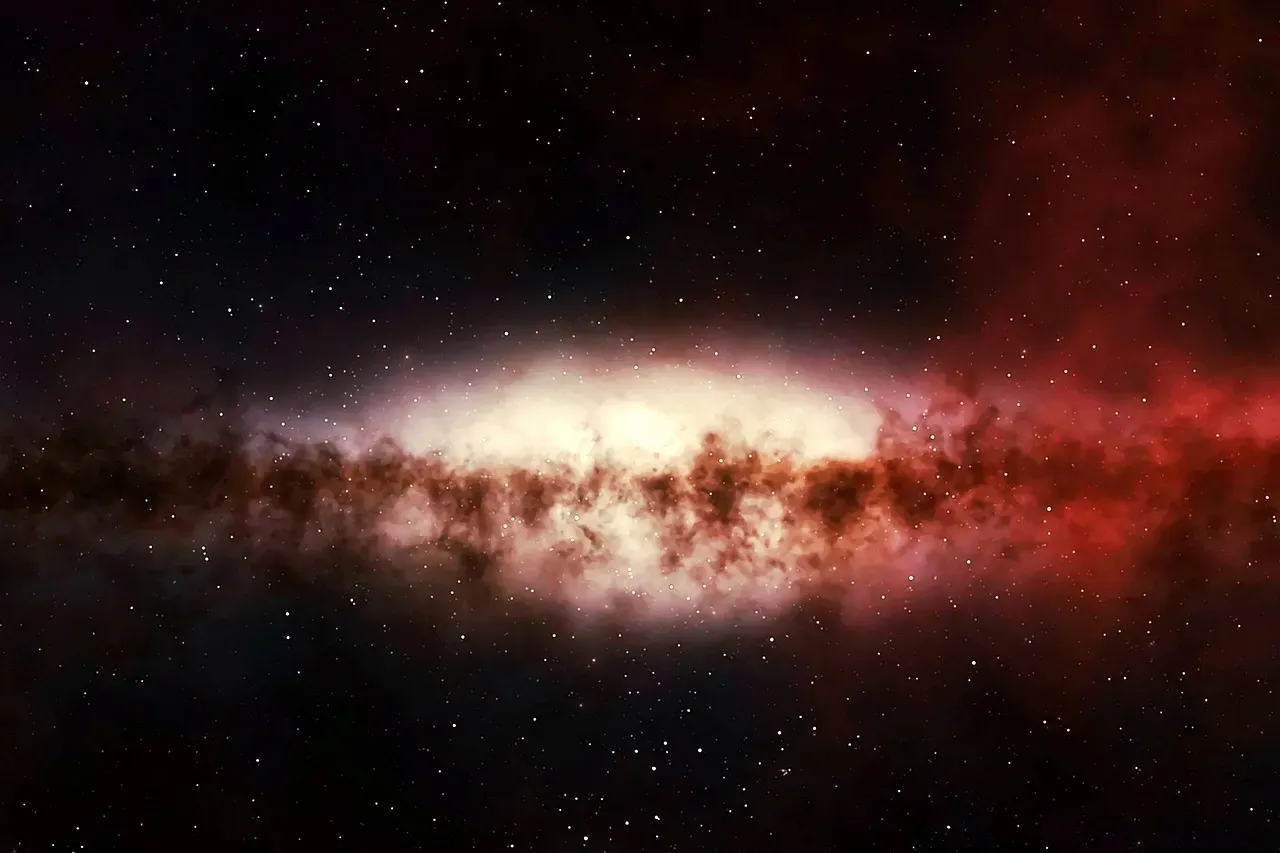
In 1998, astronomers made the shocking discovery that the universe’s expansion is accelerating – galaxies are flying apart from each other at an ever-increasing rate, contradicting the expectation that gravity should gradually slow cosmic expansion. This was bonkers. Scientists expected gravity to be slowing everything down, not speeding it up.
To explain this acceleration, physicists proposed the existence of “dark energy” – a mysterious force that pushes space itself apart. Yet there’s a catch. When physicists attempt to calculate how large this energy should be using quantum field theory, they arrive at values approximately 10120 times larger than observations indicate, representing the largest disagreement between theoretical prediction and observation in all of science. That’s not just a small error; that’s a catastrophically huge miss. Something fundamental about our understanding is clearly wrong, we just don’t know what.
What Happened Before the Big Bang?
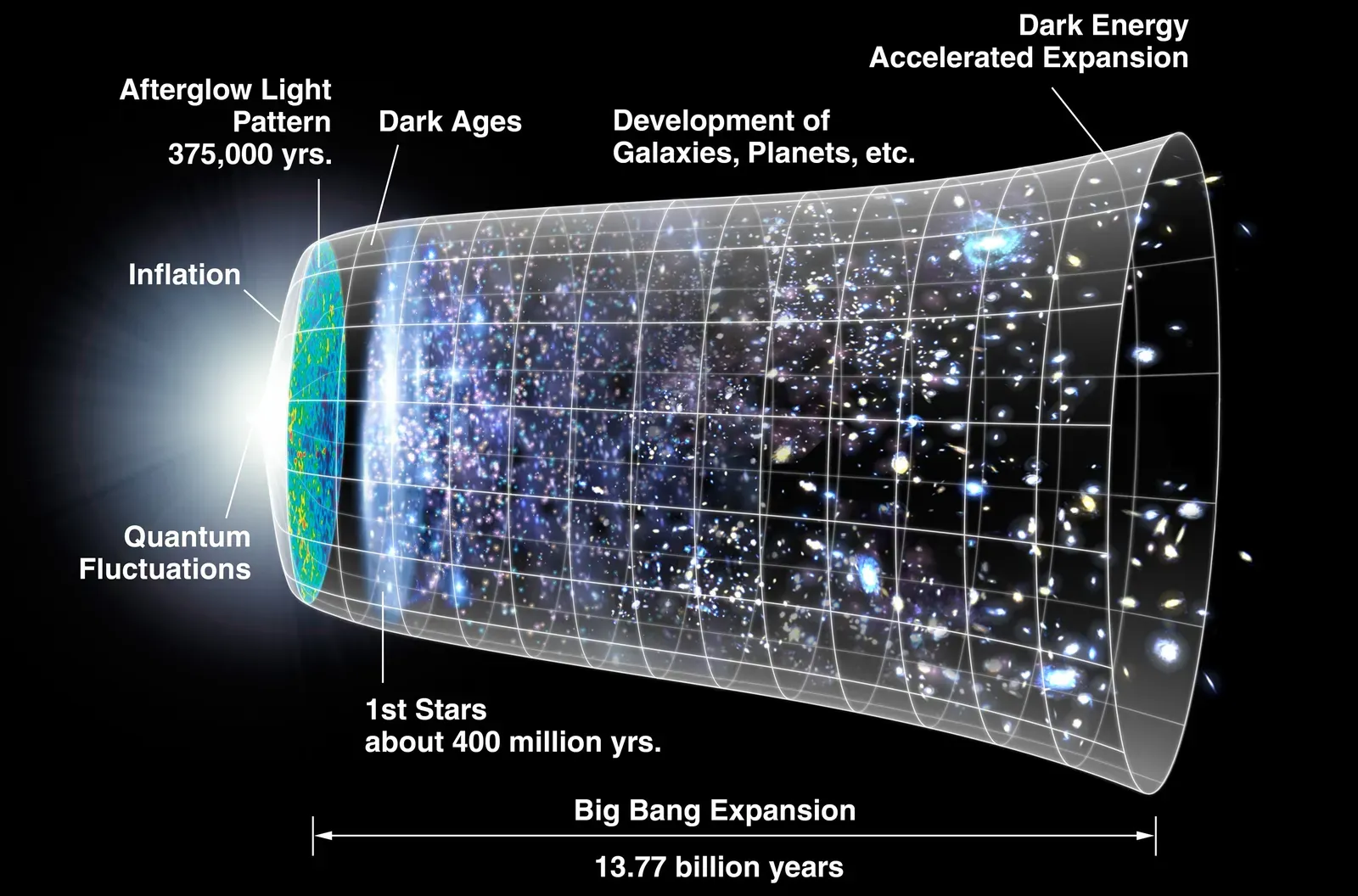
Let’s be real: this is the kind of question that makes your brain hurt. Around 13.8 billion years ago, the universe expanded faster than the speed of light for a fraction of a second, a period called cosmic inflation, and scientists aren’t sure what came before inflation or what powered it. Most cosmologists sidestep the question by saying time itself didn’t exist before the Big Bang, which honestly feels like cheating.
According to Einstein’s theory of relativity, time only came into being as the primordial singularity expanded toward its current size and shape. Yet some astrophysicists propose alternatives. In chaotic inflation theory, an endless progression of inflationary bubbles, each becoming a universe, and each of these birthing even more inflationary bubbles in an immeasurable multiverse. Maybe our universe bubbled off from another one, or maybe asking what came “before” is like asking what’s north of the North Pole – a meaningless question. Either way, we’re left with profound uncertainty.
Does the Multiverse Actually Exist?
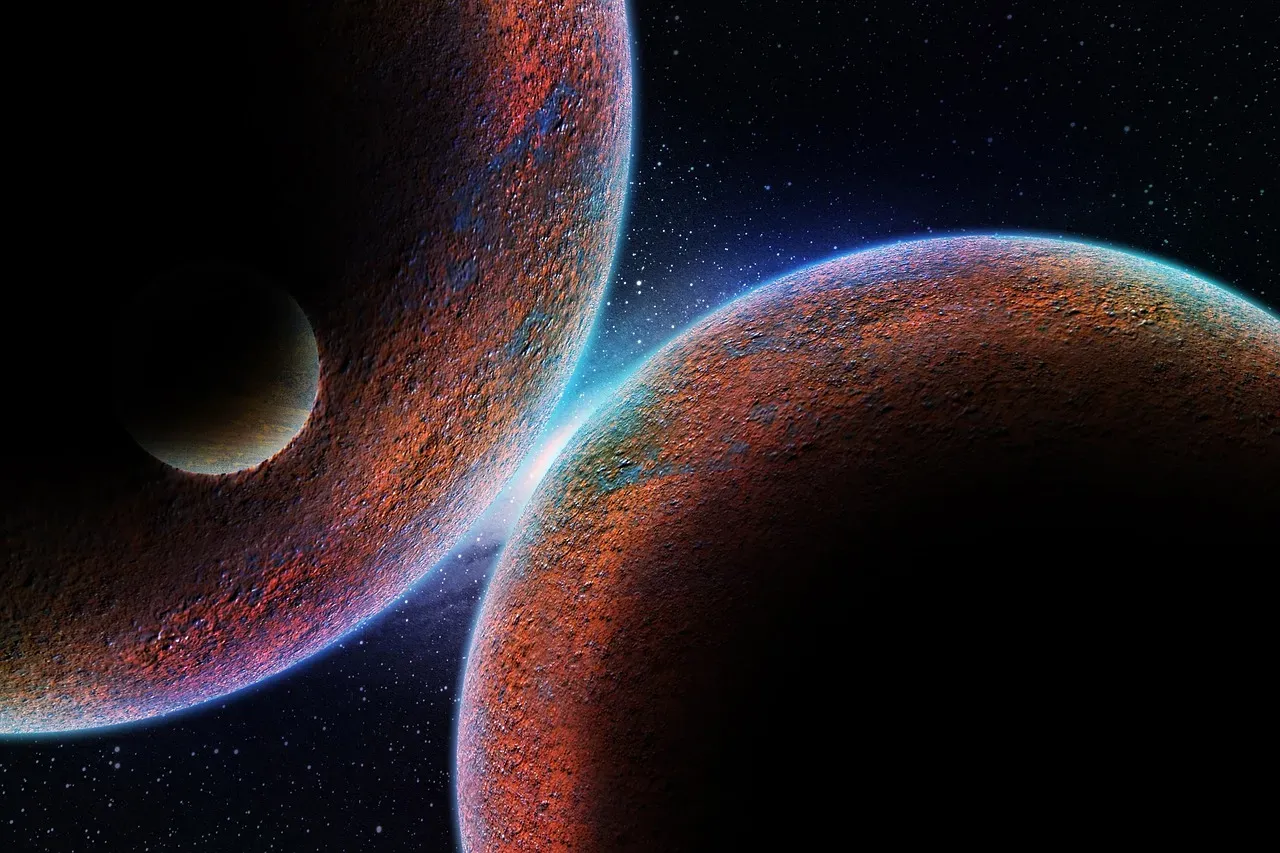
Science fiction loves this idea, and honestly, so do physicists – though for very different reasons. Perhaps the most speculative frontier in cosmology involves the possibility that our universe is just one of many in a vast “multiverse”. Different theories predict different types of multiverses, from quantum many-worlds to bubble universes created during cosmic inflation.
The problem is, even though certain features of the universe seem to require the existence of a multiverse, nothing has been directly observed that suggests it actually exists; so far, the evidence supporting the idea of a multiverse is purely theoretical, and in some cases, philosophical. Some theorists believe the multiverse is so far away that it is unlikely any evidence will ever be found. If we can never test it, is it even science? That’s a debate that gets pretty heated in physics departments.
How Does Information Escape from Black Holes?
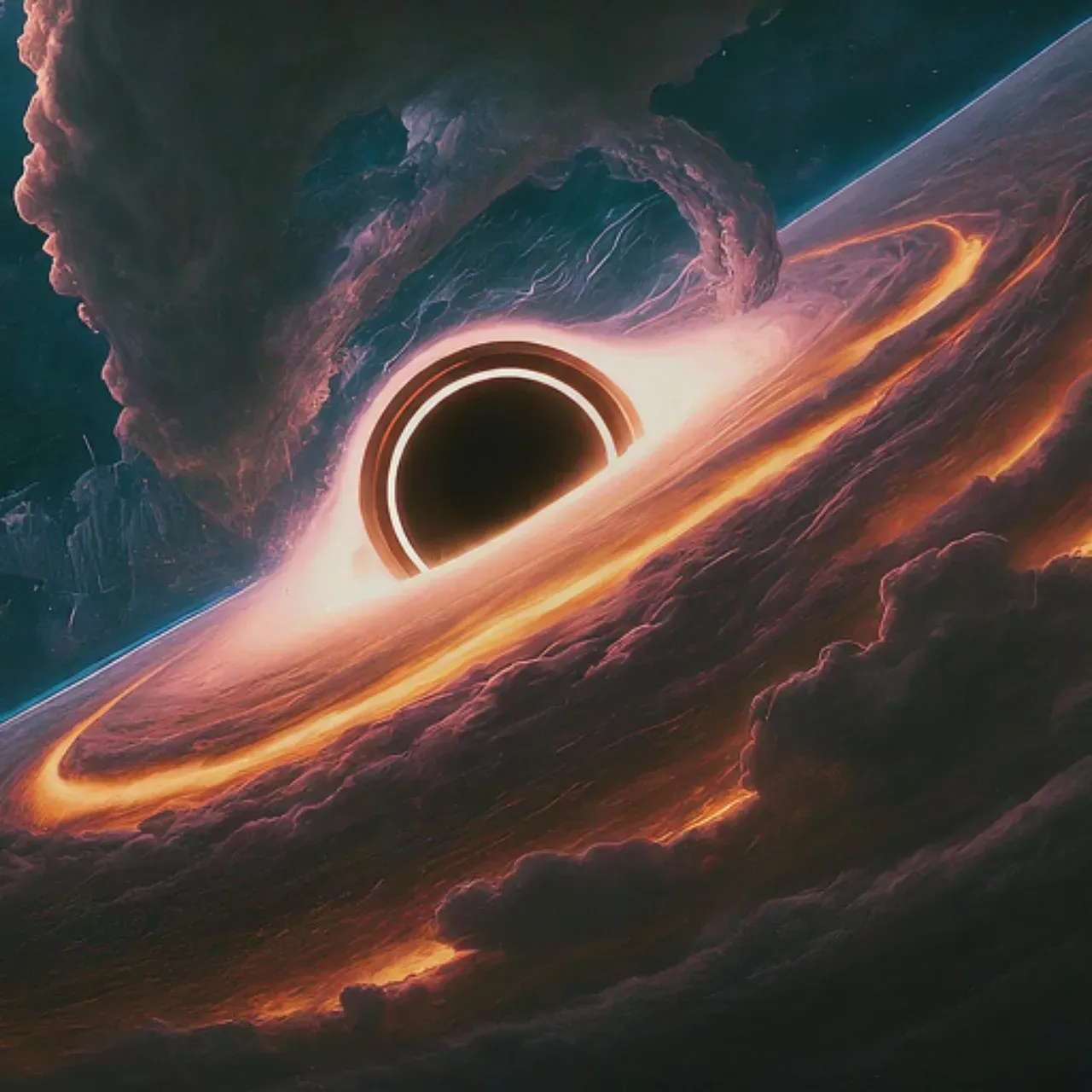
The black hole information paradox is an unsolved problem in physics and a paradox that appears when the predictions of quantum mechanics and general relativity are combined. Here’s the dilemma: knowledge is always preserved; destroying information is impossible, according to the fundamental laws of physics. That’s a fundamental principle of quantum mechanics called unitarity.
Yet black holes seem to violate this rule completely. When a black hole emits radiation, that radiation is completely unstructured; nothing about the radiation reveals whether it came from an astronaut or a lump of lead. Recent work suggests information might escape through quantum entanglement effects, but many questions still need to be worked out, and some scientists don’t call it solved. The whole paradox hints that space-time itself might be an illusion emerging from something deeper.
Why Is There More Matter Than Antimatter?
According to our best physical theories, the Big Bang should have produced equal amounts of matter and antimatter, and when matter and antimatter meet, they annihilate each other completely, converting their mass to energy, presenting a profound puzzle: if equal amounts were created, why didn’t they completely annihilate, leaving a universe filled only with radiation? Yet here we are, made of matter, living on a matter planet, orbiting a matter star.
Something must have tipped the scales ever so slightly in favor of matter over antimatter in the early universe. Experiments at particle accelerators and neutrino detectors continue searching for clues, but definitive answers remain elusive; understanding this asymmetry could reveal fundamental insights about the laws of physics and the universe’s earliest moments. For every billion antimatter particles, there must have been a billion and one matter particles. That tiny imbalance is the reason everything exists.
Is the Universe Truly Infinite?
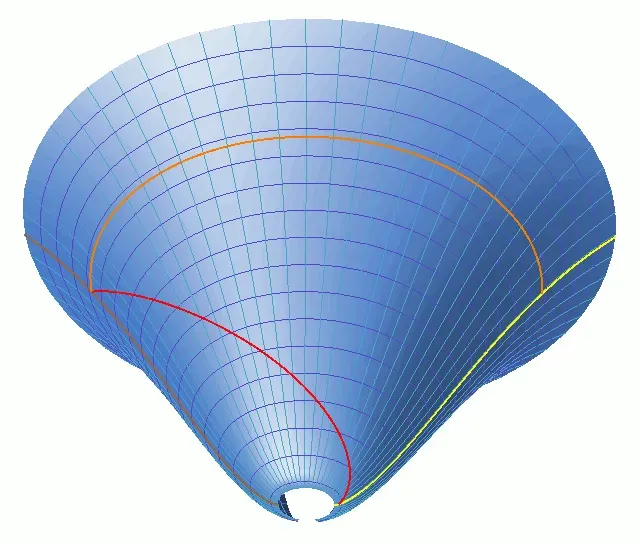
This question messes with your sense of scale. The diameter of the observable universe is about 93 billion light-years, but what is the size of the whole universe? Is the universe infinite? We can only see a finite bubble of space limited by how far light has traveled since the Big Bang. Beyond that cosmic horizon, we simply cannot observe.
The curvature of the universe is known to be “close” to zero on observable scales, which means it could extend forever in all directions. The observable universe might be just one patch of an infinitely larger cosmos, with countless regions we’ll never be able to see. Alternatively, the universe could wrap around on itself like the surface of a sphere, finite but without an edge. We honestly have no way to know for certain which possibility is true.
What Will Be the Ultimate Fate of the Universe?
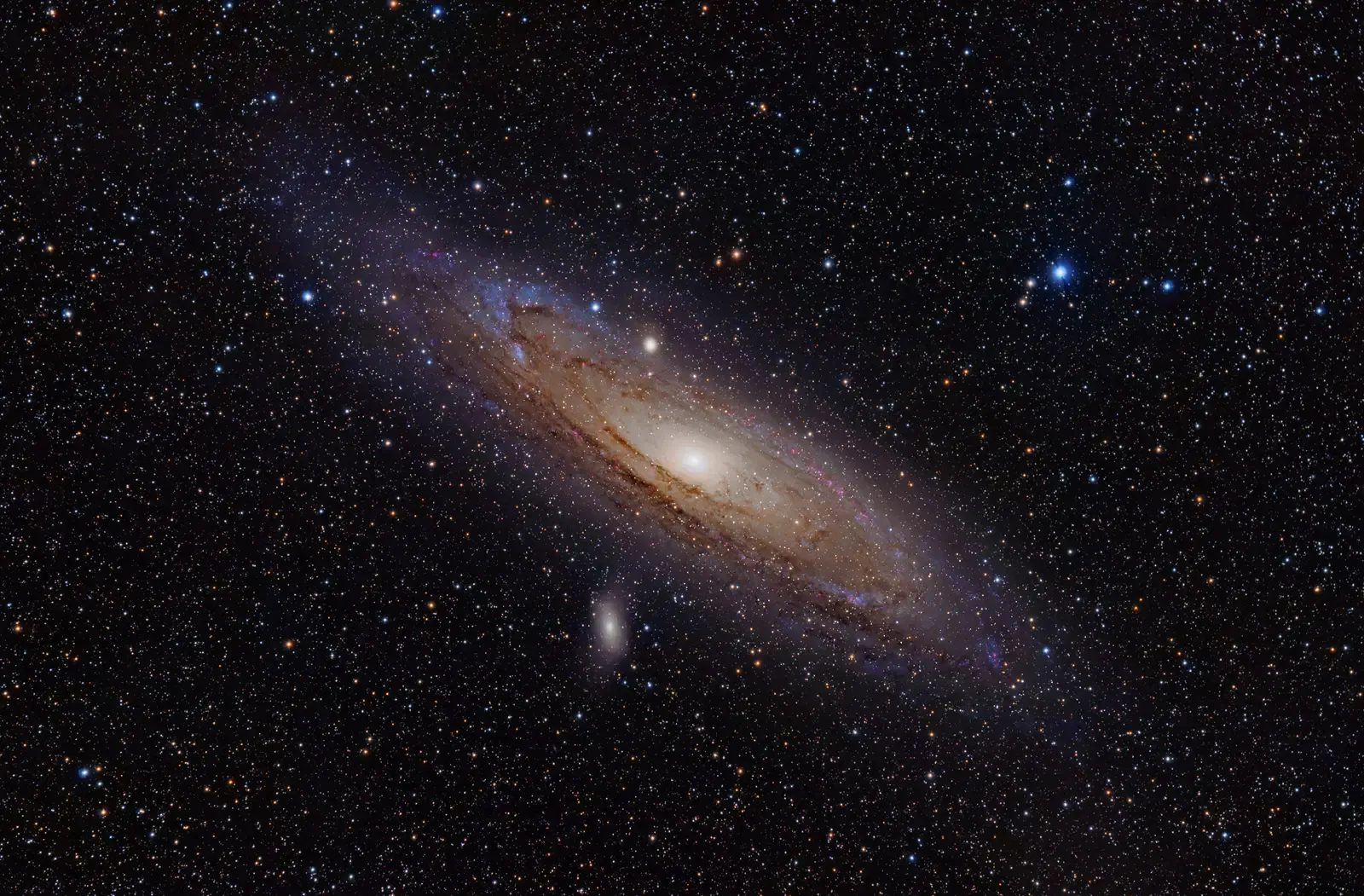
Is the universe heading towards a Big Freeze, a Big Rip, a Big Crunch, or a Big Bounce? This isn’t just philosophical speculation; it’s a question about the fundamental properties of dark energy and the geometry of space-time. If dark energy remains constant, the cosmos will expand forever, eventually spreading everything so thin that stars can no longer form.
Eventually, the expansion of our Universe will dwindle to the point it can no longer overpower the pull of gravity trying to crunch everything together again, and the expansion would turn on its head, and the cosmos would start to collapse until it all came together again in a Big Crunch. Some models even suggest a cyclical universe that bounces between expansion and contraction. The truth is, we’ll probably never know for sure exactly what our Universe’s fate will be, though that won’t stop cosmologists from trying to figure it out.
Are the Laws of Physics the Same Everywhere?
One of the fundamental axioms of physics is that the laws that govern the Universe are the same everywhere and have remained so throughout time; however, there is no convincing physical reason why this should be the case. Scientists just assume the rules don’t change depending on location or era. It’s convenient, but is it true?
Most studies have demonstrated, with a high degree of accuracy, that the laws of nature are the same everywhere. Still, some studies have hinted that one constant, the ‘fine structure constant’ – the constant which determines how electric charges interact – might have been different in the past, though this result may not be statistically significant and is controversial. If constants do vary across space or time, it would completely overturn our understanding of physics and force us to reconsider everything we think we know about how the universe works.
Why Does the Universe Appear So Finely Tuned for Life?
The constants of nature – things like the strength of gravity, the mass of electrons, the speed of light – seem to be set to incredibly specific values that allow stars, planets, and ultimately life to exist. Change any of these constants by even a tiny fraction, and the universe would be radically different, perhaps lifeless. Why are the fundamental constants of nature what they are? Why is there enough time in our universe to make stars and planets? Why do stars shine the way they do, with just the right amount of energy?
Two possible explanations exist: First, that we need newer, better theories to explain the properties of our universe, or it’s possible that we’re just one of many universes that are different, and we live in the one that’s nice and comfortable. The anthropic principle suggests we shouldn’t be surprised to find ourselves in a universe that permits our existence; we couldn’t exist anywhere else. Whether that’s a satisfying explanation or just a cosmic shrug depends on who you ask.
Conclusion
These ten questions represent some of the deepest mysteries facing modern physics and cosmology. Each one touches on fundamental aspects of reality that challenge our intuitions and push the boundaries of what science can currently explain. What’s fascinating is that many of these puzzles are interconnected; solving one might unlock answers to others.
The universe doesn’t owe us easy answers, and maybe that’s part of what makes it so captivating. Scientists continue developing new telescopes, particle detectors, and mathematical frameworks to chip away at these mysteries. Some might be solved in your lifetime; others may remain enigmatic for generations to come. What keeps researchers motivated isn’t just the promise of answers, but the journey of discovery itself – the thrill of peering into the unknown and occasionally catching a glimpse of something extraordinary. What do you find most mind-boggling about our universe?