
You’ve probably wondered about it at some point. What makes you aware? How does the grayish matter inside your skull create the vivid tapestry of your inner experience? That question has haunted thinkers for millennia, whether they stood on ancient American lands or in modern laboratories.
Here’s the thing. The puzzle of consciousness doesn’t fit neatly into either science or philosophy. It’s a boundary dispute where neuroscientists measure brain waves while philosophers debate what it means to be. This territory gets even more interesting when you realize that indigenous peoples across the Americas developed their own sophisticated frameworks for understanding awareness long before European contact. Their perspectives remind us that Western science hasn’t cornered the market on wisdom about the mind.
Let’s dive into ten theories that challenge everything you thought you knew about being conscious.
The Integrated Information Theory Proposes Consciousness as Mathematical Structure

Initially proposed by Giulio Tononi in 2004, it claims that consciousness is identical to a certain kind of information, the realization of which requires physical, not merely functional, integration, and which can be measured mathematically according to the phi metric. Think of it this way: your awareness isn’t just neurons firing. It’s about how much information your brain integrates into a unified whole.
According to IIT, integrated information (Φ) corresponds to the quantity of consciousness. That is, a system’s consciousness (what it is like subjectively) is conjectured to be mathematically described by the system’s causal structure (what it is like objectively). This means your subjective experience has an objective mathematical signature. The theory doesn’t just explain human consciousness either. It suggests consciousness exists on a spectrum, potentially present wherever information integration occurs.
Theoretical computer scientist Scott Aaronson has criticized IIT by demonstrating through its own formulation that an inactive series of logic gates, arranged in the correct way, would not only be conscious but be “unboundedly more conscious than humans are.” Tononi himself agrees with the assessment and argues that according to IIT, an even simpler arrangement of inactive logic gates, if large enough, would also be conscious. That’s either a strength or a weakness, depending on your perspective. Some find it absurd. Others see it as honest about consciousness pervading physical systems.
Global Workspace Theory Sees Consciousness as Information Broadcasting
Global workspace theory (GWT) is a cognitive architecture and theoretical framework for understanding consciousness and was first introduced in 1988 by cognitive scientist Bernard Baars. It was developed to qualitatively explain a large set of matched pairs of conscious and unconscious processes.
Picture your mind as a theater. GWT uses the metaphor of a theater, with conscious thought being like material illuminated on the main stage. Attention acts as a spotlight, bringing some of this unconscious activity into conscious awareness on the global workspace. Most mental processing happens backstage in darkness, unconscious and parallel. What enters the spotlight gets broadcast to all the cognitive systems watching from the audience.
It is a psychological construct arguing that perceptual contents, which are acted upon by localized processors, only become conscious when they are widely broadcasted to other processors across the brain. This explains why you can do familiar tasks without thinking, like walking or driving a routine route. That information never needs the spotlight. Things become conscious only when they need widespread coordination across your brain’s many specialized regions.
Quantum Consciousness Suggests the Universe Creates Your Awareness
Orchestrated objective reduction (Orch OR) is a controversial theory postulating that consciousness originates at the quantum level inside neurons (rather than being a product of neural connections). The mechanism is held to be a quantum process called objective reduction that is orchestrated by cellular structures called microtubules. Roger Penrose and Stuart Hameroff proposed this wild idea in the 1990s.
Let’s be real: most neuroscientists think it’s pretty far-fetched. These criticisms focus on three issues: Penrose’s interpretation of Gödel’s theorem; Penrose’s abductive reasoning, linking non-computability to quantum events; and the brain’s unsuitability to host the quantum phenomena required by the theory, since it is considered too “warm, wet and noisy” to avoid decoherence. Your brain doesn’t seem like the right environment for delicate quantum states.
Empirical evidence is against the notion of quantum consciousness, an experiment about wave function collapse led by Catalina Curceanu in 2022 suggests that quantum consciousness, as suggested by Roger Penrose and Stuart Hameroff, is highly implausible. Still, the theory refuses to die. It connects consciousness to the fundamental fabric of spacetime geometry, suggesting your awareness touches something deep about the universe itself.
Indigenous American Perspectives Frame Consciousness as Relational Awareness

Emphasis on Indigenous language and culture is a vital component of Native American epistemology, with language seen as essential to understanding psychology and different states of consciousness. For many Native American traditions, consciousness isn’t something locked inside your skull. It’s relational, extending outward through kinship networks.
Traditional Native American views of consciousness are very practical, guiding the seeker toward proper life choices and attitudes, and informing the practice of the indigenous healer. No word that directly translates “consciousness” is to be found in the Cherokee or many other Native American languages, but some comprehension of indigenous views can be derived from their cosmology.
I am a point of awareness, a circle of consciousness, in the midst of a series of circles. One circle is that which we call “the body.” It is a universe itself, full of millions of little living creatures living their own “separate” but dependent lives. But all of these “circles” are not really separate – they are all mutually dependent upon each other. This view sees you as inseparable from your environment. Hester and Cheney have written about the strong link between nature and the interpretation of knowledge within Native American cultures. They believe that the mind interacts with the environment in a very active, conscious way. Your consciousness doesn’t observe nature from outside. You’re woven into it.
Panpsychism Argues Everything Has Some Form of Experience
A version of this is the “panpsychist” view that consciousness goes all the way down to the fundamental building blocks of reality, with the word deriving from the two Greek words pan (all) and psyche (soul or mind). Honestly, it sounds crazy at first. Electrons are conscious? Rocks have inner experience?
Panpsychists argue it solves a fundamental problem. Some philosophers think that consciousness emerges from physical processes in the brain – this is the “physicalist” position. Others think it’s the other way around: consciousness is primary, and the physical world emerges from consciousness. If consciousness can’t emerge from non-conscious matter, maybe matter was never truly non-conscious to begin with.
The idea that even simple matter has some degree of consciousness is known as panpsychism. Panpsychism runs deeply counter to common sense, and many dismiss it as unscientific. Yet, Tononi openly stands by it insofar as it follows from IIT. The consciousness of an electron would be vanishingly simple compared to yours, but perhaps not entirely absent. This perspective echoes certain indigenous views that recognized awareness throughout the natural world.
Higher-Order Theories Claim You’re Conscious of Being Conscious

Higher-order theories suggest consciousness requires thinking about your mental states. You’re not just seeing red. You’re aware that you’re seeing red. HOTs currently do not fully specify the actual neural mechanism(s) mediating the implementation of first- versus higher-order states: how exactly does one brain state “point” at another, and what motivates the choice of which first-order state to point at or re-represent? Another challenge is that they focus on the contents of consciousness and provide less explanation for the level of consciousness.
This recursive quality distinguishes human consciousness. You can step back and observe yourself thinking. That meta-awareness might be what consciousness fundamentally is.
These under-specifications reflect the relatively limited empirical formulation of HOTs – despite their considerable philosophical backbone – as compared with other theories. These aspects of the theory are currently being developed, and an ongoing adversarial collaboration (ETHoS1) is specifically aimed at comparing the empirical predictions of four HOT variants. The theory keeps evolving as researchers test its predictions against brain data.
The Aztec Concept of Teotl Offers an Ancient Dynamic Framework
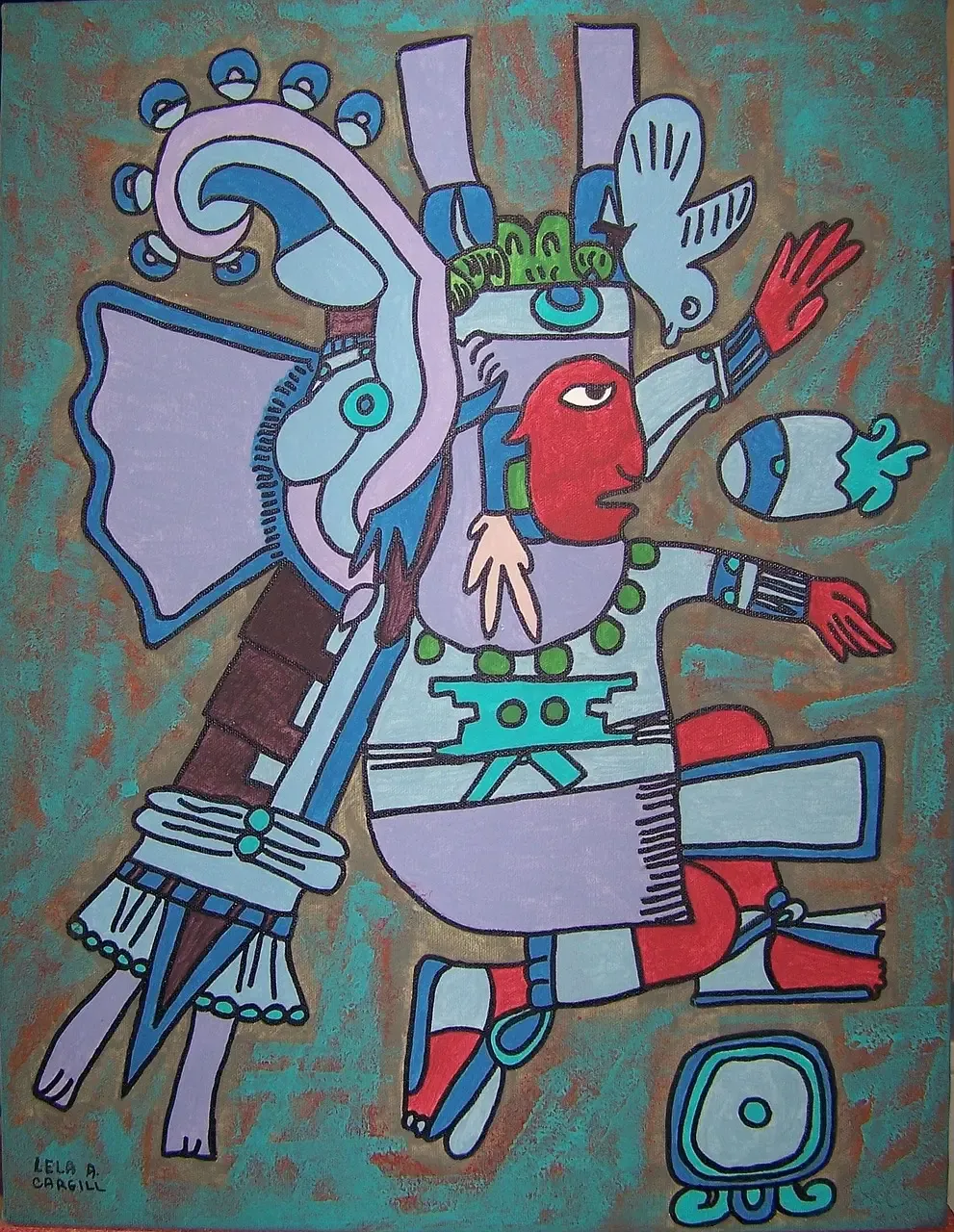
A central feature of Aztec philosophy was the concept of teotl, a Nahuatl term for the animating force of the cosmos and an ever-acting and dynamic mover. Teotl in theological terms could also symbolize a type of pantheism. Long before modern neuroscience, Nahua philosophers developed sophisticated theories about consciousness and reality.
According to James Maffie, Nahua metaphysics posited that teotl is “a single, vital, dynamic, vivifying, eternally self-generating and self-conceiving as well as self-regenerating and self-reconceiving sacred energy or force”.
This wasn’t mysticism divorced from practical observation. Aztec philosophers developed theories of metaphysics, epistemology, values, and aesthetics. Aztec ethics was focused on seeking tlamatiliztli (‘knowledge’, ‘wisdom’) which was based on moderation and balance in all actions as in the Nahua proverb “the middle good is necessary”. Consciousness for them was part of a cosmic energy that flowed through everything, constantly creating and recreating itself.
Field-Settled Consciousness Positions Awareness as Fundamental

Rather than seeing consciousness as an emergent property of material systems, it posits consciousness as the prior reality – an ontological field that pervades space, form, and function, and becomes localized only where symbolic integration occurs. This represents a radical inversion of how most neuroscientists think.
This introduction will proceed as follows: It will examine the failure of materialist science to account for subjective awareness (Section 1.1), define the hard problem and its implications for consciousness theory (Section 1.2), and offer a rationale for shifting toward a field-based model rooted in symbolic and relational coherence (Section 1.3). This foundational orientation sets the stage for a comprehensive exploration of the theory of Field-Settled Consciousness and its philosophical, metaphysical, and practical applications.
The theory suggests consciousness doesn’t come from your brain. Your brain taps into a consciousness field that already exists. It’s like a radio receiving signals rather than generating music. This view aligns surprisingly well with certain indigenous perspectives about awareness pervading reality.
Recurrent Processing Theory Focuses on Feedback Loops in the Brain
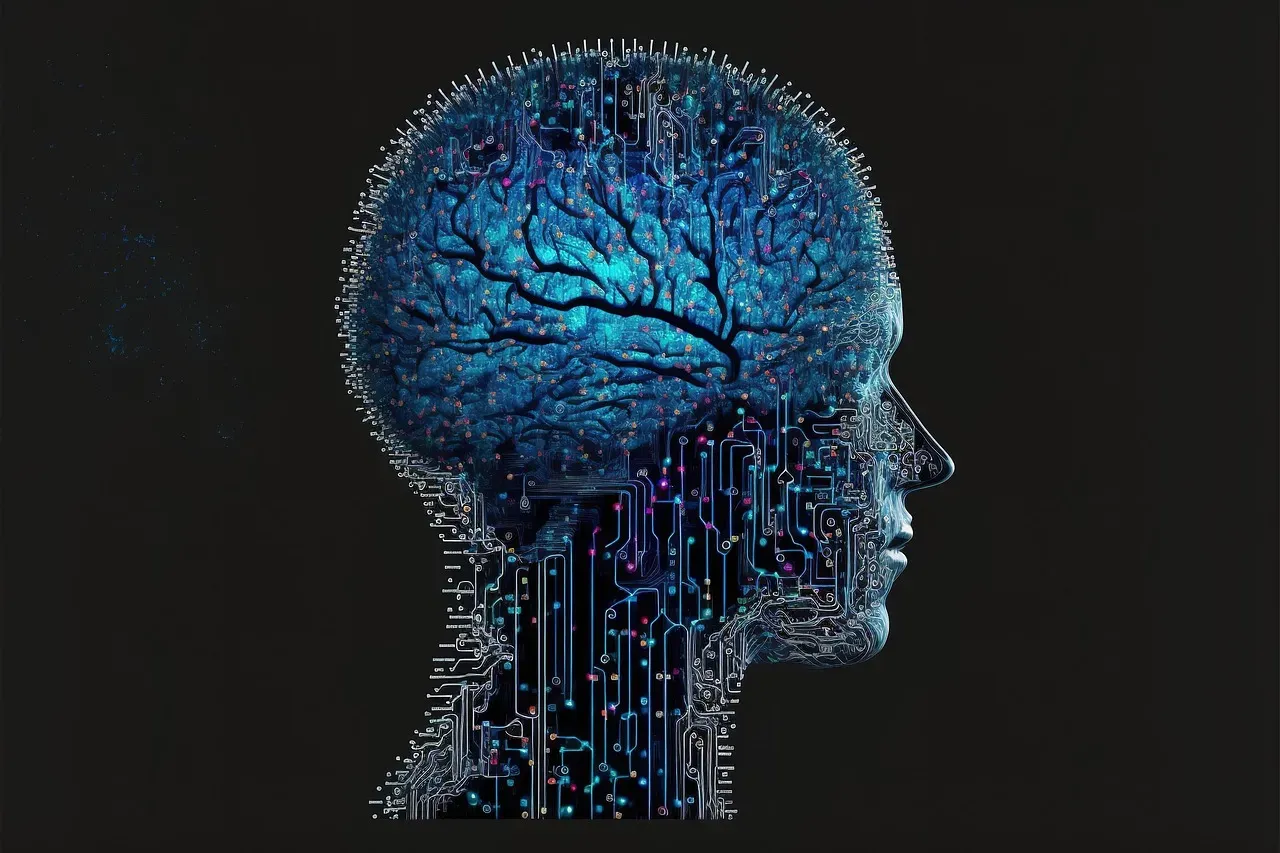
For instance, local recurrence theory predicts that the first feedforward sweep of neuronal processing of visual stimuli occurs unconsciously, and conscious perception only arises when information feeds back from higher visual areas to early visual areas. Several empirical tests have validated this prediction.
Your eyes send information forward to higher brain regions for processing. Consciousness emerges when those higher regions send signals back down to early sensory areas. The initial sweep happens too fast for awareness. Only when feedback loops engage does your experience crystallize.
This explains timing mysteries in consciousness research. The brain processes information before you become aware of it. That delay represents the time needed for recurrent loops to complete their cycles. It’s the difference between detecting and experiencing.
The Great Spirit and Orenda Describe Consciousness as Universal Energy

Among some of U.S. Native American communities, there is a belief in a metaphysical principle called the ‘Great Spirit’ (Siouan: wakȟáŋ tȟáŋka; Algonquian: gitche manitou). Another widely shared concept was that of orenda (‘spiritual power’). These aren’t primitive superstitions. They represent sophisticated philosophical frameworks.
We are the land … that is the fundamental idea embedded in Native American life the Earth is the mind of the people as we are the mind of the earth. The land is not really the place (separate from ourselves) where we act out the drama of our isolate destinies. Consciousness and physical reality aren’t separate domains. They’re different aspects of one interconnected whole.
To be alive is to be conscious. This simple principle contrasts sharply with Western materialism that struggles to explain how consciousness could emerge from non-conscious particles. For traditions holding this view, consciousness doesn’t emerge. It’s intrinsic to existence itself.
Where Science Meets Philosophy and the Mystery Deepens
A recent review taking a highly inclusive approach identified over 200 distinct approaches to explaining consciousness, exhibiting a breathtaking diversity in metaphysical assumptions and explanatory strategies. Despite all our progress, consciousness remains stubbornly mysterious. We’ve developed brain imaging techniques that show neural correlates. We’ve built mathematical models. We’ve tested predictions in laboratories.
As the problem of consciousness is revealing, there may be a limit to what we can learn through science alone. The hard problem persists: why does physical processing feel like something from the inside? How does subjective experience arise from objective mechanisms?
Indigenous understandings of consciousness represent an important inspiration for scientific discussions about the nature of consciousness. Indigenous understandings of consciousness represent an important inspiration for scientific discussions about the nature of consciousness. Perhaps the answer requires integrating perspectives that Western science has marginalized or ignored.
The theories we’ve explored represent humanity’s best attempts to crack this ancient puzzle. Some approach it through mathematics and neuroscience. Others through metaphysics and lived experience. Indigenous frameworks remind us that many ways of knowing exist, each offering unique insights.
Here’s what strikes me as remarkable: consciousness might be the one thing that genuinely requires both science and philosophy, neither discipline sufficient alone. It demands empirical investigation of brains while simultaneously forcing us to confront questions about the nature of existence itself. What do you think? Can science ever fully explain what it’s like to be you?