
You look at a photo and immediately think it has been edited. There is no way, your brain insists, that this is real. A waterfall bleeding crimson red from ancient ice. Rocks that drag themselves across a desert without anyone or anything touching them. A volcano that erupts in brilliant, electric blue. The Earth we live on is far stranger than any science fiction writer could dream up, and honestly, that is the exciting part.
What you are about to discover is that our planet has a wild and relentless habit of breaking the rules. From Antarctica to the jungles of Peru, from the deserts of California to the volcanic islands of Indonesia, the ground beneath your feet is hiding secrets that continue to puzzle some of the most brilliant minds in science. Buckle up, because some of these will genuinely make you question everything you learned in school.
1. The Sailing Stones of Death Valley: Rocks That Move Themselves
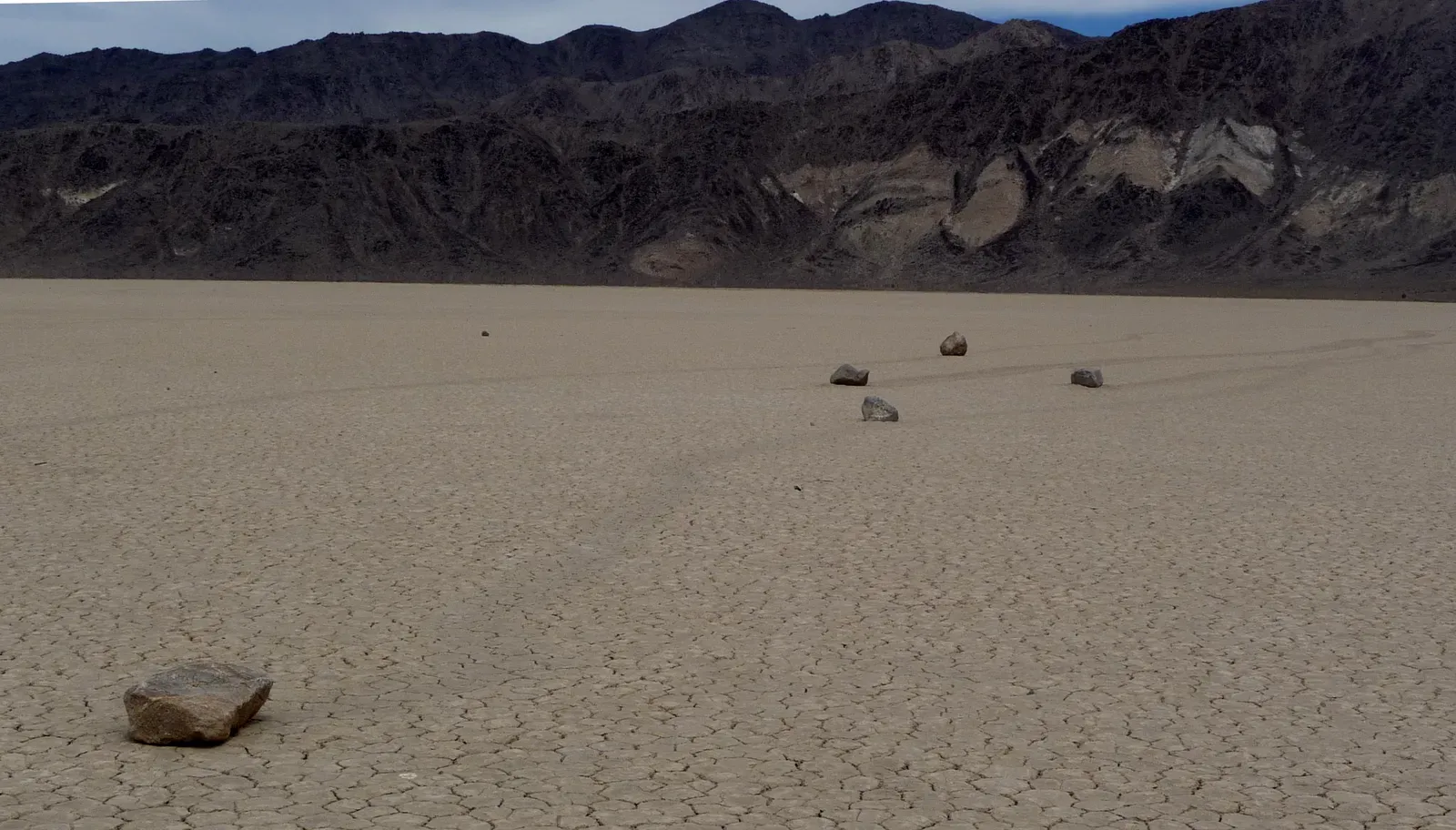
The phenomenon of the “Sailing Stones” is a mysterious geological occurrence that has puzzled scientists and intrigued visitors for years. Located in the Racetrack Playa of Death Valley National Park in California, these rocks appear to move across the desert floor on their own, leaving behind long tracks that can stretch for hundreds of feet. Some of these boulders weigh as much as a small car. Yet somehow, they slide. They turn. They leave clean, undeniable grooves behind them in cracked clay, as if quietly going for a walk in the night.
One scientific study in 2014 claimed to have solved the mystery behind these “sliding rocks,” linking their movement to the formation of thin ice on the playa overnight. Apparently, as the ice melts, the surface becomes slippery, so when light wind occurs, the rocks slide across the ground. It wasn’t until the advent of time-lapse photography that scientists were finally able to capture the movement of the rocks in action, providing important new clues about the forces at work in this unusual geological phenomenon. Even knowing the explanation, you stand there, staring at those silent stone trails, and every rational thought in your head still tells you that something impossible just happened.
2. Blood Falls, Antarctica: A Glacier That Bleeds Red
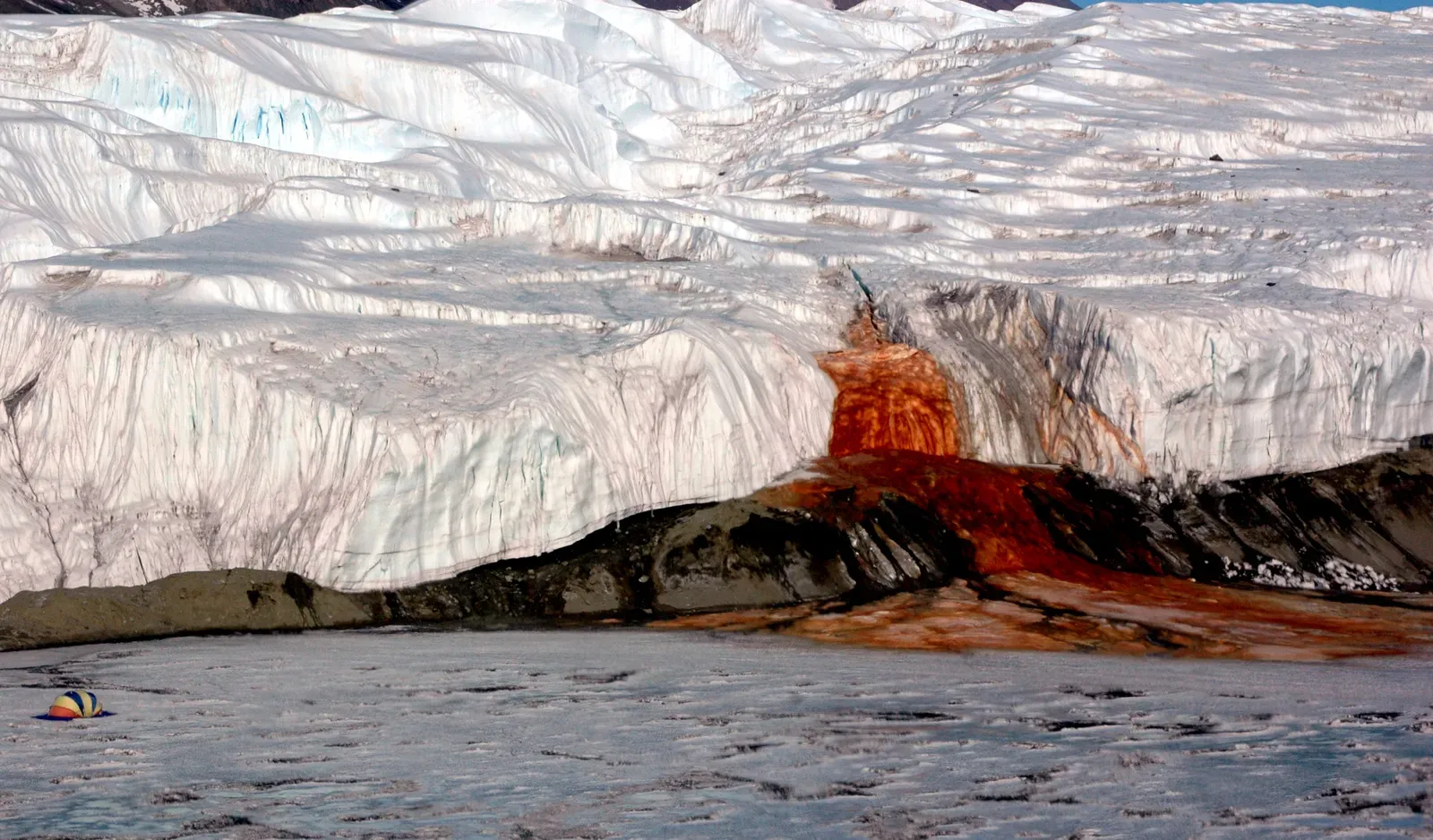
In Antarctica’s McMurdo Dry Valleys, a waterfall the color of rust bleeds from the edge of a glacier into the ice below. First spotted by explorers in 1911, Blood Falls has puzzled scientists for more than a century. Imagine stumbling upon this during one of history’s polar expeditions, far from civilization, surrounded by endless white. You would be forgiven for thinking you had lost your mind.
Blood Falls is an outflow of an iron(III) oxide tainted plume of saltwater, flowing from the tongue of Taylor Glacier onto the ice-covered surface of West Lake Bonney in the Taylor Valley. Iron-rich hypersaline water sporadically emerges from small fissures in the ice cascades. The saltwater source is a subglacial pool of unknown size overlain by about 400 metres of ice, several kilometers from its tiny outlet at Blood Falls. Evidence suggests the particles form in a chemical environment shaped by ancient microbes living beneath the glacier in total darkness, extreme cold, and very low oxygen. These microorganisms survive in hypersaline water trapped beneath the ice, using iron and sulfur compounds instead of sunlight to fuel their metabolism. The subglacial system may have remained isolated for hundreds of thousands of years, allowing life to adapt to conditions that would be lethal almost anywhere else on the planet.
3. Kawah Ijen’s Blue “Lava”: Fire That Should Not Be That Color
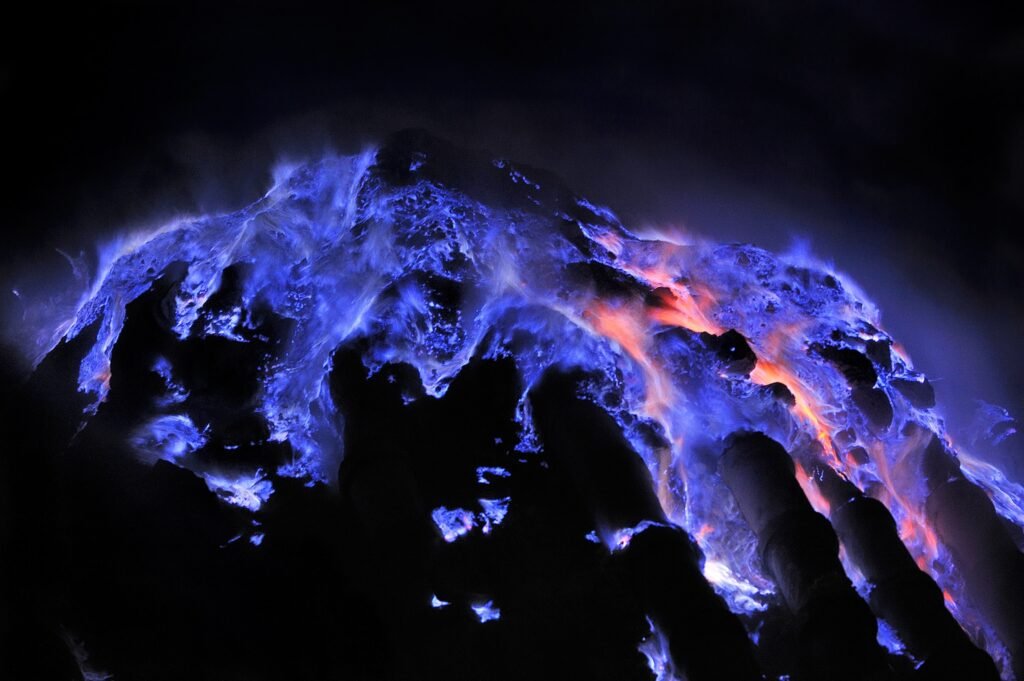
Blue lava, simply referred to as blue fire or sulfur fire, is a phenomenon that occurs when sulfur burns. It is an electric-blue flame that has the illusory appearance of lava. Despite the name, the phenomenon is actually a sulfuric fire that resembles the appearance of lava, rather than actual lava from a volcanic eruption. Volcanoes are supposed to glow red and orange. That is geology 101. Then there is Kawah Ijen, sitting quietly in East Java, Indonesia, completely refusing to cooperate with that rule.
Sulfur burns when it comes into contact with hot air at temperatures above 360°C (680°F), which produces the energetic flames. There is so much sulfur that at times it flows down the rock face as it burns, making it seem as though blue lava is spilling down the mountainside. The crater of Kawah Ijen is the world’s largest blue flame area. Visiting this place at night has been described by photographers as feeling like standing on another planet entirely, and I honestly think that description does not do it enough justice.
4. The Boiling River of the Amazon: Heat With No Explanation
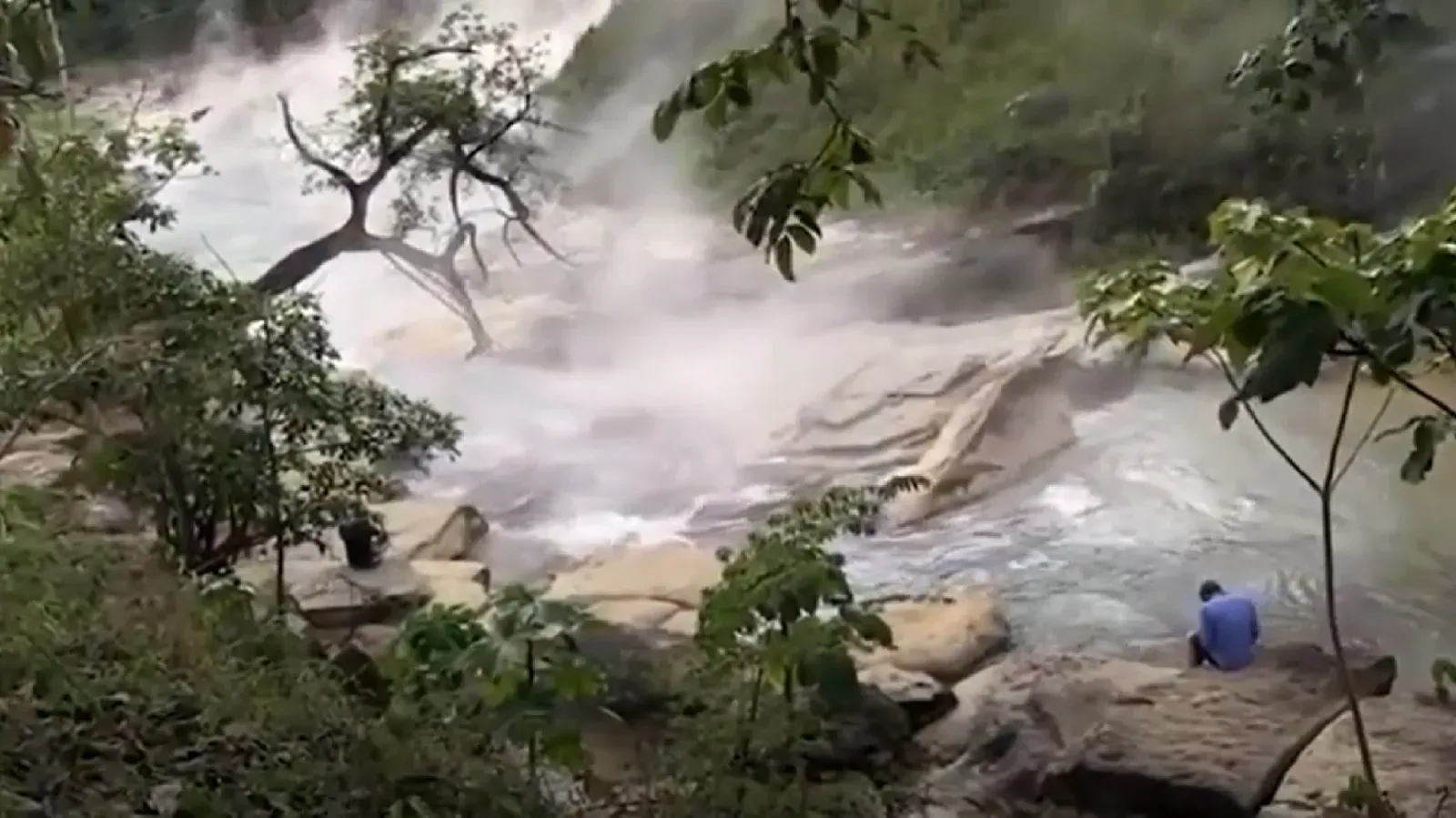
Deep in the Peruvian jungle, a river flows with water so hot it can boil small animals alive. Scientists were stunned to find such extreme temperatures in a region far from any known volcanic activity. The indigenous Asháninka people have long revered the river as sacred, and its origins remain a scientific enigma. Some believe it is heated by deep Earth fractures, but its precise geothermal source remains unknown. Think about that for a moment. A boiling river, deep in the Amazon rainforest, with no volcano anywhere nearby. It defies the most basic rule of geothermal science.
The best working theory suggests deep underground faults allow rainwater to seep down far enough to heat from geothermal pressure, then rush back to the surface. It’s geothermal plumbing on a hyper-local scale, rare, unstable, and still not entirely understood. For the local Asháninka people, the river is not just a curiosity. They have used it in rituals and healing for generations. Science has offered its best guess, but the river simply continues to boil, unbothered and unexplained.
5. The Eye of the Sahara: A Perfect Circle Visible From Space
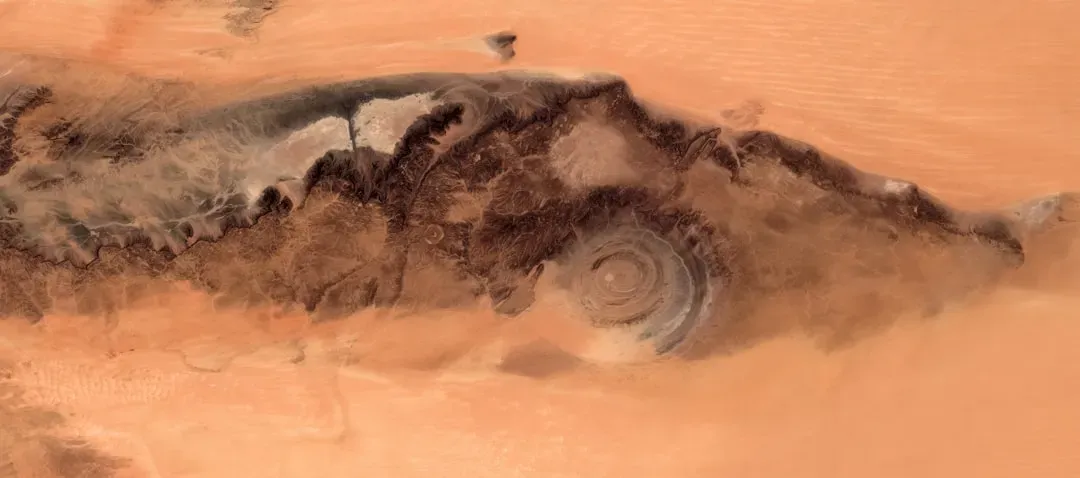
Visible from space, the Eye of the Sahara is an enormous, near-perfect circular formation in Mauritania’s desert. Initially thought to be an impact crater, scientists later realized it lacked the shock features of an asteroid strike. Instead, some believe it is the remnants of a massive collapsed dome, but its symmetry remains puzzling. It is the kind of thing that, when you see it from a satellite image, you genuinely stop and stare. Nothing in nature is supposed to be that round. Nothing.
Typically known as the Richat Structure, the Eye of the Sahara is a geological formation that spans 40 kilometers and looks like a bull’s eye from the sky. It was initially believed that a meteorite caused the rocky formation. Still, extensive research has now revealed it’s all due to Mother Nature painstakingly forming these rings after millennia of rock erosion. New Age enthusiasts hint that the Eye of the Sahara could represent the remains of the mythical sunken island of Atlantis, based on Plato’s allegory. Science, folklore, and awe have all collided at this one strange, circular patch of the Sahara.
6. The Devil’s Kettle: A Waterfall That Swallows Everything
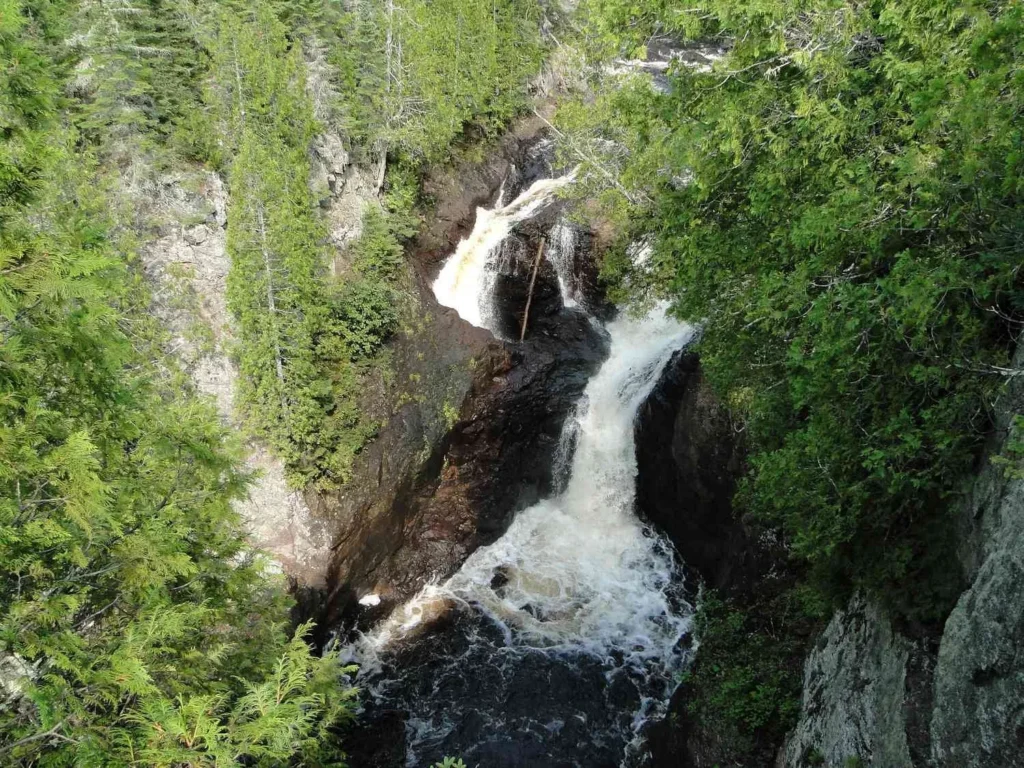
At Minnesota’s Judge C.R. Magney State Park, a river splits in two. One side flows normally, while the other vanishes into a deep hole called the Devil’s Kettle. For years, scientists tried dropping dye, ping-pong balls, and even logs into the hole to see where the water emerges, but it never does. While recent research suggests the water may resurface underground, no one has ever found an exact exit point. This disappearing river continues to be one of geology’s strangest riddles. It sounds like a setup to a ghost story. You throw something in, and the Earth just takes it. Gone. Forever.
A waterfall splits into two: one side flows into the river, while the other side plunges into a deep stone hole and simply disappears. For decades, researchers dropped GPS trackers, dye, and thousands of ping-pong balls into the “kettle,” but nothing ever came out at the bottom of the river or in Lake Superior. It is hard to say for sure what is happening down there, but the fact that nothing, not a single tracker or rubber ball, has ever resurfaced is the kind of thing that keeps geologists up at night. Where does the water go? The Earth is not telling.
7. The Great Unconformity: Half a Billion Years of Missing Time
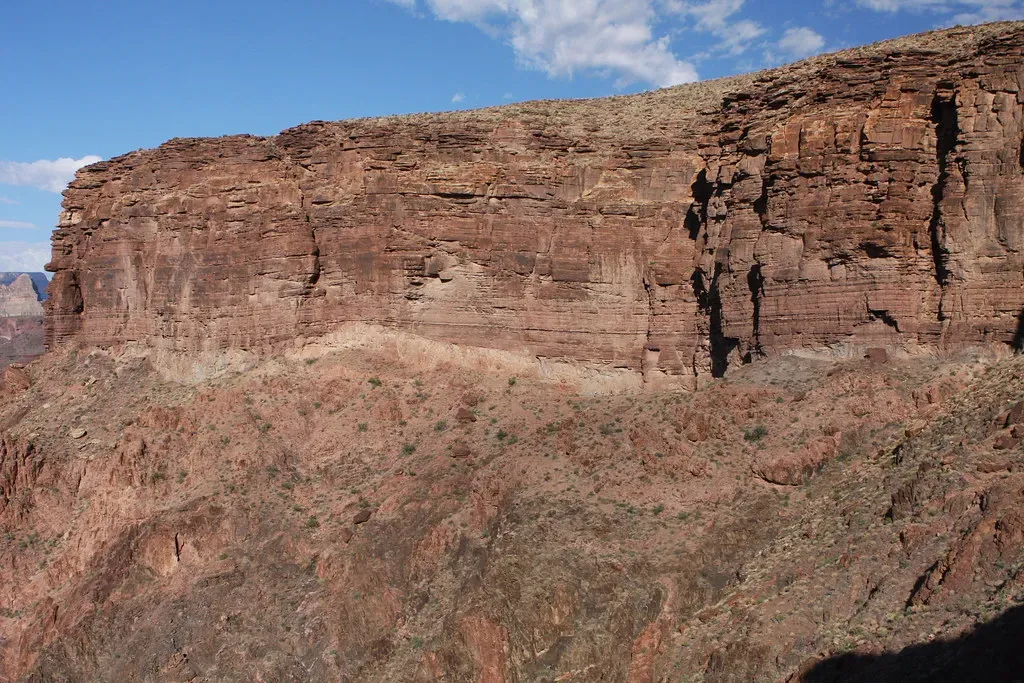
The Great Unconformity is a huge gap in the geological record. Layers of rock dating from about 1.2 billion to 250 million years ago are completely missing from certain areas around the globe. This enormous chunk of lost time can be seen clearly in the stratigraphy of the Grand Canyon in Arizona. Geologists studying the anomaly there have noted that there is plenty of rock, full of fossils, from the Cambrian period but the layer beneath it is basement rock, formed roughly 1 billion years ago and empty of fossils. It is like opening a history book and discovering that someone tore out nearly a billion pages.
An emerging theory called “Snowball Earth” may explain where the rock disappeared to. Around 700 million years ago, Earth was encased in snow and ice. Moving glaciers peeled off the planet’s crust with the help of lubricating sediments, pushing it into oceans, where it was reabsorbed by subducting tectonic plates. Even if this theory holds up, the sheer scale of what went missing is almost impossible to wrap your head around. An entire era of Earth’s history, simply erased from the record. It is both thrilling and deeply unsettling.
8. Fairy Circles of the Namib Desert: Geometry That Nature Shouldn’t Know
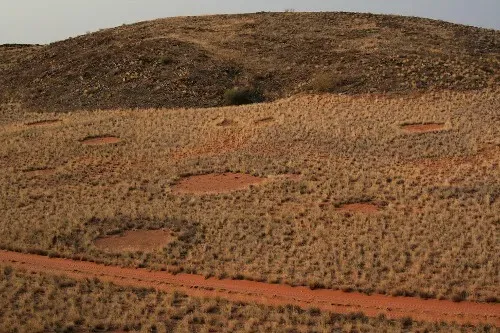
Fairy Circles are circular patches of barren earth surrounded by a ring of tall grasses found in the Namib Desert in southern Africa. These circles are typically between 6 and 30 feet in diameter and are evenly spaced, sometimes covering hundreds of acres. The cause of these circles has long been a mystery, but there are many theories that attempt to explain this strange phenomenon. From above, they look like a pattern that only a deliberate mind could create. Thousands upon thousands of perfect rings, stretching as far as you can see. It honestly looks artificial. The desert has no business being this organized.
For decades, scientists proposed various explanations: termites eating plant roots, toxic gases, fungal growth, even radioactive soil. The current leading theory suggests self-organization: in extreme environments, plants “space themselves out” to maximize access to scarce water and nutrients. By forming rings, they create a natural feedback system that persists across the landscape. The Himba people of Namibia tell different stories: the circles are footprints of gods, spirits dancing at night, or dragon’s breath from beneath the sand. Without definitive proof, both science and folklore occupy the same uncertain space.
9. The Rainbow Mountains of China: Colors That Geology Shouldn’t Produce
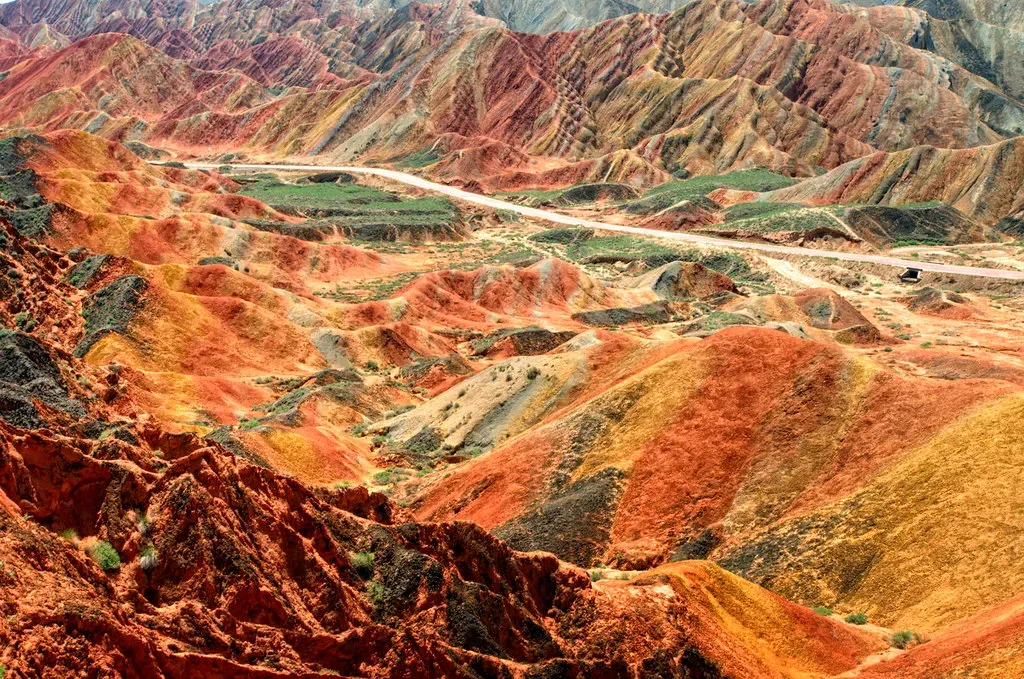
The Rainbow Mountains, also known as the Zhangye Danxia Landform Geological Park, are a natural wonder located in Gansu Province, China. They get their name from their colorful appearance, which is caused by the presence of different minerals that have been compressed and eroded over millions of years. The Rainbow Mountains are made up of a series of sandstone and mineral deposits that were formed over 24 million years ago. You look at photos of this place and your first instinct is to check whether the saturation slider has been pushed to maximum. It hasn’t.
The different colors are the result of the oxidization of iron and other minerals, which created unique bands of red, orange, yellow, green, and blue. The park is home to a number of hiking trails and viewing platforms that allow visitors to get a closer look at the colorful formations. It is also a popular destination for photography enthusiasts who are drawn to the otherworldly landscape and vibrant colors. Think of it like Earth baking a layered cake over millions of years, each layer a different mineral blend, then cutting a cross-section and letting erosion reveal the whole beautiful mess. Nature has no sense of subtlety here, and that is entirely the point.
10. The Cave of the Crystals, Mexico: Giants That Should Not Exist
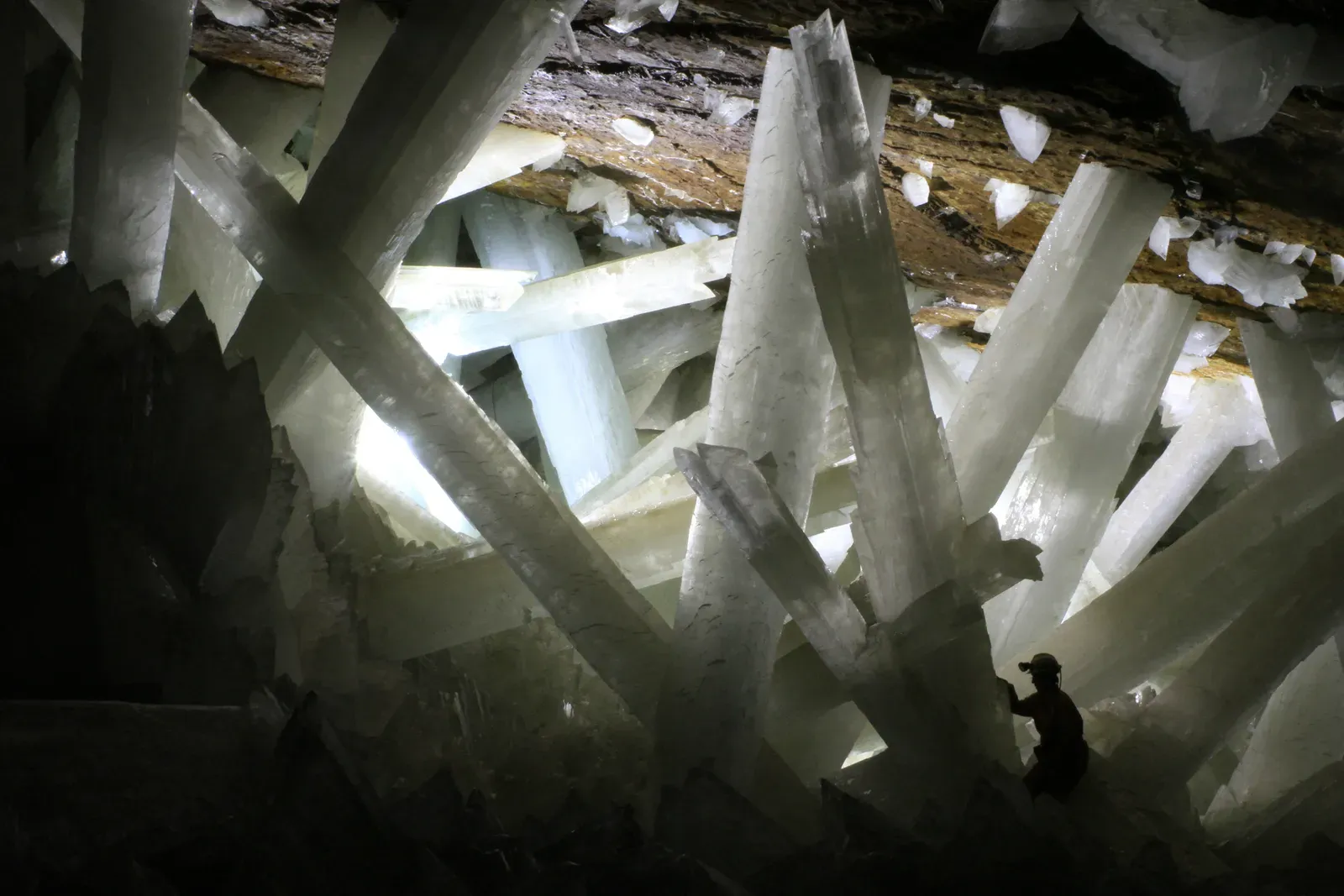
The otherworldly crystals in the Cave of the Crystals in Mexico can reach sizes larger than houses, by far the largest such crystals known on the planet. They apparently grow at incredibly slow rates, gypsum formations that take as long as a million years to reach more than two stories tall. When you hear the words “crystal cave,” you probably imagine something small and shimmering. You are not imagining anything close to the Cave of the Crystals beneath Naica, Chihuahua. This place is like stepping into a cathedral built by a planet.
Researchers speculate that microscopic pockets of liquid within these giant crystals might hold microbes. The cave is also brutally hostile. Temperatures inside hover around 58°C (136°F) with nearly 100 percent humidity, which means unprotected humans can only survive inside for about ten minutes before heatstroke sets in. The remnants of a 2-billion-year-old nuclear reactor and a cave of house-sized crystals might seem too strange to be natural, but the world is apparently full of such bizarre natural phenomena. Nature spent a million years quietly building something extraordinary down there in the dark, where nobody could see it.
Conclusion: The Earth Is Still Full of Secrets
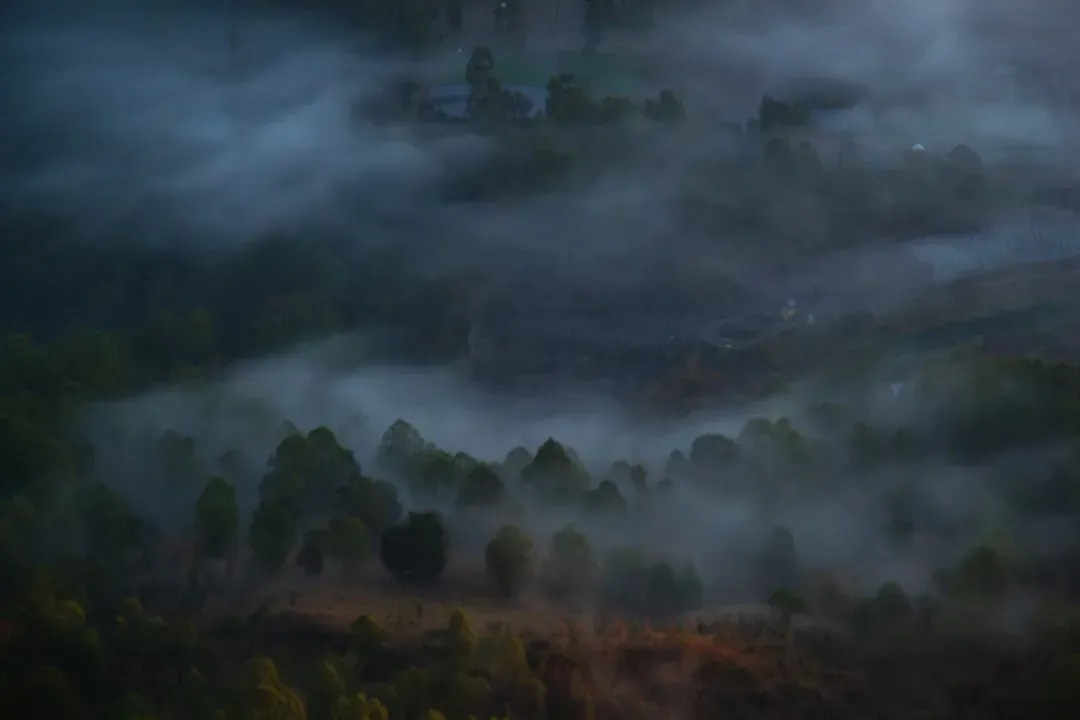
You might assume that in the age of satellites, deep-sea drones, and Mars rovers, we have figured most of this out. We haven’t. Some landscapes are so strange they seem almost impossible, defying logic and challenging our understanding of geology. While science has unraveled many mysteries, some wonders remain unexplained, hinting at forces we have yet to fully comprehend.
The ten phenomena on this list represent something far bigger than curiosity. They are proof that the planet beneath your feet is still wild, still surprising, and still deeply mysterious. From a river that boils without a volcano to a cave of house-sized crystals that took a million years to grow, Earth has been building wonders for billions of years without waiting for anyone’s approval. It is clear that our planet still has plenty of tricks up its sleeve, and these mysterious places remind us to keep questioning the world around us.
So here is the question worth sitting with: if the surface of our own planet still holds this many secrets, what else is hiding just below it? What do you think? Share your thoughts in the comments below.