
You’ve probably heard all about black holes, those cosmic vacuum cleaners that swallow everything, even light itself. They’re terrifying, sure. They’re mysterious, absolutely. Here’s the thing though. Black holes aren’t even the weirdest things floating around in the universe.
The cosmos is jam-packed with structures so bizarre, so utterly mind-boggling, that they make black holes look almost ordinary by comparison. From invisible threads connecting galaxies across impossible distances to dead stars with magnetic fields that could rip atoms apart, the universe has spent billions of years crafting phenomena that challenge everything we thought we understood about physics. Some of these cosmic oddities are so massive they shouldn’t exist according to our current models of cosmology. Others are so strange that scientists are still scratching their heads, unable to fully explain what they’re witnessing.
So let’s dive in and explore these ten cosmic structures that prove the universe is far stranger than we ever imagined.
The Cosmic Web Stretches Across The Universe Like A Giant Spider Web

Over billions of years, the universe evolved into a web of filaments and vast sheets, largely made of dark matter, which form the structure of the universe today and create the cosmic web that forms the large-scale backbone of the universe. Think of it like a colossal spider web stretching across all of space. Matter in intergalactic space is arranged in a vast network of interconnected filaments, and researchers have captured the sharpest-ever image of one of these cosmic filaments, which links two actively forming galaxies and dates back to when the Universe was only about 2 billion years old.
These filaments aren’t just pretty patterns in space. Cosmic filaments stretch across millions of light-years and form the cosmic web, where galaxies are strung together to form large filaments, and at their intersections are galaxy clusters, the densest regions of the web, with these filaments funneling gas into galaxies and thereby helping them grow. What makes this even weirder is that you can’t actually see most of it. Dark matter, the mysterious entity that accounts for 85% of all the matter in the universe, is heavy and doesn’t interact with light, so it’s tough to detect, but it does interact with normal matter gravitationally.
Scientists recently used a brilliant trick to photograph these invisible threads. Honestly, it’s hard to say for sure, but the images are breathtaking and terrifying at the same time.
Quipu Is The Largest Known Structure In The Universe

Astronomers have discovered what may be the largest-scale structure in the known universe, a group of galaxy clusters stretching roughly 1.3 billion light-years across and containing a mind-boggling 200 quadrillion solar masses. They named it Quipu, after an ancient Incan counting system. It’s essentially a giant cluster of galaxy clusters stretching approximately 1.3 billion light-years long, more than 13,000 times the length of our Milky Way, and consists of 200 quadrillion solar masses.
Let’s be real, our human brains can’t really grasp numbers like that. Quipu and four other similar structures encompass 30 percent of the galaxies, 45 percent of the galaxy clusters, 25 percent of the matter and 13 percent of the overall volume of the known universe. The problem is that structures this gigantic shouldn’t even exist according to our current understanding of cosmology. The Cosmological Principle suggests the universe should look pretty uniform on the largest scales.
Yet here’s Quipu, breaking all the rules and forcing scientists to reconsider whether our models of the universe are actually correct or fundamentally flawed. Larger structures might quite probably exist if we inspect ever-larger cosmic volumes in the more distant universe.
The Hercules-Corona Borealis Great Wall Defies Our Understanding Of Reality
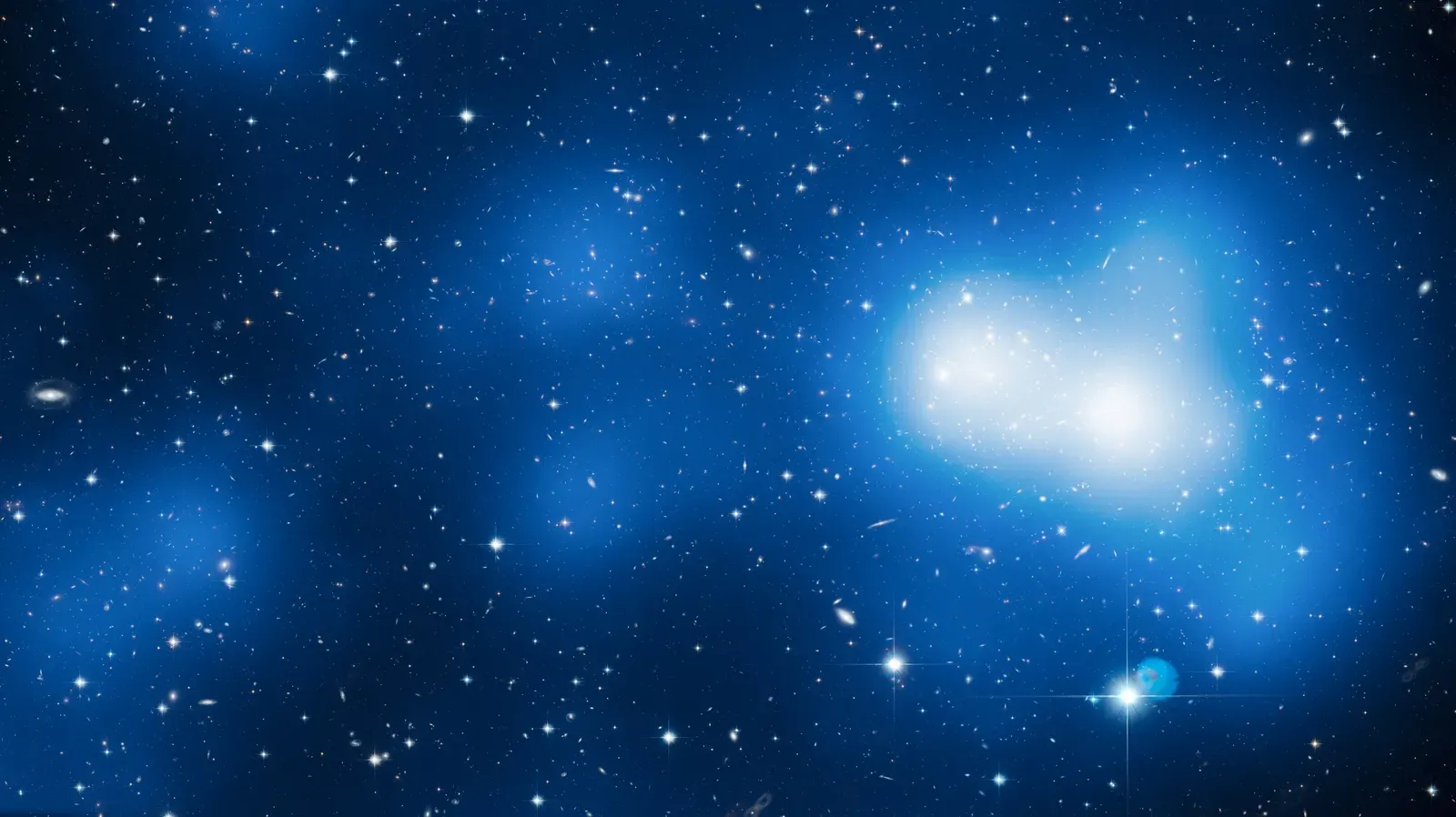
Astronomers have just revealed that the largest known structure in the universe, the Hercules–Corona Borealis Great Wall, might be even larger than we initially thought, with the latest findings suggesting that this massive cosmic wall could stretch over 10 billion light-years, exceeding its previous estimate of 9.8 billion light-years. Ten billion light-years. That’s not a typo.
The new size estimate challenges the limits of cosmological models, because according to the commonly accepted principles of cosmology, the universe should be homogeneous on large scales, with no structures larger than 370 megaparsecs, roughly 1.2 billion light-years, yet this newly discovered superstructure breaks that limit by a huge margin. It’s like finding a building taller than Mount Everest when all your blueprints say nothing should exceed a two-story house.
Scientists discovered it using gamma-ray bursts, those incredibly bright explosions from dying stars. In addition to being a puzzle for cosmologists, this structure could be a key to understanding the formation of galaxies, dark matter, and the forces that shaped the universe. The universe keeps throwing curveballs at our best theories, and this one’s a doozy.
The Big Ring Shouldn’t Exist But It Does Anyway

The Big Ring spans about 3% of the radius of the entire observable universe and is an almost perfectly circular group of galaxies and galaxy clusters with a diameter of about 1.3 billion light-years and a circumference of around 4 billion light-years. If you could somehow see it with your naked eye, it would be fifteen times the size of the full moon in our night sky.
Not only is the Big Ring bigger than other large cosmic structures, but it’s bigger than should be possible for any structure to ever get, because according to the Cosmological Principle, the universe should look uniform in all directions, and the Cosmological Principle sets an upper limit of 1.2 billion light-years on the size of any structures, a limit that the Big Ring blatantly disregards. It’s completely off the scale. The Big Ring and the Giant Arc were discovered in the same region of sky, at around the same distance, 9.2 billion light-years from Earth, and there’s a chance the two are actually part of a single, even larger structure.
Some scientists are now looking at outlandish models like cosmic strings or theories suggesting our universe is one link in an infinite chain. The Big Ring is forcing us to think outside the box, way outside.
Naked Black Holes Are Rewriting The History Of The Early Universe
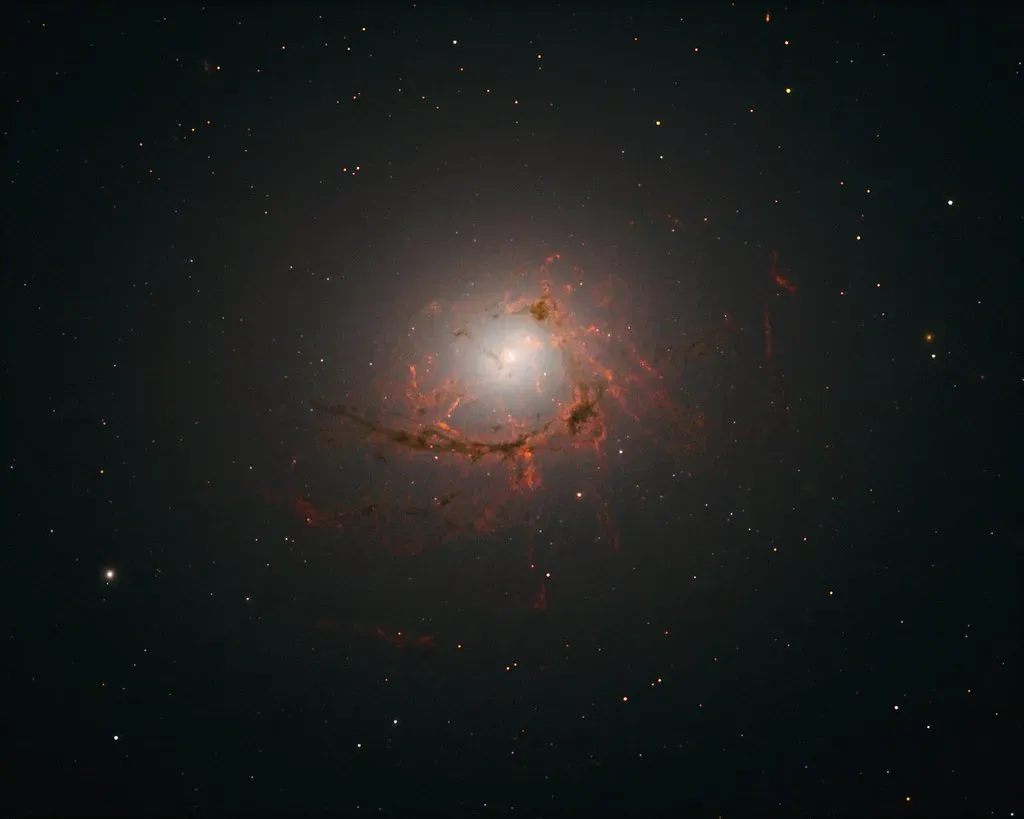
A supersize black hole, seen three times in a JWST image, mysteriously appears in the early universe without a galaxy surrounding it, and it’s huge and appears to be essentially on its own with few stars circling it, with the object potentially representing a whole new class of enormous naked black holes that upends the textbook understanding of the young universe. Scientists are calling these objects “little red dots” because, well, that’s what they look like in telescope images.
QSO1 is one of hundreds of similar-looking objects nicknamed little red dots that JWST has spotted in its first few years, and astrophysicists can’t say yet whether these dots are all black holes or not, with the telescope’s snapshots suggesting a rowdy young cosmos that fabricated big black holes and galaxies both together and independently, or maybe even a universe where black holes were among the first large structures in existence. The traditional understanding said galaxies formed first, then black holes grew at their centers over time.
Now we’re finding massive black holes just floating around with barely any galaxies attached. It’s completely off the scale, and it’s terribly exciting, according to one astrophysicist. These discoveries suggest the early universe was far more chaotic and unpredictable than anyone imagined.
Magnetars Have Magnetic Fields That Could Destroy Your Credit Cards From Halfway To The Moon
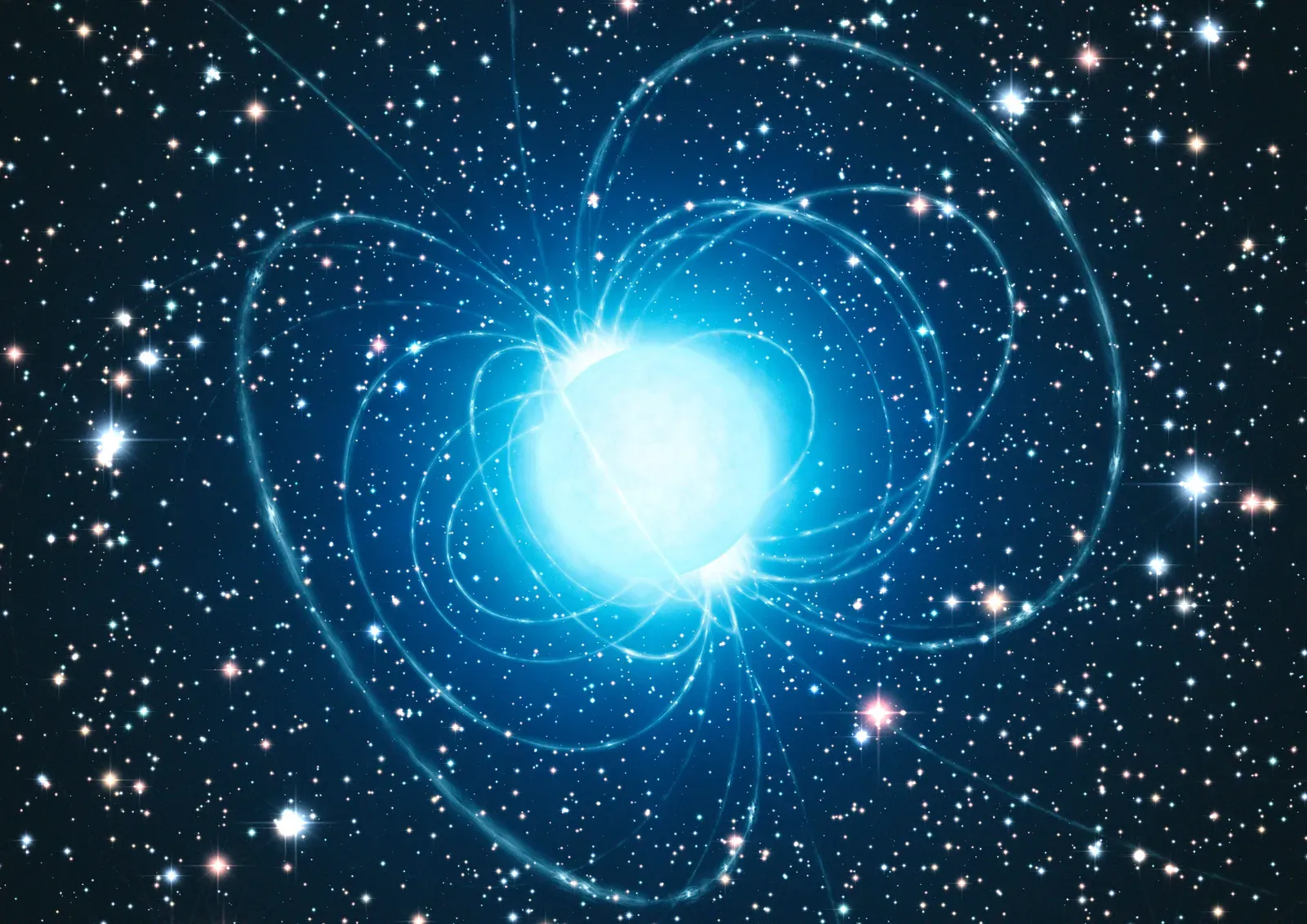
A magnetar is a type of neutron star with an extremely powerful magnetic field, around 109 to 1011 Tesla, with the magnetic-field decay powering the emission of high-energy electromagnetic radiation, particularly X-rays and gamma rays. Let me put that in perspective for you. These magnetic fields are a hundred million times stronger than any man-made magnet and about a trillion times more powerful than the field surrounding Earth, with Earth having a geomagnetic field of 30–60 microteslas while a magnetar’s 1010 tesla field has an energy density with a mass density more than 10,000 times that of lead.
Can you imagine a magnet so powerful that it could wipe every credit card on Earth from a distance halfway to the moon? That is how strong the magnetic field of a magnetar is. Like other neutron stars, magnetars are around 20 kilometres in diameter and have a mass of about 1.4 solar masses, formed by the collapse of a star with a mass 10–25 times that of the Sun, with the density of the interior such that a tablespoon of its substance would have a mass of over 100 million tons.
Magnetars, which are birthed from the collapse of much more giant stars, have extremely powerful magnetic fields for reasons that still mystify astronomers, and they’re powered by the decay of the magnetic field, which causes a lot of heat and the emission of giant flares that can emit, in just a hundredth of a second, the same amount of energy put out by the sun over the course of a million years. They’re rare, unpredictable, and absolutely fascinating.
Galactic Filaments That Spin Together Defy Expectations
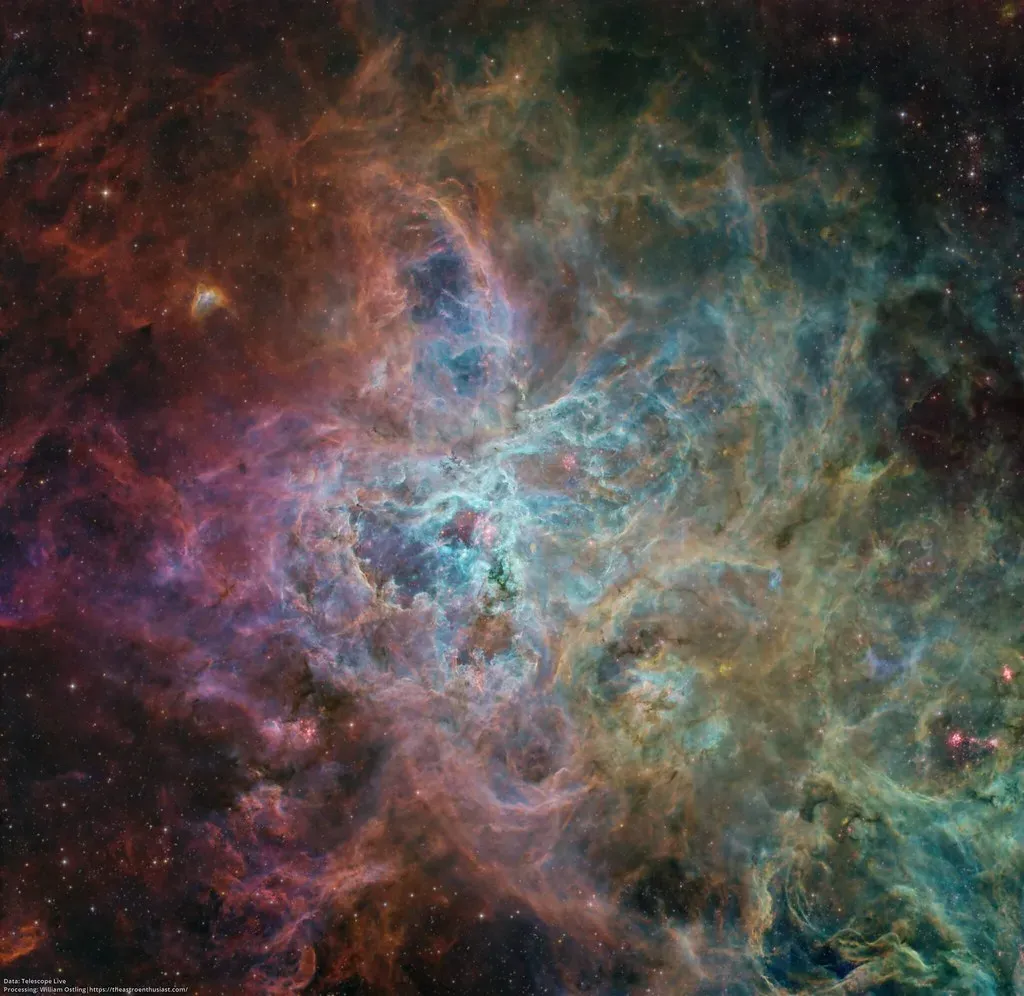
The filament of matter stretches 50 million light-years and contains a row of galaxies 5.5 million light-years long that are rotating in sync with the filament, with galaxies residing in a huge filament of dark matter found to be mostly rotating in the same direction that the filament is spinning. Think about that for a second. We’re talking about entire galaxies, each containing hundreds of billions of stars, all moving together like synchronized swimmers.
Nobody expected this level of coordination on such a massive scale. Galaxies were supposed to be independent entities, doing their own thing as they drift through space. Instead, we’re finding they’re connected by these dark matter threads, moving in harmony across distances our minds can barely comprehend.
The largest filaments act as highways of the Universe, channelling dark matter, gas and galaxies into the higher density node regions. It’s like discovering that cities across an entire continent are all connected by invisible highways that nobody knew existed. The cosmic web is far more organized and interconnected than we ever suspected.
Fermi Bubbles Are Two Giant Mystery Bubbles Erupting From Our Galaxy
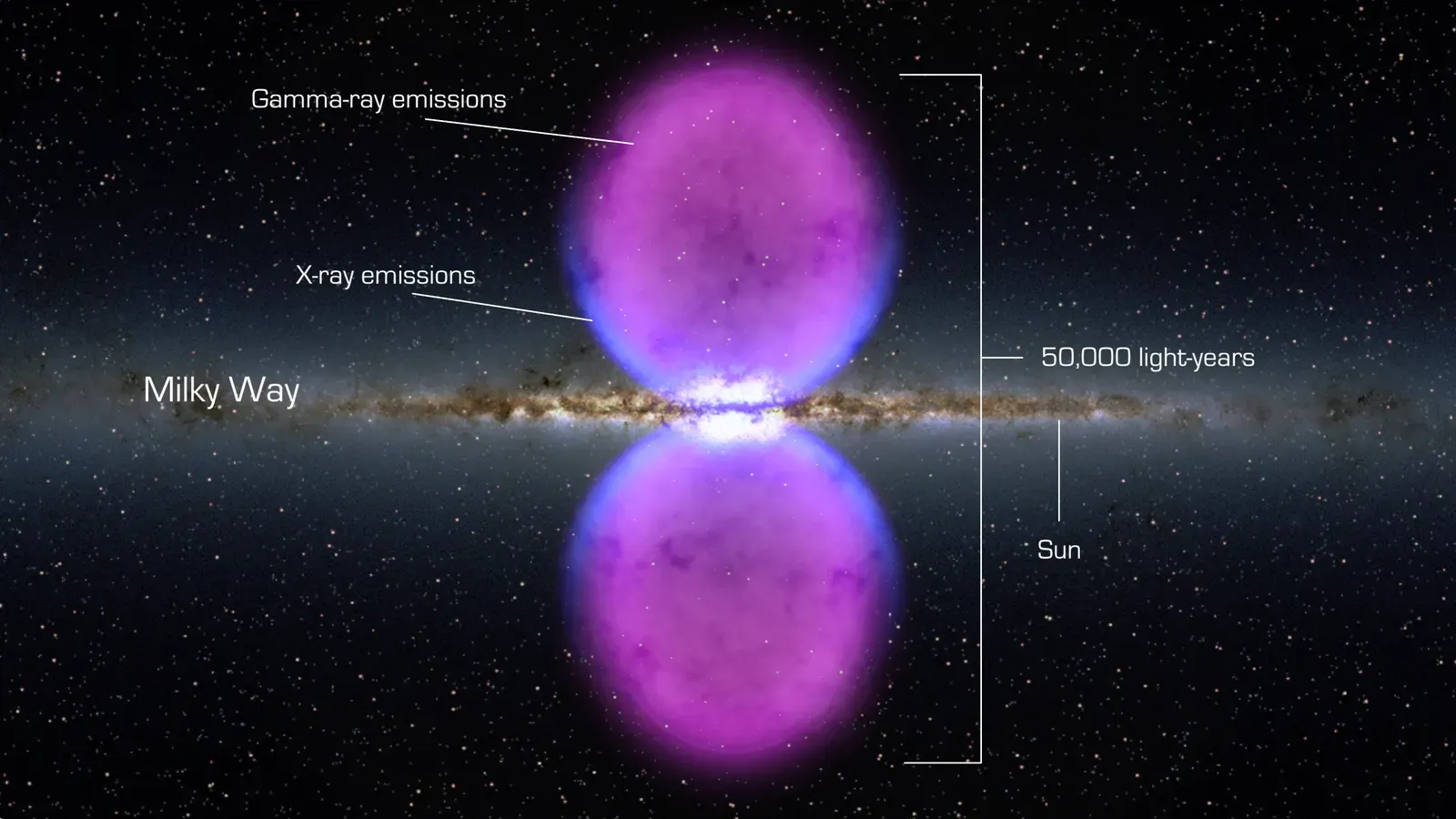
Two enormous lobes of high-energy gamma radiation extend 25,000 light-years above and below the Milky Way’s center, invisible to human eyes but blazing brightly in gamma-ray observations, with these structures having sharp, well-defined edges that suggest a sudden, powerful explosion rather than gradual stellar activity. Emanating from the center of our Milky Way Galaxy are two bubbles made solely of powerful gamma rays expanding at 2.2 million mph, with the two enormous spheres each hovering in seemingly empty space above and below the black hole Sagittarius A* in the Milky Way’s nucleus, tangent to each other, touching at the galactic center to form a squat hourglass shape.
No similar structures have been observed in other galaxies, making these bubbles a unique fingerprint of some dramatic event in our cosmic neighborhood’s past. Scientists think they might have been caused by violent outbursts from our galaxy’s central supermassive black hole millions of years ago, or maybe intense bursts of star formation near the galactic core.
The real mystery is why these bubbles have such sharp, clean edges. It’s like someone took a cosmic cookie cutter and carved perfect shapes out of space itself. Whatever created them was sudden, violent, and unlike anything we’ve seen elsewhere in the universe.
Hoag’s Object Is A Ring Galaxy That Shouldn’t Be Possible
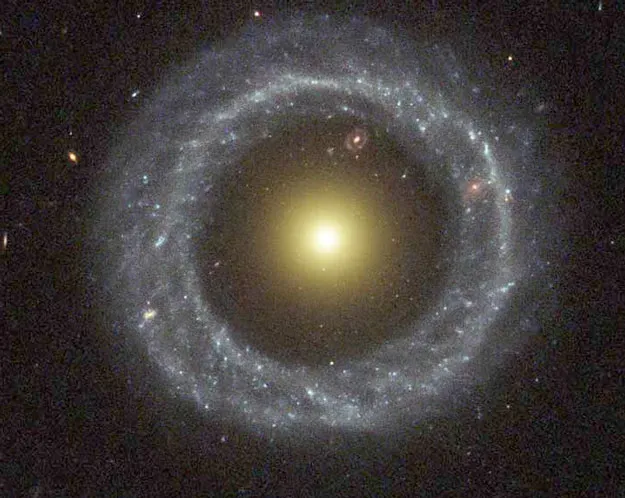
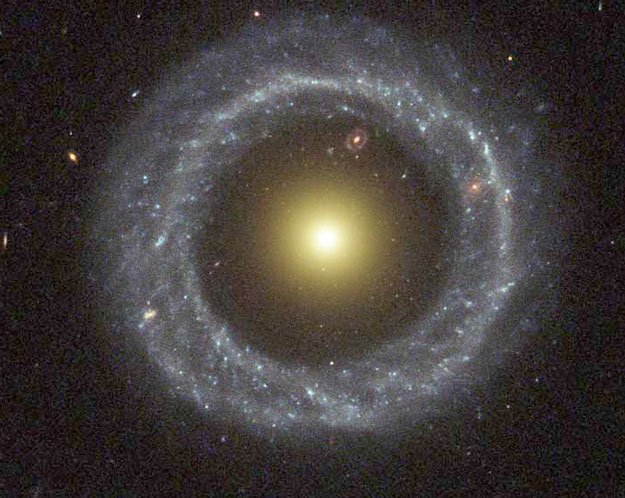
It was spotted in 1950 by American astronomer Arthur Hoag, and perhaps the most feasible explanation offered so far is that, two to three billion years ago, a small galaxy sped through the larger disc-shaped galaxy, creating this unusual structure, but there’s no sign of any galaxies nearby that might have served as the bullet, and such a collision would have sped up the core of Hoag’s Object, whereas observations show that it spins slowly.
Here’s where it gets really wild. If you look closely at roughly the one o’clock position, there’s a smaller version of the galaxy hidden within itself. A galaxy within a galaxy, like some cosmic matryoshka doll. Scientists have proposed multiple theories, but none of them fully explain what we’re seeing.
Some think it could be a gravitational mirage, while others suggest it formed from a perfectly timed collision. The problem is that every explanation creates new problems. Hoag’s Object just sits there in space, defying our attempts to categorize it, reminding us that the universe doesn’t need to make sense to us.
Przybylski’s Star Has Elements That Shouldn’t Exist

Przybylski’s Star is about twice the diameter and four times the mass of the sun, and its surface is several thousand degrees hotter than the sun’s, but what elevates the star to true weirdness is its spectrum, with each chemical element leaving a unique imprint in the spectrum, and the spectrum of Przybylski’s Star placing it in a class known as chemically peculiar stars that show unusual abundances of different elements.
Scientists have detected elements in its atmosphere that are incredibly rare, some of which are radioactive with half-lives so short they shouldn’t exist in nature anymore. It’s like finding fresh ice cream in a freezer that’s been unplugged for years. Where did these elements come from? How are they being replenished?
Some researchers have even jokingly suggested alien technology might be involved, though most favor more conventional explanations involving unusual stellar processes. Still, nobody can quite explain the full picture. Przybylski’s Star is one of those cosmic objects that keeps astronomers up at night, wondering if they’re missing something fundamental about how stars work.
The universe has spent billions of years crafting structures and objects that challenge our understanding at every turn. From invisible webs connecting galaxies to dead stars with magnetic fields that could atomize matter, from gigantic structures that shouldn’t exist to rings and bubbles defying explanation, space is far stranger and more wonderful than any science fiction writer could imagine. These ten cosmic mysteries remind us that despite all our technological advances and scientific knowledge, we’re still just scratching the surface of understanding the cosmos.
What do you think is the strangest thing out there? Which of these cosmic structures fascinates you the most?
Jan loves Wildlife and Animals and is one of the founders of Animals Around The Globe. He holds an MSc in Finance & Economics and is a passionate PADI Open Water Diver. His favorite animals are Mountain Gorillas, Tigers, and Great White Sharks. He lived in South Africa, Germany, the USA, Ireland, Italy, China, and Australia. Before AATG, Jan worked for Google, Axel Springer, BMW and others.