

The ethical implications of artificial intelligence are reshaping our world at breakneck speed, and public universities across America are stepping up as unlikely heroes in this digital revolution. While Silicon Valley races to build faster algorithms, these academic institutions are asking the tough questions that private companies often sidestep: How do we make AI fair? Who takes responsibility when algorithms make mistakes? What happens to human dignity in a world where machines make increasingly important decisions?
Stanford University: Where AI Ethics Meets Real-World Impact

Stanford’s Institute for Human-Centered AI is leading groundbreaking discussions about AI’s dual nature as both a powerful tool for societal benefit and a potential risk if misused, with emphasis on ethical governance and collaborative approaches involving many perspectives to ensure technological advancements prioritize human dignity and well-being. Their Human-Centered AI initiative isn’t just academic theory – it’s actively shaping policy discussions at the highest levels of government and industry. The university offers a 9-10 week fellowship for undergraduate and graduate students to engage in technology ethics and policy field as it intersects with public policy and social impact. What makes Stanford’s approach particularly compelling is how they bridge the gap between cutting-edge research and practical applications. They invited 11 sci-fi filmmakers and AI researchers to Stanford for Stories for the Future, where researchers shared perspectives on AI and filmmakers reflected on challenges of writing AI narratives, with researcher-writer pairs transforming research papers into written scenes. This creative collaboration demonstrates how they’re thinking beyond traditional academic boundaries to influence cultural narratives about AI’s role in society.
Carnegie Mellon University: The Birthplace of Machine Learning Ethics

Carnegie Mellon stands as a colossus in AI education, and their approach to ethics is just as impressive as their technical prowess. CMU is ranked as the number one university in the world for AI programs, according to the US News and World Report 2025. But what sets them apart isn’t just their technical excellence – it’s their comprehensive approach to responsible AI development. The theme of AI ethics and governance deeply aligns with Carnegie Mellon’s institutional mission, as they’re committed to not only advancing technological frontiers, but also ensuring these advancements serve humanity ethically and responsibly, with scholars and researchers deeply involved in helping to envision and build a future where people, policy and technology are better connected and better served. Their K&L Gates-Carnegie Mellon University Conference in Ethics and Computational Technologies brings together industry leaders, academics, and policymakers to tackle the most pressing ethical challenges in AI. The conference examines new ethical considerations and societal implications of GenAI and weighs the strengths and weaknesses of existing approaches to the governance of the technology to ensure safe, responsible and ethical use. This isn’t just talk – CMU is actively training the next generation of AI professionals who understand that with great computational power comes great responsibility.
University of California, Berkeley: Data Justice Meets AI Innovation

Berkeley’s approach to AI ethics is deeply rooted in social justice, making them a standout among elite research universities. Sonia Katyal is a professor and Associate Dean of Faculty Development and Research at UC Berkeley School of Law who has examined topics such as algorithmic transparency, trade secrecy, and the role of technology in shaping gender and cultural property rights. The university’s commitment goes beyond traditional computer science departments. The Data Science for Social Justice Workshop, organized in partnership between UC Berkeley’s Graduate Division and D-Lab, is an 8-week program aiming to provide an introduction to data science for graduate students, grounded in critical approaches, including understanding how positioning of marginalized speech communities affects how speech patterns vary and change. Berkeley’s approach is refreshingly honest about the challenges facing AI ethics. Their initiatives emphasize the importance of AI ethics, equipping participants with insights into responsible AI development and emerging ethical considerations. What makes Berkeley unique is how they’re training a new generation of data scientists to think critically about power structures and social justice from day one of their education. Since 2018, the UC Berkeley Law AI Institute has been at the forefront of exploring the dynamic intersection of artificial intelligence, law, and business, where experts and innovators dive into the latest developments in AI technology, governance, legal practice innovations, risk mitigation, and regulatory frameworks.
University of Texas at Austin: Comprehensive AI Ethics Integration

The Lone Star State’s flagship university is taking a holistic approach to AI ethics that spans multiple disciplines and degree programs. The Ethical Artificial Intelligence program at UT Austin trains graduate students to address the challenge of integrating responsible and ethical AI at all stages of development, design, and deployment of AI technologies. This isn’t just a single course or program – it’s a comprehensive initiative that touches students across the entire university. The goal of their AI ethics course is to prepare AI professionals for the important ethical responsibilities that come with developing systems that may have consequential, even life-and-death consequences, where students first learn about both the history of ethics and the history of AI to understand the basis for contemporary, global ethical perspectives and the factors that have influenced the design, development, and deployment of AI-based systems. What’s particularly impressive is how UT Austin connects theory to practice. Their healthcare AI course dives deep into how AI innovations are transforming the healthcare system by focusing on AI in drug discovery, AI in medical image diagnosis, explainable AI for health risk prediction, and ethics of AI in healthcare. Students aren’t just learning about ethical frameworks in the abstract – they’re grappling with real-world scenarios where AI decisions can literally mean the difference between life and death.
Ohio State University: Revolutionary AI Fluency for All Students

Ohio State is making waves with perhaps the most ambitious AI ethics initiative in higher education. Beginning with the Class of 2029, every Buckeye graduate will be fluent in AI and how it can be responsibly applied to advance their field, as President Walter “Ted” Carter Jr. noted that every job, in every industry, is going to be impacted in some way by AI, and Ohio State has an opportunity and responsibility to prepare students to not just keep up, but lead in this workforce of the future. This isn’t just about teaching students to use AI tools – it’s about creating a generation of professionals who understand the ethical implications of AI in every field. The initiative will support faculty in navigating practical questions about the future of learning, including the ethical and responsible use of AI in the classroom, with graduates having not only technical AI skills but also a rich understanding of how the ethical, secure use of AI tools can be harnessed for good across disciplines, whether health care, computer science, agriculture or the humanities. Some professors, like Associate Professor of Philosophy Steven Brown who specializes in ethics, have already begun integrating AI into their courses, encouraging students to have discussions about ethics and philosophy with AI chatbots and using AI to help create dialogues between two sides of controversial topics, noting that it would be a disaster for students to have no idea how to effectively use one of the most powerful tools that humanity has ever created. The university is taking a bold stance that ethical AI education isn’t optional – it’s essential for every graduate entering the modern workforce.
Penn State University: Bridging Technical Skills and Social Responsibility

Penn State is launching a comprehensive approach to AI ethics education that addresses both technical competency and social responsibility. Starting this fall, Penn State students will be able to major in artificial intelligence, focusing on the development, application and ethical considerations of AI, with Professor Vasant Honavar noting that with the wider applications of AI across industries, it is important for students to understand the societal implications of the technology. The university’s approach recognizes that AI ethics isn’t just about preventing harm – it’s about creating informed citizens who can navigate an AI-driven world. As Honavar explains, this is really about becoming an informed citizen about AI in a world that is being transformed by it, where everybody has to know something about it, from someone in a position in a company making decisions about ethical use of AI within that organization to someone on the staff of a legislature advising about AI regulation. One area of focus for social responsibility will be the development of predictive modeling using data, as while AI helps professionals to forecast and find new methods for processes, any biases in the data sets AI systems are trained on can have negative impacts on society. Penn State is preparing students to be thoughtful practitioners who understand that every line of code has potential social consequences.
Georgia Institute of Technology: Confronting AI’s Dark Side Head-On
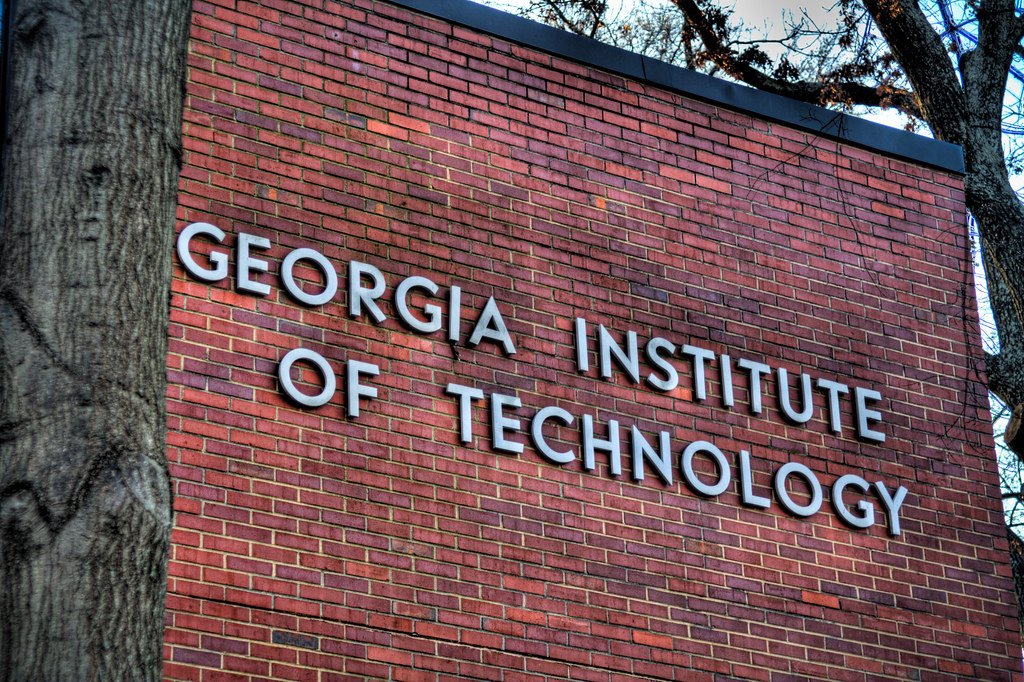
Georgia Tech isn’t sugarcoating the ethical challenges of AI – they’re confronting them with unflinching honesty. Their approach recognizes that machine learning algorithms are already being deployed by industry, government, and schools to make decisions that impact us in direct ways, with such programs typically promoted as fair and free of human biases, but humans who make mistakes are programming, calibrating the systems. Their CS 6603: AI, Ethics, and Society course doesn’t shy away from uncomfortable truths about how abuse of big data means your worst fears can come true, including being monitored by your employer, government intrusions into daily life, or being turned down by college admissions because you are predicted to not donate in 10-20 years, describing scenarios that sound like visions from Minority Report. This direct approach to AI’s potential for harm sets Georgia Tech apart from institutions that focus primarily on AI’s benefits. The university emphasizes AI’s transformative potential in reshaping industries and improving public services while offering a roadmap for ethical, responsible deployment of AI technologies, with emphasis on the need for AI systems that not only perform at a high level but also align with ethical standards. Georgia Tech is training students to be skeptical, critical thinkers who can identify and address AI bias before it causes real-world harm.
University of Washington: Policy-Focused AI Ethics Leadership

The University of Washington is taking a unique approach by focusing heavily on the policy implications of AI ethics. Jai Jaisimha, who has a Ph.D. in Electrical Engineering with a focus on AI from the University of Washington, was previously the founding program director of the University of Washington’s Tech Policy Lab, where he co-led projects on augmented reality, driverless cars, and AI-driven toys. This practical, policy-oriented approach sets UW apart from more theoretical programs. The university understands that ethical AI isn’t just about academic debate – it’s about creating real policies that govern how AI is developed and deployed in society. Their work addresses legislative changes within Washington state, tracking laws and involving nonprofit leaders who talk about AI globally or from a governance perspective. UW is training students to be policy leaders who can translate complex technical concepts into legislation and regulations that protect the public interest. Their graduates aren’t just going into tech companies – they’re becoming the policymakers and advocates who will shape how AI is regulated and governed in the coming decades.
University of Chicago: Philosophical Depth in AI Governance

The University of Chicago brings its renowned tradition of rigorous intellectual inquiry to AI ethics through its Harris School of Public Policy. Their course on The Ethics and Governance of Artificial Intelligence observes the emergence of AI ethics in law and public policy, examining the norms, values, and political strategies involved in consensus-building processes that shape the development and governance of AI systems, with students engaging in critical analysis of AI policy documents and delving into core principles such as fairness, accountability, and transparency, exploring their origins and practical applications. Chicago’s approach is distinguished by its philosophical rigor and policy focus. The university isn’t just teaching students to build ethical AI systems – they’re training them to understand the complex political and social processes that determine how AI ethics principles are translated into actual governance structures. This deep, analytical approach prepares students to be thoughtful leaders who can navigate the complex intersection of technology, politics, and ethics. The University of Chicago is creating graduates who understand that AI ethics isn’t just a technical problem – it’s a fundamentally human challenge that requires sophisticated understanding of political processes and social dynamics.
University of Edinburgh: Global Leadership in AI Ethics Education

While technically not a U.S. state university, the University of Edinburgh’s innovative approach to AI ethics education deserves recognition for its influence on American programs. Faced with rising public expectations and regulatory demands that new technologies will be applied not just legally, but ethically, all sectors require skilled graduates armed with critical, creative and higher-order data skills, with graduates of this programme helping their future employers to navigate complex new technical systems and roles with transparency, accountability, fairness, justice, and respect for individual and human rights. Their interdisciplinary degree is designed with world-leading academic expertise in this area, drawing on philosophy, law, informatics, and science and technology innovation studies, leveraging the research power and mission of the Futures Institute’s Centre for Technomoral Futures, which promotes sustainable, just and ethical outcomes for artificial intelligence and data-driven technology. Edinburgh’s influence on American AI ethics programs is significant, with many U.S. universities adopting similar interdisciplinary approaches and philosophical frameworks. Their emphasis on “technomoral futures” represents a sophisticated understanding that technology and ethics are not separate domains but deeply intertwined aspects of human progress.
Arizona State University: Innovation Meets Responsibility

Arizona State University is making significant strides in AI ethics education, particularly through its integration with state-level policy initiatives. Arizona’s first AI Steering Committee is focused on guiding responsible and people-centered adoption of artificial intelligence across the state. ASU has emerged as an “AI-powered university,” making AI as integral to their campus as the internet. This comprehensive integration approach means that AI ethics isn’t confined to computer science departments – it’s woven throughout the entire university experience. ASU’s approach recognizes that AI ethics education needs to be as ubiquitous as AI itself. Students studying education, business, healthcare, and the humanities all encounter AI ethics as part of their core curriculum. This university-wide approach ensures that future professionals in every field understand their role in creating and maintaining ethical AI systems. ASU is demonstrating that AI ethics education can’t be an afterthought or an elective – it needs to be fundamental to modern higher education. Their model is being watched closely by other universities seeking to create similarly comprehensive programs.
The landscape of AI ethics education is evolving rapidly, and these ten universities are leading the charge in fundamentally different ways. From Stanford’s policy influence to Ohio State’s universal AI fluency initiative, each institution is contributing unique perspectives to our collective understanding of how to develop and deploy AI responsibly. The most striking aspect of these programs isn’t their differences – it’s their shared recognition that AI ethics can’t be left to technologists alone. These universities are training philosophers, policymakers, lawyers, educators, and citizens who understand that the future of AI depends not just on what we can build, but on what we should build. What will the graduates of these programs accomplish in the next decade?